Softcover. Cambridge University Press, reprint, 1992, Book: Very Good, Dust Jacket: None, Softcover, 314 pages. Essays on language, action and interpretation. This is a collection in translation of essays by Paul Ricoeur which presents a comprehensive view of his philosophical hermeneutics, its relation to the views of his predecessors in the tradition and its consequences for the social sciences. The major theme that unites his writings is that of a philosophical anthropology. This anthropology, which Ricoeur came to call an anthropology of the "capable human being," aims to give an account of the fundamental capabilities and vulnerabilities that human beings display in the activities that make up their lives.
Hardcover. NY, Oxford University Press, 2nd pr., 2112, Book: Very Good, Dust Jacket: Very Good, Hardcover in a bright dust jacket, 270 pages. Since the birth of cinema at the end of the nineteenth century religion and film have been entwined. The Jesus-story and other religious narratives were the subject matter of some of the earliest cinema productions and this relationship has continued into the present. A recent proliferation of texts, conferences and courses bear witness to burgeoning academic interest in the relation between religion and film. In this study, Jonathan Brant explores the possibility that even films lacking religious subject matter might have a religious impact upon their viewers, the possibility of revelation through film. The book begins with a reading of Paul Tillich's theology of revelation through culture and continues with a qualitative research project which grounds this theoretical account in the experiences of a group of filmgoers. The empirical research takes place in Latin America where the intellectual puzzle and central research questions that drive the thesis arose and developed.
Hardcover. New Haven CT, Yale University Press, 1st, 2000, Book: Very Good, Dust Jacket: Very Good, Hardcover in a bright dust jacket, 234 pages, b&w illustrations. Nicolas-Claude Fabri de Peiresc (1580-1637) was, during his lifetime, one of Europe's most famous men. A friend of Pope Urban VIII and Galileo, of Peter-Paul Rubens and Hugo Grotius, of Tommaso Campanella and Marin Mersenne, Peiresc played an important role in the intellectual culture of his time. This book is the first study in English of this extraordinary man, as well as a vivid portrait of his whole circle. Looking through the lens of Peiresc's life, Peter N. Miller brings into focus the early-seventeenth-century world of learning-its people, places, and ideas. Drawing on the extensive Peiresc archive (more than 50,000 pieces of paper), Miller brilliantly evokes the lives of antiquaries, philosophers, theologians, and politicians of Peiresc's day, only some of whom remain known today. He explores the age in which Peiresc's toleration and sociability, his political action and cosmopolitanism, and his serious scholarship without dogmatism were identified as a set of virtues and practices by which to live. Peiresc's notion of scholarship as a moral exercise, the sweep of his interests, and the cross-Continental reach of his intellectual life show with new clarity what it meant to be a man of learning during the decades around 1600. Name on front fly leaf, otherwise clean copy.
Softcover. Oxford UK, Oxford University Press, reprint, 2002, Book: Very Good, Softcover, 209 pages. The papers in this collection provide views on central aspects of Thomas Hobbes's (1588-1679) life and work. The collection testifies to his enduring importance as a major philosopher four hundred years after his birth, and helps to unravel aspects of his intellectual biography which are relevant to a proper appreciation of his philosophy. Clean copy.
Hardcover. NY, Greenwood Press, reprint, 1969, Book: Very Good, Dust Jacket: None, Hardcover, blue cloth covers with gilt lettering on spine, 477 pages, two b&w plates. A reprint of the 1913 revised Second Edition. A selection from his correspondence with Boccaccio and other friends, designed to illustrate the beginnings of the Renaissance. Name on front fly leaf, otherwise clean
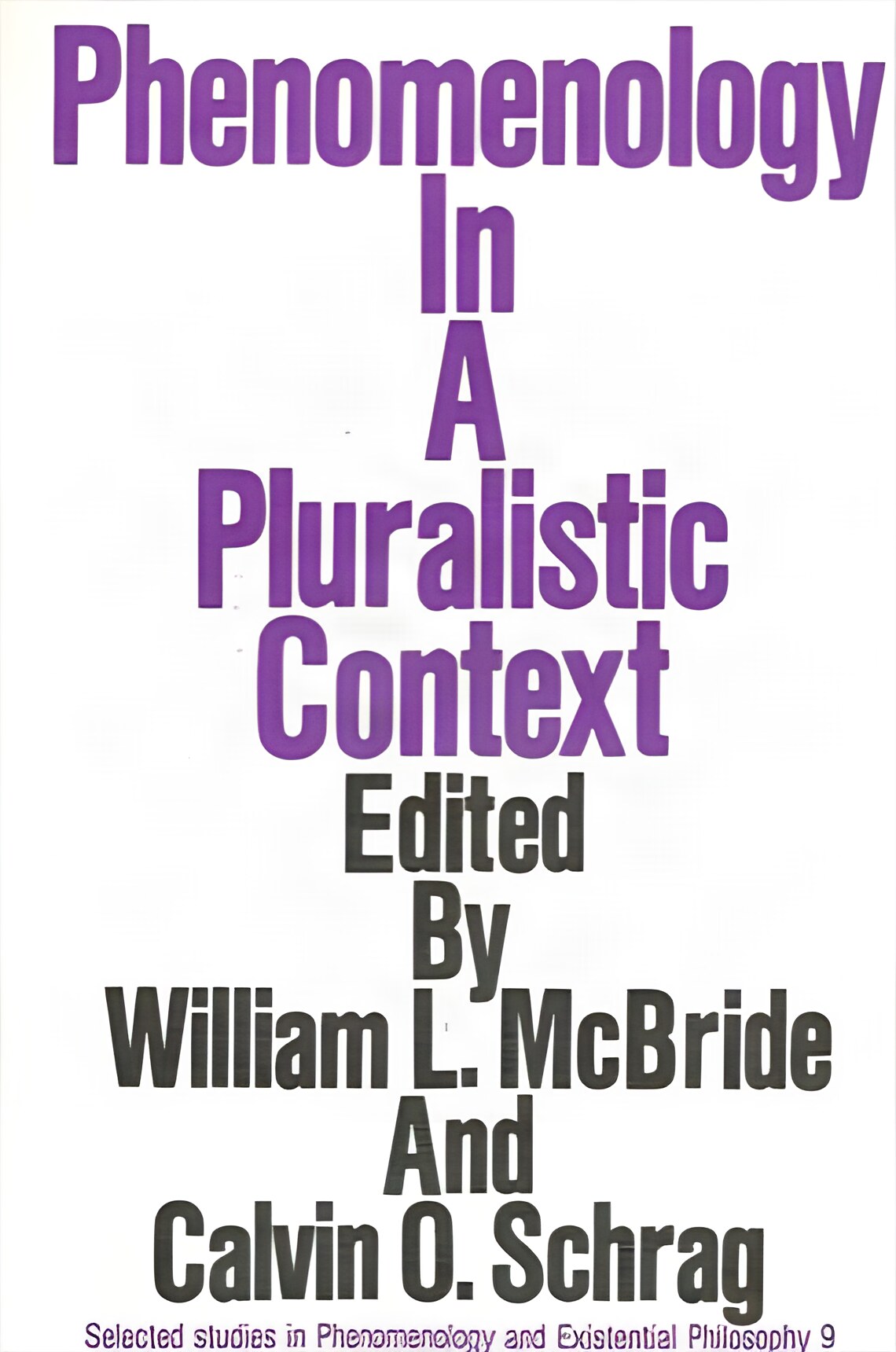
Softcover. Albany, State University of New York Press , 1st, 1983, Book: Very Good, Dust Jacket: None, Softcover, 317 pages. Phenomenology in a Pluralistic Context contains papers selected from three years of meetings of the Society for Phenomenology and Existential Philosophy (SPEP). The essays are representative of the most current thinking among North American philosophers who have been influenced by the phenomenological movement. A majority of the selections reveals a considerable mutual influence between phenomenology and other philosophical currents. Special emphasis is given to issues in social and political theory; the philosophy of medicine, of art, of language, and of religion; phenomenology's relationship to Kantianism and to Marxism; and the figures of Merleau-Ponty, Sartre, and Heidegger. Clean copy.
Hardcover. Philadelphia, American Philological Association, 1st, 1941, Book: Very Good, Dust Jacket: None, Hardcover, green cloth covers with gilt lettering on spine, 200 pages. The Greek text with facing translation runs from pages 22-199. The rest of the book is discussions chapters discussing the polemics between Stoic and Epicureans and the ways the Philodemus arguments might be improvements on Early Modern empiricism. Classic scholarly treatise presents a detailed study of the manner in which the problem of method was expressed by the empirically oriented philosophy of the Epicureans and Sceptics, and by their rationalistic opponents, the Stoics. Each of these schools developed a theory of signs, as the basis for both epistemological and logical speculations. Philodemus' treatise is a defense of Epicurean empirical method, and simultaneously an attack on the rival Stoic rationalistic method. This is first English translation of this work. Clean, bright copy.
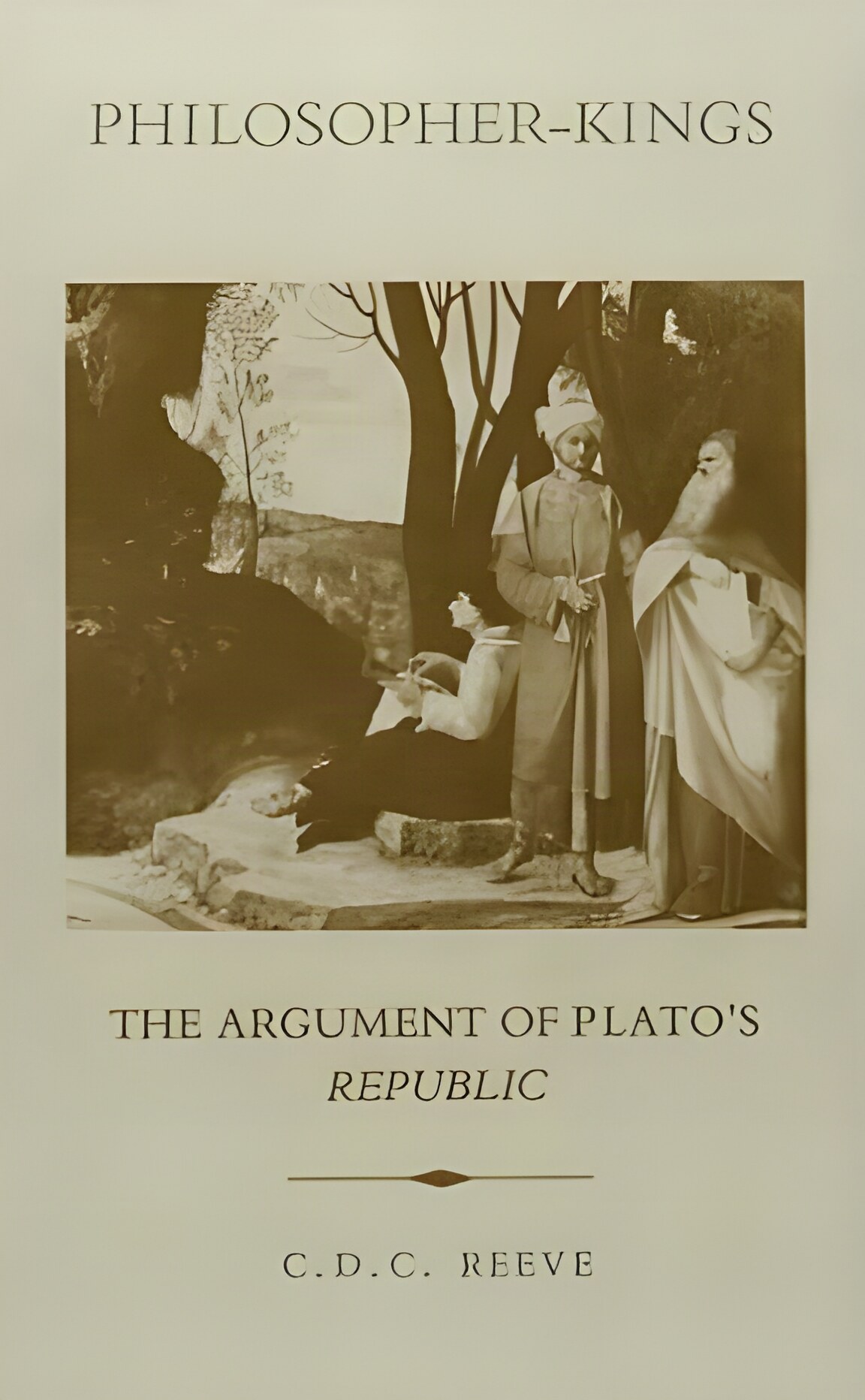
Hardcover. Princeton NJ, Princeton University Press, 1st, 1988, Book: Very Good, Dust Jacket: Very Good, Hardcover in a dust jacket, dark green cloth covers with gilt title on spine. 350 pages. The distinctive aim of Philosopher-Kings is to show, by giving a rational reconstruction of its overall argument, that the Republic is not the flawed patchwork it is usually made out to be by interpreters, but a deeply consistent and systematic work, which raises fundamental problems for philosophy and develops powerful and probing solutions to them. The book's central innovative thesis is that Plato's psychology, more specifically his theory of desires, holds the key to this, his most ambitious work. "Although the Republic has come to seem frazzled from too much use in introductory courses, in Reeve's hands it is new and refreshing".--Paul Woodruff, Ancient Philosophy "Although the philosopher-kings of Reeve's title are central to the argument of this handsomely produced book, it is in reality nothing less than a complete reinterpretation of the Republic. Name on front fly leaf, otherwise clean.
Hardcover. Oxford, Clarendon Press, 1st , 1982, Book: Good, Dust Jacket: Good, Hardcover, 284 pages. Previous owner's signature on front fly leaf. Slight foxing to top edge. Dust jacket has price clipped from front flap. Dust jacket also shows minor shelf wear and fading to spine. Otherwise, tight clean copy.
Hardcover. NY, The Macmillan Company, 6th pr., 1962, Book: Very Good, Dust Jacket: None, Hardcover, light tan cloth with dark green lettering, 464 pages with side-by-side German and English text. Wittgenstein's posthumous but influential tract, often cited as the most important book of philosophy of the 20th century; presented in the original German, with the English translation opposite. Some light pencil lines in margins, name on front fly leaf.
Hardcover. Hillsdale NJ, Lawrence Erlbaum, 1st, 1982, Book: Very Good, Dust Jacket: None, Hardcover, green cloth covers with light blue stamping, 422 pages. This highly readable translation of the major works of the 18th- century philosopher Etienne Bonnot, Abbe de Condillac, a disciple of Locke and a contemporary of Rousseau, Voltaire, and Diderot, shows his influence on psychiatric diagnosis as well as on the education of the deaf, the retarded, and the preschool child. Published two hundred years after Condillac's death, this translation contains treatises which were, until now, virtually unavailable in English: A Treatise on Systems, A Treatise of the Sensations, Logic. Name on front fly leaf, light bumps to cover corners.
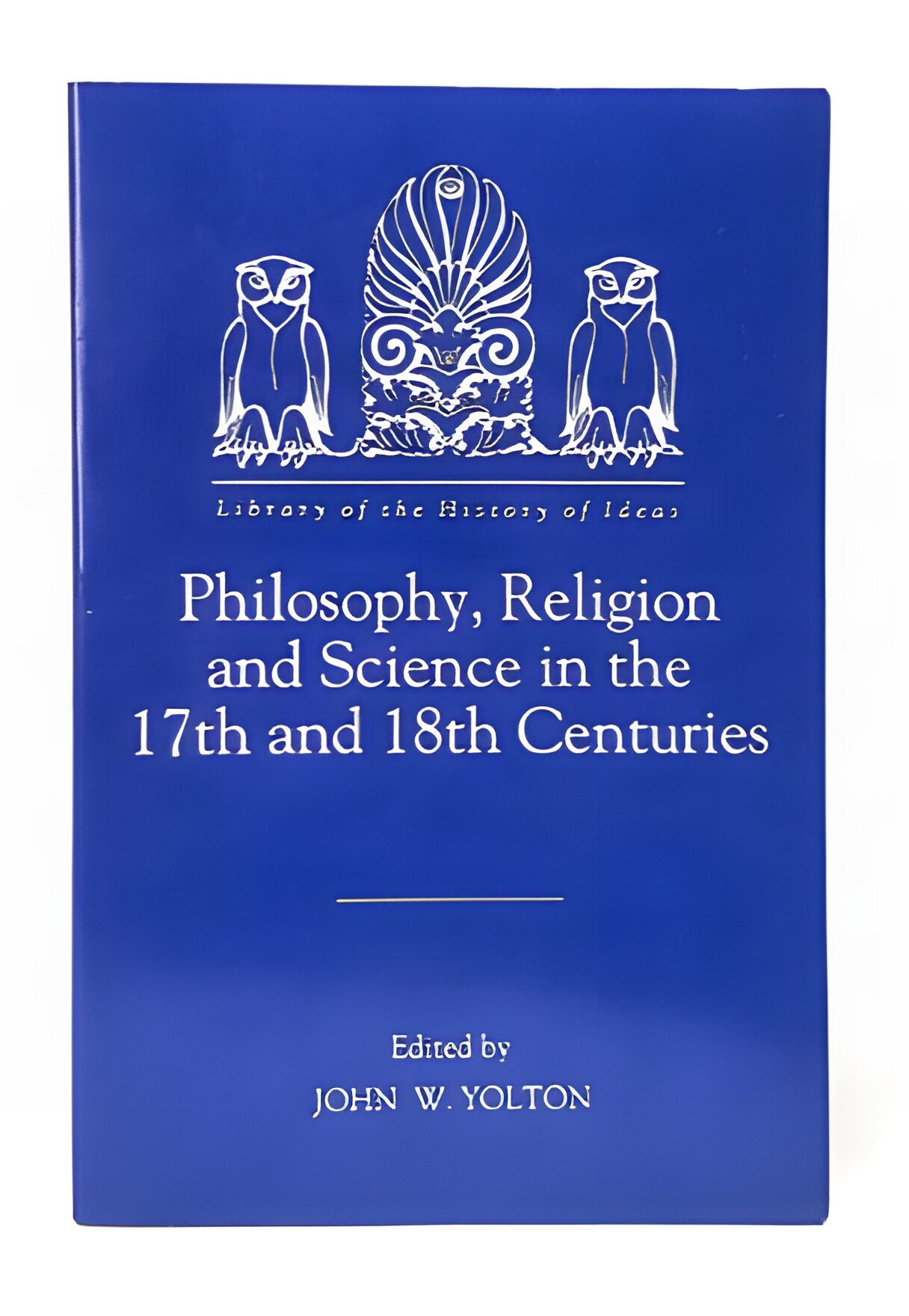
Softcover. Rochester NY, University of Rochester Press, reprint, 1994, Book: Very Good, Dust Jacket: None, Softcover, 539 pages. The essays in this collection illustrate the interdisciplinary approach to the history of ideas fostered by the Journal of the History of Ideas. Science, philosophy and religion were closely connected in the 17th and 18th centuries, and common threads run through all the articles. A number of essays revolve around Locke: the implications of his doctrines for religion, and their relation to and support of the new science; several of these articles refer to Descartes, Leibniz andHume. There are essays on optics and vision in the work of Berkeley, Reid and Newton, and on the relation between biology and physiology, especially as these disciplines contribute to the science of man. The authors include HENRY GUERLAC, MARGARET C. JACOB, SHIRLEY ROE, L. LAUDAN, NICHOLAS JOLLEY, JAMES FORCE, G. A. J. ROGERS and CATHERINE WILSON. Name on front fly leaf, otherwise clean.
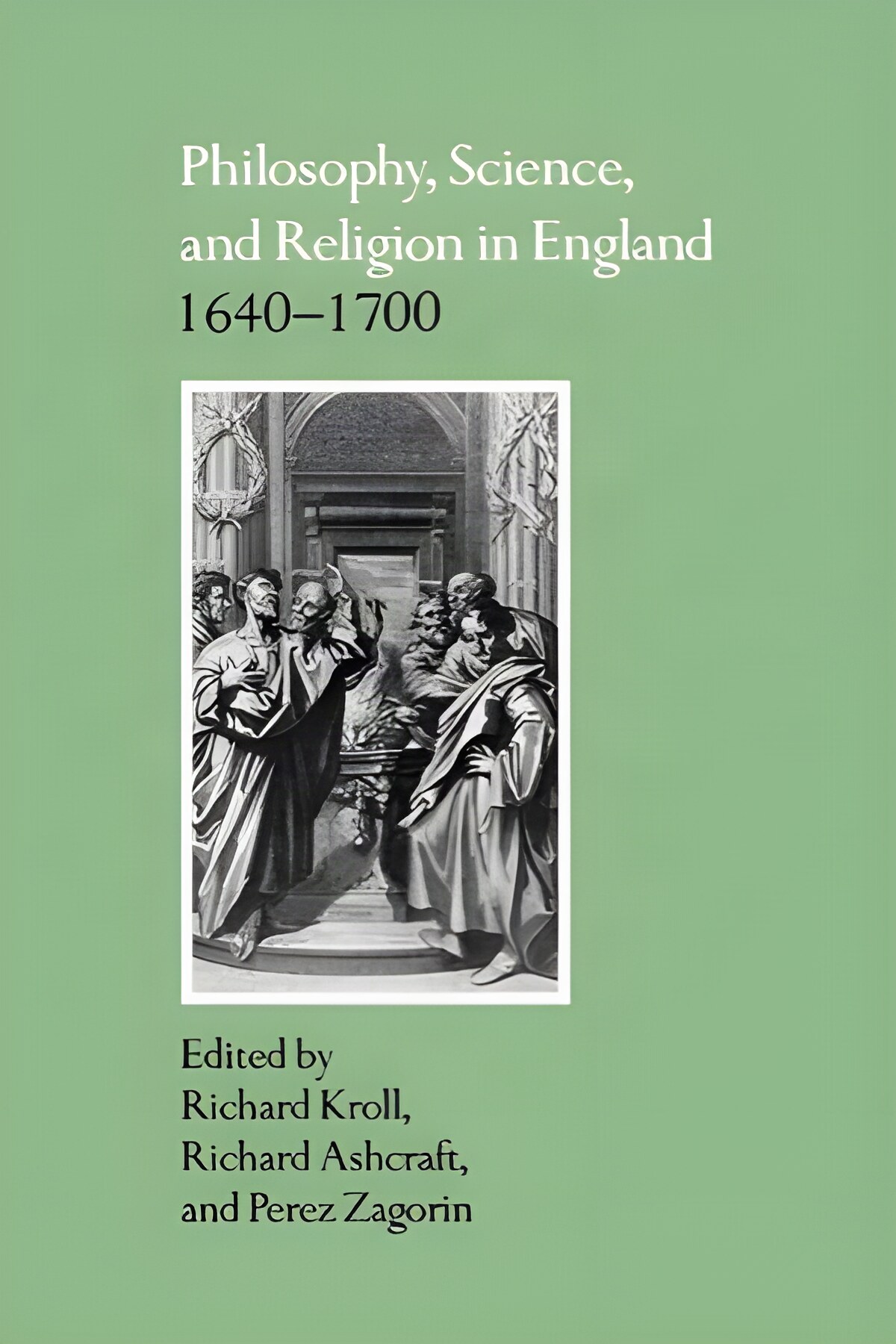
Hardcover. Oxford UK, Cambridge University Press, 1st, 1992, Book: Good, Dust Jacket: Very Good, Hardcover in a bright dust jacket, 287 pages. This collection of essays looks at the distinctively English intellectual, social and political phenomenon of Latitudinarianism, which emerged during the Civil War and Interregnum and came into its own after the Restoration, becoming a virtual orthodoxy after 1688. Dividing into two parts, it first examines the importance of the Cambridge Platonists, who sought to embrace the newest philosophical and scientific movements within Church of England orthodoxy, and then moves into the later seventeenth century, from the Restoration onwards, culminating in essays on the philosopher John Locke. These contributions establish a firmly interdisciplinary basis for the subject, while collectively gravitating towards the importance of discourse and language as the medium for cultural exchange. The variety of approaches serves to illuminate the cultural indeterminacy of the period, in which inherited models and vocabularies were forced to undergo revisions, coinciding with the formation of many cultural institutions still governing English society. Name on front fly, pencil marking to about 20 pages.
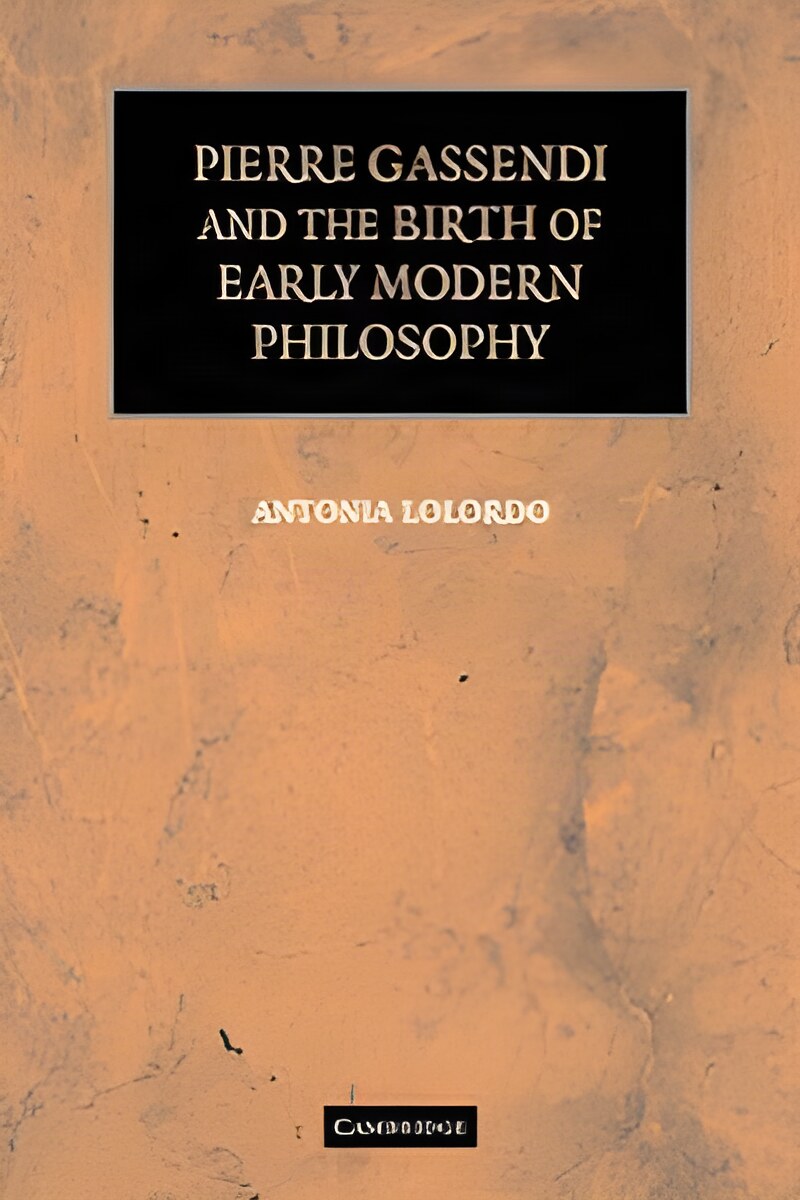
Hardcover. Cambridge UK, Cambridge University Press , 1st, 2007, Book: Very Good, Dust Jacket: Very Good, Hardcover in a bright dust jacket, 283 pages. This book offers a comprehensive treatment of the philosophical system of the seventeenth-century philosopher Pierre Gassendi. Gassendi's importance is widely recognized and is essential for understanding early modern philosophers and scientists such as Locke, Leibniz and Newton. Offering a systematic overview of his contributions, LoLordo situates Gassendi's views within the context of sixteenth- and early seventeenth-century natural philosophy as represented by a variety of intellectual traditions, including scholastic Aristotelianism, Renaissance Neo-Platonism, and the emerging mechanical philosophy. LoLordo's work will be essential reading for historians of early modern philosophy and science. Name on front fly leaf, otherwise clean.
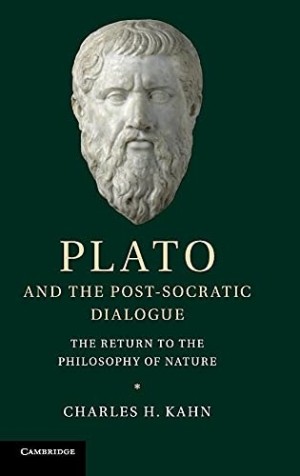
Hardcover. UK, Cambridge University Press, 1st, 2013, Book: Very Good, Dust Jacket: Very Good, Hardcover in a bright dust jacket, 249 pages. Plato's late dialogues have often been neglected because they lack the literary charm of his earlier masterpieces. Charles Kahn proposes a unified view of these diverse and difficult works, from the Parmenides and Theaetetus to the Sophist and Timaeus, showing how they gradually develop the framework for Plato's late metaphysics and cosmology. The Parmenides, with its attack on the theory of Forms and its baffling series of antinomies, has generally been treated apart from the rest of Plato's late work. Kahn shows that this perplexing dialogue is the curtain-raiser on Plato's last metaphysical enterprise: the step-by-step construction of a wider theory of Being that provides the background for the creation story of the Timaeus. This rich study, the natural successor to Kahn's earlier Plato and the Socratic Dialogue, will interest a wide range of readers in ancient philosophy and science. Name and date on front fly leaf otherwise clean.
Softcover. Souix City IA, Parnassos Press, 1st, 2019, Book: Very Good, Dust Jacket: None, Softcover, 312 pages. This book is born from a desire to understand how Plato influenced and was influenced by the intellectual culture of Western Greece, the ancient Hellenic cities of Sicily and Southern Italy. In 2018, a seminar on Plato at Syracuse was organized, in which a small group of scholars discussed a new translation of the Seventh Letter and several essays on the topic. The essays consider the historical, political, and philosophical implications of Plato's involvement in Syracuse. They also look at the reception of his voyage among fellow philosophers, ancient and modern. Clean copy.
Softcover. Las Vegas, Parmenides Publishing, 1st, 2010, Book: Very Good, Dust Jacket: None, Softcover, 246 pages. Plato's Parmenides presents the modern reader with a puzzle. Noted for being the most difficult of Platonic dialogues, it is also one of the most influential. This new edition of the work includes the Greek text on facing pages, with an English translation by Arnold Hermann in collaboration with Sylvana Chrysakopoulou. Hermann's Introduction provides an overview and commentary aimed at scholars and first time readers alike.
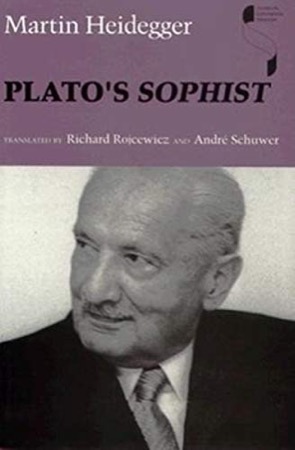
Hardcover. Bloomington, Indiana University Press, 1st, 1997, Book: Very Good, Dust Jacket: Very Good, Hardcover in a bright dust jacket, 476 pages. Reconstructs Martin Heidegger's lecture course at the University of Marburg in the winter semester of 1924-25, which was devoted to an interpretation of Plato and Aristotle. This volume approaches Plato through Aristotle. Translated by Richard Rojcewicz and Andre Schuwer. Name, date, light pencil making to 9 pages toward front.
Softcover. UK, Oxford University Press, 1st pbk., 2004, Book: Very Good, Dust Jacket: None, Softcover, 643 pages. An illuminating reappraisal of Plato's later works, which reveals radical changes in his ethical and political theory. Christopher Bobonich argues that in these works Plato both rethinks and revises important positions which he held in his better-known earlier works such as the Republic and the Phaedo. Bobonich analyses Plato's shift from a deeply pessimistic view of non-philosophers in the Republic, where he held that only philosophers were capable of virtue and happiness, to his far more optimistic position in the Laws, where he holds that the constitution and laws of his ideal city of Magnesia would allow all citizens toachieve a truly good life. Name on front fly leaf, otherwise clean.
Hardcover. UK, Oxford University Press, 1st, 2008, Book: Very Good, Dust Jacket: Very Good, Hardcover in a bright dust jacket, 238 pages. The Laws is Plato's last and longest dialogue. Although it has been neglected (compared to such works as the Republic and Symposium), it is beginning to receive a great deal of scholarly attention. Book 10 of the Laws contains Plato's fullest defence of the existence of the gods, and his last word on their nature, as well as a presentation and defence of laws against impiety (e.g. atheism). Plato's primary aim is to defend the idea that the gods exist and that they are good - this latter meaning that they do not neglect human beings and cannot be swayed by prayers and sacrifices to overlook injustice. As such, the Laws is an important text for anyone interested in ancient Greek religion, philosophy, and politics generally, and the later thought of Plato in particular. Robert Mayhew presents a new translation, with commentary, of Book X of the Laws. His primary aim in the translation is fidelity to the Greek. His commentary focuses on philosophical issues (broadly understood to include religion and politics), and deals with philological matters only when doing so serves to better explain those issues. Knowledge of Greek is not assumed, and the Greek that does appear has been transliterated. It is the first commentary in English of any kind on Laws X for nearly 140 years. Light pencil notations to about 15 pages.
Softcover. NY, Oxford University Press, reprint, 2011, Book: Very Good, Dust Jacket: None, Softcover, 384 pages. Plato is the best known and most widely studied of all the ancient Greek philosophers. Malcolm Schofield, a leading scholar of ancient philosophy, offers a lucid and accessible guide to Plato's political thought, enormously influential and much discussed in the modern world as well as the ancient. Schofield discusses Plato's ideas on education, democracy and its shortcomings, the role of knowledge in government, utopia and the idea of community, money and its grip on the psyche, and ideological uses of religion. Clean, bright copy.
Hardcover. Cambridge MA, Harvard University Press, 1st, 2001, Book: Very Good, Dust Jacket: Very Good, Hardcover in a very good dust jacket with light fading to spine, 342 pages. The Platonic Theology is a visionary work and the philosophical masterpiece of Marsilio Ficino (1433-1499), the Florentine scholar-philosopher-magus who was largely responsible for the Renaissance revival of Plato. A student of the Neoplatonic schools of Plotinus and Proclus, he was committed to reconciling Platonism with Christianity, in the hope that such a reconciliation would initiate a spiritual revival and return of the golden age. His Platonic evangelizing was eminently successful and widely influential, and his Platonic Theology, translated into English for the first time in this edition, is one of the keys to understanding the art, thought, culture, and spirituality of the Renaissance.

 "Pearls & Corals: Al-Lu'lu'wal-Marjan: Arabic-English: A Collection of Agreed upon Ahadith from Al-Bukhari & Muslim (2 volume set) (ARABIC TEXT WITH ENGLISH TRANSLATIONS)by:")

 "Petrarch: The First Modern Scholar and Man of Lettersby: James Harvey Robinson")

 "Philodemus: on Methods of Inference. A Study in Ancient Empiricism by: Philodemus, Philip Howard De Lacey, Estelle Allan De Lacey")
 "Philosophes and Post-Revolutionary France, Theby: Lough, John")
 "Philosophical Writings of Etienne Bonnot, Abbe De Condillac:by: Franklin Philip/ Harlan Lane")