Hardcover. London, Lutterworth, 1st UK, 1955, Book: Very Good, Dust Jacket: None, Hardcover, blue cloth with faded gilt lettering on spine, 115 pages. A fascinating glimpse into the debate in Scandinavia concerning a number of inter-related Biblical themes focused on the concept of the Messiah, a debate associated with scholars such as Mowinckel, Pedersen, Widengren, and Bentzen himself. The argument traces the development of the Messianic figure from its Old Testament roots, starting with the Messiah of many of the Psalms, which represents a demythologised form of the Oriental conception of kingship, through the eschatologised Messiah of the prophetic thought of Isaiah and Micah, and then to the prophet-Messiah of Second Isaiah, which although still a present and entirely human figure, embodies the insight that the saviour of Israel must suffer and be cast in the role of a Moses Redivivus as leader of a new Exodus. The Son of Man of Daniel 7 carries this eschatologising process even further, until the Christology of the New Testament emerges as a creative synthesis of these Old Testament types. In this synthesis, Jesus is a new Adam, the Messiah present in the flesh and present still in His body the Church, the suffering Prophet playing the part of the new Moses and the once and future Divine King. Bentzen argues that ultimately this figure of Christ the Messiah transcends not only the Old Testament types on which it is based, but also the subsequent historical development of the Christian Messianic tradition.
Softcover. Paris, Les Impressions Nouvelles, 1st thus, 1988, Book: Very Good, Dust Jacket: None, Softcover, 540 pages. FRENCH TEXT. Name on front fly leaf otherwise clean, tight copy.
Softcover. La Salle, Ill., Open Court, reprint, 1999, Book: Very Good, Dust Jacket: None, Softcover, 214 pages. Minor wear to edges of cover. Previous owner's inscription on front flyleaf. A bright and clean copy.
Hardcover. NY, March & Greenwood, 1st, 1938, Book: Very Good, Dust Jacket: None, Hardcover, purple cloth with gilt lettering on spine. 23.4*16.3cm, 123 pages. Printed on one side of double leaves, folded once in Chinese style. Now uncommon in commerce, this was the first English translation by a Chinese scholar of the foundational book of Taoism. The enigmatic polymath Dr Sum Nung Au-Young (1893-1942) was an accomplished poet, philosopher, lawyer and economist. There is some faint discoloration but hardly visible unless held at an angle, otherwise a very good hardcover. "Author's edition".
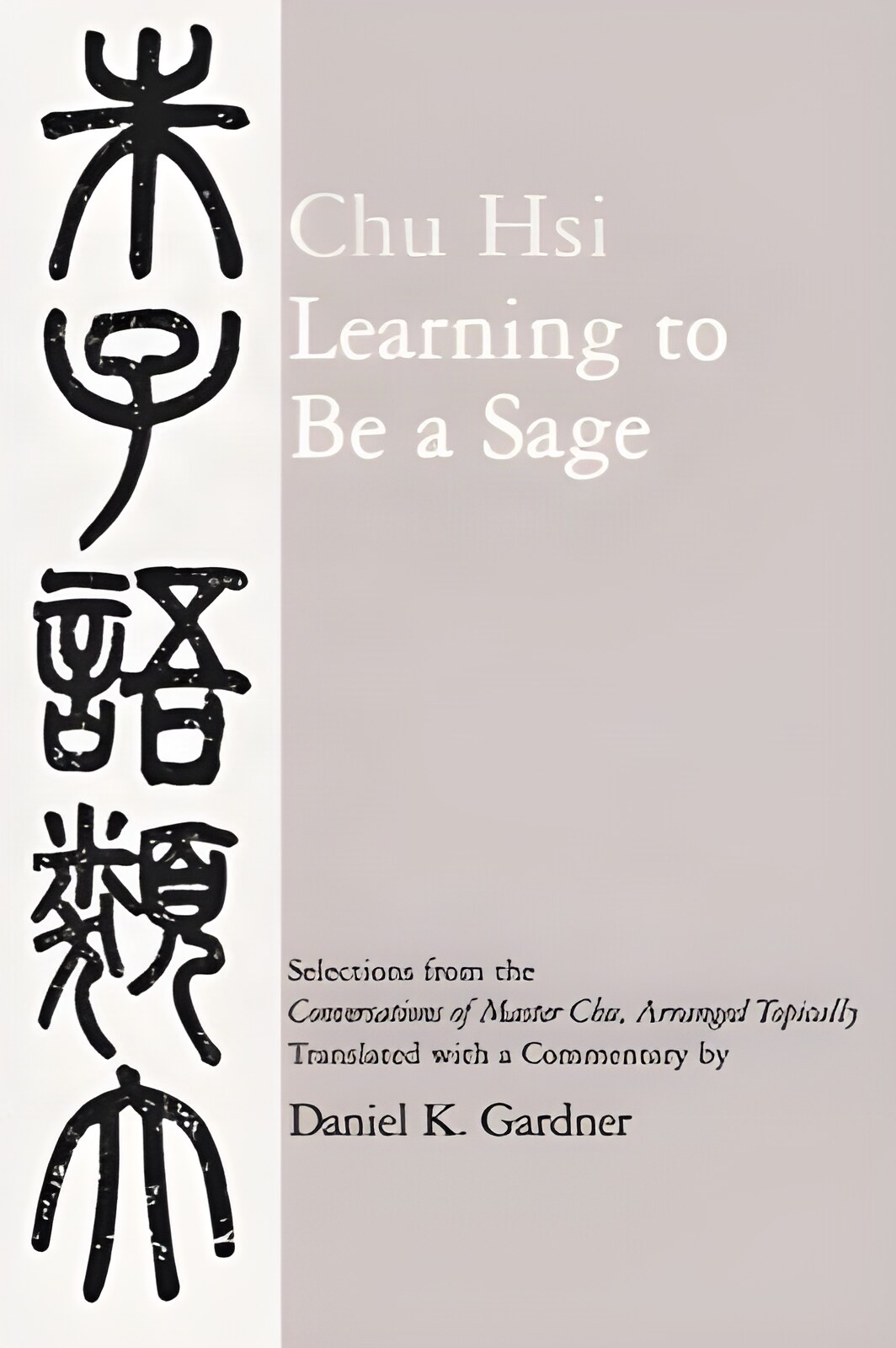
Softcover. Berkeley CA, University of California Press, reprint, 1990, Book: Very Good, Dust Jacket: None, Softcover, 218 pages. Students and teachers of Chinese history and philosophy will not want to miss Daniel Gardner's accessible translation of the teachings of Chu Hsi (1130-1200)-a luminary of the Confucian tradition who dominated Chinese intellectual life for centuries. Homing in on a primary concern of our own time, Gardner focuses on Chu Hsi's passionate interest in education and its importance to individual development. For hundreds of years, every literate person in China was familiar with Chu Hsi's teachings. They informed the curricula of private academies and public schools and became the basis of the state's prestigious civil service examinations. Nor was Chu's influence limited to China. In Korea and Japan as well, his teachings defined the terms of scholarly debate and served as the foundation for state ideology. Clean copy.
Softcover. NY, Columbia University Press, 2nd pr., 1986, Book: Very Good, Dust Jacket: None, Softcover, 353 pages. The only available collection of Ricoeur's lectures on ideology and utopia, this seminal collection discusses the work of Althusser, Marx, Habermas, Geertz, Mannheim, and Weber. Clean copy.
Hardcover. Berkeley CA, University of California Press, 1st, 1985, Book: Very Good, Dust Jacket: Very Good, Hardcover in a bright dust jacket, 423 pages. Volume III only. Edited by Peter C. Hodgson. Translated from the German by R. F. Brown, et al. The third volume of philosopher G.W.F. Hegel's LECTURES ON THE PHILOSOPHY OF RELIGION covers Hegel's philosophical interpretation of Christianity. Taken together, the three volumes establish a critical study, separating the material and publishing it as autonomous units on the basis of a complete re-editing of the sources--a series of actual lectures delivered by Hegel in 1821, 1824, 1827, and 1831. Name on front fly leaf, otherwise clean.
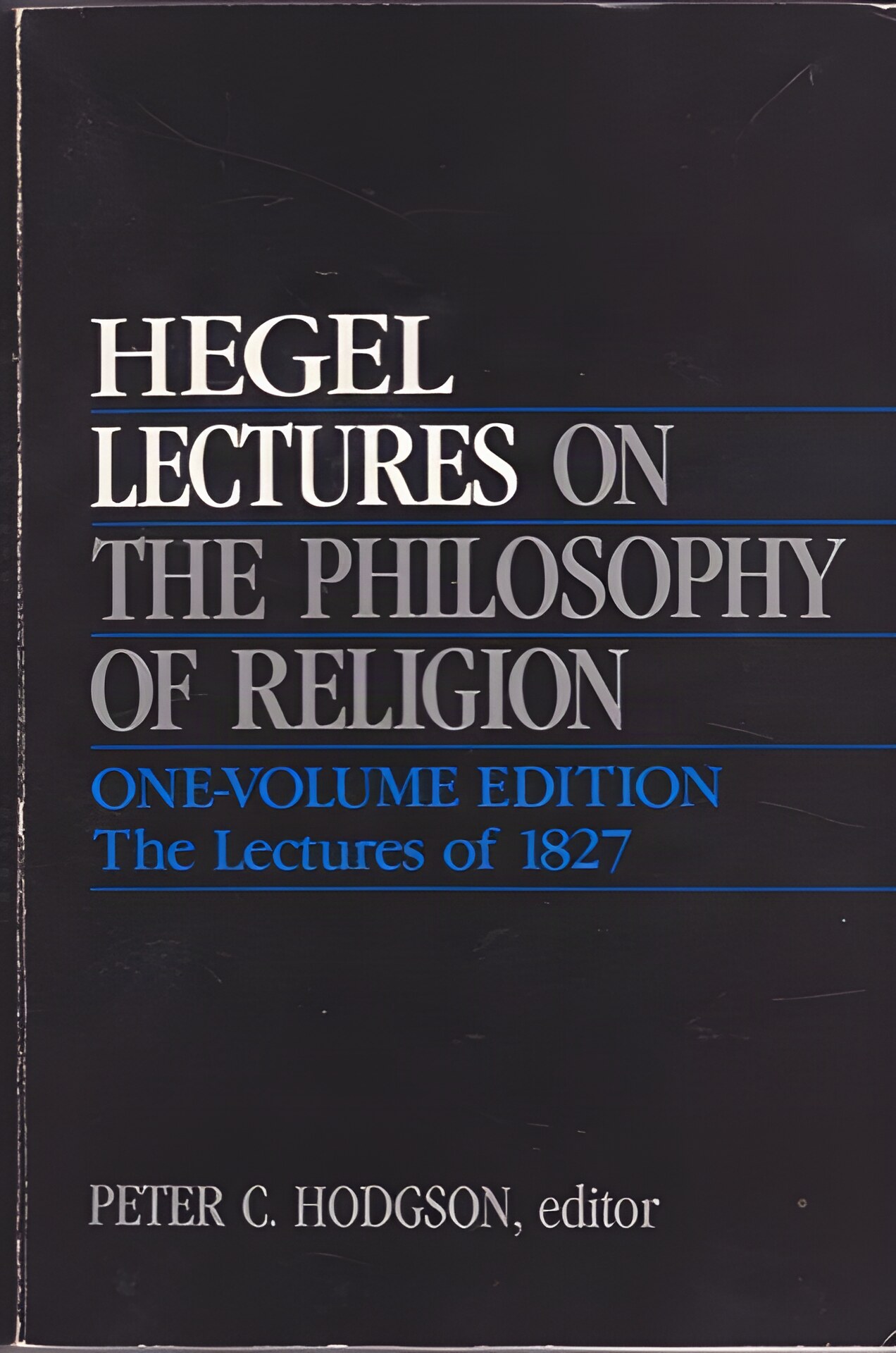
Softcover. Berkeley, University of California Press, reprint, 1988, Book: Very Good, Dust Jacket: None, Sotcover, 552 pages. From the complete three-volume critical edition of Hegel's Lectures on the Philosophy of Religion, this edition extracts the full text and footnotes of the 1827 lectures, making the work available in a convenient form for study. Of the lectures that can be fully reconstructed, those of 1827 are the clearest, the maturest in form, and the most accessible to nonspecialists. In them, readers will find Hegel engaged in lively debates and in important refinements of his treatment of the concept of religion, the Oriental religions and Judaism, Christology, the Trinity, the God-world relationship, and many other topics. Name onfront fly leaf, otherwise clean.
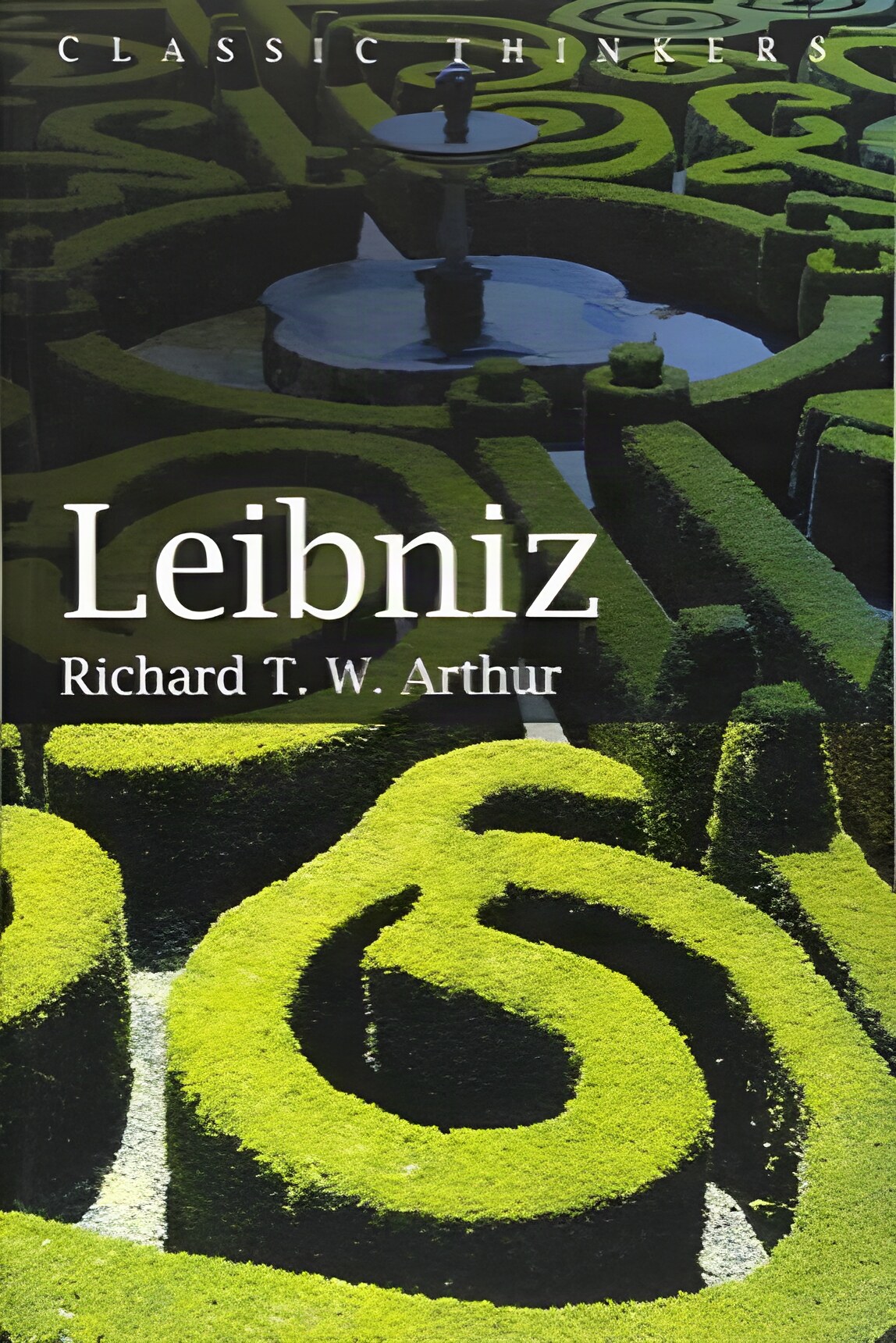
Softcover. Cambridge UK, Polity, reprint, 2014, Book: Very Good, Dust Jacket: None, Softcover, 231 pages. Few philosophers have left a legacy like that of Gottfried Wilhelm Leibniz. He has been credited not only with inventing the differential calculus, but also with anticipating the basic ideas of modern logic, information science, and fractal geometry. He made important contributions to such diverse fields as jurisprudence, geology and etymology, while sketching designs for calculating machines, wind pumps, and submarines. But the common presentation of his philosophy as a kind of unworldly idealism is at odds with all this bustling practical activity. In this book Richard. T. W. Arthur offers a fresh reading of Leibniz's philosophy, clearly situating it in its scientific, political and theological contexts. He argues that Leibniz aimed to provide an improved foundation for the mechanical philosophy based on a new kind of universal language. His contributions to natural philosophy are an integral part of this programme, which his metaphysics, dynamics and organic philosophy were designed to support. Rather than denying that substances really exist in space and time, as the idealist reading proposes, Leibniz sought to provide a deeper understanding of substance and body, and a correct understanding of space as an order of situations and time as an order of successive things. Clean, bright copy.
Hardcover. Princeton, NJ, Princeton University Press, 1st Edition, 1989, Book: Very Good, Dust Jacket: Very Good, 350 pages. Hardcover. Previous owner's name on front flyleaf. Blue cover boards, gilt title on spine. Dust jacket unclipped, some fading and agewear to spine of dj. This study of the metaphysics of G.W. Leibniz gives a clear picture of his philosophical development within the general scheme of seventeenth-century natural pholosophy.
Hardcover. Cambridge, Harvard University Press, First Edition, 1968, Book: Very Good, Dust Jacket: Very Good, 335 pages. Hardcover. Ivory boards with black printed titles to mustard cloth spine. Dust jacket with moderate toning & light wear to edges. Previous owner's signature to front flyleaf. Illustrations in bw throughout. Clean & unmarked copy.
Softcover. Stanford CA, Stanford University Press, 1st transl., 1944, Book: Very Good, Dust Jacket: None, Softcover, 246 pages. Philosophical aesthetics has seen an amazing revival over the past decade, as a radical questioning of the very grounds of Western epistemology has revealed that some antinomies of aesthetic experience-and in particular of the limits of the aesthetical-can be viewed as a general, yet necessarily open model for human understanding. In this revival, no text in the classical corpus of Western philosophy has been more frequently discussed than the complex paragraphs modestly inserted into Kant's Critique of Judgment as sections 23-29: the Analytic of the Sublime. This book is a rigorous explication de texte, a close reading of these sections. First, Lyotard reconstitutes, following the letter of Kant's analysis, the philosophical context of his critical writings and of the European Enlightenment. Second, because the analytic of the sublime reveals the inability of aesthetic experience to bridge the separate realms of theoretical and practical reason, Lyotard can connect his reconstitution of Kant's critical project with today's debates about the very conditions-and limits-of presentation in general.
Hardcover. Bristol, Thoemmes Press, Reprint, 1991, Book: Very Good, Dust Jacket: None, 2 Hardcover Volumes. Volume 1 - 447 pages. Previous owners name at top right corner of front endpaper. Blue cloth covers with gilt title on spine. Clean, tight copy. Volume 2 - 519 pages. Previous owners name at top right corner of front endpaper. Approximately 15 pages of light pencil marking/marginalia. Blue cloth covers with gilt title on spine. Clean, tight copy.
Hardcover. Boston, Houghton Mifflin, reprint, 1882, Book: Very Good, Dust Jacket: None, Hardcovers, two-volume set complete. Matching dark brown cloth covers stamped in black and gilt, top edge gilt. 639; vi, 653 pages; index, bibliography, frontispiece portrait in each volume - one a quite formal portrait of Voltaire in his prime, the other a sketch of him in old age. Covers show light wear, name on title pages. This is the second printing, the first published a year earlier. A comprehensive life of the great Enlightenment writer. PLEASE NOTE: DUE TO WEIGHT, DOMESTIC SHIPPING ONLY.
Hardcover. Evanston IL, Northwestern University Press, 1st, 1970, Book: Very Good, Dust Jacket: None, Hardcover, purple cloth (sunned on spine), 455 pages. Translated with an introduction by Nancy Metzel. Clean, tight copy. No dust jacket.
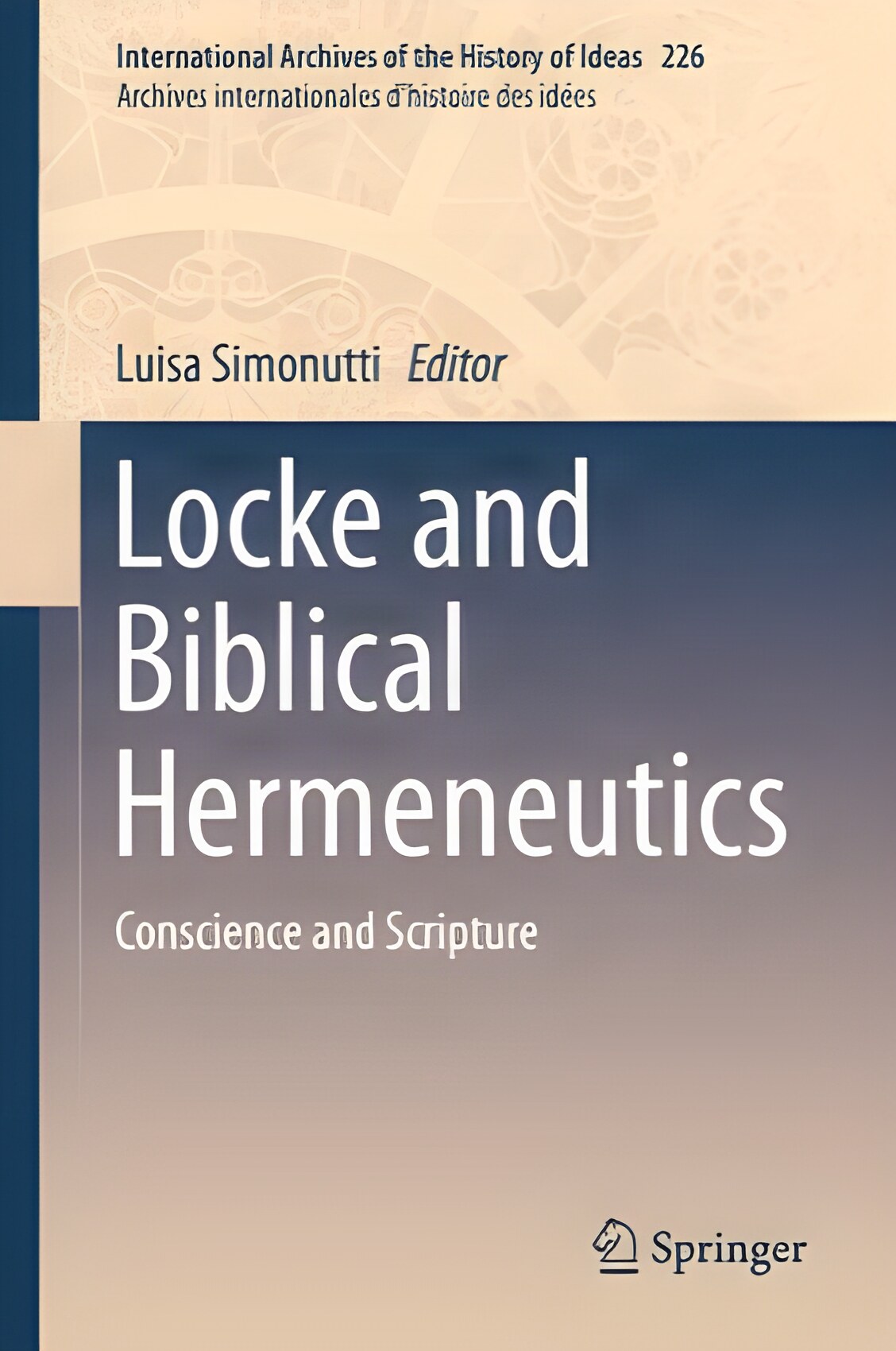
Hardcover. Springer, 1st, 2019, Book: Very Good, Dust Jacket: None, Hardcover in laminated boards, 266 pages. The volume presents illuminating research carried out by international scholars of Locke and the early modern period. The essays address the theoretical and historical contexts of Locke's analytical methodology and come together in a multidisciplinary approach that sets biblical hermeneutics in relation to his philosophical, historical, and political thought, and to the philological and doctrinal culture of his time. The contextualization of Locke's biblical hermeneutics within the contemporary reading of the Bible contributes to the analysis of the figure of Christ and the role of Paul's theology in political and religious thought from the seventeenth century to the Enlightenment. The volume sheds light on how Locke was appreciated by his contemporaries as a biblical interpreter and exegete. It also offers a reconsideration that overarches interpretations confined within specific disciplinary ambits to address Locke's thought in a global historic context. Clean, like new.
Hardcover. Oxford UK, The Voltaire Foundation, 1st, 1991, Book: Very Good, Dust Jacket: None, Hardcover in blue cloth, gilt lettering on spine, 251 pages. As France moved from the seventeenth to the eighteenth century, it found itself in the grip of anglomanie - a fascination with new English ideas in the domains of science and philosophy. Chief among the English thinkers it enthusiastically embraced was John Locke. On his visits to France and in his personal correspondence, Locke interacted with prominent French thinkers, scientists and savants of the day, such as Charles Barbeyrac and Pierre Magnol, and his works engaged in a critical dialogue with those of Descartes. However, Locke has been feted to such an extent that his position in the history of ideas in France is often overlooked. In Locke in France 1688-1734, Ross Hutchison re-examines and re-contextualises the precise nature and extent of Locke's influence in France by exploring how his ideas were incorporated into contemporary French debates and controversies in the transitional period from the seventeenth to the eighteenth century. Hutchison highlights the various channels of dissemination which brought Locke to the attention of the French, including translations of his major works and his personal friendships with French Protestant exiles. Hutchison also presents case studies of interactions in which Lockean ideas played a dominant role in the evolution of French thought, ranging from political theory to the nature of language, theories of education, and the relation between soul and matter. Clean copy, no dust jacket.
Hardcover. Oxford UK, Clarendon Press, 1st, 1991, Book: Very Good, Dust Jacket: Very Good, Hardcover set, complete in two volumes, both with bright dust jackets. Locke on Money presents for the first time the entire body of the philosopher's writings on this important subject (other than Two Treatises of Government). Accurate texts, together with an apparatus listing variant readings and significant manuscript changes, record the evolution of Locke's ideas from the original 1668-74 paper on interest to the three pamphlets on interest and coinage published in the 1690s. The introduction by Patrick Hyde Kelly establishes the wider context of Locke's writings in terms of contemporary debates on these subjects, the economic conditions of the time, and the circumstances of writing and publication. It shows, notably, that Locke's supposed responsibility for the 1696 recoinage is a myth. The account of what Locke derived from Mercantilist writings and of how he reformulated these in accordance with his philosophy illuminates his contribution to the evolution of economics, and will aid reappraisal of Two Treatises. The picture that emerges confirms Locke's status as major economic thinker, contrary to the prevalent view of recent decades. There are two volumes in the edition. The first contains the introductory matter, and the texts of the Early Writings on Interest, 1688-74, and Some Considerations. The second comprises Short Observations, Further Considerations, and the Appendices, Bibliography, and Index. 664 total pages. Name on front fly leaf in Vol. 1, otherwise clean.
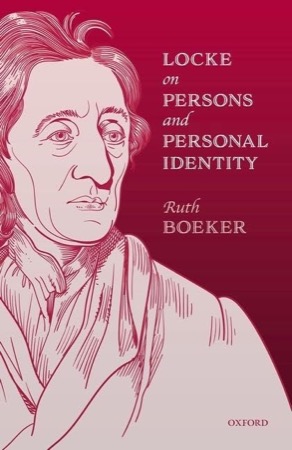
Hardcover. UK, Oxford University Press, 1st, 2021, Book: Very Good, Dust Jacket: Very Good, Hardcover in a bright dust jacket, 303 pages. Ruth Boeker offers a new perspective on Locke's account of persons and personal identity by considering it within the context of his broader philosophical project and the philosophical debates of his day. Her interpretation emphasizes the importance of the moral and religious dimensions of his view. By taking seriously Locke's general approach to questions of identity, Boeker shows that we should consider his account of personhood separately from his account of personal identity over time. On this basis, she argues that Locke endorses a moral account of personhood, according to which persons are subjects of accountability, and that his particular thinking about moral accountability explains why he regards sameness of consciousness as necessary for personal identity over time. In contrast to some neo-Lockean views about personal identity, Boeker argues that Locke's account of personal identity is not psychological per se, but rather his underlying moral, religious, metaphysical, and epistemic background beliefs are relevant for understanding why he argues for a consciousness-based account of personal identity. Taking his underlying background beliefs into consideration not only sheds light on why many of his early critics do not adopt Locke's view, but also shows why his view cannot be as easily dismissed as some of his critics assume. Clean copy.
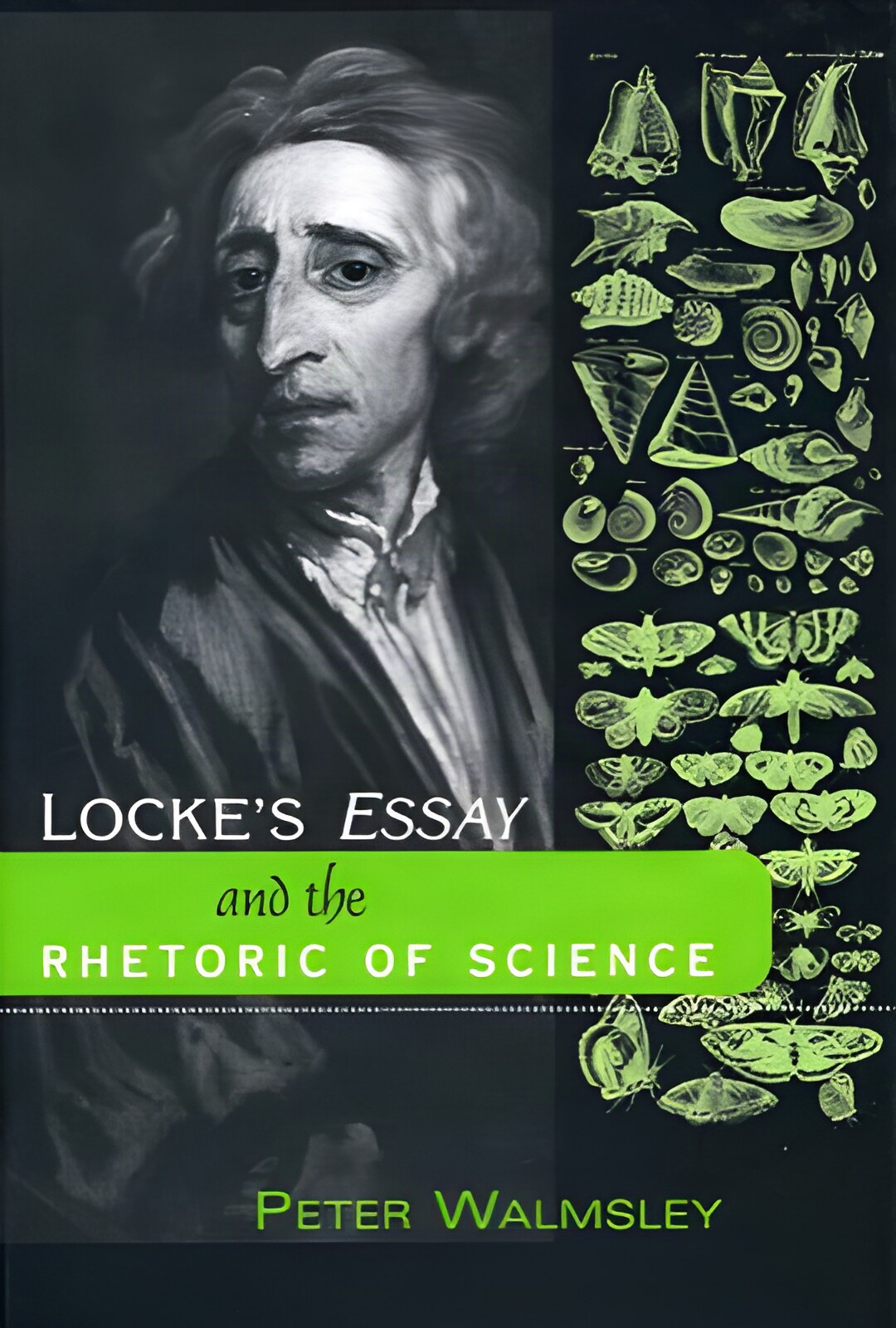
Hardcover. London, Bucknell University Press, 1st, 2003, Book: Very Good, Dust Jacket: Very Good, Hardcover in a bright dust jacket, 199 pages. This book shows how, in his enormously influential Essay Concerning Human Understanding (1689), John Locke embraces the new rhetoric of seventeenth-century natural philosophy, adopting the strategies of his scientific contemporaries to create a highly original natural history of the human mind. With the help of Locke's notebooks, letters, and journals, Peter Walmsley reconstructs Locke's scientific career, including his early work with the chemist Robert Boyle and the physician Thomas Sydenham. He demonstrates too how the Essay embodies in its form and language many of the preoccupations of the science of its day, from the emerging discourses of experimentation and empirical taxonomy to developments in embryology and the history of trades. Widely research and lucidly and engagingly written, Locke's Essay and the Rhetoric of Science constitutes an important new reading of Locke, on that shows both his brilliance as a writer and his originality in turning to science to effect a radical re-invention of the study of the mind. Pencil marking to front fly leaf, otherwise clean.
Hardcover. London, England, Cambirdge at the University Press, 1st Edition, 1917, Book: Good, Dust Jacket: None, 338 pages. Hardcover. Green cloth cover boards, gilt title on spine and front cover board, gilt faded on cover, some agewear. Some light pencil within. Previous owner's name on front flyleaf. Some tanning to pages and edges.
Hardcover. Cambridge UK, Cambridge University Press, 1st, 1953, Book: Very Good, Dust Jacket: Good, Hardcover in a worn dust jacket with a chunk gone from rear panel, 309 pages. This book gives a complete account of all that Locke saw, did and heard during his four years in France. The entries vary from laconic jottings to detailed accounts - full of colour and wit - of life in Paris and the provinces. Locke's variety of interests presents a vivid and thorough account of France at that time. He observed and recorded the absolutism of Louis XIV and the poverty of the peasants, the growing persecution of the Protestants and the external manifestations of Catholicism, recent developments in science and technology - even agricultural methods and the system of taxes. So that this is a book for the general reader as well as for the student of Locke, the social historian and the historian of science. Three b&w plates including a map of his travels. Name on front fly leaf, rubber withdrawn stamp on copyright page, otherwise clean.
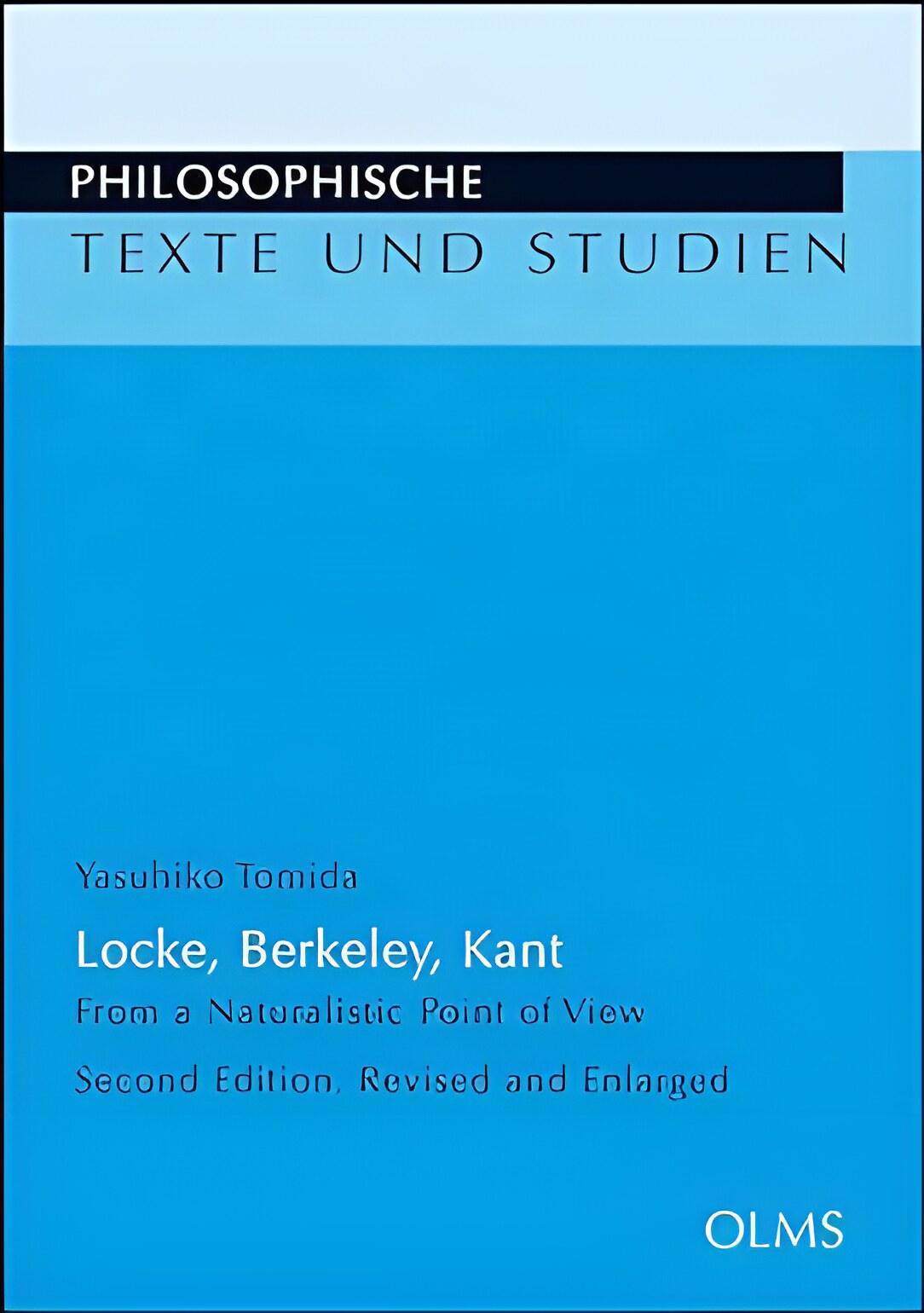
Softcover. Zurich, Georg Olms, 1st, 2012, Book: Very Good, Dust Jacket: None, Softcover, 220 pages. INSCRIBED BY AUTHOR on the front fly leaf. This volume consists of Yasuhiko Tomida's notable essays on Locke, Berkeley, and Kant, as well as a thought-provoking article written in collaboration with an experimental physicist. Tomida asserts that the logical space of the theory of ideas is originally "naturalistic" in Quine's sense of the term and that Berkeley and Kant 'distort' it in their respective ways, thus offering a wholly new viewpoint concerning the historiography of the theory of ideas.


 "King and the Corpse, The: Tales of the Soul's Conquest of Evilby: Zimmer, Heinrich")
 "La Querelle d'Utrecht. Textes ?©tablis, traduits et annot?©s par Theo Verbeek. Pr?©face de Jean-Luc Marionby: Descartes, Ren?© und Martin Schoock")
 "Language, Logic, and Experience: The Case For Anti-Realismby: Luntley, Michael")


 "Lectures on Ideology and Utopia by: Paul Ricoeur")

 "Leibniz's Metaphysics: A Historical and Comparative Studyby: Wilson, Catherine")


 "Life of John Locke - With extracts from his Correspondence, Journals, and Common-place books - In Two Volumes, Theby: King, Peter")



 "Locke on Money. Edited together with Ancillary Manuscripts, an Introduction, Critical Apparatus, and Notes by Patrick Hyde Kelly.(2 Volumes)by: Locke, John and Kelly,")
 "Locke's Theory of Knowledge and its Historical Relationsby: Gibson, James")