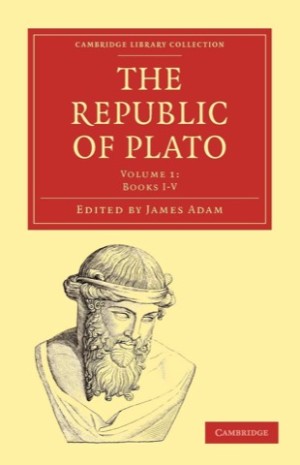
Softcover. Cambridge University Press, reprint, 2007, Book: Very Good, Dust Jacket: None, Two softcover volumes: Vol. 1: Books 1-V, 364 pages. Vol. 2: Books VI-X and Indexes, 531 pages. Previous owner's name, otherwise clean. James Adam (1860-1907) was a Scottish classics scholar who taught at Emmanuel College, Cambridge. A strong defender of the importance of Greek philosophy in a well-rounded education, Adam published a number of Plato's works including Protagoras and Crito. This two-volume critical edition of the Republic (1902) was another major contribution to the field. Though his preface claims 'an editor cannot pretend to have exhausted its significance by means of a commentary,' Adam's depth of knowledge and erudite analysis of the Greek text ensured that his edition remained the standard reference for decades to follow, and it remains a thought-provoking evaluation of one of the great works of Western thought.
Hardcover. NY, Open Court/ W.W. Norton, 1st, 1930, Book: Very Good, Dust Jacket: None, Hardcover, dark green cloth, gilt lettering on spine, 325 pages. Includes chapters on Bertrand Russell and Alfred North Whitehead. "The Revolt Against Dualism, first published in 1930, belongs to a tradition in philosophical theorizing that Arthur O. Lovejoy called "descriptive epistemology." Lovejoy's principal aim in this book is to clarify the distinction between the quite separate phenomena of the knower and the known, something regularly obvious to common sense, if not always to intellectual understanding. This work is as much an argument about the ineluctable differences between subject and object and between mentality and reality, as it is a subtle polemic against those who would stray far from acknowledging these differences. With a resolve that lasts over three hundred pages, Lovejoy offers candid evaluations of a generation's worth of philosophical discussions that address the problem of epistemological dualism. Name on front fly leaf, pages tanning, otherwise very good, clean copy.
Hardcover. Princeton NJ, Princeton University Press, 1st, 1986, Book: Very Good, Dust Jacket: Very Good, Hardcover in a bright dust jacket, 234 pages. When Leviathan first appeared in 1651, it was recognized as a work of extraordinary scope, uniting metaphysical, theological, and political arguments into a single distinctive outlook. Contending that modern readers do the book an injustice by neglecting its metaphysical and theological themes, David Johnston supports his claim with a detailed examination of the text as a whole and with a reinterpretation of the genesis of the work. Clean copy.
Softcover. Carbondale IL, Southern Illinois University Press, 1st, 1986, Book: Very Good, Dust Jacket: None, Softcover, 408 pages. Makes accessible to modern readers the 17th-century rhetorics of Thomas Hob-bes (1588-1677) and Bernard Lamy (1640-1715) Hobbes' A Briefe of the Art of Rhet-orique, the first English translation of Aristotle's rhetoric, reflects Hobbes' sense of rhetoric as a central instrument of self-defense in an increasingly frac-tious Commonwealth. In its approach to rhetoric, which Hobbes defines as "that Faculty by which wee understand what will serve our turne, concerning any subject, to winne beliefe in the hearer," the Briefe looks forward to Hobbes' great political works De Cive and Leviathan. Published anonymously in France as De l'art de parler, Lamy's rhetoric was translated immediately into English as The Art of Speaking. Lamy's long associa-tion with the Port Royalists made his works especially attractive to English readers because Port Royalists were en-gaged in a vicious quarrel with the Jesuits during the last half of the 17th century. Name at top of front cover and front fly leaf.
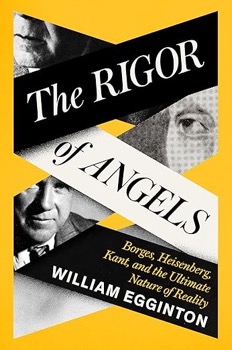
Hardcover. NY, Pantheon, 6th pr., 2023, Book: Very Good, Dust Jacket: Very Good, Hardcover in a bright dust jacket, 338 pages. Argentine poet Jorge Luis Borges was madly in love when his life was shattered by painful heartbreak. But the breakdown that followed illuminated an incontrovertible truth-that love is necessarily imbued with loss, that the one doesn't exist without the other. German physicist Werner Heisenberg was fighting with the scientific establishment on the meaning of the quantum realm's absurdity when he had his own epiphany-that there is no such thing as a complete, perfect description of reality. Prussian philosopher Immanuel Kant pushed the assumptions of human reason to their mind-bending conclusions, but emerged with an idea that crowned a towering philosophical system-that the human mind has fundamental limits, and those limits undergird both our greatest achievements as well as our missteps. Through fiction, science, and philosophy, the work of these three thinkers coalesced around the powerful, haunting fact that there is an irreconcilable difference between reality "out there" and reality as we experience it. Clean copy.
Hardcover. Ithaca NY, Cornell University Press, 2nd pr., 2005, Book: Very Good, Dust Jacket: Very Good, Hardcover in a bright dust jacket, 261 pages, previous owner's signature on front fly leaf. "Evil is the most serious of our moral problems. All over the world cruelty, greed, prejudice, and fanaticism ruin the lives of countless victims. Outrage provokes outrage. Millions nurture seething hatred of real or imagined enemies, revealing savage and destructive tendencies in human nature. Understanding this challenges our optimistic illusions about the effectiveness of reason and morality in bettering human lives. But abandoning these illusions is vitally important because they are obstacles to countering the threat of evil. The aim of this book is to explain why people act in these ways and what can be done about it." The first part of this book is a detailed discussion of six horrible cases of evil: the Albigensian Crusade of about 1210; Robespierre's Terror of 1793?94; Franz Stangl, who commanded a Nazi death camp in 1943?44; the 1969 murders committed by Charles Manson and his "family"; the "dirty war" conducted by the Argentinean military dictatorship of the late 1970s; and the activities of a psychopath named John Allen, who recorded reminiscences in 1975. John Kekes includes these examples not out of sensationalism, but rather to underline the need to hold vividly in our minds just what evil is. The second part shows why, in Kekes's view, explanations of evil inspired by Christianity and the Enlightenment fail to account for these cases and then provides an original explanation of evil in general and of these instances of it in particular.
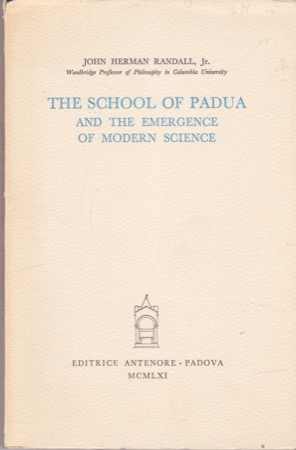
Softcover. Padova Italy, Editrice Antenore, 1st, 1961, Book: Very Good, Dust Jacket: None, Softcover, cream color wrappers with black and blue type, 141 pages with index. Foreword by author. English text. Name on front fly leaf, light pencil marking to 10 pages.
Softcover. UK, Clarendon Press, reprint, 1992, Book: Very Good, Dust Jacket: None, Softcover, 291 pages. It is widely supposed that Hume (1711-1776) invented and espoused the `regularity' theory of causation, holding that causal relations are nothing but a matter of one type of thing being regularly followed by another. It is also widely supposed that he was quite right about this, and that it was one of his greatest contributions to philosophy. Galen Strawson argues in this book that the regularity theory of causation is indefensible, and that Hume never adopted it in any case. Name on front fly leaf, otherwise clean.
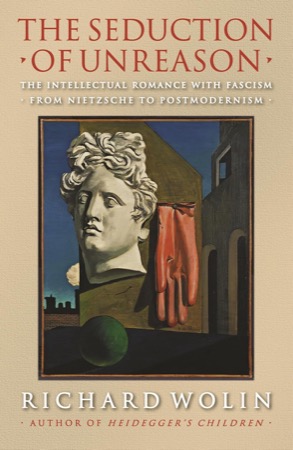
Hardcover. Princeton NJ, Princeton University Press, 1st, 2004, Book: Very Good, Dust Jacket: Very Good, Hardcover in a bright dust jacket, 375 pages. In probing chapters on C. G. Jung, Hans-Georg Gadamer, Georges Bataille, and Maurice Blanchot, Wolin discovers an unsettling commonality: during the 1930s, these thinkers leaned to the right and were tainted by a proverbial "fascination with fascism." Frustrated by democracy's shortcomings, they were seduced by fascism's grandiose promises of political regeneration. The dictatorships in Italy and Germany promised redemption from the uncertainties of political liberalism. But, from the beginning, there could be no doubting their brutal methods of racism, violence, and imperial conquest. Postmodernism's origins among the profascist literati of the 1930s reveal a dark political patrimony. The unspoken affinities between Counter-Enlightenment and postmodernism constitute the guiding thread of Wolin's suggestive narrative. In their mutual hostility toward reason and democracy, postmodernists and the advocates of Counter-Enlightenment betray a telltale strategic alliance--they cohabit the fraught terrain where far left and far right intersect. Clean copy.
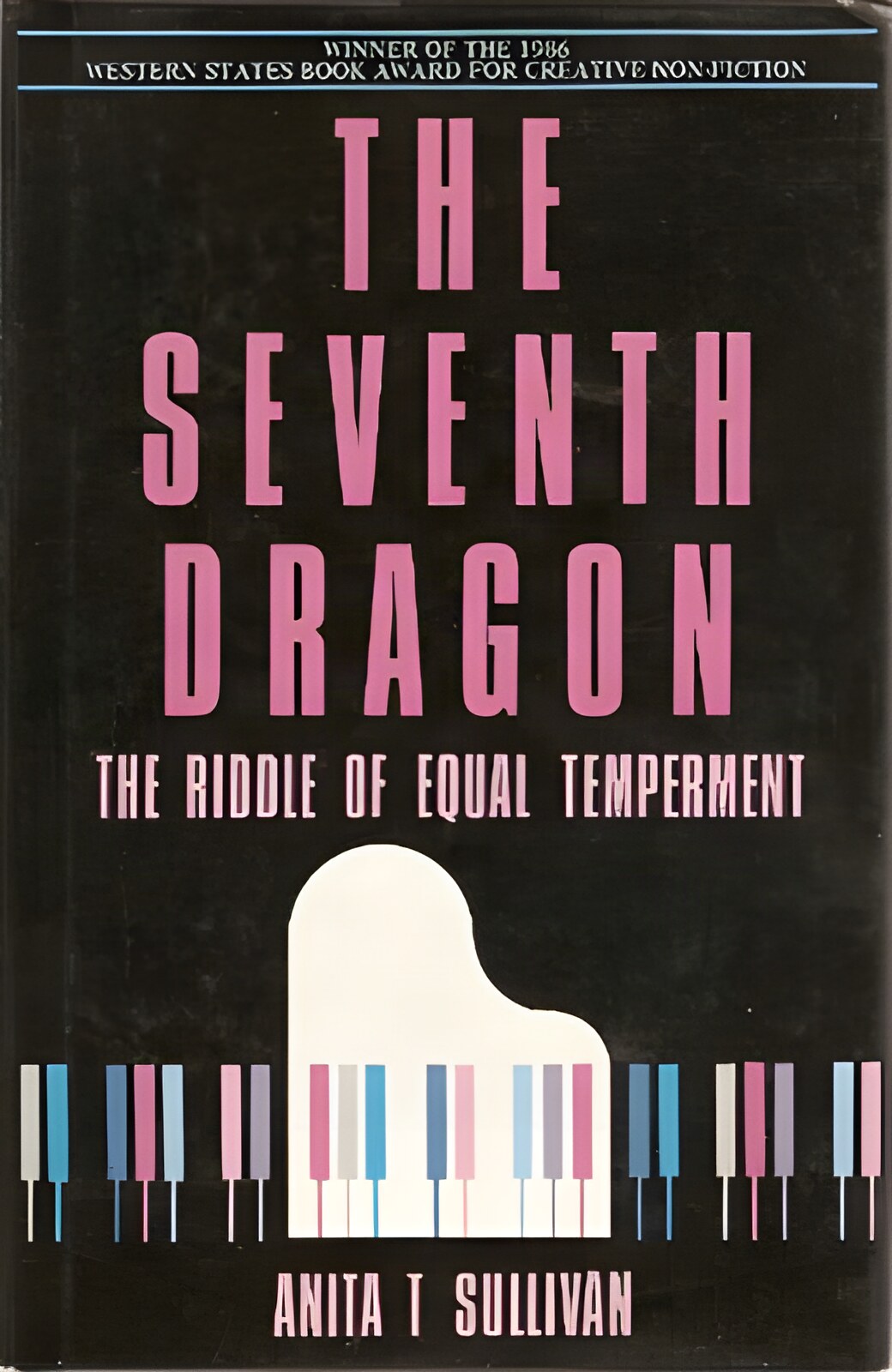
Hardcover. Lake Oswego OR, Metamorphous Press, 1st, 1985, Book: Very Good, Dust Jacket: Very Good, Hardcover in a bright dust jacket, b&w illustrations, 104 pages. A veteran piano tuner presents a non-technical, literary view of the quixotic tuning system used on keyboard instruments for hundreds of years. Focuses on the "comma", which is the pitch difference by which (9/8)^12 > (2/1), discusses its history, its importance in piano tuning, and philosophically what it all means. Winner of the Western States Book Award for creative nonfiction in 1986.
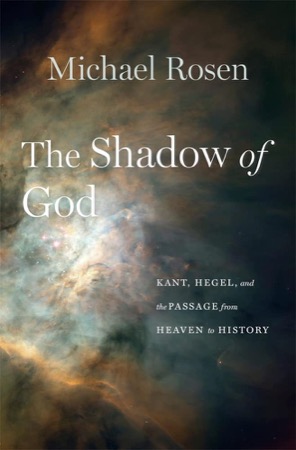
Hardcover. Cambridge MA, Belknap Press: An Imprint of Harvard University Press, 1st, 2022, Book: Very Good, Dust Jacket: Very Good, Hardcover in a bright dust jacket, 406 pages. A bold and beautifully written exploration of the "afterlife" of God, showing how apparently secular habits of mind in fact retain the structure of religious thought. Once in the West, our lives were bounded by religion. Then we were guided out of the darkness of faith, we are often told, by the cold light of science and reason. To be modern was to reject the religious for the secular and rational. In a bold retelling of philosophical history, Michael Rosen explains the limits of this story, showing that many modern and apparently secular ways of seeing the world were in fact profoundly shaped by religion. Clean copy.
Hardcover. Minneapolis, University of Minnesota Press, 1st, 1983, Book: Very Good, Dust Jacket: None, Hardcover, maroon cloth with gilt lettering, 269 pages. Name on front fly leaf, otherwise a clean copy.
Hardcover. Syracuse NY, Syracuse University Press, 1st, 1950, Book: Very Good, Dust Jacket: Good, Hardcover in a lightly worn dust jacket, 220 pages. Bookplate on inside front cover. Otherwise clean.
Hardcover. London, Thomas Nelson & Sons, 1st, 1961, Book: Very Good, Dust Jacket: Good, Hardcover in a lightly worn dust jacket, 344 pages. Edited by Raymond Klibansky and Elizabeth Anscombe.
Hardcover. Chicago, University Of Chicago Press, reprint, 1990, Book: Very Good, Dust Jacket: None, Softcover, 334 pages. The Spirit of Modern Republicanism sets forth a radical reinterpretation of the foundations on which the American regime was constructed. Thomas L. Pangle argues that the Founders had a dramatically new vision of civic virtue, religious faith, and intellectual life, rooted in an unprecedented commitment to private and economic liberties. It is in the thought of John Locke that Pangle finds the fullest elaboration of the principles supporting the Founders' moral vision. Clean copy.
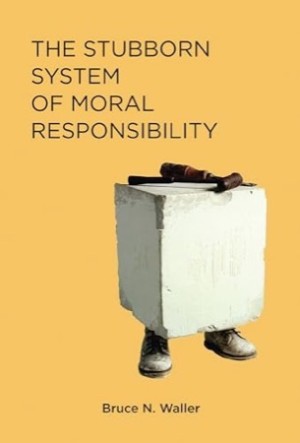
Hardcover. Cambridge MA, The MIT Press, 1st, 2014, Book: Very Good, Dust Jacket: Very Good, Hardcover in a bright dust jacket, 294 pages. An examination of the powerful social and psychological factors that hold the belief in moral responsibility firmly in place. The philosophical commitment to moral responsibility seems unshakable. But, argues Bruce Waller, the philosophical belief in moral responsibility is much stronger than the philosophical arguments in favor of it. Philosophers have tried to make sense of moral responsibility for centuries, with mixed results. Most contemporary philosophers insist that even conclusive proof of determinism would not and should not result in doubts about moral responsibility. Many embrace compatibilist views, and propose an amazing variety of competing compatibilist arguments for saving moral responsibility. In this provocative book, Waller examines the stubborn philosophical belief in moral responsibility, surveying the philosophical arguments for it but focusing on the system that supports these arguments: powerful social and psychological factors that hold the belief in moral responsibility firmly in place. Clean copy.
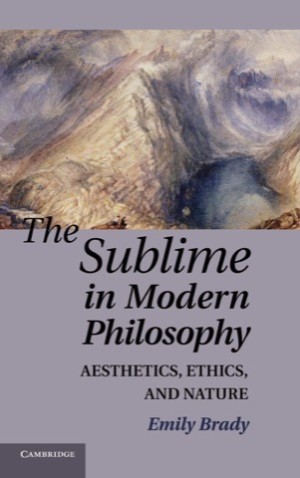
Hardcover. NY, Cambridge University Press, 1st, 2013, Book: Very Good, Dust Jacket: Very Good, Hardcover in a bright dust jacket, 227 pages. Emily Brady takes a fresh look at the sublime and shows why it endures as a meaningful concept in contemporary philosophy. In a reassessment of historical approaches, the first part of the book identifies the scope and value of the sublime in eighteenth-century philosophy (with a focus on Kant), nineteenth-century philosophy and Romanticism, and early wilderness aesthetics. The second part examines the sublime's contemporary significance through its relationship to the arts; its position with respect to other aesthetic categories involving mixed or negative emotions, such as tragedy; and its place in environmental aesthetics and ethics. Far from being an outmoded concept, Brady argues that the sublime is a distinctive aesthetic category which reveals an important, if sometimes challenging, aesthetic-moral relationship with the natural world. Clean, bright copy.
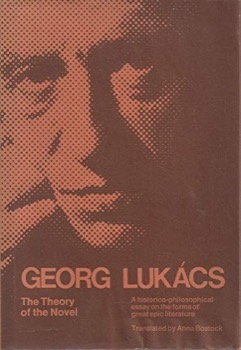
Hardcover. Cambridge MA, M.I.T. Press, 1st thus, 1971, Book: Very Good, Dust Jacket: Very Good, Hardcover in a bright, unclipped dust jacket, 160 pages. In an essay of prophetic vision, Lukacs defines a critical realism: 'anyone who wants to become more intimately acquainted with the prehistory of the important ideologies of the [nineteen-] twenties and thirties will be helped by a critical reading of this book.'
Hardcover. Bristol UK, Thoemmes Press, reprint, 1995, Book: Very Good, Dust Jacket: None, Three hardcover volumes, uniform blue cloth covers with gilt lettering on spines. 638, 662 and 700 pages. Cudworth's magisterial work is a sweeping philosophical and religious treatise, tackling some of the biggest questions in the history of thought. He examines the nature of the universe, the concept of God, and the foundations of morality, weaving together insights from ancient philosophy, Christian theology, and contemporary science. This work is a monument to the intellectual ambition and erudition of one of Britain's greatest philosophers. A reprint of the 1845 edition published in London. Pencil marking to about 50 pages combined in volumes 1 and 3, name on front fly leaf of Volume 3. DUE TO WEIGHT, DOMESTIC SHIPPING ONLY.
Hardcover. London, Stuart & Watkins, 2nd pr., 1970, Book: Very Good, Dust Jacket: Good, Hardcover in a lightly worn dust jacket with tape repairs to rear panel, black cloth stamped with gilt. 221 pages. Originally published in 1896, this printing was limited to 500 copies. Clean. Arthur Edward Waite (2 October 1857 - 19 May 1942), commonly known as A. E. Waite, was an American-born British poet and scholarly mystic who wrote extensively on occult and esoteric matters, and was the co-creator of the Rider-Waite Tarot deck.
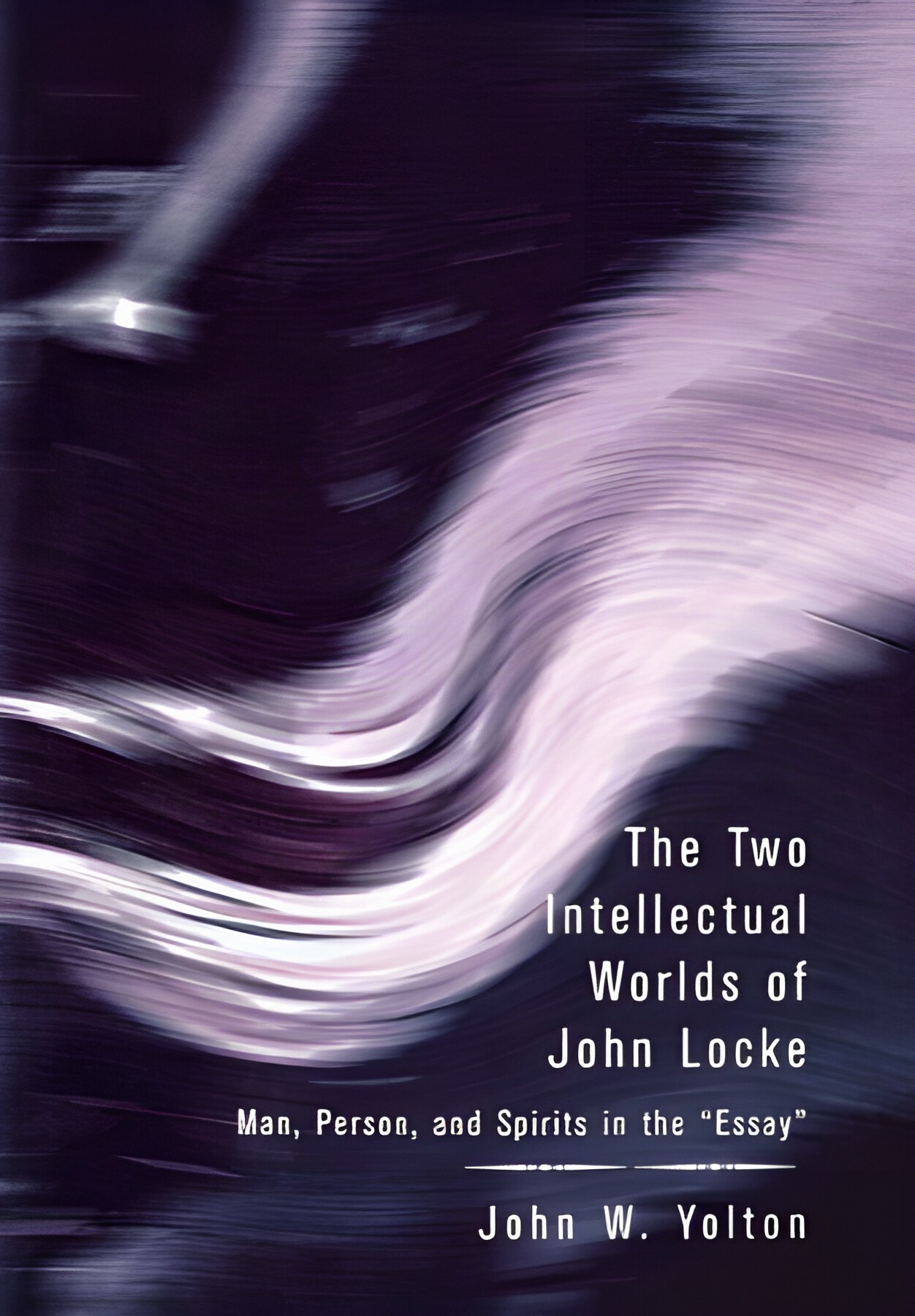
Hardcover. Ithaca NY, Cornell University Press, 1st, 2004, Book: Very Good, Dust Jacket: Very Good, Hardcover in a bright dust jacket, 180 pages. Using his intimate knowledge of John Locke's writings, John W. Yolton shows that Locke comprehends "human understanding" as a subset of a larger understanding of other intelligent Beings-angels, spirits, and an omniscient God. Locke's books on Christianity (The Reasonableness of Christianity and Paraphrases of St. Paul's Epistles) have received extensive analysis and commentary, but little attention has been given to the place of his Essay Concerning Human Understanding in his religious and theological beliefs. Yolton shows that Locke's account of what it is to be human in that work is profoundly religious. Yolton's book opens with an attempt to sort out several important terms basic to Locke's account of identity: man, self, person, and soul. A number of rarely examined components of Locke's thought emerge: the nature of man, the nature of a human being, and the place of man in the universe among the other creatures. Some will be surprised to learn that the domain of God, angels, and spirits is a part of Locke's universe, where it is considered the hoped-for destination of the just. Name, date on front fly leaf, otherwise clean.
Hardcover. UK, Cambridge University Press, 1st, 1999, Book: Very Good, Dust Jacket: Very Good, Hardcover in a bright dust jacket, 346 pages. Dr. Notomi presents a new interpretation of one of Plato's most important dialogues, the Sophist, addressing both historical context and philosophical content. He shows how important the issues concerning the sophist (professional teacher and rhetorician in ancient Greece) are to the possibility of philosophy. His new approach to the whole dialogue reveals that Plato struggles with difficult philosophical issues in a single line of inquiry; and that Plato shows, in defining the sophist, his conception of the authentic philosopher. Name, date on front fly leaf, otherwise clean.





![The Rhetorics of Thomas Hobbes and Bernard Lamyby: Harwood, John T. [Editor]](https://www.browsingisarousing.com/shop/images/The-Rhetorics-of-Thomas-Hobbes-and-Bernard-Lamy_by_Harwood-John-T.-Editor386560-440172.jpg "The Rhetorics of Thomas Hobbes and Bernard Lamyby: Harwood, John T. [Editor]")



 "The Skeptical Realism of David Humeby: Wright, John P.")

 "The Sophist and the Statesmanby: Plato (A.E. Taylor/ transl.)")

 "The True Intellectual System Of The Universe: Wherein All The Reason And Philosophy Of Atheism Is Confuted, And Its Impossibility Demonstrated: With A Treatise Concerning Eternal And Immutable Morality - Three Volumes")

 "The Use of Sacrificial Ideas in Greek Christian Writers from the FNew Testament to John Chrysostom: Patristic Monograph Series by: Young, Frances")