Hardcover. Philadelphia, Temple University Press, 1st, Book: Very Good, Dust Jacket: Very Good, Hardcover in a bright dust jacket, 211 pages. By treating the history of moral concepts as geological strata, Rosenthal discovered the archaeological method long before it became fashionable. The appeal of this book - in addition to its wryly delightful style - is to those for whom Hobbes and Spinoza's thoughts are themselves part of a continuing and unavoidable meditation on unavoidable questions.This is philosophy as an essentially moral, frustratingly human enterprise. Name on front fly leaf, otherwise clean.
Hardcover. Lewisburg ME, Bucknell University Press, 1st, 1974, Book: Very Good, Dust Jacket: Very Good, Hardcover in a bright dust jacket, 184 pages. Translated with an Introduction and Notes by Victor Nuovo. Dust jacket chipped with light stain, book is very good, clean copy.
Hardcover. Bucknell University Press, 1st, 1974, Book: Very Good, Dust Jacket: Very Good, Hardcover in a bright dust jacket, 184 pages. Translated with an Introduction and Notes by Victor Nuovo. Clean copy.
Hardcover. Oxford UK, Clarendon Press, Revised Ed., 1992, Book: Very Good, Dust Jacket: Very Good, Hardcover in a bright dust jacket, 592 pages, b&w illustrations. Lady Anne Conway was a remarkable woman who became a philosopher in her own right at a time when most women were denied even basic education. The Conway Letters is the record of her friendship with the Cambridge Platonist, Henry More, which began when he acted as her unofficial tutor in philosophy and lasted until her death. The letters cover a wide range of topics - personal, philosophical, religious, and social. They give a detailed picture of the More-Conway circle, including such figures as Jeremy Taylor, Ralph Cudworth, Robert Boyle, and Francis Mercury van Helmont, as well as Lady Conway's Quaker associates, George Keith and William Penn. The letters are thus a valuable source for mid-seventeenth-century history, and especially for the intellectual history of the period. Revised from the 1930 printing with new material and introduction by Sarah Hutton. Name on front fly leaf, small chip/tear to top spine of the dust jacket.
Hardcover. Durham NC, Duke University Press, 1st, 1994, Book: Very Good, Dust Jacket: Very Good, Hardcover in a bright dust jacket, 382 pages, b&w frontis. Remainder line to fore-edge of the text block.
Hardcover. Durham NC, Duke University Press, 1st, Book: Very Good, Dust Jacket: Very Good, Hardcover in a bright dust jacket, 348 pages. Perhaps best known as a political philosopher, Richard Price (1723-1791) made important contributions to British and American intellectual life in a variety of fields--philosophy, theology, mathematics, demography, probability and public finance, and private and social insurance. The first in a three-volume series edited by W. Bernard Peach and D. O. Thomas, The Correspondence of Richard Price makes available the extant copies of the correspondence to and from Price, including many published for the first time. These letters reveal Price's absorption with financial problems, his influence on the policies adopted by the British government, his defense of Newtonianism against Lord Monboddo, as well as important insights into the political and cultural life in Britain and America. Correspondents include John Adams, William Adams, J. D. van der Capellen, Benjamin Franklin, Thomas Jefferson, Henry Laurens, Lord Monboddo, William Pitt, Joseph Priestly, the Earl of Shelburne, Ezra Stiles, P. W. Wargentin, and Joseph Willard. Clean copy.
Hardcover. Durham NC, Duke University Press, 1st, 1991, Book: Very Good, Dust Jacket: Very Good, Hardcover in a bright dust jacket, 348 pages. Perhaps best known as a political philosopher, Richard Price (1723-1791) made important contributions to British and American intellectual life in a variety of fields--philosophy, theology, mathematics, demography, probability and public finance, and private and social insurance. The second in a three-volume series edited by W. Bernard Peach and D. O. Thomas, The Correspondence of Richard Price makes available the extant copies of the correspondence to and from Price, including many published for the first time. These letters reveal Price's absorption with financial problems, his influence on the policies adopted by the British government, his defense of Newtonianism against Lord Monboddo, as well as important insights into the political and cultural life in Britain and America. Correspondents include John Adams, William Adams, J. D. van der Capellen, Benjamin Franklin, Thomas Jefferson, Henry Laurens, Lord Monboddo, William Pitt, Joseph Priestly, the Earl of Shelburne, Ezra Stiles, P. W. Wargentin, and Joseph Willard. Clean copy.
Hardcover. UK, Clarendon Press/Oxford, 5th pr., 1971, Book: Very Good, Dust Jacket: None, Hardcover, dark blue cloth with gilt lettering on spine, 783 pages. Revised with corrections. An important and monumental work of relevance both to philosophy and mathematics.
Hardcover. Bristol UK, Thoemmes , 1st, 2003, Hardcover set, two volumes complete, black cloth with red and gilt titles on spine, 1116 pages, ribbon bookmarks. No slipcase. In this Dictionary, more than four hundred biographical entries encompass all the Dutch thinkers who exercised a major influence on the intellectual life of the Golden Age, as well as those who developed their ideas and beliefs through interaction with other scholars. Additional entries describe foreign philosophers who lived in the country temporarily and whose work was influenced by their stay. These include John Locke, Rene Descartes and Pierre Bayle. Ther is some pencil marking to the endpapers, mostly in Vol. 1. Otherwise clean, tight copies. PLEASE NOTE: DUE TO WEIGHT, DOMESTIC SHIPPING ONLY.
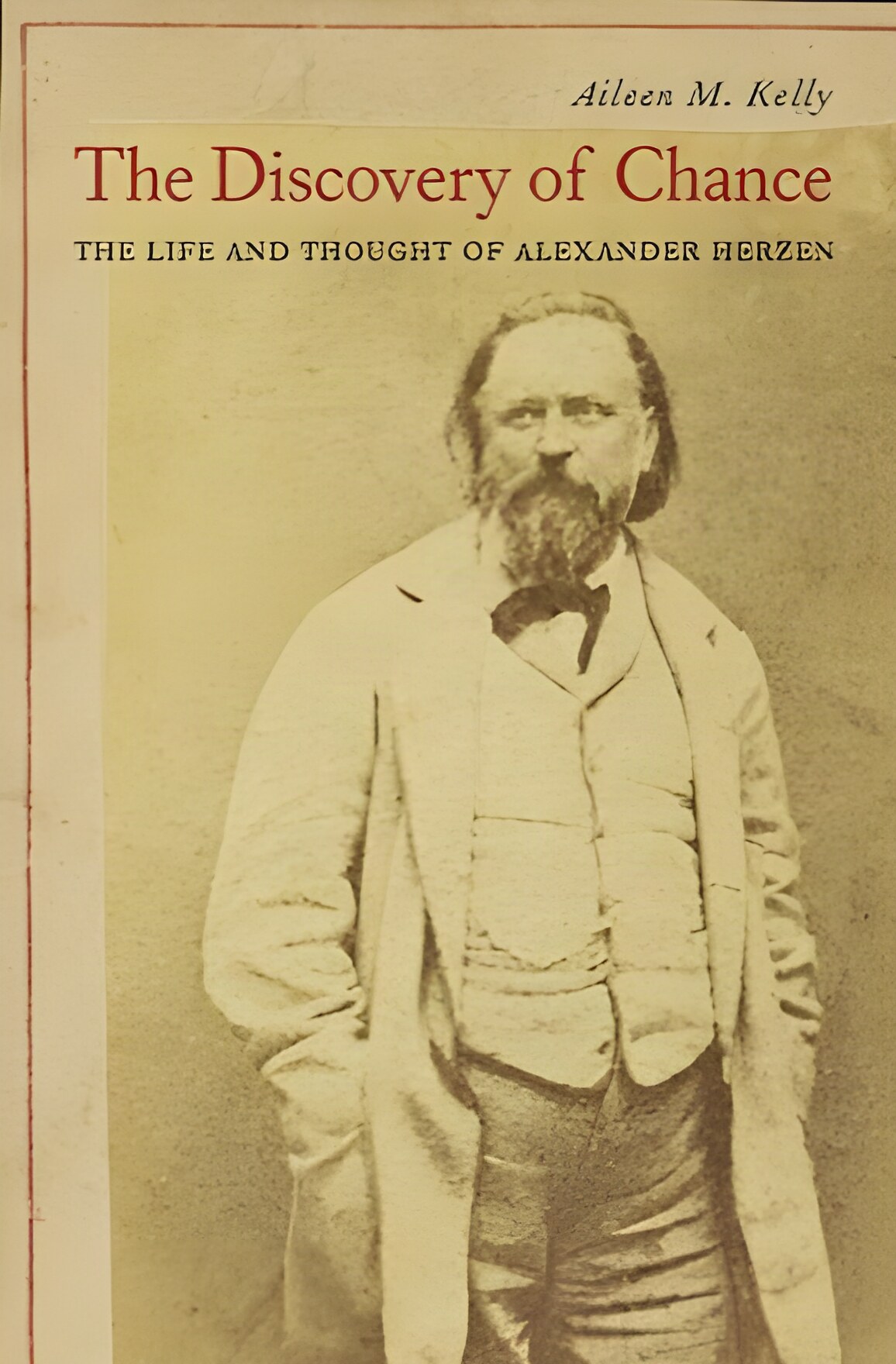
Hardcover. Cambridge MA, Harvard University Press, 1st, 2016, Book: Very Good, Dust Jacket: Very Good, Hardcover in a bright dust jacket, 592 pages. Alexander Herzen-philosopher, novelist, essayist, political agitator, and one of the leading Russian intellectuals of the nineteenth century-was as famous in his day as Tolstoy and Dostoevsky. While he is remembered for his masterpiece My Past and Thoughts and as the father of Russian socialism, his contributions to the history of ideas defy easy categorization because they are so numerous. Aileen Kelly presents the first fully rounded study of the farsighted genius whom Isaiah Berlin called "the forerunner of much twentieth-century thought." In an era dominated by ideologies of human progress, Herzen resisted them because they conflicted with his sense of reality, a sense honed by his unusually comprehensive understanding of history, philosophy, and the natural sciences. Following his unconventional decision to study science at university, he came to recognize the implications of early evolutionary theory, not just for the natural world but for human history. In this respect, he was a Darwinian even before Darwin. Clean, bright copy.
Hardcover. Amherst MA, University of Massachusetts Press, 1st US, 1976, Book: Very Good, Dust Jacket: Very Good, Hardcover in a bright blue dust jacket, 143 pages. Edited by P. T. Geach and A. J. P. Kenny. Name on front fly leaf, light pencil notations to 20 pages.
Hardcover. Berlin/Boston, De Gruyter, 1st, 2016, Book: Very Good, Dust Jacket: None, Hardcover, blue boards, 205 pages. INSCRIBED BY PERLMAN on the front fly leaf. Abraham Heschel believed that the Holocaust was an "Eclipse of Humanity." In the philosophical and historical context in which it occurred, Heschel saw this eclipse as embedded in the phenomenological approach of Heidegger. Focusing on their respective phenomenological methods, attitudes toward being, Heschel's view of Adam and Heidegger's notion of Dasein, this book is an analysis of Heschel's critique of Heidegger and the postmodernism that followers of Heidegger espoused. Clean, bright copy.
Hardcover. Duke University Press, 1st, 2003, Book: Very Good, Dust Jacket: None, Hardcover, 440 pages. Black cloth, no dust jacket. The Edge of Surrealism is an essential introduction to the writing of French social theorist Roger Caillois. Caillois was part of the Surrealist avant-garde and in the 1930s founded the College of Sociology with Georges Bataille and Michel Leiris. He spent his life exploring issues raised by this famous group and by Surrealism itself. Though his subjects were diverse, Caillois focused on concerns crucial to modern intellectual life, and his essays offer a unique perspective on many of twentieth-century France's most significant intellectual movements and figures. Including a masterful introductory essay by Claudine Frank situating his work in the context of his life and intellectual milieu, this anthology is the first comprehensive introduction to Caillois's work to appear in any language. These thirty-two essays with commentaries strike a balance between Caillois's political and theoretical writings and between his better known works, such as the popular essays on the praying mantis, myth, and mimicry, and his lesser-known pieces. Presenting several new pieces and drawing on interviews and unpublished correspondence, this book reveals Caillois's consistent effort to reconcile intellectual rigor and imaginative adventure. Perhaps most importantly, The Edge of Surrealism provides an overdue look at how Caillois's intellectual project intersected with the work of Georges Bataille and others including Breton, Bachelard, Benjamin, Lacan, and Levi-Strauss.
Hardcover. NY, Columbia University Press, 1st, 2003, Book: Very Good, Dust Jacket: Very Good, Hardcover in a bright, unclipped dust jacket, 562 pages. During John Dewey's lifetime (1859-1952), one public opinion poll after another revealed that he was esteemed to be one of the ten most important thinkers in American history. His body of thought, conventionally identified by the shorthand word "Pragmatism," has been the distinctive American philosophy of the last fifty years. His work on education is famous worldwide and is still influential today, anticipating as it did the ascendance in contemporary American pedagogy of multiculturalism and independent thinking. His University of Chicago Laboratory School (founded in 1896) thrives still and is a model for schools worldwide, especially in emerging democracies. But how was this lifetime of thought enmeshed in Dewey's emotional experience, in his joys and sorrows as son and brother, husband and father, and in his political activism and spirituality? Acclaimed biographer Jay Martin recaptures the unity of Dewey's life and work, tracing important themes through the philosopher's childhood years, family history, religious experience, and influential friendships. Clean copy.
Hardcover. NY, Oxford University Press, 1st, 2018, Book: Very Good, Dust Jacket: Very Good, Hardcover in a bright dust jacket, 239 pages. The Harvard philosopher Donald C. Williams (1899-1983) was a key figure in the history of analytic philosophy. He played a crucial role in reviving metaphysics at a time when other philosophers ridiculed, criticized, and committed it to the flames. He constructed an explanatorily powerful and parsimonious ontology and cosmology founded on logic, science, and common sense. His most influential articles were on the metaphysics of properties ('The Elements of Being') and the meta-physics of time ('The Sea Fight Tomorrow', 'The Myth of Passage'). His ontology of abstract particulars or tropes and his four-dimensional manifold theory of time remain leading hypotheses in metaphysics. Because of his novel contributions and his defense of metaphysics he made a lasting impact on philosophers of the next generation who in turn believed in the substance of metaphysical inquiry. Name on front fly leaf, light pencil marking to first 30 pages. Otherwise clean, very good.
Softcover. Indianapolis, Liberty Fund, reprint, Book: Very Good, Dust Jacket: None, Softcover, 211 pages. Edited and with an Introduction by Blair Worden. This edition brings back into print, after two and a half centuries, the pioneering work of English republicanism, Marchamont Nedham's The Excellencie of a Free-State, which was written in the wake of the execution of King Charles I. First published in 1656, and compiled from previously written editorials in the parliamentarian newsbook Mercurius Politicus, The Excellencie of a Free-State addressed a dilemma in English politics, namely, what kind of government should the Commonwealth adopt? Clean, bright copy.
Softcover. Durham NC, Duke University Press, 1st pbk, 1994, Book: Very Good, Dust Jacket: None, Softcover, 279 pages. Much recent critical theory has dismissed or failed to take seriously the question of the self. French theorists--such as Derrida, Barthes, Benveniste, Foucault, Lacan, and Levi-Strauss--have in various ways proclaimed the death of the subject, often turning to German intellectual tradition to authorize their views. Stanley Corngold's heralded book, The Fate of the Self, published for the first time in paperback with a spirited new preface, appears at a time when the relationship between the self and literature is a matter of renewed concern. Originally published in 1986 (Columbia University Press), the book examines the poetic self of German intellectual tradition in light of recent French and American critical theory. Focusing on seven major German writers--Holderlin, Dilthey, Nietzsche, Mann, Kafka, Freud, and Heidegger--Corngold shows that their work does not support the desire to discredit the self as an origin of meaning and value but reconstructs the allegedly fragmented poetic self through effects of position and style. Offering new and subtle models of selfhood, The Fate of the Self is a source of rich insight into the work of these authors, refracted through post-structuralist critical perspectives. Clean copy.
Hardcover. Binghamton NY, Medieval & Rennaissance Texts & Studies, 1st, 1993, Book: Very Good, Dust Jacket: None, Hardcover, blue cloth with gilt lettering and design to spine and front cover. 652 pages. Identical binding to the Harvard University Press set. Clean, bright copy.
Hardcover. Binghamton NY, Medieval & Rennaissance Texts & Studies, 1st, 1993, Book: Very Good, Dust Jacket: None, Hardcover, blue cloth with gilt lettering and design to spine and front cover. pages 653-1247. Identical binding to the Harvard University Press set. Errata slip taped to front fly leaf, otherwise clean, bright copy.
Hardcover. Cambridge MA, Harvard University Press , 1st, 1981, Book: Very Good, Dust Jacket: None, Hardcover, blue cloth with gilt lettering and design to spine and front cover. The writings of Richard Hooker are of central interest to those studying English Renaissance thought and literature. In this, the third volume of a much-needed critical edition of the Works of Richard Hooker, are the posthumous books of the Laws of Ecclesiastical Polity. Hooker planned the Laws in eight books, but he died shortly after publication of Book Five. Books Six, Seven, and Eight, which contain his analysis of jurisdiction, episcopacy, and the royal supremacy, are here transcribed from versions that have the most authority. The volume also includes Hooker's autograph notes toward those texts (brought to light by P. G. Stanwood in the course of his research) and the contemporary notes by George Cranmer and Edwin Sandys on a lost draft of Book Six. Mr. Stanwood's introduction lays to rest all doubts about the authenticity of the last three books as we have them, doubts current since publication of Walton's Life of Hooker in 1662.Clean, bright copy.
Hardcover. Cambridge MA, Harvard University Press , 1st, 1990, Book: Very Good, Dust Jacket: None, Hardcover, blue cloth with gilt lettering and design to spine and front cover, 926 pages. Although Richard Hooker (1554-1600) is now known principally as the author of the Laws of Ecclesiastical Polity, in his lifetime the Tractates and Sermons brought him greater notoriety. Hooker's views on justification, the perseverance of faith, and the relationship of the Church of Rome to the reformed Church of England were widely reported, and texts of the tracts were extensively circulated in manuscript. Thanks to the meticulous editing of Laetitia Yeandle, Curator of Manuscripts at the Folger Shakespeare Library, the contemporary impact of these debates can now be appreciated for the first time. These tracts provide a unique perspective on the turbulent world of late Elizabethan theology. In addition, they lay the doctrinal foundations of the Laws of Ecclesiastical Polity itself and-with the excellent commentary of Egil Grislis, Professor of Theology at the University of Manitoba in Winnipeg, enable us to trace the intellectual formation of sixteenth-century England's most innovative and provocative theologian. The volume includes a newly discovered letter; three newly attributed sermon fragments; and analysis by P. F. Forte of Hooker's distinctive preaching style. Clean, bright copy.
Hardcover. Cambridge MA, Harvard University Press, 1st, 1982, Book: Very Good, Dust Jacket: None, Hardcover, blue cloth with gilt lettering and design to spine and front cover. 274 pages. Clean, bright copy.
Hardcover. Cambridge MA, Harvard University Press, 1st, 1977, Book: Very Good, Dust Jacket: None, Hardcover, blue cloth with gilt lettering and design to spine and front cover. 552 pages. Clean, bright copy.
Hardcover. University of Chicago Press, 1st, 1991, Book: Good, Dust Jacket: Good, Hardcover in a bright dust jacket, 307 pages. This book analyzes the thought behind practices of government and argues that criticism represents a true force for change in attitudes and actions, and that extending the limits of some practices allows the invention of others. This unique and extraordinarily useful collection of articles and primary materials will open the way for a whole new set of discussions of the work of Michel Foucault as well as the status of liberalism, social policy, and insurance. Some yellow high-lighting in the first 50 pages.

 "The Construction of the History of Religion in Schelling's Positive Philosophy: Its Presuppositions and Principles by: Tillich, Paul")
 "The Construction of the History of Religion in Schelling's Positive Philosophy: Its Presuppositions and Principles by: Tillich, Paul")



 "The Development of Logic by: Kneale, William and Martha Kneale")
 "The Dictionary of Seventeenth and Eighteenth-Century Dutch Philosophers- 2 Volumesby: Van Bunge, Wiep & Henri Krop, Bart Leeuwenburgh, Han van Ruler, Paul Schuurman,")

 "The Eclipse of Humanity: Heschel's Critique of Heidegger (INSCRIBED COPY)by: Perlman, Lawrence")

 "The Elements and Patterns of Being: Essays in Metaphysics by: Williams, Donald C. (Editor: Fisher, A. R. J.)")




![The Folger Library Edition of the Works of Richard Hooker: Of the Lawes of Ecclesiastical Polity: Attack and Response - Volume Four ] by: Richard Hooker/ John E. Boot](https://www.browsingisarousing.com/shop/images/The-Folger-Library-Edition-of-the-Works-of-Richard-Hooker-Of-the-Lawes-of-Ecclesiastical-Polity-Atta386149-437874.jpg "The Folger Library Edition of the Works of Richard Hooker: Of the Lawes of Ecclesiastical Polity: Attack and Response - Volume Four ] by: Richard Hooker/ John E. Boot")

 "The Foucault Effect: Studies in Governmentality by: Burchell, Graham; Colin Gordon and Peter Miller, eds.")