Hardcover. NY, Charles Scribner's Sons, 1st thus, 1953, Book: Good, Dust Jacket: None, Hardcover, green cloth with gilt stamping, First one-volume edition, 300 and 332 pages. Spine lettering faded. Good sound copy, but pencil marking throughout.
Hardcover. Oxford UK, Oxford University Press, 2nd Ed., 1939, Book: Good, Dust Jacket: None, Blue cloth covers with gilt lettering on spine. Ex-library copy with light stamping, label on spine. 182 pages. Except for library stamping text pages are clean, firm binding. Originally published in 1906, this with a new preface by author.
Hardcover. NY, Fordham University Press, 1st, 2012, Book: Very Good, Dust Jacket: Very Good, Hardcover in a bright dust jacket, 321 pages. This volume explores the three normative sciences that Peirce distinguished (aesthetics, ethics, and logic) and their relation to phenomenology and metaphysics. The essays approach this topic from a variety of angles, ranging from questions concerning the normativity of logic to an application of Peirce's semiotics to John Coltrane's A Love Supreme. A recurrent question throughout is whether a moral theory can be grounded in Peirce's work, despite his rather vehement denial that this can be done. Some essays ask whether a dichotomy exists between theoretical and practical ethics. Other essays show that Peirce's philosophy embraces meliorism, examine the role played by self-control, seek to ground communication theory in Peirce's speculative rhetoric, or examine the normative aspect of the notion of truth. Proceedings of a conference held June 26-30, 2007 at Opole University, Poland. Clean copy.
Hardcover. UK, Oxford University Press, 1st, 2011, Book: Very Good, Dust Jacket: Very Good, Hardcover in a bright dust jacket, 437 pages. It is widely believed that people have privileged and authoritative access to their own thoughts, and many theories have been proposed to explain this supposed fact. The Opacity of Mind challenges the consensus view and subjects the theories in question to critical scrutiny, while showing that they are not protected against the findings of cognitive science by belonging to a separate "explanatory space." The book argues that our access to our own thoughts is almost always interpretive, grounded in perceptual awareness of our own circumstances and behavior, together with our own sensory imagery (including inner speech). In fact our access to our own thoughts is no different in principle from our access to the thoughts of other people, utilizing the conceptual and inferential resources of the same "mindreading" faculty, and relying on many of the same sources of evidence. Peter Carruthers proposes and defends the Interpretive Sensory-Access (ISA) theory of self-knowledge. This is supported through comprehensive examination of many different types of evidence from across cognitive science, integrating a diverse set of findings into a single well-articulated theory. One outcome is that there are hardly any kinds of conscious thought. Another is that there is no such thing as conscious agency. Clean, like new.
Hardcover. Oxford UK, Clarendon Press, reprint, 2006, Book: Very Good, Dust Jacket: None, Hardcover, black glossy boards, 363 pages. This volume belongs to the first new critical edition of the works of Francis Bacon (1561-1626) to have been produced since the nineteenth century. The edition presents the works in broadly chronological order and according to the best principles of modern textual scholarship. The seven works in the present volume belong to the final completed stages (Parts III-V) of Bacon's hugely ambitious six-part sequence of philosophical works, collectively entitled Instauratio magna (1620-6). All are presented in the original Latin with new facing-page translations. Three of the seven texts (substantial works in two cases, and all sharing a startlingly improbable textual history) are published and translated here for the first time: these are an early version of the Historia densi, the 'lost' Abecedarium, and the Historia de animato & inanimato. Another--the Prodromi sive anticipationes philosphiae secundae--has likewise never been translated before. Together with their commentaries and the introduction they open the way to important new understandings of Bacon's mature philosophical thought. Clean copy.
Softcover. The Hague, Martinus Nijhoff, 2nd Ed., 1965, Book: Very Good, Dust Jacket: None, Two matching softcover volumes, 765 total pages, b&w illustrations. Clean copies.
Hardcover. Rochester NY, University of Rochester Press, 1st, 1996, Book: Very Good, Dust Jacket: Very Good, Hardcover in a bright dust jacket, 224 pages. 10 Essays, ranging from Locke, Berkeley, and Hume to Foucault's Critique of the Enlightenment, with an Introduction by Sylvana Tomaselli. Contributors include Richard H. Popkin, Peter Laslett, and Michael Ayers.
Hardcover. Chicago, Open Court, 1st, 1921, Book: Very Good, Dust Jacket: None, Hardcover, blue cloth with gilt lettering on front cover and spine, 245 pages. Top edge gilt. Pencil notations to about 20 pages.
Hardcover. London, Routledge & Kegan Paul, reprint, 1965, Book: Very Good, Dust Jacket: Good, Hardcover in a lightly worn dust jacket, 368 pages. Hans Vaihinger (1852-1933) was an important and fascinating figure in German philosophy in the early twentieth century, founding the well-known journal Kantstudien. Yet he was overshadowed by the burgeoning movements of phenomenology and analytical philosophy, as well as hostility towards his work because of his defense of Jewish scholars in a Germany controlled by Nazism. However, it is widely acknowledged today that The Philosophy of 'As If' is a philosophical masterwork. Vaihinger argues that in face of an overwhelmingly complex world, we produce a simpler set of ideas, or idealizations, that help us negotiate it. When cast as fictions, such ideas provide an easier and more useful way to think about certain subjects, from mathematics and physics to law and morality, than would the truth in all its complexity. Even in science, he wrote, we must proceed "as if" a material world exists independently of perceiving subjects; in behavior, we must act "as if" ethical certainty were possible; in religion, we must believe "as if" there were a God. He also explores the role of fictions in the history of philosophy, going back to the ancient Greeks and the work of Leibniz, Adam Smith and Bentham. Name on front fly leaf, otherwise clean.
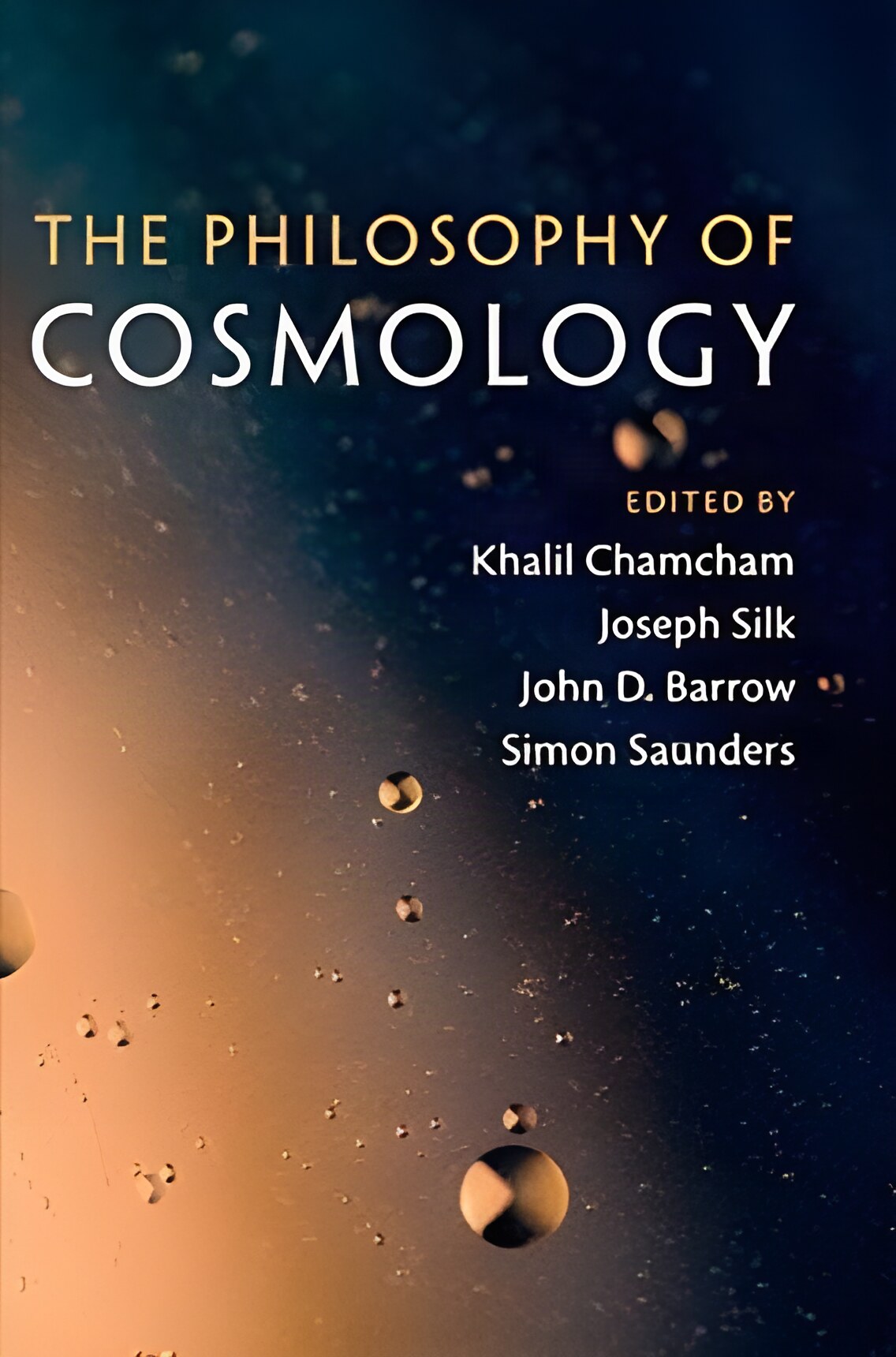
Hardcover. UK, Cambridge University Press, 1st, 2017, Book: Very Good, Dust Jacket: None, Hardcover, pictorial glossy boards, 514 pages. Following a long-term international collaboration between leaders in cosmology and the philosophy of science, this volume addresses foundational questions at the limit of science across these disciplines, questions raised by observational and theoretical progress in modern cosmology. Space missions have mapped the Universe up to its early instants, opening up questions on what came before the Big Bang, the nature of space and time, and the quantum origin of the Universe. As the foundational volume of an emerging academic discipline, experts from relevant fields lay out the fundamental problems of contemporary cosmology and explore the routes toward finding possible solutions. Written for graduates and researchers in physics and philosophy, particular efforts are made to inform academics from other fields, as well as the educated public, who wish to understand our modern vision of the Universe, related philosophical questions, and the significant impacts on scientific methodology. Clean, bright copy.
Hardcover. NY, Garland Publishing, reprint, 1983, Book: Very Good, Dust Jacket: None, Hardcover, beige boards with maroon lettering on the spine, 568 pages. A facsimile reprint of the 1941 edition published in London. Name on front fly leaf, otherwise clean.
Hardcover. La Salle IL, Open Court, reprint, 1971, Book: Very Good, Dust Jacket: None, Hardcover, blue cloth with gilt lettering on spine, 698 pages. Clean copy.
Hardcover. London, Longmans, Green and Co., 3rd Ed., 1929, Book: Good, Dust Jacket: None, Hardcover, maroon cloth with gilt lettering on spine, 270 pages. Spine faded, foxing/spotting to edge of text block. Volume 1 only. Name on front fly leaf. Clean internally.
Hardcover. London, Longmans, Green and Co., 3rd Ed., 1929, Book: Good, Dust Jacket: None, Hardcover, maroon cloth with gilt lettering on spine, 254 pages. Spine faded, foxing/spotting to edge of text block. Volume 2 only. Clean interbally.
Softcover. Toronto, University of Toronto Press, 1st, 2001, Book: Very Good, Dust Jacket: None, Softcover, 334 pages. This revised edition of The Poem of Empedocles (1992) integrates substantial new material from a recently discovered papyrus and published by A. Martin and O. Primavesi. The papyrus contains evidence of over seventy lines or part lines of poetry, of which more than fifty are both new and usable. The integration of this material into the previously known fragments has significant impact on our understanding of Empedocles, one of the most influential philosophers and poets of antiquity. Name on front fly leaf otherwise a clean, tight copy.
Hardcover. Edinburgh University Press, 1st, 2015, Book: Very Good, Dust Jacket: None, Hardcover, pictorial boards, 210 pages. All students of Western political thought encounter Niccolo Machiavelli's work. Nevertheless, his writing continues to puzzle scholars and readers who are uncertain how to deal with the seeming paradoxes they encounter. 'The Political Philosophy of Niccolo Machiavelli' is a clear account of Machiavelli's thought, major theories and central ideas. It critically engages with his work in a new way, one not based on the problematic Cambridge-school approach. Geared towards the specific requirements of students who need to reach a sound understanding of Machiavelli's ideas, it is the ideal companion to the study of this influential and challenging philosopher.
Softcover. Cambridge UK, Cambridge University Press, reprint, 1995, Book: Very Good, Dust Jacket: None, Softcover, 290 pages. This study provides a comprehensive reinterpretation of the meaning of Locke's political thought. John Dunn restores Locke's ideas to their exact context, and so stresses the historical question of what Locke in the Two Treatises of Government was intending to claim. By adopting this approach, he reveals the predominantly theological character of all Locke's thinking about politics and provides a convincing analysis of the development of Locke's thought. In a polemical concluding section, John Dunn argues that liberal and Marxist interpretations of Locke's politics have failed to grasp his meaning. Locke emerges as not merely a contributor to the development of English constitutional thought, or as a reflector of socio-economic change in seventeenth-century England, but as essentially a Calvinist natural theologian. Name on front fly leaf, otherwise clean.
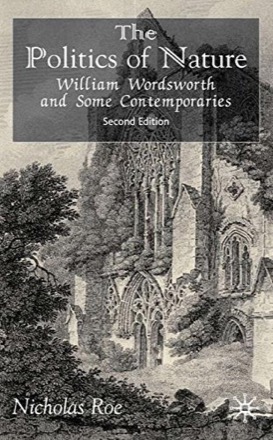
Softcover. NY/London, Palgrave , 2nd Ed., 2002, Book: Very Good, Dust Jacket: None, Softcover, 244 pages. Taking into account recent developments in historical and ecological criticism, and incorporating fresh research into poetry and politics in the 1790s, the second edition of The Politics of Nature enlarges and updates Nicholas Roe's acclaimed study of Romanticism. Hitherto marginal figures are restored to prominence, and there is new material on William Wordsworth's radical years.
Hardcover. Oxford UK, Oxford University Press, reprint, 1950, Book: Very Good, Dust Jacket: None, Hardcover, navy cloth covered boards with gilt titling to spine. Reprint of the revised second edition with commentary and terminal essays. Light pencil marking to ten pages, otherwise clean and tight copy. Volume 2 only of a two volume set.
Hardcover. New Haven CT, Yale University Press, 1st, 2003, Two hardcovers in dust dackets with sunning to spines, 479 and 493 pages. Andrew Marvell (1621-78) is best known today as the author of a handful of exquisite lyrics and provocative political poems. In his own time, however, Marvell was famous for his brilliant prose interventions in the major issues of the Restoration, religious toleration, and what he called "arbitrary" as distinct from parliamentary government. This is the first modern edition of all Marvell's prose pamphlets, complete with introductions and annotation explaining the historical context. Four major scholars of the Restoration era have collaborated to produce this truly Anglo-American edition. From the Rehearsal Transpros'd, a serio-comic best-seller which appeared with tacit permission from Charles II himself, through the documentary Account of the Growth of Popery and Arbitrary Government, Marvell established himself not only as a model of liberal thought for the eighteenth century but also as an irresistible new voice in political polemic, wittier, more literary, and hence more readable than his contemporaries. Name, date on front fly leafs, otherwise clean. DUE TO WEIGHT, DOMESTIC SHIPPING ONLY.
Hardcover. London, Pickering & Chatto, 1st, 1999, Book: Very Good, Dust Jacket: None, Hardcover, black cloth, spine with maroon title block and gilt lettering, 377 pages. Vol. 2 ONLY of a six volume set. Clean, bright copy, no markings.
Hardcover. London, Pickering & Chatto, 1st, 1999, Book: Very Good, Dust Jacket: None, Hardcover, black cloth, spine with maroon title block and gilt lettering, 384 pages. Vol. 3 ONLY of a six volume set. Name and date on front fly leaf, otherwise clean.
Hardcover. London, Pickering & Chatto, 1st, 1999, Book: Very Good, Dust Jacket: None, Hardcover, black cloth, spine with maroon title block and gilt lettering, 448 pages. Vol. 4 ONLY of a six volume set. Clean, bright copy, no markings.
Hardcover. Ithaca NY, Cornell University Press, 1st, 1993, Book: Very Good, Dust Jacket: Good, Hardcover ib a dust jscket with sun-faded spine. Why suppose that sense perception is an accurate source of information about the physical environment? More generally, is it possible to demonstrate that our basic ways of forming beliefs are reliable? In this book, a leading analytic philosopher confronts this classic problem through detailed investigation of sense perception, the source of beliefs in which we place the most confidence. Carefully assessing the available arguments, William P. Alston concludes that it is not possible to show in any noncircular way that sense perception is a reliable source of beliefs. 148 pages. Clean copy.

 "The Nature and Destiny of Man; A Christian Interpretation; I. Human Nature; II. Human Destiny; Gifford Lectures by: Reinhold Niebuhr")
 "The Nature of Truth: An Essayby: Harold H. Joachim")
 "The Oxford Francis Bacon XIII: The Instauratio Magna: Last Writingsby: Bacon, Francis, and Rees, Graham (Edited and translated by)")
 "The Phenomenological Movement: A Historical Introduction (2 volumes). by: Spiegelberg, Herbert")
 "The Philosophical Writings of Richard Burthoggeby: Richard Burthogge; Margaret W. Landes (editor)")
 "The Philosophy of 'As If' : A System of the Theoretical, Practical and Religious Fiction of Mankind. by: Hans Vaihinger")
 "The Philosophy Of David Hume: A Critical Study of Its Origins and Central Doctrines by: Norman Kemp Smith")
 "The Philosophy of Plotinus: Volume Iby: William Ralph Inge")


 "The Political Thought of John Locke: An Historical Account of the Argument of the 'Two Treatises of Government'by: Dunn, John/John Locke")
 "The Principles of Logic (Volume 2)by: Bradley, F. H.")


 "The Reception of Locke's Politics Vol 2: Patriarchalism, the Social Contract and Civic Virture 1705- 1760by: Goldie, Mark (Ed.)")
 "The Reception of Locke's Politics Vol 3: The Age of the American Revolution 1760-1780by: Goldie, Mark (Ed.)")
 "The Reception of Locke's Politics Vol 4: Poitical Reform in the Age of The French Revolution 1780-1838by: Goldie, Mark (Ed.)")