Hardcover. New Haven, CT, Yale University Press, 1st, 2001, Book: Very Good, Dust Jacket: Very Good, 289 pages. Hardcover with dust jacket. A very clean, unmarked copy with minor wear to dust jacket edges. Klein surveys the history of Matisse's portraits and their sitters, with attention to the details of the financial transaction or other agreement that caused the painting to be made. An analysis of Matisse's self-portraits is also provided. Klein works chronologically, detailing the artist's developing style, but remains attached to his biography as well, with many quotes about Matisse or his works from contemporary sources. This volume is well illustrated with b&w and color plates.
Hardcover. Munich, Williams College Museum of Art/Prestel, 1st, 1990, Book: Very Good, Dust Jacket: Very Good, Hardcover, 812 pages. Blue cloth slip case, 2193 illustrations including 100 color plates. Book still in shrink wrap, in excellent condition. If you think that Maurice Prendergast (1858-1924) only produced decorative park and beach scenes rendered in an abstract style, these two new volumes will set the record straight. Thanks in large part to the generosity of the Eugenie Prendergast Foundation, Mathews has produced a splendid exhibition catalog that surveys the career of the American Impressionist. She also labored for over six years as part of a team of art historians to create a monumental, ten-pound, slip-cased tome that documents the total artistic output of the two Prendergast brothers, Maurice and Charles, A Catalogue Raisonne. A good balance has been struck between the books. The exhibition catalog, of interest to both lay people and scholars, offers a chronological discussion of Maurice's ever-evolving style along with selected works represented by 130 glorious color plates. In contrast, the comprehensive catalogue raisonne , with its highly detailed essays by eight art historians, features 2200 illustrations, 100 of which are in color. All works discussed are represented by an image and catalog entry and range from the sketchbooks, monotypes, and applied graphics of Maurice to the carved and painted panels and sculpture of Charles (1863-1948). A Herculean achievement, the catalogue raisonne will long serve as a cornerstone in the arena of American art history reference.
Hardcover. Germany , Steidl, 1st, 2010, Book: Very Good, Dust Jacket: None, 156 pages. Hardcover with no dust jacket. Very clean, unmarked copy with only minor edgewear. Color photographs throughout. In the early 1970s, the workers at a steel smelting factory east of Havana wrote to Fidel Castro describing their housing needs. Out of this exchange a new city called Alamar was born, conceived by the same workers who would build it and live there. Today it is abandoned; Mauro D'Agati's photographs examine its eccentric spaces.
Hardcover. New York , Pantheon, 1st, 1991, Book: Very Good, Dust Jacket: Very Good, Hardcover, 136 pages, b&w illustrations by Spiegelman. The second installment of the Pulitzer Prize-winning graphic novel acclaimed as "the most affecting and successful narrative ever done about the Holocaust" (Wall Street Journal) and "the first masterpiece in comic book history" (The New Yorker). A brutally moving work of art--widely hailed as the greatest graphic novel ever written--Maus recounts the chilling experiences of the author's father during the Holocaust, with Jews drawn as wide-eyed mice and Nazis as menacing cats.
Softcover. NY, Pantheon, reprint, 1986, Book: Very Good, Dust Jacket: None, Two softcover volumes in a cardboard slipcase. Vol. 1: My Father Bleeds History, Vol. 2: And Here My Trouble Began. Slipcase has some light rubbing, books are clean and bright. A brutally moving work of art--widely hailed as the greatest graphic novel ever written--Maus recounts the chilling experiences of the author's father during the Holocaust, with Jews drawn as wide-eyed mice and Nazis as menacing cats.
Hardcover. New Haven CT, Yale University Press, 1st, 2004, Book: Very Good, Dust Jacket: Very Good, Hardcover in a bright, unclipped dust jacket, 398 pages. From colonial times to the present, American composers have lived on the fringes of society and defined themselves in large part as outsiders. In this stimulating book Michael Broyles considers the tradition of maverick composers and explores what these mavericks reveal about American attitudes toward the arts and about American society itself. Broyles starts by examining the careers of three notably unconventional composers: William Billings in the eighteenth century, Anthony Philip Heinrich in the nineteenth, and Charles Ives in the twentieth. All three had unusual lives, wrote music that many considered incomprehensible, and are now recognized as key figures in the development of American music. Broyles goes on to investigate the proliferation of eccentric individualism in all types of American music-classical, popular, and jazz-and how it has come to dominate the image of diverse creative artists from John Cage to Frank Zappa. The history of the maverick tradition, Broyles shows, has much to tell us about the role of music in American culture and the tension between individualism and community in the American consciousness. Leer menos
Hardcover. NY, George Braziller, 1st US, 1970, Book: Very Good, Dust Jacket: Very Good, Hardcover in a bright, unclipped dust jacket. 288 pages. Chapters include Semiology and Architecture by Charles Jencks, Meaning into Architecture by Geoffrey Broadbent and 'La Dimension Amoureuse' in Architecture by George Baird, The Time House or Argument for an Existential Dwelling by Martin Pawley. Packed with black and white reproductions of unusual buildings. Mild edgewear to dust jacket, clean copy.
Softcover. Tuscaloosa, University of Alabama Press, 1st, 1999, Book: Very Good, Dust Jacket: None, Softcover. This collection of Ford's works focuses on the development of ceramic chronology-a key tool in Americanist archaeology. When James Ford began archaeological fieldwork in 1927, scholars divided time simply into prehistory and history. Though certainly influenced by his colleagues, Ford devoted his life to establishing a chronology for prehistory based on ceramic types, and today he deserves credit for bringing chronological order to the vast archaeological record of the Mississippi Valley. This book collects Ford's seminal writings showing the importance of pottery styles in dating sites, population movements, and cultures. These works defined the development of ceramic chronology that culminated in the major volume Archaeological Survey in the Lower Mississippi Alluvial Valley, 1940-1947, which Ford wrote with Philip Phillips and James B. Griffin. In addition to Ford's early writings, the collection includes articles written with Griffin and Gordon Willey, as well as other key papers by Henry Collins and Fred Kniffen. Clean copy in publisher's shrinkwrap.
Hardcover. New York , The Vanguard Press, Inc, reprint, 1968, Book: Very Good, Dust Jacket: Very Good, Hardcover, 157 pages, b&w illustrations. Light shelf-wear and rubbing to dust jacket, faint musty smell. Clean, tight copy.
Hardcover. Baltimore, Johns Hopkins University Press, 1st, 2011, Book: Very Good, Dust Jacket: None, Hardcover, dark green cloth with gilt lettering on spine, 439 pages, illustrated with 108 black & white halftones. A critical study of this key figure and the works of his contemporaries-including Borelli, Swammerdam, Redi, and Ruysch-opens a wonderful window onto the scientific and medical worlds of the seventeenth century. A clean, bright copy lacking the dust jacket.
Hardcover. London, Michael Joseph, 1st UK, 2006, Book: Very Good, Dust Jacket: Very Good, Hardcover in a bright, unclipped dust jacket. SIGNED & DATED BY THE AUTHOR on the title page. Clean, like new.
Hardcover. New Haven CT, Yale University Press, 1st, 2001, Book: Very Good, Dust Jacket: Very Good, Hardcover in a bright dust jacket, 387 pages. Color and b&w illustrations. Leading medieval historian Nicholas Orme draws together a vast range of sources and disciplines-history, literature, religion, and art-to create a picture of medieval childhood more comprehensive than ever before. Beginning with pregnancy and childbirth, Orme explores the succeeding stages of a child's growth to adulthood. He discusses baptism, the significance of birthdays and ages, and family life, including upbringing, food, clothes, sleep, and the plight of the poor. He also chronicles the misfortunes of childhood, from disablement, abuse, and accidents to illness and death. In a fascinating review of the special culture of children, the author describes their rhymes, toys, and games; their religion and relationship to the Church; and their learning to read the literature for children. The final chapter of the book explains how adolescents grew up and entered the adult world. Mild fade to spine, front fly leaf with two small scars to black paper, otherwise a clean, bright copy.
Softcover. London, The Hambledon Press, 1st, 1982, Book: Very Good, Dust Jacket: None, Softcover, 288 pages. The inner workings of early medieval societies cannot be understood without also studying their links - religious, cultural, economic and political - with their neighbours. In this collection Karl Leyser shows how Ottonian and Salian Germany both influenced and was influenced by the societies with which it came into contact. While the author's central interest is in Germany, his work is of value for the study of medieval European society as a whole. Clean copy.
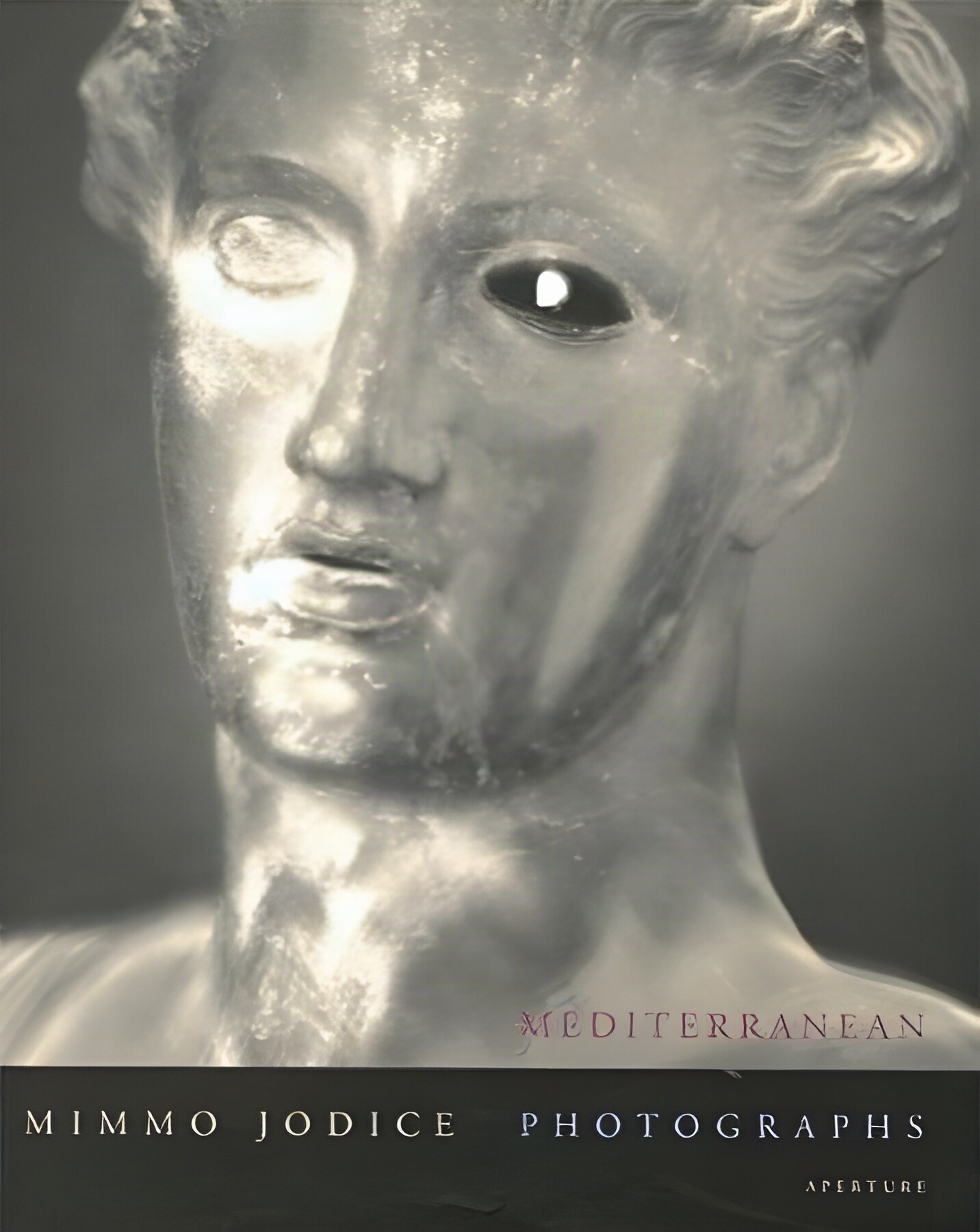
Hardcover. NY, Aperture, 1st, 1995, Book: Very Good, Dust Jacket: Very Good, Hardcover in a bright dust jacket. 118 pages with b&w plates. From Italy, France, Spain, Greece, Macedonia, Turkey, Tunisia, Syria, and Jordan, Jodice's luminous photographs evoke a vision of Mediterranean civilization that is a conflation of history and mythology. His dramatic yet ethereal images refuse both classical and contemporary boundaries in a fusion of the topographical and the intimate. Ruined temples, lost cities, heroic landscapes, gods and goddesses, vistas of Vesuvius and of the omnipresent sea transcend the constraints of their historical context in terms of both time and space. Clean copy.
Hardcover. New York, Atria Books, 1st, 2004, Book: Very Good, Dust Jacket: Very Good, Hardcover, 271 pages, b&w photos, very clean, tight copy, like new.
Hardcover. Berkeley CA, Lancaster-Miller Publishers, 1st, 1979, Book: Very Good, Dust Jacket: Good, Hardcover, small format art book. The artist Mel Ramos (1935-2018), often associated with the pop artists of the 1960s, here presents female nudes executed in watercolor, many of which 'salute' some of the classical nudes of art history. "Paintings which both reveal and destroy some of our fondest cultural stereotypes". 68 pages, color plates. Dust jacket with chip at top of spine, otherwise clean, very good.
Hardcover. NY, Bobbs-Merrill, reprint, 1966, Book: Very Good, Dust Jacket: Very Good, Hardcover in a bright dust jacket, 450 pages, b&w illustrations. Biography of William Lamb, 2nd Viscount Melbourne, who served twice as Prime Minister of England during the reign of Queen Victoria. Clean copy.
Hardcover. NY, D. Appleton & Company, 1st US, 1894, Book: Very Good, Dust Jacket: None, Hardcovers, Three volumes complete, blue cloth hardcovers with gilt titles and oval decorations on the front covers. Gilt titles and decorations on the spines. Top edges gilt. Volume I: 421 pages, [4] pages advertisements, Volume II: 484 pages, [8] pages advertisements, Volume III: 541 pages, [2] pages advertisements. Illustrated with frontispieces in the three volumes. Illustrations and folding facsimile autographs and manuscripts. Previous owner's inscriptions written on inside front cover of Vol. 1, Otherwise a bright, clean set. PLEASE NOTE: DUE TO WEIGHT, DOMESTIC SHIPPING ONLY.
Softcover. NY, Seven Stories Press, reprint, 2012, Book: Very Good, Dust Jacket: None, Softcover, 431 pages. A fascinating document of an extraordinary life, Memoirs of A Breton Peasant reads with the liveliness of a novel and bristles with the vigor of an opinionated autodidact from the very lowest level of peasant society. Brittany during the nineteenth century was a place seemingly frozen in the Middle Ages, backwards by most French standards; formal education among rural society was either unavailable or dismissed as unnecessary, while the church and local myth defined most people's reasoning and motivation. Jean-Marie Deguignet is unique not only as a literate Breton peasant, but in his skepticism for the church, his interest in science, astronomy and languages, and for his keen--often caustic--observations of the world and people around him. Born into rural poverty in 1834, Deguignet escapes Brittany by joining the French Army in 1854, and over the next fourteen years he fights in the Crimean war, attends Napoleon III's coronation ceremonies, supports Italy's liberation struggle, and defends the hapless French puppet emperor Maximilian in Mexico. He teaches himself Latin, French, Italian and Spanish and reads extensively on history, philosophy, politics, and literature. He returns home to live as a farmer and tobacco-seller, eventually falling back into dire poverty. Throughout the tale, Deguignet's freethinking, almost anarchic views put him ahead of his time and often (sadly, for him) out of step with his contemporaries. Deguignet's voluminous journals (nearly 4,000 pages in total) were discovered in a farmhouse in Brittany a century after they were written. This narrative was drawn from them and became a surprise bestseller when published in France in 1998. Clean copy.
Hardcover. NY, D Appleton and Company, 1st, 1929, Book: Very Good, Dust Jacket: None, Hardcover, green cloth covers with gilt lettering, 342 pages. Frontis. portrait, 3 other b&w plates. Thomas Power O'Connor (1848-1929) was a journalist and Irish nationalist who served in Parliament for five decades. A close associate of Parnell, O'Connor had published a history of the Parnell movement in 1886. VOL 2 ONLY. Clean copy.
Hardcover. Edinburgh, Sterling and Slade, 1st Revised, 1819, Book: Good, Dust Jacket: None, Five volumes complete. Bound in half leather with marbled boards. Spines with raised bands and gilt lettering., Marbled design to all edges. Each volume with an engraved frontispiece portrait. Covers rubbed , worn, moderate foxing (mostly to early pages) otherwise clean, solid copies. Gilt lettering on spine faded, rubbing and wear to ribs and edges. Gutter crack in Vol. 1 at rear in middle of appendix, This is the first revised and corrected edition with a new appendix.

 "Matisse Portraitsby: Klein, John")
 "Maurice Brazil Prendergastby: Prendergast, Charles")
 "Mauro D'Agati: Alamarby: D'Agati, Mauro (Photographer)")
 "Maus II A Survivor's Tale: And Here My Troubles Beganby: Spiegelman, Art")
 "Maus: A Survivors Tale (2 Volume Set in Slipcase)by: Spiegelman, Art")
 "Mavericks and Other Traditions in American Musicby: Michael Broyles")

 "Measuring the Flow of Time: The Works of James A. Ford, 1935-1941by: Ford, James A., Foreword: Willey, Gordon R./ Editor: Lyman, R. Lee/ Editor: O'Brien, Professor Mi")
 "Mechanical Bride, The: Folklore of Industrial Manby: McLuhan, Marshall")
 "Mechanism, Experiment, Disease: Marcello Malpighi and Seventeenth-Century Anatomyby: Domenico Bertoloni Meli")
 "Medicus and the Disappearing Dancing Girls (SIGNED COPY)by: R S Downie")
 "Medieval Childrenby: Nicholas Orme")
 "Medieval Germany and its Neighbours: 900-1250by: Leyser, K. J.")
 "Meet Me at the Theresa: The Story of Harlem's Most Famous Hotelby: Wilson, Sondra Kathryn")
 "Mel Ott: THe Gentle Giant : American Sports History, No. 24by: Martin, Alfred M.")

 "Melbourne by: Cecil, Lord David")
 "Memoire Du Cinema: Les Films Noirs by: Patrick Brion")


 "Memoirs of a Breton Peasant, 1834-1905by: Jean-Marie D?©guignet")



 "Memoirs of The Duke of Sully Prime Minister of Henry the Great with the Trial of Francis Ravalilac for the Murder of Henry the Great and An Appendix (5 Volumes)by: Du")