Hardcover. Norman OK, University of Oklahoma Press, 1st , 1950, Book: Very Good, Dust Jacket: Very Good, Hardcover in a lightly worn dustjacket. Ground plans of the Indian villages of New Mexico and Arizona with aerial photos & scale drawings.
Softcover. Cambridge UK, Cambridge University Press, 1st pbk., 1999, Book: Very Good, Dust Jacket: None, Softcover, 267 pages. This book argues that modern presidents could learn much from Franklin Roosevelt's method of organizing his presidency. Roosevelt consciously avoided a large, functionally specialized White House bureaucracy. Instead, he developed staff agencies composed mostly of civil servants and personally managed them using competitive administrative practices. Matthew Dickinson is the first scholar to reconstruct the methods FDR used and his research suggests modern presidents could benefit greatly by studying them. Clean copy.
Hardcover. Syracuse NY, Syracuse University Press, 1st, 1973, Book: Very Good, Dust Jacket: Good, Hardcover in a worn dust jacket with fading to spine, 236 pages. This foremost history of the Northern slave system examines its operation from its colonial beginnings to its dissolution. Unlike the South, which used slaves primarily for agricultural labor, the North trained and diversified its slave force to meet the needs of a complicated economy. In the early 19th century the author sees that economic displacement allows an emancipation of blacks that is at least as beneficial to the masters as to the blacks. Name on front fly leaf, otherwise clean.
Softcover. Cambridge MA, Harvard University Press, reprint, 1998, Book: Very Good, Dust Jacket: None, Softcover, 310 pages, b&w illustrations. Few Americans, black or white, recognize the degree to which early African American history is a maritime history. W. Jeffrey Bolster shatters the myth that black seafaring in the age of sail was limited to the Middle Passage. Seafaring was one of the most significant occupations among both enslaved and free black men between 1740 and 1865. Tens of thousands of black seamen sailed on lofty clippers and modest coasters. They sailed in whalers, warships, and privateers. Some were slaves, forced to work at sea, but by 1800 most were free men, seeking liberty and economic opportunity aboard ship.Bolster brings an intimate understanding of the sea to this extraordinary chapter in the formation of black America. Because of their unusual mobility, sailors were the eyes and ears to worlds beyond the limited horizon of black communities ashore. Sometimes helping to smuggle slaves to freedom, they were more often a unique conduit for news and information of concern to blacks.But for all its opportunities, life at sea was difficult. Blacks actively contributed to the Atlantic maritime culture shared by all seamen, but were often outsiders within it. Capturing that tension, Black Jacks examines not only how common experiences drew black and white sailors together-even as deeply internalized prejudices drove them apart-but also how the meaning of race aboard ship changed with time. Bolster traces the story to the end of the Civil War, when emancipated blacks began to be systematically excluded from maritime work. Rescuing African American seamen from obscurity, this stirring account reveals the critical role sailors played in helping forge new identities for black people in America.
Hardcover. Washington, DC, Associated Publishers, Revised Ed., 1944, Book: Very Good, Dust Jacket: None, Hardcover, 381 pages. Dark green cover with slight wear and white spotting to back. Slight soiling to edges. Binding cracked at page 45. Overall, a clean, tight copy.
Hardcover. NY, Alfred A. Knopf, 1st, 1966, Book: Very Good, Dust Jacket: None, Hardcover, dark blue cloth with gilt lettering on spine, 371 pages plus index. B&w illustrations. A study of the Civil War's effects on the "development" of women 1861-65 and how this led to further advances in the women's movement in later years. Name on front fly leaf, page 133 wrinkled. No dust jacket.
Hardcover. New York, Harper & Brothers, reprint , 1923, Book: Very Good, Dust Jacket: None, Hardcover, 274 pages. Illustrated with full color and black & white plates by Frederic Remington. Brown paper covered boards with cover pastedown of Remington drawing. black cloth spine. Copyright page with 1923 date and Harper's G-B code indicating later printing of 1st edition. Light foxing to outer edges of some pages and plates. Fraying to cloth at top of spine. Light darkening of pages close to gutter. Still an attractive copy.
Hardcover. NY, Amistad/HarperCollins, 3rd pr., 2005, Book: Very Good, Dust Jacket: Very Good, Hardcover in a bright, unclipped dust jacket. 540 pages, b&w illustrations, index. An important book of epic scope on America's first racially integrated, religiously-inspired political movement for change-The Underground Railroad, a movement peopled by daring heroes and heroines, and everyday folk For most, the mention of the Underground Railroad evokes images of hidden tunnels, midnight rides, and hairsbreadth escapes. Yet the Underground Railroad's epic story is much more morally complex and politically divisive than even the myths suggest. Against a backdrop of the country's westward expansion,which brought together Easterners who had engaged in slavery primarily in the abstract alongside slaveholding Southerners and their slaves, arose a clash of values that evolved into a fierce fight for nothing less than the country's soul. Beginning six decades before the Civil War, freedom-seeking blacks and pious whites worked together to save tens of thousands of lives, often at the risk of great physical danger to themselves. Not since the American Revolution had the country engaged in an act of such vast and profound civil disobedience that not only subverted federal law but also went against prevailing mores.
Hardcover. NY, Abrams, 1st, 2004, Book: Very Good, Dust Jacket: Very Good, Hardcover, 192 pages. Taken from 1939 to 1943 under the auspices of the Farm Security Administration and the Office of War Information, these 175 "lost" photos feature shots by Russell Lee, Andreas Feininger and Marion Post Wolcott, using the then-revolutionary technology of Kodachrome film. Color photographs taken before 1939 have largely deteriorated, so these surviving photos are later than the most familiar b&w Depression-era shots. This 11 3/4 "x8 1/2 " volume thus "colorizes" one's normally black-and-white impressions of a very vibrant time, as Hendrickson (Sons of Mississippi) notes in his introduction. The logic behind the arrangement of the photos, which at first seems largely random, as it follows neither photographer, location nor chronology, becomes clear by the end of the book: the U.S.'s industrial rise. Images of urban lethargy and farmhands picking cotton under hot blue skies (the unbearable conditions of cotton-picking somehow seem more apparent in color) gradually give way to images of mobility, mechanization and a changing economy. Arnold T. Palmer's gleaming portraits of Rosie the riveter-like aircraft workers follow Jack Delano's earthier photos of male railroad workers, their sweaty and intent faces caked with soot. Tellingly, the book ends with photos of bombers flying over California.
Hardcover. Denver, CO, Fred and Jo Mazzulla, 1st, 1966, Book: Very Good, Dust Jacket: None, Hardcover, SIGNED BY BOTH AUTHORS. 56 pages, b&w photographs. Light foxing to top edge. Very minor soiling to boards; covered by plastic dust jacket. Else a very clean, tight copy.
Hardcover. US, Atlas & Co, 6th, 2008, 240 pages. Hardcover with dust jacket. Clean, unmarked copy with only minor wear to dust jacket. Black and white pictures throughout.
Hardcover. NY, Viking, 1st, 2005, Book: Very Good, Dust Jacket: Very Good, Hardcover in a bright, lightly worn dust jacket. SIGNED BY WATSON on title page. A history of the winter of 1912 in Lawrence, Massachusetts that began when thousands of workers stormed out of the massive textile mills that lined the Merrimack River north of Boston. After receiving their paychecks that morning, they were protesting a pay cut, but were really on strike for their lives. Black and white photographs. Remainder line bottom edge, otherwise clean.
Hardcover. Boston, Little, Brown and Company, reprint, 1954, Book: Very Good, Dust Jacket: None, Hardcover, blue cloth with gilt lettering on spine. Volume VI in The History of United States Naval Operations in World War II. 463 pages, illustrated with maps (one fold-out) and b&w photos. Gilt on spine with fading, lacks dust jacket, otherwise clean, tight copy.
Hardcover. London/Portand OR, Fank Cass, 1st, 2001, Book: Very Good, Dust Jacket: Very Good, Hardcover in a bright, unclipped dust jacket. This work examines in a comparative historical way the socialist, liberal and conservative strands of Anglo-American anticommunist thought before the Cold War. In so doing, this book provides us with an intellectual pre-history of Cold War attitudes and policy positions. Clean copy.
Softcover. Plattsburgh, NY/ Elizabethtown, NY, Clinton County Historical Association/ Essex County Historical Society, 1st, 1994, Book: Very Good, Dust Jacket: None, Softcover, 56 pages. Blue cwrappers with some faint smudges, small sticker on back, but otherwise very little wear. Inside is bright and clean, with b&w illustrations throughout.
Hardcover. Princeton NJ, Princeton University Press, 1st, 1966, Book: Very Good, Dust Jacket: Very Good, Hardcover in a lightly worn dust jacket, 228 pages. This study is an attempt to add a new dimension to our understanding of the causes of the American Revolution. It is an analysis of the role of the subministers--the secretaries and undersecretaries--of the major departments of the British government responsible for colonial policy during the period from 1763 to the outbreak of the Revolution--the period of the Stamp and Sugar Acts, the Townshend Duties, and the Coercive Acts--and of their role in the war itself. Name on front fly leaf otherwise clean.
Hardcover. San Rafael CA, Presidio Press, Revised Ed., 1976, Book: Very Good, Dust Jacket: Good, Hardcover in a lightly worn dust jacket. 226 pages, An updated edition of the 1961 printing. B&w illustrations. "The author relates the fascinating story of the propaganda and subversion activities of both factions during the American Revolutionary War."
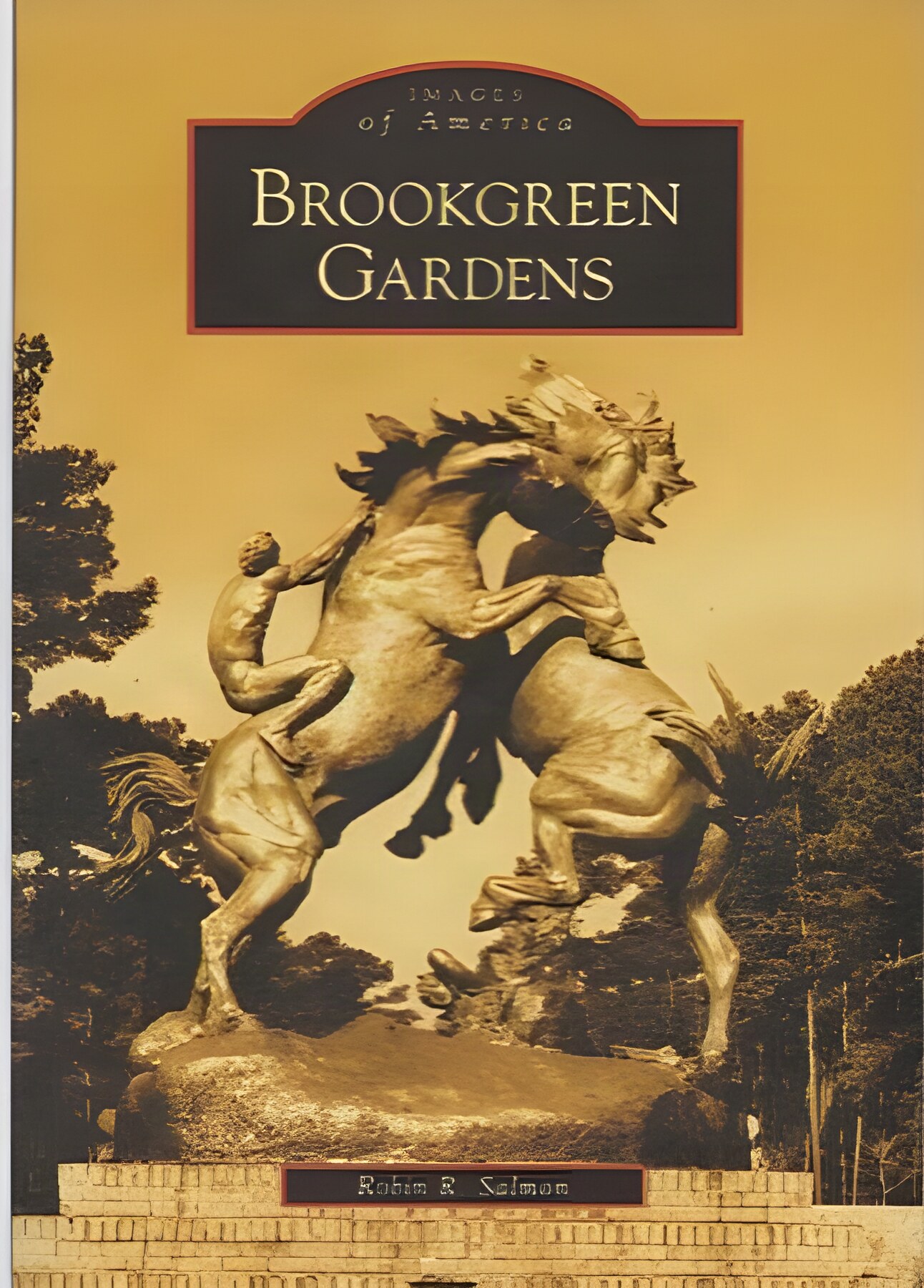
Softcover. Charleston SC, Arcadia Publishing, 1st, 2006, Book: Very Good, Dust Jacket: None, Softcover, 127 pages. A pictorial history of the one-time rice plantation that became America's first public sculpture garden. Many vintage photos. Clean copy.
Hardcover. Oklahoma Heritage Assn., 2000, Book: Very Good, Dust Jacket: Very Good, Hardcover in a bright, unclipped dust jacket. 324 pages, b&w illustrations. SIGNED BY CO-AUTHOR THOMPSON on the title page.Bryce Harlow was one of the most extraordinary political figures in the United States in the second half of the 20th century. He served four presidents with great honor and distinction. His word was his bond. With his gentle manner and Oklahoma drawl, Harlow advised Presidents on more public issues than perhaps anyone in American history. Dr. Henry Kissinger says Harlow spent his entire adult life studying the ways of Washington, D.C., alternating between participant and observer. Harlow had a deep sense for the Presidency, its power, its majesty, and the awful responsibility it imposes. Clean, unread copy.
Hardcover. Chicago, University of Chicago Press, 1st, 2008, Book: Very Good, Dust Jacket: Very Good, 320 pages, b&w illustrations. Clean, unmarked copy with only minor wear to dust jacket. Building the Devil's Empire is the first comprehensive history of New Orleans's early years, tracing the town's development from its origins in 1718 to its revolt against Spanish rule in 1768. Shannon Lee Dawdy's picaresque account of New Orleans's wild youth features a cast of strong-willed captives, thin-skinned nobles, sharp-tongued women, and carousing travelers. But she also widens her lens to reveal the port city's global significance, examining its role in the French Empire and the Caribbean, and she concludes that by exemplifying a kind of rogue colonialism--where governments, outlaws, and capitalism become entwined--New Orleans should prompt us to reconsider our notions of how colonialism works.
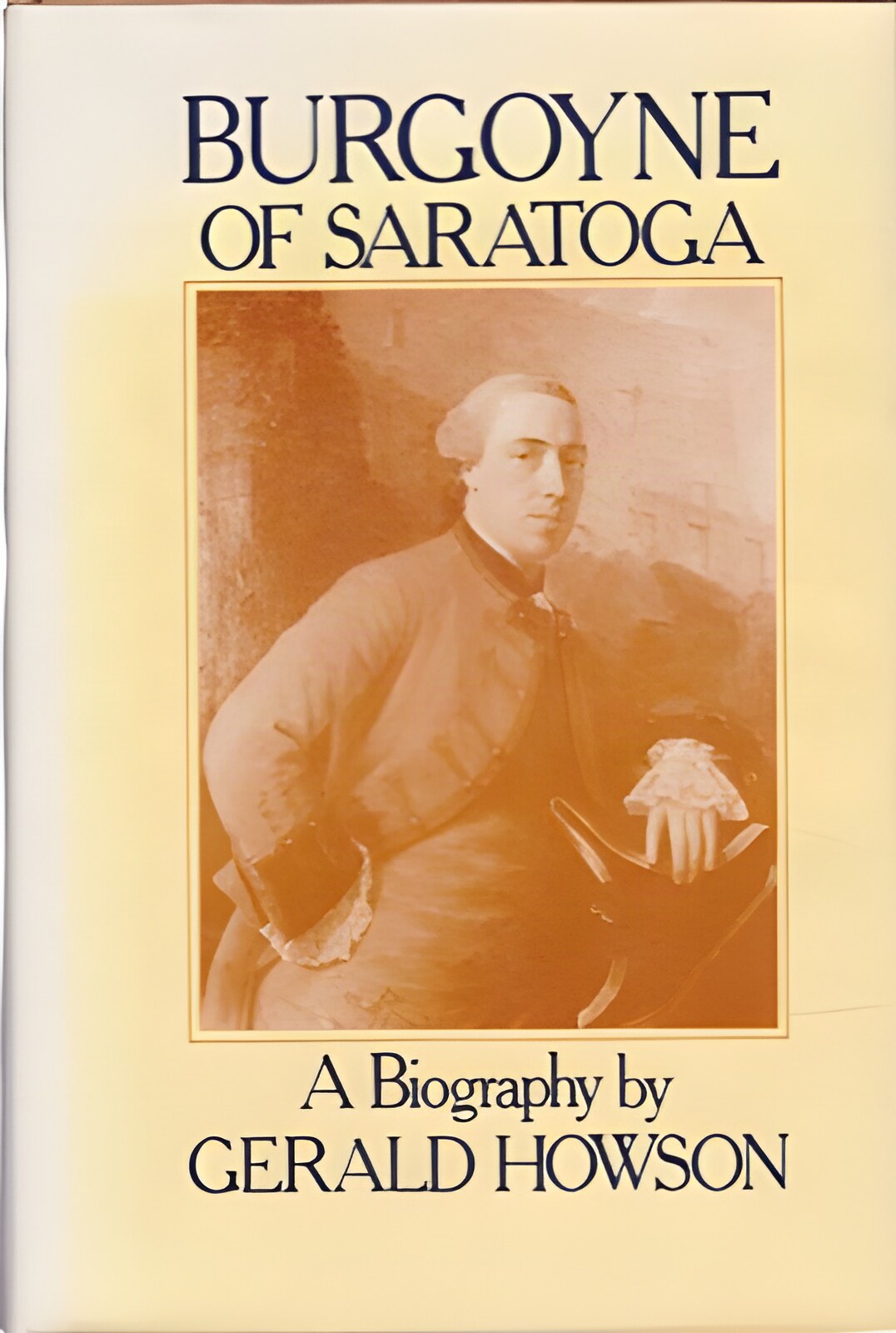
Hardcover. NY, Times Books, 1st, 1979, Book: Very Good, Dust Jacket: Good, Hardcover in a lightly worn dust jacket that shows fading, 360 pages, b&w illustrations, endpaper maps. General John Burgoyne was a British army officer, politician and dramatist. He first saw action during the Seven Years' War when he participated in several battles, mostly notably during the Portugal Campaign of 1762. Burgoyne is best known for his role in the American War of Independence. During the Saratoga campaign he surrendered his army of 5,000 men to the American troops on October 17, 1777. Appointed to command a force designated to capture Albany and end the rebellion, Burgoyne advanced from Canada but soon found himself surrounded and outnumbered. He fought two battles at Saratoga, but was forced to open negotiations with Horatio Gates. Although he agreed to a convention, on 17 October 1777, which would allow his troops to return home, this was subsequently revoked and his men were made prisoners. Burgoyne faced criticism when he returned to Britain, and never held another active command. Clean copy.
Hardcover. Chapel Hill, University of North Carolina, 1st, 1991, Book: Very Good, Dust Jacket: Very Good, Hardcover, 514 pages, b&w illustrations, in a bright dust jacket. Biography of Union general Ambrose Burnside, reassessing his reputation as an "incompetent leader" by viewing his entire career as a soldier during the war: along the Carolina coast, at Antietam, and his capture of Knoxville in East Tennessee, while still recognizing the debacle at Fredericksburg.

 "Bird's Eye View of the Pueblosby: Stubbs, Stanley A.")
 "Bitter Harvest: FDR, Presidential Power and the Growth of the Presidential Branchby: Dickinson, Matthew")

 "Black Man in White America, Theby: Van Drusen, John O.")



 "Bradford's History 'of Plimoth Plantation': From the Original Manuscript- With a Report of the Proceedings Incident to the Return of the Manuscript to Massachusetts by:")


 "Breach of Peace: Portraits of the 1961 Mississippi Freedom Ridersby: Etheridge, Eric")

 "Breaking the Bismarcks Barrier: 22, July 1942-1 May, 1944 (History of United States Naval Operations in World War II, Vol. 6) by: Morison, Samuel Eliot")

 "British Naval Activity on Lake Champlain During the War of 1812.by: Lewis, Dennis M.")



 "Burnsideby: Marvel, William")