Hardcover. NY, Touchstone, 1st, 2016, Book: Very Good, Dust Jacket: Very Good, Hardcover in a bright, unclipped dust jacket. The first biography of arguably the most influential member of Franklin Delano Roosevelt?s administration, Marguerite "Missy" LeHand, FDR?s de facto chief of staff, who has been misrepresented, mischaracterized, and overlooked throughout history until now. If you wanted access to Franklin, you had to get through Missy. She was one of his most trusted advisors, affording her a unique perspective on the president that no one else could claim, and she was deeply admired and respected by Eleanor and the Roosevelt children. Clean copy.
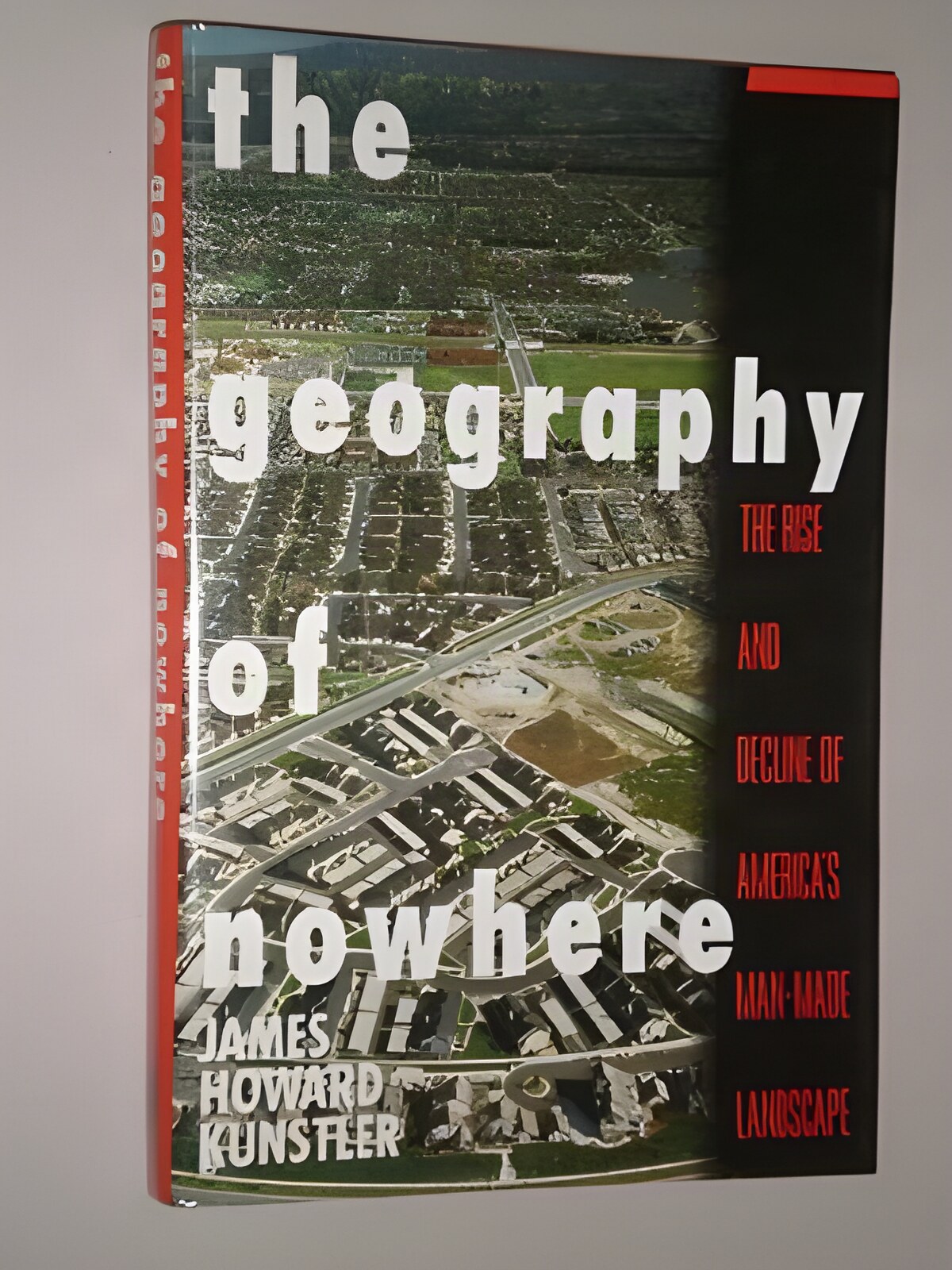
Hardcover. NY, Simon & Schuster, 1st, 1993, Book: Very Good, Dust Jacket: Very Good, Hardcover in a bright, unclipped dust jacket, 303 pages. Eighty percent of everything ever built in America has been built since the end of World War II. This tragic landscape of highway strips, parking lots, housing tracts, mega-malls, junked cities, and ravaged countryside is not simply an expression of our economic predicament, but in large part a cause. It is the everyday environment where most Americans live and work, and it represents a gathering calamity whose effects we have hardly begun to measure. In The Geography of Nowhere, James Howard Kunstler traces America's evolution from a nation of Main Streets and coherent communities to a land where everyplace is like noplace in particular, where the city is a dead zone and the countryside a wasteland of cars and blacktop. Now that the great suburban build-out is over, Kunstler argues, we are stuck with the consequences: a national living arrangement that destroys civic life while imposing enormous social costs and economic burdens. Kunstler explains how our present zoning laws impoverish the life of our communities, and how all our efforts to make automobiles happy have resulted in making human beings miserable. Name on front fly leaf, otherwise like new.
Hardcover. NY, New York University Press, 1st, 2002, Book: Very Good, Dust Jacket: Very Good, Hardcover in a bright dust jacket, pages. The GI War Against Japan recounts the harrowing experiences of American soldiers in Asia and the Pacific. Based on countless diaries and letters, it sweeps across the battlefields, from the early desperate stand at Guadalcanal to the tragic sinking of the U.S.S. Indianapolis at war's very end. From the daunting spaces of the China-India theater to the fortress islands of Iwo Jima and Okinawa, Schrijvers brings to life the GIs' struggle with suffocating wilderness, devastating diseases, and Japanese soldiers who preferred death over life. Amidst the frustration and despair of this war, American soldiers abandoned themselves to an escalating rage that presaged Hiroshima and Nagasaki.
Softcover. Berkeley, University of California Press, 1st, 1987, Book: Very Good, Dust Jacket: None, Softcover, 248 pages. Name on front fly leaf whited out, otherwise clean.
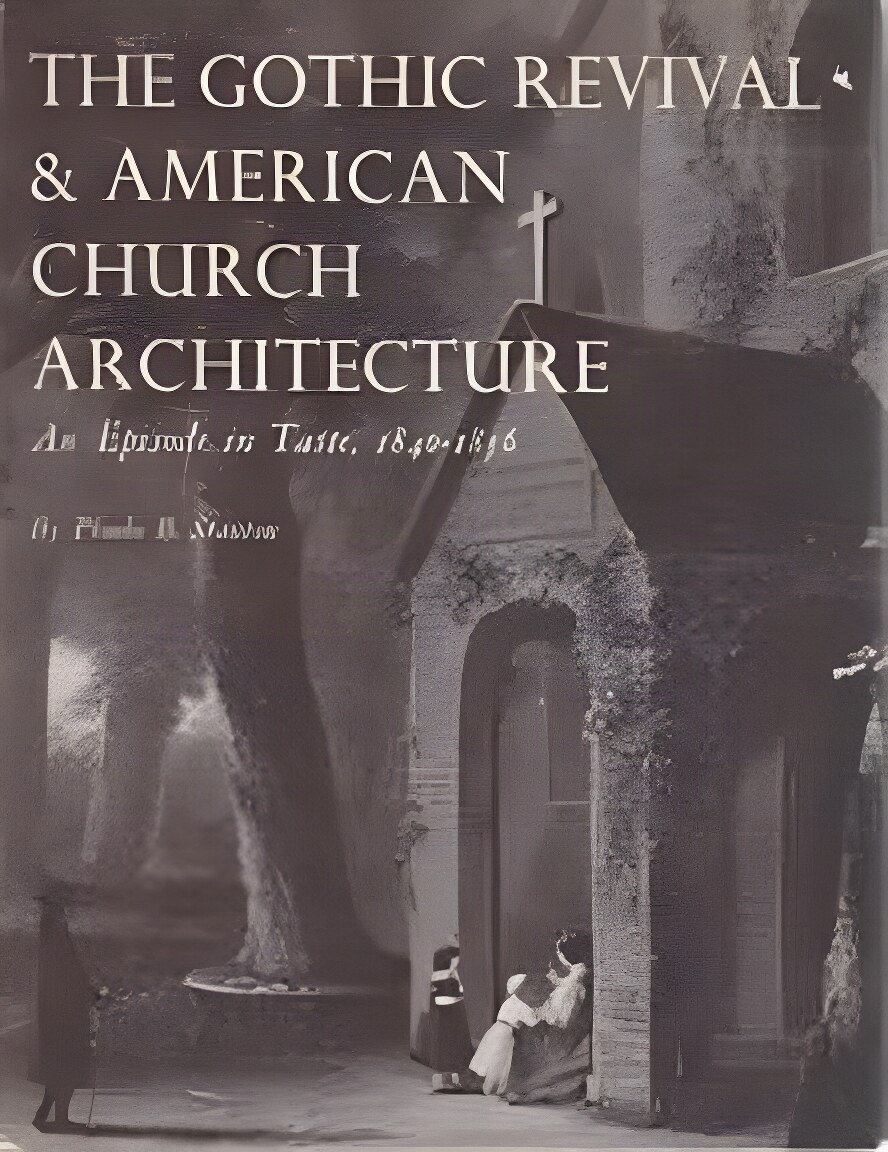
Hardcover. Baltimore, Johns Hopkins University, 1st, 1968, Book: Very Good, Dust Jacket: Very Good, Hardcover in a lightly worn, unclipped dust jacket, 350 pages, b&w illustrations. This illustrated account of the impact of the English Gothic revival on American church architecture in the mid-nineteenth century finds that this fundamentally conservative movement provided the foundation for a new, influential aesthetic. Clean copy.
Hardcover. NY, Alfred A Knopf, 1960, Book: Very Good, Dust Jacket: Very Good, Hardcover in a lightly worn, unclipped dust jacket, 324 pages plus index. Illustrated with 17 halftone reproductions from various sources and with line drawings by Nick Eggenhofer. A comprehensive history of the slaughter of the buffalo, the battles between the hunters and Indians. Also tells of the buffalo hunting for sport by Washington Irving and the Russian Prince Alexis. Describes Buffalo Bill's killing buffaloes to feed the men who were building a railroad across the plains. Most of the book, however chronicles the hide hunters who swarmed over the ranges in 1871 and reduced the herds of nearly forty million buffaloes to fewer than one-thousand, taking the hides and leaving the meat to rot. Bookplate on inside front cover, otherwise clean.
NY, Simon & Schuster, 1st, 2021, Book: Very Good, Dust Jacket: Very Good, Hardcover in a bright, unclipped dust jacket. 609 pages, b&w illustrations. They say that history is written by the victors. But not in the case of the most famous dissenter on the Supreme Court. Almost a century after his death, John Marshall Harlan's words helped end segregation and gave us our civil rights and our modern economic freedom. But his legacy would not have been possible without the courage of Robert Harlan, a slave who John's father raised like a son in the same household. After the Civil War, Robert emerges as a political leader. With Black people holding power in the Republican Party, it is Robert who helps John land his appointment to the Supreme Court. At first, John is awed by his fellow justices, but the country is changing. Northern whites are prepared to take away black rights to appease the South. Giant trusts are monopolizing entire industries. Against this onslaught, the Supreme Court seemed all too willing to strip away civil rights and invalidate labor protections. So as case after case comes before the court, challenging his core values, John makes a fateful decision: He breaks with his colleagues in fundamental ways, becoming the nation's prime defender of the rights of Black people, immigrant laborers, and people in distant lands occupied by the US. Harlan's dissents, particularly in Plessy v. Ferguson, were widely read and a source of hope for decades. Thurgood Marshall called Harlan's Plessy dissent his "Bible"--and his legal roadmap to overturning segregation. In the end, Harlan's words built the foundations for the legal revolutions of the New Deal and Civil Rights eras.
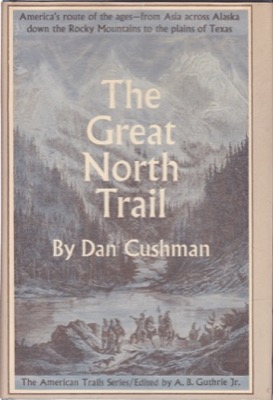
Hardcover. NY, McGraw Hill, 1st, 1966, Book: Very Good, Dust Jacket: Very Good, Hardcover in a bright, unclipped dust jacket. The American Trails Series, edited by A.B. Guthrie, Jr. 383 pages, includes a two-page map. This book offers an account of the route between Siberia and Alaska that continues southward along the Rockies all the way to Mexico and beyond. Cushman details the stories of the many groups who have traversed parts of the route from prehistoric peoples to Native Americans, Spanish explorers, fur traders, cowboys, and whiskey runners of the Prohibition era. A clean and pristine copy of the first printing,
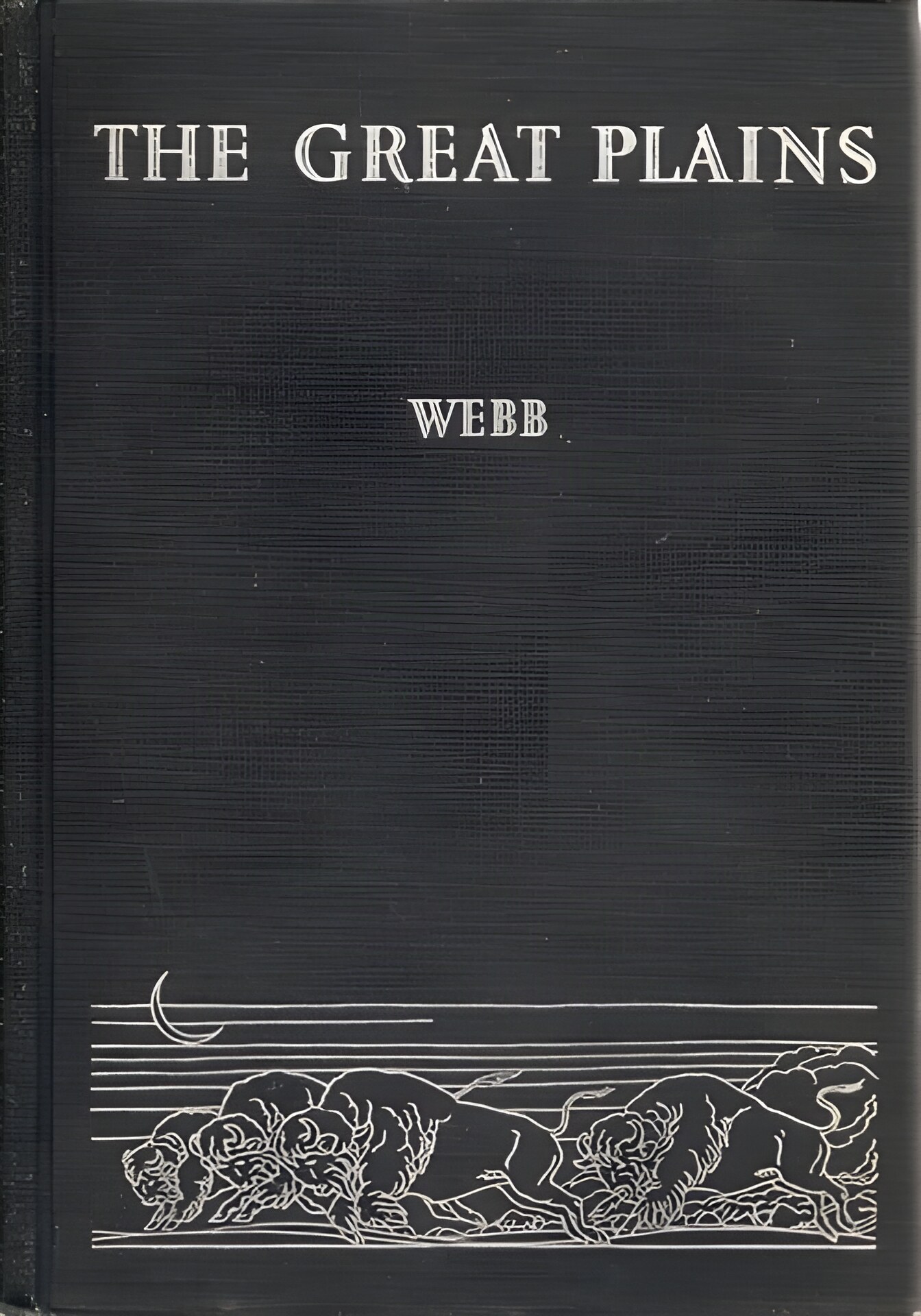
Hardcover. Boston, Ginn and Company, reprint, Book: Very Good, Dust Jacket: None, Hardcover, black cloth with silver lettering, 525 pages with index. B&w maps, illustrations. A historical interpretation of the semi-arid Short grass Country, the so called Cattle Kingdom. A well written book with a long chapter on the cattle industry. Copyright page states 1931, but titles listed in front date to 1937. Name on front fly leaf, mild musty odor.
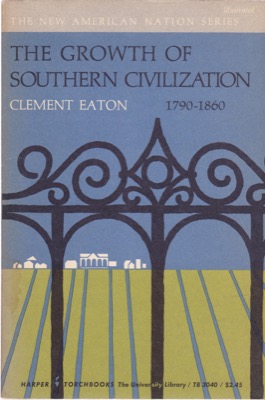
Softcover. NY, Harper Torchbooks, reprint, 1965, Book: Very Good, Dust Jacket: None, Softcover, 357 pages. A scholarly study about life in the Old South. Clean copy.
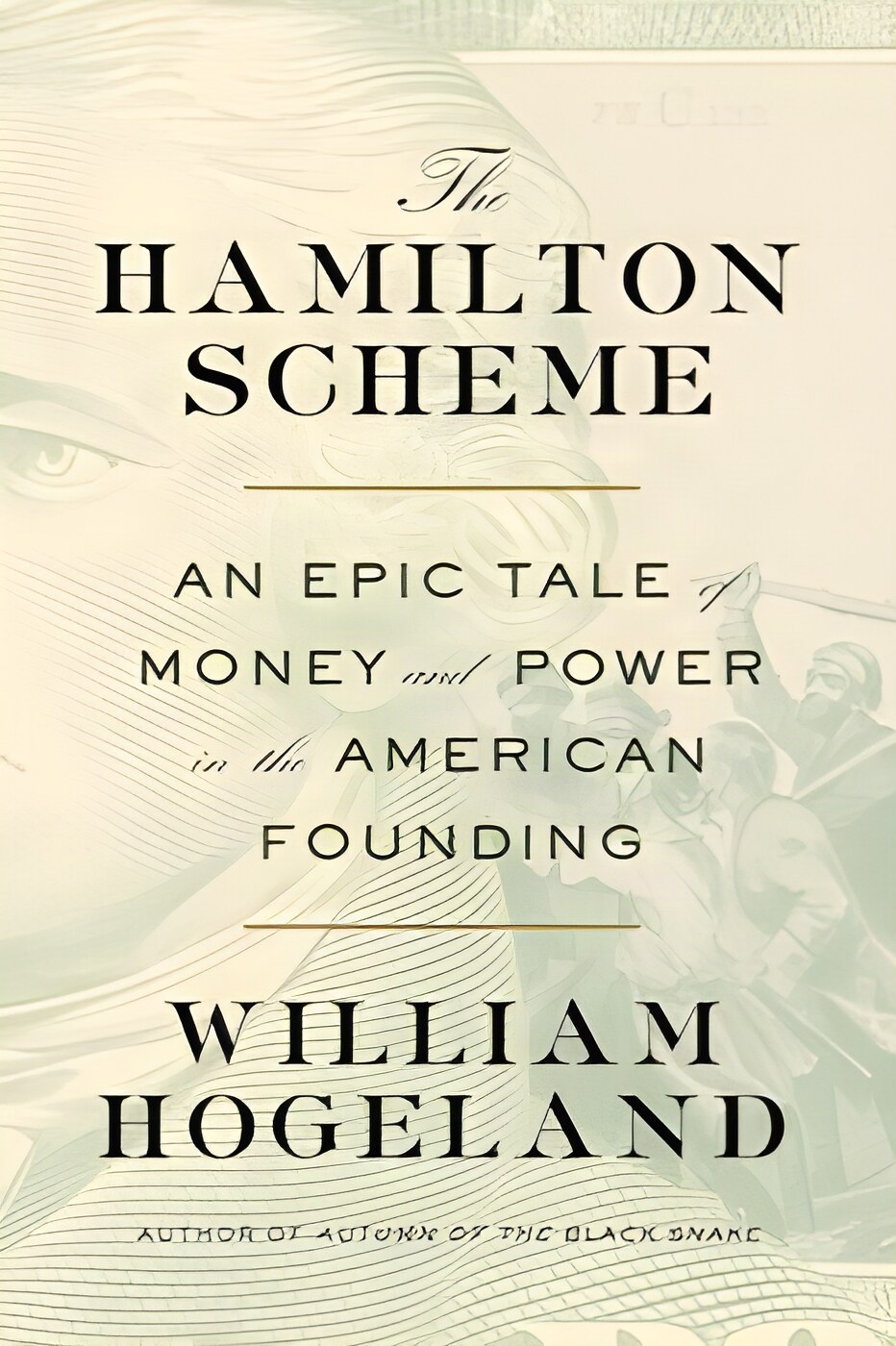
Hardcover. NY, Farrar, Straus and Giroux, 1st, 2024, Book: Very Good, Dust Jacket: Very Good, Hardcover in a bright dust jacket, 525 pages. "Forgotten founder" no more, Alexander Hamilton has become a global celebrity. Millions know his name. Millions imagine knowing the man. But what did he really want for the country? What risks did he run in pursuing those vaulting ambitions? Who tried to stop him? How did they fight? It's ironic that the Hamilton revival has obscured the man's most dramatic battles and hardest-won achievements-as well as downplaying unsettling aspects of his legacy. Thrilling to the romance of becoming the one-man inventor of a modern nation, our first Treasury secretary fostered growth by engineering an ingenious dynamo-banking, public debt, manufacturing-for concentrating national wealth in the hands of a government-connected elite. Seeking American prosperity, he built American oligarchy. Hence his animus and mutual sense of betrayal with Jefferson and Madison-and his career-long fight to suppress a rowdy egalitarian movement little remembered today: the eighteenth-century white working class. Clean copy.
Hardcover. NY, Creative Age Press, 2nd pr., 1944, Book: Very Good, Dust Jacket: Fair, Hardcover in a worn, chipped dust jacket. 368 pages, red cloth, black border and gilt title on upper cover. Black label with gilt title on spine. Second printing copy of this detailed look at FDR's New Deal. Jacket art by C.B. Falls. Some tape repair to dj, name on inside front cover hidden by dj flap. Otherwise a clean copy,
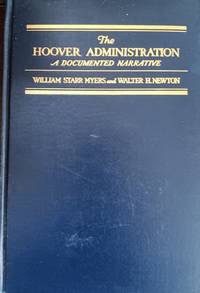
Hardcover. NY, Charles Scribner's Sons, 1st, 1936, Book: Very Good, Dust Jacket: None, Hardcover, blue cloth with gilt lettering, 553 pages. "The complete, fully documented, and authoritative story of Herbert Hoover's four years in Washington." Written by Myers, a history scholar whose academic field was the GOP, and Newton, a former member of Congress who was for many years Hoover's personal secretary or roughly his Chief of Staff.This is about as good a defense of Hoover's actions just before and during the Great Depression as anything that has come out since. Bookplate on inside front cover, otherwise clean.
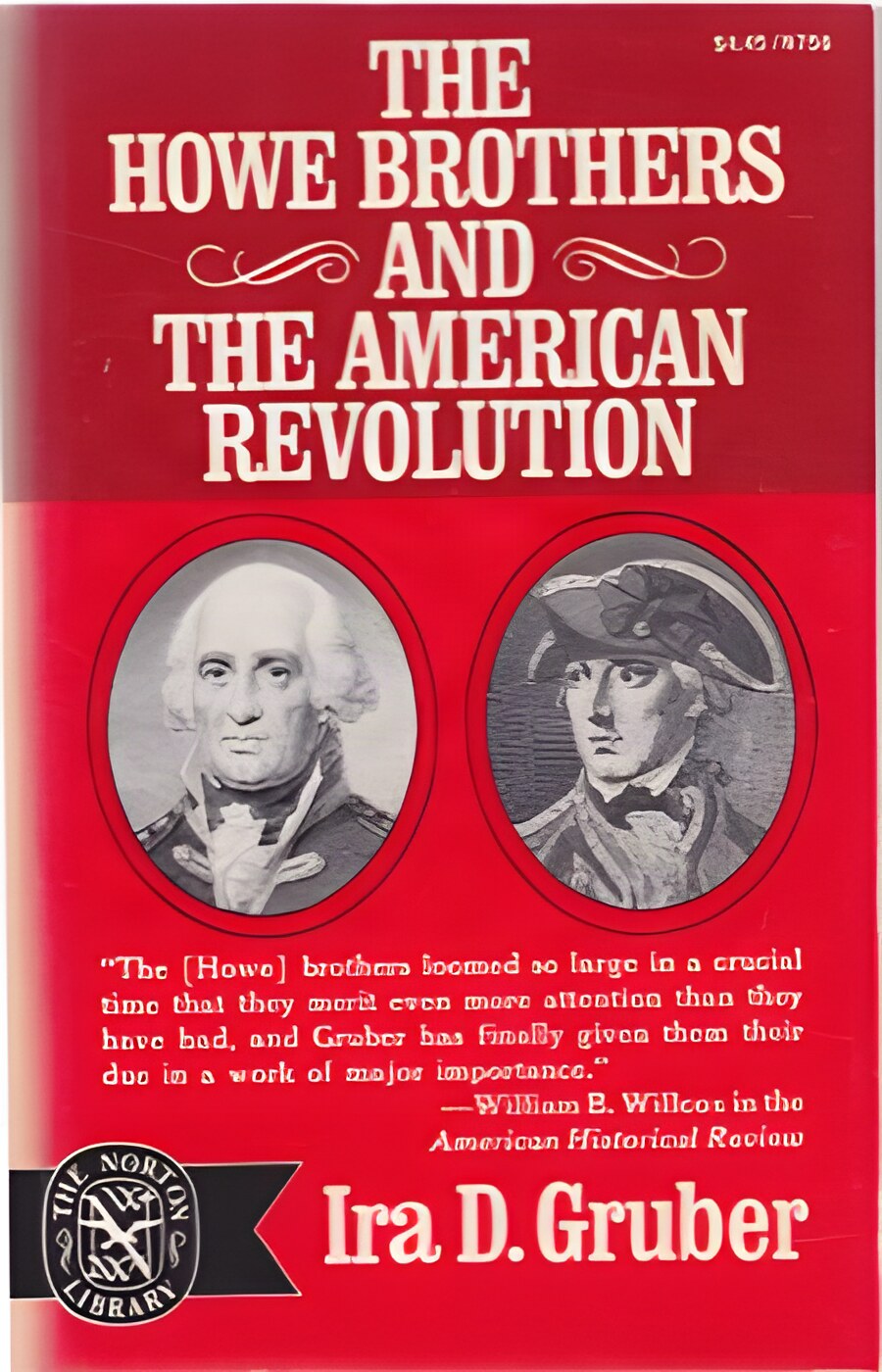
Softcover. NY, W. W. Norton & Company, reprint, 1975, Book: Very Good, Dust Jacket: None, Softcover, 396 pages including index. By focusing on the Howe brothers, their political connections, their relationships with the British ministry, their attitude toward the Revolution, and their military activities in America, Gruber answers the frequently asked question of why the British failed to end the American Revolution in its early years. This book supersedes earlier studies because of its broader research and because it elucidates the complex personal interplay between Whitehall and its commanders. Clean, bright copy.
Hardcover. Charlottesville, VA, University Press of Virginia, 1st, 1981, Book: Very Good, Dust Jacket: Very Good, 185 pages. Black cloth cover with silhouette of Jefferson's head embossed to front and gilt lettering to spine, b&w illustrated dust jacket, 60 b&w figures, 8 b&w plates. Light wear to dust jacket; otherwise a very tight, clean copy.
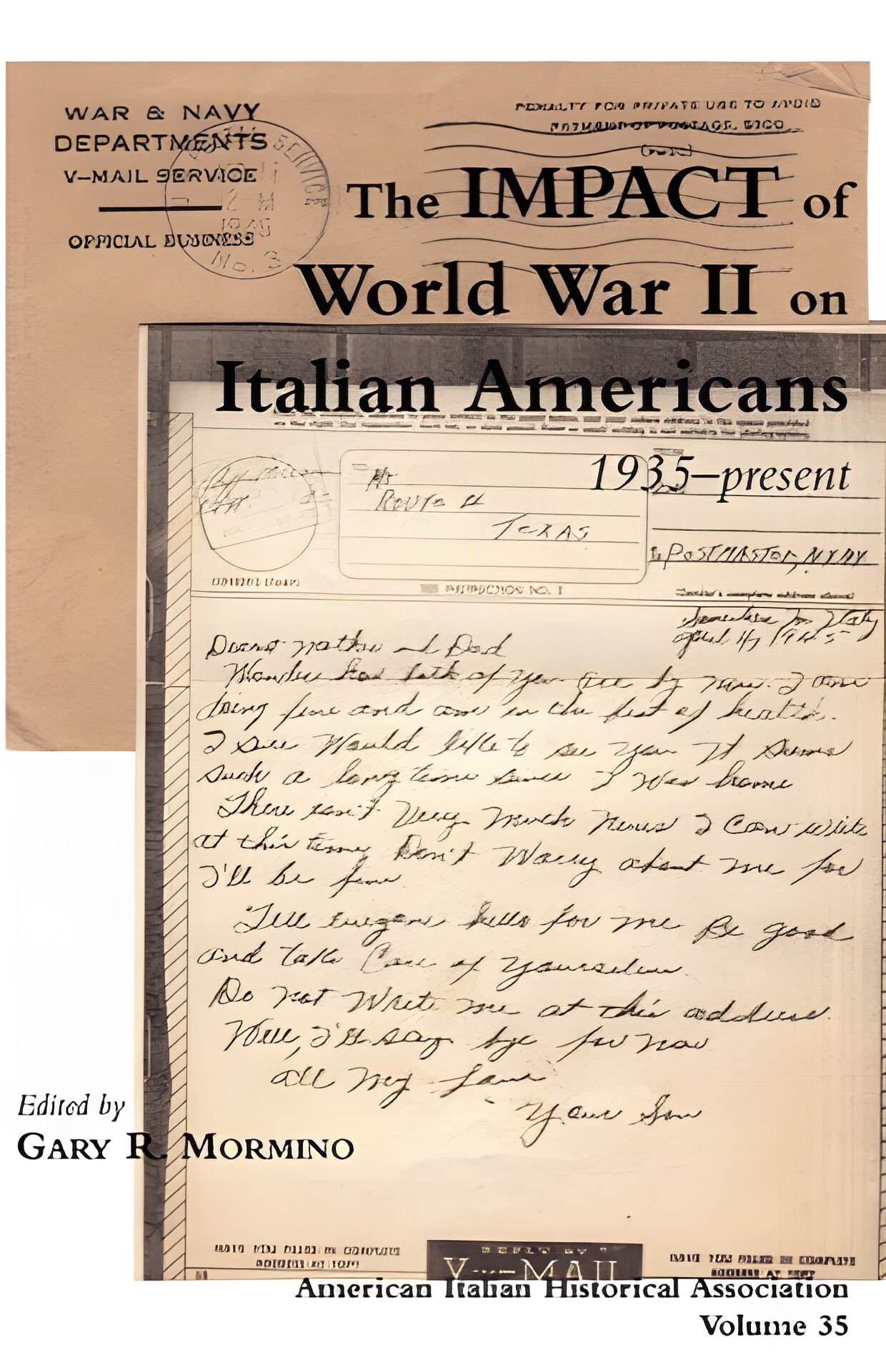
Softcover. NY, American Italian Historical Association, 1st, 2007, Book: Very Good, Dust Jacket: None, Softcover, 244 pages, 35th Conference of the American Italian Historical Association . "'Italian Americans and World War II, ' explores many facets of the dynamic period of the 1940s and the consequences of war and peace. Scholars within AIHA and outside the academy have been slow to recognize the significance of World War II, now recognized as a seminal event in Italian-American life and culture. . . . "This volume is dedicated to all Italian Americans who lived and died, fought and prayed during World War II." Clean copy.
Hardcover. NY, Burdick Brothers, reprint, 1857, Book: Very Good, Dust Jacket: None, Hardcover, embossed brown cloth with gilt lettering on spine. Ninth thousand. The Impending Crisis is often considered the only popular antislavery work by a southern author prior to the outbreak of the Civil War. Helper (1829-1909)'s argument that "slavery was economically unsound" caused this work to be "officially banned in the South"; in the North, it "vied in popularity and influence with Uncle Tom's Cabin" (Howes). The book stoked fears among southern slaveholders that the "North would promote a class conflict among southern whites," and helped drive many towards secessionism. Bookplate on inside front cover, front fly leaf missing. Otherwise a clean copy in exceptionally nice condition.
Hardcover. Boston, Little, Brown and Company, 1st, 1957, Book: Very Good, Dust Jacket: None, Hardcover, blue cloth with gilt lettering on spine. Volume XI in The History of United States Naval Operations in World War II. 360 pages, illustrated with maps (one fold-out) and b&w photos. Gilt on spine with light fading, lacks dust jacket, dj flap copy pasted inside front cover, otherwise clean, tight copy.
Hardcover. NY, WW Norton, 1wst, 2014, Book: Very Good, Dust Jacket: Very Good, Hardcover in a bright, unclipped dust jacket. A landmark collection, spanning ninety years of U.S. history, of the never-before-published diaries of George F. Kennan, America's most famous diplomat. Through it all, Kennan kept a diary. Spanning a staggering eighty-eight years and totaling over 8,000 pages, his journals brim with keen political and moral insights, philosophical ruminations, poetry, and vivid descriptions. In these pages, we see Kennan rambling through 1920s Europe as a college student, despairing for capitalism in the midst of the Depression, agonizing over the dilemmas of sex and marriage, becoming enchanted and then horrified by Soviet Russia, and developing into America's foremost Soviet analyst. But it is the second half of this near-century-long record--the blossoming of Kennan the gifted author, wise counselor, and biting critic of the Vietnam and Iraq wars--that showcases this remarkable man at the height of his singular analytic and expressive powers, before giving way, heartbreakingly, to some of his most human moments, as his energy, memory, and finally his ability to write fade away.
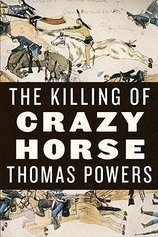
Hardcover. NY, Alfred A. Knopf, 1st, 2010, Book: Very Good, Dust Jacket: Very Good, Hardcover in a bright, unclipped dust jacket. He was the greatest Indian warrior of the nineteenth century. His victory over General Custer at the battle of Little Bighorn in 1876 was the worst defeat inflicted on the frontier Army. And the death of Crazy Horse in federal custody has remained a controversy for more than a century. The Killing of Crazy Horse pieces together the many sources of fear and misunderstanding that resulted in an official killing hard to distinguish from a crime. A rich cast of characters, whites and Indians alike, passes through this story, including Red Cloud, the chief who dominated Oglala history for fifty years but saw in Crazy Horse a dangerous rival; No Water and Woman Dress, both of whom hated Crazy Horse and schemed against him; the young interpreter Billy Garnett, son of a fifteen-year-old Oglala woman and a Confederate general killed at Gettysburg; General George Crook, who bitterly resented newspaper reports that he had been whipped by Crazy Horse in battle; Little Big Man, who betrayed Crazy Horse; Lieutenant William Philo Clark, the smart West Point graduate who thought he could "work" Indians to do the Army's bidding; and Fast Thunder, who called Crazy Horse cousin, held him the moment he was stabbed, and then told his grandson thirty years later, "They tricked me! They tricked me!" With the Great Sioux War as background and context, drawing on many new materials as well as documents in libraries and archives, Thomas Powers recounts the final months and days of Crazy Horse's life not to lay blame but to establish what happened.
Hardcover. NY, The Free Press, 1st, 1968, Book: Very Good, Dust Jacket: None, Hardcover, gray cloth binding with orange and gilt lettering on spine. 394 pages. Prof. Paige's reconstruction and analysis of the U.S. decision to resist Chinese aggression in Korea in 1950. Name on front fly leaf othewise clean. No dust jacket.
Softcover. New Jersey, Bergen County Board, 1st, 1983, Book: Very Good, Dust Jacket: None, Softcover, 71 pages. Volume one of a seven volume set on the history and heritage of Bergen County. Clean, like new..




 "The Great American Rascal: The Turbulent Life of Aaron Burr by: Vail, Philip")




 "The Image of Thomas Jeffersonby: Cunningham, Jr., Noble E.")


 "The Invasion of France and Germany, 1944-1945: History of United States Naval Operations in World War II, Volume 11 by: Morison, Samuel Eliot")