Hardcover. Lawrence KS, University Press of Kansas, 1st, 2009, Book: Very Good, Dust Jacket: Very Good, Hardcover in bright dust jacket, 375 pages. The debate over the federal budget-and the deficit spending it tends to produce-has assumed a renewed urgency for reasons that are painfully clear to all of us. Over the past thirty-two years-from the presidency of Jimmy Carter through that of George W. Bush-the U.S. government has in fact balanced its budget in only four of them, while the fiscal challenges confronting President Obama make a balanced budget anytime soon a remote possibility. Iwan Morgan's book provides a much-needed historical perspective on this perennially troubling issue. Clean copy.
Hardcover. NY, Doubleday, 1st, 2002, Book: Very Good, Dust Jacket: Very Good, Hardcover in a bright, unclipped dust jacket. The discovery of gold by a team of Mormon mill workers in 1848 sparked a frenzy that shook the world. People swarmed to California from as far as China and Australia. They came from England and France, from Ireland and Chile, leaving behind their families and everything they owned in the hope of making their fortunes in the new world. They came by ship and overland, braving Tierra del Fuego and the pestilences of Panama, lured by the promise of gold. In a spellbinding narrative that spans several continents, Brands brings the fervour and excitement of the gold rush vividly to life. The Age of Gold is narrative history at its best -- the astonishing tale of one of the most extraordinary speculative frenzies in history, told by a master historian. 547 pages, clean copy.
Hardcover. Knoxville, University Of Tennessee Press, 1st, Book: Very Good, Dust Jacket: Very Good, Hardcover in a bright dust jacket, 432 pages. Shields shows how both the myth of Adam and the myth of Aeneas, in crossing over to America from Europe, dynamically intermingled in the thought of the earliest American writers. This rearticulation of the myths of Adam and Aeneas became peculiarly adapted to the demands of the American adventure in freedom. Shields argues that uncovering and acknowledging the classical roots of our culture can allay the American fear of "pastlessness" that the long-standing emphasis on the Adamic myth has generated. The authors probing analysis sheds new light on the works of such seminal figures as Edward Taylor, Cotton Mather, Phillis Wheatley, George Washington, Nathaniel Hawthorne, and Herman Melville.
Hardcover. Princeton Providence, Princeton University Press / Brown University Press, 1st, 1972, Book: Very Good, Dust Jacket: Very Good, Hardcovers. Complete in two volumes. Volume I: The Journals of Clermont-Crevecoeur, Verger, and Berthier. Volume II: The Itineraries, Maps, Views. Both volumes are fine in near fine unclipped dust jackets. Housed in a lightly rubbed slipcase that has a chip to one of the pictorial labels. INSCRIBED BY CO-EDITOR ANNE BROWN on the half title page in Vol. 1. Mild residue to prelim page in Vol. 2, otherwise nice, clean and unmarked. Vol. 1: 351 pages, Vol. 2: 362 pages, color and b&w illustrations, indexed, fold out maps. PLEASE NOTE: DUE TO SIZE AND WEIGHT, DOMESTIC SHIPPING ONLY.
Hardcover. Norman OK, University of Oklahoma Press, 1st, 1974, Book: Very Good, Dust Jacket: Very Good, Hardcover in a bright dust jacket, 236 pages. Clean copy.
Hardcover. NY, Arno Press, reprint, 1969, Book: Very Good, Dust Jacket: None, Hardcover in a lightly worn dust jacket, 620 pages. History of the American Army in the Southern states during the Revolutionary war. Written by Henry (Light Horse) Lee, father of Robert E Lee. This is a reprint of the 1869 edition, with a biography of Henry Lee by Robert E Lee. Clean copy.
Hardcover. New York, William Morrow & Co, 1st, 1992, Book: Very Good, Dust Jacket: Very Good, 160 pages. Hardcover with dust jacket. Very clean, unmarked copy with some minor shelfwear to dust jacket. This beautiful book is a spectacular overview of McCarthy's exciting Western work, presenting colorful paintings from his fine art career. Color illustrations throughout.
Hardcover. Princeton NJ, Princeton University Press, 1st, 2007, Book: Very Good, Dust Jacket: Very Good, Hardcover, 288 pages. The impact of the humble American snapshot has been anything but humble. Any American who takes a snapshot contributes to a compelling and influential genre. Since 1888, when George Eastman introduced the Kodak camera and roll film, the snapshot has not only changed everyday American life and memory; it has also changed the history of fine art photography. The distinctive subject matter and visual vocabulary of the American snapshot--its poses, facial expressions, viewpoints, framing, and themes--influenced modernist photographers as they explored spontaneity, objectivity, and new topics and perspectives. A richly illustrated chronicle of the first century of snapshot photography in America, The Art of the American Snapshot is the first book to examine the evolution of this most common form of American photography. The book shows that among the countless snapshots taken by American amateurs, some works, through intention or accident, continue to resonate long after their intimate context and original meaning have been lost.The catalogue of a fall 2007 exhibition at the National Gallery of Art in Washington, DC, The Art of the American Snapshot reproduces some 250 snapshots drawn from Robert Jackson's outstanding collection and from a recent gift Jackson made to the museum. Organized decade by decade, the book traces the evolution of American snapshot imagery and describes how technical, social, and cultural factors affected the look of snapshots at different periods.
Softcover. Baltimore, Johns Hopkins University Press, 1st, 2007, Book: Very Good, Dust Jacket: None, Softcover, 155 pages. Thomas Dennis emigrated to America from England in 1663, settling in Ipswich, a Massachusetts village a long day's sail north of Boston. He had apprenticed in joinery, the most common method of making furniture in sixteenth- and seventeenth-century Britain, and he became Ipswich's second joiner, setting up shop in the heart of the village. During his lifetime, Dennis won wide renown as an artisan. Today, connoisseurs judge his elaborately carved furniture as among the best produced in seventeenth-century America. Robert Tarule, historian and accomplished craftsman, brilliantly recreates Dennis's world in recounting how he created a single oak chest. Writing as a woodworker himself, Tarule vividly portrays Dennis walking through the woods looking for the right trees; sawing and splitting the wood on site; and working in his shop on the chest-planing, joining, and carving. Dennis inherited a knowledge of wood and woodworking that dated back centuries before he was born, and Tarule traces this tradition from Old World to New. He also depicts the natural and social landscape in which Dennis operated, from the sights, sounds, and smells of colonial Ipswich and its surrounding countryside to the laws that governed his use of trees and his network of personal and professional relationships. Clean copy.
Hardcover. Boston, Little, Brown and Company, reprint, 1957, Book: Very Good, Dust Jacket: None, Hardcover, blue cloth with gilt lettering on spine. Volume X in The History of United States Naval Operations in World War II. 399 pages, illustrated with maps (one fold-out) and b&w photos. Gilt on spine with light fading, lacks dust jacket, dj flap copy pasted inside front cover, otherwise clean, tight copy.
Hardcover. Westport CT, Greenwood Press, 1st, 2003, Book: Very Good, Dust Jacket: None, Hardcover, glazed pictorial boards, 177 pages. Postma draws on primary sources and current historical scholarship to offer secondary readers and researchers a comprehensive and well-written history. He covers the entire Atlantic slave trade era, from the 1400s to the final abolition of chattel slavery in the New World in 1888. The focus is on Africa and the entire New World. While he describes the many horrors of the Middle Passage, he also examines how the slave trade contributed to the development of the modern international economy. The last chapters discuss the efforts to abolish the slave trade and its legacy. Throughout, Postma documents the sources that support his discussion and conclusions. Chapter notes are supplemented by an extensive annotated bibliography that includes books, articles, films, and electronic resources. The volume concludes with biographical sketches of important people and excerpts from primary documents written by enslaved Africans and white officials. The black-and-white reproductions of period illustrations add little to the text. Clean copy.
Hardcover. Boston, Little, Brown and Company, reprint, 1950, Book: Very Good, Dust Jacket: None, Hardcover, blue cloth with gilt lettering on spine. Volume I in The History of United States Naval Operations in World War II. 432 pages, illustrated with maps and b&w photos. Gilt on spine with light fading, lacks dust jacket, otherwise clean, tight copy.
Hardcover. NY, Alfred A. Knopf, 1st, 1946, Book: Very Good, Dust Jacket: None, Hardcover, 313 pages plus index. Tan cloth boards that show minor fading to top, spine and light discoloration to back cover. Otherwise very good. No dust jacket. Generous selection of black and white illustrations. This copy also complete with both the fold-out maps that are often missing: (1) City of Richmond in 1861; and (2) Richmond-Petersburg Theatre of Operations. These ten chapters reconstitute, across an eighty-year gap, the everyday life of a capital city close behind the fighting fronts of a prolonged war. From records that originated close to the facts or in the midst of them--newspapers, advertisements, diaries, letters, stenographic reports of the time--Mr. Bill discloses how people lived on the home front of the Confederacy. He tells in abundant detail what the people did to amuse themselves, what rumors alternately exalted and depressed them, about what and whom they gossiped, what they found procurable in the black market and what it cost them.
NY, St. Martin's Press, 1st, 2002, Book: Very Good, Dust Jacket: Very Good, Hardcover in a bright, unclipped dust jacket. A masterful, definitive, and eloquent look at the enormous cultural and economic impact on America of New England's textile mills. The author, an award-winning CBS producer, traces the history of American textile manufacturing back to the ingenuity of Francis Cabot Lodge. The early mills were an experiment in benevolent enlightened social responsibility on the part of the wealthy owners, who belonged to many of Boston's finest families. But the fledgling industry's ever-increasing profits were inextricably bound to the issues of slavery, immigration, and workers' rights. William Moran brings a newsman's eye for the telling detail to this fascinating saga that is equally compelling when dealing with rags and when dealing with riches. Clean copy.
Hardcover. Chicago, University of Chicago Press, 1st, 2000, Book: Very Good, Dust Jacket: Very Good, Hardcover in a bright, unclipped dust jacket. In this daring reexamination of the connections between national politics and Hollywood movies, Lary May offers a fresh interpretation of American culture from the New Deal through the Cold War and one in which a populist, egalitarian ethos found itself eventually supplanted by a far different view of the nation. Clean copy.
Hartford CT, Clapp and Benton, 1st, 1832, Book: Good, Hardcover, leather bound, 422 pages. A rare, early 19th-century account of the famed American President, focusing primarily on his career as a military officer and as a lawyer. This 1832 first edition of Goodwin's book includes a portrait frontispiece of Andrew Jackson. It is filled with information regarding his early childhood, civil life as lawyer senator and judge, as well as heroics in the War of 1812, the Creek War, and the American Revolution with an inclusion of his time in the presidency. Previous owner's name on verso of frontis. Covers show edgewear, top 2" of title page missing, frontispiece engraving of Jackson has a repaired tear. Still a solid copy, spine label with gilt title.
Softcover. Norman OK, University of Oklahoma Press , reprint, 1996, Book: Very Good, Dust Jacket: None, Softcover, 167 pages. After nearly 200,000 African-American soldiers fought in the Civil War, Congress enacted legislation to authorize regiments of cavalry and infantry for service in the West. The Ninth and Tenth cavalries won fame as "buffalo soldiers" in the Indian wars, nearly overshadowing the critical support role of the Twenty-fourth and Twenty-fifth infantries. Now Arlen L. Fowler brings to light the story of African-American infantry service from 1869 to 1891 in Texas, Indian Territory, the Dakotas, Montana, and Arizona.
Hardcover. London , Rupert Hart=Davis, 1st, 1968, Book: Very Good, Dust Jacket: Good, Hardcover in a dust jacket with light edgewear, 365 pages. An informal military history of the North American continent. The two major campaigns covered being the war with France for the possession of Canada & the American War of Independence. Service discipline in the British Army meant a bloody back, hence the nickname for the soldiers of the time. Name on front fly leaf, otherwise clean.
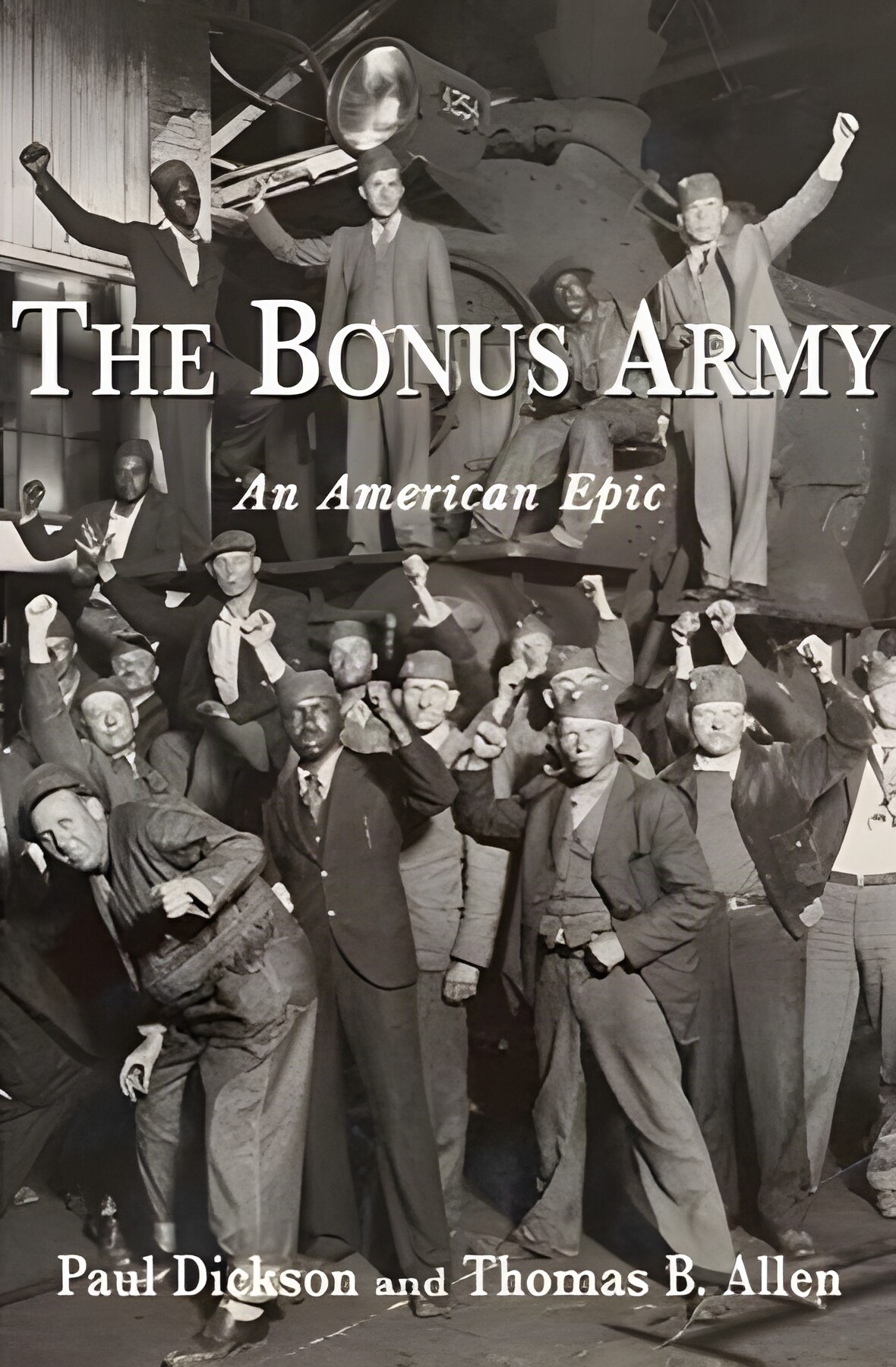
Hardcover. NY, Walker Books, 1st, 2004, Book: Very Good, Dust Jacket: Very Good, Hardcover in a bright, unclipped dust jacket. n the summer of 1932, at the height of the Depression, some forty-five thousand veterans of World War I descended on Washington, D.C., from all over the country to demand the bonus promised them eight years earlier for their wartime service. They lived in shantytowns, white and black together, and for two months they protested and rallied for their cause-an action that would have a profound effect on American history. Clean copy.
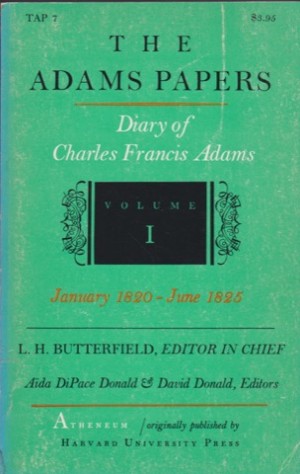
Hardcover. Cambridge MA, Harvard University Press, 3rd pr., 1975, Book: Very Good, Dust Jacket: Good, Hardcover in a worn, chipped dust jacket. 411 pages; index; 24 illustrations, including color frontispiece of Abigail and John; from the Introduction: " 'The Book of Abigail and John' is a Bicentennial updating of Charles Francis Adams' contribution ('Familiar Letters') to the nation's Centennial. It contains what the present editors consider the best letters of John and Abigail Adams, written from their courtship beginning late in 1762 to their reunion in Europe in August 1784.To these letters have been added a number of letters to "third parties" and selected diary and autobiographical passages that reveal the two as man and woman, husband and wife, father and mother." Name on front fly leaf, otherwise clean.
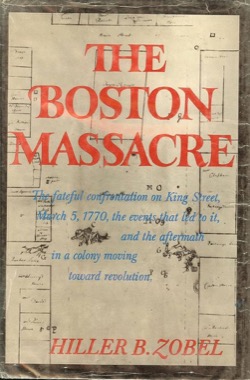
Hardcover. NY, Hastings House, 1st, 1970, Book: Very Good, Dust Jacket: Very Good, Hardcover in a bright, lightly worn dust jacket, 191 pages, b&w illustrations. An unsparing account of the famous massacre of March 5, 1770, when a squad of British soldiers, called out to protect a sentry from a Boston mob, fired on civilians, killing 4, fatally wounding a fifth, and injuring 6 others. Was it a massacre, as Boston called it, or "the first battle of the American Revolution," as some writers styled it, or merely a street brawl, as the testimonies of witnesses seem to indicate? Whatever its character, it had great influence in consolidating colonial opposition to the British Government. This is the story of one of the most famous and controversial murder trials in American history, in which John Adams and Josiah Quince, Jr., confirmed patriots, toiled to get the soldiers acquitted to save Boston from retaliation, against the violent opposition of Samuel Adams, who wanted the soldiers convicted as murderers. Name on front fly leaf, otherwise clean.
Hardcover. NY, W. W. Norton & Company, 1st, 1970, Book: Very Good, Dust Jacket: Good, Hardcover in a lightly worn dust jacket, 372 pages. The Boston Massacre, known as the Incident on King Street by the British, was an event on March 5, 1770, in which British Army soldiers shot and killed people while under attack by a mob. The British soldiers were put on trial, found guilty of manslaughter and had their thumbs branded with an 'M' for murder as punishment. This book covers the action and the subsequent trial. Name on front fly leaf, otherwise clean.




![The American Campaigns of Rochambeau's Army, 1780-1783 (2 Volumes) (SIGNED COPY)by: Rice, Howard C. Jr. [Editor And Translator]; Brown, Anne S. K. [Editor And Transla](https://www.browsingisarousing.com/shop/images/The-American-Campaigns-of-Rochambeaus-Army-1780-1783-2-Volumes-SIGNED-COPY_by_Rice-Howard-C.-Jr.-Edi383191-429346.jpg "The American Campaigns of Rochambeau's Army, 1780-1783 (2 Volumes) (SIGNED COPY)by: Rice, Howard C. Jr. [Editor And Translator]; Brown, Anne S. K. [Editor And Transla")
![The American Campaigns of Rochambeau's Army, 1780-1783 (2 Volumes) (SIGNED COPY)by: Rice, Howard C. Jr. [Editor And Translator]; Brown, Anne S. K. [Editor And Transla](https://www.browsingisarousing.com/shop/images/The-American-Campaigns-of-Rochambeaus-Army-1780-1783-2-Volumes-SIGNED-COPY_by_Rice-Howard-C.-Jr.-Edi383191-429346_50_th.jpg)
![The American Campaigns of Rochambeau's Army, 1780-1783 (2 Volumes) (SIGNED COPY)by: Rice, Howard C. Jr. [Editor And Translator]; Brown, Anne S. K. [Editor And Transla](https://www.browsingisarousing.com/shop/images/The-American-Campaigns-of-Rochambeaus-Army-1780-1783-2-Volumes-SIGNED-COPY_by_Rice-Howard-C.-Jr.-Edi383191-429347_50_th.jpg)



 "The Atlantic Battle Won, May 1943-May 1945: History of United States Naval Operations in World War II, Volume 10 by: Morison, Samuel Eliot")

 "The Battle of the Atlantic: September 1939 - May 1943 (History of United States Naval Operations in World War Ii, Volume 1)by: Morison, Samuel Eliot")