Hardcover. St. Ann's Press, 1st, 2002, Book: Very Good, Dust Jacket: Very Good, Hardcover, 172 pages. On May 25, 1961, Bruce Davison joined a group of Freedom Riders traveling by bus from Montgomery, Alabama to Jackson, Mississippi. The actions of these youths challenged and disobeyed federal laws allowing for integrated interstate bus travel. These historic episodes, which ended in violence and arrests, marked the beginning of Davidson's exploration into the heart and soul of the civil rights movement in the United States during the years 1961-1965. In 1962, Davidson received a Guggenheim Fellowship and continued documenting the era, including an early Malcolm X rally in Harlem, steel workers in Chicago, a Ku Klux Klan cross burning near Atlanta, farm migrant camps in South Carolina, cotton picking in Mississippi, protest demonstrations in Birmingham, and the heroic Selma March that led to the Voting Rights Act of 1965, which was instrumental in changing the political power base in the segregated Southern states. In the 140 photographs collected here, many of which have never before been published, we see intimate and revealing portraits of Dr. Martin Luther King Jr., John Lewis, and other leaders made by Davidson during those turbulent times. These images describe the mood that prevailed during the civil rights movement with a lyrical imagery that is both poignant and profound. As Davidson bears witness to these historical events, and documents the degradation and segregation that were endured, he gives testimony to the struggle for freedom, equality, justice, and human dignity.
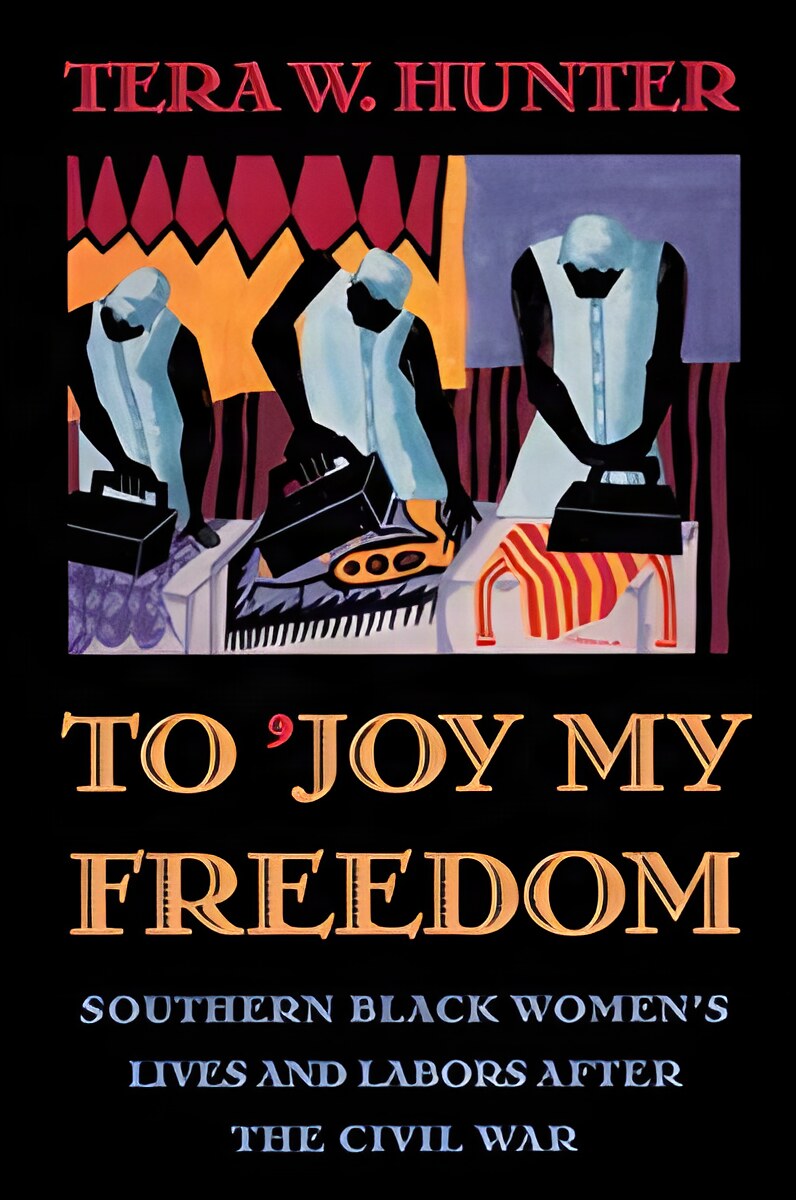
Softcover. Cambridge MA, Harvard University Press, reprint, 1998, Book: Very Good, Dust Jacket: None, Softcover, 311 pages. As the Civil War drew to a close, newly emancipated black women workers made their way to Atlanta-the economic hub of the newly emerging urban and industrial south-in order to build an independent and free life on the rubble of their enslaved past. In an original and dramatic work of scholarship, Tera Hunter traces their lives in the postbellum era and reveals the centrality of their labors to the African-American struggle for freedom and justice. Household laborers and washerwomen were constrained by their employers' domestic worlds but constructed their own world of work, play, negotiation, resistance, and community organization. Hunter follows African-American working women from their newfound optimism and hope at the end of the Civil War to their struggles as free domestic laborers in the homes of their former masters. We witness their drive as they build neighborhoods and networks and their energy as they enjoy leisure hours in dance halls and clubs. We learn of their militance and the way they resisted efforts to keep them economically depressed and medically victimized. Finally, we understand the despair and defeat provoked by Jim Crow laws and segregation and how they spurred large numbers of black laboring women to migrate north. Clean copy.
Hardcover. NY, Knopf, 1st, 2003, Book: Very Good, Dust Jacket: Very Good, Hardcover in a bright dust jacket. 185 pages, color and b&w illustrations. With these character sketches of key figures of the American Revolution and illuminating probes of its circumstances, Bernard Bailyn reveals the ambiguities, complexities, and uncertainties of the founding generation as well as their achievements. Using visual documentation--portraits, architecture, allegorical engravings--as well as written sources, Bailyn, one of our most esteemed historians, paints a complex picture of that distant but still remarkably relevant world. He explores the powerfully creative effects of the Founders' provincialism and lays out in fine detail the mingling of gleaming utopianism and tough political pragmatism in Thomas Jefferson's public career, and the effect that ambiguity had on his politics, political thought, and present reputation. And Benjamin Franklin emerges as a figure as cunning in his management of foreign affairs and of his visual image as he was amiable, relaxed, and amusing in his social life. Bailyn shows, too, why it is that the Federalist papers--polemical documents thrown together frantically, helter-skelter, by Alexander Hamilton, James Madison, and John Jay in a fierce political battle two hundred years ago--have attained canonical status, not only as a penetrating analysis of the American Constitution but as a timeless commentary on the nature of politics and constitutionalism.
Hardcover. NY, Harper & Row, 1st, 1970, Book: Very Good, Dust Jacket: Very Good, Hardcover in a bright, lightly worn dust jacket that's price-clipped. 434 pages, b&w illustrations. This is a full-scale biography of John Brown. "John Brown was a profoundly religious man dedicated to emancipation and Negro rights..." He "tried to overthrow slavery in the South itself by attacking Harpers Ferry and inciting a slave insurrection."Was Brown a vicious fanatic, or the greatest abolitionist hero in history?" This history is based on "contemporary letters, diaries, journals, newspapers, published reports, and recollections of eyewitnesses, this book is especially notable for providing the first really full account ever written of Brown's career before he went to Kansas..." Bold presentation inscription on front fly leaf, otherwise clean.
Hardcover. New York , Dodd Mead, 1st, 1942, Book: Very Good, Dust Jacket: Good, Hardcover, 70 pages, illustrated in color and b&w by Paul Lantz. Blue cloth covers, dust jacket with light edgewear, soil.
Hardcover. New York , Viking Press , 1st, 1973, Book: Very Good, Dust Jacket: Good, Hardcover, 260 pages, b&w illustrations. Light edgewear to dust jacket with creases to both front and rear flap. Internally very good.
Hardcover. Princeton NJ, Princeton University Press, 1st, 1965, Book: Very Good, Dust Jacket: Very Good, Hardcover in a bright dust jacket, 463 pages with index. This study considers the subtle and frequently confused relationship of armed force and political control in the British Empire before the American Revolution. It also clarifies a number of points of controversy and uncertainty about the causes of the American Revolution. A crisp copy of the 1965 1st edition. Name on front fly leaf, price clipped otherwise clean.
Hardcover. Lunenburg, Town of Lunenburg Historical Society, 1st, 1977, Book: Very Good, Dust Jacket: None, 80 pages. Illustrated with black & white photographs. Previous owners bookplate on half-title page. Some light underlining in pen of residents names on front endpaper. Cloth covers age darkened along spine and edges. Clean, tight copy.
Hardcover. NY, Columbia University, 1st, 1907, Book: Good, Dust Jacket: None, Hardcover, black cloth with gilt stamping, 126 pages. Ex-library with light markings and stamping. Much on the fur trade, early agriculture, gold dust and Civil War currency and trade in Oregon during the 1800s.
Hardcover. Cambridge MA, Harvard University Press, 1st, 1967, Book: Very Good, Dust Jacket: Very Good, Hardcover in a lightly worn dust jacket, 336 pages. Discusses the British Acts of Trade and Navigation as enforced in colonial America. Name on front fly leaf, otherwise a clean, tight copy.
Softcover. NJ, Rutgers University Press, 1st, 2003, Book: Very Good, Dust Jacket: None, Softcover, 244 pages. The story of westering Americans in the late nineteenth and early twentieth centuries has been told most notably through photographs of American Indians. Unlike this vast archive, produced primarily by male photographers, which depicted American Indians as either vanishing or domesticated, the lesser-known images by the women featured in Trading Gazes provide new ways of seeing the intersecting histories of colonial expansion and indigenous resistance. Four unconventional women-Jane Gay, who documented land allotment to the Nez Perces; Kate Cory, an artist who lived for years in a Hopi community; Grace Nicholson, who purchased cultural items from the Karuk and other northern California tribes; and Mary Schaffer, who traveled among the Stoney and Metis of Alberta, Canada-used cameras to document their cross-cultural encounters. Trading Gazes reconstructs the rich biographical and historical contexts explaining these women's presence in different Native communities of the North American West. Their photographs not only record the unprecedented opportunities available for Euro-American women eager to shed gender restrictions, but also reveal how women's newfound mobility depended on the increasing restrictions placed on Native Americans in this era.
Hardcover. Edinburgh, Cadell and Co., Reprint, 1829, Book: Very Good, Dust Jacket: None, 3 volume set. REBOUND. Each volume contains original pages, new covers. Age toning throughout with margins discolored to preliminary and end pages. Vol. 1 - 421 pages, fold out map tipped in to front with tape & small tears to edges; Vol. 2 - 432 pages; and Vol. 3 - 436 pages with fold out table tipped in to rear. Previous owner's book plate on front end paper on each volume.
Hardcover. Barre, Mass., The Imprint Society, 1st thus, 1972, Book: Very Good, Dust Jacket: None, Hardcover, 514 pages, with 25 illustrations, translated by John Reinhold Foster, introduced by Ralph M. Sargent, number 380 of a limited 1500 copies, decorated cover and slipcase, very clean and tight copy.
Hardcover. Troy NY, William H. Young, 1st, 1891, Book: Very Good, Dust Jacket: None, 453 pages. Hardcover, dark green covers stamped in black. Previous owners name on preliminary page. Black & white illustrations. One fold-out city view. Title in gilt on spine. Cloth covers with areas of light surface rubbing. Clean, unmarked text.
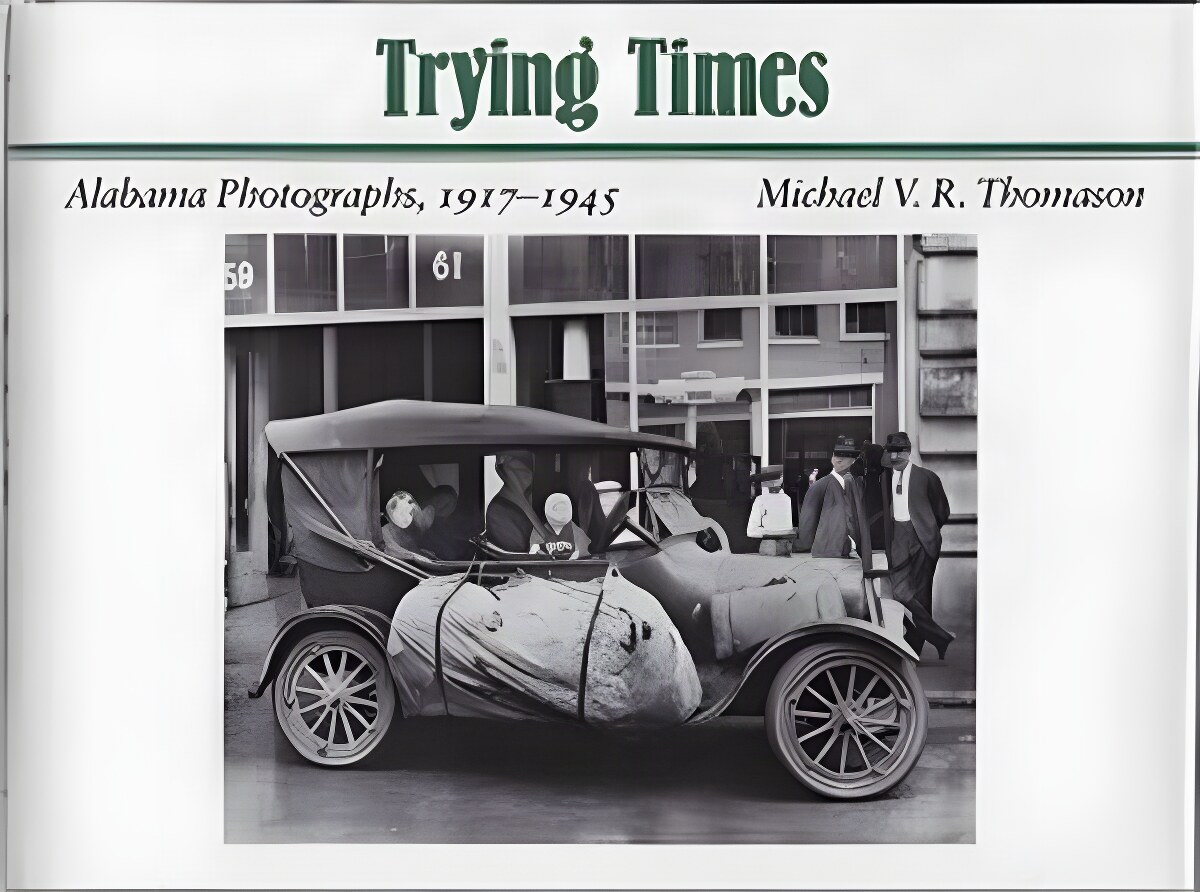
Hardcover. Alabama, University of Alabama Press, 1st, 1985, Book: Very Good, Dust Jacket: Very Good, 299 pages. Hardcover with dust jacket. Illustrated with black & white photographs. Clean, bright copy.
Hardcover. Boston, Houghton Mifflin Company, 1st, 1928, Book: Good, Dust Jacket: None, Hardcover, 500 pages, with illustrations. Corner and edge wear and fade, scuff mark on spine, some red spots on back cover, two small watermarks on front cover and black ink stains on bottom edge. Overall in good condition with clean pages and tight binding.
Hardcover. NY, Simon & Schuster, 1st, 2002, Book: Very Good, Dust Jacket: Very Good, Hardcover in a bright dust jacket, 352 pages. Alfred Lee Loomis (1887-1975) made his fortune in the 1920s by investing in public utilities, but science was his first love. In 1928, he established a premier research facility in Tuxedo Park, N.Y., that attracted such brilliant minds as Einstein, Bohr and Fermi and became instrumental in the Allies' WWII victory. Conant, a magazine writer, draws on studies, family papers and interviews with Loomis's friends, family and colleagues (she's a relative of two scientists who worked with Loomis) to trace the story of the tycoon's professional and social life (the latter fairly racy). At the Tuxedo Park lab, Loomis attracted top-flight scientists who experimented with sound, time measurement and brain waves. During WWII, he established a laboratory at MIT (the "rad lab") where radar was developed. He also served as a conduit between civilian scientists and Roosevelt's military establishment. Although he lost some of his top people to the Manhattan Project, the "rad lab" was a major contributor to the allies' defense. In his well-publicized personal life, Loomis angered family members by trying to have his emotionally unstable wife institutionalized while he pursued an affair with another woman. Through Conant's spare, unobtrusive prose and well-paced storytelling, Loomis emerges as a contradictory man who craved scientific accomplishment and influence, but rarely took credit for himself.
Softcover. New York , Ira Spanierman Gallery, 1st, 1987, Book: Very Good, Dust Jacket: None, Exhibition catalog. 88 pages, illustrated throughout with numerous plates in b&w and 19 plates in full color. French folded pictorial wrappers. Lovely copy. like new.
Softcover. Lincoln NE, Bison Books, reprint, 2004, Book: Very Good, Dust Jacket: None, Softcover, 368 pages. Documents the generations of Native peoples who for twelve millennia have moved through and eventually settled along the rocky coast, rivers, lakes, valleys, and mountains of a region now known as Maine. Arriving first to this area were Paleo-Indian peoples, followed by maritime hunters, more immigrants, then a revival of maritime cultures. Beginning in the sixteenth century, Native peoples in northern New England became tangled in the far-reaching affairs of European explorers and colonists. Twelve Thousand Years reveals how Penobscots, Abenakis, Passamaquoddies, Maliseets, Micmacs, and other Native communities both strategically accommodated and overtly resisted European and American encroachments. Clean copy.
Hardcover. NY, W. W. Norton & Company, 2nd pr., 2020, Book: Very Good, Dust Jacket: Very Good, Hardcover in a bright dust jacket, 926 pages, illustrations. In June 1944, the United States launched a crushing assault on the Japanese navy in the Battle of the Philippine Sea. The capture of the Mariana Islands and the accompanying ruin of Japanese carrier airpower marked a pivotal moment in the Pacific War. No tactical masterstroke or blunder could reverse the increasingly lopsided balance of power between the two combatants. The War in the Pacific had entered its endgame. Beginning with the Honolulu Conference, when President Franklin Delano Roosevelt met with his Pacific theater commanders to plan the last phase of the campaign against Japan, Twilight of the Gods brings to life the harrowing last year of World War II in the Pacific, when the U.S. Navy won the largest naval battle in history; Douglas MacArthur made good his pledge to return to the Philippines; waves of kamikazes attacked the Allied fleets; the Japanese fought to the last man on one island after another; B-29 bombers burned down Japanese cities; and Hiroshima and Nagasaki were vaporized in atomic blasts. Ian W. Tolls narratives of combat in the air, at sea, and on the beaches are as gripping as ever, but he also reconstructs the Japanese and American home fronts and takes the reader into the halls of power in Washington and Tokyo, where the great questions of strategy and diplomacy were decided. Clean copy.
Hardcover. Washington, Government Printing Office, 1st, 1892, Book: Good, Dust Jacket: None, 1000 pages. Black cloth cover, worn and soiled. Corners and edges of spine are bumped. Minor foxing on front endpaper. Front flyleaf has small tear, but no part of the page is missing. Pages untrimmed. Diverse topics include the history of sheep husbandry in the U. S. and a record of the sheep industry in Eastern and Western states. Inside is bright and clean, with 96 b&w plates depicting various sheep breeds and farms, also b&w statistic charts throughout. A nice copy.
Hardcover. New York , The Bobbs-Merrill Company, 1st, 1942, Book: Good, Dust Jacket: None, 275 pages. Blue cloth cover with gilt lettering. Edges and corners and worn and bumped, faint smudges on cloth. Previous owner's inscription on front flyleaf. Pages untrimmed, some unopened. Some foxing on front and rear endpapers. Otherwise, inside is bright and clean, with many b&w illustrations throughout.












 "Trading In Santa Fe - John M. Kingsbury's Correspondence with James Josiah Webb 1853-1861by: Elder, Jane Lenz and David J. Weber")

 "Travels into North Americaby: Kalm, Peter")


 "Twachtman in Gloucester : His Last Years, 1900 - 1902by: Hale, Essays by John Douglas & Richard J Boyle, William H Gerdts")
 "Twelve Thousand Years: American Indians in Maine by: Bruce J. Bourque")

 "U. S. Department of Agriculture. Bureau of Animal Industry. Special Report on the History and Present Condition of the Sheep Industry of the United States.by: Carman,")
 "U. S. Navy Fights, The.by: Roberts, W. Adolphe")