Hardcover. Rutland VT, Charles E. Tuttle Company, reprint, 1971, Book: Very Good, Dust Jacket: None, Large folio, a reprint of the original 1871 Edition. 48 map plates, some fold-out, map of Vermont in color. A Fine copy, lacking any flaws.
Hardcover. Washington D.C, National Portrait Gallery, 1st, 2014, Book: Very Good, Dust Jacket: None, Hardcover. Like new in publisher's shrink-wrap. For this exclusive collection of postcards, David Bailey, one of the worlds most distinguished and distinctive photographers, has chosen a selection of images from his archive some familiar, others previously unseen. This box of 36 portraits, reminiscent of Baileys acclaimed Box of Pin - Ups (1965), demonstrates the extraordinary range of people that he has captured during his long career;
Hardcover. Washington DC, National Portrait Gallery, 1st, 2014, Book: Very Good, Dust Jacket: None, Hardcover. Like new in publisher's shrink-wrap. For this exclusive collection of postcards, David Bailey, one of the worlds most distinguished and distinctive photographers, has chosen a selection of images from his archive some familiar, others previously unseen. This box of 36 portraits, reminiscent of Baileys acclaimed Box of Pin - Ups (1965), demonstrates the extraordinary range of people that he has captured during his long career;
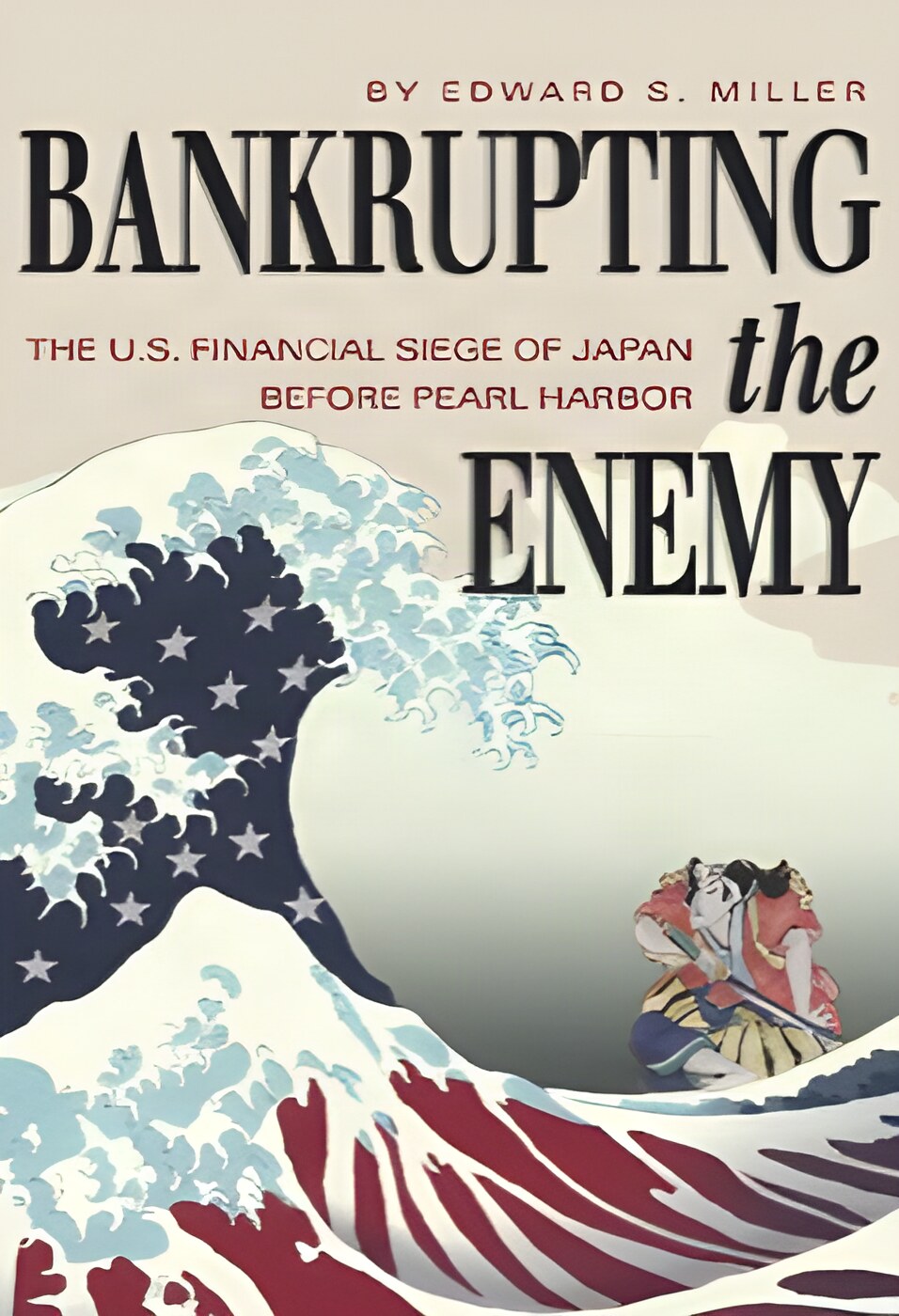
Softcover. Annapolis MD, Naval Institute Press, 1st pbk, 2023, Book: Very Good, Dust Jacket: None, Softcover, 325 pages, b&w illustrations. Author Edward S. Miller contends in this work that the United States forced Japan into international bankruptcy to deter its aggression. While researching newly declassified records of the Treasury and Federal Reserve, Miller, a retired chief financial executive of a Fortune 500 resources corporation, uncovered just how much money mattered. Washington experts confidently predicted that the war in China would bankrupt Japan, not knowing that the Japanese government had a huge cache of dollars fraudulently hidden in New York. Once discovered, Japan scrambled to extract the money. But, Miller explains, in July 1941 President Roosevelt invoked a long-forgotten clause of the Trading with the Enemy Act of 1917 to freeze Japan's dollars and forbade it to sell its hoard of gold to the U.S. Treasury, the only open gold market after 1939. Roosevelt s temporary gambit to bring Japan to its senses, not its knees, was thwarted, however, by opportunistic bureaucrats. Dean Acheson, his handpicked administrator, slyly maneuvered to deny Japan the dollars needed to buy oil and other resources for war and for economic survival. Clean copy.
Hardcover. New Jersey, Prentice-Hall, 1st, 1968, Book: Very Good, Dust Jacket: Good, Hardcover in a price-clipped dust jacket that's lightly soiled and spine faded, 277 pages. Eaton (b. 1764) was a flamboyant hero who was America's "Lawrence of Arabia" and defeated the Barbary Pirates at Derna. Front fly leaf with bookseller's old price in red pencil, otherwise clean.
Hardcover. NY, Grosset & Dunlap, 1st, 1938, Book: Very Good, Dust Jacket: Very Good, Hardcover. Illustrated in color, b&w by the authors. In a lightly chipped dust jacket with fading to spine.
Hardcover. New Haven CT, Yale University Press, 1st, 1968, Hardcover in a lightly worn dust jacket, ex-library copy with residue to endpapers, stamping to copyright page, spine sticker. 155 pages, illustrated with color and sepia tone plates. Documents the years when John Russell Bartlett (1805-1886)was commissioner of the Mexican Boundary Survey of 1850. A very nice collection of images drawn by a better than average hand. They depict the scenes witnessed by Bartlett along with a biographical text recounting the artist and his travels.
Hardcover. Philadelphia, PA, Hubbard Brothers, 1st Edition, 1882, Book: Very Good, Dust Jacket: None, 488 pages. Hardcover. B/w illustrations (including frontispiece with tissue guard--see image). Decorated endpapers. Previous owner's stamp of ownership on two preliminary pages. Cover boards bound in brown mustard cloth, gilt title and decorations on spine and front cover board (see image). Cover boards have a touch of age wear. Pages and edges have some tanning from age. Loose gutter at top of title page (see image), otherwise binding tight. "A graphic recital of personal experiences throughout the whole period of the late war for the Union--during which the author was actively engaged in 25 Battles and Skirmishes, was three times taken prisoner..."
Hardcover. NY, Oxford University Press, 1st, 1965, Book: Very Good, Dust Jacket: None, Hardcover, green cloth with black stamping, 376 pages, endpapers map. An historical account of the battles, skirmishes, and guerrilla activities of the French and Indian War. Clean copy.
Hardcover. London, Grub Street, First Edition , 1994, Book: Very Good, Dust Jacket: Very Good, 224 pages. Hardcover SIGNED BY AUTHOR to title page. 50th Anniversary Edition. Red cloth boards with gilt titles to spine. Black & white illustrations throughout. Dust jacket, bright & in very good condition. Clean, unmarked text.
Softcover. New York, D. Appleton & Company, 1st, 1914, Book: Fair, Dust Jacket: None, Hardcover. 355 pages. Illustrated by Charles M. Russell. Spine faded and ripped, cardboard showing, back cover faded. Foxing on edges. Ex-library copy with all usual stamping. Previous owner's inscription.
Hardcover. New Brunswick, Rutgers University Press, 1st, 1960, Book: Very Good, Dust Jacket: Good, 177 pages. Hardcover. Illustrated with black & white photographs. Price clipped dust jacket with wear along edges - now protected with clear plastic cover. Clean, tight copy. Report on the men and women who lived in the South and created work songs, spirituals, blues, and jazz.
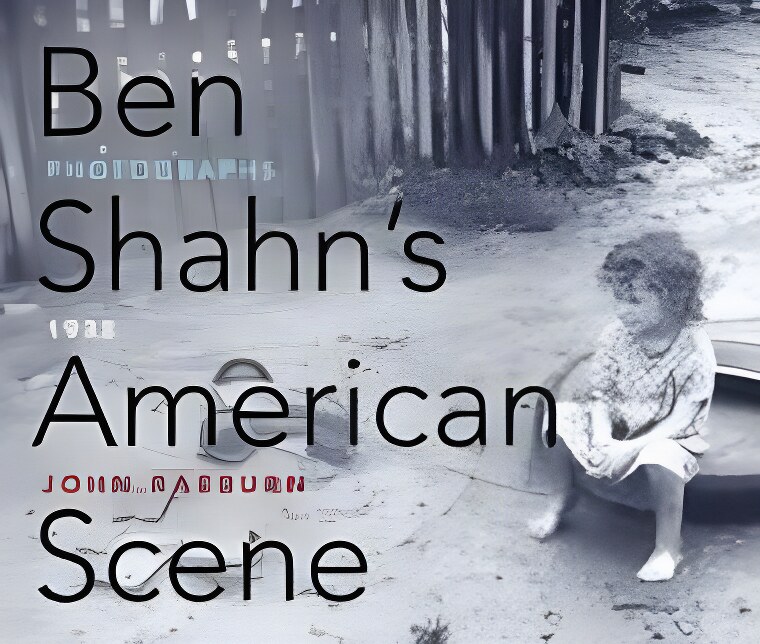
Softcover. US, University of Illinois Press, 1st, 2010, Book: Very Good, Dust Jacket: None, 190 pages, illustrated throughout in b&w. Clean, unmarked copy with only minor wear to wrappers. The paintings, murals, and graphics of Ben Shahn (1898-1969) have made him one of the most heralded American artists of the twentieth century, but during the 1930s he was also among the nation's premier photographers. Much of his photographic work was sponsored by the New Deal's Farm Security Administration, where his colleagues included Dorothea Lange and Walker Evans. Ben Shahn's American Scene: Photographs, 1938 presents one hundred superb photographs from his most ambitious FSA project, a survey of small-town life in the Depression. John Raeburn's accompanying text illuminates the thematic and formal significance of individual photographs and reveals how, taken together, they address key cultural and political issues of the years leading up to World War II. Shahn's photographs highlight conflicts between traditional values and the newer ones introduced by modernity as represented by the movies, chain stores, and the tantalizing allure of consumer goods, and they are particularly rich in observation about the changes brought about by Americans' universal reliance on the automobile. They also explore the small town's standing as the nation's symbol of democratic community and expose the discriminatory social and racial practices that subverted this ideal in 1930s America.
Softcover. US, University of Illinois Press, 1st, 2010, Book: Near Fine, Dust Jacket: None, 190 pages, illustrated throughout in b&w. Clean, unmarked copy with only minor wear to wrappers. The paintings, murals, and graphics of Ben Shahn (1898-1969) have made him one of the most heralded American artists of the twentieth century, but during the 1930s he was also among the nation's premier photographers. Much of his photographic work was sponsored by the New Deal's Farm Security Administration, where his colleagues included Dorothea Lange and Walker Evans. Ben Shahn's American Scene: Photographs, 1938 presents one hundred superb photographs from his most ambitious FSA project, a survey of small-town life in the Depression. John Raeburn's accompanying text illuminates the thematic and formal significance of individual photographs and reveals how, taken together, they address key cultural and political issues of the years leading up to World War II. Shahn's photographs highlight conflicts between traditional values and the newer ones introduced by modernity as represented by the movies, chain stores, and the tantalizing allure of consumer goods, and they are particularly rich in observation about the changes brought about by Americans' universal reliance on the automobile. They also explore the small town's standing as the nation's symbol of democratic community and expose the discriminatory social and racial practices that subverted this ideal in 1930s America.
Hardcover. New York, Vanguard Press, 1st, 1932, Book: Good, Dust Jacket: None, 306 pages. Hardcover. B/w illustrated frontispiece. Some age wear to covers. Bound in gray fabric. Previous owner's bookplate on front endpaper. Deckled edges. Some age yellowing to pages and edges. In good condition for its age.
Hardcover. Indianapolis/NY, Bobbs-Merrill, 1st, 1971, Book: Very Good, Dust Jacket: Good, Hardcover in a worn dust jacket, 490 pages, b&w frontis. Rush, the Philadelphia doctor who signed the Declaration of Independence, was an energetic, ambitious man given to devising reforms and, as the author puts it, meddling in politics. He studied medicine in Edinburgh and London, meeting Hume, Goldsmith, Samuel Johnson, et al. and, Hawke thinks, solidifying his republican disposition. Back in Pennsylvania he agitated for independence, made friends with John Adams, urged Paine to write Common Sense, and entered Congress. Apart from the recurrent epidemics of the age, the practice of military medicine and propaganda for resuming debt payments occupied Rush during the war; afterwards he turned to progressive education, speculated in land, fought paper money, equivocally supported the abolition of slavery, declared that tobacco is unhealthful, and boosted the Constitution before it was even written. Dust jacket chipped, faded in parts, clean internally.
Hardcover. Boston Ma., Houghton Mifflin Co., 1st, 1978, Book: Very Good, Dust Jacket: Very Good, 525 pages, b&w illustrations. Green cloth, gilt titles to front and spine. Light wear and rubbing to edges and spine of pictorial dust jacket, else a very nice, tight copy.
Softcover. Baltimore, MD, Baltimore Museum of Art, 1st, 1989, Book: Near Fine, Dust Jacket: None, Softcover, 119 pages, illustrated throughout in color and b&w. Blue pictorial stiff wrappers. Lovely copy. Like new.
Softcover. Washington , Smithsonian Institution Press, 1st, 1980, Book: Very Good, Dust Jacket: None, Exhibition catalog. 202 pages, illustrated throughout with 148 plates in b&w. White pictorial stiff wrappers. Light wear to covers, small tear to upper edge of spine, else a very nice, tight copy.
Hardcover. Princeton NJ, Princeton University Press, 1st, 2011, Book: Very Good, Dust Jacket: Very Good, Hardcover in a bright dust jacket. Small ink notation on front fly leaf otherwise clean. 320 pages with extensive notes and index. This book tracks the dramatic outcomes of the federal government's growing involvement in higher education between World War I and the 1970s, and the conservative backlash against that involvement from the 1980s onward. Using cutting-edge analysis, Christopher Loss recovers higher education's central importance to the larger social and political history of the United States in the twentieth century, and chronicles its transformation into a key mediating institution between citizens and the state. Framed around the three major federal higher education policies of the twentieth century--the 1944 GI Bill, the 1958 National Defense Education Act, and the 1965 Higher Education Act--the book charts the federal government's various efforts to deploy education to ready citizens for the national, bureaucratized, and increasingly global world in which they lived. Loss details the myriad ways in which academic leaders and students shaped, and were shaped by, the state's shifting political agenda as it moved from a preoccupation with economic security during the Great Depression, to national security during World War II and the Cold War, to securing the rights of African Americans, women, and other previously marginalized groups during the 1960s and '70s. Along the way, Loss reappraises the origins of higher education's current-day diversity regime, the growth of identity group politics, and the privatization of citizenship at the close of the twentieth century. At a time when people's faith in government and higher education is being sorely tested, this book sheds new light on the close relations between American higher education and politics.
Hardcover. NY, Farrar, Straus and Giroux, 1st, 2000, Book: Very Good, Dust Jacket: Very Good, Hardcover in a bright dust jacket, 358 pages. A riveting historical mystery of Colonial America. In April, 1586, Queen Elizabeth I acquired a new and exotic title. A tribe of Native Americans, "savages," had made her their weroanza-a word that meant "big chief." The news was received with great joy, both by the Queen and by her favorite, Sir Walter Ralegh. His first American expedition had brought back a captive, Manteo, whose tattoed face and otter-skin cloak had caused a sensation in Elizabethan London. In 1857, Manteo was returned to his homeland as Lord and Governor, along with more than 100 English men, women and children.In 1590, a supply ship arrived at the colony to discover that the settlers had vanished. For almost twenty years the fate of Ralegh's colonists was to remain a mystery. When a new wave of settlers sailed to America to found Jamestown, their efforts to locate the lost colony were frustrated by the mighty chieftain, Powhatan, father of Pocahontas, who vowed to drive the English out of America. Only when it was too late did the settlers discover the incredible news that Ralegh's colonists had survived in the forests for almost two decades before being slaughtered in cold blood by Powhatan's henchmen. Clean copy.
Hardcover. US, Reel Art Press, 1st, 2014, Book: Very Good, Dust Jacket: Very Good, Large heavy book, 448 pages, illustrated throughout in b&w. Clean, unmarked copy with only minor wear to dust jacket. This breathtaking tome is the definitive and comprehensive collection of Billy Name's black-and-white photographs from Warhol's Factory. Name's photographs from this period (1964-68) are one of the most important photographic documents of any single artist in history. Name lived in a tiny closet at the Factory. He was responsible for the legendary "silverizing" of the space using aluminum paint and foil to complete the instillation. When Warhol gave Name a Pentax Honeywell 35mm camera, he took on the role of resident photographer and archivist. This visual essay, produced in collaboration with Billy name, offers an extensive trip through Warhol's world. Name photographed the day-to-day happenings at The Factory with Andy, including visits from Lou Reed and the Velvet Underground, Nico, Edie Sedgwick, Ivy Nicholson and Bob Dylan, and filming Screen Tests and features such as Chelsea Girls, Vinyl and My Hustler.

 "Atlas of Addison Co. Vermont from actual surveys by and under the directions of F. W. Beers assisted by W.S. Peet & Othersby: Beers, F. W.")

 "Bailey's Box of Postcardsby: Bailey, David")
 "Bailey's Box of Postcardsby: Bailey, David")


 "Bartlett's West: Drawing the Mexican Boundaryby: Robert V. Hine")
 "Battle Field and Prison Pen, or Through the War, and Thrice a Prisoner in Rebel Dungeonsby: Urban, John W.")


 "Battle Fields of the South - From Bull Run to Fredericksburgh; With Sketches of Confederate Commanders, and Gossip of the Camps (Collector's Library of the Civil War)by:")




 "Beating Backby: Jennings, Al & Will Irwin")

 "Benedict Arnold: Military Racketeerby: Sullivan, Edward Dean")
 "Benjamin Rush: Revolutionary Gadfly by: David Freeman Hawke")
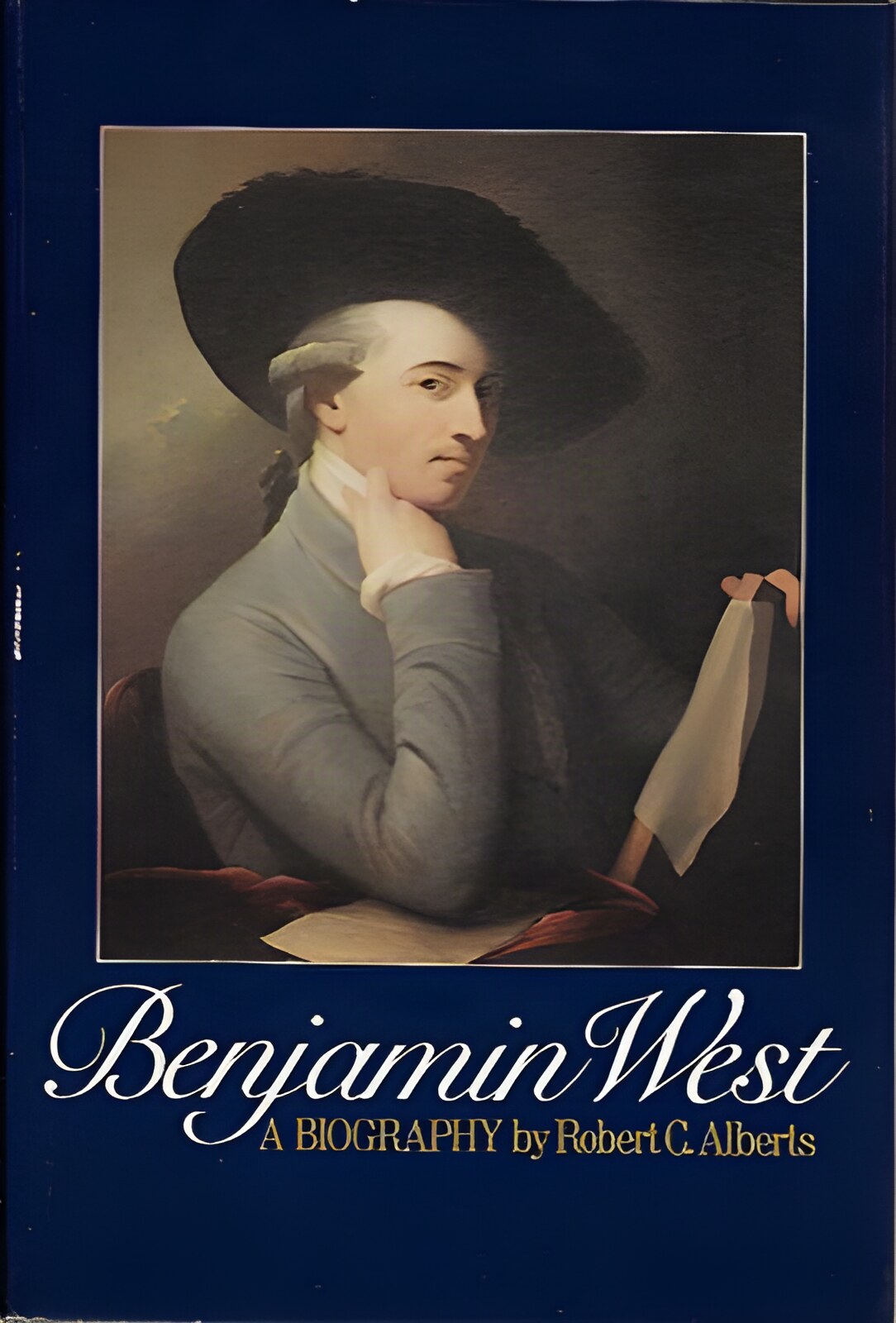
 "Benjamin West : American Painter at the English Courtby: Baltimore Museum of Art")
 "Benjamin West and His American Studentsby: Evans, Dorinda")


 "Billy Name:The Silver Age: Black and White Photographs from Andy Warhol's Factoryby: James, Dagon")