Softcover. Wilmington, DE, Delaware Art Museum, 1st, 1988, Book: Very Good, Dust Jacket: None, Softcover, 150 pages. Exhibition catalog. Mostly black-and-white, with some color, illustrations. Light sun-fade to spine. A little wear to bottom corner of front cover. Very good, unmarked copy.
Hardcover. NY, Columbia University Press, 1st, 1974, Book: Very Good, Dust Jacket: Very Good, Hardcover in a bright dust jacket, 200 pages. 'Carol Berkin's lively narrative of one British Loyalist's disastrous career uncovers in an arresting manner the other side of the U. S. Revolution. The Revolution, from Sewall's point of view, was an unnecessary and unworthy attack by charlatans and demagogues on the best society the world had yet created. Although Sewall sought to avoid confrontation with his increasingly revolutionary friends, including Sam & John Adams and John Hancock, and at the same time be independent in his appointed posts, he was trapped in the political hierarchy of colonial Massachusetts. When the Revolution began in earnest, he left a beleaguered Boston to take refuge in England where he met the same fate as the other Tory refugees: he was an insignificant colonial, unworthy of royal patronage. ' Name on front fly leaf, otherwise clean.
Hardcover. Urbana IL, University of Illinois Press, 1st, 1961, Book: Very Good, Dust Jacket: Very Good, Hardcover in alightly worn dust jacket, 260 pages. "In this first biography of Warren since 1865, John Cary re-establishes Warren's deserved reputation as an American patriot and leading figure of the American Revolution. He ranks Warren with Samuel Adams as the two most important figures in the Massachusetts revolutionary movement." Name on front fly leaf, otherwise clean.
Hardcover. New York, Wiley & Halsted, 2nd Ed., 1822, Book: Very Good, Dust Jacket: None, 246, 256 pages, two volumes bound as one. A total of 6 engraved plates - 2 illustrations in vol. I and 4 illustrations in vol. II, but lacks the map, an illustration at page 20, fold-out chart and frontispiece portrait that some dealers describe. Polished brown calf with leather label, gilt lettering still very readable. Previous owner's small stamp on front fly leaf, otherwise clean.
Hardcover. New Haven CT, Yale University Press, 2nd pr., 1922, Book: Good, Dust Jacket: None, Hardcover, marbled boards with gray cloth spine, 333 pages plus index. Endpapers map. Janet Schaw, a supporter of the Crown, illustrates the extent to which the American Revolution had, by 1775, become a close, personal insurgency, pitting neighbor against neighbor. Schaw was a young, well-educated Scottish woman who traveled to North Carolina to visit her older brother Robert, the owner of a plantation on the Cape Fear River near Wilmington. She arrived in March of 1775 and while in North Carolina witnessed, among other things, land clearing through controlled burning and the killing of an alligator. More important, she observed a society that was splitting asunder under the stress of revolutionary politics. The decisions of the Wilmington Committee forced men and women along the Cape Fear to take sides. Worn covers with spine cloth coming loose. Binding is solid.
Softcover. Athens GA, University of Georgia Press, reprint, 2001, Softcover, clean, unmarked pages. 415 pages, followed by a short Index. Fanny Kemble offers a gripping, first-hand account of life on a Southern plantation before the Civil War. Combining a keen observational style with a candid narrative voice, Kemble lays bare the complexities of plantation life, including the stark realities of slavery and the socio-economic hierarchies of antebellum Georgia. The journal entries provide an intimate glimpse into the daily lives of both the enslaved and the plantation owners, reflecting her deep moral convictions and growing abolitionist sentiments against a backdrop of genteel Southern culture. Fanny Kemble, a British actress and writer, was thrust into the world of the Southern elite through her marriage to a plantation owner, which provided her with unprecedented access to the intricacies of plantation management and its social fabric.
Softcover. NY, MJF Books, reprint, 1997, Hardcover in a bright dust jacket, 191 pages plus index. In 1834, Osborne Russell joined an expedition from Boston, under the direction of Nathaniel J. Wyeth, which proceeded to the Rocky Mountains to capitalize on the salmon and fur trade. He would remain there, hunting, trapping, and living off the land, for the next nine years. Journal of a Trapper is his remarkable account of that time as he developed into a seasoned veteran of the mountains and experienced trapper. Clean copy.
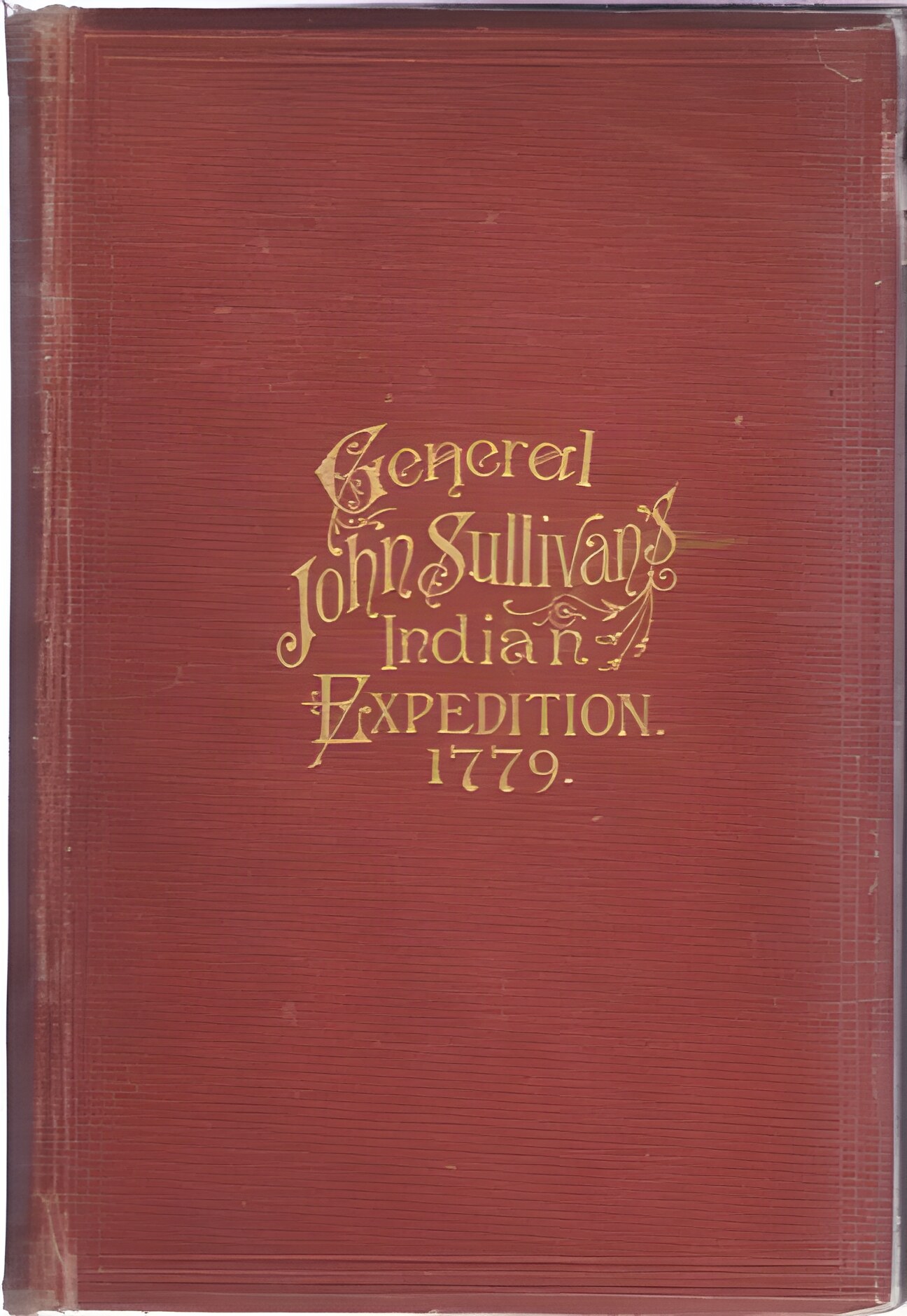
Hardcover. Auburn NY, Knapp, Peck and Thomson, 1st, 1887, Book: Fair, Dust Jacket: None, Hardcover, original red cloth, gilt titles and rules, blind-stamped double border. 581 pages including Errata leaf. Includes several fold-out maps, plus pockets inside the front and rear boards containing maps and plans. Engraved frontispiece of Sullivan, engraved portraits in text of Brigadier General James Clinton, Colonel Peter Gansevoort (from a portrait by Gilbert Stuart, famous for his portrait of George Washington), and Colonel Philip Van Cortlandt. John Sullivan was an American general in the Revolutionary War and a delegate in the Continental Congress. Sullivan served as a major general in the Continental Army and as Governor (or 'President') of New Hampshire. He is most famous for leading the Sullivan Expedition in 1779, a scorched earth campaign against the Iroquois towns that had taken up arms against the American revolutionaries. This volume contains journals by 27 officers present during the campaign, and has become the authoritative primary source of the event. Both front and rear hinges cracked with spine cloth loose, battlefield map at page 288 has a tear but no loss, front signature with title page loose but whole. All other maps present in envelopes and in very good condition. Covers worn.
Hardcover. New York, Argosy-Antiquarian Ltd., Reprint, 1963, Book: Very Good, Dust Jacket: None, Hardcover, 272 pages. limited edition (#10 of 750 copies). A diary of the late Emil Teichmann, edited and with an introduction by his son Oskar. Foreword by Ernest Gruening. Illustrated with b/w drawings and maps. Frontis portrait of author. Top edge stained blue. Blue cloth with gilt pictorial front and gilt lettering on spine. Light wear to top and bottom of spine.
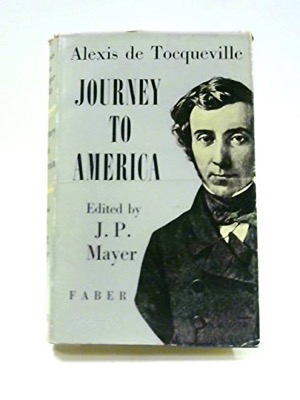
Hardcover. London, Faber and Faber Limited, 1st, 1959, Book: Very Good, Dust Jacket: Good, Hardcover in an edgeworn dust jacket, 334 pages. The editor has chosen excerpts from de Tocquville's 14 notebooks he kept on his visit to America 1831-32. The detailed notes were the raw material that became his classic Democracy In America. Many of these observations never made into the final work. Clean copy.
Hardcover. New York , Thomas Y. Crowell Company, 7th printing, 1950, Book: Very Good, Dust Jacket: Good, Hardcover, 306 pages, b&w photos. Light wear, rubbing and sunning to dust jacket. Book itself is very good.
Hardcover. Chicago, University of Chicago Press, 1st, 1968, Book: Very Good, Dust Jacket: Very Good, Hardcover in a lightly worn dust jacket, 178 pages. A new perspective on the Supreme Court during the Reconstruction period. Name on front fly leaf, otherwise clean.
Hardcover. Glens Falls, Champlain Publishing, 1st, 1914, Book: Very Good, Dust Jacket: None, 255 pages. Blue cloth covers with title rubbed from spine and some rubbing to gilt title on cover. Book has slight damp smell. Clean, tight copy.
Hardcover. Princeton NJ, Princeton University Press, 1st, 1992, Book: Very Good, Dust Jacket: Very Good, Hardcover in a bright dust jacket, 281 pages, b&w illustrations. "For, Lo! We live in an Iron Age--In the age of Steam and Fire!" wrote a poet mesmerized by the engines that were transforming American transportation, agriculture, and industry during his lifetime. Indeed, by the nineteenth century fire had become America's leitmotif--for good and for ill. "Keeping the flame" was deadly serious: even the slightest lapse of attention could convert a fire from friendly ally to ravaging destroyer. To examine the cultural context of fire in "combustible America," Margaret Hazen and Robert Hazen gather more than a hundred illustrations, most never before published, together with anecdotes and information from hundreds of original sources, including newspapers, diaries, company records, popular fiction, art, and music. What results is an immensely entertaining and encyclopedic history that ranges from stories of the tragic "great fires" of the century to fire imagery in folktales and popular literature. Dealing more with technology than with fire in nature, the book provides a vast amount of information on fire manipulation and prevention in urban life. Hazen and Hazen discuss the people who worked with fire--or against it. Founders, gaffers, blacksmiths, boilers at saltworks, and housewives knew how to "read" a fire and employ it for their purposes. A few dedicated investigators inquired about the scientific nature of heat and flame. And firefighters gradually progressed from "bucket brigades" to "using fire to fight fire" with the newly invented steam engine. The colorful stories of these Americans--the risks they took and the rewards they received--will fascinate not only social historians but also a broad audience of general readers. Clean copy.
Hardcover. Princeton NJ, Princeton University Press, 1st, 2023, Book: Very Good, Dust Jacket: Very Good, Hardcover in a bright dust jacket, 624 pages, black and white illustrations. The diplomat and historian George F. Kennan (1904-2005) ranks as one of the most important figures in American foreign policy and one of its most complex. Drawing on many previously untapped sources, Frank Costigliola's authoritative biography offers a new picture of a man of extraordinary ability and ambition whose idea of containing the Soviet Union helped ignite the Cold War but who spent the next half century trying to extinguish it. Clean copy.
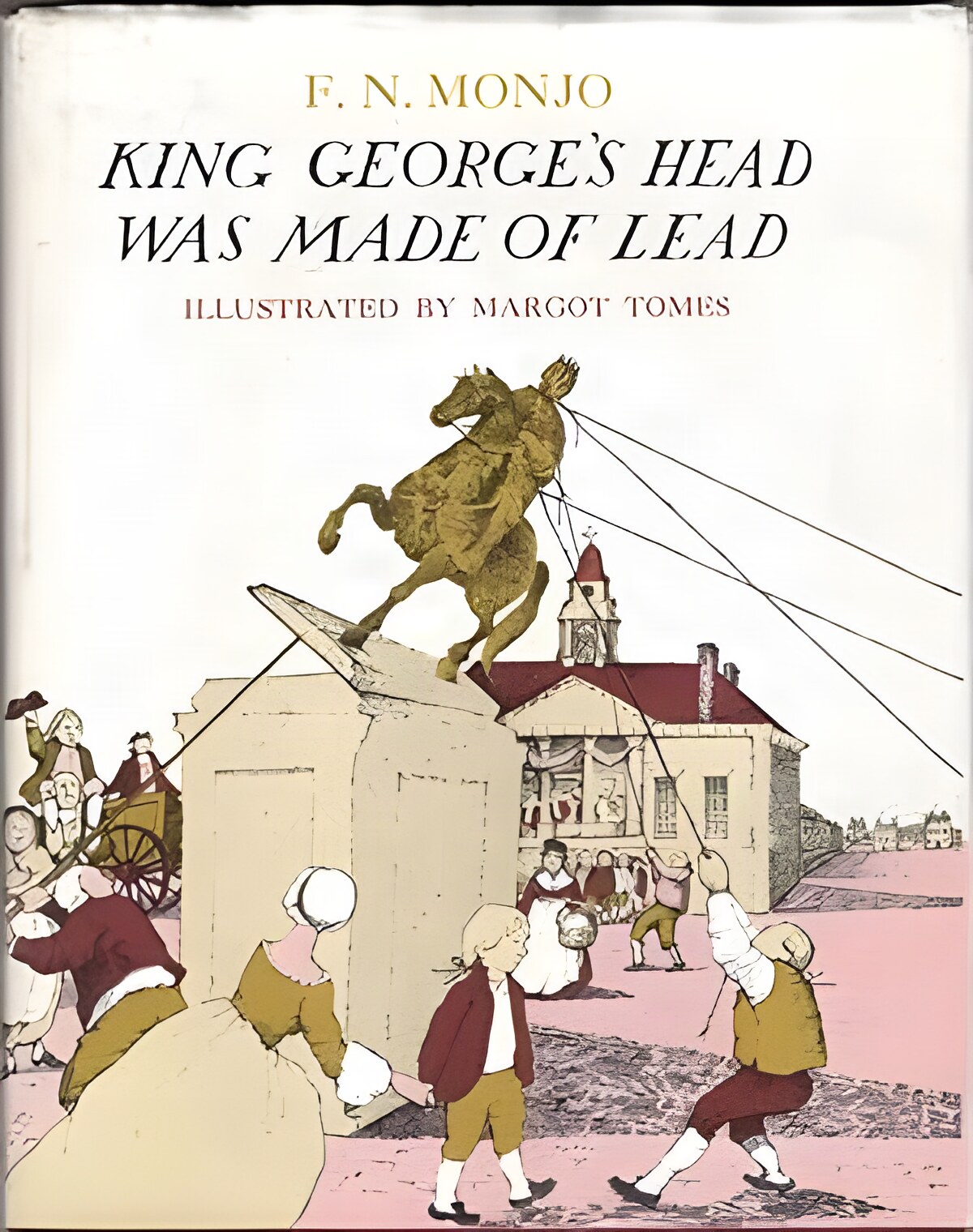
Hardcover. NY, Coward, McCann & Geoghegan, 4th pr., 1974, Book: Very Good, Dust Jacket: Very Good, Hardcover in an unclipped dust jacket, 48 pages illustrated in colors and b&w by Margot Tomes. A lead statue of King George III relates the events leading to the American Rovolution through indignant ratings about what he observes. Clean copy.
Hardcover. Woodstock VT, Countryman Press, 4th pr., 1999, Book: Very Good, Dust Jacket: Very Good, Hardcover in a bright, price-clipped dust jacket, 416 pages, b&w illustrations. Now largely forgotten, the massacres of 1675 to 1676, known as King Philip's War, ended the harmonious relations that had existed between native Americans and the colonists since their arrival at Plymouth Rock in 1620. Tensions had been rising as the number of settlers grew, and the pillaging of an outlying farm by affronted young braves escalated into open hostilities. Pitched battles were fought from Rhode Island to Maine. Hundreds of English died as farmers fled and cowered behind stockades or in the few port towns. Thousands of natives were slaughtered and the rest dispersed or sold into slavery in the West Indies. The savagery resulted in the clearing of the native populations from southern New England and the unopposed expansion of the New England colonies. It also became the brutal model on which the United States came to deal with its native peoples. King Philip's War tells the story with such close attention to detail that each ambush, each burned-out farm, becomes a vivid image. The authors make abundant use of maps and photographs of old sites to enable the reader to follow the course of the war: the book forms an exhaustive guide for the armchair historian or anyone wishing to visit the monuments and battlefields today. Clean copy.
Hardcover. New York , Abrams, 1st, 1999, Book: Very Good, Dust Jacket: Very Good, Hardcover, 254 pages, 173 illustrations, 131 in color. Although he is now seen as a progenitor of the "naive" style, during his lifetime Edward Hicks (1780-1849) was known only as a devout, impoverished Quaker minister who liked to paint. With a few exceptions, his extant body of work is made up of 62 "Peaceable Kingdom" pictures, based on Isaiah's biblical prophecy. Although these paintings, known for their charmingly wide-eyed and sensuous beasts, use potent color and effective design, they are technically unsophisticated and repetitive in the extreme. But they contain a powerfully serene devoutness, a mood probably expressed in compensation for Hicks's guilt about an avocation viewed as frivolous by other Quakers. As the popularity of folk art boomed in the early 20th century, Hicks's homely visions were popularized and became the focus of scholarly attention, and this work is probably the best to date. Weekley, the director of museums at Colonial Williamsburg, shrewdly considers Hicks's "secular" life and art through the filter of his intense piety and copiously illustrates her large-format book with brilliant color plates.
Hardcover. Boston, Houghton Mifflin, 2nd pr., 1973, Book: Very Good, Dust Jacket: Very Good, Hardcover. Black & white photos. 337 pages. Dj price clipped
Hardcover. Fort Worth, TCU Press, Reprint, 1981, Book: Very Good, Dust Jacket: Very Good, Two hardcover volumes,. Volume 1 - 164 pages. Ceremonial Dance, Ritual and Song. Full color and black & white illustrations. Dust jacket in clear plastic protective cover. Clean, tight copy. Volume 2 - 323 pages. Myths, Legends and Folktales. Full color and black & white illustrations. Dust jacket in clear protective cover. Clean, tight copy.
Hardcover. New York, The New Press, 1st, 1999, Book: Very Good, Dust Jacket: Very Good, 515 pages. Hardcover. Gray cover boards, gilt title on spine. In nice shape, Dust jacket unclipped, has just a touch of age yellow. Edges show a little soil (shelfwear). Binding very tight, clean inside. Very good condition.
Hardcover. New York, G. P. Putnam's Sons, reprint, 1894, Book: Very Good, Dust Jacket: None, Two hardcover volumes. Van Twiller Edition, with b&w illustrations by Edward W. Kemble throughout both volumes. In 1809, New Yorkers were buzzing about a series of classified ads concerning the whereabouts of Dutch historian Diedrich Knickerbocker. They were unaware that Washington Irving had invented the man entirely and placed the ads himself. Knickerbocker's purported manuscript, A History of New York, was Irving's own. Told from Knickerbocker's point of view, A History of New York is a chronicle of New York's fifty years under Dutch rule in the 1600s that plays fast and loose with the facts, to uproarious effect. A History of New York propelled Irving to the heights of literary stardom. Gilt and blue design on beveled covers, spine. Top edge gilt, decorated pages, frontispiece with tissue guard. Slight corner bump, edge wear, age darkening to spine, otherwise,very clean and tight copies.
Hardcover. New York, Harry N. Abrams, 1st, 1984, Book: Very Good, Dust Jacket: Very Good, Hardcover, 256 pages. 330 illustrations, including 150 plates in full color. Black cloth, gilt lettering to spine. Beautiful pictorial dust jacket. A very clean, tight and crisp copy. Like New.




 "Journal of a Cruise Made to the Pacific Ocean by Captain David Porter in the United States Frigate Essex in the Years 1812, 1813, and 1814 (2 Vols in One)by: Porter,")
 "Journal of a Lady of Quality Being the Narrative of a Journey from Scotland to the West Indies North Carolina and Portugal in the Years 1774 to 1776by: Andrews, Evang")



 "Judge Landis and Twenty-Five Years of Baseballby: Spink, J. G. Taylor")
 "Judicial Power and Reconstruction Politicsby: Kutler, Stanley I.")
 "Kathi of Skenesboroughby: Curtis, May Belle")



 "Kingdoms of Edward Hicks, Theby: Weekley, Carolyn J.")
 "Kinta Years, The - An Oklahoma Childhoodby: Giles, Janice Holt")


 "Knickerbocker's History of New York (2 Volumes)by: Irving, Washington")
 "Lacquer: An International History and Illustrated Surveyby: Scott, Rosemary, ET AL")