Hardcover. Chicago, The Lakeside Press, 1st, 1919, Book: Very Good, Dust Jacket: None, Hardcover, dark green cloth stamped in gilt, top edge gilt, 137 pages. Tight, attractive copy of this early "Lakeside Classic," the annual keepsake presented by this printer/publisher to friends and clients starting in 1903. Illustrated with two portraits of the author. So many pioneer stories were written at the request of a child or grandchild. What makes Christiana Tillson's humorous memoir different was her background. Tillson's story records the reactions produced upon a refined New England woman by an environment at once predominantly southern and wholly frontier. Her youth in 1822 and her parting from all that she had known in the East were common of many later Western migrants. But when she and her husband went out to try their fortunes, the "West" was what we today call the Midwest. It was still a wild, dangerous, and uncertain place to try to make a future. Clean, bright copy.
New York, Scholastic Press, 1st, 1999, Book: Very Good, Dust Jacket: Very Good, Hardcover in a bright, unclipped dustjacket. Color illustrations by Ted Lewin. Unpaginated. Skinny as a beanpole and tall for his age, an awkward young boy learns that Abraham Lincoln was called "gorilla, baboob, backwards hick." Yet along with big feet and big hands, Lincoln had a big heart and the great ability to keep a nation together. And what the boy learns as he studies Lincoln opens his mind to great possibilities for his own future.
Hardcover. New Haven CT, Yale University Press, 1st, 2009, Book: Very Good, Dust Jacket: Very Good, Hardcover, 344 pages. The abstract paintings of Jackson Pollock, Willem de Kooning, Barnett Newman, Lee Krasner, Clyfford Still, Helen Frankenthaler, and others revolutionized the art world in the 1940s and 1950s and continue to inspire passionate arguments to this day. What were these artists trying to achieve? Who were the critical voices of the time that rallied public interest in Abstract Expressionism and sparked rancorous debate? Drawing on recent critical, historical and biographical work, this lavishly illustrated book offers a sharp new focus on a pivotal art movement.
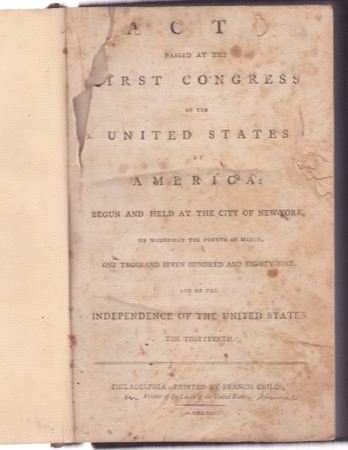
Hardcover. Philadelphia, Francis Childs, 1st, 1795, Book: Fair, Dust Jacket: None, Hardcover, leather bound, 434 pages plus an index in rear. Maroon label on spine reads UNITED STATES LAWS in gilt. Covers all three sessions: The second on the 4th of January 1790 and the 3rd session, held in Philadelphia, on the 6th of December 1790. Covers rubbed, front board detached. First 2 pages, (the title page and the following page) have tears, pieces missing. The next page, the beginning text of the Constitution has smaller marginal damage. The rest of the text pages very good with the occasional foxing.
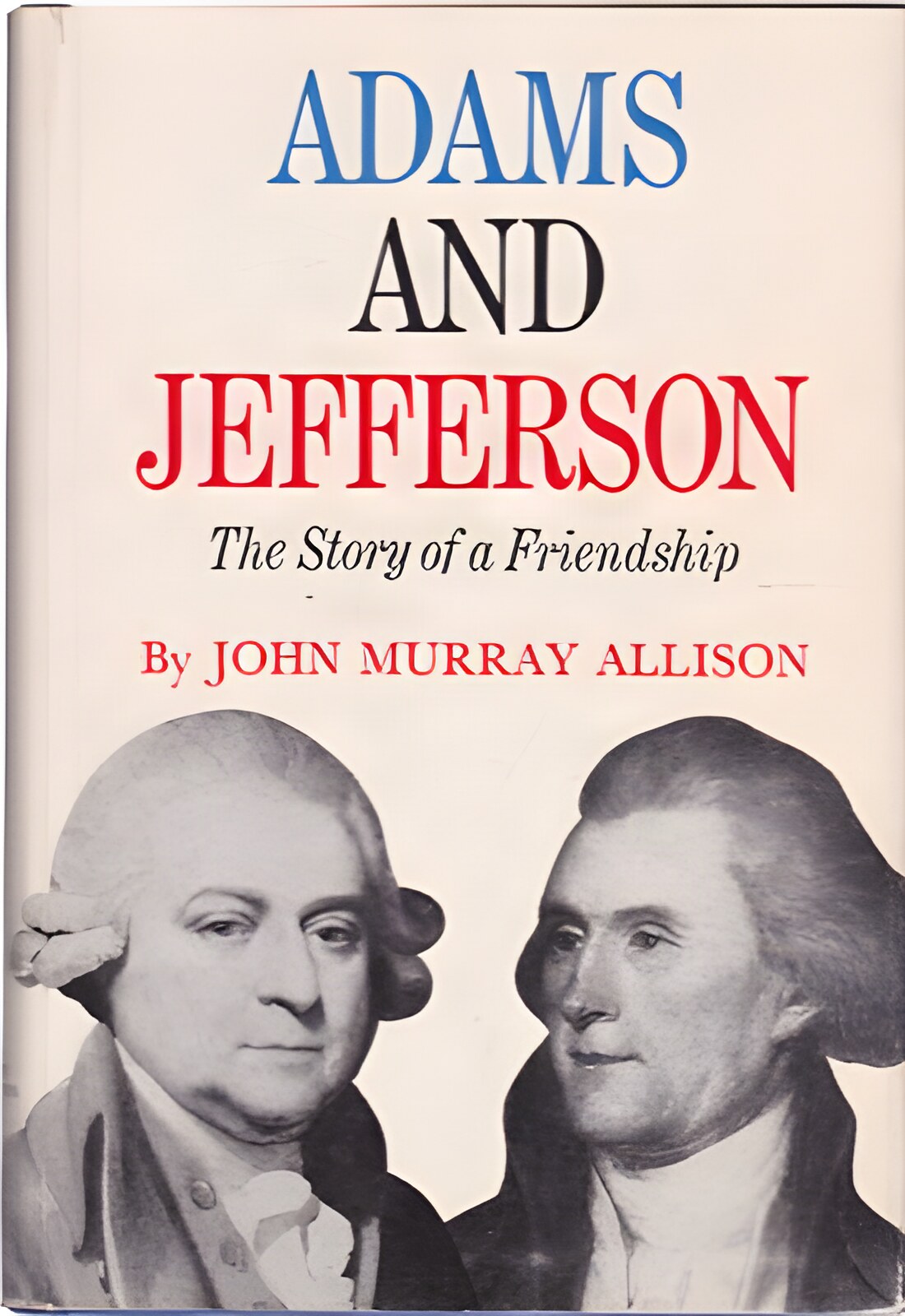
Hardcover. Norman OK, University of Oklahoma Press, 2nd pr., 1968, Book: Very Good, Dust Jacket: Very Good, Hardcover in a bright, price-clipped dust jacket, 349 pages. Dual biography of two authors of the Declaration of Indepenence, their subsequent feud, and reconciliation. Name on front fly leaf, otherwise clean.
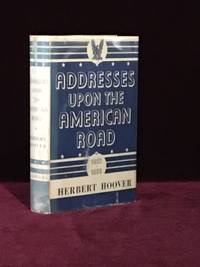
Hardcover. NY, Charles Scribner's Sons, 2nd pr., 1938, Book: Very Good, Dust Jacket: Very Good, Hardcover in a bright dust jacket, 390 pages. With 30-page booklet outlining speeches laid-in, containing a number of press blurbs supporting Hoover's ideas. Scribner's colophon on copyeight page but no A, so assumed 2nd printing. Clean copy.
Hardcover. Rutland, VT, The Tuttle Company, 1st, 1904, Book: Very Good, Dust Jacket: None, College yearbook of Dartmouth, class of 1904. 228 pages, with 33 pages of advertisements. Bound in heavy green buckram, illustrated throughout with photographs and engravings (b&w). In very good condition, some small stains to the covers and yellowing to page edges, pages clean and binding tight.
Hardcover. Berkeley, University of California Press, Revised 2nd, 1975, Book: Very Good, Dust Jacket: Good, 201 pages. Hardcover. Black & white illustrations. Dust jacket with moderate wear, closed tear. Previous owners name on front endpaper. Clean, tight copy.
Hardcover. NY, Free Press , 1st, 1997, Book: Very Good, Dust Jacket: Very Good, Hardcover in a bright, unclipped dust jacket. 464 pages, b&w illustrations. A great but frequently overlooked figure in America during the early decades of the 19th century now gets his due. Military historian Eisenhower (son of the late president) describes a natural leader of imposing stature, overweening pride, exceptional courage, and wide learning, who possessed considerable organizational and diplomatic skills along with outstanding martial instincts. As the nation's youngest general, Scott distinguished himself in the War of 1812, and he was a hero of the Mexican War in the 1840s. After a brilliant campaign fought entirely on foreign soil, he stormed and captured Mexico City despite considerable political maneuvering on the battlefield and the homefront by a variety of influential enemies. In peacetime, he served successfully as a diplomat to the Canadians, the British, the Seminoles, and the Cherokees. Clean copy.
Hardcover. Boston, Houghton Mifflin, 2nd pr., 1969, Book: Very Good, Dust Jacket: Good, Hardcover in a worn, chipped dust jacket, 505 pages with b&w illustrations. Amazing detail, yet easily flowing narrative of the governor who preceded FDR, who--with Frances Perkins assistance as Industrial Commissioner--shaped a state's humane response to sweatshops, immigration. His 1928 presidential campaign faced burning Klu Klux Klan crosses and harrassment when he ventured outside the Northeast. After losing to Herbert Hoover he left his successor to Governor of New York, Franklin D. Roosevelt, a working government and blueprint for social reform that Roosevelt would later put to use as President. Name on half title page, otherwise clean internally.
Hardcover. Boston, Little, Brown and Company, 1st, 1951, Book: Very Good, Dust Jacket: None, Hardcover, blue cloth with gilt lettering on spine. Volume VII in The History of United States Naval Operations in World War II, 369 pages, illustrated with maps (one fold-out) and b&w photos. Gilt on spine with light fading, lacks dust jacket, otherwise clean, tight copy.
Hardcover. Boston, Little Brown & Co , 1st, 1983, Book: Very Good, Dust Jacket: Very Good, Hardcover, 180 pages, b&w illustrations. Previous owner's inscription on prelim page. Light shelf-wear and rubbing to price clipped dust jacket, else a clean, tight copy.
Hardcover. NY, St Martins Press, 1st, 1998, Book: Very Good, Dust Jacket: Very Good, Hardcover in a bright, unclipped dust jacket. 707 pages, b&w illustrations. Born in poverty, and self-educated while working in a print shop, William Lloyd Garrison was one of the United States' greatest crusading editors, putting out a weekly anti-slavery newspaper, The Liberator, for 35 years, beginning in 1831. A product of the rough and tumble political journalism of the day, Garrison wrote with extreme passion and from an uncompromising point of view. Yet the man who emerges from the pages of All on Fire is a deeply thoughtful person who, despite barely escaping lynch mobs himself, had a great sense of humor and a very polite demeanor. Historians have tended to minimize Garrison's impact on America, and some consider him a fringe character. But Henry Meyer, in this hefty biography, places Garrison at the center of his century, noting that Garrison's thought and tactics influenced not only the country's changing view of slavery, but also inspired the incipient feminist movement. The Lincoln administration noted Garrison's influence by inviting him to help raise the flag over the recaptured Fort Sumter. All on Fire goes into great detail on Garrison's life and work, providing the close and copious examination this activist's life fully deserves. Clean copy.
Hardcover. Washington DC, Library of Congress/Musee d'Art Giverny, 1st, 2001, Book: Very Good, Dust Jacket: Very Good, Like new in publishers shrink-wrap. Hardcover exhibition catalog with a dust jacket. 200 pages, 218 bw plates. An exhibition held in Paris a century ago demonstrated the key role American women photographers played in the international pictorialist movement. The accomplishment of these professional and amateur photographers clearly demonstrated a mastery of the medium and made a strong impression on those in attendance. Ambassadors of Progress explores this largely unknown event. Each of the 29 artists, including such well-known figures as Gertrude Kaesebier, Amelia van Buren and Zaida Ben-Yusuf, is represented in a selection of approximately 70 breathtaking color and b&w plates.
Chicago, Chicago Review Press, 1st, 2014, Book: Very Good, Dust Jacket: Very Good, Hardcover in a bright dust jacket. The presidential election of 1844 was one of the two or three most momentous elections in American history. Had Henry Clay won instead of James K. Polk, we'd be living in a very different country today. Polk's victory cemented the westward expansion that brought Texas, California, and Oregon into the union. It also took place amid religious turmoil that included anti-Mormon and anti-Catholic violence, and the "Great Disappointment," in which thousands of followers of an obscure preacher named William Miller believed Christ would return to earth in October 1844. Author and journalist John Bicknell details even more compelling, interwoven events that occurred during this momentous year: the murder of Joseph Smith, the religious fermentation of the Second Great Awakening, John C. Fremont's exploration of the West, Charles Goodyear's patenting of vulcanized rubber, the near-death of President John Tyler in a freak naval explosion, and much more. All of these elements illustrate the competing visions of the American future--Democrats versus Whigs, Mormons versus Millerites, nativists versus Catholics, those who risked the venture westward versus those who stayed safely behind--and how Polk's election cemented the vision of a continental nation. Clean copy.
Hardcover. GR, Steidl, 1st, 2008, Book: Very Good, Dust Jacket: Very Good, Hardcover, 272 pages. One of the most intriguing and little studied forms of nineteenth-century photography is the tintype. Introduced in 1856 as a low-cost alternative to the daguerreotype and the albumen print, the tintype was widely marketed from the 1860s through the first decades of the twentieth century as the most popular photographic medium. The picture-making preference of the people, it was almost never used for celebrity portraiture: It was affordable, portable, unique and available almost everywhere. Because of its ubiquity, the tintype provides a startlingly candid record of the political upheavals that rocked the four decades following the American Civil War-and the personal anxieties they induced. As this book's author, Steven Kasher, argues, the tintype studio became a kind of performance space in which sitters could act out their personal identities. Sitters brought to the tintype studio not just their family and friends but also the tools of their trade, costumes, toys, stuffed animals and other such props. Often they would enact stereotypes and fantasies that reflected or challenged conventional gender, race and class roles. Surprisingly, the tintype was almost exclusively an American phenomenon, rarely used in other countries, and this book demonstrates how this modest form of photography provides extraordinary insight into the development of national attitudes and characteristics in the formative years of the early Modern era. Featured in this book are more than 200 remarkable examples of tintypes, mostly drawn from the Permanent Collection of the International Center of Photography in New York.
Hardcover. Boston, Gray & Bowen, 1st, 1830, Book: Good, Dust Jacket: None, Hardcover, 312 pages, leather spine and corners with marbled boards. Gilt title on spine. Copyright page states "on the eleventh day of November, A. D. 1830." With frontispiece folding map of the eclipse of Feb 12th, in its passage across the United States. A very good copy with mild wear to leather, map in very good condition. moderate foxing to text. There is some minimal marking, numbers and light residue to endpapers.
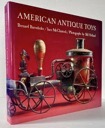
Hardcover. New York, Harry N. Abrams, Inc., 1st, 1980, Book: Very Good, Dust Jacket: Very Good, Hardcover, 282 pages, plus index. Text by Bernard Barenholtz and Inez McClintock, photographs by Bill Holland. Light blue cloth covers with gilt titles to spine, illustrated laminate dust jacket, 285 illustrations including 100 plates in full-color. Light rubbing to dust jacket, clean boards, pages crisp and unmarked; a very clean, tight copy in great condition.
Hardcover. New York, Harry N. Abrams, Inc., 1st, 1980, Book: Very Good, Dust Jacket: Very Good, Hardcover, 282 pages, plus index. Text by Bernard Barenholtz and Inez McClintock, photographs by Bill Holland. Light blue cloth covers with gilt titles to spine, illustrated laminate dust jacket, 285 illustrations including 100 plates in full-color. Light rubbing to dust jacket, clean boards, pages crisp and unmarked; a very clean, tight copy in great condition.
Softcover. New York, Doubleday, 1st, 1990, Book: Very Good, Dust Jacket: None, 297 pages. Softcover. A very clean, unmarked copy with only minor edgewear to paper wrappers. Faded spine. A Livingston descendant once called the Hudson Valley, Livingston Valley, and with good reason. The original 1686 Royal patent of 160,000 acres on the east side of New York's Hudson River to Scottish merchant Robert Livingston grew within two generations to nearly one million acres and included vast portions of the Catskill Mountains as well. Intermarriages with other wealthy and influential Hudson Valley families, the Roosevelts, Delanos, Van Rensselaers, Schuylers, Astors, and Beekmans, to name a few created a dynasty and a landed aristocracy on the banks of the new republic s most important river an irony embedded at the core of the American experiment. At one time forty Livingston mansions lined the east shore, and the family s reach into NYS and American politics, economics, and social scene was profound and enduring. Their influence on early American politics was pervasive, with Livingstons on the Provincial Assembly, as members of the Continental Congress, on the committee to draft a Declaration of Independence, as first Chancellor of New York State and co-drafter with John Jay of the state s Constitution, justice of the NYS Supreme Court, Minister to France the list goes on. And, of course, there was the patron of Robert Fulton who brought a revolution to commerce with the world s first steamship, known as the Clermont after the Livingston estate in Columbia County that is now a State Historic Site Text includes a map of the Hudson Valley showing Livingston family land holdings, and a family genealogy from 1654 to 1964.
Hardcover. Kansas City, Hallmark Cards, 2nd Ed., 1999, Book: Very Good, Dust Jacket: Very Good, Hardcover, Second Edition, Revised and Enlarged, one of a series from the hallmark Photographic Collection celebrating the history and art of photography. Blue gilt stamped cloth over boards, 590 pages, Notes, Bibliography, Index, 499 illustrations, including 448 in tritone, 48 in full-color, and 3 in duotone. Bright, clean copy. This new edition is nearly fifty percent larger than the first. The entire text has been revised, and a great number of new artists, images, and themes have been added.
Hardcover. Boston, Lothrop, Lee & Shepard & Co., 2nd printing, 1933, Book: Very Good, Dust Jacket: Very Good, 318 pages. Blue cloth covers, gilt titles to front board and spine, blue dust jacket with illustration, b&w frontispiece of Hamilton's portrait, 7 additional b&w plates. Mild rubbing and chipping to dust jacket, previous owner's signature to front endpaper, otherwise pages crisp and unmarked, clean covers; overall, a very neat, tight copy.
Hardcover. New York, Clarkson N Potter , 1st, 1967, Book: Very Good, Dust Jacket: Good, 132 pages, 78 b&w illustrations, 12 in color. Clean, tight copy. Dust jacket shows wear, closed short tears, small pieces gone from edges.


 "A. Lincoln and Meby: Borden/Ted Lewin, Louise")



 "Aegis 1904, The: Published by the Junior Class of Dartmouth College, 1902by: Dartmouth College")

 "After the Hunt - William Harnett and Other American Still Life Painters 1870-1900by: Frankenstein, Alfred")


 "Aleutians, Gilberts, and Marshalls: June 1942 - April 1944 - Volume 7 in The History of United States Naval Operations in World War IIby: Morison, Samuel Eliot")



 "American Antique Toys 1830-1900by: Barenholtz, Bernard, Inez McClintock and Bill Holland")
 "American Aristocracy, An: The Livingstonsby: Brandt, Clare")

 "American Colossus, An: The Singular Career of Alexander Hamiltonby: Bailey, Ralph Edward")
 "American Daguerreian Artby: Rinhart, Floyd and Marion")