Hardcover. Middletown Conn. , Wesleyan University Press, 1st, 1975, Book: Very Good, Dust Jacket: None, Hardcover, 283 pages, 94 black/white illustrations. Study of American artists influenced by Dada and their relationship with American avant-garde. Orange cloth, gilt lettering to spine. A very nice, tight, clean copy.
Hardcover. Middletown, Connecticut, Wesleyan University Press, 1st, 1975, Book: Very Good, Dust Jacket: None, Study of American artists influenced by Dada and their relationship with American avant-garde. 283 pages, 94 black/white illustrations. Cloth bound book in near fine condition, only sign of wear is slight discoloration to the top edges of pages (light spotting), not visible when reading the book.
Softcover. UK, Cambridge University Press, Reprint, 2004, Book: Very Good, Dust Jacket: None, 236 pages. Softcover. Binding tight. Some underlining in pencil on a few pages, otherwise clean inside. A touch of foxing to top edge. Wrapper in great shape. Looks great.
Hardcover. Urbana IL, University of Illinois Press, 1st, 1964, Book: Very Good, Dust Jacket: Good, Hardcover in a dust jacket with two small holes to front cover, 227 pages with index. "Slavery was a social and an economic institution of such power that it sustained and extended an economic system whose demands went far to determine the domestic and foreign policy of the "agrarian" party in our early history. For the agrarian politics of Jefferson, while possibly benefiting the small freeholder, very closely served the interests of the plantation system, at least as the planters conceived their interests." Name on front fly leaf, otherwise clean.
Softcover. Montgomery AL, Equal Justice Initiative, 1st, 2014, Book: Very Good, Dust Jacket: None, Softcover, 58 pages. Slavery in America: The Montgomery Slave Trade documents American slavery and Montgomery's prominent role in the domestic slave trade. The report is part of a project focused on developing a more informed understanding of America's racial history and how it relates to contemporary challenges.
Softcover. UK, Cambridge University Press, 1st pbk, 2003, Book: Very Good, Dust Jacket: None, Softcover, 352 pages, b&w illustrations. Wilma Dunaway breaks new ground by focusing on slave experiences on small plantations in the Upper South. She argues that a region was not buffered from the political, economic, and social impacts of enslavement simply because it was characterized by low black population density and small slaveholdings. By drawing on a massive statistical data base derived from antebellum census manuscripts and county tax records of 215 counties in nine states, on a vast array of slaveholder manuscripts, and on regional slave narratives, she pinpoints several indicators that distinguished Mountain South enslavement from the Lower South. These include a higher incidence of ethnic mixing between African and Native American slaves, heavier reliance on the field labor of women and children, and more frequent assignment of slaves to non-agricultural occupations. Dunaway also calls into question the notion that large numbers were necessary before slaves could engage in community building and resistance. Clean, bright copy.
Hardcover. NY, Farrar, Straus & Giroux, 3rd pr., 1968, Book: Very Good, Dust Jacket: Very Good, Hardcover in a lightly worn dust jacket, 290 pages. This book about slavery and the southern plantation system includes writings by Nat Turner, Frederick Douglass, Thomas Jefferson, and many others. Name on a blank prelim page, otherwise clean.
Hardcover. New York, John S. Taylor, 2nd pr., 1837, Book: Good, Dust Jacket: None, Hardcover, leather bound with gilt design on front and rear covers, spine also with gilt design with the title Cabinet of Freedom (the series under which the publisher issued this narrative). 517 pages with an extra illustrated title page dated 1836, the regular title page dated 1837. All edges gilt. First published by John Shugert in Lewistown PA a year earlier. Written with the help of Isaac Fisher, a white Philadelphia lawyer, who declares in his preface that he has edited the oral narrative Ball had dictated to him to omit any beliefs or feelings Ball may have expressed about slavery. This declaration of significant editing has led scholars to debate the authenticity of Ball's narrative, but most agree that it represents a true story. Ball describes his experiences as a slave, including the uncertainty of slave life and the ways in which the slaves are forced to suffer harsh and inhumane conditions. In particular, he recounts the qualities of his various masters, and the ways in which his fortune depended on their temperament. The leather has separated from the spine of the book but appears to be very repairable. The first 3 pages loose (a blank leaf and the two title pages), there is a light stain to the illustrated one and light foxing. The interior of the book is clean, tight with minimal foxing throughout.
Softcover. NY, American Italian Historical Assoc., 1st, 2010, Book: Very Good, Dust Jacket: None, Softcover, 248 pages. This volume consists of a selection of 14 scholarly works examining the urban experience of Italian Americans in small towns and big cities, out of the approximately 60 stimulating papers presented at the 41st annual Conference of the American Italian Historical Association, held in 2008. Clean copy.
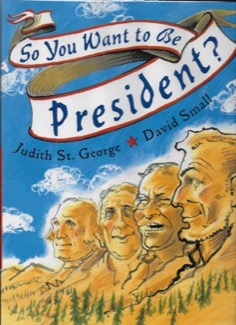
Hardcover. NY, Philomel, 2nd pr., 2000, Book: Very Good, Dust Jacket: Very Good, 52 pages. Hardcover with dust jacket. SIGNED BY ILLUSTRATOR ON TITLE PAGE. Color illustrations by David Small. Winner of the Caldecott Medal. Clean, tight copy. Second printing, no medal sticker on cover.
Hardcover. New York, Cambridge University Press, 1st, 1996, Book: Very Good, Dust Jacket: Very Good, 314 pages. Hardcover with dust jacket. Clean, unmarked copy with only minor wear to dust jacket. Black and white pictures.
Hardcover. NY, Time Life, reprint, 1984, Book: Very Good, Dust Jacket: None, 362 pages. Hardcover with no dust jacket. Dark blue leather bound with gilt titles to front cover and spine. Embossed decoration on front cover. Gilt text block edges, red ribbon marker. Clean, tight copy. The account of the battles give incisive information, the writer speaks in such a way that one feels he is present, and telling you his experience and account of each battle discussed. McKim was a Maryland Confederate officer and one can feel his position in many of the comments he makes. This book is "the real deal". If you seek the true Confederate view of the Civil War, McKim will supply you with accurate information, both the good and the bad, concerning his experience in battles.
Hardcover. Jericho, Town of Jericho, 1st, 1868, Book: Very Good, Dust Jacket: None, 47 pages. Soldiers listed by name, age, unit, dates of service, capture, wounds, deaths. Interspersed throughout text are historical facts to be found in no other Civil War publication. Brown cloth. Title in gilt on front cover. Front and rear endpapers age toned. Small wrinkle in cloth on back cover. Clean, tight copy.
Hardcover. Columbia SC, University of South Carolina Press, 1st, 1988, Book: Very Good, Dust Jacket: Very Good, Hardcover in a bright dust jacket. 278 pages, b&w illustrations. INSCRIBED BY AUTHOR on front fly leaf. "Drawing upon hundreds of obscure and hard-to-find sources, the author has produced a fresh, sometimes humorous, sometimes heartbreaking chronicle of what it was like to be a participant in the most intense war the world had ever seen up to that time." Clean copy.
Hardcover. Cambridge, MA, Harvard University Press, reprint, 1950, Book: Very Good, Dust Jacket: None, 201 pages. Red embossed cloth cover, minor wear to corners and edges. Some foxing on front and rear endpages. Inside is bright and clean with b&w illustrations throughout.
Softcover. Lincoln NE, University of Nebraska Press, 1st, 2013, Book: Very Good, Dust Jacket: None, Softcover. At a time when few Americans had visited Australia, journalist John Lardner sailed down under with the U.S. armed forces as one of the first American war correspondents in the Pacific theater. With his excellent sense of humor and gift for narrative, Lardner penned vignettes of MacArthur's arrival and his reception in Melbourne and a flight with the daring Dutch flier Capt. Hans Smits. More frequently, Lardner wrote about the ordinary day and the average person. Traveling throughout the country, in Southwest Passage Lardner offers a glimpse of Australia in the 1940s and generates warmth and admiration for World War II fighters in the Pacific, whether Australian, New Zealander, aboriginal, or American. Clean copy.
Hardcover. New York, Alfred A. Knopf, 1st, 1966, Book: Very Good, Dust Jacket: None, 416 pages. Hardcover. B/w illustrations throughout. Top edge dyed. Some underlining throughout. Deckled edges. Blue cover boards, black title on spine and front cover board.
Hardcover. Baltimore, Johns Hopkins Press, 1st, 1906, Book: Good, Dust Jacket: None, Hardcover, brown cloth covers with gilt lettering on spine, 95 pages. Ex-lib with residue, stamping to endpapers. Interior clean, probably a rebound softcover published in 1906.
Hardcover. unknown, private publishing, 1st, 1887, Book: Very Good, Dust Jacket: None, 324 pages. INSCRIBED BY PHINEAS SPAULDING. Includes Life and Selected Poetry of Caroline A. Spaulding. Brown cloth covers, beveled edges, black stamped boarders and pictorial, gilt titles to spine, b&w tissue-protected frontispiece of author's portrait, decorated endpapers. Light edgewear to covers, previous owner's inscription to front endpaper, pages crisp and otherwise unmarked, stiff binding; a very clean, tight copy in great condition.
Paperback. NY, Random House, 1st wraps, 1952, Book: Good, Dust Jacket: None, Softcover, 128 pgs. A collection of political speeches with a four page intro by Steinbeck. Fading to color on wraps with some shallow creases.
Softcover. Columbus OH, Ohio State University Press, 1st, 2005, Book: Very Good, Dust Jacket: None, Softcover, 189 pages. Looks at the response of American writers to Prohibition with an analysis of fictional portrayals of bootleggers, moonshiners, cabarets, speakeasies, and Prohibition-era characters. Clean copy.
Softcover. Indianapolis, Liberty Fund, reprint, 2001, Book: Very Good, Dust Jacket: None, Softcover, 325 pages. John Adams and Benjamin Rush were two remarkably different men who shared a devotion to liberty. Their dialogues on the implications of fame for their generation prove remarkably timely--even for the twenty-first century. Adams and Rush championed very different views on the nature of the American Revolution and of the republic established with the United States Constitution; yet they shared one of the most important correspondences of their time. John Adams and Benjamin Rush met in 1774 as members of the Continental Congress--Adams from Massachusetts, Rush from Pennsylvania. In 1805, after Adams was defeated in his quest of a second term as the new republic's second President, the two men self-consciously commenced an exchange of letters. Their recurring subject was fame. This emphasis on fame was crucial, Adams and Rush believed, because on the fame attached to individual leaders of the Revolutionary generation would depend the view of the Revolution and of the Constitution and republican government that would be embraced by generations to come, including our own. The Liberty Fund edition of The Spur of Fame reproduces a text originally published by the Huntington Library.
Hardcover. New York , G. W. Carleton & Co., Publishers, reprint, 1886, Book: Fair, Dust Jacket: None, 688 pages, b&w illustrations. Brown cloth, gilt and black titles and gilt design on front and spine. Binding is very delicate. Some internal signature coming loose. Handle with care. Small tear to front gutter, ex-lib numbers at bottom spine. Previous owner's stamp on prelim-page. Light wear and rubbing to pictorial boards.

 "Skyscraper Primitives: Dada and the American Avant-Garde, 1910-1925by: Tashjian, Dickran")
 "Skyscraper Primitives: Dada and the American Avant-Garde, 1910-1925by: Tashjian, Dickran")


![Slavery in the South: First-Hand Accounts of the Ante-Bellum American Southland from Northern & Southern Whites, Negroes, & Foreign Obervers by: Wish, Harvey [Ed.]](https://www.browsingisarousing.com/shop/images/Slavery-in-the-South-First-Hand-Accounts-of-the-Ante-Bellum-American-Southland-from-Northern-Souther396380-446228.jpg "Slavery in the South: First-Hand Accounts of the Ante-Bellum American Southland from Northern & Southern Whites, Negroes, & Foreign Obervers by: Wish, Harvey [Ed.]")





 "Solar System Astronomy in America: Communities, Patronage, and Interdisciplinary Science, 1920-1960by: Doel, Ronald E.")
 "Soldier's Recollection, A - Leaves from the Diary of a Young Confederate; With an Oration on the Motives and Aims of the Soldiers of the South (Collector's Library of the Civil War)by:")
 "Soldier's Record of Jericho, Vermont, Theby: Lane, E. H.")
 "Soldiers Blue and Gray (SIGNED COPY)by: Robertson, James I., Jr.; Connelly, Thomas L. (editor)")
 "Some Early Tools of American Science: An Account of the Early Scientific Instruments and Mineralogical and Biological Collections in Harvard University.by: Cohen, I.")




 "Spaulding Memorial and Personal Reminiscences (SIGNED COPY)by: Spaulding, Phineas")
 "Speeches of Adlai Stevensonby: Steinbeck, John")