Hardcover. NY, Rizzoli, 1st, 2010, Book: Very Good, Dust Jacket: Very Good, Hardcover, More than a century ago, when Abbot Kinney built his Venice-of-America with its network of canals and fanciful buildings, cultural aspirations were high. Over the years, this aura of fantasy and imaginative possibility endured as integral to the zeitgeist of the place. Today, this spirit of innovation and creativity is richly expressed in the vintage bungalows and cottages that have been embraced and brought back to life by homeowners more in love with place than size. Stalwart survivors of the ebb and flow of the area's fortunes over a century, these small homes channel the creative spirit of the place and provide a welcome counterpoint to oversize houses. Color, landscape, treasured collections, personal narrative, contemporary overlays and additions, art and craft, and inventive design--all combine in various ways to produce domestic environments with unique and deeply personal points of view.
Hardcover. Brooklyn NY, Melville House, 1st, 2013, Book: Very Good, Dust Jacket: Very Good, Hardcover in a bright, unclipped dust jacket. This is the original 30,000 word article Agee wrote for Fortune magazine in 1936 that was never published. Accompanied by 30 Walker Evans photos. Clean copy.
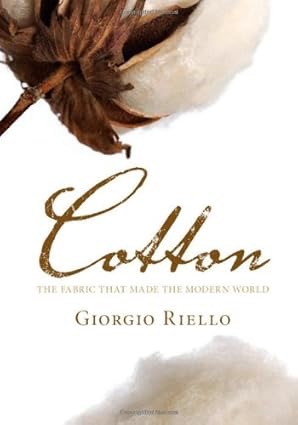
Hardcover. UK, Cambridge University Press, 1st, 2013, Book: Very Good, Dust Jacket: Very Good, Hardcover in a bright dust jacket, 407 pages. Color and b&w illustrations. Details the history of cotton and how it has impacted the textile and garment trade. Today's world textile and garment trade is valued at a staggering $425 billion. We are told that under the pressure of increasing globalisation, it is India and China that are the new world manufacturing powerhouses. However, this is not a new phenomenon: until the industrial revolution, Asia manufactured great quantities of colorful printed cottons that were sold to places as far afield as Japan, West Africa and Europe. Cotton explores this earlier globalized economy and its transformation after 1750 as cotton led the way in the industrialization of Europe. By the early nineteenth century, India, China and the Ottoman Empire switched from world producers to buyers of European cotton textiles, a position that they retained for over two hundred years. This is a fascinating and insightful story which ranges from Asian and European technologies and African slavery to cotton plantations in the Americas and consumer desires across the globe. Clean copy.
Hardcover. NY, Assouline, 1st, 2004, Book: Very Good, Dust Jacket: Very Good, Hardcover, 240 pages. Celebrates its centennial in 2004 with a global operation in more than 25 countries. With wit, spirit, and luminous images, Orla Healy tells the inspiring story of Coty, both the man and the company..
Hardcover. London, The Folio Society, 1st illust thus, 2010, Book: Very Good, Dust Jacket: None, Hardcover, decorative boards with black slipcase. 445 pages, color frontispiece and 12 color plates by David Hughes. First published in 1938, recounting the life of the Byzantine general Belisarius (AD 500-565), It was not a peaceful time for the Roman empire. Invaders threatened all fronts, but they grew to respect and fear the name of Belisarius, Emperor Justinian's greatest general. With this book Robert Graves again demonstrates his command of a vast historical subject, creating a startling and vivid picture of a decadent era. Forward by Lindsey Davis. Clean copy.
Hardcover. New York, Algonquin Books, 1st, 1990, Book: Very Good, Dust Jacket: Very Good, 183 pages. Hardcover with dust jacket. A very clean, unmarked copy with only minor wear to dust jacket edges. A tight copy.
Hardcover. NY, Viking Press, 1st, 1990, Book: Very Good, Dust Jacket: Very Good, Hardcover in a bright, unclipped dust jacket. This copy has been SIGNED by Shirley Hazzard on the title page. The author, who worked at the United Nations for ten years, and who during Waldheim's tenure raised questions about his hidden past, discloses here the secret history of an institution that is supposed to safeguard the world's most cherished principles. Remainder line on bottom edge, otherwise clean.
Hardcover. New York , Thomas Y. Crowell Company, reprint, 1974, Book: Very Good, Dust Jacket: Good, Hardcover, 274 pages. Blue cloth cover, minor wear to corners and edges of spine. Inside is bright and clean, with many b&w illustrations throughout. A nice copy in a lightly worn dust jacket.
Hardcover. Princeton, NJ, Princeton University Press, 1st US, 1982, Book: Very Good, Dust Jacket: Good, Hardcover. 360 pages. Dust jacket with edgewear, sun-fading. Clean, tight copy. The first monograph on English medieval county courts, this book provides a major revision of traditional conceptions of the character of these courts and the organization of English society from the twelfth to the fourteenth century. THe county courts have been considered courts of custom dominated by local knights unskilled in the law. By analyzing county peronnel and their role of the courts, Robert C. Palmer shows that these courts were, on the contrary, clearly professional and controlled by the magnates through their lawyers. Nevertheless, as the author demonstrates by his study of the process of jurisdictional change, the county courts were increasingly relegated to lesser roles by changes meant to assure justice to county litigants, while the king's court became the normal court of original jurisdiction for most important cases.
Softcover. New Haven CT, Yale University Press, reprint, 1977, Book: Very Good, Dust Jacket: None, Softcover, 284 pages. Samuel Decalo presents detailed evidence from Dahomey, Togo, Congo/Brazzaville, and Uganda that African military coups are engineered by coteries of cliques composed of ambitious officers seeking self-advancement. He successfully refutes prevailing theories that military rule has fostered socioeconomic or political development or stability. Clean, tight copy.
Hardcover. London, Henry Colburn, 1st, 1848, Book: Good, Dust Jacket: None, Two volumes. 1/2 leather bindings with gold marbled covers and end papers. Gilt top edges. Volume 1 - 476 pages plus 16 pages of ads. Raised bands on spine. Rubbing to edges. Clean, unmarked text. Volume 2 - 510 pages. Raised bands on spine. Rubbing to edges. Clean, unmarked text.
Hardcover. Ketchum ID, Dobler Hill Ltd, 1st, 1993, Book: Very Good, Dust Jacket: Very Good, Hardcover in a bright dust jacket, 228 pages. In stunning photographs, Stoecklein shows cowboy and Western gear as it actually looked on the cowboys who wore them, and how the gear was used. A timeless resource for collectors, and western fans alike. A full color documentary of our Western heritage, including saddles, spurs, boots, hats, and attitude. Shows artifacts and collectibles from 1860 to 1920 as they were actually used by their original owners -- it's a true look into the daily lives of the men who settled the West. Clean copy.
Hardcover. New York, Funk Wagnalls, 4th pr., 1967, Book: Very Good, Dust Jacket: Fair, Hardcover, 110 pages. Black & white illustrations by Eric Sloane. Dust jacket heavily chipped. Dust jacket is protected by a mylar cover.
Hardcover. Hoboken, John Wiley & Sons, Inc., First Edition, 2006, Book: Very Good, Dust Jacket: Very Good, 272 pages. Hardcover. Black cloth covered boards with red printed titles to spine. Dust jacket in very good condition. Illustrations in bw throughout. Clean & unmarked copy.
Softcover. Austin, University of Texas Press, 1st, 1993, Book: Very Good, Dust Jacket: None, Softcover, yellow wrappers, 287 pages. Light fading to spine. In ancient Mediterranean cultures, diamonds were thought to endow their owners with invincibility. In contemporary United States culture, a foreign-made luxury car is believed to give its owner status and prestige. Where do these beliefs come from In this study of craft production and long-distance trade in traditional, nonindustrial societies, Mary W. Helms explores the power attributed to objects that either are produced by skilled artisans and/or come from 'afar.' She argues that fine artisanship and long-distance trade, both of which are more available to powerful elites than to ordinary people, are means of creating or acquiring tangible objects that embody intangible powers and energies from the cosmological realms of gods, ancestors, or heroes. Clean copy.
Hardcover. Syracause NY, The Adirondack Museum, 1st, 1968, Book: Very Good, Dust Jacket: Fair, Hardcover in a worn, tape repaired dust jacket, 207 pages, b&w illustrations including a fold-out map. Articles and primary source materials (diaries; memoirs) about the settlement and development of this region in the New York Adirondack Mountains. Previous owner's inscription on front fly leaf, otherwise clean.
Hardcover. Chicago, University of Chicago Press, 1st, 2020, Book: Very Good, Dust Jacket: Very Good, Hardcover in a bright, unclipped dust jacket. In Crap: A History of Cheap Stuff in America, Wendy A. Woloson takes seriously the history of objects that are often cynically-made and easy to dismiss: things not made to last; things we don't really need; things we often don't even really want. Woloson does not mock these ordinary, everyday possessions but seeks to understand them as a way to understand aspects of ourselves, socially, culturally, and economically: Why do we--as individuals and as a culture--possess these things? Where do they come from? Why do we want them? And what is the true cost of owning them? Woloson tells the history of crap from the late eighteenth century up through today, exploring its many categories: gadgets, knickknacks, novelty goods, mass-produced collectibles, giftware, variety store merchandise. As Woloson shows, not all crap is crappy in the same way--bric-a-brac is crappy in a different way from, say, advertising giveaways, which are differently crappy from commemorative plates. Taking on the full brilliant and depressing array of crappy material goods, the book explores the overlooked corners of the American market and mindset, revealing the complexity of our relationship with commodity culture over time.
Hardcover. Middle Village, Jonathan David, 1st, 1978, Book: Very Good, Dust Jacket: Good, Hardcover, 438 pages. Black & white illustrations. Price clipped dust jacket with 2 tape repaired short tears on top edge. Clean, tight copy.
Hardcover. Boston, MA, University of Massachusetts Press, 1st, 2013, Book: Very Good, Dust Jacket: Very Good, 516 pages. Hardcover with dust jacket. A very clean, unmarked copy with only minor wear to dust jacket edges. This volume documents Fenn's prolific career from the 1860s until his death in 1911. Sue Rainey also recounts his adventurous sketching trips in the western United States, Europe, and the Middle East, which enhanced his reputation for depicting far-flung places at a time when the nation was taking a more prominent role on the world stage.
Hardcover. Boston, MA, University of Massachusetts Press, 1st, 2013, Book: Very Good, Dust Jacket: Very Good, 516 pages. Hardcover with dust jacket. A very clean, unmarked copy with only minor wear to dust jacket edges. This volume documents Fenn's prolific career from the 1860s until his death in 1911. Sue Rainey also recounts his adventurous sketching trips in the western United States, Europe, and the Middle East, which enhanced his reputation for depicting far-flung places at a time when the nation was taking a more prominent role on the world stage.
Softcover. Jackson MS, University Press of Mississippi , 1st, 2018, Book: Very Good, Dust Jacket: None, Softcover, 235 pages. Throughout his life, Louis Armstrong tried to explain how singing with a barbershop quartet on the streets of New Orleans was foundational to his musicianship. Until now, there has been no in-depth inquiry into what he meant when he said, "I figure singing and playing is the same," or, "Singing was more into my blood than the trumpet." Creating the Jazz Solo: Louis Armstrong and Barbershop Harmony shows that Armstrong understood exactly the relationship between what he sang and what he played, and that he meant these comments to be taken literally: he was singing through his horn. Clean copy, like new.
Hardcover. Berkeley CA, University of California Press, 1st, 2012, Book: Very Good, Dust Jacket: Very Good, Hardcover, 267 pages, b&w photos. Clean, unmarked copy with only minor wear to dust jacket. This book examines the often-neglected role played by immigrant artists and critics in the circle of Alfred Stieglitz, including Japanese-German author Sadakichi Hartmann, Mexican-born caricaturist Marius de Zayas and English Sri-Lankan curator Ananda Coomaraswamy, as well as better-known U.S.-born painters, including Arthur Dove and Georgia O'Keeffe.

 "Cottages in the Sun: Bungalows of Venice, Californiaby: Margaret Bach, Melba Levick (Photographer)")
 "Cotton Tenants: Three Familiesby: Agee James; Summers John Editor; Evans Walker Photographer; Haslett Adam Introduction;")
 "Coty: The Brand of Visionaryby: Orla Healy")

 "Countdown! 35 Daylight Missions Against Nazi Germanyby: Koger, Fred")
 "Countenance of Truth; The United Nations and the Waldheim Case (SIGNED COPY)by: Shirley Hazzard")
 "Country Furnitureby: Watson, Aldren A.")
 "County Courts of Medieval England, 1150-1350, Theby: Palmer, Robert C.")

 "Court and Times of James the First - Illustrated by Authentic and Confidential Letters, from Various Public and Private Collections - 2 Volumes, Theby: Williams, Robe")



 "Cowboy Upby: Introduction: Johnson, Dirk, Photographer: Frank, Arthur")
 "Cracker Barrel, Theby: Sloane, Eric")
 "Cradle of Violence - How Boston's Waterfront Mobs Ignited the American Revolutionby: Bourne, Russell")
 "Craft and the Kingly Ideal: Art, Trade, and Powerby: Helms, Mary W.")

 "Crap: A History of Cheap Stuff in Americaby: Woloson, Wendy A.")
 "Crawford's Encyclopedia of Comic Booksby: Crawford, Hubert H.")
 "Creating a World on Paper: Harry Fenn's Career in Artby: Rainey, Sue")

 "Creating the Commonwealth: The Economic Culture of Puritan New Englandby: Innes, Stephen")

 "Creative Composites: Modernism, Race, and the Stieglitz Circle (The Phillips Book Prize Series)by: Kroiz, Lauren")