Hardcover. Washington DC, Counterpoint, 1999, Book: Very Good, Dust Jacket: Very Good, Hardcover, 642 pages. Hailed in 1849 as "a new department in the literature of civilization," the slave narrative forms the foundation of the African American literary tradition. From the late-eighteenth-century narratives by Africans who endured the harrowing Middle Passage, through the classic American fugitive slave narratives of the mid-nineteenth century, slave narratives have provided some of the most graphic and damning documentary evidence of the horrors of slavery. Riveting, passionate, and politically charged, the slave narrative blends personal memory and rhetorical attacks on slavery to create powerful literature and propaganda.The Civitas Anthology presents the seven classic antislavery narratives of the antebellum period in their entirety: The History of Mary Prince, a West Indian Slave , the first slave narrative published by a woman in the Americas; The Confessions of Nat Turner , written when Turner was asked to record his motivation for leading the bloodiest slave revolt in U.S. history; The Narrative of the Life of Frederick Douglass , an international bestseller and the first narrative to fashion the male fugitive slave into an African American cultural hero; The Narrative of William W. Brown , an account that explored with unprecedented realism the slave's survival ethic and the art of the slave trickster; The Narrative of the Life of Henry Bibb , the story of the struggles of the most memorable family man among the classic slave narrators; Running a Thousand Miles for Freedom , a gripping chronicle of one of the most daring and celebrated slave escapes ever recorded; and Incidents in the Life of Slave Girl , a dramatic text that exposed the sexual abuse of female slaves and pioneered the image of the fugitive slave woman as an articulate resister and survivor.Born out of lives of unparalleled suffering, the slave narrative captures all the bravery, drama, and hope that characterized the African American struggle against slavery. From these beginnings came some of the most influential novels in American literature, for the works of writers such as Harriet Beecher Stowe, Mark Twain, and Toni Morrison owe much of their power and social resonance to the slave narrative tradition. The Civitas Anthology gathers the most important narratives in this tradition into one volume for the first time, an indispensable resource for scholars, students, and general readers. Clean copy.
Hardcover. Cleveland, World Publishing Company, 1st, 1966, Book: Very Good, Dust Jacket: Good, 336 pages. Hardcover. Previous owners name on front endpaper. Includes cartoonists: John Held, Jr., Charles Keene, George Herriman, A. B. Frost, Peter Arno, Saul Steinberg, Charles Addams, Virgil Partch, William Steig, Gerald Scarfe, Shel Silverstein, Tomi Ungerer, and more. Black & white illustrations. Dust jacket with chipping along edges. Clean, unmarked pages.
Hardcover. Prion, 1st, 2009, Book: Very Good, Dust Jacket: Very Good, Hardcover, 230 pages. In terms of both words and images the world had never seen the like of the American comic book. They were bizarre, morbid, lurid, risque and bursting with subconscious desires of burgeoning youth culture. By the time 1954 arrived their were 500 different comics being published by 35 different companies, selling over 60 million copies a month between them. This is the history of the era and the art it produced. The book looks at the pioneers of the comic book and the comic's founding links with sleazy pulp magazines; the campaign for censorship; the fraught relationship between the comic book artists and their publishers; how what they did was rarely recognized as art at the time - and of course the comics themselves.
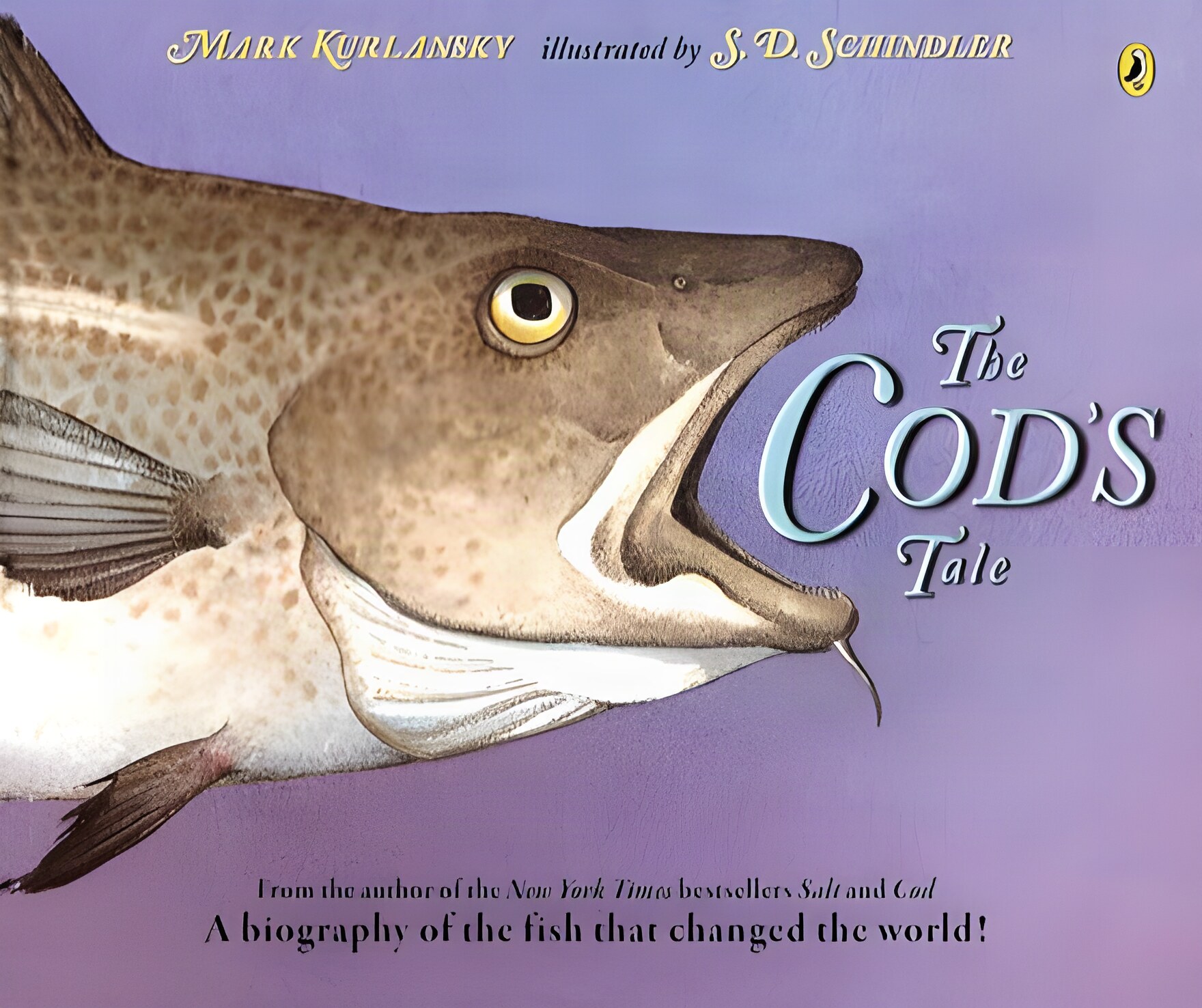
Hardcover. NY, G.P. Putnam's Sons, 1st, 2001, Book: Very Good, Dust Jacket: Very Good, Hardcover in a bright, unclipped dust jacket. 48 pages illustrated in color by S.D. Schindler. Clean copy.
Hardcover. NY, Basic Books, 4th pr., 2017, Book: Very Good, Dust Jacket: Very Good, Hardcover in a bright dust jacket, 710 pages. We think of the Cold War as a clash of two superpowers, the United States and the Soviet Union. But in The Cold War, award-winning historian Odd Arne Westad argues that the war must be understood as a global confrontation, with roots in the Industrial Revolution and ongoing repercussions around the world. The Cold War may have begun on the perimeters of Europe, but it had its deepest reverberations in Asia, Africa, and the Middle East. Stunning in its breadth and revelatory in its perspective, The Cold War expands our understanding of the Cold War both geographically and chronologically, and offers a new history of how today's world was creased. Clean copy.
Hardcover. NY, Metropolitan Museum of Art/ The Viking Press, 1st, 1978, Book: Very Good, Dust Jacket: Very Good, Hardcover in a lightly worn dust jacket. In addition to being one of the preeminent American photographers of the late 19th and early 20th centuries, Alfred Stieglitz was an avid collector of the works of other photographers. From 1894-1910, he collected over 650 prints from a variety of photographers. He donated 400 of these to the Metropolitan Museum of Art in 1939, and the balance was given in a bequest to the museum in 1949. Photographers included in the collection include Edward Steichen, Gertrude Kasebier, Baron de Meyer, Ansel Adams, Eliot Porter, and Julia Margaret Cameron. This substantial volume was produced by Weston Naef, who was Associate Curator of Prints and Photographs at The Metropolitan Museum of Art. It includes a black-and-white reproduction of all the photographs in the Stieglitz Collection, some full-page and many in smaller size. It also includes details about, and portraits and signatures of each of the painters. Small closed tears to dust jacket, otherwise a clean, bright copy.
Softcover. Dallas TX, Southern Methodist University, reprint, 2001, Book: Very Good, Dust Jacket: None, Softcover, 221 pages, 202 b&w plates, 20 in color. Historical and cultural history of religious, popular and folk architecture of colonial New Spain. Clean copy.
Softcover. Minneapolis, University of Minnesota Press, 1st, Book: Very Good, Dust Jacket: None, Softcover, 135 pages. The author has collected, arranged, and annotated picture postcards of Algerian women produced and sent by the French during the first three decades of the 20th century. From this album emerges a powerful analysis of the distorting, denigrating effects of the French colonial presence on Algerian society. Alloula's reading of the pohotographs locates them in their historical context and examines them through the lens of contemporary critical theory. Wraps with light edgewear, clean.
Softcover. Carbondale IL, Southern Illinois University Press , 1st, 1970, Book: Very Good, Dust Jacket: None, Softcover, dark gray covers with some fading. 639 pages. A detailed documentary on the American Colonial Society, discussing culture, politics, religion, and much more. David Potter and Gordon L. Thomas have selected representative and important speeches and exhortations delivered by famous Americans from the beginning of the Massachusetts Bay Colony to the signing of the Declaration of Independence. The selections are arranged in five categories--those dealing with academic, legal, occasional, political, and religious matters. They are drawn from every stratum of colonial activity--from the classrooms, clerical studies, town meetings, provincial assemblies, and the bar. Great names abound in these pages, but, frequently, expounders of great ideas found here are unremembered figures whose works cannot be found easily elsewhere. The editors have carried out careful research on each speech to assure the authenticity of the text. They have added, for each selection, a note on the speaker and on the place where he delivered his address. Clean copy.
Hardcover. Belgium, Brepols , 1st, 2012, Book: Very Good, Dust Jacket: None, Hardcover, pictorial boards, 696 pages, 34 b/w illustrations.The rise of modern science and European colonial and imperial expansion are indisputably two defining elements of modern world history. James E. McClellan III and Francois Regourd explore these two world-historical forces and their interactions in this comprehensive and in-depth history of the French case in the Old Regime presented here for the first time. The case is key because no other state matched Old-Regime France as a center for organized science and because contemporary France closely rivaled Britain as a colonial power, as well as leading all other nations in commodity production and participating in the slave trade. Based on extensive archival research and vast primary and secondary literatures and sharply reframing the historiography of the field, this landmark volume traces the development and significance for early-modern history of the Colonial Machine of Old-Regime France, an unparalleled agglomeration of institutions geared to the success of the French colonial enterprise, including the Royal Navy, the Academie Royale des Sciences, the Jardin du Roi, and a host of related specialist institutions working together at home and overseas. Mainly supported by the French state, the Colonial Machine reveals itself through its actions from the time of Colbert and Louis XIV as it grappled with fundamental problems facing contemporary European colonialism. SIGNED LETTER from co-author McClelland laid in. Clean copy.
Hardcover. New Haven CT, Yale University Press, 1st, 1938, Book: Very Good, Dust Jacket: Very Good, Hardcover in a lightly worn, price-clipped dust jacket, 477 pages. Original edition of this major study of British policies toward its North American colonies by a premiere early 20th century historian of Colonial America, Charles M. Andrews. Name on front fly leaf, otherwise a clean, tight copy.
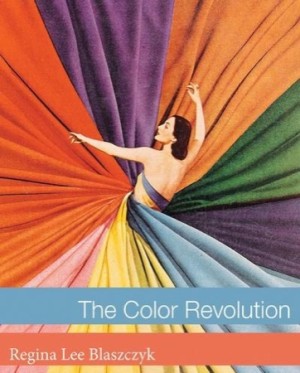
Hardcover. Cambridge MA, The MIT Press, 1st, 2012, Book: Very Good, Dust Jacket: Very Good, Hardcover in a bright dust jacket In this book, 380 pages, illustrated in color. The award-winning historian Regina Lee Blaszczyk traces the relationship of color and commerce, from haute couture to automobile showrooms to interior design, describing the often unrecognized role of the color profession in consumer culture. Blaszczyk examines the evolution of the color progression from 1850 to 1970, telling the stories of innovators who managed the color cornucopia that modern artificial dyes and pigments made possible. These color stylists, color forecasters, and color engineers helped corporations understand the art of illusion and the psychology of color. Clean copy.
Hardcover. NY, Columbia University Press, 1st, 1993, Book: Very Good, Dust Jacket: Very Good, Hardcover in a bright dust jacket, 894 pages. Edited by Jay Parini and with poetry and poetry criticism by Anne Bradstreet and Edward Taylor by Francis Murphy, Early African American Poetry, by Carolivia Herron, The Epic in the Nineteenth Century, by John McWilliams, Longfellow in the Aftermath of Modernism, by Dana Gioia, The Transcendentalist Poets by Lawrence Buell, Emily Dickinson, Cynthia Griffin Wolff, Walt Whitman, by Donald Pease and many others, such as Dana Gioia, Gregory Orr, Ann Charters, William Pritchard, Helen Vendler, Edward Hirsch, and the work of Ezra Pound, William Carlos Williams, the Beat poets and Native American poets and others. SIGNED BY PARINI on the title page. Bright, clean copy.
Hardcover. London, Paul Holberton Publishing, 1st, 2015, Book: Very Good, Dust Jacket: Very Good, Hardcover in a bright dust jacket, 197 pages. Color and b&w plates throughout. This groundbreaking architectural history examines what people actually wanted in their institutional and private patronage over the last two centuries as opposed to what architects and theorists thought they should want - as seen through the prism of Oxford's principal building contractor and craft practitioner, Symm & Company. Clean, bright copy.
Softcover. Seattle, Fantagraphics, 1st, 2008, Book: Very Good, Dust Jacket: None, Softcover, 200 pages. Gary Groth interviews father and son cartoonists Gene and Kim Deitch. Academy-award-winning Gene Deitch, whose wide-ranging career has spanned over 60 years, talks about doing illustrations for The Record Changer, directing cartoons such as Munro and Krazy Kat, and creating his comic strip Terr'ble Thompson. Underground comics pioneer Kim Deitch, touches on his father's influence, reminisces about the New York-based scene and outlines the evolution of Waldo the Cat. Plus: The innovative Grant Morrison fills us in on his X-Men run, All Star Superman, the ambitious Seven Soldiers "maxiseries," and how he became one of the architects of the current DC Comics universe. Finally, the comics gallery presents an historical essay and highlights from the turn-of-the-19th-century work of Puck cartoonist, F. M. Howarth.
Softcover. Seattle, Fantagraphics, 1st, 2009, Book: Very Good, Dust Jacket: None, Softcover, 207 pages. A career-spanning interview with Mort Walker, the creator of Beetle Bailey and Hi & Lois. Jordan Crane discusses The Clouds Above: comics by the famous 17th century caricaturist Thomas K. Rowlandson.
Softcover. Seattle, Fantagraphics, 1st, 2015, Book: Very Good, Dust Jacket: None, Large softcover, 263 pages, b&w photos ad illustrations. In-depth, career-spanning interviews with the cartoonists - Crumb, Shelton, and more - who forever altered the course of American comics with their anthology title, Zap Comix. The definitive Comics Journal interviews with the cartoonists behind Zap Comix, featuring: Supreme 1960s counterculture/underground artist Robert Crumb on how acid unleashed a flood of Zap characters from his unconscious; Marxist brawler Spain Rodriguez on how he made the transition from the Road Vultures biker gang to the exclusive Zap cartoonists' club; Yale alumnus Victor Moscoso and Christian surfer Rick Griffin on how their poster-art psychedelia formed the backdrop of the 1960s San Francisco music scene; Savage Id-choreographer S. Clay Wilson on how his dreams insist on being drawn; Painter and Juxtapoz-founder Robert Williams on how Zap #4 led to 150 news-dealer arrests; Fabulous, Furry, Freaky Gilbert Shelton on the importance of research; Church of the Subgenius founder Paul Mavrides on getting a contact high during the notorious Zap jam sessions; and much more. In these career-spanning interviews, the Zap contributors open up about how they came to create a seminal, living work of art. Partial color.
Softcover. Seattle, Fantagraphics, 1st, 2015, Book: Very Good, Dust Jacket: None, Large softcover, 263 pages, b&w photos ad illustrations. In-depth, career-spanning interviews with the cartoonists - Crumb, Shelton, and more - who forever altered the course of American comics with their anthology title, Zap Comix. The definitive Comics Journal interviews with the cartoonists behind Zap Comix, featuring: Supreme 1960s counterculture/underground artist Robert Crumb on how acid unleashed a flood of Zap characters from his unconscious; Marxist brawler Spain Rodriguez on how he made the transition from the Road Vultures biker gang to the exclusive Zap cartoonists' club; Yale alumnus Victor Moscoso and Christian surfer Rick Griffin on how their poster-art psychedelia formed the backdrop of the 1960s San Francisco music scene; Savage Id-choreographer S. Clay Wilson on how his dreams insist on being drawn; Painter and Juxtapoz-founder Robert Williams on how Zap #4 led to 150 news-dealer arrests; Fabulous, Furry, Freaky Gilbert Shelton on the importance of research; Church of the Subgenius founder Paul Mavrides on getting a contact high during the notorious Zap jam sessions; and much more. In these career-spanning interviews, the Zap contributors open up about how they came to create a seminal, living work of art. Partial color.
Softcover. New York, Fantagraphics Books, 1st, 2014, Book: Very Good, Dust Jacket: None, 300 pages. Softcover with light edgewear to paper wrappers. Clean, tight copy. Color and black and white illustrations throughout. The definitive Comics Journal interviews with the cartoonists behind Zap Comix, featuring: Supreme 1960s counterculture/underground artist Robert Crumb on how acid unleashed a flood of Zap characters from his unconscious; Marxist brawler Spain Rodriguez on how he made the transition from the Road Vultures biker gang to the exclusive Zap cartoonists' club; Yale alumnus Victor Moscoso and Christian surfer Rick Griffin on how their poster-art psychedelia formed the backdrop of the 1960s San Francisco music scene; Savage Id-choreographer S. Clay Wilson on how his dreams insist on being drawn; Painter and Juxtapoz-founder Robert Williams on how Zap #4 led to 150 news-dealer arrests; Fabulous, Furry, Freaky Gilbert Shelton on the importance of research; Church of the Subgenius founder Paul Mavrides on getting a contact high during the notorious Zap jam sessions; and much more. In these career-spanning interviews, the Zap contributors open up about how they came to create a seminal, living work of art.
Hardcover. NY, Benjamin Blom, 1st, 1964, Book: Very Good, Dust Jacket: None, Hardcover, light orange cloth with brown titles on spine. Traces the history of the time-honored farce, featuring Pulcinella, Harlequin, Pierrot, Pantaleone, and other traditionsl characters, from Roman comedy to Cruikshank's Punch & Judy. Originally published in 1912, this new edition adds 46 pages of illustrations and a folding color frontispiece. Clean copy, no dust jacket.
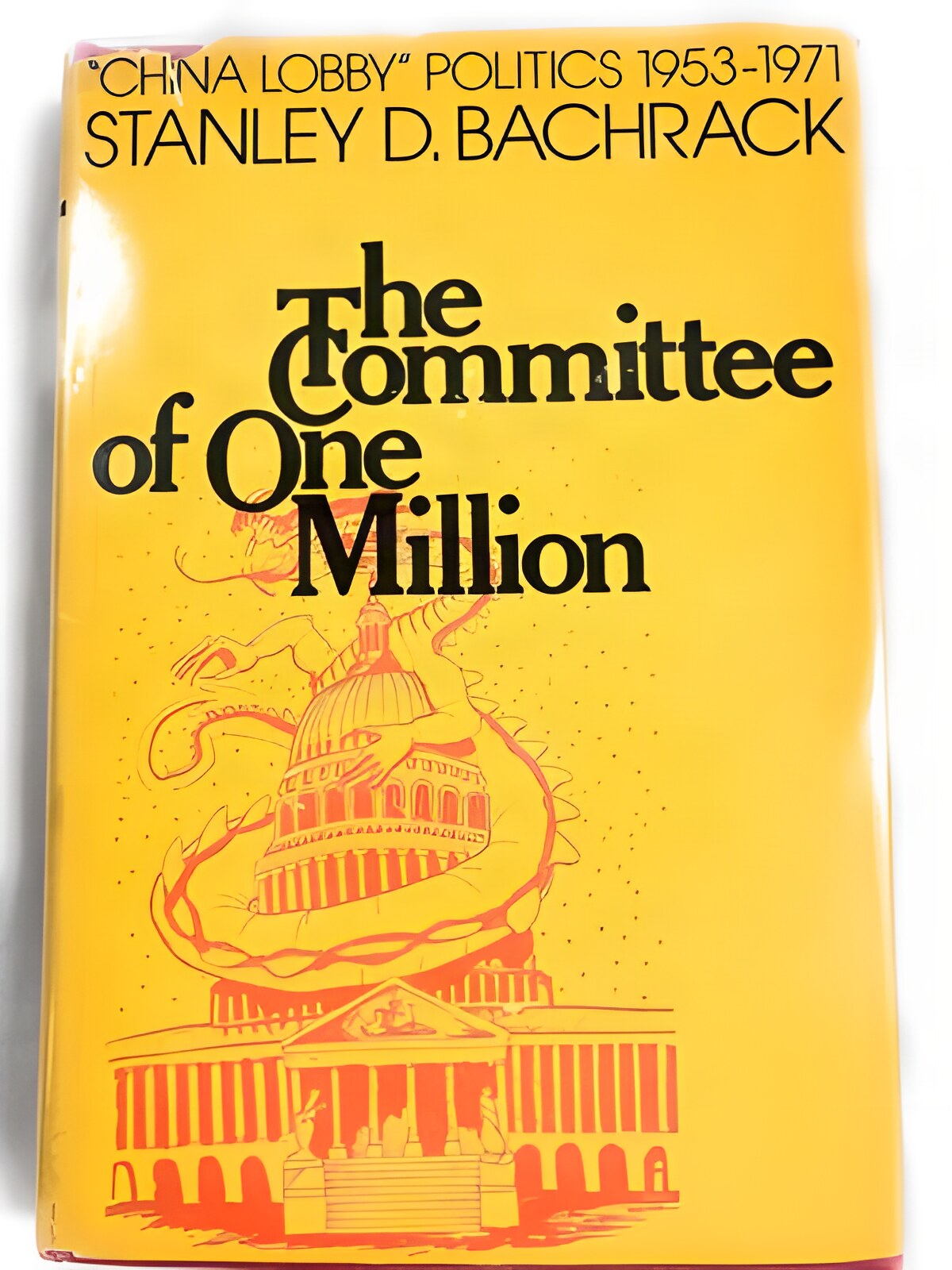
Hardcover. NY, Columbia University Press, 1st, 1976, Book: Very Good, Dust Jacket: Very Good, Hardcover in a bright, price-clipped dust jacket, 371 pages. Looks into the origins and activities of a foreign-policy interest group which emerged after the Korean War and exerted pressure on the federal government not to recognize the People's Republic of China. Name on front fly leaf, otherwise clean.
Softcover. Ithaca NY, Cornell University Press, 1st pbk, 1973, Book: Very Good, Dust Jacket: None, Softcover, 180 pages. The spirit of an event consecrated in anarchist legend is captured in these documents. Eyewitness reports, accounts of participants, and archival documents are used by Dr Edwards to illustrate the many facets of the seventy-three-day Paris Commune of 1871, the largest urban insurrection in modern history. Each section of the book is preceded by an explanatory note, and footnotes clarify contemporary references The introduction to the documents provides a general survey of the origins and events of the Commune. Bright, clean copy.
Hardcover. NY, Harper Business , 1st, 2020, Book: Very Good, Dust Jacket: Very Good, Hardcover in a bright dust jacket, 432 pages. B&w and color illustrations. Small remainder line on bottom edge. In his much-anticipated memoir, The Company I Keep: My Life in Beauty, Chairman Emeritus and former CEO of The Estee Lauder Companies Leonard A. Lauder shares the business and life lessons he learned as well as the adventures he had while helping transform the mom-and-pop business his mother founded in 1946 in the family kitchen into the beloved brand and ultimately into the iconic global prestige beauty company it is today. In its infancy in the 1940s and 50s, the company comprised a handful of products, sold under a single brand in just a few prestigious department stores across the United States. Today, The Estee Lauder Companies constitutes one of the world's leading manufacturers and marketers of prestige skin care, makeup, fragrance and hair care products. It comprises more than 25 brands, whose products are sold in over 150 countries and territories. This growth and success was led by Leonard A. Lauder, Estee Lauder's oldest son, who envisioned and effected this expansion during a remarkable 60-year tenure, including leading the company as CEO and Chairman.

 "The Civitas Anthology of African American Slave Narratives by: William L. Andrews; Henry Louis Gates/editors")
 "The Classic Cartoons - A Definitive Gallery of the Cartoon as Art and as Humorby: Cole (Editors), William/Mike Thaler")
 "The Classic Era of American Comicsby: Wright, Nicky")



 "The Collection in Seventy Four Titles: A Canon Law Manual of The Gregorian Reformby: John Gilchrist")
 "The Collection of Alfred Stieglitz: Fifty Pioneers of Modern Photography by: Naef, Weston")

 "The Colonial Harem by: Malek Alloula")



![The Columbia History of American Poetry (SIGNED COPY)by: Parini, Jay [Editor]](https://www.browsingisarousing.com/shop/images/399544.jpg "The Columbia History of American Poetry (SIGNED COPY)by: Parini, Jay [Editor]")

 "The Comics Journal #292 (No. 292)by: Gary Groth, Mike Dean & Kristy Valenti (Ed.)")
 "The Comics Journal #297 (No. 297)by: Gary Groth (Ed.)")
 "The Comics Journal Library Vol. 9: Zap - The Interviews by: Gary Groth (Editor), Michael Dean (Editor), Bob Levin (Introduction)")


 "The Comics Journal Library Vol. 9: Zap - The Interviews by: Gary Groth (Editor), Michael Dean (Editor), Bob Levin (Introduction)")


 "The Comics Journal Library Vol. 9: Zap - The Interviewsby: Rosenkranz, Patrick")
 "The Commedia Dell'Arteby: Winifred Smith")

 "The Company I Keep: My Life in Beautyby: Leonard A. Lauder")