Hardcover. New York, William Morrow & Co, 1st, 1992, Book: Very Good, Dust Jacket: Very Good, 160 pages. Hardcover with dust jacket. Very clean, unmarked copy with some minor shelfwear to dust jacket. This beautiful book is a spectacular overview of McCarthy's exciting Western work, presenting colorful paintings from his fine art career. Color illustrations throughout.
Hardcover. NY, Abrams, 1st, 2009, Book: Very Good, Dust Jacket: Very Good, Hardcover, 256 pages. Harvey Kurtzman discovered Robert Crumb and gave Gloria Steinem her first job in publishing when he hired her as his assistant. Terry Gilliam also started at his side, met an unknown John Cleese in the process, and the genesis of Monty Python was formed. Art Spiegelman has stated on record that he owes his career to him. And he's one of Playboy publisher Hugh Hefner's favorite artists. Harvey Kurtzman had a Midas touch for talent, but was himself an astonishingly talented and influential artist, writer, editor, and satirist. The creator of MAD and Playboy's "Little Annie Fanny" was called, "One of the most important figures in postwar America" by the New York Times. Kurtzman's groundbreaking "realistic" war comics of the early '50s and various satirical publications (MAD, Trump, Humbug, and Help!) had an immense impact on popular culture, inspiring a generation of underground cartoonists. Without Kurtzman, it's unlikely we'd have had Airplane, SNL, or National Lampoon. The Art of Harvey Kurtzman is the first and only authorized celebration of this "Master of American Comics." This definitive book includes hundreds of never-before-seen illustrations, paintings, pencil sketches, newly discovered lost E.C. Comics layouts, color compositions, illustrated correspondence, and vintage photos from the rich Kurtzman archives
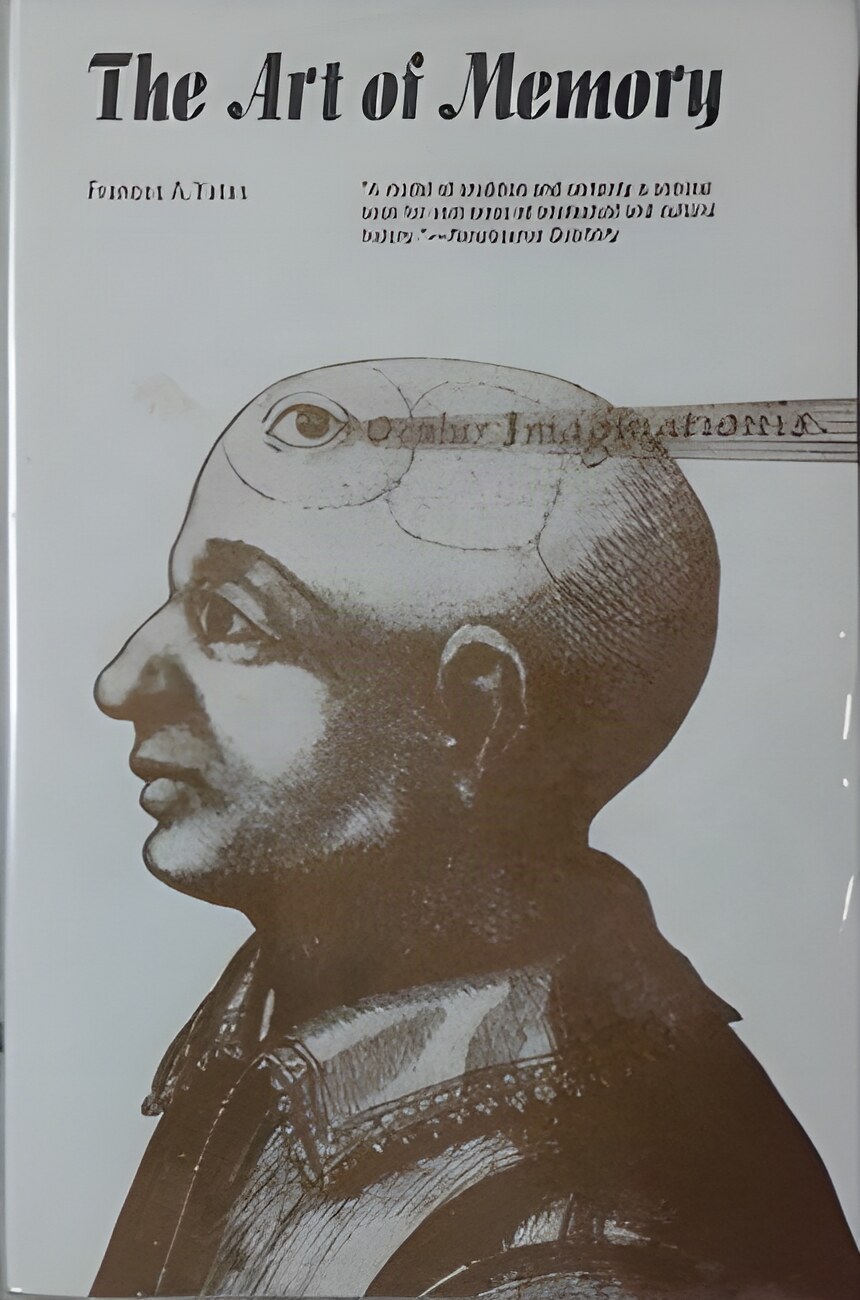
Softcover. Chicago, University of Chicago Press, reprint, 1978, Book: Very Good, Dust Jacket: None, Softcover, 400 pages. A landmark work by English historian Frances A. Yates (1899-1981); an examination of the mnemonic systems developed by the ancient Greeks, and their impact on the Renaissance thought of Giordano Bruno and others. Named one of the top 100 nonfiction books of the century by the Modern Library in 1999. One large fold-out plate, clean copy.
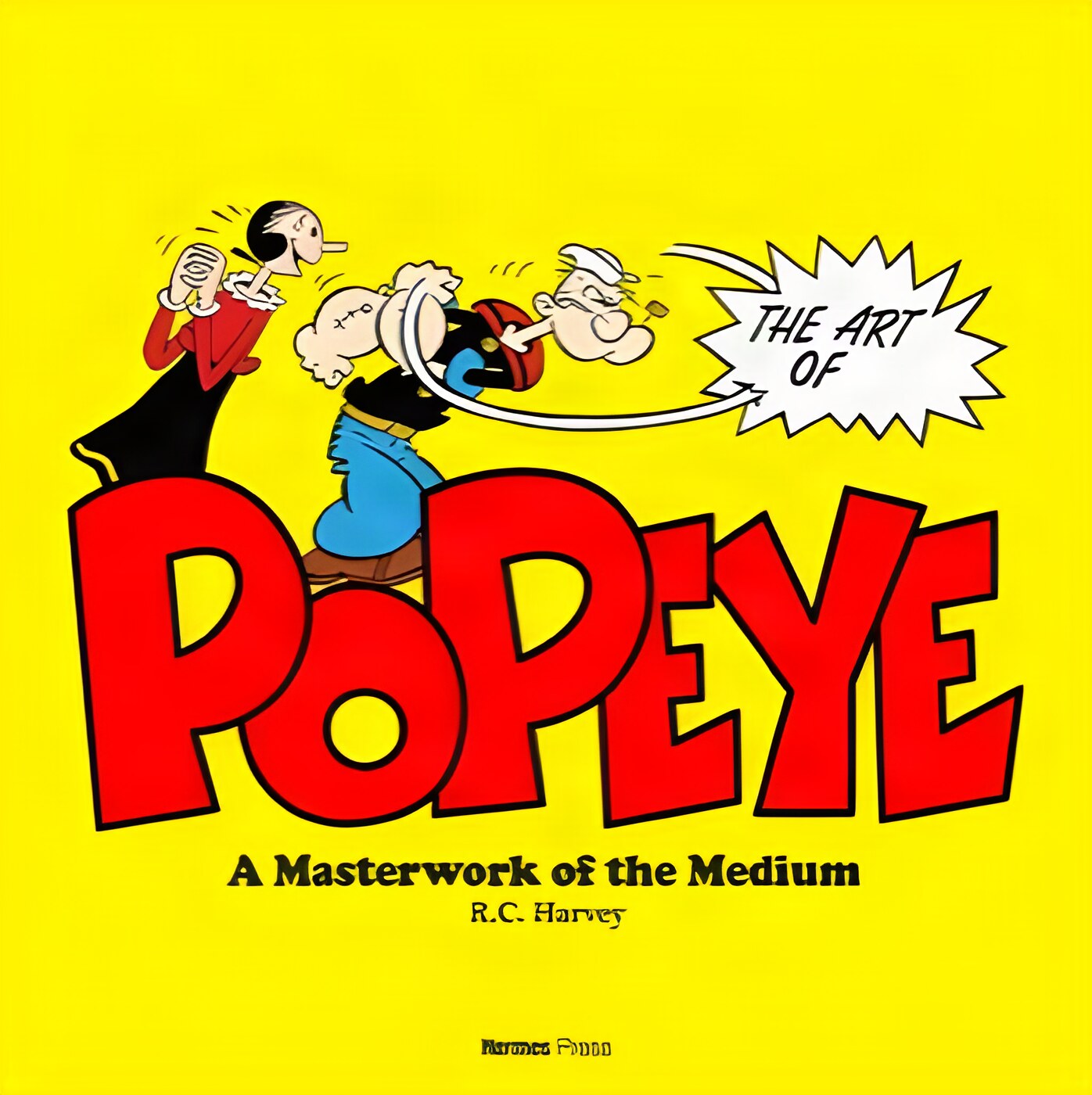
Hardcover. Hermes Press, 1st, 2024, Book: Very Good, Dust Jacket: None, Hardcover, pictorial boards, 190 pages. When cartoonist Elzie Segar created Popeye, as a minor character ten years into the run of the Thimble Theatre strip in 1929, little did he know that the world's most famous sailor would still be around over ninety years later and still being offered as a Sunday feature. To celebrate Popeye, the character, the comic strip and his universe, a feature cartoonist Charles M. Schulz described as "perfect... consistent in drawing and humor," Hermes Press is publishing the definitive art monograph on the subject. This book features a comprehensive essay written by pop culture historian R.C. Harvey accompanied by over 350 illustrations of original strip and comic book art, animation art, illustrations, advertising art, products, the Robert Altman film, and everything Popeye. Every aspect of Popeye is explored, from Olive Oyl and Eugene the Jeep to Wimpy and Bluto. Clean, bright copy.
Softcover. Washington DC, National Gallery of Art , 2nd pr., 203, Book: Very Good, Dust Jacket: None, Softcover, 334 pages illustrated with 224 color plates, 86 black & white. One of America's most innovative artists, Romare Bearden (1911-1988) made colorful and passionate images that reflected his life in a time of creative ferment. His influences ranged from the old masters to African art, as well as the world around him: popular religion and ritual, jazz clubs and brothels, the history and literature of his time, and the places he lived (the rural South, Pittsburgh and Harlem, the Caribbean island of St. Martin). The resulting images are fresh and evocative, filled with quirky details and rhythmic forms. This authoritative and beautiful book, which accompanies a major retrospective opening at the National Gallery of Art in Washington, D.C., provides a provocative and absorbing look at a beloved artist. The Art of Romare Bearden showcases compelling examples of his pioneering work: complex collages and photostats; watercolors, gouaches, and oils; little-known landscapes; his only known sculpture; costume designs; and book illustrations. Mildwear to corners otherwise very good, clean copy.
Hardcover. Cambridge MA, Harvard University Press, 1st, 1940, Book: Very Good, Dust Jacket: Poor, Hardcover, red cloth in a worn and chipped dust jacket with closed tears, 191 pages with index. Dr. Worcester presents a theory of satire, surveying the whole field since Dryden's Discourse of the Origin of Satire and drawing illustrations not only from English but from classical, French, German, and American literature. At the same time he makes a penetrating study of irony and its uses. Name on inside front cover otherwise clean.
Hardcover. Pittsburgh PA, GoodKnight Books, 1st, 2017, Book: Very Good, Dust Jacket: Very Good, Hardcover in a bright, unclipped dust jacket. The Art of Selling Movies presents the first-ever look at 60 years of newspaper advertising for motion pictures great and small. These ads created by Hollywood and adapted by local and regional exhibitors motivated patrons to leave their homes, part with precious income, and spend time in the dark. Because of the high stakes involved, theater operators used wildly creative means to make that happen. They made movie advertising equal parts art and psychology, appealing to every human instinct (especially sex) in an effort to push product and keep their theatres in business. From the pen-and-ink masterpieces of the 1920s and 30s to location-specific folk art to ad space jam-packed with enticements for every member of the family, The Art of Selling Movies dissects the psyche of the American movie-going public ... and the advertisers seeking to push just the right buttons.
Hardcover. Princeton NJ, Princeton University Press, 1st, 2007, Book: Very Good, Dust Jacket: Very Good, Hardcover, 288 pages. The impact of the humble American snapshot has been anything but humble. Any American who takes a snapshot contributes to a compelling and influential genre. Since 1888, when George Eastman introduced the Kodak camera and roll film, the snapshot has not only changed everyday American life and memory; it has also changed the history of fine art photography. The distinctive subject matter and visual vocabulary of the American snapshot--its poses, facial expressions, viewpoints, framing, and themes--influenced modernist photographers as they explored spontaneity, objectivity, and new topics and perspectives. A richly illustrated chronicle of the first century of snapshot photography in America, The Art of the American Snapshot is the first book to examine the evolution of this most common form of American photography. The book shows that among the countless snapshots taken by American amateurs, some works, through intention or accident, continue to resonate long after their intimate context and original meaning have been lost.The catalogue of a fall 2007 exhibition at the National Gallery of Art in Washington, DC, The Art of the American Snapshot reproduces some 250 snapshots drawn from Robert Jackson's outstanding collection and from a recent gift Jackson made to the museum. Organized decade by decade, the book traces the evolution of American snapshot imagery and describes how technical, social, and cultural factors affected the look of snapshots at different periods.
Hardcover. Chicago, University of Chicago Press, 1st, 2016, Hardcover in a bright dust jacket, still in publisher's shrinkwrap. This stunning book charts the rich history of the blues, through the dazzling array of posters, album covers, and advertisements that have shaped its identity over the past hundred years. The blues have been one of the most ubiquitous but diverse elements of American popular music at large, and the visual art associated with this unique sound has been just as varied and dynamic. There is no better guide to this fascinating graphical world than Bill Dahl--a longtime music journalist and historian who has written liner notes for countless reissues of classic blues, soul, R&B, and rock albums. With his deep knowledge and incisive commentary--complementing more than three hundred and fifty lavishly reproduced images--the history of the blues comes musically and visually to life.
Hardcover. Baltimore, Racquet Sports Information Service, reprint, 1977, Book: Very Good, Dust Jacket: None, Hardcover, red cloth stamped in gold color in a matching slipcase. Number 550 out of 750. The second English edition of the work. Originally published in French in 1767 and translated into English by Catherine W. Leftwich in 1938. With a frontispiece and 5 plates to the rear. This work discusses how to make tennis rackets and talks about the sport itself. At the time of it's original creation, this work was considered to be one of the most detailed works on the game of tennis. Inscription on front fly leaf otherwise clean.
Hardcover. Cambridge MA, Harvard University Press , 1st, 1960, Book: Very Good, Dust Jacket: Very Good, Hardcover in a bright dust jacket, 313 pages. Reprint of the 1864 original. Edited by Benjamin Rowland, Jr. Blue cloth, gilt lettering to spine and front cover. A very crisp, clean and well preserved copy
Hardcover. NY, Hill & Wang , 1st, 1996, Book: Very Good, Dust Jacket: Very Good, Hardcover in a bright dust jacket, 251 pages. Completed in 1825 and enlarged between 1836 and 1862 at the initial cost of $7 million, the Erie Canal not only created an economic revolution in the region but fostered new and unique communities made up of entrepreneurs, canal workers, and farmers. Utilizing a variety of primary resources, but especially the Canal Board Papers, Sheriff (history relates the social history of those who lived, worked, and traveled the Erie Canal before the Civil War. This previously untold story is laced with accounts by businessmen who saw the canal as opportunity, immigrant laborers looking for steady work, and farmers who transported their produce by canal boat. Although all of these groups relayed their complaints, claims, and concerns to the Canal Board, we do not know the responses they received. Still, the issues raised tell a great deal about the local impact of the Erie Canal, and herein lies the strength of the book. Clean copy.
Softcover. Baltimore, Johns Hopkins University Press, 1st, 2007, Book: Very Good, Dust Jacket: None, Softcover, 155 pages. Thomas Dennis emigrated to America from England in 1663, settling in Ipswich, a Massachusetts village a long day's sail north of Boston. He had apprenticed in joinery, the most common method of making furniture in sixteenth- and seventeenth-century Britain, and he became Ipswich's second joiner, setting up shop in the heart of the village. During his lifetime, Dennis won wide renown as an artisan. Today, connoisseurs judge his elaborately carved furniture as among the best produced in seventeenth-century America. Robert Tarule, historian and accomplished craftsman, brilliantly recreates Dennis's world in recounting how he created a single oak chest. Writing as a woodworker himself, Tarule vividly portrays Dennis walking through the woods looking for the right trees; sawing and splitting the wood on site; and working in his shop on the chest-planing, joining, and carving. Dennis inherited a knowledge of wood and woodworking that dated back centuries before he was born, and Tarule traces this tradition from Old World to New. He also depicts the natural and social landscape in which Dennis operated, from the sights, sounds, and smells of colonial Ipswich and its surrounding countryside to the laws that governed his use of trees and his network of personal and professional relationships. Clean copy.
Hardcover. NY/London, Sotheby's Parke Bernet, Revised Ed., 1985, Book: Very Good, Dust Jacket: Very Good, Hardcover, 376 pages. 26 illustrations in color, and 420 in black and white. Originally published in 1979. John Harris was one of England's leading Architectural Historians at the time this book was written. He was curator of the Drawing Collection for RIBA. (Royal Institute of British Architects). Each section introduces a period such as: the Age of Estate Cartographers and the Garden Converstations, The Country House and Sporting Art: John Wootton, Peter Tillemans and Others, Caneletto and the Architectural Topographers, Gainsborough and the Picturesque, The Art of Turner and Constable. Harris comments on the artists , their style and pictures.
Hardcover. New Haven CT, Yale University Press, 1st, 2007, Book: Very Good, Dust Jacket: Very Good, Hardcover, 224 pages. How does the artist's self-conception change in old age? How does old age affect artistic practice? In this intriguing study, art historian Philip Sohm considers some of the greatest artists of Renaissance and Baroque Italy and their experiences of aging. Sohm investigates how art critics, collectors, biographers, and fellow artists dealt with old painters, what mental landscapes preconditioned responses to art by the elderly, and how biology and psychology were co-opted to explain the imprint that artists left on their art. He also looks carefully at the impact of prejudices, stereotypes, and other imaginary truths about old age. For some artists, the problems of old age were related to physical decline-Poussin's hands became shaky, Titian's eyesight dimmed. For others, psychological symptoms emerged. The book's cast of characters includes Michelangelo, the hypochondriac young fogy; Titian, the shrewd marketer of old age; the multiphobic Pontormo; and others. With sensitivity and insight, Sohm uncovers what it meant to be an old artist and how successive generations have looked at the art of an old master.
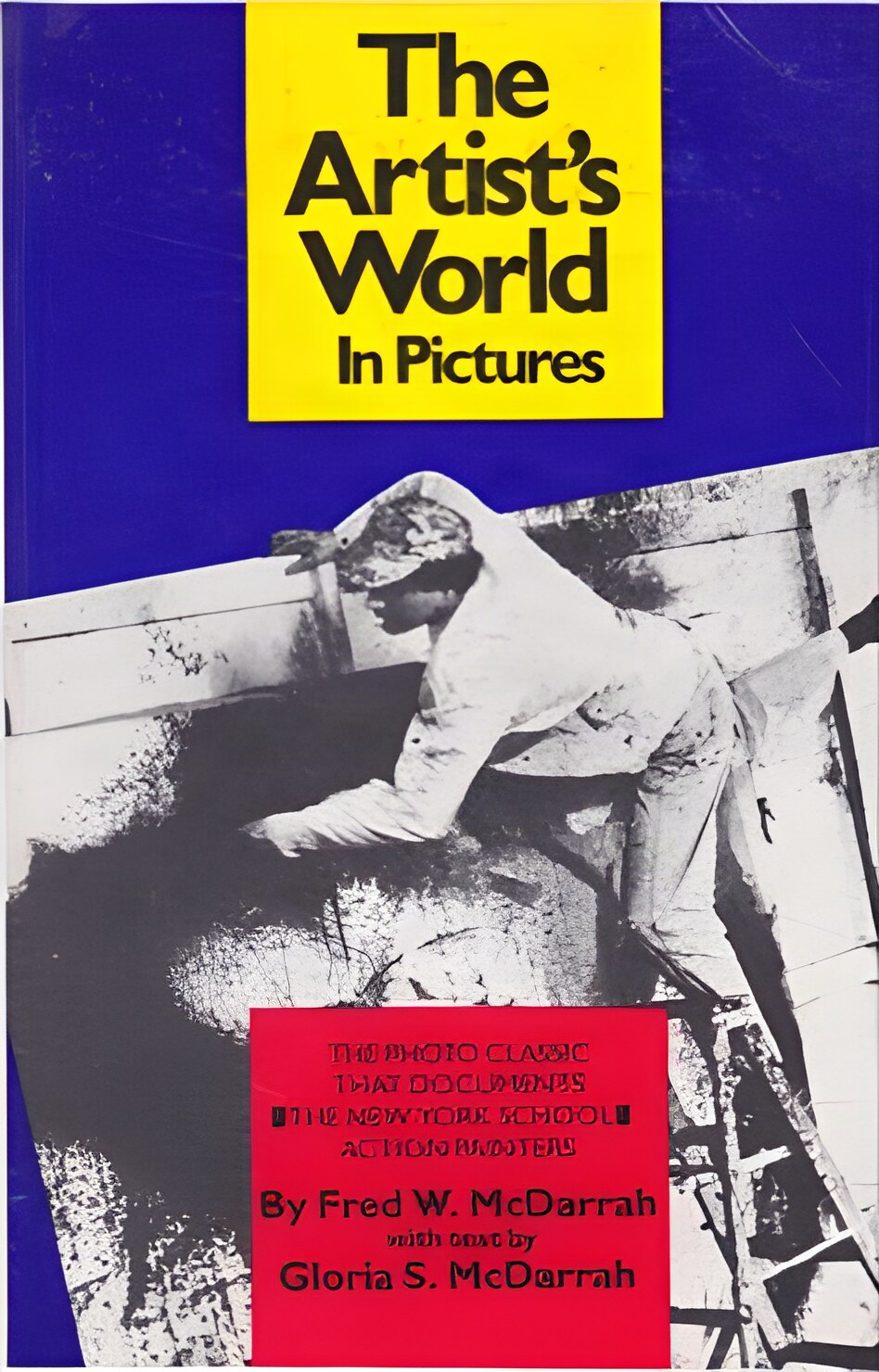
Softcover. NY, Shapolsky Publishers, 2nd Ed., 1988, Book: Very Good, Dust Jacket: None, Softcover, 196 pages, b&w photos throughout. Introduction by Thomas Hess. Fred McDarrah (1926-2007) was a photojournalist, author, and staff photographer for the Village Voice known for documenting the Beat Generation and the New York art world. The present work is a vital document of an exuberant moment in cultural history. Clean copy.
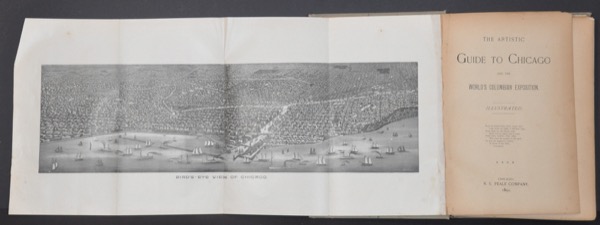
Hardcover. Columbian Art Company, 1st, 1892, Book: Very Good, Dust Jacket: None, Hardcover, bound in gray cloth with black and gilt titles and black embossed images to front. Illustrated with a fold-out frontispiece and with several full-page black and white illustrations, styled as plates, all illustrations in black and white. First published by R.S. Peale Co. the year before. A lovely overview of tourist spots in Chicago that World's Fair attendees could visit while enjoying the fair.
Softcover. London/NY, Verso Books, reprint, 2002, Book: Very Good, Dust Jacket: None, Softcover, 226 pages, b&w illustrations. Unravels the appalling mass of lies, hypocrisy and betrayals that have surrounded accounts of the 1961 assassination of Patrice Lumumba-the first prime minister of the Republic of Congo and a pioneer of African unity-since it perpetration. Making use of a huge array of official sources as well as personal testimony from many of those in the Congo at the time, Ludo De Witte reveals a network of complicity ranging from the Belgian government to the CIA. Patrice Lumumba's personal strength and his quest for African unity emerges in stark contrast with one of the murkiest episodes in twentieth-century politics.
Hardcover. Boston, Little, Brown and Company, reprint, 1957, Book: Very Good, Dust Jacket: None, Hardcover, blue cloth with gilt lettering on spine. Volume X in The History of United States Naval Operations in World War II. 399 pages, illustrated with maps (one fold-out) and b&w photos. Gilt on spine with light fading, lacks dust jacket, dj flap copy pasted inside front cover, otherwise clean, tight copy.
Hardcover. Westport CT, Greenwood Press, 1st, 2003, Book: Very Good, Dust Jacket: None, Hardcover, glazed pictorial boards, 177 pages. Postma draws on primary sources and current historical scholarship to offer secondary readers and researchers a comprehensive and well-written history. He covers the entire Atlantic slave trade era, from the 1400s to the final abolition of chattel slavery in the New World in 1888. The focus is on Africa and the entire New World. While he describes the many horrors of the Middle Passage, he also examines how the slave trade contributed to the development of the modern international economy. The last chapters discuss the efforts to abolish the slave trade and its legacy. Throughout, Postma documents the sources that support his discussion and conclusions. Chapter notes are supplemented by an extensive annotated bibliography that includes books, articles, films, and electronic resources. The volume concludes with biographical sketches of important people and excerpts from primary documents written by enslaved Africans and white officials. The black-and-white reproductions of period illustrations add little to the text. Clean copy.
Hardcover. Seattle, Fantagraphics, 1st, 2023, Book: Very Good, Dust Jacket: None, Hardcover, pictorial cloth, 212 pages. Atlas holds a special place among aficionados of the genre, producing more horror titles and issues by far, than anyone in the industry. While the quality of EC's six horror/sci-fi titles was unsurpassed with their elite cadre of talent, Atlas was the equivalent of the B-movies studio, churning out anywhere from 8 to 12 different horror titles a month, giving a wider array of artists, including some of the best craftsmen of the era, a chance to show off their talents: in addition to those already mentioned, future volumes will include Bill Everett, John Romita, Bernie Krigstein, Jerry Robinson, Harry Anderson, and Matt Fox. Stories from Marvel's Atlas line have barely been reprinted. The Fantagraphics Atlas Comics Library is the first attempt to publish a carefully curated line of Atlas titles. The first volume, Adventures Into Terror, includes a treasure trove of stories drawn by many of the most stylistically accomplished artists of the Golden Age including George Tuska, Carl Burgos, Mike Sekowsky, Joe Maneely, and Joe Sinnott. Highlights include Russ Heath's two-part story "The Brain" from issue #4 and "Return of the Brain" from issue #6; Basil Wolverton's classic "Where Monsters Dwell" from issue #7; Gene Colan's moody "House of Horror" in issue #3; and Don Rico's wild layouts are on display from #4's "The Torture Room." The stories are written firmly in the tradition of the pulpy, perverse, borderline deranged style that brought Fredric Wertham, the United States Senate Sub-Committee, and public opinion down like a sledgehammer on comics in the early '50s. Edited by Atlas scholar Dr. Michael J. Vassallo, scanned directly from the published comics, and meticulously restored by Allan Harvey, the first volume of the new Fantagraphics Atlas Library series is an event among comics lovers, collectors, and historians.
Hardcover. NY, Oxford University Press, 1st, 1998, Book: Very Good, Dust Jacket: Very Good, Hardcover in a very good dust jacket with fading to spine, 403 pages. The concept of the atom is very near scientific bedrock, touching first causes, fundamental principles, our conception of the nature of reality. This book is a translation from the French of a history of atomic thought and theory, from ancient Greece to the present day. Pullman grounds his coverage of scientific theory always in the religious and philosophical context of the times, covering the whole period of Western civilization, including in passing the major scientific philosophies of the Muslim world and India. The transition of atomism from a philosophical position to an experimental science, in the mid-19th century, is well handled, and the coverage is nicely rounded out by a treatment of the first visual proof of atoms' material existence by direct microscopic imaging of individual atoms about 10 years ago. Name on front fly leaf otherwise clean.
Hardcover. Chicago, University of Chicago Press, 1st, 1996, Book: Very Good, Dust Jacket: Very Good, Hardcover in a bright dust jacket. Clean, bright copy, 467 pages. Illustrated with 36 pages of historic Plates, b/w, on coated paper. One of the most famous works of history, Johan Huizinga presents a brilliant portrait of life, thought, and art in 14th and 15th century France and the Netherlands.
Hardcover. Chicago, University of Chicago Press, 1st, 1996, Book: Very Good, Dust Jacket: Very Good, Hardcover in a bright dust jacket. Clean, bright copy, 467 pages. Illustrated with 36 pages of historic Plates, b/w, on coated paper. One of the most famous works of history, Johan Huizinga presents a brilliant portrait of life, thought, and art in 14th and 15th century France and the Netherlands.

 "The Art of Frank C. McCarthyby: Kelton, Elmer")
 "The Art of Harvey Kurtzman: The Mad Genius of Comicsby: Denis Kitchen , Paul Buhle , et al.")
 "The Art of Selling Moviesby: John McElwee")
 "The Art of the American Snapshot, 1888-1978by: Sarah Greenough , Diane Waggoner, et al.")
 "The Art of the Blues: A Visual Treasury of Black Music's Golden Ageby: Bill Dahl")




 "The Artisan of Ipswich: Craftsmanship and Community in Colonial New England by: Robert Tarule")
 "The Artist & the Country House: A History of Country House & Garden View Painting 1540-1870by: John Harris")
 "The Artist Grows Old: The Aging of Art and Artists in Italy, 1500-1800by: Philip Sohm")


 "The Assassination of Lumumba by: De Witte, Ludo/ Fenby, Renee (Transl.)/ Wright, Ann (Transl.)")
 "The Atlantic Battle Won, May 1943-May 1945: History of United States Naval Operations in World War II, Volume 10 by: Morison, Samuel Eliot")
 "The Atlantic Slave Tradeby: Postma, Johannes")