Hardcover. London, Burns, Oates & Washbourne, 1st, 1923, Book: Very Good, Dust Jacket: None, 194 pages. Dark blue cloth covers, gilt titles to spine, titles and border blind stamped to front. Light rubbing and edgewear, spine slightly faded, previous owner's short ink inscription to front endpaper, pencil underlining and markings to some page margins, pencil notations to rear endpaper; otherwise a clean, tight copy.
Hardcover. NY, D. Appleton & Company, 1st, 1852, Book: Good, Dust Jacket: None, Hardcover, red cloth with black title to front board and to spine. 261 pages, publisher's ads. Contains of an early review of Harriet Beecher Stowe's bestselling novel, Uncle Tom's Cabin, as well as accounts of travels to the Nubian Desert and Arctic, a history of Spanish literature, and literary essays and reviews of works by Dickens, Tennyson, Thackeray, and Hawthorne. Mild foxing, some light chipping and wear to spine.
Hardcover. Gainesville, University Press of Florida, 1st, 1995, Book: Very Good, Dust Jacket: None, Hardcover, 306 pages. Red cloth, no dust jacket issued. Light wear to edges, else a clean, tight copy.
Hardcover. Lawrence KS, Coronado Press, 1st, 1972, Book: Very Good, Dust Jacket: None, 217 pages, green cloth over boards. Limited to 400 copies. The author was a scholar on the banking business in the early American west, especially Kansas.
Hardcover. Austin TX, University of Texas Press, 1stt, 1969, Book: Very Good, Dust Jacket: Very Good, Hardcover in a bright dust jacket. Three essays (on the Shelterbelt Project, New Deal critics, and FDR's attempt to expand the Supreme Court) make up the second annual Walter Prescott Webb Memorial Lectures; foreword by C. B. Smith; edited by Harold M. Hollingsworth and William F. Holmes. Bound in bright green cloth-covered boards with silver lettering on the front board and spine.
Hardcover. NY, W. W. Norton & Company, 1st, 2016, Book: Very Good, Dust Jacket: Very Good, Hardcover in a bright, unclipped dust jacket, 580 pages, b&w illustrations. Los Angeles is a city founded on blood. Once a small Mexican pueblo teeming with Californios, Indians, and Americans, all armed with Bowie knives and Colt revolvers, it was among the most murderous locales in the Californian frontier. In Eternity Street: Violence and Justice in Frontier Los Angeles, "a vivid, disturbing portrait of early Los Angeles" (Publishers Weekly), John Mack Faragher weaves a riveting narrative of murder and mayhem, featuring a cast of colorful characters vying for their piece of the city. These include a newspaper editor advocating for lynch laws to enact a crude manner of racial justice and a mob of Latinos preparing to ransack a county jail and murder a Texan outlaw. In this "groundbreaking" (True West) look at American history, Faragher shows us how the City of Angels went from a lawless outpost to the sprawling metropolis it is today. A riveting popular history of Los Angeles's bloody beginnings. Clean copy.
Hardcover. NY, WW Norton & Co, 1st, 2016, Book: Very Good, Dust Jacket: Very Good, Hardcover in a bright, unclipped dust jacket. 580 pages, 16 pages of illustrations. Eternity Street tells the story of a violent place in a violent time: the rise of Los Angeles from its origins as a small Mexican pueblo. In a masterful narrative, John Mack Faragher relates a dramatic history of conquest and ethnic suppression, of collective disorder and interpersonal conflict. Eternity Street recounts the struggle to achieve justice amid the turmoil of a loosely governed frontier, and it delivers a piercing look at the birth of this quintessentially American city. In the 1850s, the City of Angels was infamous as one of the most murderous societies in America. Saloons teemed with rowdy crowds of Indians and Californios, Mexicans and Americans. Men ambled down dusty streets, armed with Colt revolvers and Bowie knives. A closer look reveals characters acting in unexpected ways: a newspaper editor advocating lynch law in the name of racial justice; hundreds of Latinos massing to attack the county jail, determined to lynch a hooligan from Texas. Murder and mayhem in Edenic southern California. "There is no brighter sun...no country where nature is more lavish of her exuberant fullness," an Angeleno wrote in 1853. "And yet, with all our natural beauties and advantages, there is no country where human life is of so little account. Men hack one another to pieces with pistols and other cutlery as if God's image were of no more worth than the life of one of the two or three thousand ownerless dogs that prowl about our streets and make night hideous." Like-new.
Hardcover. Boston, Dayton and Wentworth, 1st, 1853, Book: Fair, Dust Jacket: None, 428 pages. Hardcover with heavy wear and soil on cover boards. Gutter cracked in several areas. Loose hinge and loose pages. Foxing on pages.
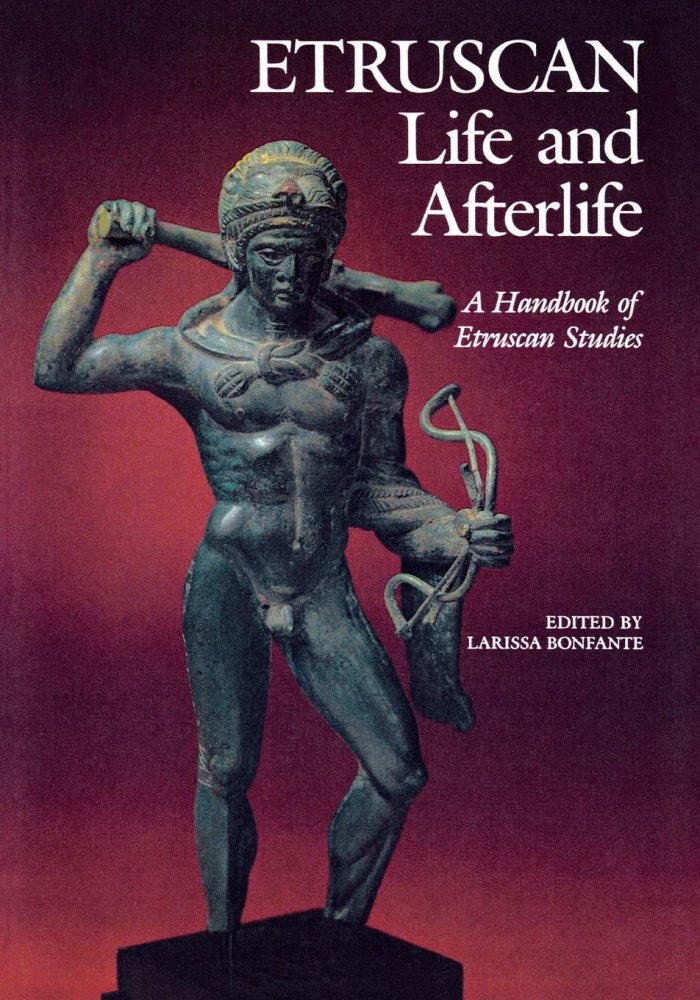
Softcover. Detroit MI, Wayne State University Press, 5th pr., 1994, Book: Very Good, Dust Jacket: None, Softcover, 289 pages, b&w illustrations. As Bonfante explains in the introductory chapter, "The Etruscans provide an excellent opportunity of turning archaeology into history: this we tried to do, in our chapters, according to our individual directions. Nancy Thomson de Grummond traces the interest in and knowledge of the Etruscans from the earliest days. Mario Torelli provides an independent account of Etruscan history, based on monuments and sources. Jean MacIntosh Turfa belies the cliche of the Etruscans' traditional 'isolation' by surveying the material evidence for their trade with the Phoenicians, Greeks, and other neighbors in the Mediterranean. Marie-Francoise Briguet, Friedhelm Prayon, David Tripp, and I survey Etruscan art, architecture, coinage, and daily lives, respectively, Emeline Richardson contributes what she calls a 'primer' in the Etruscan language, a basic archaeological introduction to the Etruscan language, meant to help newcomers read the inscriptions on many of the monuments illustrated and to see these with the interdisciplinary approach so characteristic of, and necessary in, Etruscan studies." Clean copy.
Hardcover. Jefferson NC, McFarland, 1st, 1999, Book: Very Good, Dust Jacket: None, Hardcover, 223 pages, b&w photos. Eugene Jackson became a child star in 1924 playing "Pineapple" in the original "Our Gang" comedy shorts. Join him as he shares his life story -- a story that preserves the history of vaudeville and early Hollywood as well as chronicles the African American experience in the entertainment business.
Softcover. Princeton, NJ, Markus Weiner Publishers, 1st English Translation, 2001, Book: Very Good, Dust Jacket: None, 327 pages. Softcover. B/w illustrations throughout. Decorated wrapper, excellent. Pages clean and bright. Binding good. Like new copy. This fascinating study of eunuchs guides readers as they travel through various lands and periods, familiarizing themselves with the duties and responsibilities, the unspeakable torments, and the passions and joys of these individuals.
Softcover. Cambridge MA, Harvard University Press, reprint, 1985, Book: Very Good, Dust Jacket: None, Softcover, 291 pages with index. A social history of Europe in all its aspects: economic, political, diplomatic military, colonial-expansionist. Crisply and succinctly written, it describes Europe not through a history of individual countries, but in a common context during the three quarters of a century between the death of Louis XIV and the industrial revolution in England and the social and political revolution in France. It presents the development of government, institutions, cities, economies, wars, and the circulation of ideas in terms of social pressures and needs, and stresses growth, interrelationships, and conflict of social classes as agents of historical change, paying particular attention to the role of popular, as well as upper- and middle-class, protest as a factor in that change. Clean, bright copy.
Hardcover. Chicago, Quadrangle Books, 1st, 1972, Book: Very Good, Dust Jacket: Good, Hardcover in a rubbed, worn dust jacket, 277 pages. Name on front fly leaf, otherwise clean.
Hardcover. NY, Random House, 1st, 1969, Book: Very Good, Dust Jacket: Very Good, Hardcover in a lightly worn dust jacket, 387 pages. These essays originated in a series of lectures and seminars held by the Graduate School of Contemporary European Studies and the Centre for the Advanced Study of Italian Society of the University of Reading in 1966-1967. The countries covered include Italy, Germany, Austria, Hungary, Rumania, Poland, Finland, Norway, Great Britain, France, Spain, and Portugal. Name on front fly leaf otherwise clean.
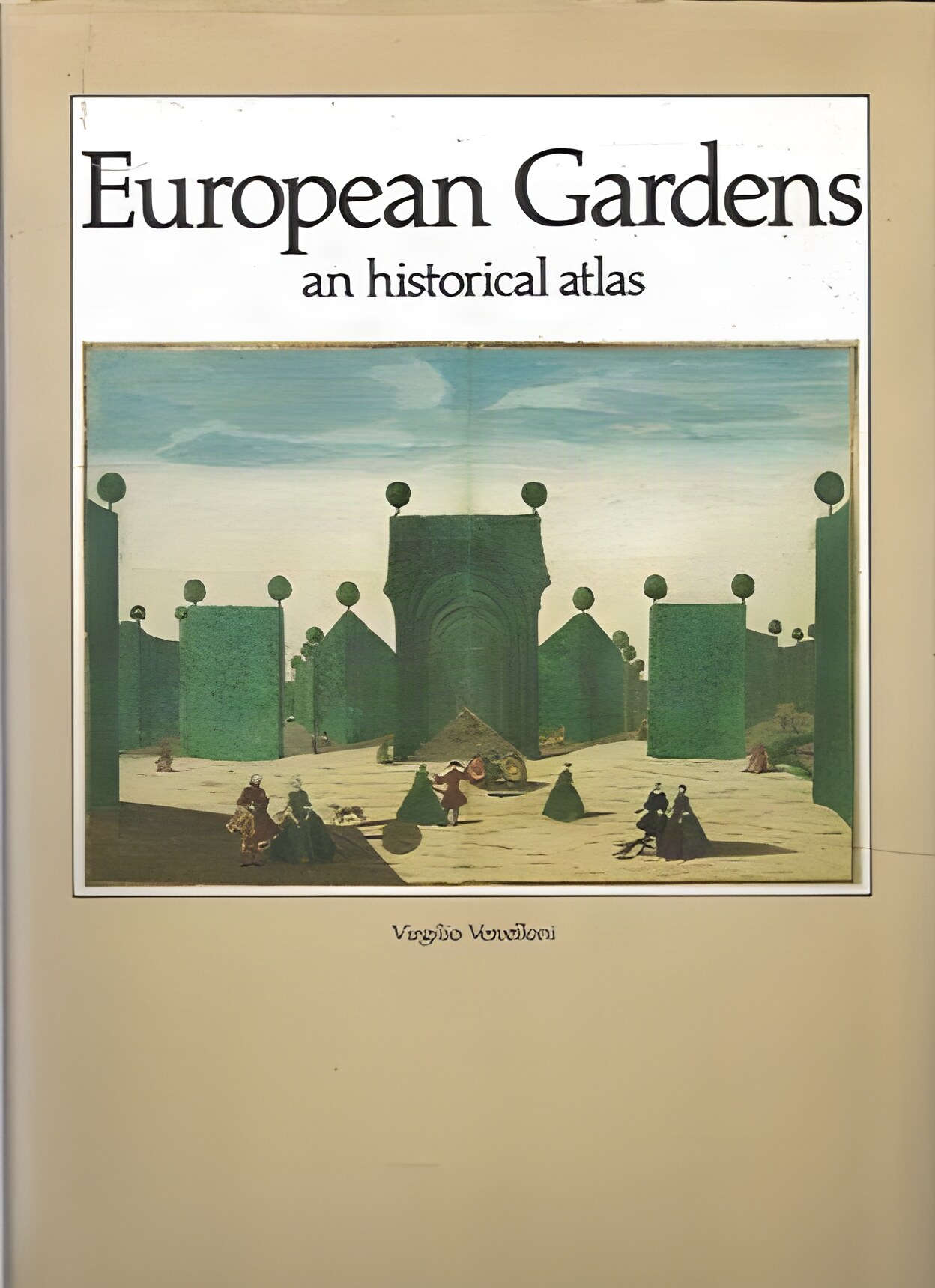
Hardcover. NY, Rizzoli, 1st US, 1990, Book: Very Good, Dust Jacket: Very Good, Hardcover in a bright dust jacket, 207 pages. Entertainingly idiosyncratic in its selection of material, this historical compendium of facts and fascinating lore takes off on a visual romp through the history of gardens. Rather than adhere to a conventional narrative format, Vercelloni--an Italian architect, city planner and landscape gardener--arranges his material as though it were a slide show, devoting each page to an image and accompanying text. Beginning with the "landscape" of the Ice Ages, forging ahead to the Renaissance and finally reaching contemporary times, the author presents a captivating grab-bag of information, covering such topics as the significance of flowers in Renaissance painting, the reasoning behind the 17th-century craze for tulips and the role of contemporary urban parks in society. With its strong visual orientation and pungent text, Vercelloni's "historical atlas" looks deftly and light-heartedly at humanity's ongoing love of gardens. Clean copy.
Hardcover. Boston, Charles C. Little and James Brown, 1st, 1849, Book: Very Good, Dust Jacket: None, Hardcover, embossed brown cloth covers with gilt lettering on spine. How respectable members of society communicated by letter with examples of mannered correspndence of the mid-19th century. Clean copy.
Softcover. London, V & A Publications, 1st pbk, 1996, Book: Very Good, Dust Jacket: None, Softcover, 191 pages. Containing over 100 masterpieces from a major collection, this volume traces the history of European sculpture, from the early-Christian period through to the beginning of the 20th century. Highlights include the medieval ivories, works by many of the Italian Renaissance masters, English 18th-century pieces, such as Roubillac's statue of Handel and sculptures by Rodin. Clean, bright copy.
Softcover. West Lafayette IN, Purdue University Press , 1st, 2020, Book: Very Good, Dust Jacket: None, Softcover, 529 pages, b&w illustrations. Eva and Otto is a true story about German opposition and resistance to Hitler as revealed through the early lives of Eva Lewinski Pfister (1910-1991) and Otto Pfister (1900-1985). It is an intimate and epic account of two Germans-Eva born Jewish, Otto born Catholic-who worked with a little-known German political group that resisted and fought against Hitler in Germany before 1933 and then in exile in Paris before the German invasion of France in May 1940. After their improbable escapes from separate internment and imprisonment in Europe, Eva obtained refuge in America in October 1940 where she worked to rescue other endangered political refugees, including Otto, with the help of Eleanor Roosevelt. As revealed in recently declassified records, Eva and Otto later engaged in different secret assignments with the US Office of Strategic Services (OSS) in support of the Allied war effort. Despite their vastly different backgrounds, Eva and Otto gave each other hope and strength as they acted upon what they understood to be an ethical duty to help others threatened by fascism. The book provides a sobering insight into the personal risks and costs of a commitment to that duty. Their unusually beautiful writing-directed to each other in diaries and correspondence during two long periods of wartime separation-also reveals an unlikely and inspiring love story.
Hardcover. NY, Scribner & Welford, 1st US, Book: Very Good, Dust Jacket: None, Hardcover, color pictorial boards with a green cloth spine. Illustrated throughout in color by Seeley. The history of the inhabitants of Brandon Hall is told from the planting of a mulberry tree brought to England by Sir Francis Drake until the reign of Queen Victoria. No date but appears to be the first American edition. Originally published in London in 1881. Very nice copy, bright and clean.
Softcover. Berkeley CA, University of California Press, reprint, Book: Very Good, Dust Jacket: None, Softcover, 210 pages. Taking Gandhi's statements about civil disobedience to heart, in February 1922 residents from the villages around the north Indian market town of Chauri Chaura attacked the local police station, burned it to the ground and murdered twenty-three constables. Appalled that his teachings were turned to violent ends, Gandhi called off his Noncooperation Movement and fasted to bring the people back to nonviolence. In the meantime, the British government denied that the riot reflected Indian resistance to its rule and tried the rioters as common criminals. These events have taken on great symbolic importance among Indians, both in the immediate region and nationally. Amin examines the event itself, but also, more significantly, he explores the ways it has been remembered, interpreted, and used as a metaphor for the Indian struggle for independence. The author, who was born fifteen miles from Chauri Chaura, brings to his study an empathetic knowledge of the region and a keen ear for the nuances of the culture and language of its people. In an ingenious negotiation between written and oral evidence, he combines brilliant archival work in the judicial records of the period with field interviews with local informants. Clean copy.

 "Essay on the Economic Effects of the Reformation, Anby: O'Brien, George")

 "Essays in Anglo-Saxon Lawby: Adams, Henry, Henry Cabot Lodge, Ernest Young And J. Laurence Laughlin")
 "Essays on Cuban History: Historiography and Researchby: Perez Jr., Louis A.")
 "Essays on the History of Bankingby: Anderson, George L.")
 "Essays on the New Dealby: William E. Leuchtenburg William H. Droze, George Wolfskill")


 "Ethan Allen and the Green Mountain Heros of '76by: De Puy, Henry W.")
 "Ethan Allen and the Green-Mountain Heroes of '76by: De Puy, Henry W.")


 "Etruscan Placesby: Lawrence, D. H.")


 "Eugene \"Pineapple\" Jackson - His Own Storyby: Jackson II, Eugene W. with Gwendolyn Sides St. Julian")
 "Eunuchs and Castrati: A Cultural Historyby: Scholz, Piotr O.")


 "Europe in the Sixteenth Centuryby: Koenigsberger, H. G. and George L. Mosse")


 "European Life And Manners; In Familiar Letters To Friends Vol. 1 Only by: Colman, Henry")
 "European Sculpture at the Victoria and Albert Museumby: Williamson, Paul")
 "Eva and Otto: Resistance, Refugees, and Love in the Time of Hitlerby: Pfister, Tom; Pfister, Kathy; Pfister, Peter")

 "Event, Metaphor, Memory: Chauri Chaura, 1922-1992by: Shahid Amin")