Hardcover. NY, Abrams, 1st, 2007, Book: Very Good, Dust Jacket: Very Good, Hardcover, 200 pages. The photography that Americans invented in the 1960s and ?70s was as fresh and vital as their music. Photographers of those years believed in their medium?s unlimited capacities of expression. Between the publication of Robert Frank?s The Americans (1958) and the coming of post-modernism, the photographers featured in this book embarked on their own personal quests. Whether they roamed the world, like Lee Friedlander and Garry Winogrand, or sought out its dark corners, like Larry Clark and Nan Goldin, they shared a fierce devotion to their medium and its unique qualities. The generation that created this work knew it was remarkable. Today, with Gilles Mora as a guide, we can look back on it with even greater appreciation, since we know that these were indeed the last photographic heroes. Also includes work by Joel Meyerowitz, William Eggleston, and many others.
Hardcover. NY, Abrams, 1st, 2007, Book: Very Good, Dust Jacket: Very Good, Hardcover, 200 pages. The photography that Americans invented in the 1960s and ?70s was as fresh and vital as their music. Photographers of those years believed in their medium?s unlimited capacities of expression. Between the publication of Robert Frank?s The Americans (1958) and the coming of post-modernism, the photographers featured in this book embarked on their own personal quests. Whether they roamed the world, like Lee Friedlander and Garry Winogrand, or sought out its dark corners, like Larry Clark and Nan Goldin, they shared a fierce devotion to their medium and its unique qualities. The generation that created this work knew it was remarkable. Today, with Gilles Mora as a guide, we can look back on it with even greater appreciation, since we know that these were indeed the last photographic heroes. Also includes work by Joel Meyerowitz, William Eggleston, and many others.
Hardcover. Hoboken NJ, Wiley Publishing, 1st, 2003, Book: Very Good, Dust Jacket: Very Good, Hardcover in a bright, unclipped dust jacket. The Last Samurai traces Saigo's life from his early days as a tax clerk in far southwestern Japan, through his rise to national prominence as a fierce imperial loyalist. Saigo was twice exiled for his political activities - sent to Japan's remote southwestern islands where he fully expected to die. But exile only increased his reputation for loyalty, and in 1864 he was brought back to the capital to help his lord fight for the restoration of the emperor.
Hardcover. NY, Appleton-Century-Crofts, 1st, Book: Very Good, Dust Jacket: None, Hardcover, tan cloth with gilt lettering on black title blocks, 650 pages. "This is the only complete history of the Latin American Republics that takes into account the important subject of inter-American relations in the present war {World War II}. It brings Latin American history down to the conferences in which Under-Secretary of State Sumner Welles helped to cement North and South solidarity." The book presents, in separate chapters, the history of each of the twenty Latin American nations since independence. Bookplate and name on front endpapers, otherwise a clean, tight copy.
Hardcover. Birmingham AL, The Legal Classics Library, reprint, 1982, Book: Very Good, Dust Jacket: None, Hardcover, 72 pages. Quarto [30.5 cm] Maroon leather with raised bands, a gilt stamped title on the spine, and decorative gilt stamped designs on the spine and covers. All edges gilt. Marbled endsheets. Very good. There is a former owner's bookplate on the inside of front cover. The Laws and Liberties of Massachusetts is one of the seminal documents in the development of the American legal system. It is believed to be the precursor to the General Laws of Massachusetts and the Massachusetts Constitution. An influence on the U.S. Constitution, it contains provisions that were incorporated in the Bill of Rights.
Hardcover. Philadelphia, Quirk Books, 1st, 2018, Book: Very Good, Dust Jacket: None, Hardcover in pictorial boards, 255 pages. A hilarious spotlight on the strangest second bananas in superhero comics, including junior partners, animal assistants, and even heinous henchmen (sidekicks of the villain world). Complete with vintage art and publication details. Batman has Robin. Captain America has Bucky. And Yankee Doodle had Dandy. Being a superhero is hard work, which is why so many comics characters rely on a sidekick for help. Someone who can watch the hero's back, help search for clues, or, if nothing else, give the hero someone to talk to. But just as not every superhero achieves the glory of Batman, not all sidekicks are as capable as the Boy Wonder. In The League of Regrettable Sidekicks, author Jon Morris discusses some of the strangest iterations of the sidekick phenomenon, and in the process explores how important these characters were to comic book storytelling.
Hardcover. Philadelphia, Quirk Books, 1st, 2018, Book: Very Good, Dust Jacket: None, Hardcover in pictorial boards, 255 pages. A hilarious spotlight on the strangest second bananas in superhero comics, including junior partners, animal assistants, and even heinous henchmen (sidekicks of the villain world). Complete with vintage art and publication details.Batman has Robin. Captain America has Bucky. And Yankee Doodle had Dandy. Being a superhero is hard work, which is why so many comics characters rely on a sidekick for help. Someone who can watch the hero's back, help search for clues, or, if nothing else, give the hero someone to talk to. But just as not every superhero achieves the glory of Batman, not all sidekicks are as capable as the Boy Wonder. In The League of Regrettable Sidekicks, author Jon Morris discusses some of the strangest iterations of the sidekick phenomenon, and in the process explores how important these characters were to comic book storytelling.
Softcover. Coos Bay OR, B&B Publishing, reprint, 1994, Book: Very Good, Dust Jacket: None, Softcover, 60 pages, illustrated in b&w. Originally published by the Josephine County Historical Society in Grants Pass, Oregon. Clean copy.
NY, Random House, 1st, 2013, Book: Very Good, Dust Jacket: Very Good, Hardcover in a bright, unclipped dust jacket. An advisor to presidents, two-time Pulitzer Prize winner, and tireless champion of progressive government, Arthur Schlesinger, Jr., was also an inveterate letter writer. Indeed, the term "man of letters" could easily have been coined for Schlesinger, a faithful and prolific correspondent whose wide range of associates included powerful public officials, notable literary figures, prominent journalists, Hollywood celebrities, and distinguished fellow scholars. The Letters of Arthur Schlesinger, Jr. reveals the late historian's unvarnished views on the great issues and personalities of his time, from the dawn of the Cold War to the aftermath of September 11. Here is Schlesinger's correspondence with such icons of American statecraft as Harry Truman, Adlai Stevenson, Hubert Humphrey, Henry Kissinger, Bill Clinton, and, of course, John and Robert Kennedy (including a detailed critique of JFK's manuscript for Profiles in Courage). There are letters to friends and confidants such as Eleanor Roosevelt, John Kenneth Galbraith, Gore Vidal, William Styron, and Jacqueline Kennedy (to whom Schlesinger sends his handwritten condolences in the hours after her husband's assassination), and exchanges with such unlikely pen pals as Groucho Marx, Sammy Davis, Jr., and Bianca Jagger. Finally, there are Schlesinger's many thoughtful replies to the inquiries of ordinary citizens, in which he offers his observations on influences, issues of the day, and the craft of writing history.
Hardcover. NY, Funk & Wagnalls, reprint, 1968, Book: Very Good, Dust Jacket: Very Good, Hardcover in a bright dust jacket, 455 pages. Name on front fly leaf otherwise clean.
Hardcover. NY, Funk and Wagnalls, reprint, 1968, Book: Very Good, Dust Jacket: Very Good, Hardcover in slightly worn dust jacket, 354 pages. Frontis, illustration, footnotes, genealogical table, sources and references, index. Originally published in 1935. Name on front fly leaf, otherwise clean.
Hardcover. San Francisco, Chronicle Books, 1st, Book: Very Good, Dust Jacket: Very Good, Hardcover in a bright, unclipped dust jacket, 200 pages, large format. Profusley illustrated with color photographs of trees. Trees are vital- without them we simply wouldn't be here. Not only essential, they have been an inspiration throughout our history. In breathtaking photographs and stories we are taken on a journey from the boreal forest at the edge of the Arctic to the rainforests girdling the planet; from ancient bristlecones to fresh-leaved seedlings; from the charming and familiar to the scary and rare. An elegantly written and highly accessible text is complemented by an extraordinary collection of images created by some of the world's leading nature photographers.
Hardcover. NY, Derby & Miller, 1st, 1865, Book: Very Good, Dust Jacket: None, Hardcover embossed brown cloth with bright gilt title and decoration on spine. 808 pages plus 6 pages of ads. Beautiful steel engraving frontispiece of Lincoln engraved by A. H. Ritchie. Illustrated with 15 additional engravings. The book is tight and square. Raymond was the Editor of the New York Times and he brought this volume out with amazing dispatch after the assassination of Lincoln. Frank B. Carpenter, who had lived in the White House for an extended period , added a section , "Anecdotes And Personal Reminiscences Of President Lincoln." Mild wear to rear cover, clean copy.
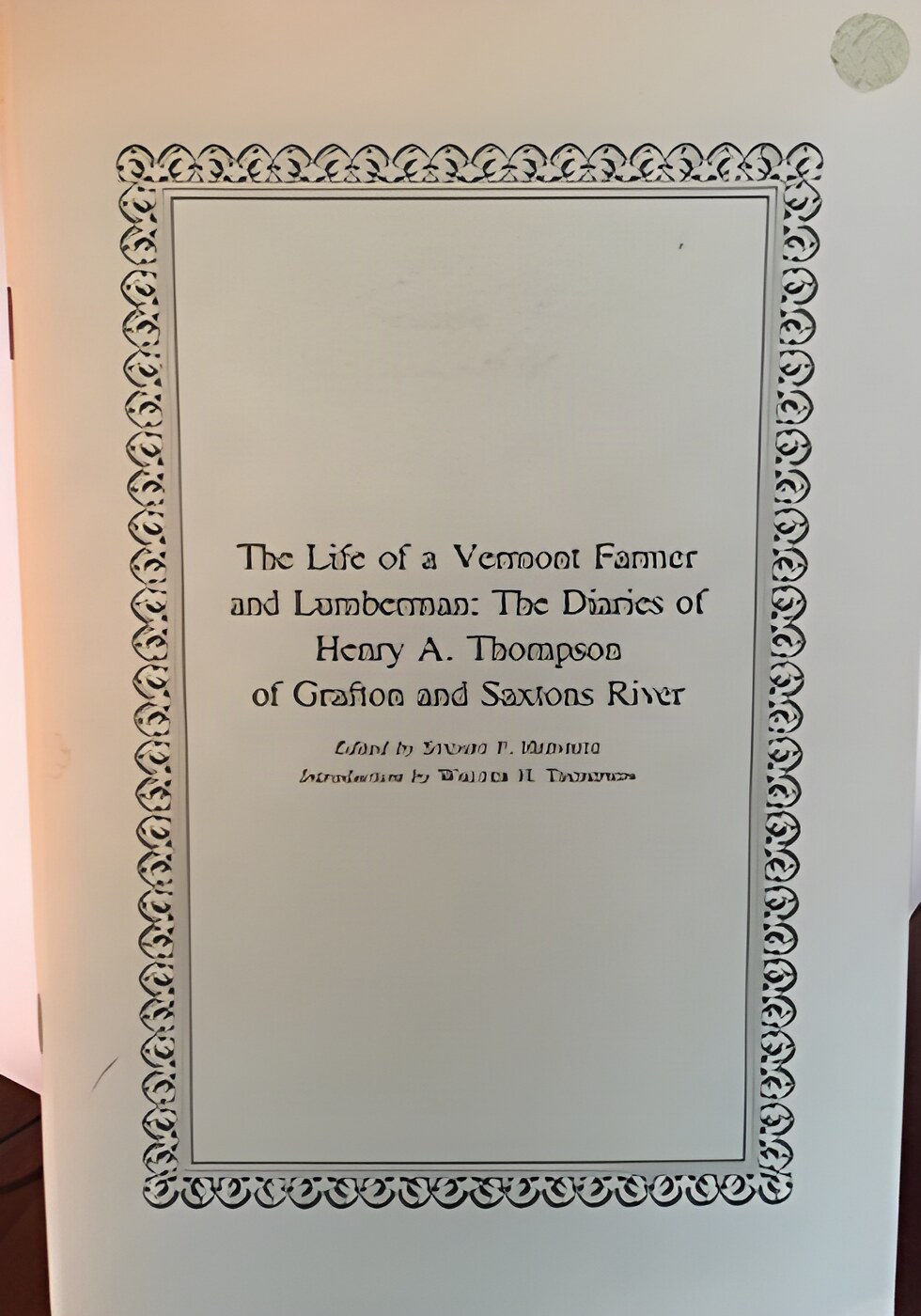
Softcover. self-published, reprint, nd, Book: Very Good, Dust Jacket: None, Softcover, light green stapled wrappers. 52 pages. Originally published in 1974 by the Vermont Historical Society. Thompson began his diary as a lad of 17 and continued to be a diary-keeper for 69 years. His jottings provide a telling portrait of himself and the world he lived in. Clean copy.
Hardcover. UK, Oxford University at the Clarendon Press, 2nd Ed., 1980, Book: Very Good, Dust Jacket: Very Good, Hardcover in a bright dust jacket, 709 pages. B&W frontispiece portrait of Hume and folding family tree to rear. Mossner's Life of David Hume remains the standard biography of this great thinker and writer. First published in 1954, and now updated, in response to an overwhelming interest in Hume's brilliant ideas. Containing more than a simple biography, this exemplary work is also a study of intellectual reaction in the eighteenth century. In this new edition are a detailed bibliography, index, and textual supplements, making it the perfect text for scholars and advanced students of Hume, epistemology, and the history of philosophy. It is also ideal for historians and literary scholars working on the eighteenth century, and for anyone with an interest in philosophy. Name and date on front fly leaf, otherwise clean.
Softcover. NY, Macmillan, reprint, 1963, Book: Good, Dust Jacket: None, Softcover, 674 pages, b&w illustrations. According to Keynes' biographer, "Keynes' contributions to the theory of economics tended to be closely related to his practical proposals, and these in turn were also influenced by his general philosophy. An understanding of the background of his thought is indispensable for a correct interpretation of his conclusions. Furthermore, I venture to think that those who come after will be interested in Keynes, not only on account of his teachings and influence, but also for what he was in himself. If I am right in supposing that he was one of the greatest Englishmen of his age, then it is expedient that an attempt should be made to bring together all the varied aspects of his character and interests into a single biography." Light shelfwear.
Hardcover. Philadelphia , Hogan and Thompson, reprint, 1836, Book: Good, Dust Jacket: None, Hardcover, leather bound, 285 pages with index. Front fly leaf gone, book opens to title page. Hinges cracked, rear cover barely holding on. No markings.
Hardcover. London, Taylor and Francis, 1st, 1969, Book: Very Good, Dust Jacket: None, Hardcover, red cloth stamped with gilt decoration and lettering. 332 pages, b&w illustraions. "Few names in the history of science are better known than that of the Honourable Robert Boyle, F.R.S., (1627-1691). His chemical and physical researches, his association with the early history of the Royal Society, and his influence on the development of scientific thought in the seventeenth century have been the subject of many general and specialized studies. Dr. Maddison's 'Life' is based on a close study of the Boyle papers and includes much new material. Its purpose is essentially to record the facts of Boyle's life and to serve as a guide to the numerous and varied, primary and secondary sources which are available for a study of his many scientific and other activities." Clean copy, no dust jacket.
Softcover. Mayfield NY, DreamChase Features, 1st, 2009, Book: Very Good, Dust Jacket: None, Softcover, 176 pages plus an extensive index, bibliography. Illustrated with b&w photos, drawings. SIGNED BY COOK on the title page. Like new condition.
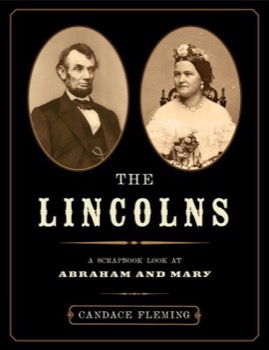
Hardcover. NY, Schwartz & Wade Books, 2nd pr, 2008, Book: Very Good, Dust Jacket: Very Good, Hardcover in a bright dust jacket, 180 pages. Profusely illustrated in b&w. Here are the extraordinary lives of Abraham and Mary, from their disparate childhoods and tumultuous courtship, through the agony of the Civil War, to the loss of three of their children, and finally their own tragic deaths. Readers can find Mary's recipe for Abraham's 'favorite cake' and bake it themselves; hear what Abraham looked like as a toddler; see a photo of the Lincoln's dog; discover that the Lincoln children kept goats at the White House; see the Emancipation Proclamation written in Lincoln's own hand. Perfect for reluctant readers as well as history lovers, The Lincolns provides a living breathing portrait of a man, a woman, and a country. Clean copy.
Hardcover. NY, Houghton Mifflin Harcourt, reprint, 2018, Book: Very Good, Dust Jacket: Very Good, Hardcover in a bright dust jacket, 224 pages. Few stories are as widely read and as universally cherished by children and adults alike as The Little Prince. This special edition of Antoine de Saint-Exupery's world-famous classic marks its seventy-fifth anniversary in print. Featuring a beautiful new cover and a special look at its history and making including a biography of Saint-Exupery, sketches, photos, and reviews from the first edition. Clean copy.
Hardcover. NY, G. P. Putnam's Sons, 1st, 1996, Book: Very Good, Dust Jacket: Very Good, Hardcover in a bright, unclipped dust jacket, 64 pages. Yarbrough weaves a beautiful story in picture-book format about the role of music in the lives of Africans and shows how it was transformed on American and Caribbean soil. The tale revolves around a "Roots of Rhythm and Blues" concert attended by a sister and brother and their parents, great grandmother, and elderly neighbor. At the park, the father tells his children about slavery and the "culture baggage" the slaves carried with them from Africa. With a compelling delivery that echoes the rhythmic chanting of the griot, the man speaks about concepts such as spirit power and the tree of life that at first are hard for his young son to grasp. The performance begins with a song of praise for the strength and endurance of a transplanted people. By the end, the youngsters understand more about their heritage and the role spirituals played and continue to play in it. Geter's pencil-and-charcoal illustrations are richly imaginative, evoking images of Africa, slavery, roots, and soaring trees. Clean copy.
Softcover. Cambridge University Press, 1st, 2006, Book: Very Good, Dust Jacket: None, Softcover, 485 pages, b&w illustrations. By analytically de-coupling war and violence, this book explores the causes and dynamics of violence in civil war. Against the prevailing view that such violence is an instance of impenetrable madness, the book demonstrates that there is logic to it and that it has much less to do with collective emotions, ideologies, and cultures than currently believed. Kalyvas specifies a novel theory of selective violence: it is jointly produced by political actors seeking information and individual civilians trying to avoid the worst but also grabbing what opportunities their predicament affords them. Violence, he finds, is never a simple reflection of the optimal strategy of its users; its profoundly interactive character defeats simple maximization logics while producing surprising outcomes, such as relative nonviolence in the 'frontlines' of civil war. Clean copy.

 "The Last Photographic Heroes: American Photographers of the Sixties and Seventiesby: Gilles Mora")
 "The Last Photographic Heroes: American Photographers of the Sixties and Seventiesby: Gilles Mora")
 "The Last Samurai: The Life and Battles of Saigo Takamori by: Mark Ravina")





 "The Letters of Arthur Schlesinger, Jr. by: Arthur Schlesinger Jr. Andrew Schlesinger (Editor)")
 "The Life & Love Of Treesby: Blackwell, Lewis")


 "The Life of David Humeby: Mossner, Ernest Campbell")
 "The Life of John Maynard Keynesby: R. F. Harrod")
 "The Life of the Honourable Robert Boyle F. R. S.by: Maddison, R.E.W.")
 "The Light-Keepers of Lake Champlain (SIGNED COPY)by: Cook, David E.")