Hardcover. Berkeley CA, University of California Press, 1st, 1999, Book: Very Good, Dust Jacket: Very Good, Hardcover, 156 pages. Between 1935 and 1938 the celebrated photographer Roman Vishniac explored the cities and villages of Eastern Europe, capturing life in the Jewish shtetlekh of Poland, Romania, Russia, and Hungary, communities that even then seemed threatened-not by destruction and extermination, which no one foresaw, but by change. Using a hidden camera and under difficult circumstances, Vishniac was able to take over sixteen thousand photographs; most were left with his father in a village in France for the duration of the war. With the publication of Children of a Vanished World, seventy of those photographs are available, thirty-six for the first time. The book is devoted to a subject Vishniac especially loved, and one whose mystery and spontaneity he captured with particular poignancy: children.
Hardcover. NY, Macmillan, 1st, 1934, Book: Very Good, Dust Jacket: None, Hardcover, 329 pages, frontispiece, 31 b&w plates. Blue cloth covers w/ gilt lettering and design. Light edge wear to corners. Front hinge weak. Light bump to top corner of cover. Else a clean, tight copy.
New York , Putnams, 1st, 1902, Book: Very Good, Dust Jacket: None, Hardcover. Color frontispiece by Thomas Moran. Many B&W photos. 399 pages + ads. previous owner's bookplate front end paper.
Hardcover. NY, Universe Books, 1st, 1971, Book: Very Good, Dust Jacket: None, Hardcover, red cloth with gilt titles. 196 pages, illustrated throughout in color and b&w. Discusses the history of the movement and shows examples of architecture, sculpture, metalwork, ivories, stained glass, wall paintings, and book illuminations. Clean, tight copy.
Hardcover. Philadelphia, University of Pennsylvania Press, 1st, 1937, Book: Very Good, Dust Jacket: Very Good, 296 pages, b&w illustrations, dark blue cloth with gilt design on spine. In a bright, price-clipped dust jacket.
Hardcover. NY, Museum of Modern Art, 1st, 1943, Book: Very Good, Dust Jacket: None, Hardcover, brick-red cloth, 143 pages, color frontis., b&w plates. A pioneering exhibition, with essay and catalogue by James Thrall Soby and Dorothy C. Miller. The exhibition checklist cites 213 works by 121 artists, and nearly all are names you would recognize. More than 100 pieces are pictured here. One of 7500 copies. Clean copy.
Hardcover. Boston, L. C. Page & Co., 1st impression, 1912, Book: Very Good, Dust Jacket: None, 243 pages, b&w illustrations, illustrated end paper. Gray covers w/ gilt lettering and design. Gilt top edge. Rough-cut pages. Light edge wear to covers. Sticker inside front cover. Else a very clean, tight copy.
Hardcover. Wilmington DE, Scholarly Resources Inc., 1st, 1997, Book: Very Good, Dust Jacket: Very Good, Hardcover in a bright dust jacket. The transcripts of Reagan.s five-minute broadcasts he made starting April 3rd, 1982. Clean copy.
Hardcover. NY, Farrar, Straus and Company, 2nd pr., 1963, Book: Very Good, Dust Jacket: None, Hardcover, light tan boards with white cloth spine, no dust jacket, 257 pages with index. Story of British intelligence operations in NY, and espionage deterrence during WW 2. Foreword by Ian Fleming.
Hardcover. London, John Murray, 1st, 1965, Book: Very Good, Dust Jacket: Good, Hardcover in a lightly worn dust jacket, 236 pages. Name on front fly leaf otherwise clean.
Hardcover. NY, Wilfred Funk, 1st, 1942, Book: Very Good, Dust Jacket: None, Hardcover, light tan cloth, gilt lettering on spine. 634 pages, mild shelf wear. An incredible chronologically arranged, unedited and indexed collection of FDR's Foreign Policy, National Defense Policy, Public Letters & Papers, Messages to Congress, Executive Orders, Proclamations, Fireside Chats & Public Addresses. Bookplate on inside front cover. Otherwise a clean copy.
Hardcover. Boston, Little, Brown and Co., 1st, 1921, Book: Good, Dust Jacket: None, Hardcover, green cloth covers with gilt lettering on spine, 375 pages. With a frontispiece portrait of Roosevelt, and 10 other illustrations. "A biography, written con amore (with love) by a Harvard classmate, that is full of illuminating anecdotes and memories of this great American." Ink name on front fly leaf and following page. Covers show wear to edges, top of spine. Interior clea, binding solid.
Hardcover. Montpelier, Vermont General Assembly, 1st, 1927, Book: Very Good, Dust Jacket: None, 1665 pages, black leatherette binding with gilt lettering. Bright, clean copy.
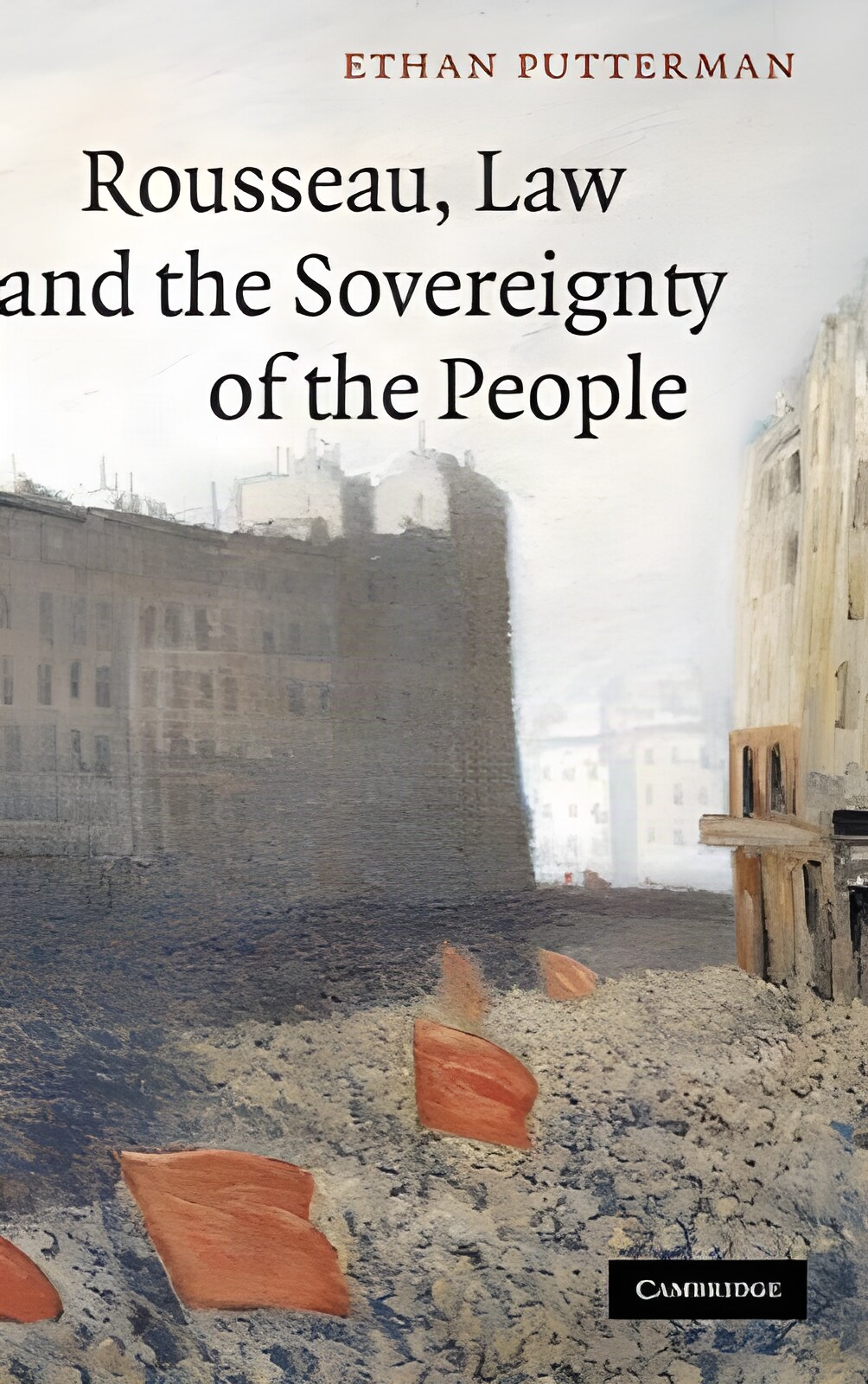
Hardcover. Cambridge UK, Cambridge University Press, 1st, 2010, Book: Very Good, Dust Jacket: Very Good, Hardcover in a bright dust jacket, 187 pages. Examines Rousseau's contribution as a constitutionalist and builder of institutions, relating his major ideas to twenty-first century debates. Rubber stamp on copyright page, otherwise clean.
Softcover. Port Townsend WA, Feral House, 1st, 2022, Book: Very Good, Dust Jacket: None, Softcover, 339 pages. Ladies' man. Child soldier. Civil War hero. Egotist. Tramp. Drunkard. Published author. Roving Bill Aspinwall: Dispatches from a Hobo in Post-Civil War America tells the story of an American hobo entirely in his own words. William 'Roving Bill' Aspinwall was all of these things and yet no lone descriptor does him justice. Born one of 23 siblings, married 5 times, wounded fighting for the Union in one of the bloodiest battles of the American Civil War, kicked out of numerous jobs and soldiers' homes for drunkenness, and having spent decades wandering as a penniless vagabond, Bill also kept up a 24-year correspondence with John James McCook, Professor of Modern Languages at Trinity College, Hartford, Connecticut. In so doing Bill provided the earliest and best account of life on the road by an American hobo. Written between 1893 and 1917, Roving Bill Aspinwall: Dispatches from a Hobo in Post-Civil War America tells Bill's story entirely in his own words. Describing experiences on the road, the people he meets, his dalliances with women and his memories of the Civil War, the letters are a rich and unique correspondence. Having been physically and mentally scarred at the 1863 Battle of Champion Hill, Bill details his lifelong battle with booze. He also gives first-hand accounts of men thrown out of work during the economic Panic of 1893, of wandering around the country as an itinerant umbrella-mender, of working in factories, farms and even a circus, as well as his visit to the St. Louis World's Fair in 1903. Bill's words are the real voice of a nineteenth-century hobo.
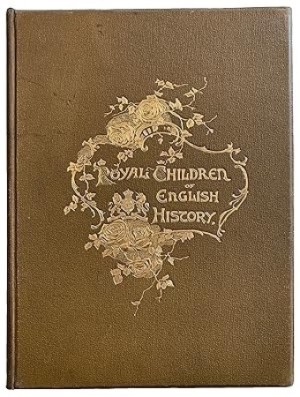
Hardcover. London, Raphael Tuck & Sons, 1st, Book: Very Good, Dust Jacket: None, Hardcover. 94 pages. Brown cloth covers, beveled edges, gilt titles to spine and front cover, lovely gilt pictorial to front, patterned endpapers, all edges gilt, 10 full-page color plates (1 plate torn in half) and numerous b&w illustrated figures, by Frances Brundage and M. Bowley. Previous owner's bookplate to front endpaper, light edgewear to covers, endpapers lightly discolored with age, chipping and tear to first plate, half of 9th color plate torn off, a few pages separate from page block.
Hardcover. London, St. Bartholomew's Hospital, 1st, 1974, Book: Very Good, Dust Jacket: Very Good, Hardcover in a bright dust jacket, 423 pages, b&w illustrations. Published to commemorate the 850th anniversary of the founding of St Barts with two chapters devoted specifically to the development of the Medical College. A comprehensive history of London's oldest Hospital now a centre of excellence for cancer and cardiac care part of the NHS in Central London. Notation and small stamp to front endpapers, otherwise clean.
Softcover. New Jersey, Princeton University Press, 1st, 1982, Book: Very Good, Dust Jacket: None, 278 pages including plates. (INSCRIBED) Softcover. B/w illustrations throughout. Wrapper has a touch of age yellow, otherwise very good. A small bit of soil on bottom edge. In very good condition.
Softcover. NY, Pierpont Morgan Library,, 1979, Book: Very Good, Dust Jacket: None, Softcover, stiff paper wrappers. 298 pages. Catalogue of Rubens and Rembrandt drawings in the Pierpont Morgan Library, New York. Introduction, indexed by artists and former owners. 130 black and white plates. Index of artists. Illustrations of 57 watermarks.
Hardcover. Paris, Baudry's European Library, 1st, 1838, Book: Very Good, Dust Jacket: None, Hardcover, calf binding with title label on spine. Illustrated with 8 b&w engravings. Well written, entertaining legends, history and folklore of the Rhine, including the Mouse Tower, Hildegard von Bingen, St. Ursula, etc. Cover is scuffed with surface scars, but binding is firm. 354 pages. Minor foxing. Aside from cover appearance, very good.
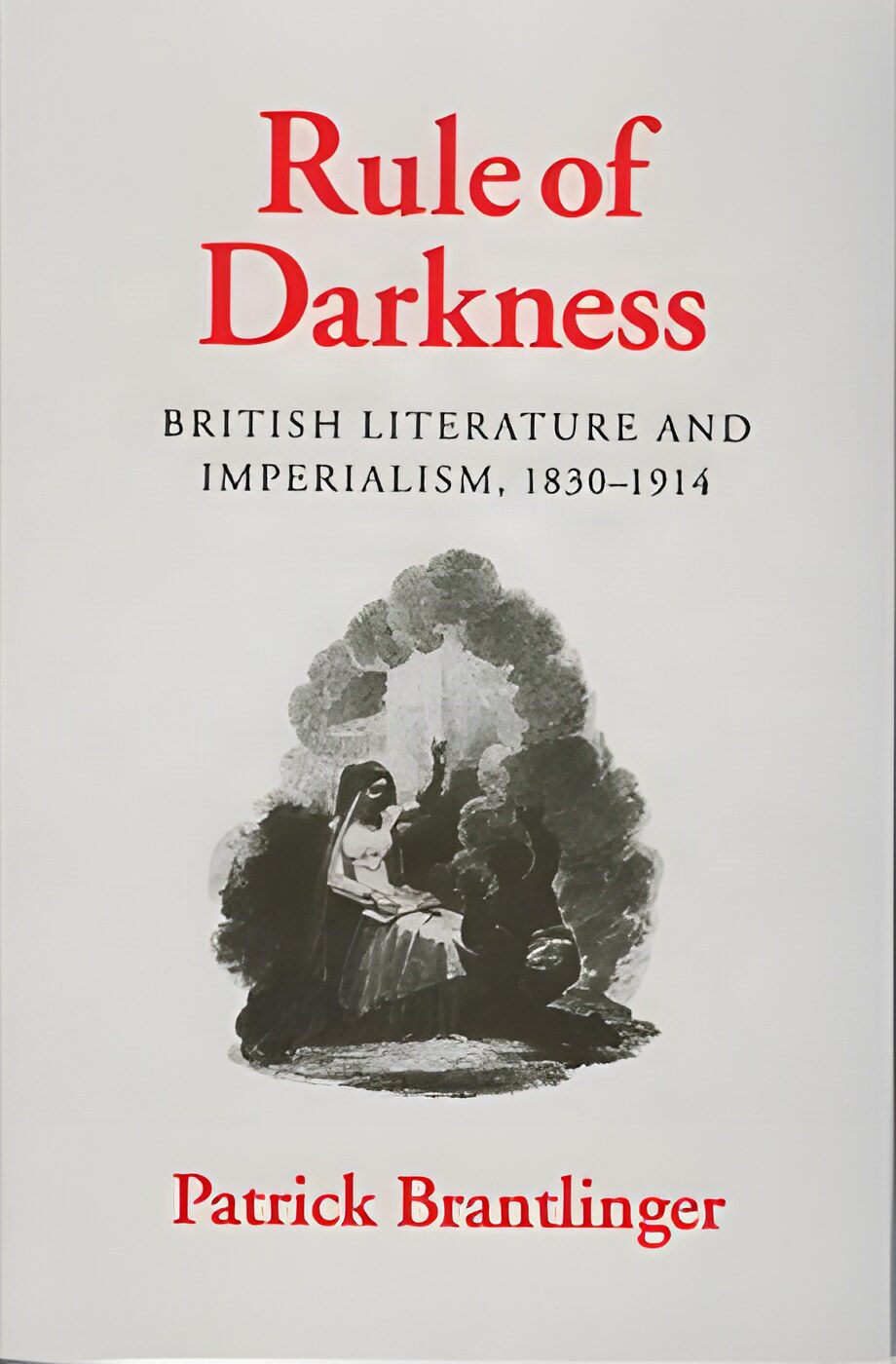
Softcover. Ithaca NY, Cornell University Press, reprint, 1990, Book: Very Good, Dust Jacket: None, Softcover, 309 pages. A major contribution to the cultural and literary history of the Victorian age, Rule of Darkness maps the complex relationship between Victorian literary forms, genres, and theories and imperialist, racist ideology. Critics and cultural historians have usually regarded the Empire as being of marginal importance to early and mid-Victorian writers. Patrick Brantlinger asserts that the Empire was central to British culture as a source of ideological and artistic energy, both supported by and lending support to widespread belief in racial superiority, the need to transform "savagery" into "civilization," and the urgency of promoting emigration. Rule of Darkness brings together material from public records, memoirs, popular culture, and canonical literature. Brantlinger explores the influence of the novels of Captain Frederick Marryat, pioneer of British adolescent adventure fiction, and shows the importance of William Makepeace Thackeray's experience of India to his novels. He treats a number of Victorian best sellers previously ignored by literary historians, including the Anglo-Indian writer Philip Meadows Taylor's Confessions of a Thug and Seeta. Brantlinger situates explorers' narratives and travelogues by such famous author-adventurers as David Livingstone and Sir Richard Burton in relation to other forms of Victorian and Edwardian prose. Through readings of works by Arthur Conan Doyle, Joseph Conrad, H. Rider Haggard, Rudyard Kipling, John Hobson, and many others, he considers representations of Africa, India, and other non-British parts of the world in both fiction and nonfiction. Clean, bright copy.

 "Roman Vishniac: Children of a Vanished Worldby: Mara Vishniac Kohn/Roman Vishniac")
 "Romance of Labrador, Theby: Grenfell, Sir Wilfred")
 "Romance of the Colorado River, Theby: Dellenbaugh, Frederick S.")

 "Romantic Decatur, Theby: Lewis, Charles Lee")

 "Romantic Story of the Puritan Fathers, Theby: Addison, Albert Christopher")
![Ronald Reagan's Weekly Radio Addresses: The President Speaks to America; Volume 1: The First Termby: Ronald Reagan; Fred L. Israel [Compiler]; Sen. William V. Roth Jr](javascript:largeIMTop('https://www.browsingisarousing.com/shop/images/Ronald-Reagans-Weekly-Radio-Addresses-The-President-Speaks-to-America-Volume-1-The-First-Term_by_Ron378815-412185.jpg','https://www.browsingisarousing.com/shop/images/Ronald-Reagans-Weekly-Radio-Addresses-The-President-Speaks-to-America-Volume-1-The-First-Term_by_Ron378815-412185.jpg',0,'378815',0,'') "Ronald Reagan's Weekly Radio Addresses: The President Speaks to America; Volume 1: The First Termby: Ronald Reagan; Fred L. Israel [Compiler]; Sen. William V. Roth Jr")
 "Room 3603: The story of the British Intelligence Center in New York during WWIIby: Hyde, H. Montgomery")
 "Roosevelt and Wilson: A Comparative Study by: D. H. Elletson")

 "Rose Blancheby: Innocenti, Roberto/Christophe Gallaz")
 "Roster of Vermont Men and Women in the Military and Naval Service of the United States and Allies in the World War 1917-1919by: Johnson, Herbert T.")
 "Roving Bill Aspinwall: Dispatches from a Hobo in Post-Civil War America by: Bill Aspinwall (Author), Owen Clayton (Editor)")


 "Rubens and His Circle: Studies by Julius S. Held (INSCRIBED)by: Lowenthal, Anne W., David Rosand, John Walsh Jr.")
 "Rubens and Rembrandt in Their Century: Flemish & Dutch Drawings of the 17th Century from The Pierpont Morgan Libraryby: Stampfle, Felice")
 "Ruin of The Ancient Civilization and The Triumph of Christianity, Theby: Ferrero, Guglielmo")