Hardcover. NY/Koln, Taschen, 1st, 2023, Book: Very Good, Dust Jacket: None, Hardcover. "Bond, James Bond." Since Sean Connery uttered those immortal words in 1962, the most dashing secret agent in the history of cinema has been charming and thrilling audiences worldwide. This impeccably British character created by author Ian Fleming has starred in 25 EON-produced films, played by six different actors over five decades.EON Productions opened their archives of photos, designs, storyboards, and production materials to editor Paul Duncan, who spent two years researching over one million images and 100 filing cabinets of documentation. The result is the most complete account of the making of the series, covering every James Bond film ever made, beginning with Dr. No (1962) and ending with No Time To Die (2021), including the spoof Casino Royale (1967) and Never Say Never Again (1983).The wealth of previously unpublished photography, set designs, storyboards, and production memos is supplemented by an oral history recounted by over 150 cast and crew. From producers to stuntmen, directors to production designers, these personal narratives relate the true inside story from the Bond sets, offering outstanding insight into the personalities and processes behind the most successful and longest-running film franchise in cinema history. " Still in publisher's shrinkwrap. DUE TO WEIGHT, DOMESTIC SHIPPING ONLY.
Softcover. Cambridge UK, Cambridge University Press, 1st pbk., 2002, Book: Very Good, Dust Jacket: None, Softcover, 359 pages. In this major reevaluation of Isaac Newton's intellectual life, Betty Jo Teeter Dobbs shows how his pioneering work in mathematics, physics, and cosmology was intertwined with his study of alchemy. Professor Dobbs argues that to Newton those several intellectual pursuits were all ways of approaching Truth, and that Newton's primary goal was not the study of nature for its own sake but rather an attempt to establish a unified system that would have included both natural and divine principles. She also argues that Newton's methodology was much broader than modern scholars have previously supposed, and she traces the evolution of his thought on the intertwined problems of the microcosmic "vegetable spirit" of alchemy and the "cause" of the cosmic principle of gravitation. Clean, bright copy.
Hardcover. Pinceton NJ, Princeton University Press, 1st, 1979, Book: Very Good, Dust Jacket: Very Good, Hardcover in a bright dust jacket, 315 pages. The Western ideal of individualism had a pervasive influence on the culture of the Meiji period in Japan (1868-1912). Janet Walker argues that this ideal also had an important influence on the development of the modern Japanese novel. Focusing on the work of four late Meiji writers, she analyzes their contribution to the development of a type of novel whose aim was the depiction of the modern Japanese individual. Professor Walker suggests that Meiji novels of the individual provided their readers with mirrors in which to confront their new-found sense of individuality. Her treatment of these novels as confessions allows her to discuss the development of modern Japanese literature and "the modern literary self" both in themselves and as they compare their prototypes and analogues in European literature. The author begins by examining the evolution of a literary concept of the inner self in Futabatei Shimei's novel Ukigumo (The Floating Clouds), Kitamura Tokoku's essays on the inner life, and Tayama Katai's I-novel Futon (The Quilt). She devotes the second half of her book to Shimazaki Toson, the Meiji novelist who was most influenced by the ideal of individualism. Here she traces Toson's development of a personal ideal of selfhood and analyzes in detail two examples of the lengthy confessional novel form that he created as a vehicle for its expression.
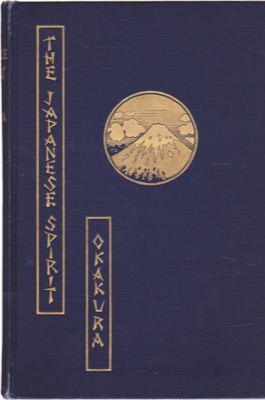
Hardcover. NY, James Pott & Co., 1st, 1905, Book: Very Good, Dust Jacket: None, Hardcover, blue cloth with bright gilt design to cover, gilt lettering on spine, 127 pages. Introduction by George Meredith. Bookplate/name on inside front cover. Otherwise a clean, bright copy.
Hardcover. NY, Knopf, 1st, 2009, Book: Very Good, Dust Jacket: Very Good, Hardcover, 268 pages. After having a breakdown in the midst of working on a photo-essay on Pittsburgh in 1957, legendary photographer W. Eugene Smith holed up in a loft in New York's Chelsea, in the Tin Pan Alley area. There, over the next several years, he became deeply embroiled in the New York City jazz scene, opening his home as a practice and performance space for some of the great artists of mid-century jazz, including Thelonious Monk, Zoot Sims and many others. Of course, he took pictures--both of musicians and of a window-size view of mid-century New York--and also wired the place for recording, logging hours and hours of tape, capturing the music and the talk around it. These photos and tapes had been thought lost--the stuff of rumor, buried in Smith's archive--until Stephenson dug them out and culled the best, along with transcriptions of material from the tapes, for this landmark book. Smith's stunning use of contrast makes figures like Monk seem dramatic and completely ordinary at the same time. The photos of the city offer a rare glimpse into a neighborhood being itself when it thought no one was watching. This will be an essential book for jazz fans, photography lovers and those interested in the history of New York.
Softcover. Jerusalem, Gefen Publishing House, reprint, Book: Very Good, Dust Jacket: None, Softcover. Masha Greenbaum delivered an excellent history of the Jews of Lithuania, from the earliest years, beginning in the 9th Century through WWII. The author discusses the many kings, their courts, the Church, the various social strata and their relationships with the Jews throughout the centuries. Politics, religion, areas of livelihood and social standing are detailed in each time period. Clean, like new.
Softcover. NY, Oxford University Press, reprint, 1989, Book: Very Good, Dust Jacket: None, Softcover, 310 pages. Jacques Adler (1927-2017) was born in 1927. Jacques brought his experience in the Resistance to the study of history and used it in his pioneering Ph.D. Jacques joined the Jewish underground in Paris and was active throughout the war. During the Liberation, Jacques was involved in the Resistance takeover of the offices of the Union generale des israelites de France (UGIF), the organization which the Vichy regime forced French Jews to create and pay for in order to control the Jewish community. Clean copy.
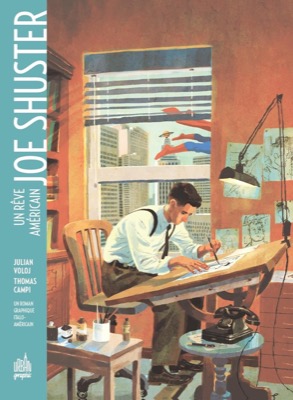
Hardcover. NY, Super Genius, 1st, 2018, Book: Very Good, Dust Jacket: None, Hardcover, pictorial boards, 180 pages. Everyone knows Superman, but not everyone knows the story of two youngsters from Cleveland who created Superman. Based on archival material and original sources, "Truth, Justice, and the American Way: The Joe Shuster Story" tells the story of the friendship between writer Jerry Siegel and illustrator Joe Shuster, and puts it into the wider context of the American comicbook industry. Told in graphic novel format in color.
Hardcover. NY/Oxford UK, Berghahn Books, 1st, 2003, Book: Very Good, Dust Jacket: None, Hardcover, 232 pages, pictorial boards. Milena Jesenska, born in Prague in 1896, is most famous as one of Franz Kafka's great loves. Although their relationship lasted only a short time, it won the attention of the literary world with the 1952 publication of Kafka's letters to Milena. Her own letters did not survive. Later biographies showed her as a fascinating personality in her own right. In the Czech Republic, she is remembered as one of the most prominent journalists of the interwar period and as a brave one: in 1939 she was arrested for her work in the resistance after the German occupation of Bohemia and Moravia, and died in Ravensbruck concentration camp in 1944. It is estimated that Jesenska wrote well over 1,000 articles but only a handful have been translated into English. In this book her own writings provide a new perspective on her personality, as well as the changes in Central Europe between the two world wars as these were perceived by a woman of letters. The articles in this volume cover a wide range of topics, including her perceptions of Kafka, her understanding of social and cultural changes during this period, the threat of Nazism, and the plight of the Jews in the 1930s. Clean copy.
Hardcover. NY, WW Norton, 1wst, 2014, Book: Very Good, Dust Jacket: Very Good, Hardcover in a bright, unclipped dust jacket. A landmark collection, spanning ninety years of U.S. history, of the never-before-published diaries of George F. Kennan, America's most famous diplomat. Through it all, Kennan kept a diary. Spanning a staggering eighty-eight years and totaling over 8,000 pages, his journals brim with keen political and moral insights, philosophical ruminations, poetry, and vivid descriptions. In these pages, we see Kennan rambling through 1920s Europe as a college student, despairing for capitalism in the midst of the Depression, agonizing over the dilemmas of sex and marriage, becoming enchanted and then horrified by Soviet Russia, and developing into America's foremost Soviet analyst. But it is the second half of this near-century-long record--the blossoming of Kennan the gifted author, wise counselor, and biting critic of the Vietnam and Iraq wars--that showcases this remarkable man at the height of his singular analytic and expressive powers, before giving way, heartbreakingly, to some of his most human moments, as his energy, memory, and finally his ability to write fade away.
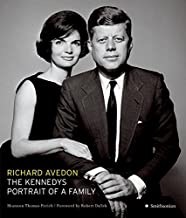
Hardcover. NY, Harper Design, 1st, 2007, Book: Very Good, Dust Jacket: Very Good, Hardcover, 128 pages. In the early 1960s, Richard Avedon was commissioned by Harper's Bazaar to create Observations, a column that consisted of a series of nine photographic essays. The subject of the first essay was John F. Kennedy and his young family, who sat for formal black-and-white portraits just three weeks prior to Kennedy's presidential inauguration. Six images appeared in the magazine's February 1961 issue. That same day, Avedon created more informal color portraits of Kennedy and his family at the Kennedy compound in Palm Beach. One of these images ran as the cover of LOOK magazine's February 28 issue, with photographs by Avedon inside. Just before the magazine hit the newsstands and was delivered to over 6.5 million people, a set of photographs, comprised mostly of the LOOK images, was released by the White House and appeared in newspapers across the country. During his lifetime, Richard Avedon donated more than two hundred images to the Smithsonian Institution, including all of the photographs of the Kennedy family sitting for Harper's Bazaar. Smithsonian curator Shannon Thomas Perich has culled more than seventy-five images from that donation for The Kennedys: Portrait of a Family, making these stunning photographs available for view for the first time. Perich's introductory essay--accompanied by a wealth of archival photographs of both Avedon and the Kennedy family--provides historical background on the two sittings within a political and cultural context and critically examines the work of one of the finest photographers of the twentieth century. A foreword by Robert Dallek, distinguished historian and author of the bet-selling An Unfinished Life: John F. Kennedy, 1917-1963, provides authoritative and compelling insight to one of the most fascinating presidents in American history.
Hardcover. Edmonds WA, Pacific Fast Mail, 1st, 1981, Book: Very Good, Dust Jacket: Very Good, Hardcover, 289 pages, tri-fold frontis. map intact, without tears. A pictorial history of rail development in southern British Columbia and the building of the Kettle Valley Railway. Mostly b&w photos, some color. Clean copy.
Hardcover. NY, Alfred A. Knopf, 1st, 2010, Book: Very Good, Dust Jacket: Very Good, Hardcover in a bright, unclipped dust jacket. He was the greatest Indian warrior of the nineteenth century. His victory over General Custer at the battle of Little Bighorn in 1876 was the worst defeat inflicted on the frontier Army. And the death of Crazy Horse in federal custody has remained a controversy for more than a century. The Killing of Crazy Horse pieces together the many sources of fear and misunderstanding that resulted in an official killing hard to distinguish from a crime. A rich cast of characters, whites and Indians alike, passes through this story, including Red Cloud, the chief who dominated Oglala history for fifty years but saw in Crazy Horse a dangerous rival; No Water and Woman Dress, both of whom hated Crazy Horse and schemed against him; the young interpreter Billy Garnett, son of a fifteen-year-old Oglala woman and a Confederate general killed at Gettysburg; General George Crook, who bitterly resented newspaper reports that he had been whipped by Crazy Horse in battle; Little Big Man, who betrayed Crazy Horse; Lieutenant William Philo Clark, the smart West Point graduate who thought he could "work" Indians to do the Army's bidding; and Fast Thunder, who called Crazy Horse cousin, held him the moment he was stabbed, and then told his grandson thirty years later, "They tricked me! They tricked me!" With the Great Sioux War as background and context, drawing on many new materials as well as documents in libraries and archives, Thomas Powers recounts the final months and days of Crazy Horse's life not to lay blame but to establish what happened.
Hardcover. NY, Celadon Books, 1st, 2022, Book: Very Good, Dust Jacket: Very Good, Hardcover in a bright, unclipped dust jacket. It begins quietly on a balmy Southern night as some locals gather at Bo Peep's, one of the town's favorite watering holes. Within an hour, however, a man will be murdered and his companion will be "disappeared." An unlikely detective, Morgana Musgrove, doyenne of Savannah society, is called upon to unravel the mystery of these crimes. Morgana is an imperious, demanding, and conniving woman, whose four grown children are weary of her schemes. But one by one she inveigles them into helping with her investigation, and soon the family uncovers some terrifying truths-truths that will rock Savannah's power structure to its core. Moving from the homeless encampments that ring the city to the stately homes of Savannah's elite, Green's novel brilliantly depicts the underbelly of a city with a dark history and the strangely mesmerizing dysfunction of a complex family. Clean copy.
Hardcover. NY, The Free Press, 1st, 1968, Book: Very Good, Dust Jacket: None, Hardcover, gray cloth binding with orange and gilt lettering on spine. 394 pages. Prof. Paige's reconstruction and analysis of the U.S. decision to resist Chinese aggression in Korea in 1950. Name on front fly leaf othewise clean. No dust jacket.
Hardcover. Ontario CA, Hanover Square Press, 1st, 2019, Book: Very Good, Dust Jacket: Very Good, Hardcover in a bright, unclipped dust jacket. Uncovers the life and work of Milicent Patrick--one of Disney's first female animators and the only woman in history to create one of Hollywood's classic movie monsters As a teenager, Mallory O'Meara was thrilled to discover that one of her favorite movies, Creature from the Black Lagoon , featured a monster designed by a woman, Milicent Patrick. But for someone who should have been hailed as a pioneer in the genre, there was little information available. For, as O'Meara soon discovered, Patrick's contribution had been claimed by a jealous male colleague, her career had been cut short and she soon after had disappeared from film history. No one even knew if she was still alive. As a young woman working in the horror film industry, O'Meara set out to right the wrong, and in the process discovered the full, fascinating story of an ambitious, artistic woman ahead of her time. Patrick's contribution to special effects proved to be just the latest chapter in a remarkable, unconventional life, from her youth growing up in the shadow of Hearst Castle, to her career as one of Disney's first female animators. And at last, O'Meara discovered what really had happened to Patrick after The Creature's success, and where she went. A true-life detective story and a celebration of a forgotten feminist trailblazer, Mallory O'Meara's The Lady from the Black Lagoon establishes Patrick in her rightful place in film history while calling out a Hollywood culture where little has changed since.
Softcover. New Jersey, Bergen County Board, 1st, 1983, Book: Very Good, Dust Jacket: None, Softcover, 71 pages. Volume one of a seven volume set on the history and heritage of Bergen County. Clean, like new..
Hardcover. Berkeley, University Of California Press, 1st, 1984, Book: Very Good, Dust Jacket: Very Good, Hardcover in a bright dust jacket, 278 pages. History of the Pedi's struggle to keep the land that belonged to them in South Africa. Clean copy.
Hardcover. NY, Oxford University Press, 4th pr., 1951, Book: Very Good, Dust Jacket: Very Good, Hardcover in a lightly worn dust jacket, 350 pages. A history of the Little Traverse Bay on the northern tip of Michigan's lower peninsula. Text is illustrated with drawings and contains memoirs, memories, recollections, etc.
Hardcover. NY, Taplinger Publishing, 1st US, 1979, Book: Very Good, Dust Jacket: Very Good, Hardcover in a bright, unclipped dust jacket. 332 pages, b&w illustrations. Originally published in 1961 and revised twice to reflect changes in Iranian society. Endpapers map. Page edges tanning, a clean copy.
Softcover. Chicago, University of Chicago Press, reprint, 2005, Book: Very Good, Dust Jacket: None, Softcover, 311 pages. After decades of bloodshed and political terror, many lament the rise of the left in Latin America. Since the triumph of Castro, politicians and historians have accused the left there of rejecting democracy, embracing communist totalitarianism, and prompting both revolutionary violence and a right-wing backlash. Through unprecedented archival research and gripping personal testimonies, Greg Grandin powerfully challenges these views in this classic work. In doing so, he uncovers the hidden history of the Latin American Cold War: of hidebound reactionaries holding on to their power and privilege; of Mayan Marxists blending indigenous notions of justice with universal ideas of equality; and of a United States supporting new styles of state terror throughout the region. With Guatemala as his case study, Grandin argues that the Latin American Cold War was a struggle not between political liberalism and Soviet communism but two visions of democracy--one vibrant and egalitarian, the other tepid and unequal--and that the conflict's main effect was to eliminate homegrown notions of social democracy.
Hardcover. NY, Frederick Ungar, 1st thus, 1974, Book: Very Good, Dust Jacket: Very Good, Hardcover in a lightly worn dust jacket, 263 pages. 1st American Edition of this Abridged Translation. This is Kraus's masterpiece, with half of Europe as its stage. It is presented here in English for the first time, in an abridged version that preserves the essence of the 800-page original. Its influence on Brecht, Ionesco, and other playwrights is acknowledged. Mingling actual quotations, news reports, and government orders with Kraus's own satiric dialogue, this immense drama (never meaning to be performed) offers a vast fresco of events at the front and at home during, as it prophesied, the last days of the Austro-Hungarian Empire. Indeed, Kraus anticipated the development of atomic warfare and its threat to all mankind. Some of Kraus is untranslatable, but, as Stanley Kauffmann wrote in his New Republic review, "Ungar has done us a benefit at least by bringing us a bit closer to this sharp-eyed, angry, prickly, lover-hater of mankind." INSCRIBED BY FREDERICK UNGAR, the editor and publisher on the half-title page. He also wrote the 14 page introduction. Clean copy.
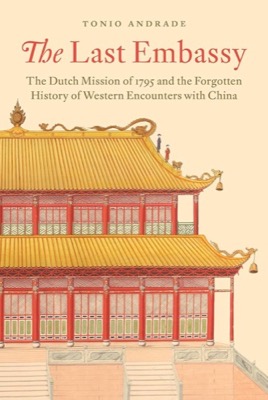
Hardcover. Princeton NJ, Princeton University Press, 1st, 2021, Book: Very Good, Dust Jacket: Very Good, Hardcover in a bright dust jacket, 408 pages. A book that casts new light on the history of China and the West at the turn of the nineteenth century. George Macartney's disastrous 1793 mission to China plays a central role in the prevailing narrative of modern Sino-European relations. Summarily dismissed by the Qing court, Macartney failed in nearly all of his objectives, perhaps setting the stage for the Opium Wars of the nineteenth century and the mistrust that still marks the relationship today. But not all European encounters with China were disastrous. The Last Embassy tells the story of the Dutch mission of 1795, bringing to light a dramatic but little-known episode that transforms our understanding of the history of China and the West. Drawing on a wealth of archival material, Tonio Andrade paints a panoramic and multifaceted portrait of an age marked by intrigues and war. China was on the brink of rebellion. In Europe, French armies were invading Holland. Enduring a harrowing voyage, the Dutch mission was to be the last European diplomatic delegation ever received in the traditional Chinese court. Andrade shows how, in contrast to the British emissaries, the Dutch were men with deep knowledge of Asia who respected regional diplomatic norms and were committed to understanding China on its own terms.

 "The James Bond Archives, 007by: Duncan, Paul (Editor)")

 "The Japanese Novel of the Meiji Period and the Ideal of Individualismby: Janet A. Walker")
 "The Jazz Loft Project: Photographs and Tapes of W. Eugene Smith from 821 Sixth Avenue, 1957-1965by: Sam Stephenson")
 "The Jews of Lithuania: A History of a Remarkable Community 1316-1945by: Greenbaum, Masha")
 "The Jews of Paris and the Final Solution: Communal Response and Internal Conflicts 1940-1944 by: Adler, Jacques")
 "The Journalism of Milena Jesenska: A Critical Voice in Interwar Central Europeby: Kathleen Hayes (Ed.)")
 "The Kennan Diariesby: George F Kennan and Frank Costigliola")
 "The Kettle Valley and Its Railways by: Riegger, Hal")
 "The Kingdoms of Savannah by: George Dawes Green")

 "The Lady From The Black Lagoon: Hollywood Monsters and the Lost Legacy of Milicent Patrickby: O'Meara, Mallory")
 "The Land Belongs to Us: The Pedi Polity the Boers and the British in the Nineteenth Century Transvaal by: Delius, Peter")
 "The Land of the Great Sophy by: Roger Stevens")
 "The Last Colonial Massacre: Latin America in the Cold Warby: Grandin, Greg")
 "The Last Days of Mankind: A Tragedy in Five Acts by: Kraus, Karl; /Ungar, Frederick(Ed.) /Wright, E Sue (transl.)")