Hardcover. US, Dark Horse, 1st, 2013, Book: Very Good, Dust Jacket: None, Elephant folio, hardcover, 104 pages in color. Like new in publishers shrink-wrap. One of comics' greatest artistic achievements gets its due in this deluxe 15" x 20" hardcover collecting the first two years of Tarzan Sunday strips by Hal Foster! Beautifully restored and printed at giant size, this first volume in Dark Horse's comprehensive collection of Foster's Tarzan Sundays reprints over one-hundred strips on high-quality paper and in eye-popping color, replicating when they first appeared! Includes a historical essay on Tarzan and Foster by comics scholar, Mark Evanier.
Softcover. New York, Billboard Books, 1st, 2006, Book: Very Good, Dust Jacket: None, 656 pages. Softcover with no dust jacket. Remainder mark on top edge, otherwise, clean, unmarked copy. Light edgewear to wrappers. Black and white pictures throughout. Mann, a novelist and author of books on film history, presents this biography of director John Schlesinger (1926-2003), based on interviews with the director and his family following his stroke in 2001, in addition to other primary source documents, articles, and reviews. He describes Schlesinger's childhood; his early days as a documentary director at the BBC; his films during the era of New Hollywood; and Midnight Cowboy, which won an Academy Award. His other films, such as Billy Liar, Darling, Cold Comfort Farm, and The Day of the Locust, are discussed, as well as his accurate depictions of homosexuality, and his personal and professional relationships.
Hardcover. Cleveland OH, Seaforth Publications, 3rd pr., 1978, Book: Very Good, Dust Jacket: Fair, Hardcover in a worn, chipped dust jacket, b&w illustrations throughout. What began as a scrapbook and a photo album now emerges as a coherent narrative, which one Edistonian has rightly said "will educate those who should know Edisto's history." The Sea Islands are unique, and some are yet unspoiled--Edisto least of all, perhaps. Opening this new door into the past may also open a more informed path into the future. Ninety two pages from eariest history to the 1970's, when the barrier island were mostly ignored. Lots of information about hurricanes, Colonial Times, Plantation days, and after the Civil War. Mrs. Puckette became a well known South Carolina writer. Inscroption on inside cover, otherwise clean.
Hardcover. New Haven CT, Yale University Press, 1st, 2019, Book: Very Good, Dust Jacket: None, Hardcover, pictorial boards, 232 pages. The question "What is American art?" might conjure the hyperrealism of Raphaelle Peale and William Harnett, the bold graphic style of Stuart Davis and Jacob Lawrence, or the Precisionist forms of Charles Sheeler. Little known, however, is that such notions of American art are significantly owed to a Russian Jewish immigrant named Edith Halpert. The founder of the Downtown Gallery in New York, Halpert shaped an identity for American art, declaring that its thrilling heterogeneity and democratic values were what most distinguished it from the European avant-garde. For forty-plus years, Halpert's gallery brought recognition and market success to now-legendary American artists--among them Arthur Dove, Marsden Hartley, and Georgia O'Keeffe, in addition to the artists mentioned above. She relentlessly championed nonwhite, female, and unknown artists and was a formative advisor in the shaping of many of the nation's most celebrated art museums and collections, from San Francisco to Boston. Not content with those achievements, she also pioneered the appreciation and collecting of American folk art. Richly illustrated with works that passed through her groundbreaking gallery, this book tells the extraordinary and largely overlooked story of her career and legacy. The artists Halpert launched into the American canon are household names--and this book compellingly argues that hers should be, as well. In publisher's shrinkwrap.
Hardcover. New York , Vanguard Press, 1st, 1976, Book: Very Good, Dust Jacket: Very Good, Hardcover, 320 pages. Light edgewear, tanning to dust jacket else a clean, tight copy.
Hardcover. NY/London, Macmillan / Collier Macmillan, 1st, 1975, Book: Very Good, Dust Jacket: Very Good, Hardcover in a bright, unclipped dust jacket, 517 pages, b&w illustrations. Life of the signer of the Declaration of Independence, first US Attorney General, and second Secretary of State. Clean copy.
Hardcover. Tokyo, Japan, Toho Gakkai, 1st, 2006, Book: Very Good, Dust Jacket: Good, Hardcover, 262 pages, minor dust jacket edge wear, otherwise, very clean and tight copy.
Hardcover. Baltimore, John Hopkins University Press, 1st, 1989, Book: Very Good, Dust Jacket: Very Good, Hardcover in a bright dust jacket, 432 pages. Biography of Edward Gibbon, who wrote arguably the most famous work of history ever, The Decline and Fall of the Roman Empire (1776-1789). Clean copy.
Hardcover. Alabama, University of Alabama Press, 1st, 1974, Book: Very Good, Dust Jacket: Very Good, 365 pages. Hardcover. Southern Historical Publications No.18. Dust cover front flap price clipped. Just a bit of age wear to dust cover, but completely whole, no rips or tears (covered in plastic). Vary clean inside. "Edward Stanley was light of frame but fearless, and his aggressive electioneering and, in Congress, his temper and sarcasm brought him more than once to the verge of duels, won him the nickname "Little Conqueror," and led John Quincy Adams to call him "the terror of the Lucifer party"."
Hardcover. New York, W. W. Norton & Company, 1st, 2008, Book: Very Good, Dust Jacket: Very Good, Hardcover, 288 pages, 242 photographs reproduced in four-color process. Like new in publishers shrink-wrap. Edward Steichen was already a famous painter and photographer in America and abroad when, in early 1923, he was offered the most prestigious position in photography's commercial domain: that of chief photographer for Vogue and Vanity Fair. Over the next fifteen years, he would produce a body of work of unequaled brilliance, dramatizing and glamorizing contemporary culture and its achievers. Here are icon images of Gloria Swanson, Gary Cooper, Greta Garbo, and Charles Chaplin, as well as numerous other celebrities drawn from an archive of more than 2,000 original prints.
Hardcover. New York, W. W. Norton & Company, 1st, 2008, Book: Very Good, Dust Jacket: Very Good, Hardcover, 288 pages, 242 photographs reproduced in four-color process. Like new in publishers shrink-wrap. Edward Steichen was already a famous painter and photographer in America and abroad when, in early 1923, he was offered the most prestigious position in photography's commercial domain: that of chief photographer for Vogue and Vanity Fair. Over the next fifteen years, he would produce a body of work of unequaled brilliance, dramatizing and glamorizing contemporary culture and its achievers. Here are icon images of Gloria Swanson, Gary Cooper, Greta Garbo, and Charles Chaplin, as well as numerous other celebrities drawn from an archive of more than 2,000 original prints.
Hardcover. NY, Norton, 1st, 2008, Book: Very Good, Dust Jacket: Very Good, Hardcover, 288 pages. Edward Steichen was already a famous painter and photographer in America and abroad when, in early 1923, he was offered the most prestigious position in photography's commercial domain: that of chief photographer for Vogue and Vanity Fair. Over the next fifteen years, Steichen would produce a body of work of unequaled brilliance, dramatizing and glamorizing contemporary culture and its achievers in politics, literature, film, sport, dance, theater, opera, and the world of high fashion. Here are iconic images of Gloria Swanson, Gary Cooper, Greta Garbo, and Charlie Chaplin as well as numerous other celebrities drawn from an archive of more than two thousand original prints. Until now, no more than a handful have been exhibited or published in book form. The photographs of the 1920s and 1930s represent the high point in Steichen's career and are among the most striking creations of twentieth-century photography. 242 illustrations.
Hardcover. East Sussex UK, Book Guild, 1st, 2000, Book: Very Good, Dust Jacket: Very Good, Hardcover, b&w period photos from the turn of the last century. Like new in shrink-wrap. From a box brimming with fantastic photographs come this collection of the works of photojournalist Andrew Pitcairn-Knowles assembled by his grandson. 38 pages of text. 110 plates.
Hardcover. Cologne, Dumont Buchverlag, 1st, 1997, Book: Very Good, Dust Jacket: Very Good, Hardcover, 363 pages, illustrated throughout in color and b&w. Clean, unmarked copy with only minor wear to dust jacket. This volume provides an extensive survey of painting in Austria from 1900-1930, with Egon Schiele as the focal point, through a representative selection of over 100 works by Schiele and 23 of his contemporaries from the collection of Dr. Rudolf Leopold. Contributions by: Antonia Hoerschelmann, Rudolf Leopold, Klaus Albrecht Schroder, Harald Szeemann, and Patrick Werkner. 139 color plates and 59 b&w illustrations.
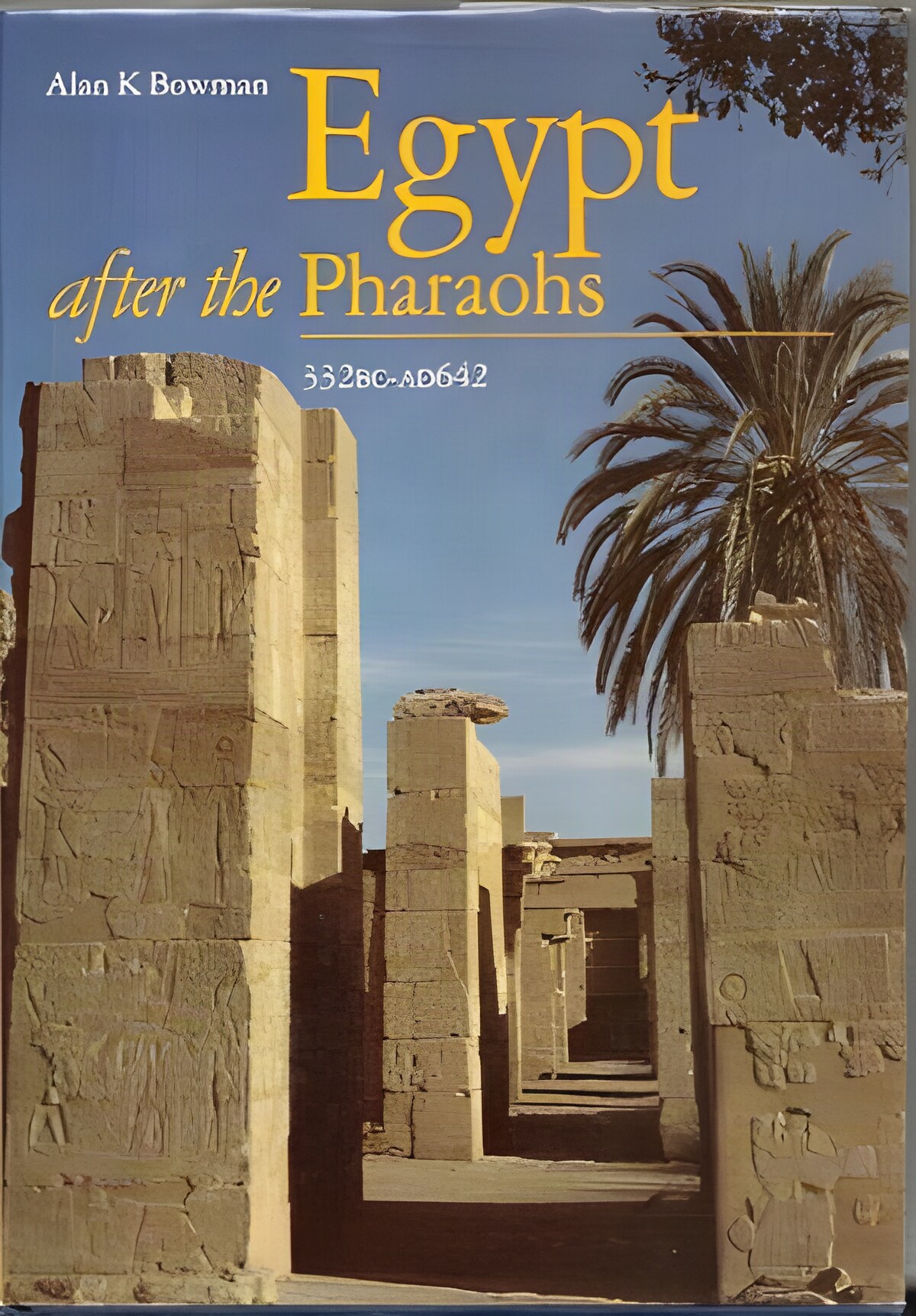
Hardcover. Berkeley CA, University of California Press, 1st, 1986, Book: Very Good, Dust Jacket: Very Good, Hardcover in a bright dust jacket, 264 pages, photographs throughout. Egypt After the Pharoahs treats the period which witnessed the arrival of the Greeks and Hellenistic culture in Egypt, the reign of the Ptolemies from Ptolemy I to Cleopatra, the conquest by Rome, the scientific and cultural achievements of Alexandria, and the rise of Christianity. The rich social, cultural, and intellectual ferment of this period comes alive in Alan Bowman's narrative. Clean copy.
Softcover. UK, Cambridge University Press, 1st pbk., 1984, Book: Very Good, Dust Jacket: None, Softcover, 300 pages. This account of Egyptian society in the reign of Muhammad Ali traces the beginnings of the nation state in Egypt. It considers Muhammad Ali as part of a social group whose economic interests led them in the direction of trade with Europe as a means of raising money for further investments. They attempted to increase agricultural exports and to use the profits to create industry; then, following the logic of imperialists, their next step was to seek to conquer the surrounding areas to find markets for their industries and sources of raw materials. These policies brought them into conflict with their suzerain, the Ottoman sultan, and with England, since England needed markets in the Middle East. England sought to destroy the new regime in Egypt as a means of exerting influence on the region. In carrying out these economic changes, the country underwent a series of internal developments that were to revolutionize the structure and shape of Egyptian society. The rules of landownership were altered and large estates were formed, Egyptian fallahin were drafted into the army, and the administration was Egyptianized, establishing the groundwork for a nation state. Small embossed stamp on title page, otherwise clean.
Hardcover. London, Grant Richards, 1st, 1909, Book: Good, Dust Jacket: None, Hardcover, green cloth stamped in white, 294 pages, illustrated with 32 b&w photos. Back hinge partially cracked, otherwise clean. Light fraying to spine cloth at top.
Hardcover. University of Pittsburgh Press, 1st , 1984, Book: Very Good, Dust Jacket: None, Hardcover, yellow cloth with gilt stamping, 283 pages. Between 1805 and 1879, Egypt evolved into a modern state with a Western-style military force and a central bureaucracy headed by an elite corps of European-trained officials. Viceroy Muhammad Ali and his successors used this new state apparatus to augment their autocratic power and to profit as intermediaries between Egypt and the capitalist West. This study is invaluable for it's unique and exhaustive research into the structure and foundations of the ruling elite and the process by which modern bureaucracy was built up in Egypt. It also highlights the dangers of rapidly developing a country's material infrastructure using massive outside assistance without adjusting for the destabilizing social changes that are the inevitable result. Clean copy.
Hardcover. New York , privately printed, 1st, 1882, Book: Good, Dust Jacket: None, Hardcover. large folio, maroon cloth with gilt stamping. Covers worn, especially corners. Internally clean. 187 pages plus 51 full-page plates: 32 artotypes, 18 engravings, 1 chromo-lithograph. Some plates with light foxing, small water stains to some margins.In 1879, Gorringe won the contract to move the obelisk of Thutmosis III from Alexandria to Central Park for $75,000. This book is about the expedition to retrieve the obelisk and a study of the other standing obelisks in Paris and London. Frontispiece portrait of William Vanderbilt who financed the acquisition of the monument. Scarce in original printing.
Hardcover. Candlewick Press, 1st, 2004, Book: Very Good, Dust Jacket: None, Hardcover, 32 pages. Discover the wonders of ancient Egypt through a fascinating journal from a lost expedition -- a treasure trove of fact and fantasy featuring a novelty element on every spread. Who can resist the allure of ancient Egypt -- and the thrill of uncovering mysteries that have lain hidden for thousands of years? Not the feisty Miss Emily Sands, who in 1926, four years after the discovery of King Tut's tomb, led an expedition up the Nile in search of the tomb of the god Osiris. Alas, Miss Sands and crew soon vanished into the desert, never to be seen again. But luckily, her keen observations live on in the form of a lovingly kept journal, full of drawings, photographs, booklets, fold-out maps, postcards, and many other intriguing samples.
Hardcover. Candlewick Press, 1st, 2004, Book: Very Good, Dust Jacket: Very Good, Hardcover, 32 pages. Discover the wonders of ancient Egypt through a fascinating journal from a lost expedition -- a treasure trove of fact and fantasy featuring a novelty element on every spread. Who can resist the allure of ancient Egypt -- and the thrill of uncovering mysteries that have lain hidden for thousands of years? Not the feisty Miss Emily Sands, who in 1926, four years after the discovery of King Tut's tomb, led an expedition up the Nile in search of the tomb of the god Osiris. Alas, Miss Sands and crew soon vanished into the desert, never to be seen again. But luckily, her keen observations live on in the form of a lovingly kept journal, full of drawings, photographs, booklets, fold-out maps, postcards, and many other intriguing samples.
Hardcover. St. Albans VT, Messenger Company, 1st, 1902, Book: Very Good, Dust Jacket: None, Hardcover, contains the Railway Commissioners' report, complaints petitions andorders, investigations of all accidents, reports on the physical conditionof the steam and electric railways and statistical tables. Tipped in at front is a color folding map of the Vermont railway system circa 1902. All in excellent condition.
Hardcover. Princeton NJ, Princeton University Press, 2nd pr., 2013, Book: Very Good, Dust Jacket: Very Good, Hardcover in a bright dust jacket, 332 pages, b&w illustrations. Einstein and the Quantum reveals for the first time the full significance of Albert Einstein's contributions to quantum theory. Einstein famously rejected quantum mechanics, observing that God does not play dice. But, in fact, he thought more about the nature of atoms, molecules, and the emission and absorption of light-the core of what we now know as quantum theory-than he did about relativity. A compelling blend of physics, biography, and the history of science, Einstein and the Quantum shares the untold story of how Einstein-not Max Planck or Niels Bohr-was the driving force behind early quantum theory. It paints a vivid portrait of the iconic physicist as he grappled with the apparently contradictory nature of the atomic world, in which its invisible constituents defy the categories of classical physics, behaving simultaneously as both particle and wave. And it demonstrates how Einstein's later work on the emission and absorption of light, and on atomic gases, led directly to Erwin Schrodinger's breakthrough to the modern form of quantum mechanics. The book sheds light on why Einstein ultimately renounced his own brilliant work on quantum theory, due to his deep belief in science as something objective and eternal. Clean copy.
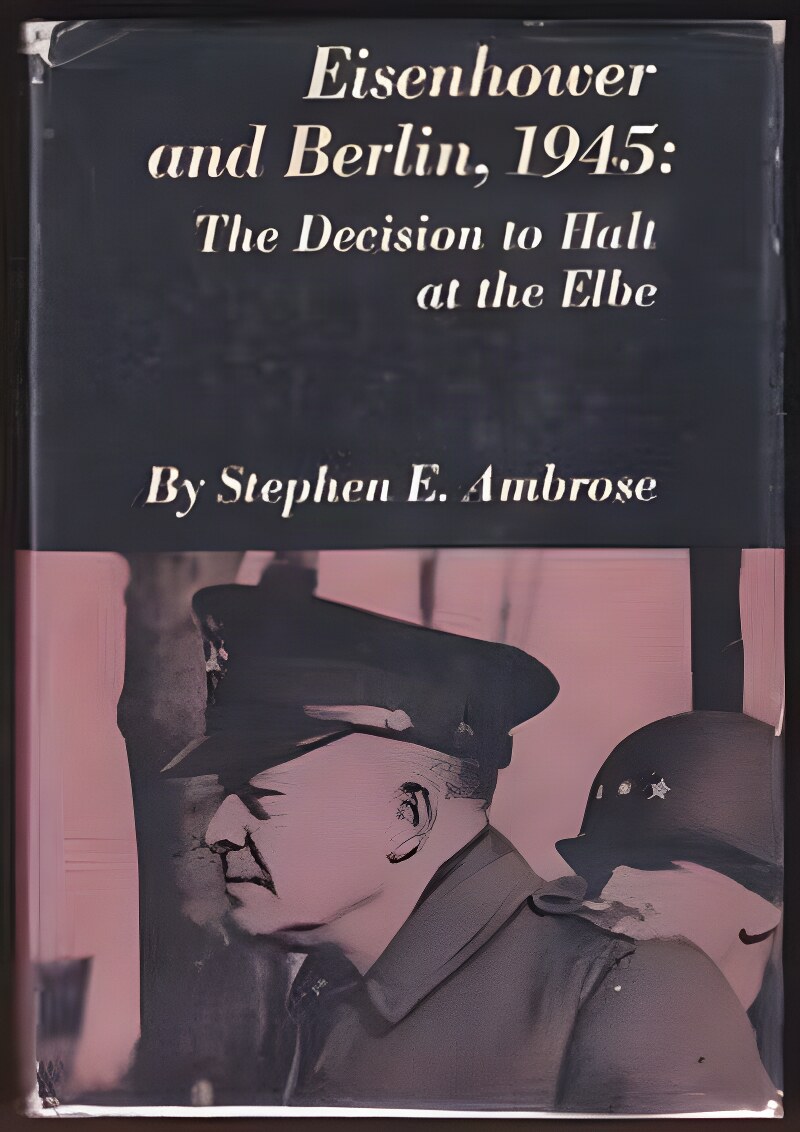
Hardcover. NY, W. W. Norton, 1st, 1967, Book: Very Good, Dust Jacket: Very Good, Hardcover in a worn, chipped dust jacket, 119 pages, maps, index. As WWII ground to a close, whose forces would be the first to reach Berlin? General Dwight David Eisenhower, supreme commander of the British and American armies, chose to halt at the Elbe River and leave Berlin to the Red Army. Could he have beaten the Russians to Berlin? If so, why didn't he? If he had, would the Berlin question have arisen? Would Germany have been divided as it was? Name on front fly leaf, otherwise clean.

 "Edgar Rice Burroughs' Tarzan: The Sunday Comics, 1931-1933by: Foster, Hal")
 "Edge of Midnight: The Life of John Schlesingerby: Mann, William J.")
 "Edisto: A Sea Island Principalityby: Puckette, Clara Childs")
 "Edith Halpert: The Downtown Gallery and the Rose of American Artby: Shaykin, Rebecca")
 "Edith Sitwell: Fire of the Mindby: Salter, Elizabeth & Allanah Harper")
 "Edmund Randolph: A Biography by: John J. Reardon")


 "Edward Stanly: Whiggery's Tarheel \"Conqueror\"by: Brown, Norman D.")
 "Edward Steichen: In High Fashion - The Conde Nast Years, 1923-1937by: Ewing, William A.")
 "Edward Steichen: In High Fashion - The Conde Nast Years, 1923-1937by: Ewing, William A.")
 "Edward Steichen: In High Fashion - The Conde Nast Years, 1923-1937by: Todd Brandow and William A. Ewing")
 "Edwardian Eye of Andrew Pitcairn-Knowles 1871-1956, Theby: Pitcairn-Knowles, Richard")
 "Egon Schiele: The Leopold Collection, Viennaby: Leopold, Rudolf")

 "Egypt of Yesterday and To-Dayby: Withers, Percy")
 "Egypt Under the Khedives 1805-1879by: F. Robert Hunter")
 "Egyptology: Search for the Tomb of Osirisby: Emily Sands , Dugald Steer, et al")
 "Eighth Biennial Report of the Board of Railroad Commissioners of the State of Vermont June 30th 1900 to June 30th 1902 by: N/A")