Softcover. Cambridge UK, Cambridge University Press, reprint, 1995, Book: Very Good, Dust Jacket: None, Softcover, 290 pages. This study provides a comprehensive reinterpretation of the meaning of Locke's political thought. John Dunn restores Locke's ideas to their exact context, and so stresses the historical question of what Locke in the Two Treatises of Government was intending to claim. By adopting this approach, he reveals the predominantly theological character of all Locke's thinking about politics and provides a convincing analysis of the development of Locke's thought. In a polemical concluding section, John Dunn argues that liberal and Marxist interpretations of Locke's politics have failed to grasp his meaning. Locke emerges as not merely a contributor to the development of English constitutional thought, or as a reflector of socio-economic change in seventeenth-century England, but as essentially a Calvinist natural theologian. Name on front fly leaf, otherwise clean.
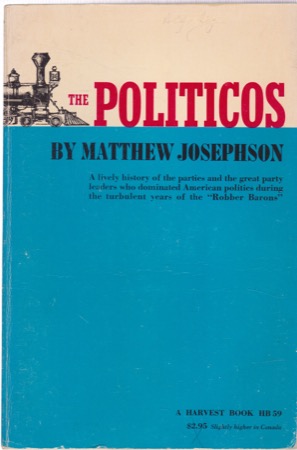
Softcover. NY, Harcourt, Brace & World, reprint, 1963, Book: Very Good, Dust Jacket: None, Softcover, 760 pages. This is a frank and insightful analysis of the political and economic influences in the United States during the Reconstruction Era, covering the years immediately after the Civil War and the death of Abraham Lincoln, and ending shortly before the Spanish-American War. Originally published in 1938. Name on front fly leaf, otherwise clean.
Hardcover. NY, Pantheon, 1st, 1994, Book: Very Good, Dust Jacket: Very Good, Hardcover in a bright, unclipped dust jacket, 450 pages. Map endpapers. Ever since the appearance of his groundbreaking The Question of Palestine, Edward Said has been America's most outspoken advocate for Palestinian self-determination. As these collected essays amply prove, he is also our most intelligent and bracingly heretical writer on affairs involving not only Palestinians but also the Arab and Muslim worlds and their tortuous relations with the West. In The Politics of Dispossession Said traces his people's struggle for statehood through twenty-five years of exile, from the PLO's bloody 1970 exile from Jordan through the debacle of the Gulf War and the ambiguous 1994 peace accord with Israel. As frank as he is about his personal involvement in that struggle, Said is equally unsparing in his demolition of Arab icons and American shibboleths. Stylish, impassioned, and informed by a magisterial knowledge of history and literature, The Politics of Dispossession is a masterly synthesis of scholarship and polemic that has the power to redefine the debate over the Middle East. Clean copy.
Hardcover. NY, Alfred A. Knopf, 1st, 1968, Book: Very Good, Dust Jacket: Very Good, Hardcover in a nice, unclipped dust jacket. 293 pages plus index. A survey of the dramatic evolution of the Democratic Party that led to the election of Franklin D. Roosevelt in 1932. Clean, bright copy.
Hardcover. NY, Alfred A. Knopf, 1st, 2001, Book: Very Good, Dust Jacket: Very Good, Hardcover in a bright, unclipped dust jacket, 355 pages. In this meticulously researched, unflinching, and reasoned study, National Book Award finalist David I. Kertzer presents shocking revelations about the role played by the Vatican in the development of modern anti-Semitism. Working in long-sealed Vatican archives, Kertzer unearths startling evidence to undermine the Church's argument that it played no direct role in the spread of modern anti-Semitism. In doing so, he challenges the Vatican's recent official statement on the subject, We Remember. Kertzer tells an unsettling story that has stirred up controversy around the world and sheds a much-needed light on the past. Newspaper review laid in. Clean copy.
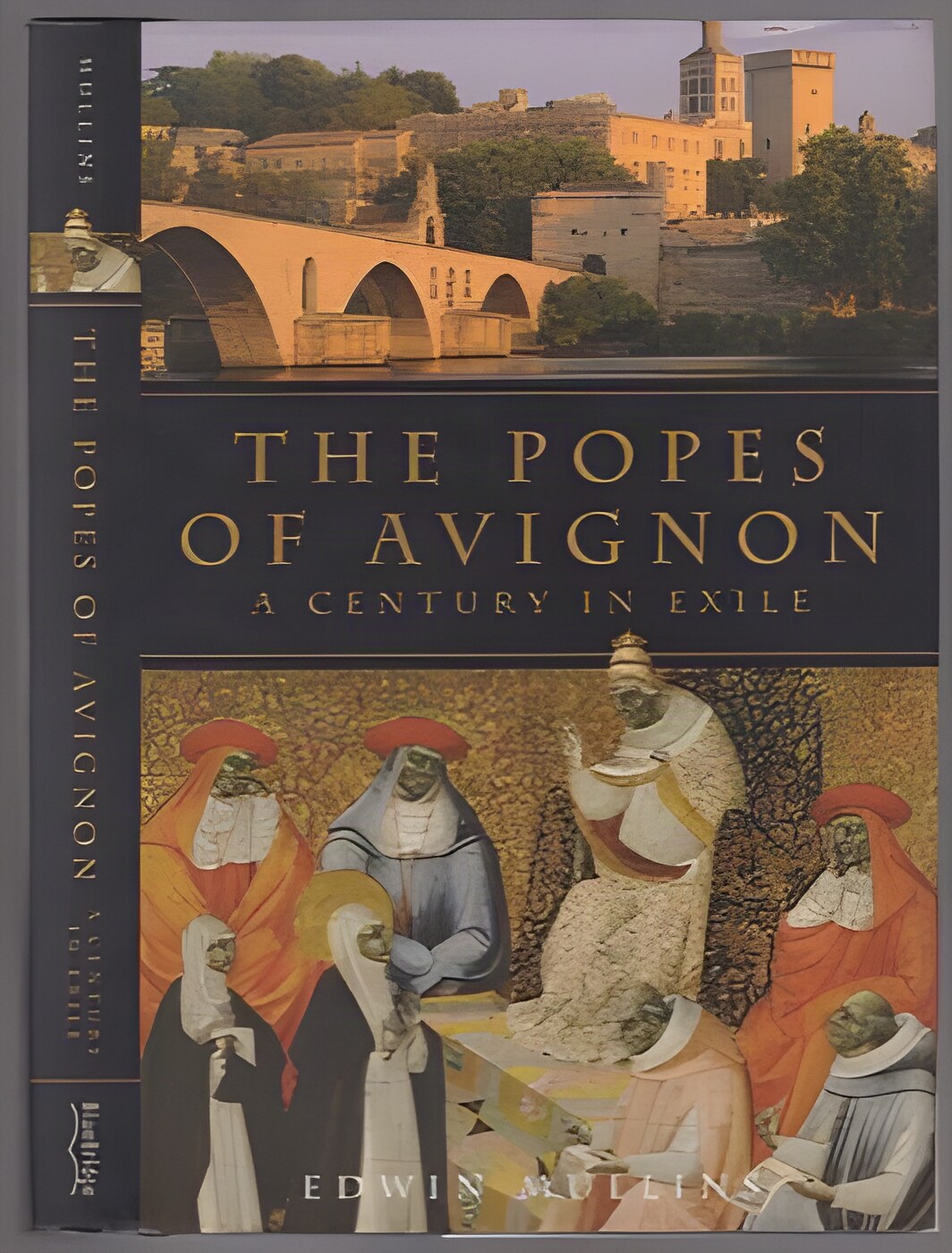
Hardcover. NY, BlueBridge, 1st US, 2008, Book: Very Good, Dust Jacket: Very Good, Hardcover in a bright dust jacket, 246 pages. This narrative history masterfully weaves together the sweeping events surrounding what has become known as the "Babylonian captivity" of the popes into the broader story of 14th-Century Europe?one of the most turbulent times in the continent's history. It was a time of fear, ferocity, and religious agony, which saw the suppression of the Knights Templar and the Cathars, the first onslaught of the plague, and the beginning of the Hundred Years' War. The century also produced some of the greatest writers and artists in the western tradition, including Giotto, Boccaccio, Petrarch, and Chaucer. Central to this period was the movement of the papal seat from Rome to Avignon in the south of France, where seven successive popes held power from 1309 to 1377. The drama, intrigue, and tumult associated with the papacy in exile forms the perfect lens through which to clearly see a Europe making the transition from the Middle Ages to the Renaissance. Clean copy.
Hardcover. NY, Pantheon Books, 1st, 1966, Book: Very Good, Dust Jacket: Good, Hardcover, 12th volume of the A.W. Mellon lectures in the fine arts. The Bollingen Series XXXV. Profusely illustrated with b/w plates. Arntzen calls this book `a good critical treatment of the development of the Renaissance portrait.' Light edgewear to dust jacket.
Softcover. London, Cambridge, University Press, reprint, 1981, Book: Very Good, Dust Jacket: None, Softcover, 514 pages. The Post-Darwinian Controversies offers an original interpretation of Protestant responses to Darwin after 1870, viewing them in a transatlantic perspective and as a constitutive part of the history of post-Darwinian evolutionary thought. The impact of evolutionary theory on the religious consciousness of the nineteenth century has commonly been seen in terms of a 'conflict' or 'warfare' between science and theology. Dr. Moore's account begins by discussing the polemical origins and baneful effects of the 'military metaphor', and this leads to a revised view of the controversies based on an analysis of the underlying intellectual struggle to come to terms with Darwin. Clean, bright copy.
Softcover. Boston, Shambhala, 1st, 1981, Softcover, 160 pages. The Power of Limits was inspired by those simple discoveries of harmony. The author went on to investigate and measure hundreds of patterns--ancient and modern, minute and vast. His discovery, vividly illustrated here, is that certain proportions occur over and over again in all these forms. Patterns are also repeated in how things grow and are made--by the dynamic union of opposites--as demonstrated by the spirals that move in opposite directions in the growth of a plant.
Hardcover. Fort Worth,TX, P&T Publishing Co., 1st, 1998, Book: Very Good, Dust Jacket: None, History and Development of Printing Presses from the Fifteenth to the Twenty-First Century. Hardcover in a bright dust jacket, 297 pages plus index and glossary. B&w illustrations. Previous owner's name and date on front fly leaf, otherwise clean.
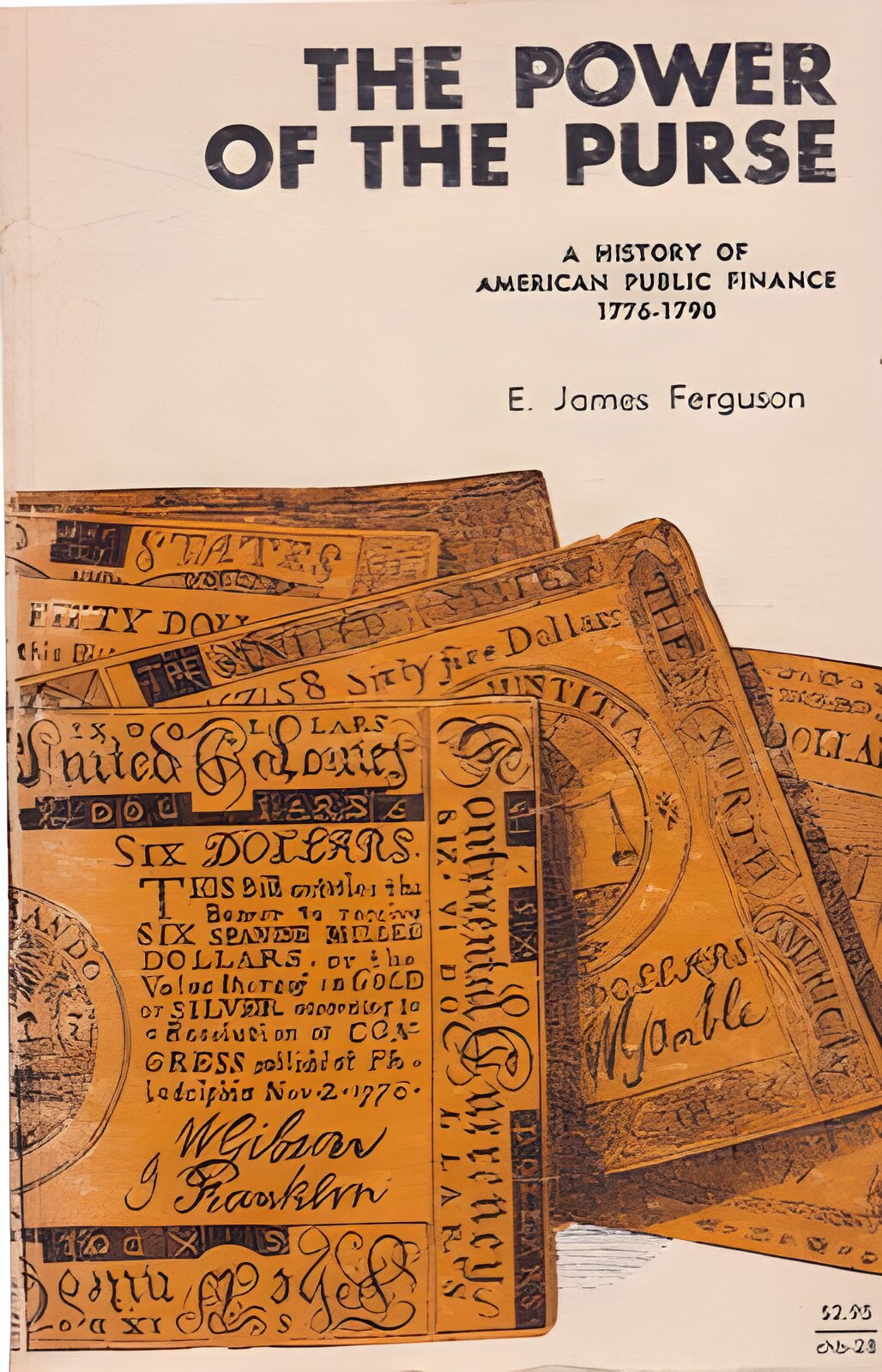
Softcover. Chapel Hill, University of North Carolina Press, 1st, 1961, Book: Very Good, Dust Jacket: None, Softcover, 358 pages with index. In The Power of the Purse, E. James Ferguson examines the intricate financial history of the American Revolution and the Confederation and connects it to political and constitutional developments in the period. Whether states or Congress should pay the debts of the Revolution and collect the taxes was a pivotal question whose solution would largely determine the country's progress toward national union. Ultimately, says Ferguson, the Revolutionary debt fulfilled an important purpose as a "bond of union." Ferguson's masterful analysis has become a classic among the literature on the American Revolution. Name on front fly leaf, otherwise clean.
Hardcover. Omohundro Institute/University of North Carolina Press, 1st, 2004, Book: Very Good, Dust Jacket: Very Good, Hardcover in a bright dust jacket, 349 pages. In an examination of transatlantic Puritanism from 1570 to 1638, Theodore Dwight Bozeman analyzes the quest for purity through sanctification. The word "Puritan," he says, accurately depicts a major and often obsessive trait of the English late Reformation. He argues forcefully for the various movements in England and New England termed 'antinomianism' to be seen as sustained protests against and deliberate alternatives to this great and defining Puritan achievement in practical divinity.
Cambridge UK, Cambridge University Press, reprint, 1994, Book: Very Good, Dust Jacket: None, Softcover, 240 pages, b&w illustrations, diagrams. The exploration and colonisation of the Pacific is a remarkable episode of human prehistory. Early sea-going explorers had no prior knowledge of Pacific geography, no documents to record their route, no metal, no instruments for measuring time and none for exploration. Forty years of modern archaeology, experimental voyages in rafts, and computer simulations of voyages have produced an enormous range of literature on this controversial and mysterious subject. This book represents a major advance in knowledge of the settlement of the Pacific by suggesting that exploration was rapid and purposeful, undertaken systematically, and that navigation methods progressively improved. Using an innovative model to establish a detailed theory of navigation, Geoffrey Irwin claims that rather than sailing randomly downwind in search of the unknown, Pacific Islanders expanded settlement by the cautious strategy of exploring upwind, so as to ease their safe return. The author has tested this hypothesis against the chronological data from archaeological investigation, with a computer simulation of demographic and exploration patterns and by sailing throughout the region himself. Clean copy.
Hardcover. NY, Praeger Publishers, 1st US, 1969, Book: Very Good, Dust Jacket: Very Good, Hardcover in an unclipped dust jacket with light edgewear, faded spine. 276 pages, 81 photos, 27 drawings, 11 maps. Volume 65 in the series 'Ancient People and Places', edited by Glyn Daniel. Owner name inked on inside front cover, otherwise clean.
Softcover. Albany NY, Mount Ida Press, 1st, 2001, Book: Very Good, Dust Jacket: None, Softcover, B&w photos and plans; 11" - 13" tall; 160 pages. Traces the history of Roosevelt?s long-forgotten retreat near Hyde Park? from the president?'s original drawings for the modest, two-bedroom cottage to its recent preservation by the Open Space Institute, the Franklin and Eleanor Roosevelt Institute and the National Park Service. Examines Top Cottage as a symbol of Roosevelt?s love of the Hudson Valley and as one of the country?s first barrier-free buildings. Top Cottage joins Thomas Jefferson?s Monticello and Poplar Forest as the only homes designed by a U. S. President while in office. Clean copy.
Hardcover. Flesk Publications, 1st, 2008, Book: Very Good, Dust Jacket: None, Hardcover, 112 pages. The Prince Valiant Page is the first book collection featuring Gary Gianni's work on Prince Valiant. This book gives a well-rounded informative look at both Gianni's rendition of the Prince Valiant Sunday strip and his own working procedures. After 25 years as a professional illustrator, Gianni describes his new role as an assistant to John Cullen Murphy (who assisted Hal Foster--Prince Valiant's creator). Upon Murphy's retirement, Gianni became the third artist in the 70-year history of the feature. It continues with in-depth knowledge of the strip's creative process (i.e., receiving the script, photographing models, making preliminary drawings and pencil roughs, then concluding with the finished illustrations). Supporting artwork includes collaborations between Murphy and Gianni, with Murphy's hand written notes and instructions. Examples of Gianni's work over the previous thirty years as a professional illustrator are included as well
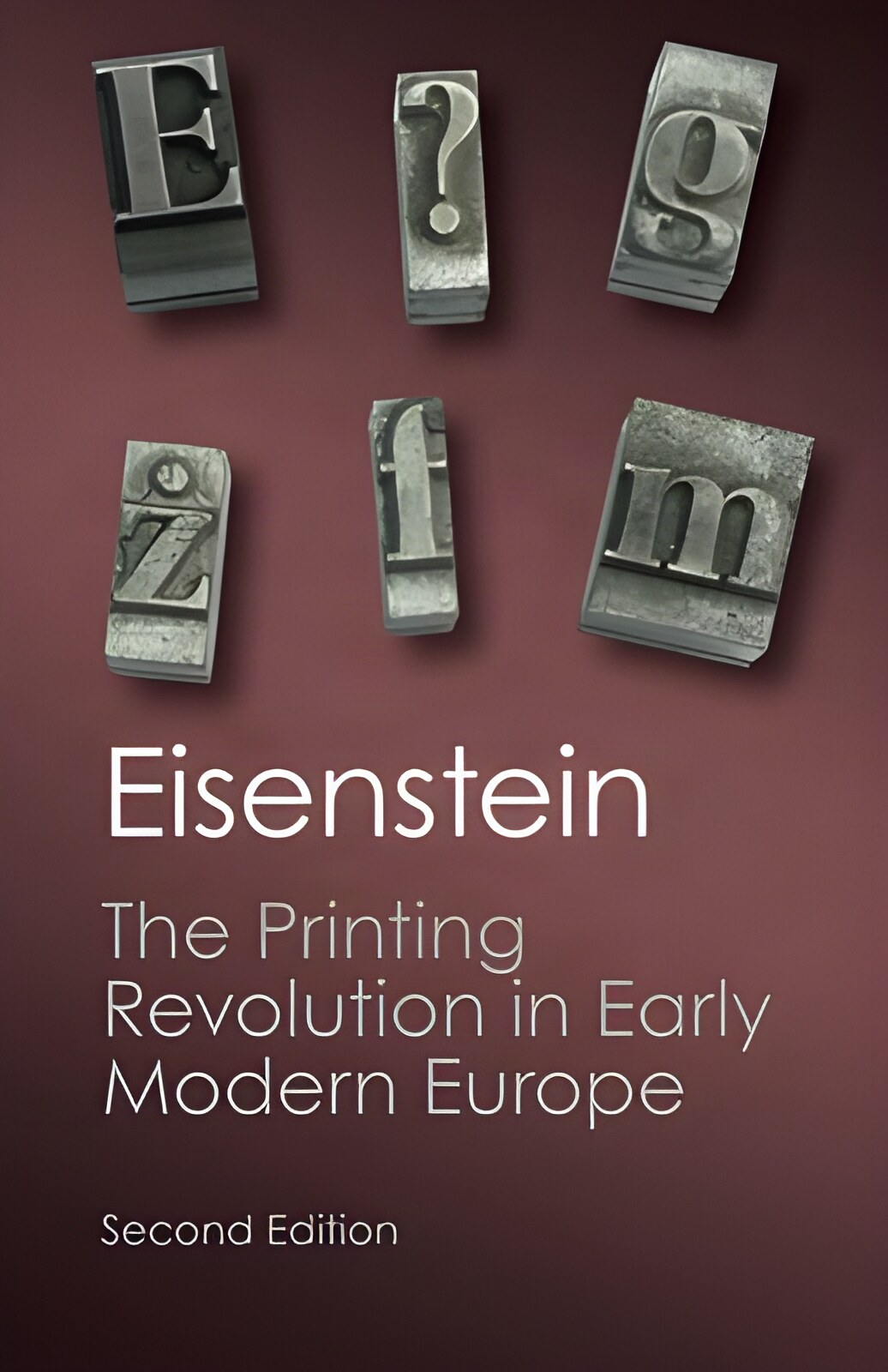
Softcover. UK, Cambridge University Press, reprint, 2012, Book: Very Good, Dust Jacket: None, Softcover, 384 pages, b&w illustrations. In 1979 Elizabeth Eisenstein provided the first full-scale treatment of the fifteenth-century printing revolution in the West in her monumental two-volume work, The Printing Press as an Agent of Change. This abridged edition, after summarising the initial changes introduced by the establishment of printing shops, goes on to discuss how printing challenged traditional institutions and affected three major cultural movements: the Renaissance, the Reformation, and the rise of modern science. Also included is a later essay which aims to demonstrate that the cumulative processes created by printing are likely to persist despite the recent development of new communications technologies. Clean copy.
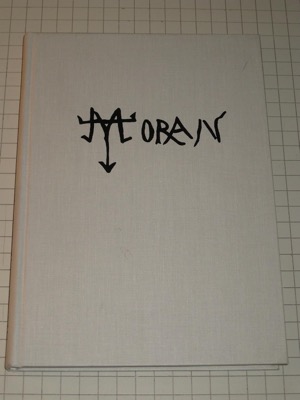
Tulsa OK, Thomas Gilcrease Museum, 1st, 1986, Book: Very Good, Dust Jacket: None, Hardcover. light gray cloth with black lettering, 255 pages, b&w plates throughout. Thomas Moran (1837-1926) from Bolton, England was an American painter & printmaker of the Hudson River School in New York whose work often featured the Rocky Mountains. This catalog features 129 prints with extensive notes. Bibliography and index. Bright, clean copy.
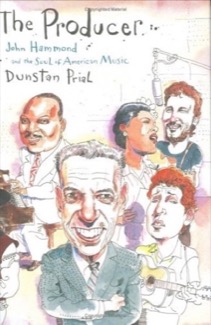
Hardcover. NY, Farrar Straus Giroux, 1st, 2006, Book: Very Good, Dust Jacket: Very Good, Hardcover in a bright dust jacket, 347 pages. In this first biography focusing on John Hammond, the charismatic American music producer is brought to life by journalist Dunston Prial. Hammond was renowned for his ability to spot new talent, introducing the world to some of most gifted musicians of early jazz- Billie Holiday, Count Basie, and Charlie Christian. Then, as jazz gave way to pop and rock, Hammond staged an amazing second act discovering Bob Dylan, Aretha Franklin, Bruce Springsteen, and Stevie Ray Vaughan. 'The Producer' covers Hammond's entire story from his heyday as a music producer to his privileged upbringing as a Vanderbilt. This is a story of an American music in all its rough-edged vitality. Clean copy.
Hardcover. Boyds Mills Press, 1st, 2002, Book: Very Good, Dust Jacket: Very Good, Hardcover in a bright dust jacket. Long ago in a part of the world once known as Mesopotamia, a nomadic tribesman led his people through the wilderness in search of a mystical land called Canaan. This journey would change the course of human history. Since that time, entire civilizations have flourished and vanished, along with their religions. Only one people has survived the tumult of the centuries--the Jews. What accounts for their remarkable survival? Neil Waldman tells the story of the Jewish people from their arrival in Canaan to the Exodus from Egypt. His paintings capture emotional scenes of Jewish life in the ancient world and in Europe. He shows how generation upon generation of Jews, in the face of profound crisis, have drawn strength from God's promise of a land flowing with milk and honey. The key to the Jewish people's survival is found in the story of their birth. Clean copy.

 "The Political Thought of John Locke: An Historical Account of the Argument of the 'Two Treatises of Government'by: Dunn, John/John Locke")


 "The Politics of Provincialism: The Democratic Party in Transition 1918-1932 by: David Burner")


 "The Post-Darwinian Controversies: A Study of the Protestant Struggle to Come to Terms with Darwin in Great Britain and America, 1870-1900 by: Moore, James R.")
 "The Power of Limits: Proportional Harmonies in Nature, Art, and Architectureby: Doczi, Gyorgy")

 "The Prehistoric Exploration and Colonisation of the Pacific by: Geoffrey Irwin")
 "The Prehistory of Australia by: Mulvaney, D.J.")


 "The Prince Valiant Pageby: Gary Gianni")


 "The Promised Land: The Birth of the Jewish People by: Neil Waldman")
 "The Prose Works of William Byrd of Westover: Narratives of a Colonial Virginianby: Wright, Louis B {Edited by}")