Softcover. NY, Da Capo Press, reprint, 2000, Book: Very Good, Dust Jacket: None, Softcover, 449 pages, b&w illustrations. Man Ray was the quintessential modernist figure - painter, sculptor, photographer, filmmaker, poet, and philosopher. One of the most fascinating of the Surrealists who transformed the Paris art world during the 1920s, Man Ray was an enigma - a Dadaist who revered the Old Masters, an anarchist pursued by wealthy patrons. Driven to make his mark in as many art forms as possible, he struggled bitterly to win acceptance as a painter even as his skill as a photographer brought him world wide fame. Remainder line to bottom edge, otherwise clean.
Hardcover. Preinceton NJ, Princeton University Press, 2nd pr., 2006, Book: Very Good, Dust Jacket: Very Good, Hardcover in a bright, unclipped dust jacket. "What is abstract art good for? What's the use-for us as individuals, or for any society-of pictures of nothing, of paintings and sculptures or prints or drawings that do not seem to show anything except themselves?" In this invigorating account of abstract art since Jackson Pollock, eminent art historian Kirk Varnedoe, the former chief curator of painting and sculpture at the Museum of Modern Art, asks these and other questions as he frankly confronts the uncertainties we may have about the nonrepresentational art produced in the past five decades. He makes a compelling argument for its history and value, much as E. H. Gombrich tackled representation fifty years ago in Art and Illusion, another landmark A. W. Mellon Lectures volume. Realizing that these lectures might be his final work, Varnedoe conceived of them as a statement of his faith in modern art and as the culminating example of his lucidly pragmatic and philosophical approach to art history. He delivered the lectures, edited and reproduced here with their illustrations, to overflowing crowds at the National Gallery of Art in Washington in the spring of 2003, just months before his death. 297 pages; approx. 250 color and bw figures. Remains a nice, sharp and bright copy.
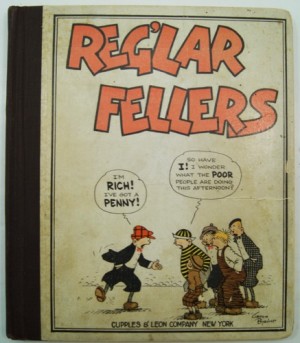
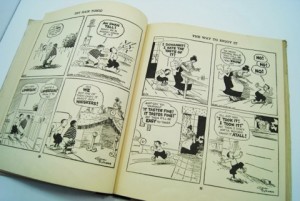
Hardcover. New York, Cupples & Leon, 1st, 1929, Book: Very Good, Dust Jacket: None, Publisher's cloth-backed boards illustrated in color, 86 pages of b&w cartoons reprinted from the New York Herald Tribune, most dated 1927. Light use to edges of boards; tight and sound, no markings.
Hardcover. New York, Monacelli Press, 1st, 2005, Book: Very Good, Dust Jacket: Very Good, 352 pages, numerous illustrations. Pictorial boards in clear plastic dust jacket. Beautiful copy. Like new, in shrinkwrap.
Softcover. Boston, University of Massachusetts Press, 1st, 1991, Book: Very Good, Dust Jacket: None, Softcover, 116 pages, 68 color, 14 b&w plates. Indochina Arts Project of the William Joiner Foundation. Essays by Quach Van Phong. Tran Viet Son, Lucy R Lippard and David Kunzle. Clean copy.
Softcover. Germany, Steidl, 1st, 2015, Book: Very Good, Dust Jacket: None, 96 pages. Softcover. Very clean, unmarked copy still in publishers shrink-wrap. Color photographs throughout. This combination of portraiture, still-life and landscape photography mirrors the eclectic influences and materials which Ghesquiere synthesizes in his collections a bold, unconventional flow whereby innovation unceasingly rejuvenates tradition.
Hardcover. Tokyo, Kodansha, 1st, 1967, Book: Very Good, Dust Jacket: Very Good, Hardcover, 187 pages. Large format. Illustrated with full color and black & white examples of of fine contemporary prints from Japan. Dust jacket shows wear with dime sized chunk missing at top of spine and piece missing at bottom left corner of rear flap. Clean, tight copy. May require additional postage. "Contemporary Japanese Prints" is a fine, beautifully printed folio book--just the way art books should be. Written by a key art historian and critic as well as museum director, it serves as an excellent and eye-opening overview of just what the straightforward title indicates, artistic prints by Japanese artists then currently active as of 1967. Kawakita's introduction is clear and concise but properly informative, defining this art form's general characteristics and then outlining its modern history, starting with its rise in the early twentieth century. Contrary to what one might expect, these prints are almost totally unrelated to Japan's rather famous ukiyo-e prints of the early modern period, these modern "hanga" instead representing the creative vision and artistic labor of one individual artist. And well, a picture's worth a thousand words, so the bulk of the book presents a selection of 150 prints by 119 artists--47 color plates and 103 monochrome plates.

 "Man Ray: American Artist by: Baldwin, Neil")
 "Pictures of Nothing: Abstract Art since Pollock (The A. W. Mellon Lectures in the Fine Arts, 38)by: Kirk Varnedoe , Adam Gopnik, et al.")
 "Reg'lar Fellersby: Byrnes, Gene")
 "Emotion as Promotionby: Valicenti , Rick")
 "As Seen by Both Sides: American and Vietnamese Artists Look at the War by: Thomas C. David (Ed.)")
 "Perpetuating the Culture: African Images of Mother and Childby: Gilbert Graham/Herbert Cole")
 "The Flow: Louis Vuitton, Spring-Summer 2015by: Teller, Juergen (Photographer)")
 "Contemporary Japanese Printsby: Kawakita, Michiaki")