Hardcover. Cambridge, W. Heffer & Sons, Revised, 1928, Book: Very Good, Dust Jacket: None, 94 pages. Hardcover with no dust jacket. A few minor margin marks in pencil. Dark blue cover boards.
Softcover. Evanston IL, Northwestern University Press, reprint, Book: Very Good, Dust Jacket: None, Softcover, 333 pages. A work about the problems in the philosophy of history by the French hermeneutic phenomenologist. Introduction by Charles A. Kelbley; Foreword by David M. Rasmussen. Clean copy.
Hardcover. London, England, Routledge & Kegan Paul Limited, 1st Editions, 1950, Book: Very Good, Dust Jacket: None, International Library of Sociology and Social Reconstruction. Two Volumes: Vol. 1: 352 pages. Vol. 2: 706 pages plus publisher ads. Previous owner's name on front flyleafs. Green cloth cover boards, gilt title on spine, fading to boards, especially to spines. Binding tight. Spines straight. Pages/edges have light tanning, otherwise clean. Appearing in isolation as they do, autobiographies demand for their description and appreciation, a comprehensive view of the development of the human mind. DOMESTIC SHIPPING ONLY.
Hardcover. Poona, Bhandarkar Oriental Research Institute, 1st Thus, 1962, Book: Very Good, Dust Jacket: None, Vol. V - Part II-only. Hardcover. 992 pages of main text plus Epilogue, and 269 page Index. Previous owners name at top of front endpaper. Light wear. Clean, tight copy.
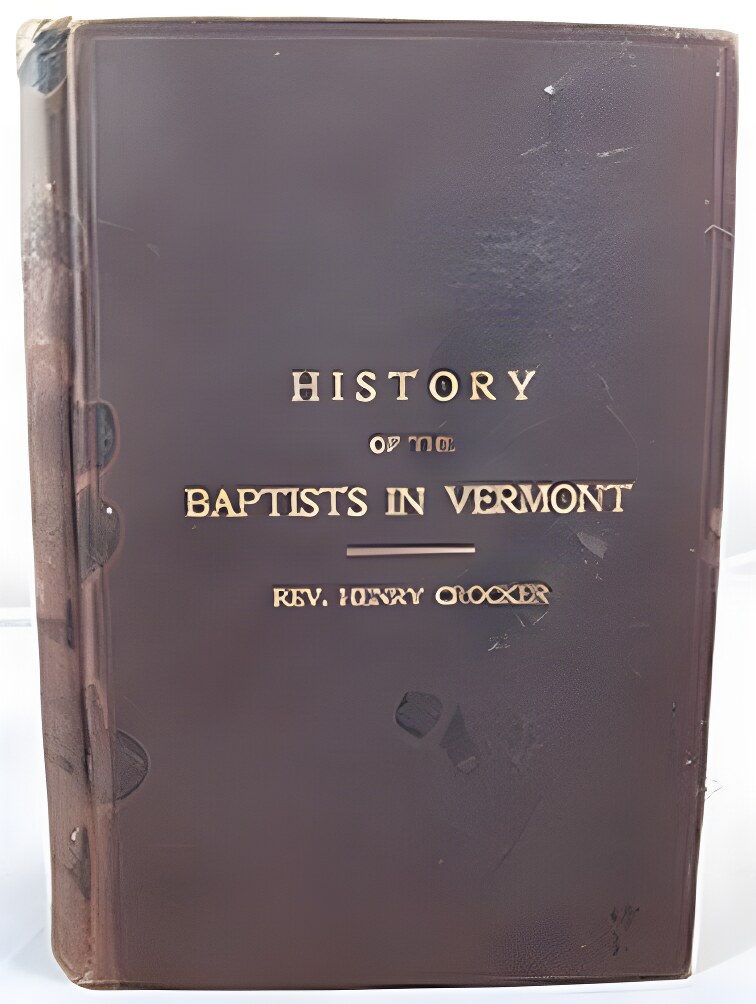
Hardcover. Bellows Falls, Vermont Baptists, 1st, 1913, Book: Good, Dust Jacket: None, 700 pages. Hardcover. Illustrated with black & white. Front and back interior hinges cracked. Tears to cloth along front exterior hinge. Stains along spine and front cover - wood varnish? Notation in blue ink at top right corner of front endpaper. Good reference copy.
Hardcover. Rockland, C. E. Hunt & Co., 1st, 1878, Book: Fair, Ends at page 502; MIssing back pages. B&w frontispiece and illustrations throughout. Ornately decorated red cloth cover with gilt titles and decoration. Cover separated with soiling, rubbing, and edgewear. Foxing to edges and some light spotting throughout.
Hardcover. NY, Viking, 1st, 1999, Book: Very Good, Dust Jacket: Very Good, Hardcover in a bright, unclipped dust jacket, 430 pages. In this book, backed by a wealth of new research, the author tells for the first time the story of the career of Eugenio Pacelli, the man who as Pius XII was Pope during the Second World War and arguably the most powerful churchman in modern history. Adding to the continuing debate about collective guilt and the Holocaust this is an extraordinary and explosive history. In the first decade of the century, as a brilliant young lawyer, Pacelli helped shape an ideology of unprecedented papal power; during the 1920s he employed cunning and moral blackmail to impose that power in Germany. In 1933 Hitler became his perfect negotiating partner and a concordat was established that granted religious and educational advantages to the Catholic Church in exchange for Catholic withdrawal from social and political action. This 'voluntary' abdication of political Catholicism imposed from Rome facilitated the rise of Nazism. Clean copy.
Hardcover. New York , The Macmillan Company, 1st U.S., 1953, Book: Very Good, Dust Jacket: Good, 141 pages. Red cloth cover in good condition. Inside bright, clean and crisp. Dust jacket has some wear. Frontispiece has b&w illustration of the opening verses of the Koran. A nice copy.
Hardcover. NY, Oxford University Press, 1st, 2012, Book: Very Good, Dust Jacket: Very Good, Hardcover in a bright dust jacket, 365 pages. Holy war, sanctioned or even commanded by God, is a common and recurring theme in the Hebrew Bible. Rabbinic Judaism, however, largely avoided discussion of holy war in the Talmud and related literatures for the simple reason that it became dangerous and self-destructive. Reuven Firestone's Holy War in Judaism is the first book to consider how the concept of ''holy war'' disappeared from Jewish thought for almost 2000 years, only to reemerge with renewed vigor in modern times. The revival of the holy war idea occurred with the rise of Zionism. As the necessity of organized Jewish engagement in military actions developed, Orthodox Jews faced a dilemma. There was great need for all to engage in combat for the survival of the infant state of Israel, but the Talmudic rabbis had virtually eliminated divine authorization for Jews to fight in Jewish armies. Once the notion of divinely sanctioned warring was revived, it became available to Jews who considered that the historical context justified more aggressive forms of warring.
Hardcover. New York, McCall Publishing, 1st, 1971, Book: Very Good, Dust Jacket: None, Hardcover, glazed boards illustrated in color. Unpaginated, b&w cartoon illustrations by the Berenstains. Clean copy.
Hardcover. NY/London, Oxford University Press, 1st, 2011, Book: Very Good, Dust Jacket: Very Good, Hardcover in a bright, unclipped dust jacket, 470 pages. This central volume in the Collected Essays brings together John Finnis's wide-ranging contribution to central issues in political philosophy. The volume begins by examining the general theory of political community and social justice. It includes the powerful and well-known Maccabaean Lecture on Bills of Rights -- a searching critique of Ronald Dworkin's moral-political arguments and conclusions, of the European Court of Human Rights' approach to fundamental rights, and of judicial review as a constitutional institution. It is followed by an equally searching analysis of Kant's thought on the intersection of law, right, and ethics. Other papers in the book's opening section include an early assessment of Rawls's A Theory of Justice, a radical re-interpretation of Aquinas on limited government and the significance of the private/public distinction, and a challenging paper on virtue and the constitution. The volume then focuses on central problems in modern political communities, including the achievement of justice in work and distribution; the practice of punishment; war and justice; the public control of euthanasia and abortion; and the nature of marriage and the common good. There are careful and vigorous critiques of Nietzsche on morality, Hart on punishment, Dworkin on the enforcement of morality and on euthanasia, Rawls on justice and law, Thomson on the woman's right to choose, Habermas on abortion, Nussbaum and Koppelman on same-sex relations, and Dummett and Weithman on open borders. The volume's previously unpublished papers include a foundational consideration of labor unions, a fresh statement of a new grounding for the morality of sex, a surprising reading of C.S. Lewis's Abolition of Man on contraception, and an introduction reviewing some of the remarkable changes in private and public morality over the past half-century.
Softcover. Urbana IL, University of Illinois Press, 1st pbk, 2006, Book: Very Good, Dust Jacket: None, Softcover, 83 pages. In Humanism of the Other, Emmanuel Levinas argues that it is not only possible but of the highest exigency to understand one's humanity through the humanity of others. In paperback for the first time, Levinas's work here is based in a new appreciation for ethics and takes new distances from phenomenology, idealism, and skepticism to rehabilitate humanism and restore its promises. Painfully aware of the long history of dehumanization that reached its apotheosis in Hitler and Nazism, Levinas does not underestimate the difficulty of reconciling oneself with another. The humanity of the human, Levinas argues, is not discoverable through mathematics, rational metaphysics, or introspection. Rather, it is found in the recognition that the other person comes first, that the suffering and mortality of others are the obligations and morality of the self. Clean copy.
Hardcover. Cambridge MA, Harvard University Press, 1st, 1963, Book: Very Good, Dust Jacket: Very Good, Hardcover, 184 pages, maroon cloth with a lightly worn dust jacket. Previous owner's signature, pencil notes on front end paper. Otherwise clean. These studies concern the development in the Renaissance of a new perspective on the past, a new method for interpreting the meaning of the documents of the past, and a reformulation of traditional doctrine that history was philosophy teaching by example.
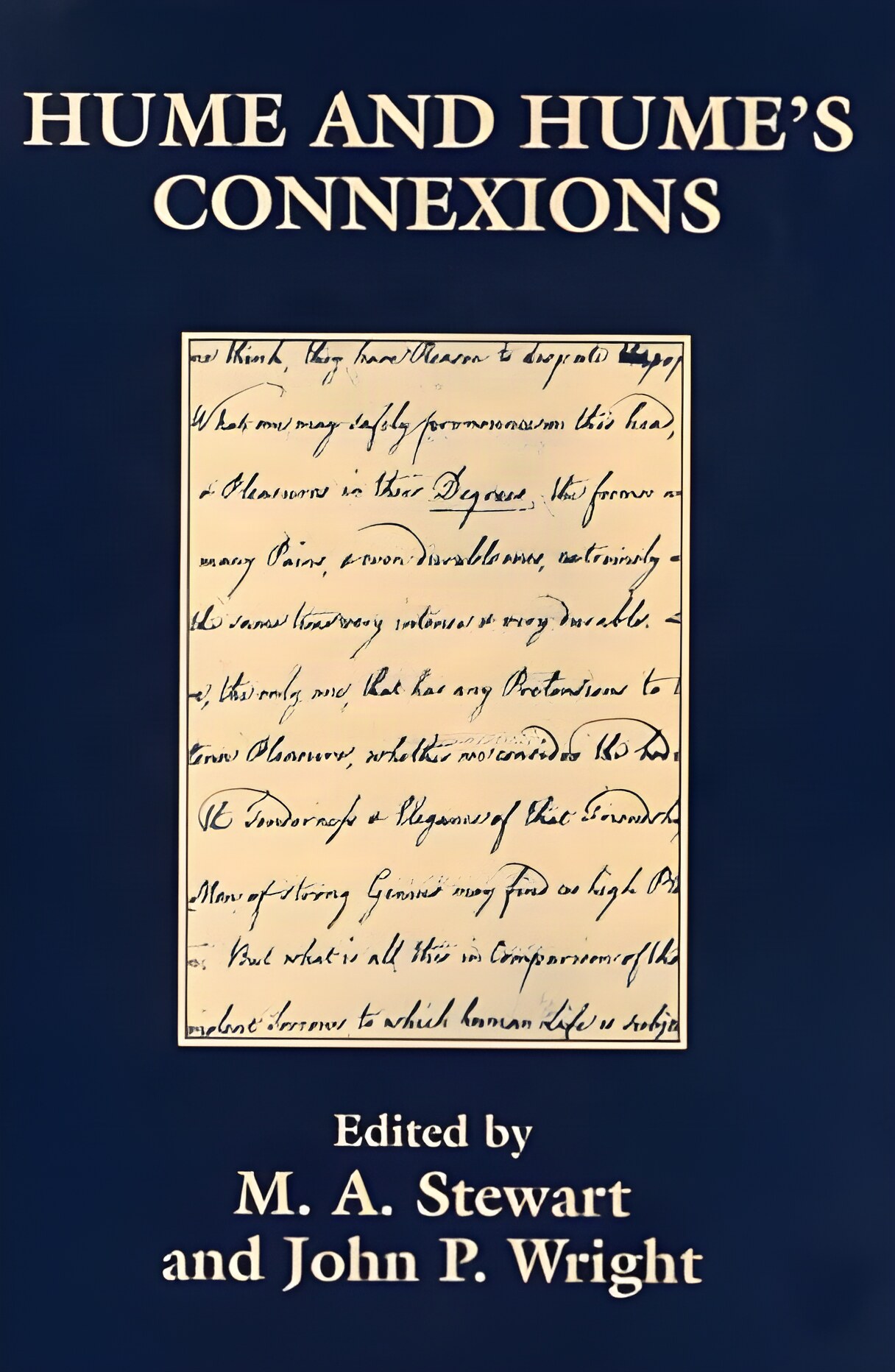
Hardcover. Edinburgh, Edinburgh University Press, 1st, 1994, Book: Very Good, Dust Jacket: Very Good, Hardcover in a bright dust jacket, 266 pages. Presenting new research on the moral and religious philosophy of David Hume, this volume tries to illustrate the importance of intellectual context in understanding the work and career of one of the most important thinkers of the 18th Century. The essays fall into three broad groups. The first looks at Hume's work as a moral philosopher, re-evaluating his place in the sceptical, utilitarian, and natural-law traditions. The second reassesses his work in moral psychology and the science of hte mind in the light of new research on 17th and 18th century sources. A final group, which examines Hume's critique of religion in its literary, historical, and philosophical aspects, includes an edited transcription of a new manuscript on the problem of evil. Clean copy.
Hardcover. Edinburgh, Edinburgh University Press, 1st, 1982, Book: Very Good, Dust Jacket: Very Good, Hardcover in a dust jacket with fading to spine, 230 pages. The author substantially revises the view that Hume's main intellectual debts are to Newton and Hutcheson. The book traces the deep and pervasive influence of Cicero on Hume's thought and the impact of French philosophers such as Malebranche. Name on front fly leaf, otherwise clean.
Softcover. Los Angeles, Wilshire Book Company, reprint, 1971, Book: Very Good, Dust Jacket: None, Softcover, 167 pages. Author name spelled Wynn on cover and Winn on title page. Has 1939 and 1956 dates on the copyright page. Clean, tight copy.
NY, Lothrop, Lee & Shepard, 1st, 1980, Book: Very Good, Dust Jacket: Very Good, Non-paginated. Hardcover with dust jacket. Color illustrations by Charles Mikolaycak. Tight copy.
Softcover. Oxford UK, Oneworld, 1st, 2005, Book: Very Good, Dust Jacket: None, Softcover, 152 pages. Renowned expert William Chittick covers the life and works of this legendary Sufi writer. The importance of Muhyi al-Din Ibn al-Arabi (1165-1240) for Islamic mysticism lies in the fact that he was a speculative thinker of the highest order, albeit diffuse and difficult to understand. His central doctrine is the unity of all existence. In this text, William Chittick explores how, through the work of Ibn Al-Arabi, Sufism moves away from anguished and ascetic searchings of the heart also conscience and becomes a matter of speculative philosophy and theosophy. Ex-lib with stamping and stickers on front endpapers, cover, otherwise clean.
Hardcover. New York, Twayne Publishers, 1st , 1972, Book: Very Good, Dust Jacket: None, 246 pages. Previous owner's signature on front flyleaf. Light spotting to edges. Very minor rubbing to cover edges. A nice, clean copy.
Hardcover. Leiden, Netherlands, E. J. Brill, 1st, 1976, Book: Very Good, Dust Jacket: None, Hardcover, 377 pages. Blue cloth, gilt lettering to front and spine, no dust jacket. Light wear and smudges to covers. Clean, tight copy in excellent condition.

 "Historical Account of The Church Hymnary: Revised Edition, Anby: Kinloch, T.F.")

 "History of Autobiography in Antiquity (Two Volumes)by: Misch, Georg, Dr. Karl Mannheim (Editor)")


 "History of Dharmasastra - Vol. V - Part IIby: Kane, Pandurang Vaman")
 "History of the Buddhist Sangha in India and Sri Lanka by: Panabokke, Gunarantne")
 "History of Turkey and the War in the Eastby: Hammond, R. A.")

 "Holy Koran, The: An Introduction with Selectionsby: Arberry, A. J.")

 "Horae Lyricae. Poems Chiefly of the Lyric Kind in Three Books Sacred to the Devotation and Piety, to Virtue, Honour and Friendship to the Memory of the Deadby: Watts")
 "How to teach your children about God: Without actually scaring them out of their witsby: Berenstain, Stan and Jan")



 "Hypnotism Made Easyby: Ralph Wynn")



 "Ibn Tufayl's Hayy Ibn Yaqzanby: Goodman, Lenn Evan")
