Hardcover. NY, The Viking Press, reprint, 1956, Book: Very Good, Hardcover, tan cloth covers with brown lettering, 187/189 pages. Lyrics with music and a preface of the songs. Two volumes in one. No dust jacket. Inscription on front fly leaf, otherwise clean.
Hardcover. London, The Folio Society, 4th pr., 2007, Book: Very Good, Dust Jacket: None, Hardcover. Ornamented with wood cuts from designs of Albert Durer, Hans Holbein, and others. In imitation of Queen Elizabeth's Book of Christian Prayers. Foreword by Sir Patrick Cormack. Quarter bound in green leather with gilt design over marbled paper, gilded head, green stained edges, frontispiece, place ribbon, green slipcase with gilt design. Facsimile of the 1853 edition by William Pickering and Charles Whittingham the Younger. A pristine copy with slipcase.
Softcover. Cambridge UK, Cambridge University Press, 1st, 1970, Book: Very Good, Dust Jacket: None, Softcover, 310 pages. One of the incidental consequences of the success of British arms in eighteenth-century India was the appearance of a number of publications which reflect the intense curiosity of contemporary Europeans about strange peoples, their manners and religions. Of the three principal religions of India, Hinduism attracted the most attention. European contact with Islam was several centuries old, while few travellers could identify Buddhism with any certainty. This book reprints some of the most significant English contributions to the early European understanding of Hinduism. Paper covers with light wear.
Hardcover. London, Ruskin House, George Allen and Unwin, 1st, 1959, Book: Very Good, Dust Jacket: Good, Hardcover in a worn dust jacket, 194 pages. This study traces the origin of Buddhism in Brahmanism, and fixes its relationship to Hinduism, describing and stressing the basic importance of Buddhist contemplation. No markings.
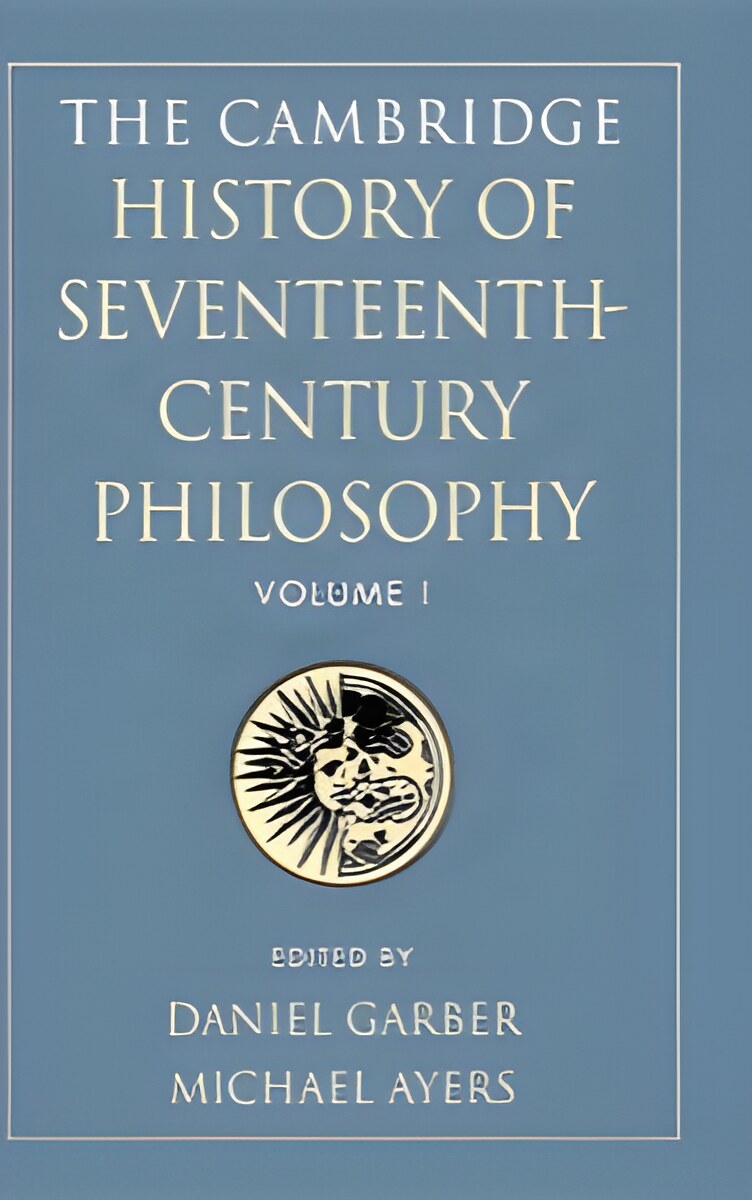
Hardcover. Cambridge UK, Cambridge University Press, 1st, 1998, Book: Very Good, Dust Jacket: Very Good, Hardcover in a dust jacket with mild fading to spine, 949 pages. Volume 1 only of a 2-volume set. The Cambridge History of Seventeenth-Century Philosophy offers a uniquely comprehensive and authoritative overview of early-modern philosophy written by an international team of specialists. As with previous Cambridge Histories of Philosophy the subject is treated by topic and theme, and since history does not come packaged in neat bundles, the subject is also treated with great temporal flexibility, incorporating frequent reference to medieval and Renaissance ideas. The basic structure corresponds to the way an educated seventeenth-century European might have organized the domain of philosophy. Thus, the history of science, religious doctrine, and politics feature very prominently. Name on front fly leaf, about 12 pages with light pencil markings. Otherwise clean.
Hardcover. Montreal, McGill-Queen's University Press, 1st, 1997, Book: Very Good, Dust Jacket: None, Hardcover, gray cloth stamped in black. 164 pages. The Career of Toleration considers the Locke-Proast controversy from the standpoint of political theory, examining Locke's and Proast's texts and tracing their relationship to later discussions of toleration. Vernon reconstructs the grounds of the dispute, drawing attention to the long-term importance of the arguments and evaluating their relative strength. He then examines issues of toleration in later contexts, specifically James Fitzjames Stephen's critique of John Stuart Mill, the perfectionist alternative to contractualist liberalism, and the view that the traditional attachment to toleration must, by the force of its own arguments, move from liberalism to a defence of a much stronger form of democracy. Arguing that Locke's and Proast's exchange marks a turning point in the intellectual history that has helped to structure the terms of modern political debate, Vernon presents a solid case for thinking that the exchange between Locke and Proast is as important for the twentieth century as it was for the seventeenth. Bright, clean copy.
Softcover. Paderborn GER, Mentis, 1st, 2002, Book: Very Good, Dust Jacket: None, Softcover, 199 pages. INSCRIBED BY AUTHOR on the front fly leaf. This book investigates whether knowledge is closed under known entailment. Clean copy.
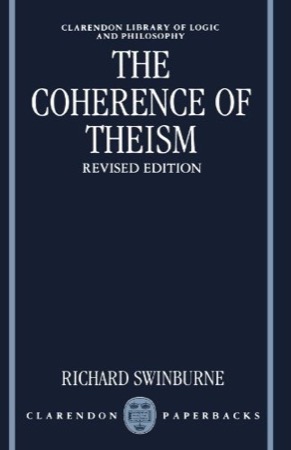
Softcover. Oxford UK, Clarendon Press, Revised Ed., 1993, Book: Very Good, Dust Jacket: None, Softcover, 312 pages. This book investigates what it means, and whether it is coherent, to say that there is a God. The author concludes that, despite philosophical objections, the claims which religious believers make about God are generally coherent; and that although some important claims are coherent only if the words by which they are expressed are being used in stretched or analogical senses, this is in fact the way in which theologians have usually claimed they are being used. This revised edition includes various minor corrections and clarifications. Name on front fly leaf, otherwise clean.
Hardcover. NY, St. Martin's Press, 1st, 1963, Book: Very Good, Dust Jacket: None, Hardcover, blue cloth with gold lettering on spine, 272 pages. The nine essays compiled in this work deal with the nature of philosophical arguments and the degree to which they are linguistic; the possibility and status of private experience; the criteria of personal identity and the relation between mind and body; the interplay of the referential and descriptive functions of language; the criteria of truth; the interpretation of judgments of probability; the distinction between generalizations of law and generalizations of fact; and the status of judgments about the future and the question of free will and determinism. New theories are advanced and old theories are criticized. Bright, clean copy, lacks dust jacket.
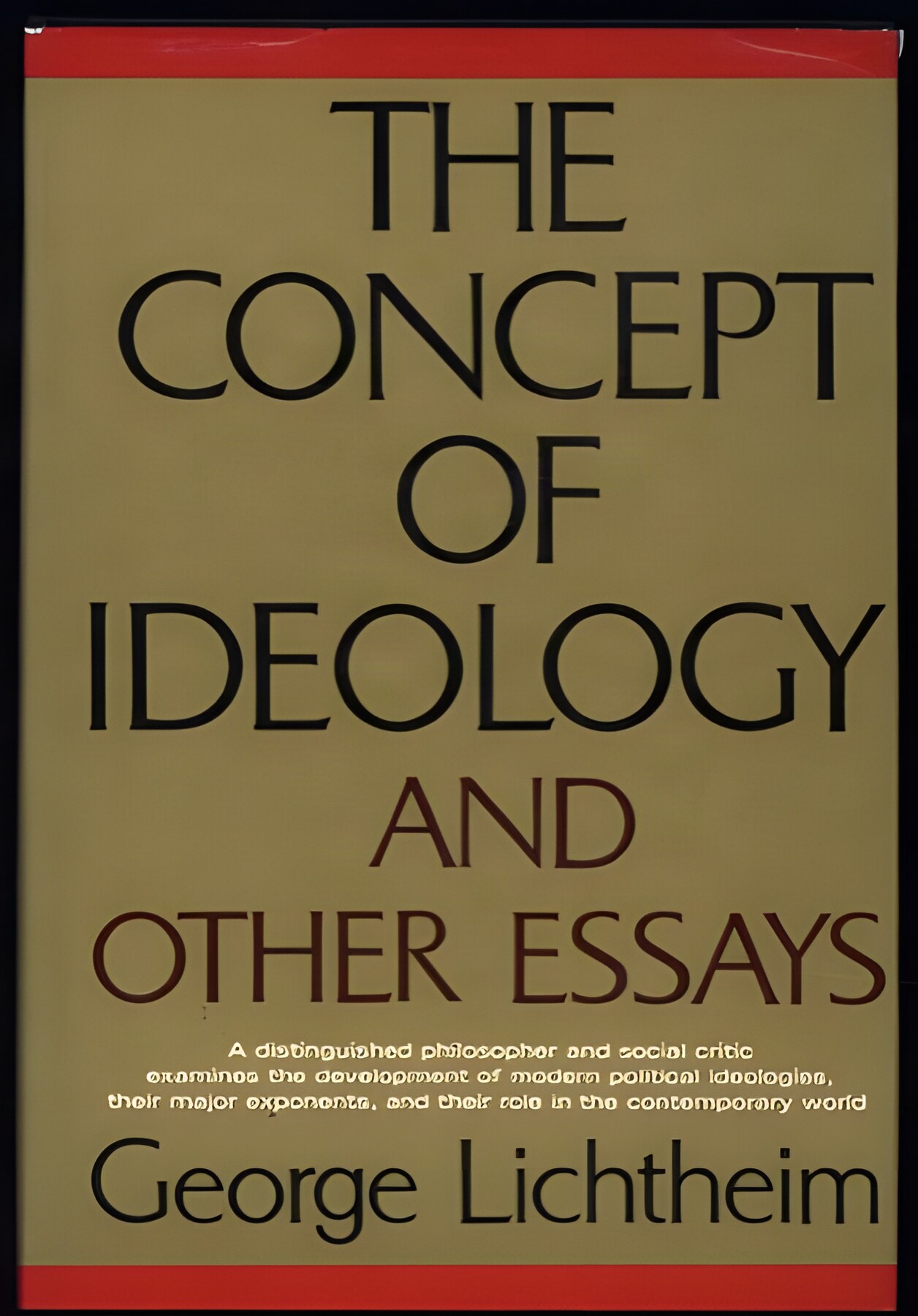
Hardcover. NY, Random House, 1st, 1967, Book: Very Good, Dust Jacket: Very Good, Hardcover in a bright, unclipped dust jacket, 327 pages. George Lichtheim (1912-1973) was a German-born intellectual whose works focused on the history and theory of socialism and Marxism. He defined himself as a socialist and stated in a 1964 letter to the New York Review of Books that "I am not a liberal and never have been. I find liberalism almost as boring as communism and have no wish to be drawn into an argument over which of these two antiquated creeds is less likely to advance us any further." His work appeared in the Palestine Post, Commentary, Partisan Review, Dissent, the New Leader, Encounter, the Times Literary Supplement and the New York Review of Books. Additionally, he translated Gershom Scholem's Main Currents in Jewish Mysticism. His death was by suicide. Clean, tight copy.
Hardcover. UK, Cambridge at the University Press, 2nd pr., 1926, Book: Very Good, Dust Jacket: None, Hardcover, dark blue cloth with gilt lettering on spine, 202 pages. When The Concept of Nature by Alfred North Whitehead was first published in 1920 it was declared to be one of the most important works on the relation between philosophy and science for many years, and several generations later it continues to deserve careful attention. This is the second printing published six years later. Whitehead explores the fundamental problems of substance, space and time, and offers a criticism of Einstein's method of interpreting results while developing his own well-known theory of the four-dimensional 'space-time manifold'. Name on front fly leaf, light pencil notations to 15 pages.
Hardcover. NY, Verso, 1st, 2021, Book: Very Good, Dust Jacket: Very Good, Hardcover in a bright dust jacket, 241 pages. In essays that range from ancient Greece to the end of the Anthropocene, Bull addresses questions central to contemporary political theory in novel readings of texts by Aristotle, Machiavelli, Marx, and Arendt, and shows how classic philosophical problems have a bearing on issues like political protest and climate change. The result is an entirely original account of political agency for the twenty-first century in which uncertainty and idleness are limned with utopian promise. Clean, bright copy.
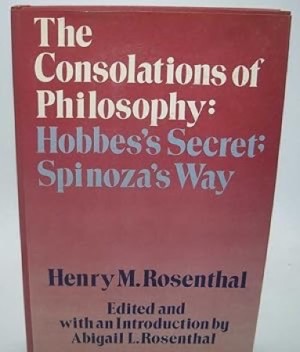
Hardcover. Philadelphia, Temple University Press, 1st, Book: Very Good, Dust Jacket: Very Good, Hardcover in a bright dust jacket, 211 pages. By treating the history of moral concepts as geological strata, Rosenthal discovered the archaeological method long before it became fashionable. The appeal of this book - in addition to its wryly delightful style - is to those for whom Hobbes and Spinoza's thoughts are themselves part of a continuing and unavoidable meditation on unavoidable questions.This is philosophy as an essentially moral, frustratingly human enterprise. Name on front fly leaf, otherwise clean.
Hardcover. Bucknell University Press, 1st, 1974, Book: Very Good, Dust Jacket: Very Good, Hardcover in a bright dust jacket, 184 pages. Translated with an Introduction and Notes by Victor Nuovo. Clean copy.
Hardcover. Lewisburg ME, Bucknell University Press, 1st, 1974, Book: Very Good, Dust Jacket: Very Good, Hardcover in a bright dust jacket, 184 pages. Translated with an Introduction and Notes by Victor Nuovo. Dust jacket chipped with light stain, book is very good, clean copy.
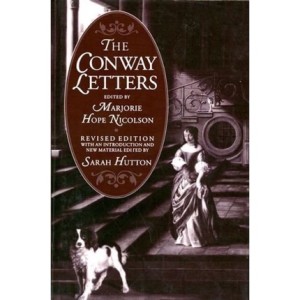
Hardcover. Oxford UK, Clarendon Press, Revised Ed., 1992, Book: Very Good, Dust Jacket: Very Good, Hardcover in a bright dust jacket, 592 pages, b&w illustrations. Lady Anne Conway was a remarkable woman who became a philosopher in her own right at a time when most women were denied even basic education. The Conway Letters is the record of her friendship with the Cambridge Platonist, Henry More, which began when he acted as her unofficial tutor in philosophy and lasted until her death. The letters cover a wide range of topics - personal, philosophical, religious, and social. They give a detailed picture of the More-Conway circle, including such figures as Jeremy Taylor, Ralph Cudworth, Robert Boyle, and Francis Mercury van Helmont, as well as Lady Conway's Quaker associates, George Keith and William Penn. The letters are thus a valuable source for mid-seventeenth-century history, and especially for the intellectual history of the period. Revised from the 1930 printing with new material and introduction by Sarah Hutton. Name on front fly leaf, small chip/tear to top spine of the dust jacket.
Hardcover. Durham NC, Duke University Press, 1st, 1994, Book: Very Good, Dust Jacket: Very Good, Hardcover in a bright dust jacket, 382 pages, b&w frontis. Remainder line to fore-edge of the text block.
Hardcover. Durham NC, Duke University Press, 1st, Book: Very Good, Dust Jacket: Very Good, Hardcover in a bright dust jacket, 348 pages. Perhaps best known as a political philosopher, Richard Price (1723-1791) made important contributions to British and American intellectual life in a variety of fields--philosophy, theology, mathematics, demography, probability and public finance, and private and social insurance. The first in a three-volume series edited by W. Bernard Peach and D. O. Thomas, The Correspondence of Richard Price makes available the extant copies of the correspondence to and from Price, including many published for the first time. These letters reveal Price's absorption with financial problems, his influence on the policies adopted by the British government, his defense of Newtonianism against Lord Monboddo, as well as important insights into the political and cultural life in Britain and America. Correspondents include John Adams, William Adams, J. D. van der Capellen, Benjamin Franklin, Thomas Jefferson, Henry Laurens, Lord Monboddo, William Pitt, Joseph Priestly, the Earl of Shelburne, Ezra Stiles, P. W. Wargentin, and Joseph Willard. Clean copy.
Hardcover. Durham NC, Duke University Press, 1st, 1991, Book: Very Good, Dust Jacket: Very Good, Hardcover in a bright dust jacket, 348 pages. Perhaps best known as a political philosopher, Richard Price (1723-1791) made important contributions to British and American intellectual life in a variety of fields--philosophy, theology, mathematics, demography, probability and public finance, and private and social insurance. The second in a three-volume series edited by W. Bernard Peach and D. O. Thomas, The Correspondence of Richard Price makes available the extant copies of the correspondence to and from Price, including many published for the first time. These letters reveal Price's absorption with financial problems, his influence on the policies adopted by the British government, his defense of Newtonianism against Lord Monboddo, as well as important insights into the political and cultural life in Britain and America. Correspondents include John Adams, William Adams, J. D. van der Capellen, Benjamin Franklin, Thomas Jefferson, Henry Laurens, Lord Monboddo, William Pitt, Joseph Priestly, the Earl of Shelburne, Ezra Stiles, P. W. Wargentin, and Joseph Willard. Clean copy.
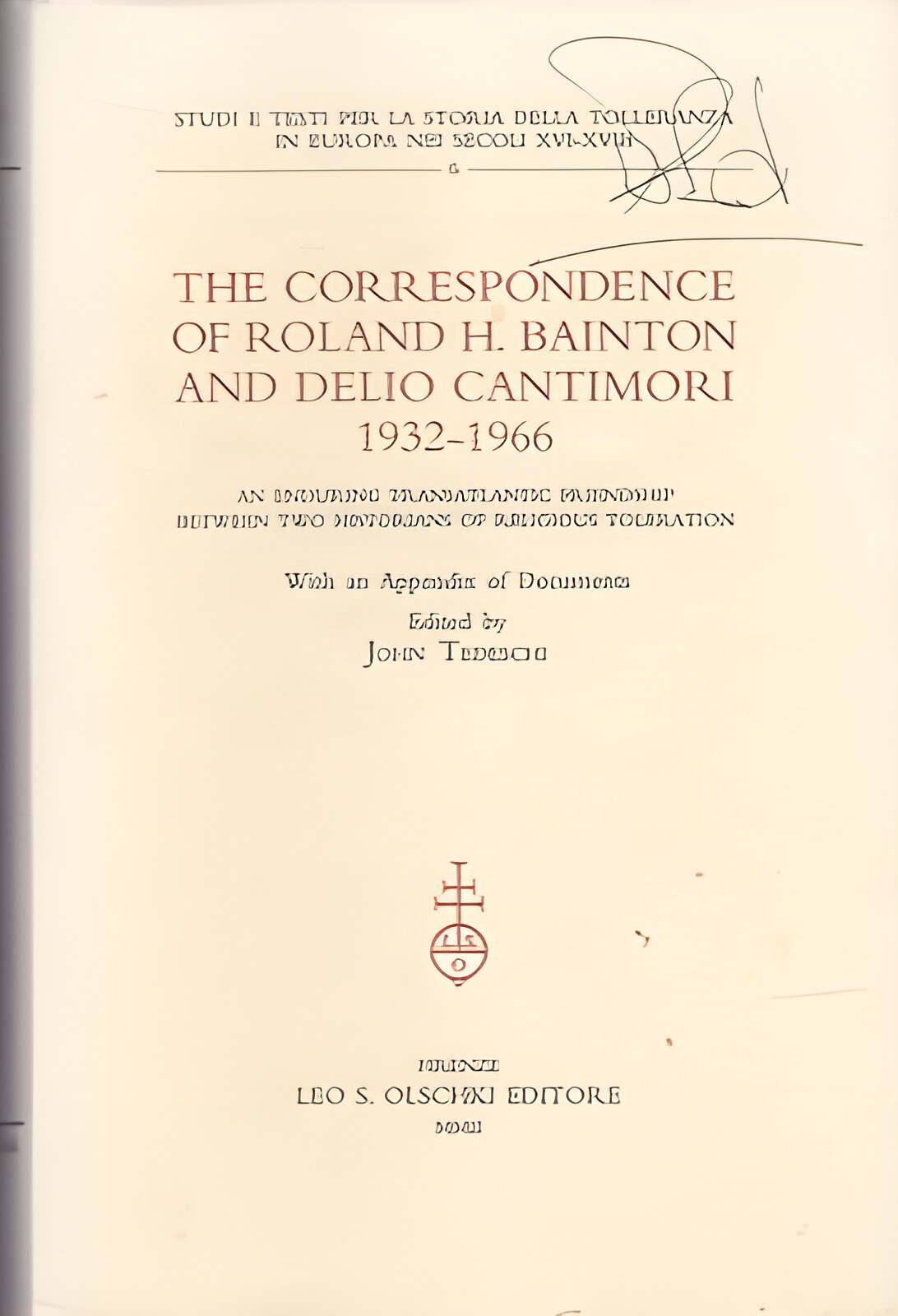
Softcover. Italy, Leo S. Olschki Editore, 1st, 2002, Book: Very Good, Dust Jacket: Very Good, Softcover in a dust jacket, 313 pages. The first complete collection of all that is conserved of the correspondence that endured for more than thirty years between two great scholars of 16th century religious toleration. The ample introduction and detailed erudite comments accompanying each letter provide precious information on four decades of American and European historiography on the 16th century. Name on cover
Softcover. Ithaca NY, Snow Lion Publications, 1st, 1990, Book: Very Good, Dust Jacket: None, Softcover, 151 pages. SIGNED ON HALF TITLE PAGE BY THE 14TH DALAI LAMA IN OCTOBER OF 2012 AT MIDDLEBURY COLLEGE. Light wear. Clean, tight copy.
Hardcover. UK, Clarendon Press/Oxford, 5th pr., 1971, Book: Very Good, Dust Jacket: None, Hardcover, dark blue cloth with gilt lettering on spine, 783 pages. Revised with corrections. An important and monumental work of relevance both to philosophy and mathematics.
Hardcover. Bristol UK, Thoemmes , 1st, 2003, Hardcover set, two volumes complete, black cloth with red and gilt titles on spine, 1116 pages, ribbon bookmarks. No slipcase. In this Dictionary, more than four hundred biographical entries encompass all the Dutch thinkers who exercised a major influence on the intellectual life of the Golden Age, as well as those who developed their ideas and beliefs through interaction with other scholars. Additional entries describe foreign philosophers who lived in the country temporarily and whose work was influenced by their stay. These include John Locke, Rene Descartes and Pierre Bayle. Ther is some pencil marking to the endpapers, mostly in Vol. 1. Otherwise clean, tight copies. PLEASE NOTE: DUE TO WEIGHT, DOMESTIC SHIPPING ONLY.

 "The Book of American Negro Spirituals, The Second Book of Negro Spirituals. Two volumes in Oneby: Johnson, James and J. Rosamond")



 "The Career of Toleration: John Locke, Jonas Proast, and After by: Vernon, Richard")

 "The Concept of Nature: Tarner Lectures Delivered in Trinity College November 1919.by: Alfred North Whitehead")

 "The Construction of the History of Religion in Schelling's Positive Philosophy: Its Presuppositions and Principles by: Tillich, Paul")
 "The Construction of the History of Religion in Schelling's Positive Philosophy: Its Presuppositions and Principles by: Tillich, Paul")




 "The Development of Logic by: Kneale, William and Martha Kneale")
 "The Dictionary of Seventeenth and Eighteenth-Century Dutch Philosophers- 2 Volumesby: Van Bunge, Wiep & Henri Krop, Bart Leeuwenburgh, Han van Ruler, Paul Schuurman,")