Hardcover. NY, Oxford University Press, 1st, 1983, Book: Very Good, Dust Jacket: Very Good, Hardcover, 288 pages. Traces the history of bells and their use by different civilizations, examines their connection with Christian churches, and discusses the use of bells to make music, mark time, and signal events
Hardcover. Ithaca NY, Cornell University Press, 1st, 1990, Book: Very Good, Dust Jacket: Very Good, Hardcover in a bright dust jacket, 249 pages. Berkeley's Essay towards a New Theory of Vision (1709), his first substantial publication, revolutionized the theory of vision. His approach provided the framework for subsequent work in the psychology of vision and remains influential to this day. Among philosophers, however, the New Theory has not always been read as a landmark in the history of scientific thought, but instead as a halfway house to Berkeley's later metaphysics. In this book, Margaret Atherton seeks to redress the balance through a commentary on and a reinterpretation of Berkeley's New Theory. Clean copy.
Hardcover. Cambridge MA, Harvard University Press, 1st, 1989, Book: Very Good, Dust Jacket: Very Good, Hardcover, 192 pages. Light sun-fade to dust jacket spine, else a clean, tight copy. Michael Slote challenges the long-dominant conception of individual rationality, which has to a large extent shaped the very way we think about the essential problems and nature of rationality, morality, and the relations between them. He contests the accepted view by appealing to a set of real-life examples, claiming that our intuitive reaction to these examples illustrates a significant and prevalent, if not always dominant, way of thinking. Slote argues that common sense recognizes that one can reach a point where "enough is enough," be satisfied with what one has, and, hence, rationally decline an optimizing alternative. He suggests that, in the light of common sense, optimizing behavior is often irrational.
Hardcover. New York, Cassell, 1st, 1880, Book: Fair, Dust Jacket: None, Unpaginated, 100 b&w illustrations by Dore. Brown cloth covers w/ faded gilt lettering and design. Rubbing, chipping to corners. Hinges and binding cracked. Foxing to end papers. Previous owner's signature on front fly leaf. Else pages clean and crisp
Hardcover. Chicago, University of Chicago Press, 1st, 1955, Book: Very Good, Dust Jacket: Very Good, Hardcover in a lightly soiled. unclipped dust jacket. 325 pages including index. The author explores Sunday's career as the product and expression of his era. A lively account of the famous revivalist's life and the inner workings of mass revivalism. Name stamp on front fly leaf otherwise clean.
Hardcover. NY, Macmillan Company, 1st, 1936, Book: Very Good, Dust Jacket: None, Hardcover, gray cloth with gilt lettering on spine faded, 271 pages. The book covers the life and work of Bishop Butler and the impact his philosophy had on the Age of Reason. Name, date on front fly leaf, otherwise a clean, tight copy.
Hardcover. New York, Thomas Whittaker, 1st, 1886, Book: Very Good, Dust Jacket: None, 225 pages, blue cloth covers with gilt lettering on spine. Clean, bright copy.
Hardcover. Black Dog Publishing, 1st, 2006, Book: Very Good, Dust Jacket: Very Good, Hardcover, 189 pages. Blasphemy: Art that Offends is a prescient examination of the perpetually troubled, often explosive relationship between religion, politics and art. This book draws on a rich wealth of visual material, tracing both the history of blasphemy as a concept and re-positioning the term in the twenty-first century. Questions of censorship and freedom of expression are today extremely volatile, a fact evinced by the recent international backlash against the Danish newspaper Islamic caricatures and the murder of the Dutch filmmaker Theo Van Gogh following the release of his notorious Submission. Blasphemy: Art that Offends provides a vital vantage point from which to view the complicated, compelling interrelations between religion, politics and the visual arts.
Hardcover. Oxford UK, Clarendon Press, 1st, 1981, Book: Very Good, Dust Jacket: Very Good, Hardcover in a bright dust jacket, 313 pages. The Consolations of Philosophy by Boethius, whose English translators include King Alfred, Geoffrey Chaucer, and Queen Elizabeth I, ranks among the most remarkable books to be written by a prisoner awaiting the execution of a tyrannical death sentence. Its interpretation is bound up with his other writings on mathematics and music, on Aristotelian and propositional logic, and on central themes of Christian dogma. Chadwick begins by tracing the career of Boethius, a Roman rising to high office under the Gothic King Theoderic the Great, and suggests that his death may be seen as a cruel by-product of Byzantine ambitions to restore Roman imperial rule after its elimination in the West in AD 476. Subsequent chapters examine in detail his educational programme in the liberal arts designed to avert a threatened collapse of culture and his ambition to translate into Latin everything he could find on Plato and Aristotle. Name on front fly leaf, otherwise bright and clean.
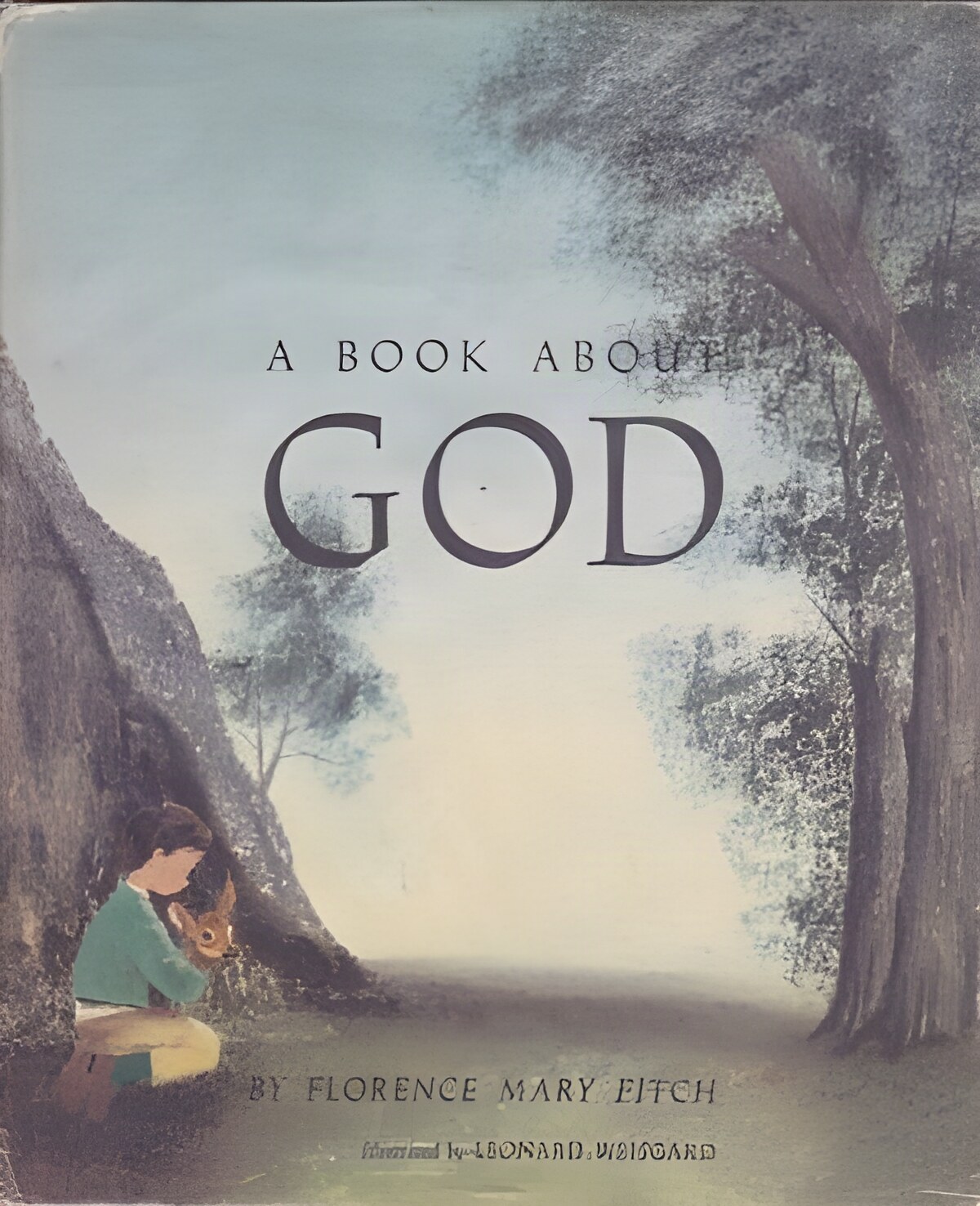
Hardcover. New York , Lothrop Lee and Shepard, 5th pr., 1960, Book: Good, Dust Jacket: Good, Hardcover in a worn dust jacket. 24 pages, illustrated in color by Leonard Weisgard. Blue cloth covers with white stamping, dust jacket edgeworn, flap price of $2.75
Hardcover. Oxford, Thomas Baskett and Robert Baskett, 1st, 1743, Book: Good, Dust Jacket: None, Unpaginated in parts. Leather binding shows heavy wear to edges, especially corners. Gilt decoration on spine and stamped embellishment on front. Heavy foxing on pages. Gutter cracked in center. Black and white illustrations.
Hardcover. Cambridge, England, Cambridge University, 1st Edition, 1777, Book: Good, Dust Jacket: None, Nonpaginated. Hardcover. Cover boards bound in polished calf (agewear--see image), gilt bands on spine. Front cover boards and front flyleaf still attached but coming loose from binding,Binding tight otherwise. Spine straight. Previous owner's inscription on front flyleaf and dated signatures (178? and 1792) on title page (see image). Some light pencil on top of title page (see image). Tanning throughout from age. Beautiful old volume, a collector's dream.
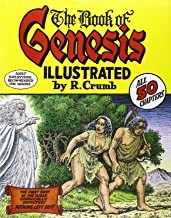
Hardcover. New York , W.W. Norton & Co., 1st, 2009, Book: Very Good, Dust Jacket: Very Good, Hardcover, 224 pages, b&w art throughout by Crumb. Envisioning the first book of the bible like no one before him, R. Crumb, the legendary illustrator, reveals here the story of Genesis in a profoundly honest and deeply moving way. Originally thinking that we would do a take off of Adam and Eve, Crumb became so fascinated by the Bible's language, "a text so great and so strange that it lends itself readily to graphic depictions," that he decided instead to do a literal interpretation using the text word for word in a version primarily assembled from the translations of Robert Alter and the King James bible. As Crumb writes in his introduction, "the stories of these people, the Hebrews, were something more than just stories. They were the foundation, the source, in writing of religious and political power, handed down by God himself." Crumb's Book of Genesis, the culmination of 5 years of painstaking work, is a tapestry of masterly detail and storytelling which celebrates the astonishing diversity of the one of our greatest artistic geniuses.
Hardcover. New York , W.W. Norton & Co., 1st, 2009, Book: Very Good, Dust Jacket: Very Good, Hardcover, 224 pages, b&w art throughout by Crumb. Envisioning the first book of the bible like no one before him, R. Crumb, the legendary illustrator, reveals here the story of Genesis in a profoundly honest and deeply moving way. Originally thinking that we would do a take off of Adam and Eve, Crumb became so fascinated by the Bible's language, "a text so great and so strange that it lends itself readily to graphic depictions," that he decided instead to do a literal interpretation using the text word for word in a version primarily assembled from the translations of Robert Alter and the King James bible. As Crumb writes in his introduction, "the stories of these people, the Hebrews, were something more than just stories. They were the foundation, the source, in writing of religious and political power, handed down by God himself." Crumb's Book of Genesis, the culmination of 5 years of painstaking work, is a tapestry of masterly detail and storytelling which celebrates the astonishing diversity of the one of our greatest artistic geniuses.
Hardcover. New York , Abaris Books, Inc., 1st, 1974, Book: Very Good, Dust Jacket: None, 344 pages. Oversized red decorated cloth cover, gilt lettering, minor wear to corners. This copy does not have original slipcase. Light foxing on top and fore edge, but inside is bright and clean, with many colored illustrations throughout. Contains a history of the Prayer Book and a synopsis of the life of Emperor Maximilian I.
Softcover. Berkeley, University of California Press, 1st pbk, 1987, Book: Very Good, Dust Jacket: None, Softcover, 839 pages. Traces the history of bribery from ancient Egypt to ABSCAM, examines changing perceptions of bribery, and discusses the legal, ethical and religious injunctions against bribes. Clean, bright copy.
Hardcover. Oxford UK, Oxford University Press, 1st, 2015, Book: Very Good, Dust Jacket: Very Good, Hardcover in a bright dust jacket, 286 pages. Sarah Hutton presents a rich historical study of one of the most fertile periods in modern philosophy. It was in the seventeenth century that Britain's first philosophers of international stature and lasting influence emerged. Its most famous names, Hobbes and Locke, rank alongside the greatest names in the European philosophical canon. Bacon too belongs with this constellation of great thinkers, although his status as a philosopher tends to be obscured by his statusas father of modern science. The seventeenth century is normally regarded as the dawn of modernity following the breakdown of the Aristotelian synthesis which had dominated intellectual life since the middle ages. In this period of transformational change, Bacon, Hobbes, Locke are acknowledged tohave contributed significantly to the shape of European philosophy from their own time to the present day. But these figures did not work in isolation. Sarah Hutton places them in their intellectual context, including the social, political and religious conditions in which philosophy was practised. She treats seventeenth-century philosophy as an ongoing like all conversations, some voices will dominate, some will be more persuasive than others and there will be enormous variationsin tone from the polite to polemical, matter-of-fact, intemperate. The conversation model allows voices to be heard which would otherwise be discounted. Hutton shows the importance of figures normally regarded as 'minor' players in philosophy (e.g. Herbert of Cherbury, Cudworth, More, Burthogge,Norris, Toland) as well as others who have been completely overlooked, notably female philosophers. Crucially, instead of emphasizing the break between seventeenth-century philosophy and its past, the conversation model makes it possible to trace continuities between the Renaissance and seventeenth century, across the seventeenth century and into the eighteenth century, while at the same time acknowledging the major changes which occurred.
Hardcover. Philadelphia, David McKay, 1st US, 1929, Book: Very Good, Dust Jacket: Good, Hardcover, 123 pages, 20 tipped-in black & white plates by M. Boutet De Monvel. Dust jacket worn, soiled, chunk gone from front panel.
Hardcover. Philadelphia, David McKay Company, 1st, 1929, Book: Good, Dust Jacket: None, 133 pages, illustrated throughout with tipped in b&w plates by M. Boutet De Monvel. Purple cloth with gilt titles. Sun-fade to covers, light tanning to pages opposite plates, else a clean, tight copy.
Hardcover. New York, Doubleday, 1st, 1961, Book: Very Good, Dust Jacket: Very Good, Hardcover, 95 pages, b&w cartoons by Chon Day. The third collection of Brother Sebastian cartoons which ran in Look Magazine. Dust jacket with light edge wear, price clipped. Clean copy.
Hardcover. New York, Doubleday, 1st, 1959, Book: Very Good, Dust Jacket: Very Good, Hardcover, 95 pages, b&w cartoons by Chon Day. The second collection of Brother Sebastian cartoons which ran in Look Magazine. Dust jacket with light edge wear, price clipped. Previous owner's inscription on front fly leaf.
Hardcover. New York, Hanover House, 1st, 1957, Book: Very Good, Dust Jacket: Very Good, Hardcover, unpaginated, b&w cartoons by Chon Day. The first collection of Brother Sebastian cartoons which ran in Look Magazine. Dust jacket with light edge wear, price clipped. Clean.
Hardcover. Delhi, Motilal, 1st, 1982, Book: Very Good, Dust Jacket: None, Hardcover, blue cloth, gilt lettering on spine, 320 pages. All forms of Buddhism--The Theravada, the Mahayana and the Vajrayana--affirm the perfectability of the person, and one finds this notion of perfection embodied in three images; the arahant, the bodhisattva and the mahasiddha. Reader also finds, in scholarly treatments of Buddhism, much made of the perceived differences among these three `vehicles` (yana). By close textual analysis as well as by extensive field work, Katz criticizes this emphasis on difference and prefers to treat Buddhism as a whole, a position he finds in accord with the teachings of both Buddhists and Buddhist texts. By a close examination of these three images of human perfection, bridges among the Theravada, the Mahayana and the Vajrayana are built and continuities within Buddhism are explored. This comparison involves pioneering discussions of Buddhist philosophy of language and hermeneutics, which are facilitated by Katz`s familiarity with Pali, Sanskrit and Tibetan Buddhist texts as well as his sympathetic involvement with the living Buddhist tradition. Light pencil marking to several pages in the margins. Otherwise clean, no dust jacket.




 "Bible Gallery, Theby: Chambers, Talbot W. and Gustave Dore")
 "Billy Sunday Was His Real Nameby: William G. McLoughlin, Jr.")
 "Bishop Butler and the Age of Reason: A Study in the History of Thoughtby: Mossner, Ernest Campbell")
 "Bishops in the Tower, The: A Record of the Stirring Events Affecting the Church and Nonconformists from the Restoration to the Revolutionby: Luckock, Herbert Mortimer")
 "Blasphemy: Art That Offendsby: Plate, S. Brent")
 "Boethius: The Consolations of Music, Logic, Theology, and Philosophy by: Chadwick, Henry")

 "Book of Common Prayer, The: and Administration of the Sacraments, and Other Rites and Ceremonies of the Church, According to the Use of the Church of England; Together with the Psalter or Psalms of David, Pointed as they are to be su")








 "British Philosophy in the Seventeenth Century by: Hutton, Sarah")
 "Brother of the Birds - A Little History of Saint Francis of Assisiby: Green, Louisa Meigs")
 "Brother of the Birds: A Little History of Saint Francis of Assisiby: Green/ M. Boutet De Monvel, Louisa Meigs")
 "Brother Sabastian At Largeby: Day, Chon")
 "Brother Sabastian Carries Onby: Day, Chon")
 "Brother Sabastianby: Day, Chon")