Hardcover. Tokyo, Sophia University, 1st, 1970, Book: Very Good, Dust Jacket: Very Good, 210 pages, b&w illustrations. Beige cloth spine with patterned boards and a bright dust jacket with a glassine wrapper.
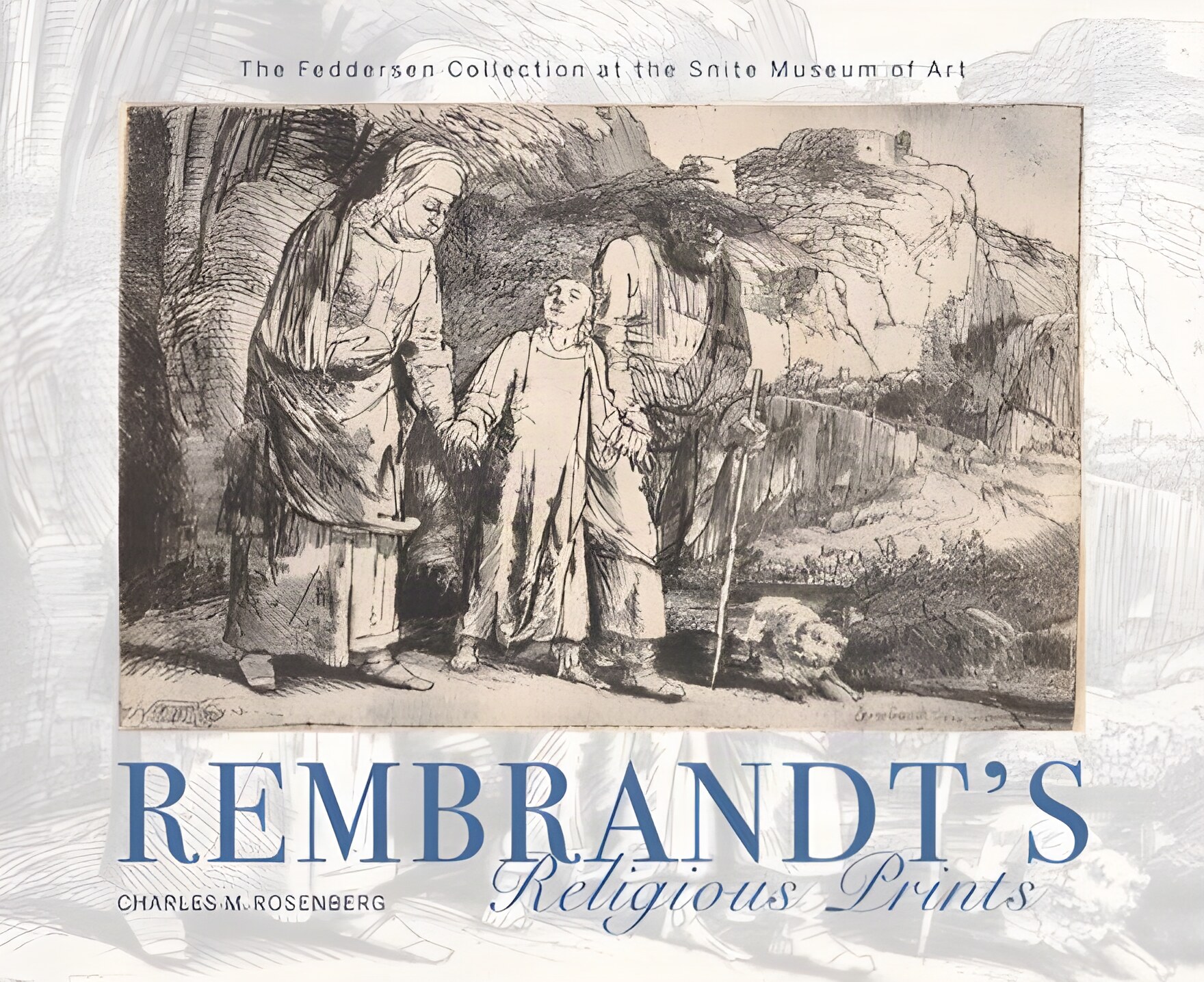
Hardcover. Indiana University Press, 1st, 2017, Book: Very Good, Dust Jacket: Very Good, Hardcover in a bright dust jacket, 475 pages. Rembrandt's stunning religious prints stand as evidence of the Dutch master's extraordinary skill as a technician and as a testament to his genius as a teller of tales. Here, several virtually unknown etchings, collected by the Feddersen family and now preserved for the ages at the University of Notre Dame, are made widely available in a lavishly illustrated volume. Building on the contributions of earlier Rembrandt scholars, noted art historian Charles M. Rosenberg illuminates each of the 70 religious prints through detailed background information on the artist's career as well as the historical, religious, and artistic impulses informing their creation. Readers will enjoy an impression of the earliest work, The Circumcision (1625-26); the famous Hundred Guilder Print; the enigmatic eighth state of Christ Presented to the People; one of a handful of examples of the very rare final posthumous state of The Three Crosses; and an impression and counterproof of The Triumph of Mordecai. From the joyous epiphany of the coming of the Messiah to the anguish of the betrayal of a father (Jacob) by his children, from choirs of angels waiting to receive the Virgin into heaven to the dog who defecates in the road by an ancient inn (The Good Samaritan), Rembrandt's etchings offer a window into the nature of faith, aspiration, and human experience, ranging from the ecstatically divine to the worldly and mundane. Ultimately, these prints? modest, intimate, fragile objects?are great works of art which, like all masterpieces, reward us with fresh insights and discoveries at each new encounter. Clean copy.
Hardcover. San Francisco, Chronicle Books, 1st, 2008, Book: Very Good, Dust Jacket: Very Good, 145 pages, illustrated throughout in color. Clean, unmarked copy with only minor wear to dust jacket. An intimate collection of photographs & portraits of the students of Patrick Henry College and their families.
Hardcover. Oxford, Clarendon Press, First Edition, 2006, Book: Very Good, Dust Jacket: Very Good, 356 pages. Hardcover with illustrated endpapers. Black cloth covered boards with gilt titles to spine. Dust jacket with light sunfade to bottom edge. Illustrations in bw throughout. Clean & unmarked copy.
NY, Farrar, Straus and Company, 1st, 1950, Book: Very Good, Dust Jacket: Fair, Hardcover in a very worn, chipped dust jacket, 312 pages. This autobiography details the struggle of a young Negroe's struggle to rise from a Knoxville slum to reach the ministry in the first half of the 20th century.
Hardcover. Oxford, Basil Blackwell, 1st, 1926, Book: Very Good, Dust Jacket: None, Hardcover, blue cloth with faded gilt lettering on spine. 191 pages, b&w frontis. of Hawker. Small name stamp on front fly leaf, otherwise clean copy.
Hardcover. La Salle, Illinois, Open Court, 1st, 1974, Book: Good, Dust Jacket: Fair, Hardcover, 151 pages. No. 14 of the Paul Carus Lecture Series. Tears on dust jacket and some foxing on rear of dust jacket. Dust jacket rubbing on front. Previous owner's signature on front flyleaf. Small notes and markings in pencil on about 20 pages. Light creasing on top edge. Nice reading copy.
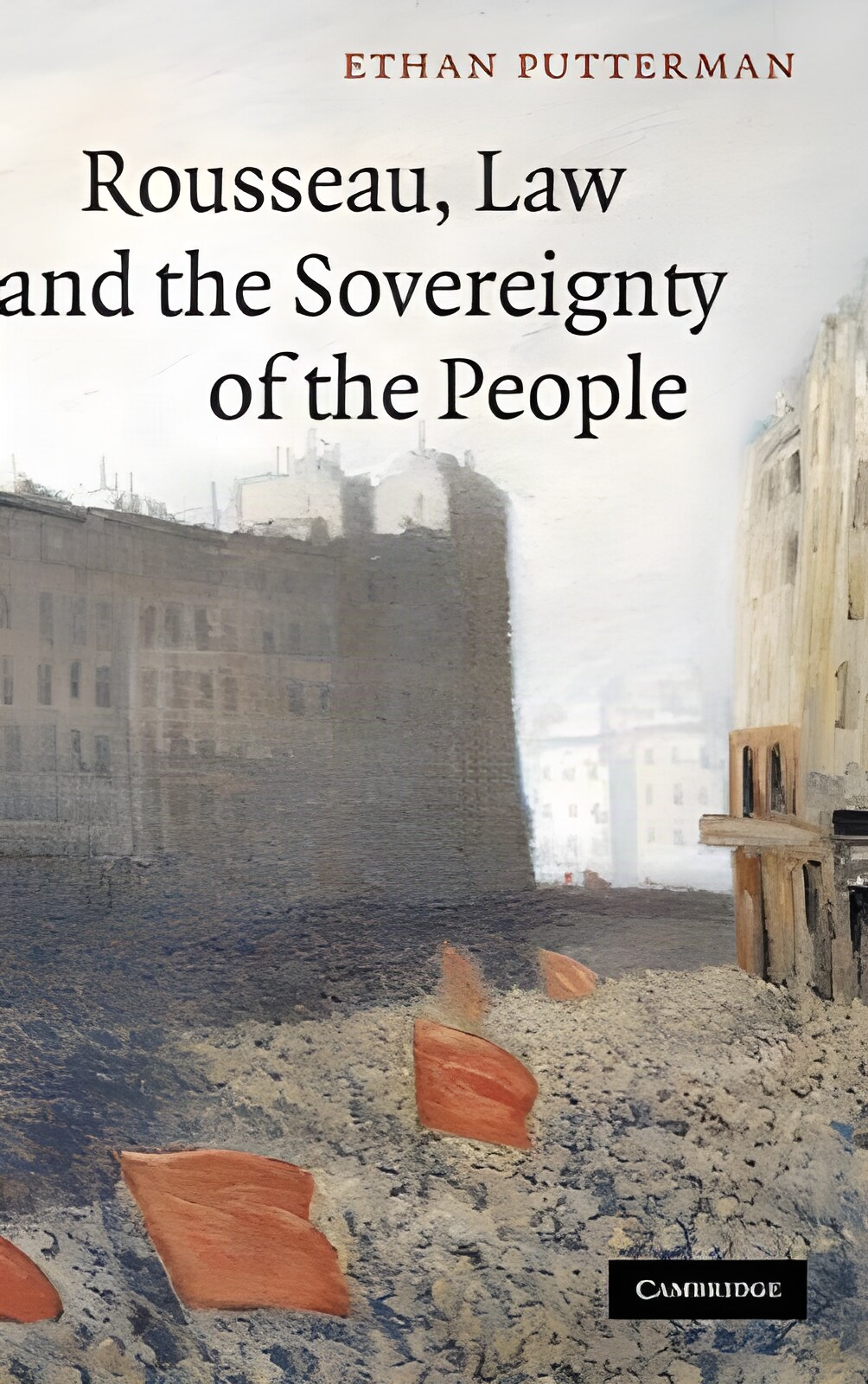
Hardcover. Cambridge UK, Cambridge University Press, 1st, 2010, Book: Very Good, Dust Jacket: Very Good, Hardcover in a bright dust jacket, 187 pages. Examines Rousseau's contribution as a constitutionalist and builder of institutions, relating his major ideas to twenty-first century debates. Rubber stamp on copyright page, otherwise clean.
Softcover. NY, Cambridge University Press, reprint, 2006, Book: Very Good, Dust Jacket: None, Softcover, like new. A comprehensive and authoritative anthology of Rousseau's important early political writings in faithful English translations. This volume includes the Discourse on the Sciences and Arts and the Discourse on the Origin and the Foundations of Inequality among Men - the so-called First and Second Discourses - together with Rousseau's extensive Replies to critics of these Discourses; the Essay on the Origin of Languages; the Letter to Voltaire on Providence; as well as several minor but illuminating writings - the Discourse on Heroic Virtue and the essay Idea of the Method in the Composition of a Book. In these as well as in his later writings, Rousseau probes the very premises of modern thought. His influence was wide-reaching from the very first, and it has continued to grow since his death. The American and the French Revolutions were profoundly affected by his thought, as were Romanticism and Idealism. 437 pages.
Hardcover. Paris, Zodiaque, 1st, 1984, Book: Very Good, Dust Jacket: Very Good, 334 pages plus index. Color, b&w gravure photographs, plans of churches, cathedrals, abbeys and monasteries in France. Text in French. Ribbon marker. Clean, tight copy in a bright dust jacket.
Hardcover. Paris, Zodiaque, 1st, 1982, Book: Very Good, Dust Jacket: Very Good, Hardcover, 407 pages plus index. Color and b&w gravure plates, plans of medieval churches of France. French text. A clean, tight copy in a bright dust jacket.
Hardcover. New York, Harper & Brothers, 1st, 1887, Book: Very Good, Dust Jacket: None, Hardcover, 310 pages. Brown cloth, gilt lettering to spine. Light wear and rubbing to covers and edges of spine. Clean, tight copy.
Hardcover. Chatham UK, The Limited Editions Club, Ltd Ed, 1969, Book: Very Good, Dust Jacket: None, Hardcover, embossed gray cloth covers with gilt lettering on spine, slipcased. Illustrated with wood engravings by Reynolds Stone. No. 38 of 1500 copies, signed by the artist. Designed by Will Carter and printed by W & J Mackay & Company. Bright, clean copy with minor wear to slip case.
Softcover. Cambridge MA, Harvard University Press, 1st, 1999, Book: Very Good, Dust Jacket: None, Softcover, 528 pages. Clean copy. Reconstructing religious motivation, conviction and behaviour in early modern Europe, this text shows the shifting perspectives of authorities willing to kill, martyrs willing to die, martyrologists eager to memorialize and controversialists keen to dispute.
Springer, Book: Very Good, Dust Jacket: None, Hardcover, glazed boards, 381 pages. This groundbreaking publication is the first comprehensive assessment of the extent to which scepticism featured in evolving Enlightenment philosophy, with expert commentary on a range of thinkers including less well known, but nonetheless influential figures.
Softcover. UK , Cambridge University Press, reprint, 1992, Book: Very Good, Dust Jacket: None, Softcover, 231 pages. Schleiermacher's On Religion: Speeches to its Cultured Despisers is a classic of modern Protestant religious thought that powerfully displays the tensions between the Romantic and Enlightenment accounts of religion. This edition presents the original 1799 text in English for the first time. Richard Crouter's introduction places the work in the milieu of early German Romanticism, Kant criticism, the revival of Spinoza and Plato studies, and theories of literary criticism and of the physical sciences. This fully annotated edition also contains a chronology and notes on further reading. Name on front fly leaf, otherwise clean.
Hardcover. Cambridge, Biograph, 1st, 2003, Book: Very Good, Dust Jacket: Very Good, Hardcover in a bright dust jacket, 166 pages. SIGNED BY WILES on the front fly leaf. Maurice Wiles was Professor Emeritus of Divinity at the University of Oxford. Clean copy.
Hardcover. Chapel Hill, University of North Carolina Press, 1st, 1982, Book: Very Good, Dust Jacket: Very Good, Hardcover, red dust jacket with sunned spine, 195 pages. Hobart demonstrates how Malebranche's theories of truth, ideas, and intelligible extension were formulated under the influence of mathematics and how these theories conflicted with the assumptions and patterns of thought needed for traditional substance philosophy and natural theology. The conflict produced inconsistencies in key concepts--necessity, infinity, being, faith, and reason--rendering any reconciliation between science and religion intellectually unattainable. Name on front fly leaf, otherwise clean.
Hardcover. Oxford UK, Oxford University Press, 1st, 2017, Book: Very Good, Dust Jacket: Very Good, Hardcover in a bright dust jacket, 274 pages. Both science and philosophy are interested in questions of ontology - questions about what exists and what these things are like. Science and philosophy, however, seem like very different ways of investigating the world, so how should one proceed? Some defer to the sciences, conceived as something apart from philosophy, and others to metaphysics, conceived as something apart from science, for certain kinds of answers. This book contends that these sorts of deference are misconceived. A compelling account of ontology must appreciate the ways in which the sciences incorporate metaphysical assumptions and arguments. At the same time, it must pay careful attention to how observation, experience, and the empirical dimensions of science are related to what may be viewed as defensible philosophical theorizing about ontology. The promise of an effectively naturalized metaphysics is to encourage beliefs that are formed in ways that do justice to scientific theorizing, modeling, and experimentation. But even armed with such a view, there is no one, uniquely rational way to draw lines between domains of ontology that are suitable for belief, and ones in which it would be better to suspend belief instead. In crucial respects, ontology is in the eye of the beholder: it is informed by underlying commitments with implications for the limits of inquiry, which inevitably vary across rational inquirers. As result, the proper scope of ontology is subject to a striking form of voluntary choice, yielding a new and transformative conception of scientific ontology. Clean copy.
Hardcover. Bristol UK, Thoemmes Press, reprint, 1995, Book: Very Good, Dust Jacket: None, Hardcover, red cloth with gilt lettering on spine, 182 pages. Mostly written in 1712, "Second Characters" contains the plan and fourth treatise of a work intended as a complement to the "Characteristics" and represents an application of the theoretical principles of that work to the realm of art. B&w frontispiece. Includes dictionary of art terms and index of ease. A facsimile reprint of the 1914 edition. Clean copy.

 "Religious Study of the Mount Haguro Sect of Shugendo, A: An Example of Japanese Mountain Religionby: Earhart, H. Byron")
 "Right: Portraits from the Evangelical Ivy Leagueby: Frank, Jona")

 "Road Without Turning: The Story of Rev. James H. Robinson by: Robinson, Reverend James H.")



 "Routes Romanes - 2: La Route aux Solitudesby: Oursel, Raymond")

 "Ruin of The Ancient Civilization and The Triumph of Christianity, Theby: Ferrero, Guglielmo")
 "Russian Church and Russian Dissent, The: Comprising Orthodoxy, Dissent, and Erratic Sectsby: Heard, Albert F.")
 "Saint Paul's Epistles to the Galatians: A Revised Textby: Lightfoot, J. B.")




 "Schleiermacher: On Religion: Speeches to its Cultured Despisers by: Friedrich Schleiermacher and Richard Crouter")
 "Scholarship and Faith: A Tale of Two Grandfathers (SIGNED COPY)by: Maurice Wiles")
 "Science and Religion in the Thought of Nicolas Malebranche by: Hobart, Michael E.")
 "Scientific Ontology:Integrating Naturalized Metaphysics and Voluntarist Epistemologyby: Chakravartty, Anjan")


 "Second Characters or the Language of Formsby: Anthony Ashley Cooper Earl of Shaftesbury")