Hardcover. New Haven CT, Yale University Press, 1st, 2000, Book: Very Good, Dust Jacket: Very Good, Hardcover in a bright dust jacket, 234 pages, b&w illustrations. Nicolas-Claude Fabri de Peiresc (1580-1637) was, during his lifetime, one of Europe's most famous men. A friend of Pope Urban VIII and Galileo, of Peter-Paul Rubens and Hugo Grotius, of Tommaso Campanella and Marin Mersenne, Peiresc played an important role in the intellectual culture of his time. This book is the first study in English of this extraordinary man, as well as a vivid portrait of his whole circle. Looking through the lens of Peiresc's life, Peter N. Miller brings into focus the early-seventeenth-century world of learning-its people, places, and ideas. Drawing on the extensive Peiresc archive (more than 50,000 pieces of paper), Miller brilliantly evokes the lives of antiquaries, philosophers, theologians, and politicians of Peiresc's day, only some of whom remain known today. He explores the age in which Peiresc's toleration and sociability, his political action and cosmopolitanism, and his serious scholarship without dogmatism were identified as a set of virtues and practices by which to live. Peiresc's notion of scholarship as a moral exercise, the sweep of his interests, and the cross-Continental reach of his intellectual life show with new clarity what it meant to be a man of learning during the decades around 1600. Name on front fly leaf, otherwise clean copy.
Softcover. Notre Dame, University of Notre Dame Press, First Thus, 1986, Book: Very Good, Dust Jacket: None, 344 pages. Softcover. Black & white illustrations throughout including maps, photographs. Bright front cover, sunfade to rear cover. Clean, unmarked copy.
Hardcover. NY, powerHouse Books, 1st, 2006, Book: Very Good, Dust Jacket: Very Good, Hardcover, 127 pages. Lili Almog's color photos taken at three Carmelite monasteries (of nuns) are revealing of their faith.. The sisters showing their distinctive profession crucifixes (normally worn hidden under their scapulars, and pinned to their beds when they go to sleep) are revealing their personal symbols of "perfect intimacy." And the statues and/or holy cards of our holy mother St. Teresa, our holy father St. John of the Cross, St. Therese, and St. Joseph make Carmelites feel right at home. The monasteries are also significant: they are on Mt. Carmel (Haifa) and in Bethlehem--founded by Sister Miriam, "the little Arab"; and in Port Tobacco, Maryland, whose community is the oldest and first Discalced Carmelite convent founded in the US. The spartan surroundings emphasize the importance of the nuns' relationship with God. The photos of the sisters revealing their profession crucifixes, which they wear near their hearts and pin to their beds when going to sleep, I found especially moving. Almog's photos are neither stilted nor rigid, but reminiscent of the photos that St. Therese's sister Celine took of her! The quotations from Blessed Teresa of the Andes are very apt comments on the photos.
Softcover. Oxford UK, Oxford University Press, reprint, 2002, Book: Very Good, Softcover, 209 pages. The papers in this collection provide views on central aspects of Thomas Hobbes's (1588-1679) life and work. The collection testifies to his enduring importance as a major philosopher four hundred years after his birth, and helps to unravel aspects of his intellectual biography which are relevant to a proper appreciation of his philosophy. Clean copy.
Hardcover. NY, Greenwood Press, reprint, 1969, Book: Very Good, Dust Jacket: None, Hardcover, blue cloth covers with gilt lettering on spine, 477 pages, two b&w plates. A reprint of the 1913 revised Second Edition. A selection from his correspondence with Boccaccio and other friends, designed to illustrate the beginnings of the Renaissance. Name on front fly leaf, otherwise clean
Softcover. Albany, State University of New York Press , 1st, 1983, Book: Very Good, Dust Jacket: None, Softcover, 317 pages. Phenomenology in a Pluralistic Context contains papers selected from three years of meetings of the Society for Phenomenology and Existential Philosophy (SPEP). The essays are representative of the most current thinking among North American philosophers who have been influenced by the phenomenological movement. A majority of the selections reveals a considerable mutual influence between phenomenology and other philosophical currents. Special emphasis is given to issues in social and political theory; the philosophy of medicine, of art, of language, and of religion; phenomenology's relationship to Kantianism and to Marxism; and the figures of Merleau-Ponty, Sartre, and Heidegger. Clean copy.
Hardcover. Philadelphia, American Philological Association, 1st, 1941, Book: Very Good, Dust Jacket: None, Hardcover, green cloth covers with gilt lettering on spine, 200 pages. The Greek text with facing translation runs from pages 22-199. The rest of the book is discussions chapters discussing the polemics between Stoic and Epicureans and the ways the Philodemus arguments might be improvements on Early Modern empiricism. Classic scholarly treatise presents a detailed study of the manner in which the problem of method was expressed by the empirically oriented philosophy of the Epicureans and Sceptics, and by their rationalistic opponents, the Stoics. Each of these schools developed a theory of signs, as the basis for both epistemological and logical speculations. Philodemus' treatise is a defense of Epicurean empirical method, and simultaneously an attack on the rival Stoic rationalistic method. This is first English translation of this work. Clean, bright copy.
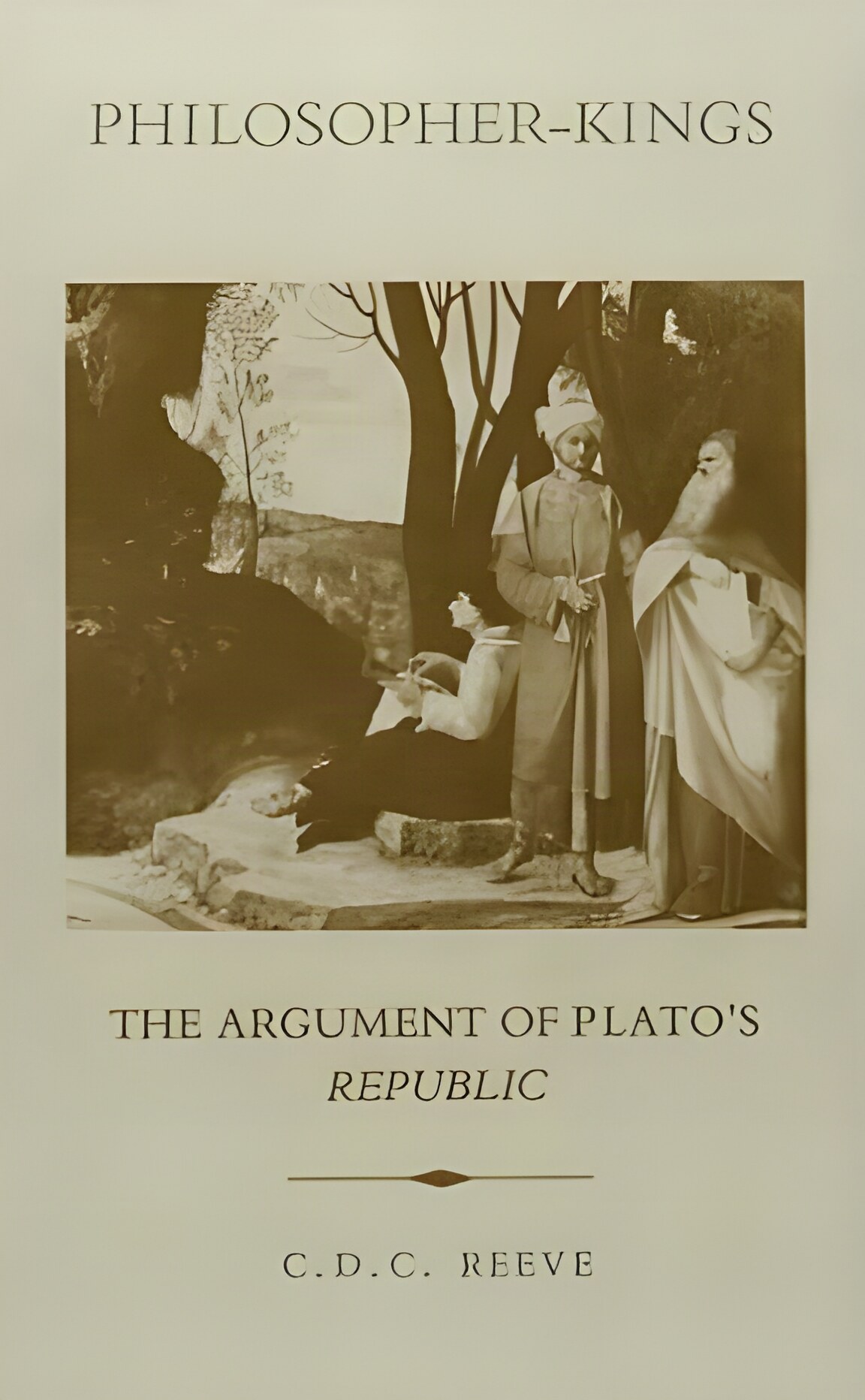
Hardcover. Princeton NJ, Princeton University Press, 1st, 1988, Book: Very Good, Dust Jacket: Very Good, Hardcover in a dust jacket, dark green cloth covers with gilt title on spine. 350 pages. The distinctive aim of Philosopher-Kings is to show, by giving a rational reconstruction of its overall argument, that the Republic is not the flawed patchwork it is usually made out to be by interpreters, but a deeply consistent and systematic work, which raises fundamental problems for philosophy and develops powerful and probing solutions to them. The book's central innovative thesis is that Plato's psychology, more specifically his theory of desires, holds the key to this, his most ambitious work. "Although the Republic has come to seem frazzled from too much use in introductory courses, in Reeve's hands it is new and refreshing".--Paul Woodruff, Ancient Philosophy "Although the philosopher-kings of Reeve's title are central to the argument of this handsomely produced book, it is in reality nothing less than a complete reinterpretation of the Republic. Name on front fly leaf, otherwise clean.
Softcover. Indianapolis, Liberty Fund, reprint, 2005, Book: Very Good, Dust Jacket: None, Softcover, 639 pages. Christian apologists as early as St. Augustine have appealed to Christ's words in Luke 14:23-'Go out into the highways and hedges and compel them to come in, that my house may be filled'- as a mandate for forcible conversion. In 1685, Protestant philosopher and critic Pierre Bayle wrote a compelling and thorough critique of this belief, contending that all coercion in religious matters is morally untenable as being inconsistent with reason. His Philosophical Commentary establishes the case against this supposed literal interpretation of Luke 14:23, arguing that reason must govern all interpretations of Scripture. According to Bayle, the erroneous conscience has the same rights as the enlightened one, his central tenet being a doctrine of mutual toleration grounded in a theory of the morality of conscience-namely, that all God requires is that people act on what seems to them to be the truth. Clean copy.
Hardcover. Hillsdale NJ, Lawrence Erlbaum, 1st, 1982, Book: Very Good, Dust Jacket: None, Hardcover, green cloth covers with light blue stamping, 422 pages. This highly readable translation of the major works of the 18th- century philosopher Etienne Bonnot, Abbe de Condillac, a disciple of Locke and a contemporary of Rousseau, Voltaire, and Diderot, shows his influence on psychiatric diagnosis as well as on the education of the deaf, the retarded, and the preschool child. Published two hundred years after Condillac's death, this translation contains treatises which were, until now, virtually unavailable in English: A Treatise on Systems, A Treatise of the Sensations, Logic. Name on front fly leaf, light bumps to cover corners.
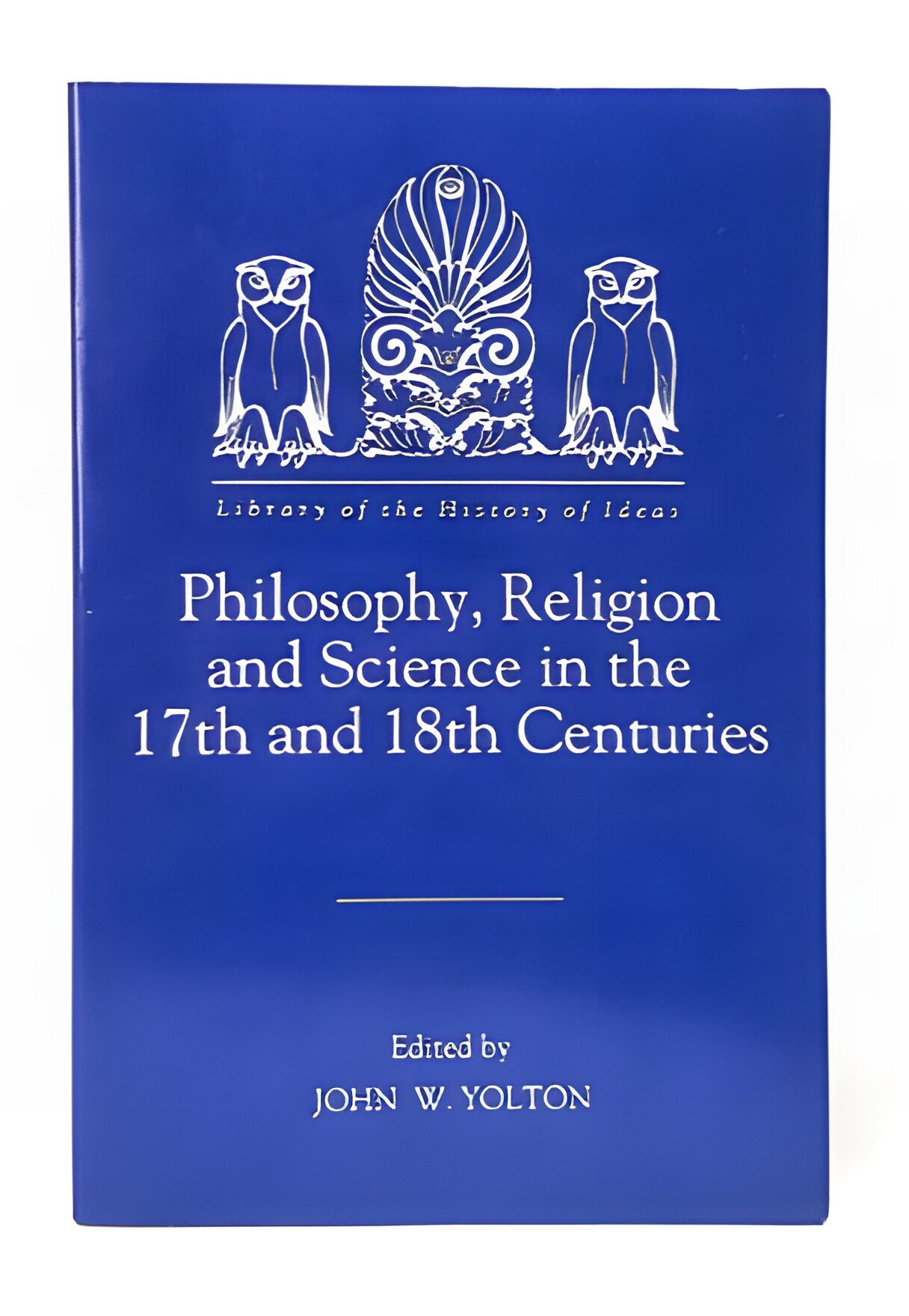
Softcover. Rochester NY, University of Rochester Press, reprint, 1994, Book: Very Good, Dust Jacket: None, Softcover, 539 pages. The essays in this collection illustrate the interdisciplinary approach to the history of ideas fostered by the Journal of the History of Ideas. Science, philosophy and religion were closely connected in the 17th and 18th centuries, and common threads run through all the articles. A number of essays revolve around Locke: the implications of his doctrines for religion, and their relation to and support of the new science; several of these articles refer to Descartes, Leibniz andHume. There are essays on optics and vision in the work of Berkeley, Reid and Newton, and on the relation between biology and physiology, especially as these disciplines contribute to the science of man. The authors include HENRY GUERLAC, MARGARET C. JACOB, SHIRLEY ROE, L. LAUDAN, NICHOLAS JOLLEY, JAMES FORCE, G. A. J. ROGERS and CATHERINE WILSON. Name on front fly leaf, otherwise clean.
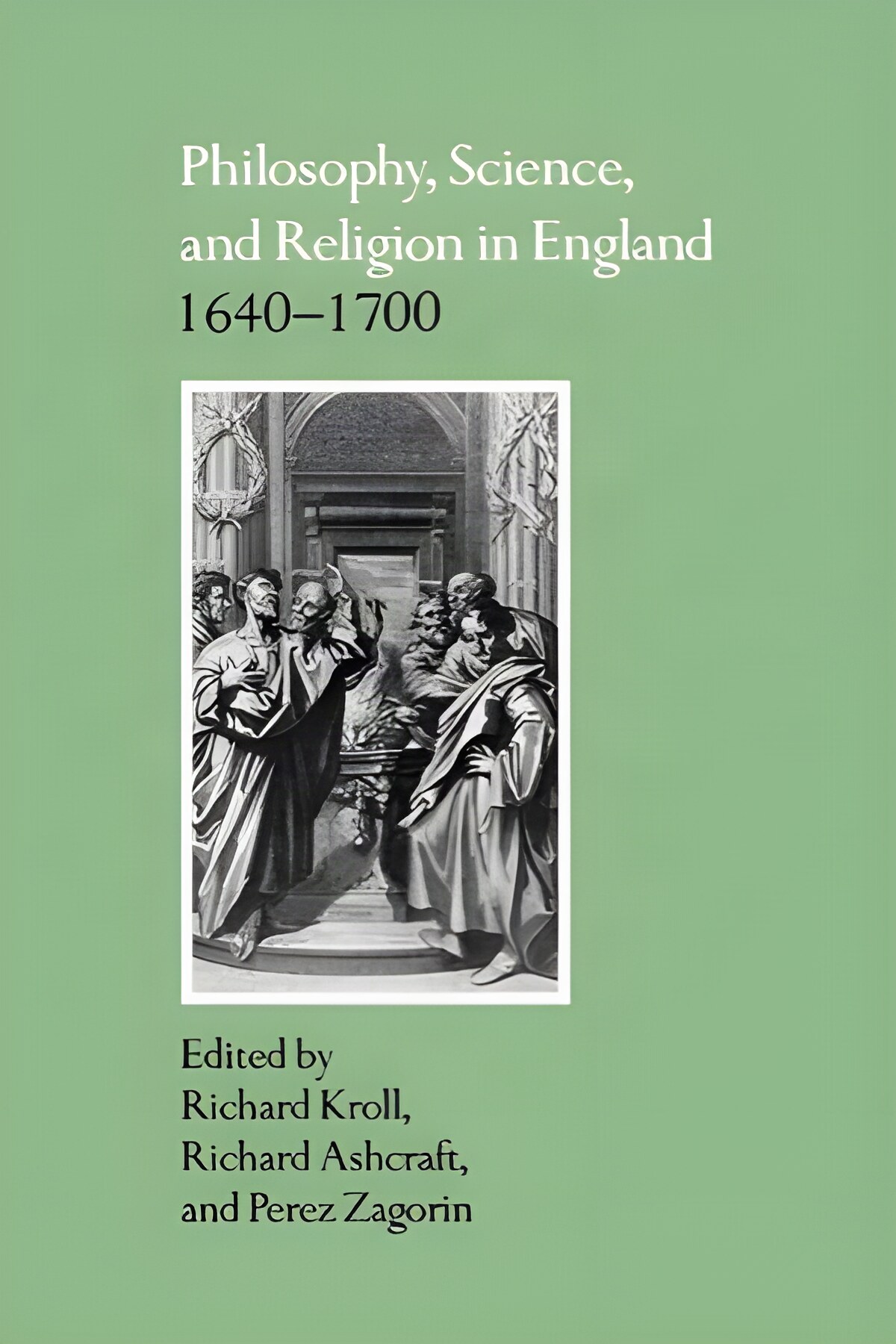
Hardcover. Oxford UK, Cambridge University Press, 1st, 1992, Book: Good, Dust Jacket: Very Good, Hardcover in a bright dust jacket, 287 pages. This collection of essays looks at the distinctively English intellectual, social and political phenomenon of Latitudinarianism, which emerged during the Civil War and Interregnum and came into its own after the Restoration, becoming a virtual orthodoxy after 1688. Dividing into two parts, it first examines the importance of the Cambridge Platonists, who sought to embrace the newest philosophical and scientific movements within Church of England orthodoxy, and then moves into the later seventeenth century, from the Restoration onwards, culminating in essays on the philosopher John Locke. These contributions establish a firmly interdisciplinary basis for the subject, while collectively gravitating towards the importance of discourse and language as the medium for cultural exchange. The variety of approaches serves to illuminate the cultural indeterminacy of the period, in which inherited models and vocabularies were forced to undergo revisions, coinciding with the formation of many cultural institutions still governing English society. Name on front fly, pencil marking to about 20 pages.
Hardcover. NY, Arno Press, reprint, 1977, Book: Very Good, Dust Jacket: None, Hardcover, green cloth with silver lettering on spine and front cover, A facsimile reprint of the corrected 1716 4th edition published in London. Sixteen sermons with notes and observations. Name on front fly leaf otherwise a clean, bright copy.
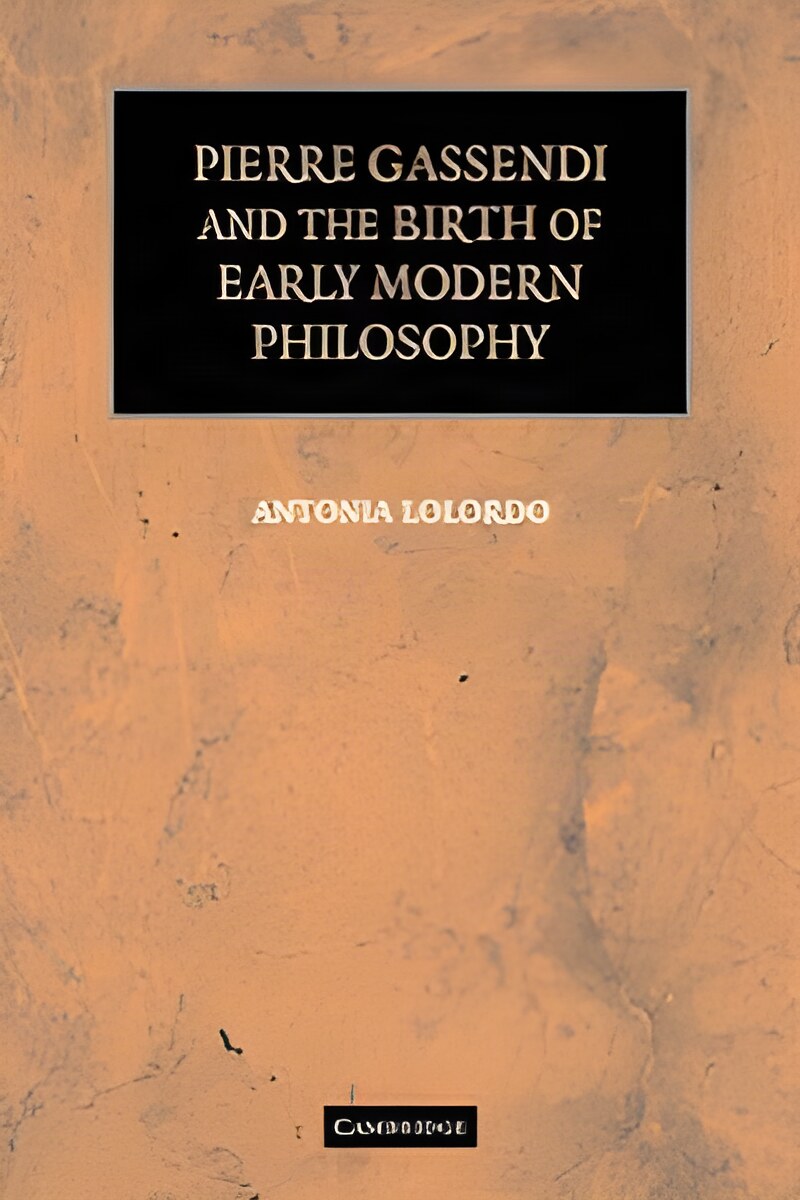
Hardcover. Cambridge UK, Cambridge University Press , 1st, 2007, Book: Very Good, Dust Jacket: Very Good, Hardcover in a bright dust jacket, 283 pages. This book offers a comprehensive treatment of the philosophical system of the seventeenth-century philosopher Pierre Gassendi. Gassendi's importance is widely recognized and is essential for understanding early modern philosophers and scientists such as Locke, Leibniz and Newton. Offering a systematic overview of his contributions, LoLordo situates Gassendi's views within the context of sixteenth- and early seventeenth-century natural philosophy as represented by a variety of intellectual traditions, including scholastic Aristotelianism, Renaissance Neo-Platonism, and the emerging mechanical philosophy. LoLordo's work will be essential reading for historians of early modern philosophy and science. Name on front fly leaf, otherwise clean.
Hardcover. New York, The Century Company, 1st illustrated, 1898, Book: Very Good, Dust Jacket: None, Hardcover, 184 pages. 12x 13". Illustrated with b&w drawings.by the Rhead brothers. Decoration on front cover in limited color of a man running away. Previous owner's bookplate inside front cover. Small dent on rear cover edge. The cover is worn and slightly soiled and age-darkened but otherwise clean copy.
Hardcover. London, Arcperiplus Publishing, 1st, 2002, Book: Near Fine, Dust Jacket: Near Fine, Hardcover, 177 pages, color photographs of Buddhist pilgrims by Lena Herzog. Brief essay by Werner.
Hardcover. New York, William Morrow and Company, Inc., 1st, 1994, Book: Very Good, Dust Jacket: Very Good, 128 pages. Hardcover. Color and b/w illustrations throughout. Dust jacket unclipped. Gilt title on spine. Dust jacket has a little bit of chipping at top of spine, patched with tape. Otherwise great. Clean and unmarked inside. Gilt endpapers.
Hardcover. New York, W. W. Norton, 1st, 1976, Book: Very Good, Dust Jacket: Good, Hardcover in a very good plus dust jacket. 192 pages. Color frontispiece, color photographs, illustrations, diagrams, bibliography, index. The dust jacket has very minor edgewear. A photographic look at some of the earlier churches built in North America.
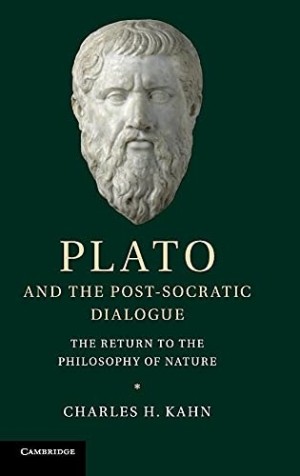
Hardcover. UK, Cambridge University Press, 1st, 2013, Book: Very Good, Dust Jacket: Very Good, Hardcover in a bright dust jacket, 249 pages. Plato's late dialogues have often been neglected because they lack the literary charm of his earlier masterpieces. Charles Kahn proposes a unified view of these diverse and difficult works, from the Parmenides and Theaetetus to the Sophist and Timaeus, showing how they gradually develop the framework for Plato's late metaphysics and cosmology. The Parmenides, with its attack on the theory of Forms and its baffling series of antinomies, has generally been treated apart from the rest of Plato's late work. Kahn shows that this perplexing dialogue is the curtain-raiser on Plato's last metaphysical enterprise: the step-by-step construction of a wider theory of Being that provides the background for the creation story of the Timaeus. This rich study, the natural successor to Kahn's earlier Plato and the Socratic Dialogue, will interest a wide range of readers in ancient philosophy and science. Name and date on front fly leaf otherwise clean.
Softcover. Souix City IA, Parnassos Press, 1st, 2019, Book: Very Good, Dust Jacket: None, Softcover, 312 pages. This book is born from a desire to understand how Plato influenced and was influenced by the intellectual culture of Western Greece, the ancient Hellenic cities of Sicily and Southern Italy. In 2018, a seminar on Plato at Syracuse was organized, in which a small group of scholars discussed a new translation of the Seventh Letter and several essays on the topic. The essays consider the historical, political, and philosophical implications of Plato's involvement in Syracuse. They also look at the reception of his voyage among fellow philosophers, ancient and modern. Clean copy.
Hardcover. Cambridge UK, Cambridge University Press, 1st, 2004, Book: Very Good, Dust Jacket: Very Good, Hardcover in a bright dust jacket, 218 pages. The Timaeus-Critias is concerned with cosmology and Plato's claim that its central task is to articulate the way in which the cosmos manifests the values of goodness and beauty. This book examines this important dialogue in its entirety using current methods of Platonic scholarship. Arguing that Aristotle's physics is far closer to the Timaeus than usually realized, the study's other prominent findings reinforce the dialogue's essentially moral message, and clarify its literary character.

 "Pearls & Corals: Al-Lu'lu'wal-Marjan: Arabic-English: A Collection of Agreed upon Ahadith from Al-Bukhari & Muslim (2 volume set) (ARABIC TEXT WITH ENGLISH TRANSLATIONS)by:")


 "Petrarch: The First Modern Scholar and Man of Lettersby: James Harvey Robinson")

 "Philodemus: on Methods of Inference. A Study in Ancient Empiricism by: Philodemus, Philip Howard De Lacey, Estelle Allan De Lacey")
 "Philosophical Writings of Etienne Bonnot, Abbe De Condillac:by: Franklin Philip/ Harlan Lane")
 "Physico-Theology: Or, A Demonstration of the Being and Attributes of God, From His Works of Creationby: William Derham")

 "Pilgrims: Becoming the Path Itselfby: Herzog, Lena and Werner")



 "Plato's Natural Philosophy: A Study of the Timaeus-Critiasby: Johansen, Thomas Kjeller")