Hardcover. Amherst MA, University of Massachusetts Press, 1st US, 1976, Book: Very Good, Dust Jacket: Very Good, Hardcover in a bright blue dust jacket, 143 pages. Edited by P. T. Geach and A. J. P. Kenny. Name on front fly leaf, light pencil notations to 20 pages.
Hardcover. Leiden/Boston, Brill, 1st, 2002, Book: Very Good, Dust Jacket: None, Hardcover, decorated cloth, 482 pages. This book explores the dynamics of the commentary and textbook traditions in Aristotelian natural philosophy under the headings of doctrine, method, and scientific and social status. It inquires what the evolution of the Aristotelian commentary tradition can tell us about the character of natural philosophy as a pedagogical tool, as a scientific enterprise, and as a background to modern scientific thought. In a unique attempt to cut old-fashioned historiographic divisions, it brings together scholars of ancient, medieval, Renaissance and seventeenth-century philosophy. The book covers a remarkably broad range of topics: it starts with the first Greek commentators and ends with Leibniz. Small ink stamp on front fly leaf, otherwise clean.
Hardcover. New Delhi, Oriental Books Reprint Corp., reprint, 1979, Book: Very Good, Dust Jacket: None, Hardcover, blue cloth with yellow lettering on spine, 328 pages including index. Originally published in London in 1936. Bright, clean copy.
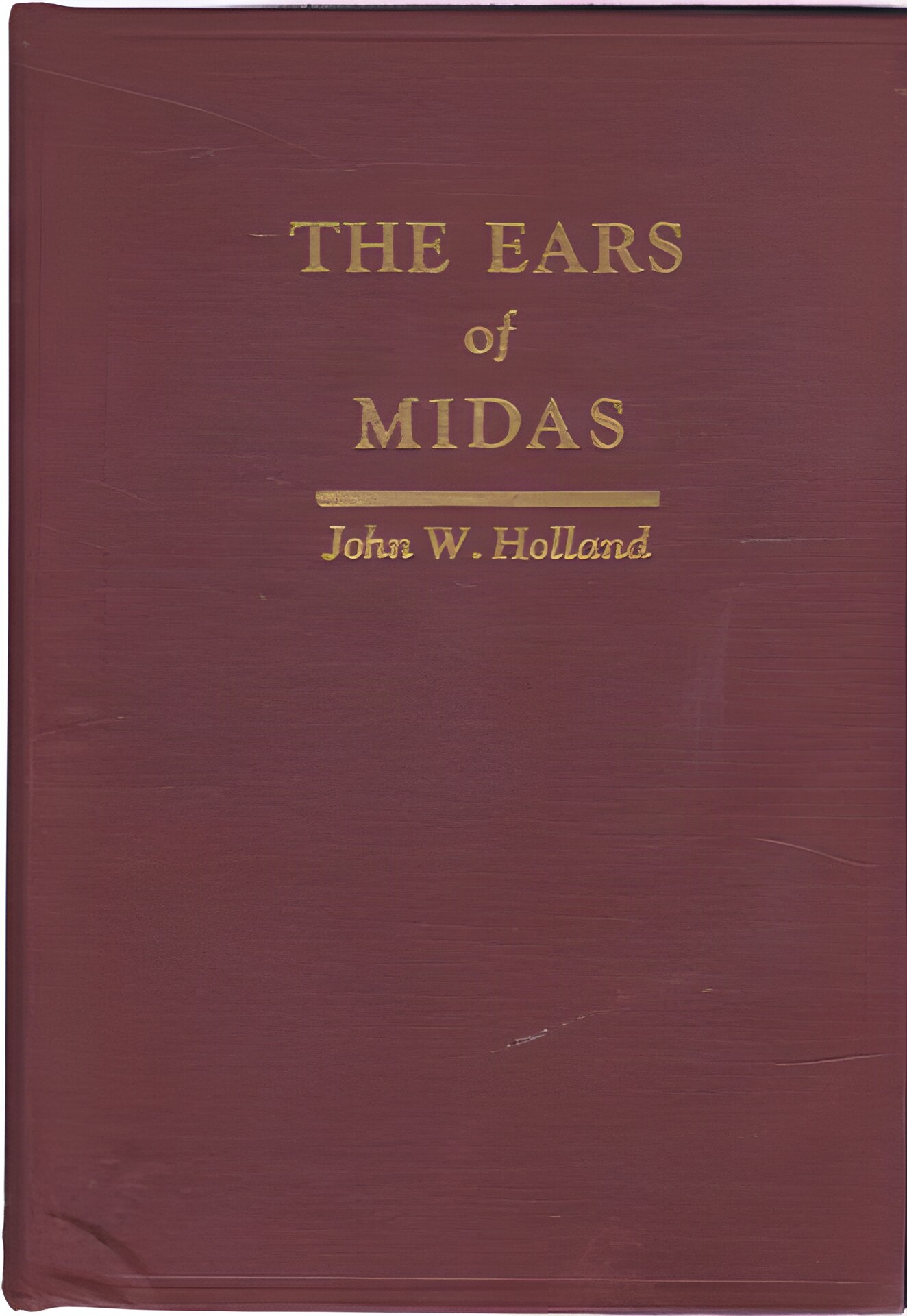
Hardcover. Chicago, The Prairie Press, 1st, 1935, Book: Very Good, Dust Jacket: None, Hardcover, brown cloth with gilt lettering to spine and front cover, 144 pages. A collection of radio sermons by a pastor broadcast on WLB, a midwest radio station in the 1930s. INSCRIBED BY HOLLAND on the title page. Clean copy.
Hardcover. Berlin/Boston, De Gruyter, 1st, 2016, Book: Very Good, Dust Jacket: None, Hardcover, blue boards, 205 pages. INSCRIBED BY PERLMAN on the front fly leaf. Abraham Heschel believed that the Holocaust was an "Eclipse of Humanity." In the philosophical and historical context in which it occurred, Heschel saw this eclipse as embedded in the phenomenological approach of Heidegger. Focusing on their respective phenomenological methods, attitudes toward being, Heschel's view of Adam and Heidegger's notion of Dasein, this book is an analysis of Heschel's critique of Heidegger and the postmodernism that followers of Heidegger espoused. Clean, bright copy.
Hardcover. UK, Cambridge University Press, 1st, 1993, Book: Very Good, Dust Jacket: Very Good, Hardcover in a bright jacket, b&w illustrations, 167 pages. Donald Davie is the foremost literary critics of his generation and one of its leading poets. His career has been marked by a series of challenging critical interventions. The eighteenth century is the great age of the English hymn though these powerful and popular texts have been marginalized in the formation of the conventional literary canon. These are poems which have been put to the text of experience by a wider public than that generally envisaged by literary criticism, and have been kept alive by congregations in every generation. Davie's study of the eighteenth-century hymn and metrical psalm brings to light a body of literature forgotten as poetry: work by Charles Wesley and Christopher Smart, Isaac Watts and William Cowper, together with several poets unjustly neglected, such as the mysterious John Byron.
Hardcover. NY, Oxford University Press, 1st, 2018, Book: Very Good, Dust Jacket: Very Good, Hardcover in a bright dust jacket, 239 pages. The Harvard philosopher Donald C. Williams (1899-1983) was a key figure in the history of analytic philosophy. He played a crucial role in reviving metaphysics at a time when other philosophers ridiculed, criticized, and committed it to the flames. He constructed an explanatorily powerful and parsimonious ontology and cosmology founded on logic, science, and common sense. His most influential articles were on the metaphysics of properties ('The Elements of Being') and the meta-physics of time ('The Sea Fight Tomorrow', 'The Myth of Passage'). His ontology of abstract particulars or tropes and his four-dimensional manifold theory of time remain leading hypotheses in metaphysics. Because of his novel contributions and his defense of metaphysics he made a lasting impact on philosophers of the next generation who in turn believed in the substance of metaphysical inquiry. Name on front fly leaf, light pencil marking to first 30 pages. Otherwise clean, very good.
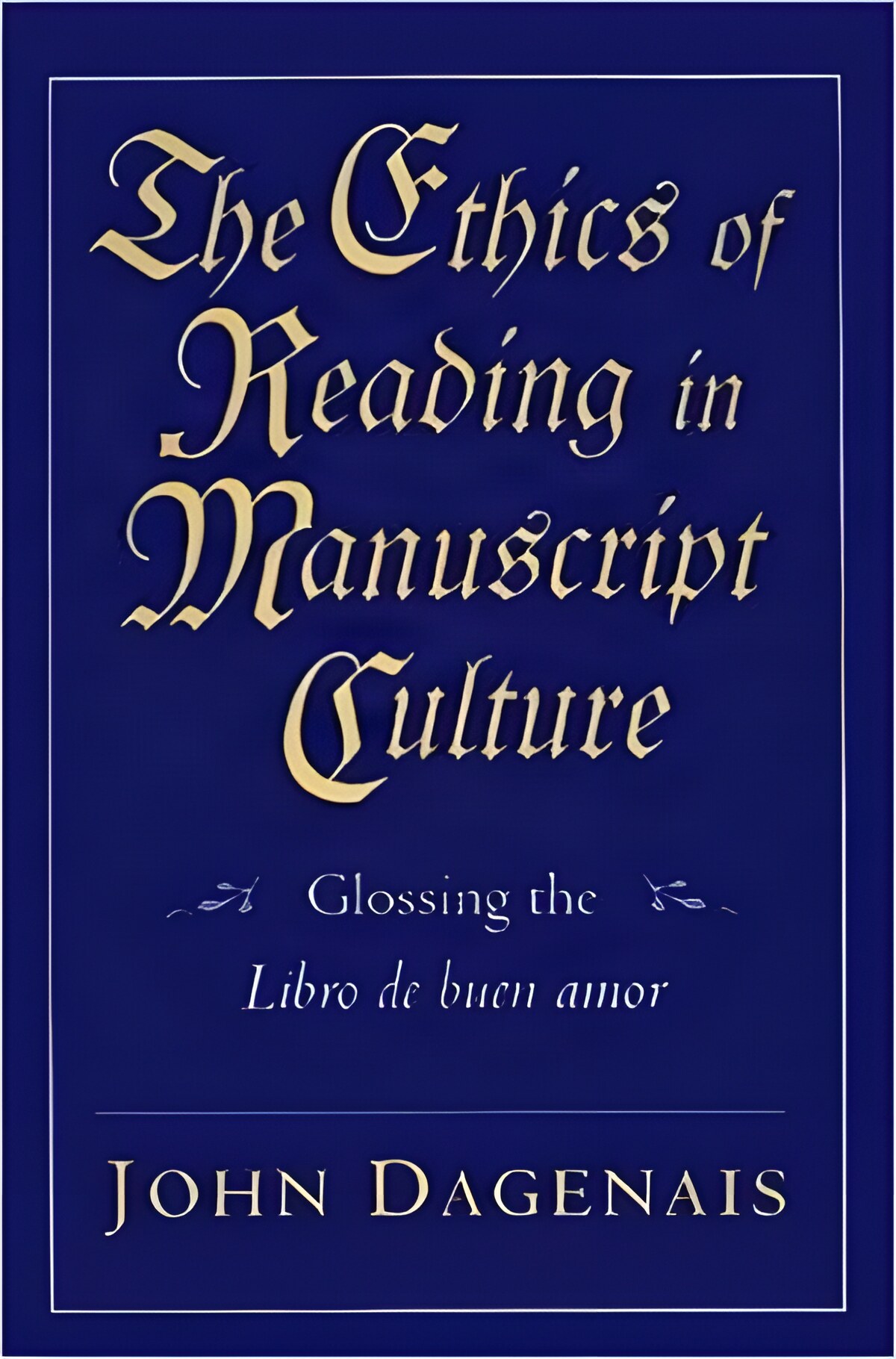
Hardcover. Princeton NJ, Princeton University Press, 1st, 1994, Book: Good, Dust Jacket: Good, Hardcover in a dust jacket with minor wear, 278 pages. A re-examination of the roles played by authors, readers, scribes and texts in medieval literature, which describes how consideration of marks on the physical manuscript - elements added by scribes and readers - can shed light on interpretive issues that have puzzled modern readers. Light underlining to 18 pages in first chapter.
Softcover. Indianapolis, Liberty Fund, reprint, Book: Very Good, Dust Jacket: None, Softcover, 211 pages. Edited and with an Introduction by Blair Worden. This edition brings back into print, after two and a half centuries, the pioneering work of English republicanism, Marchamont Nedham's The Excellencie of a Free-State, which was written in the wake of the execution of King Charles I. First published in 1656, and compiled from previously written editorials in the parliamentarian newsbook Mercurius Politicus, The Excellencie of a Free-State addressed a dilemma in English politics, namely, what kind of government should the Commonwealth adopt? Clean, bright copy.
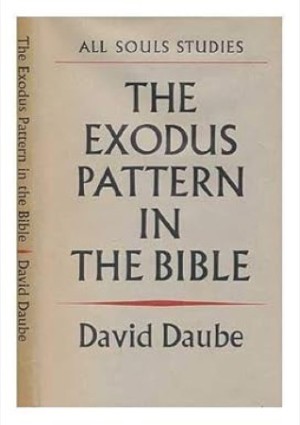
Hardcover. London, Faber & Faber, 1st, 1963, Book: Very Good, Dust Jacket: Very Good, Hardcover in a bright dust jacket, 94 pages. David Daube was a scholar of Roman and Jewish law, and his expertise led him to some unique scriptural insights. In this stimulating monograph, Daube argues that the Bible presents the exodus as a judicial proceeding, with Egypt coming under God's judgment for its treatment of the Israelite slaves. He shows that this judicial model explains some unusual details of the narrative. For example, Moses' negotiations with Pharaoh and the fact that Israelite women were given jewelry before their departure are part of implementing the proper procedures for releasing slaves as outlined in Deut 15:13. Daube also brings out parallels in the biblical accounts of Israel's release from Egypt, Jacob's departure from Laban in Gen 31, and the release of the captured ark of the covenant by the Philistines in I Sam 6. Name on front fly leaf, light pencil notations to several pages.
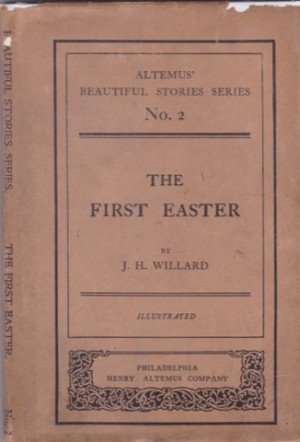
Hardcover. Philadelphia, Henry Altemus, 1st, 1906, Book: Very Good, Dust Jacket: Good, Hardcover, 50 pages. Original white cloth over boards with gilt lettering, front cover decorative color illustration, color frontis. b&w plates. DJ moderately soiled w/ light chipping to edges. Scarce in DJ. Part of Altemus' beautiful stories series.
Hardcover. Binghamton NY, Medieval & Rennaissance Texts & Studies, 1st, 1993, Book: Very Good, Dust Jacket: None, Hardcover, blue cloth with gilt lettering and design to spine and front cover. 652 pages. Identical binding to the Harvard University Press set. Clean, bright copy.
Hardcover. Binghamton NY, Medieval & Rennaissance Texts & Studies, 1st, 1993, Book: Very Good, Dust Jacket: None, Hardcover, blue cloth with gilt lettering and design to spine and front cover. pages 653-1247. Identical binding to the Harvard University Press set. Errata slip taped to front fly leaf, otherwise clean, bright copy.
Hardcover. Cambridge MA, Harvard University Press , 1st, 1981, Book: Very Good, Dust Jacket: None, Hardcover, blue cloth with gilt lettering and design to spine and front cover. The writings of Richard Hooker are of central interest to those studying English Renaissance thought and literature. In this, the third volume of a much-needed critical edition of the Works of Richard Hooker, are the posthumous books of the Laws of Ecclesiastical Polity. Hooker planned the Laws in eight books, but he died shortly after publication of Book Five. Books Six, Seven, and Eight, which contain his analysis of jurisdiction, episcopacy, and the royal supremacy, are here transcribed from versions that have the most authority. The volume also includes Hooker's autograph notes toward those texts (brought to light by P. G. Stanwood in the course of his research) and the contemporary notes by George Cranmer and Edwin Sandys on a lost draft of Book Six. Mr. Stanwood's introduction lays to rest all doubts about the authenticity of the last three books as we have them, doubts current since publication of Walton's Life of Hooker in 1662.Clean, bright copy.
Hardcover. Cambridge MA, Harvard University Press , 1st, 1990, Book: Very Good, Dust Jacket: None, Hardcover, blue cloth with gilt lettering and design to spine and front cover, 926 pages. Although Richard Hooker (1554-1600) is now known principally as the author of the Laws of Ecclesiastical Polity, in his lifetime the Tractates and Sermons brought him greater notoriety. Hooker's views on justification, the perseverance of faith, and the relationship of the Church of Rome to the reformed Church of England were widely reported, and texts of the tracts were extensively circulated in manuscript. Thanks to the meticulous editing of Laetitia Yeandle, Curator of Manuscripts at the Folger Shakespeare Library, the contemporary impact of these debates can now be appreciated for the first time. These tracts provide a unique perspective on the turbulent world of late Elizabethan theology. In addition, they lay the doctrinal foundations of the Laws of Ecclesiastical Polity itself and-with the excellent commentary of Egil Grislis, Professor of Theology at the University of Manitoba in Winnipeg, enable us to trace the intellectual formation of sixteenth-century England's most innovative and provocative theologian. The volume includes a newly discovered letter; three newly attributed sermon fragments; and analysis by P. F. Forte of Hooker's distinctive preaching style. Clean, bright copy.
Hardcover. Cambridge MA, Harvard University Press, 1st, 1982, Book: Very Good, Dust Jacket: None, Hardcover, blue cloth with gilt lettering and design to spine and front cover. 274 pages. Clean, bright copy.
Hardcover. Cambridge MA, Harvard University Press, 1st, 1977, Book: Very Good, Dust Jacket: None, Hardcover, blue cloth with gilt lettering and design to spine and front cover. 552 pages. Clean, bright copy.
Hardcover. London, Rider & Co., 1st, 1928, Book: Very Good, Dust Jacket: None, Hardcover, green cloth covers, black lettering on spine, 143 pages. A spiritual guidebook that explores the four major initiations of the human soul. The book delves into the spiritual journey of the soul and its evolution through the four initiations: Birth, Baptism, Transfiguration, and Resurrection. Conroy draws on the teachings of ancient wisdom traditions and modern spiritual practices to provide readers with a comprehensive understanding of these initiations and their significance in the spiritual path. The book is written in a clear and accessible language and provides practical exercises and meditations to help readers deepen their spiritual practice. Name on front fly leaf, inscription on dedication page. Otherwise a clean, tight copy.
Softcover. Kila MT, Kessinger Publishing, reprint, ND, Book: Very Good, Dust Jacket: None, Softcover, 217 pages. A facsimile edition from 1654 (per the preface by R Turner). Comprises two (of the six) books that made up Robert Turner's 1655 first English edition of Agrippa's "Fourth Book of Occult Philosophy." The books are "Of Occult Philosophy or Of Magical Ceremonies," by Agrippa (a work renowned as one of the most straight forward guides to evocation published) and "The Heptameron or Magical Elements" by Peter de Abano, a set of rituals of conjuration, mapped out by day. Clean copy.
Hardcover. London, William Collins, 1st, 2020, Book: Very Good, Dust Jacket: Very Good, Hardcover in a bright dust jacket, 342 pages, color photos. In 1976 James Crowden left his career in the British army and travelled to Ladakh in the Northern Himalaya, one of the most remote parts of the world. The Frozen River is his extraordinary account of the time he spent there, living alongside the Zangskari people, before the arrival of roads and mass tourism. James immerses himself in the Zangskari way of life, where meditation and week-long mountain festivals go hand in hand, and silence and solitude are the hallmarks of existence. When butter traders invite James on their journey down the frozen river Leh, he soon realises that this way of living, unchanged for centuries, comes with a very human cost. In lyrical prose, James captures a crucial moment in time for this Himalayan community. A moment in which their Buddhist practices and traditions are in flux, and the economic pull of a world beyond their valley is increasingly difficult to ignore.
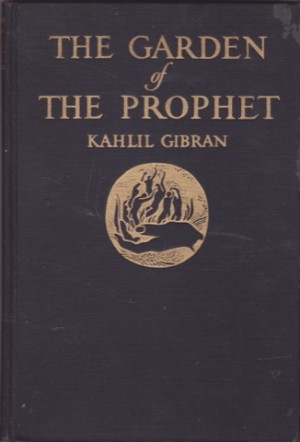
Hardcover. NY, Alfred A. Knopf, 1st, 1933, Hardcover, black cloth stamped with gilt title and design, 68 pages. Gilt lettering on spine with light fading. This is the first printing with 1933 on title page and First Edition stated on copyright page. Illustrated with seven drawings on glossy stock by Gibran and two facsimile manuscript pages, all present and intact. Previous owner's signature on front fly leaf, mild wear to covers, faint foxing to endpapers, otherwise clean.
Hardcover. Oakland CA, Pacific Press, reprint, 1888, Book: Good, Dust Jacket: None, Hardcover, leather bound with gilt lettering on spine and front cover. 704 pages, b&w illustrations. The book explores the ongoing spiritual conflict between good and evil from a Christian perspective, focusing on the consequences of humanity's choices throughout history. It seeks to illuminate the relationship between divine providence and human agency, ultimately aiming to provide readers with understanding and hope in the face of moral struggles and cosmic battles. The opening of this work introduces the foundational themes of the great controversy, beginning with a poignant depiction of Jesus' sorrow over Jerusalem's future destruction due to its rejection of Him. White emphasizes the spiritual blindness and rebellion of the people, reflecting on the historical and prophetic significance of Jerusalem as the chosen city of God. The author sets the stage for exploring the broader themes of persecution, apostasy, and the eventual triumph of good over evil, indicating that the narrative will trace historical events and divine truths that shape the ongoing struggle between Christ and Satan. Covers worn, short split to spine at top. Copyright page states 1888 with no other printings but one of the illustrated plates has a 1891 date, so assumed a reprint edition. The endpapers, front and back, are frayed, wrinkled. All edges gilt. Interior clean. Due to size and weight, DOMESTIC SHIPPING ONLY.
Hardcover. Edinburgh, T & T Clark, Revised Ed., 1991, Book: Very Good, Dust Jacket: Very Good, Hardcover in a bright dust jacket, 606 pages. Volume 2 ONLY. A New English Edition revised and edited by Geza Vermes, Fergus Millar and Matthew Black. Clean copy.
Hardcover. Edinburgh, T & T Clark, Revised Ed., 1998, Book: Very Good, Dust Jacket: Very Good, Hardcover in a bright dust jacket, 704 pages. Volume 3/Part 1 ONLY. A New English Edition revised and edited by Geza Vermes, Fergus Millar and Matthew Black. Critical presentation of the whole evidence concerning Jewish history, institutions, and literature from 175 BC to AD 135; with updated bibliographies. Name on front fly leaf, otherwise clean.


![The Dynamics of Aristotelian Natural Philosophy from Antiquity to the Seventeenth Centuryby: Herausgeber: Leijenhorst, C., Herausgeber: L]thy, C., Herausgeber: Thijss](https://www.browsingisarousing.com/shop/images/383974.jpg "The Dynamics of Aristotelian Natural Philosophy from Antiquity to the Seventeenth Centuryby: Herausgeber: Leijenhorst, C., Herausgeber: L]thy, C., Herausgeber: Thijss")

 "The Eclipse of Humanity: Heschel's Critique of Heidegger (INSCRIBED COPY)by: Perlman, Lawrence")

 "The Elements and Patterns of Being: Essays in Metaphysics by: Williams, Donald C. (Editor: Fisher, A. R. J.)")



![The Folger Library Edition of the Works of Richard Hooker: Of the Lawes of Ecclesiastical Polity: Attack and Response - Volume Four ] by: Richard Hooker/ John E. Boot](https://www.browsingisarousing.com/shop/images/The-Folger-Library-Edition-of-the-Works-of-Richard-Hooker-Of-the-Lawes-of-Ecclesiastical-Polity-Atta386149-437874.jpg "The Folger Library Edition of the Works of Richard Hooker: Of the Lawes of Ecclesiastical Polity: Attack and Response - Volume Four ] by: Richard Hooker/ John E. Boot")

 "The Fourth Book of Occult Philosophyby: Henry Cornelius Agrippa")

 "The Great Controversy Between Christ and Satan During the Christian Dispensationby: Ellen Gould Harmon White")

 "The History of the Jewish People in the Age of Jesus Christ: Volume III.1by: Emil Schurer")