Softcover. Princeton NJ, Princeton University Press, 1st, November 1989, Book: Very Good, Dust Jacket: None, Softcover, 325 pages. Clean, unmarked copy with only minor edgewear to wrappers.
Hardcover. UK, Clarendon Press, 1st, 1982, Book: Very Good, Dust Jacket: Very Good, Hardcover in a bright dust jacket, 314 pages. Presents a close discussion of each of the several topics arising in the chapter on the Paralogisms in Kant's Critique of Pure Reason: the mind's immateriality, simplicity, substantiality, relation to embodiment and the external world, identity, immortality, freedom, and ideality.
Hardcover. London, Jonathan Cape, Reprint, 1960, Book: Very Good, Dust Jacket: Very Good, Hardcover, 350 pages. Previous owners stamp on front endpaper. Dust jacket shows standard wear. Clean, tight copy.
Hardcover. London, Lutterworth, 1st UK, 1955, Book: Very Good, Dust Jacket: None, Hardcover, blue cloth with faded gilt lettering on spine, 115 pages. A fascinating glimpse into the debate in Scandinavia concerning a number of inter-related Biblical themes focused on the concept of the Messiah, a debate associated with scholars such as Mowinckel, Pedersen, Widengren, and Bentzen himself. The argument traces the development of the Messianic figure from its Old Testament roots, starting with the Messiah of many of the Psalms, which represents a demythologised form of the Oriental conception of kingship, through the eschatologised Messiah of the prophetic thought of Isaiah and Micah, and then to the prophet-Messiah of Second Isaiah, which although still a present and entirely human figure, embodies the insight that the saviour of Israel must suffer and be cast in the role of a Moses Redivivus as leader of a new Exodus. The Son of Man of Daniel 7 carries this eschatologising process even further, until the Christology of the New Testament emerges as a creative synthesis of these Old Testament types. In this synthesis, Jesus is a new Adam, the Messiah present in the flesh and present still in His body the Church, the suffering Prophet playing the part of the new Moses and the once and future Divine King. Bentzen argues that ultimately this figure of Christ the Messiah transcends not only the Old Testament types on which it is based, but also the subsequent historical development of the Christian Messianic tradition.
Hardcover. NY, Knopf, 1st, 1929, Book: Very Good, Dust Jacket: None, Hardcover, green cloth stamped with black design. Shows some minor wear but mostly a clean, nice copy. Black & white illustrations by Daugherty. No dust jacket.
Hardcover. Chez Rene' Pean, 1st thus, 1680, Book: Good, Dust Jacket: None, 648 pages. Hardcover. Brown leather bound cover boards (age wear-see images) with faded gilt title on spine and raised bands. Front cover board completely separated from spine with front flyleaf. Previous owner's notes on preliminary page, dated "1694 16 November". Dark brown dyed edges. Tanning to pages (some partially detached from spine) from age. A few stray ink marks on pages. Christian devotions in French text.
Softcover. Paris, Les Impressions Nouvelles, 1st thus, 1988, Book: Very Good, Dust Jacket: None, Softcover, 540 pages. FRENCH TEXT. Name on front fly leaf otherwise clean, tight copy.
Softcover. Torino IT, Claudiana, 1st, 1992, Book: Very Good, Dust Jacket: None, Softcover, laminated wrappers, 526 pages, b&w illustrations. ITALIAN TEXT. Labels inside covers, from university library but like new, never checked out.
Hardcover. London, England, SPCK, 1st Edition, 1950, Book: Very Good, Dust Jacket: None, 175 pages. Hardcover. Red cover boards, fading to spine and edges, gilt title on spine. Pages unmarked. Binding tight. Spine straight. The Epitome covers a wide range of topics, including the nature of God, the creation of the world, the fall of man, the life and teachings of Jesus Christ, and the end of the world. It also discusses various aspects of Christian morality.
Hardcover. Cincinnati, Poe & Hitchcock, 1st, 1860, Book: Very Good, Dust Jacket: None, Hardcover, 762 pages, b&w illustrations. Cloth and leather covers. Some foxing to pages, edgewear to covers, some pages dog-eared, else a very nice, tight copy.
Hardcover. NY, March & Greenwood, 1st, 1938, Book: Very Good, Dust Jacket: None, Hardcover, purple cloth with gilt lettering on spine. 23.4*16.3cm, 123 pages. Printed on one side of double leaves, folded once in Chinese style. Now uncommon in commerce, this was the first English translation by a Chinese scholar of the foundational book of Taoism. The enigmatic polymath Dr Sum Nung Au-Young (1893-1942) was an accomplished poet, philosopher, lawyer and economist. There is some faint discoloration but hardly visible unless held at an angle, otherwise a very good hardcover. "Author's edition".
Hardcover. Philadelphia, University of Pennsylvania Press, 1st, 1977, Book: Very Good, Dust Jacket: Good, Hardcover ina worn, rubbed dust jacket. 340 pages. Essays exploring the impact of Church law on medieval legal theory. Clean copy.
Hardcover. Paris, Desaint et Saillant, 1764, Book: Good, Dust Jacket: None, 642 pages, leather bound with spine label and raised bands. FRENCH TEXT. Copy that belonged to children's author Edith Thacher, with her signature, Paris 1929 on front fly leaf (She wrote Goodnight Moon, among many other classics). Marbled end papers, overall very good.
Hardcover. Berkeley CA, University of California Press, 1st, 1985, Book: Very Good, Dust Jacket: Very Good, Hardcover in a bright dust jacket, 423 pages. Volume III only. Edited by Peter C. Hodgson. Translated from the German by R. F. Brown, et al. The third volume of philosopher G.W.F. Hegel's LECTURES ON THE PHILOSOPHY OF RELIGION covers Hegel's philosophical interpretation of Christianity. Taken together, the three volumes establish a critical study, separating the material and publishing it as autonomous units on the basis of a complete re-editing of the sources--a series of actual lectures delivered by Hegel in 1821, 1824, 1827, and 1831. Name on front fly leaf, otherwise clean.
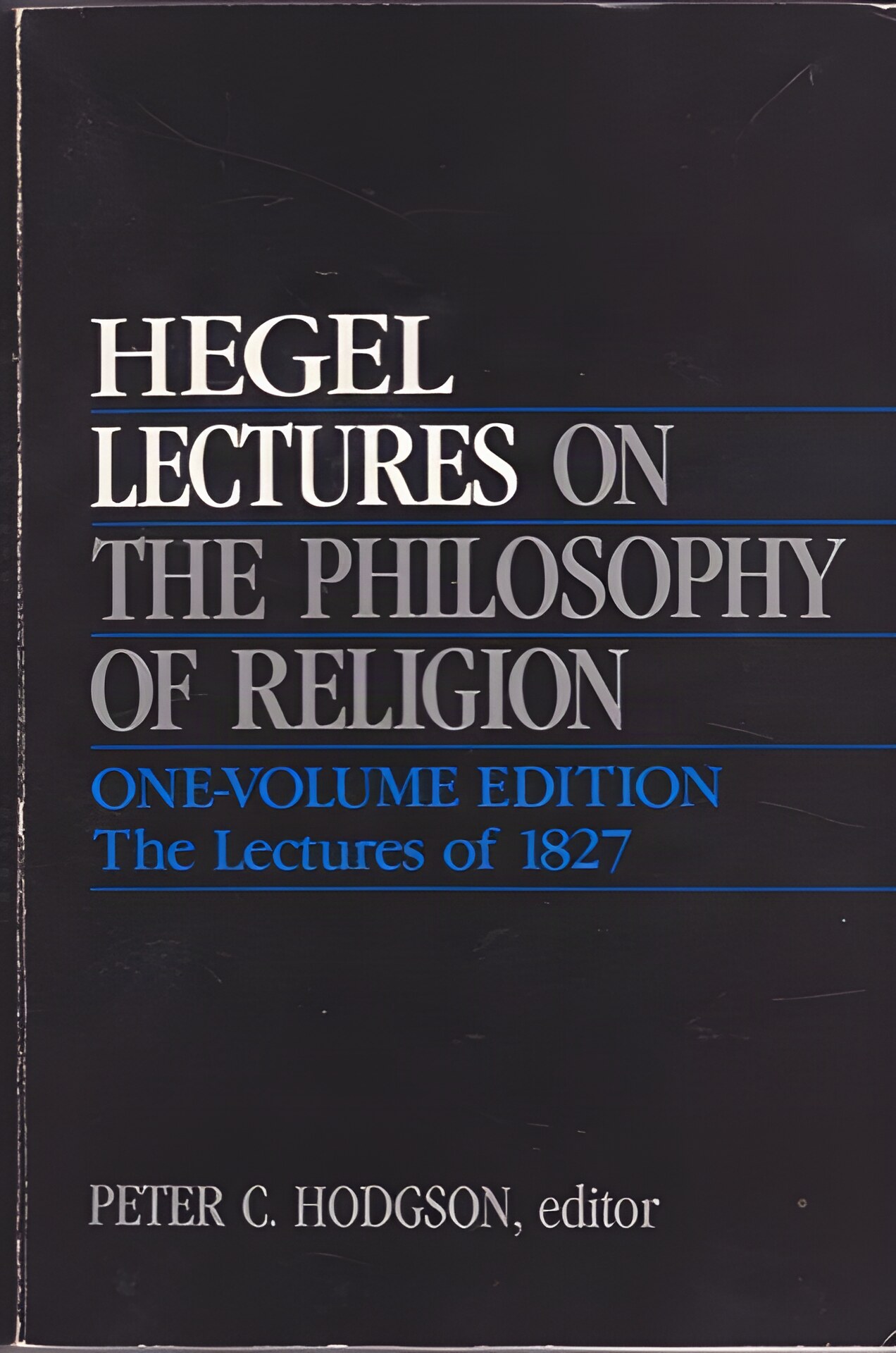
Softcover. Berkeley, University of California Press, reprint, 1988, Book: Very Good, Dust Jacket: None, Sotcover, 552 pages. From the complete three-volume critical edition of Hegel's Lectures on the Philosophy of Religion, this edition extracts the full text and footnotes of the 1827 lectures, making the work available in a convenient form for study. Of the lectures that can be fully reconstructed, those of 1827 are the clearest, the maturest in form, and the most accessible to nonspecialists. In them, readers will find Hegel engaged in lively debates and in important refinements of his treatment of the concept of religion, the Oriental religions and Judaism, Christology, the Trinity, the God-world relationship, and many other topics. Name onfront fly leaf, otherwise clean.
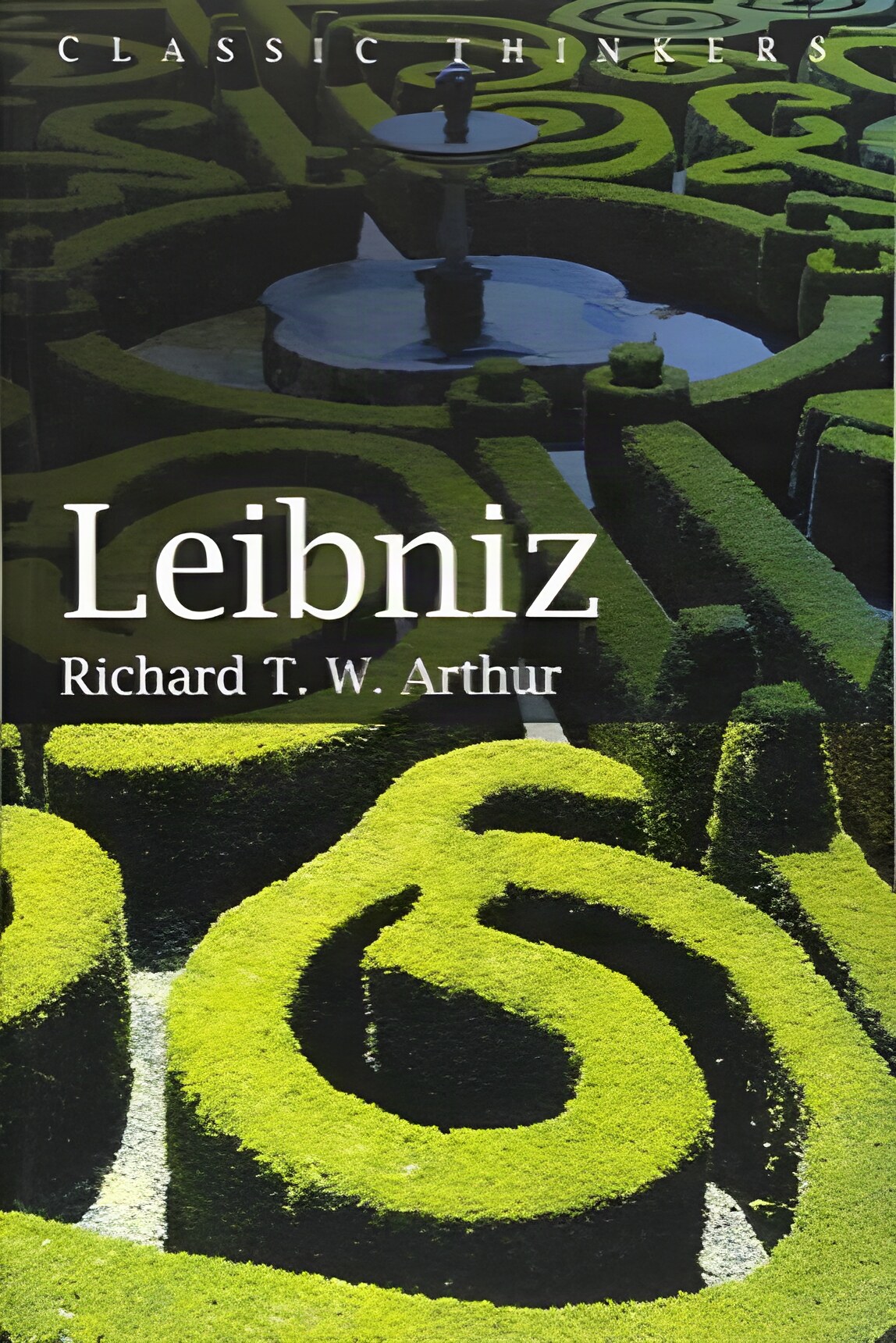
Softcover. Cambridge UK, Polity, reprint, 2014, Book: Very Good, Dust Jacket: None, Softcover, 231 pages. Few philosophers have left a legacy like that of Gottfried Wilhelm Leibniz. He has been credited not only with inventing the differential calculus, but also with anticipating the basic ideas of modern logic, information science, and fractal geometry. He made important contributions to such diverse fields as jurisprudence, geology and etymology, while sketching designs for calculating machines, wind pumps, and submarines. But the common presentation of his philosophy as a kind of unworldly idealism is at odds with all this bustling practical activity. In this book Richard. T. W. Arthur offers a fresh reading of Leibniz's philosophy, clearly situating it in its scientific, political and theological contexts. He argues that Leibniz aimed to provide an improved foundation for the mechanical philosophy based on a new kind of universal language. His contributions to natural philosophy are an integral part of this programme, which his metaphysics, dynamics and organic philosophy were designed to support. Rather than denying that substances really exist in space and time, as the idealist reading proposes, Leibniz sought to provide a deeper understanding of substance and body, and a correct understanding of space as an order of situations and time as an order of successive things. Clean, bright copy.
Hardcover. Chicago, University Of Chicago Press, 1st US, 2001, Book: Very Good, Dust Jacket: Very Good, 440 pages. Hardcover with dust jacket and slipcase. Full color and black & white illustrations. Beautiful copy with light sunning to dust jacket spine, Clean, tight copy. The technical problems with the Last Supper began as soon as Leonardo started to paint it. He jettisoned the traditional fresco technique of applying paint to wet plaster, a method unsuited to Leonardo's slow and thorough execution, and created the work instead with an experimental technique that involved painting directly on the dry plaster. With this renegade method, Leonardo rendered one of the most enduring painting techniques volatile and unstable. Added to this initial complication have been centuries of pollution, tourists, candle smoke, and the ravages of age, not to mention food fights in the refectory staged by Napoleonic soldiers and Allied bombs in 1943. By the middle of the twentieth century, the Last Supper was in desperate need of a complete restoration. Pinin Brambilla Barcilon was chosen to head this twenty-year project, and Leonardo, The Last Supper is the official record of her remarkable effort. It first documents the cleaning and removal of the overpainting performed in the other attempts at restoration and then turns to Barcilon's meticulous additions in watercolor, which were based on Leonardo's preparatory drawings, early copies of the painting, and contemporary textual descriptions. This book presents full-scale reproductions of details from the fresco that clearly display and distinguish Leonardo's hand from that of the restorer. With nearly 400 sumptuous color reproductions, the most comprehensive technical documentation of the project by Barcilon, and an introductory essay by art historian and project codirector Pietro C. Marani that focuses on the history of the fresco,
Hardcover. NY, Macmillan, 1st, 1991, Book: Very Good, Dust Jacket: None, Hardcover picture book, pictorial laminated boards. The Biblical creation story, retold and illustrated in color by Baynes. Clean.
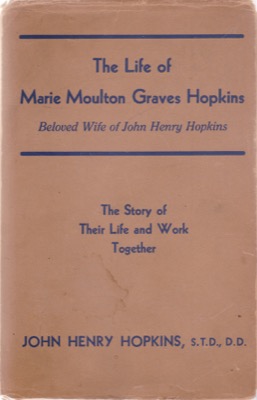
Hardcover. Grans Isle VT, Privately Printed, 1st, 1934, Book: Very Good, Dust Jacket: Good, Hardcover, 265 pages, 8 b&w plates. Signed by the author on half title page and with a letter by he author laid-in. Dust jacket is missing a few small chunks around the edges of the spine and light soil. Clean, tight copy.
Hardcover. UK, Imprint Academic, 1st, 2004, Book: Very Good, Dust Jacket: Very Good, 208 pages. Clean, unmarked copy with only minor wear to dust jacket. This book examines Oakeshott's political philosophy within the context of his more general conception of philosophical understanding. The book stresses the underlying continuity of his major writings on the subject and takes seriously the implications of understanding the world in terms of modality. The book suggests strongly that Oakeshott's philosophy of political activity cannot be reduced to a branch of conservatism, liberalism, or postmodernism or a theory or set of doctrines which fit neatly into any conventional school, like that of Idealism or Skepticism. Rather, Oakeshott's philosophy of political activity is a provocation to all of the currently dominant schools of political theory and political practice. It questions their presuppositions and exposes as ambiguous, arbitrary, or confused all of the supposed certainties which they take for granted. It does all this by offering profound insights into the character and limits of both political activity and political theory in the modern world.
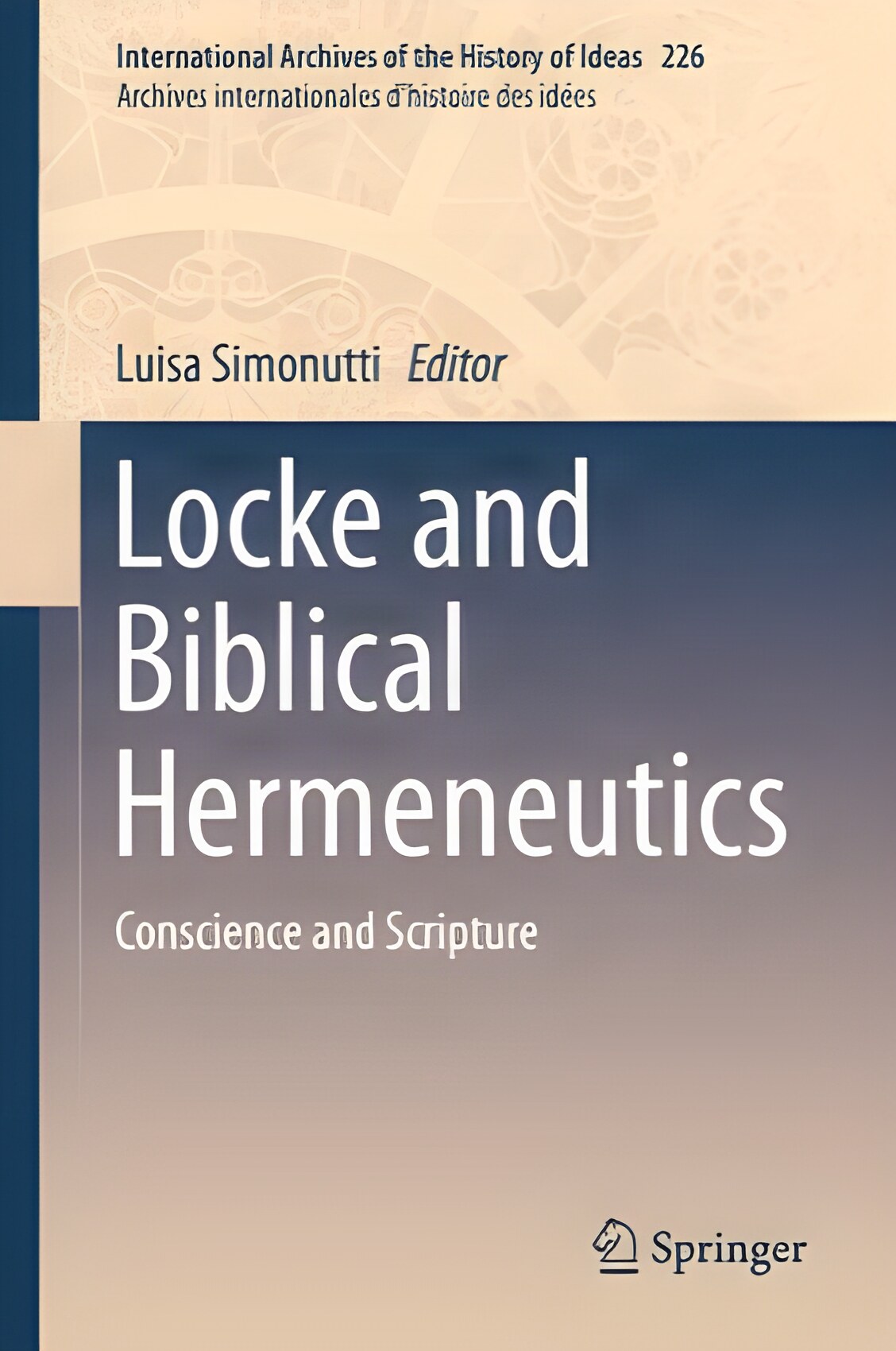
Hardcover. Springer, 1st, 2019, Book: Very Good, Dust Jacket: None, Hardcover in laminated boards, 266 pages. The volume presents illuminating research carried out by international scholars of Locke and the early modern period. The essays address the theoretical and historical contexts of Locke's analytical methodology and come together in a multidisciplinary approach that sets biblical hermeneutics in relation to his philosophical, historical, and political thought, and to the philological and doctrinal culture of his time. The contextualization of Locke's biblical hermeneutics within the contemporary reading of the Bible contributes to the analysis of the figure of Christ and the role of Paul's theology in political and religious thought from the seventeenth century to the Enlightenment. The volume sheds light on how Locke was appreciated by his contemporaries as a biblical interpreter and exegete. It also offers a reconsideration that overarches interpretations confined within specific disciplinary ambits to address Locke's thought in a global historic context. Clean, like new.

 "Kant and the Philosophy of Historyby: Yovel, Yirmiyahu")
 "Kant's Rational Theologyby: Wood, Allen W.")


 "Kilvert's Diary 1870-1879 - Selections from the Diary of The Rev. Francis Kilvertby: Plomer, William")


 "King and the Corpse, The: Tales of the Soul's Conquest of Evilby: Zimmer, Heinrich")
 "Kingdom and the Power and the Glory, The - Stories of Faith and Marvel Selected from the King Jamesby: Daugherty, James")


 "La Querelle d'Utrecht. Textes ?©tablis, traduits et annot?©s par Theo Verbeek. Pr?©face de Jean-Luc Marionby: Descartes, Ren?© und Martin Schoock")
 "La Riforma protestante nell'Italia del Cinquecento (Studi storici) (Italian Edition) by: Salvatore Caponetto")
 "Lactantius' Epitome of the Divine Institutesby: Blakeney, E.H. (Editor and translation with commentary)")


 "Ladies' Repository, The : a Monthly Periodical Devoted to Literature and Religion, Volume XXby: Clark, Rev. D. W. (Ed.)")


 "Law Church and Society: Essays in Honor of Stephan Kuttner (The Middle Ages Series)by: Somerville Robert; Pennington Kenneth/Editors")



 "Let There Be Lightby: Baynes, Pauline")
 "Limits of Political Theory, The: Oakeshott's Philosophy of Civil Association by: McIntyre, Kenneth B.")