Hardcover. London, Edmund Spettigue, 1841, Book: Very Good, Dust Jacket: None, Hardcover, half leather with marbled boards, 460 pages. Ornate gilt design on spine with 4 raised bands. Copy block with marbled edges. A contemporary note on a blank prelim page suggests this copy was a gift from Hawker's daughter. A classic that received its unique name because it was originally published in small penny portions so as to be affordable to the poor. Each morning and evening portion contains between 150 and 600 words; the size of a newspaper article or bulletin. The lessons and thought offered are to-the-point, teaching about a given Bible phrase, psalm, or proverb. Every nugget of spiritual wisdom is prefaced with a Biblical quotation that directly pertains to the author's explanations and instruction. Clean, tight copy.
Hardcover. NY, Alfred A. Knopf, 1st, 2001, Book: Very Good, Dust Jacket: Very Good, Hardcover in a bright, unclipped dust jacket, 355 pages. In this meticulously researched, unflinching, and reasoned study, National Book Award finalist David I. Kertzer presents shocking revelations about the role played by the Vatican in the development of modern anti-Semitism. Working in long-sealed Vatican archives, Kertzer unearths startling evidence to undermine the Church's argument that it played no direct role in the spread of modern anti-Semitism. In doing so, he challenges the Vatican's recent official statement on the subject, We Remember. Kertzer tells an unsettling story that has stirred up controversy around the world and sheds a much-needed light on the past. Newspaper review laid in. Clean copy.
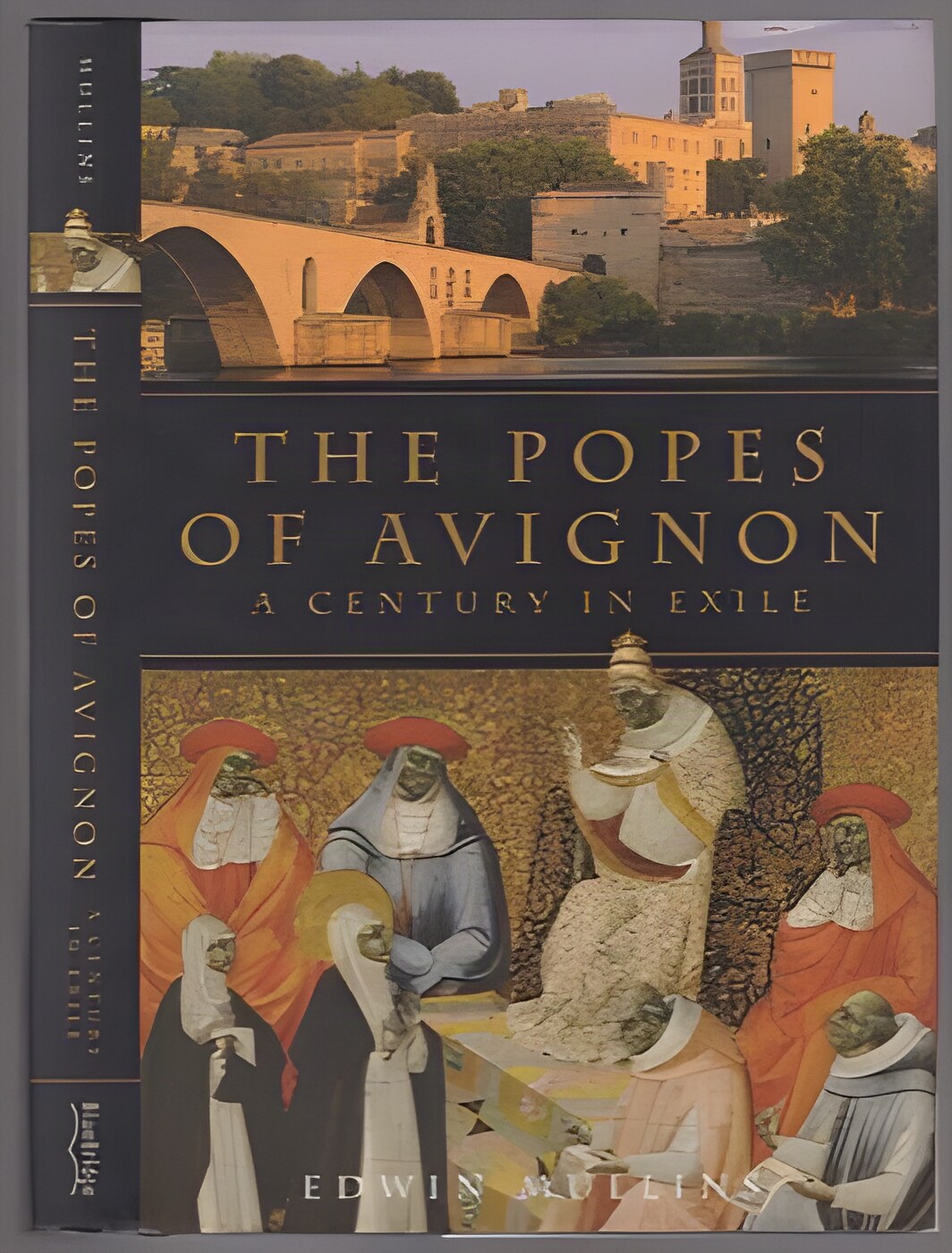
Hardcover. NY, BlueBridge, 1st US, 2008, Book: Very Good, Dust Jacket: Very Good, Hardcover in a bright dust jacket, 246 pages. This narrative history masterfully weaves together the sweeping events surrounding what has become known as the "Babylonian captivity" of the popes into the broader story of 14th-Century Europe?one of the most turbulent times in the continent's history. It was a time of fear, ferocity, and religious agony, which saw the suppression of the Knights Templar and the Cathars, the first onslaught of the plague, and the beginning of the Hundred Years' War. The century also produced some of the greatest writers and artists in the western tradition, including Giotto, Boccaccio, Petrarch, and Chaucer. Central to this period was the movement of the papal seat from Rome to Avignon in the south of France, where seven successive popes held power from 1309 to 1377. The drama, intrigue, and tumult associated with the papacy in exile forms the perfect lens through which to clearly see a Europe making the transition from the Middle Ages to the Renaissance. Clean copy.
Hardcover. Omohundro Institute/University of North Carolina Press, 1st, 2004, Book: Very Good, Dust Jacket: Very Good, Hardcover in a bright dust jacket, 349 pages. In an examination of transatlantic Puritanism from 1570 to 1638, Theodore Dwight Bozeman analyzes the quest for purity through sanctification. The word "Puritan," he says, accurately depicts a major and often obsessive trait of the English late Reformation. He argues forcefully for the various movements in England and New England termed 'antinomianism' to be seen as sustained protests against and deliberate alternatives to this great and defining Puritan achievement in practical divinity.
Hardcover. Oxford UK, Oxford University Press, reprint, 1950, Book: Very Good, Dust Jacket: None, Hardcover, navy cloth covered boards with gilt titling to spine. Reprint of the revised second edition with commentary and terminal essays. Light pencil marking to ten pages, otherwise clean and tight copy. Volume 2 only of a two volume set.
Hardcover. Edinburgh/London, William Blackwood and Sons, 1st thus, 1893, Book: Very Good, Dust Jacket: None, Hardcover, maroon cloth with gilt lettering on the spine, 187 pages plus publisher's catalog in rear. "Carefully Re-Edited, with Sketches never before published." Mainly a reprint of Hawker's contributions to "Notes and Queries", "Household Words", "All the Year Round". Frontis. photo of Morwenstow Church, protected by tissue guard. Also pasted to inside front cover a clipping of two photos: Hawker and his second wife, taken about the time of their marriage.
Hardcover. NY, Harper and Brothers, 1st, 1892, Book: Very Good, Dust Jacket: None, Two matching hardcover volumes, light gray cloth covers, gilt titles on spine, top edge gilt. 509, 588 pages. These books explore the lives of Puritans in Holland, England, and America during the 17th century. It provides a detailed account of the Puritan migration to America and their impact on American history. The book also discusses the religious and political factors that led to the Puritan migration, their beliefs, and their way of life. The author provides a comprehensive overview of the Puritan community in each of the three countries, highlighting their struggles, successes, and contributions to the development of America. The book is a valuable resource for anyone interested in American history, Puritanism, and the early settlement of America. Name and date on front fly leafs, otherwise clean. This is a heavy and oversized book and will require extra shipping. International customers please ask for a shipping quote before purchasing.
Hardcover. Amherst NY, Prometheus Books, 1st, 2000, Book: Very Good, Dust Jacket: Very Good, Hardcover in a bright dust jacket, 554 pages. More than one hundred years ago Western scholars began to investigate the origins of Islam, using the highest standards of objective historical scholarship of the time. Their aim was to determine what could be known about Muhammad and the rise of early Islam quite apart from the pious and totally unobjective traditions preserved by the Muslim religious community. In some ways this research was inspired by a similar investigation of Christianity made famous by Albert Schweitzer's Quest of the Historical Jesus. Today although much has been learned about early Christianity, little comparable progress has been made in the field of Islamic Studies. Here objective historical research has long been severely handicapped both by the resistance of Muslim societies to Western analysis of their sacred traditions and by the apologetic approaches of many Western scholars, who have compromised their investigations for fear of offending Muslim sensibilities. It is in this context that Ibn Warraq presents this important anthology of the best studies of Muhammad and early Islam ranging from the very beginnings of Islamic Studies in the nineteenth century to contemporary research. Clean copy.
Hardcover. London, Pickering & Chatto, 1st, 1999, Book: Very Good, Dust Jacket: None, Hardcover, black cloth, spine with maroon title block and gilt lettering, 377 pages. Vol. 2 ONLY of a six volume set. Clean, bright copy, no markings.
Hardcover. London, Pickering & Chatto, 1st, 1999, Book: Very Good, Dust Jacket: None, Hardcover, black cloth, spine with maroon title block and gilt lettering, 384 pages. Vol. 3 ONLY of a six volume set. Name and date on front fly leaf, otherwise clean.
Hardcover. London, Pickering & Chatto, 1st, 1999, Book: Very Good, Dust Jacket: None, Hardcover, black cloth, spine with maroon title block and gilt lettering, 448 pages. Vol. 4 ONLY of a six volume set. Clean, bright copy, no markings.
Hardcover. Ithaca NY, Cornell University Press, 1st, 1993, Book: Very Good, Dust Jacket: Good, Hardcover ib a dust jscket with sun-faded spine. Why suppose that sense perception is an accurate source of information about the physical environment? More generally, is it possible to demonstrate that our basic ways of forming beliefs are reliable? In this book, a leading analytic philosopher confronts this classic problem through detailed investigation of sense perception, the source of beliefs in which we place the most confidence. Carefully assessing the available arguments, William P. Alston concludes that it is not possible to show in any noncircular way that sense perception is a reliable source of beliefs. 148 pages. Clean copy.
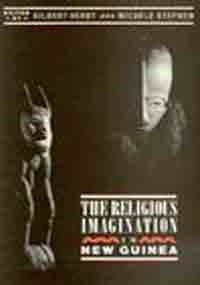
Softcover. New Brunswick, Rutgers University Press, 1st, 1989, Book: Very Good, Dust Jacket: None, Softcover, 262 pages. Explores various expressions of religious fervor such as shamanism, trances, possession, witchcraft and cult activity. Using cultural anthropology and psychoanalysis as a base, the contributors ask how religious imagination connects concepts of the self to ideas of the sacred. Light pencil underlining to about 25 pages.
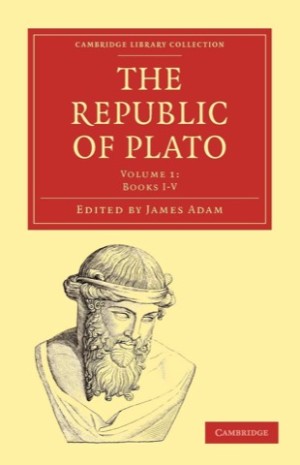
Softcover. Cambridge University Press, reprint, 2007, Book: Very Good, Dust Jacket: None, Two softcover volumes: Vol. 1: Books 1-V, 364 pages. Vol. 2: Books VI-X and Indexes, 531 pages. Previous owner's name, otherwise clean. James Adam (1860-1907) was a Scottish classics scholar who taught at Emmanuel College, Cambridge. A strong defender of the importance of Greek philosophy in a well-rounded education, Adam published a number of Plato's works including Protagoras and Crito. This two-volume critical edition of the Republic (1902) was another major contribution to the field. Though his preface claims 'an editor cannot pretend to have exhausted its significance by means of a commentary,' Adam's depth of knowledge and erudite analysis of the Greek text ensured that his edition remained the standard reference for decades to follow, and it remains a thought-provoking evaluation of one of the great works of Western thought.
Hardcover. NY, Open Court/ W.W. Norton, 1st, 1930, Book: Very Good, Dust Jacket: None, Hardcover, dark green cloth, gilt lettering on spine, 325 pages. Includes chapters on Bertrand Russell and Alfred North Whitehead. "The Revolt Against Dualism, first published in 1930, belongs to a tradition in philosophical theorizing that Arthur O. Lovejoy called "descriptive epistemology." Lovejoy's principal aim in this book is to clarify the distinction between the quite separate phenomena of the knower and the known, something regularly obvious to common sense, if not always to intellectual understanding. This work is as much an argument about the ineluctable differences between subject and object and between mentality and reality, as it is a subtle polemic against those who would stray far from acknowledging these differences. With a resolve that lasts over three hundred pages, Lovejoy offers candid evaluations of a generation's worth of philosophical discussions that address the problem of epistemological dualism. Name on front fly leaf, pages tanning, otherwise very good, clean copy.
Hardcover. Princeton NJ, Princeton University Press, 1st, 1986, Book: Very Good, Dust Jacket: Very Good, Hardcover in a bright dust jacket, 234 pages. When Leviathan first appeared in 1651, it was recognized as a work of extraordinary scope, uniting metaphysical, theological, and political arguments into a single distinctive outlook. Contending that modern readers do the book an injustice by neglecting its metaphysical and theological themes, David Johnston supports his claim with a detailed examination of the text as a whole and with a reinterpretation of the genesis of the work. Clean copy.
Softcover. Carbondale IL, Southern Illinois University Press, 1st, 1986, Book: Very Good, Dust Jacket: None, Softcover, 408 pages. Makes accessible to modern readers the 17th-century rhetorics of Thomas Hob-bes (1588-1677) and Bernard Lamy (1640-1715) Hobbes' A Briefe of the Art of Rhet-orique, the first English translation of Aristotle's rhetoric, reflects Hobbes' sense of rhetoric as a central instrument of self-defense in an increasingly frac-tious Commonwealth. In its approach to rhetoric, which Hobbes defines as "that Faculty by which wee understand what will serve our turne, concerning any subject, to winne beliefe in the hearer," the Briefe looks forward to Hobbes' great political works De Cive and Leviathan. Published anonymously in France as De l'art de parler, Lamy's rhetoric was translated immediately into English as The Art of Speaking. Lamy's long associa-tion with the Port Royalists made his works especially attractive to English readers because Port Royalists were en-gaged in a vicious quarrel with the Jesuits during the last half of the 17th century. Name at top of front cover and front fly leaf.
Hardcover. Ithaca NY, Cornell University Press, 2nd pr., 2005, Book: Very Good, Dust Jacket: Very Good, Hardcover in a bright dust jacket, 261 pages, previous owner's signature on front fly leaf. "Evil is the most serious of our moral problems. All over the world cruelty, greed, prejudice, and fanaticism ruin the lives of countless victims. Outrage provokes outrage. Millions nurture seething hatred of real or imagined enemies, revealing savage and destructive tendencies in human nature. Understanding this challenges our optimistic illusions about the effectiveness of reason and morality in bettering human lives. But abandoning these illusions is vitally important because they are obstacles to countering the threat of evil. The aim of this book is to explain why people act in these ways and what can be done about it." The first part of this book is a detailed discussion of six horrible cases of evil: the Albigensian Crusade of about 1210; Robespierre's Terror of 1793?94; Franz Stangl, who commanded a Nazi death camp in 1943?44; the 1969 murders committed by Charles Manson and his "family"; the "dirty war" conducted by the Argentinean military dictatorship of the late 1970s; and the activities of a psychopath named John Allen, who recorded reminiscences in 1975. John Kekes includes these examples not out of sensationalism, but rather to underline the need to hold vividly in our minds just what evil is. The second part shows why, in Kekes's view, explanations of evil inspired by Christianity and the Enlightenment fail to account for these cases and then provides an original explanation of evil in general and of these instances of it in particular.
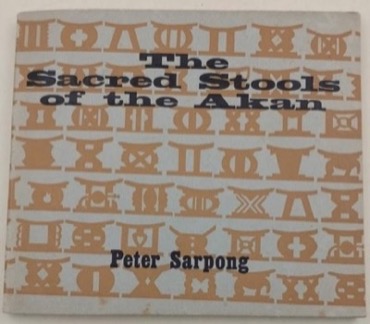
Softcover. Tema Ghana, Ghana Publishing Corp. , 1st, 1971, Book: Very Good, Dust Jacket: None, Softcover, 83 pages, b&w illustrations. Part of a doctoral thesis accepted by the University of St. Thomas Aquinas in Rome. A study of the wooden stools and their religious meaning in the culture of the Akan people of Ghana. Clean copy.
Hardcover. Lanham MD, Lexington Books, 1st, 2022, Book: Very Good, Dust Jacket: None, Hardcover, pictorial boards, 143 pages. American nature writing characteristically embodies an appreciative, lyrical evocation of the natural world. But often, too, green-disposed authors have been moved to dramatize diverse, anthropogenic perils to environmental health. John Gatta freshly reveals how this dark yet graced and hopeful strain of environmental literature enlarges upon a jeremiad tradition of prophecy inherited from Puritan New England. Across successive historical periods, such expression has assumed a rich variety of American form--as creative nonfiction, poetry, fiction, or film documentary. In the spirit of ancient Hebrew prophecy, jeremiads--unlike diatribes--reach beyond effusions of doom and gloom toward the prospect of change through a conversion of heart. Accordingly, the new climate fiction and much other writing steeped in what Gatta terms this "Green Jeremiad" tradition not only warn of material threats to life's flourishing, but may also look to stir spiritual understanding and renewal. Clean copy.
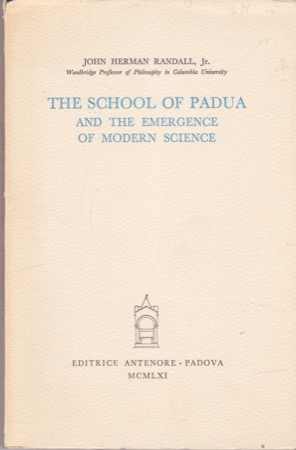
Softcover. Padova Italy, Editrice Antenore, 1st, 1961, Book: Very Good, Dust Jacket: None, Softcover, cream color wrappers with black and blue type, 141 pages with index. Foreword by author. English text. Name on front fly leaf, light pencil marking to 10 pages.
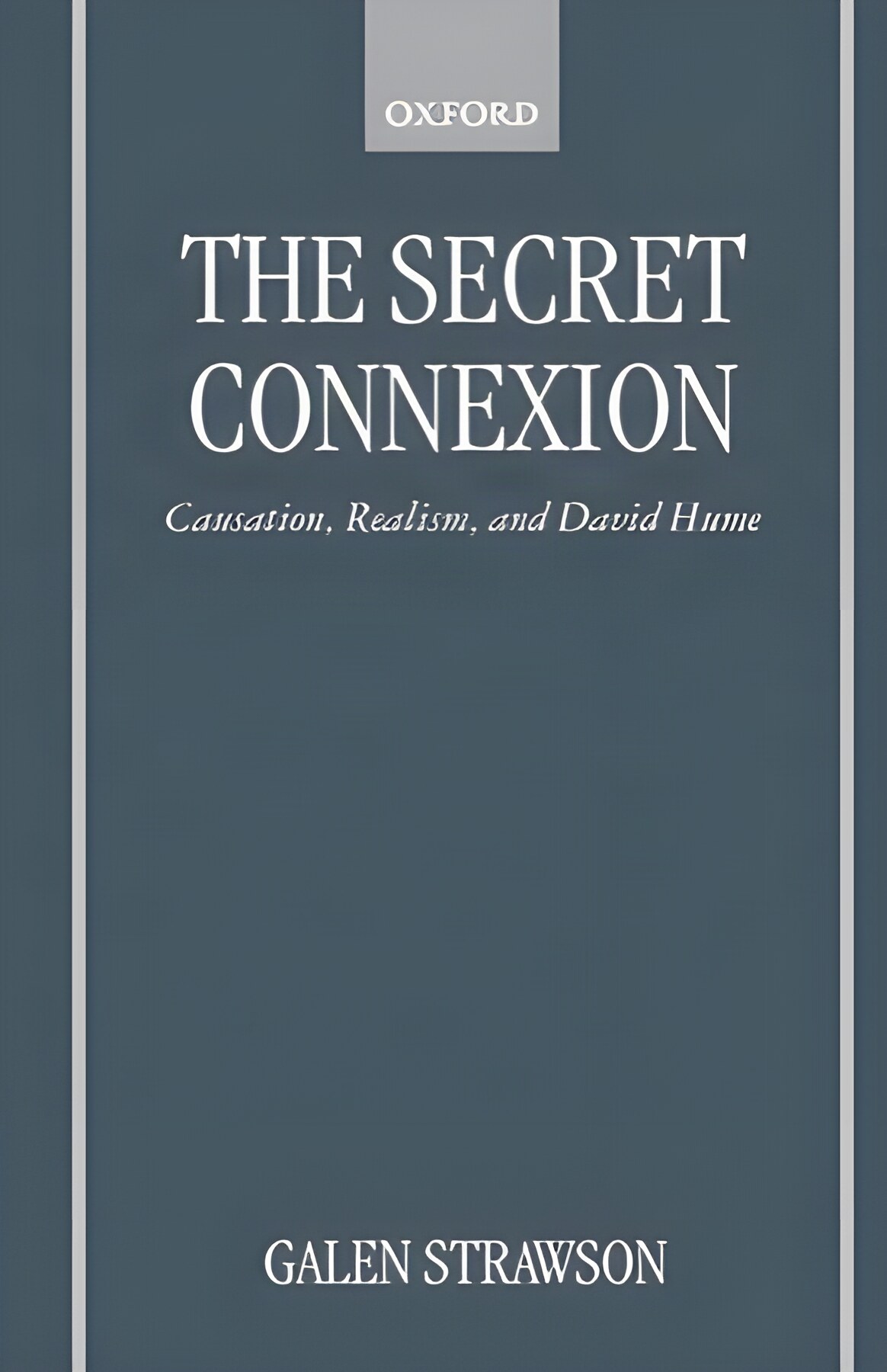
Softcover. UK, Clarendon Press, reprint, 1992, Book: Very Good, Dust Jacket: None, Softcover, 291 pages. It is widely supposed that Hume (1711-1776) invented and espoused the `regularity' theory of causation, holding that causal relations are nothing but a matter of one type of thing being regularly followed by another. It is also widely supposed that he was quite right about this, and that it was one of his greatest contributions to philosophy. Galen Strawson argues in this book that the regularity theory of causation is indefensible, and that Hume never adopted it in any case. Name on front fly leaf, otherwise clean.
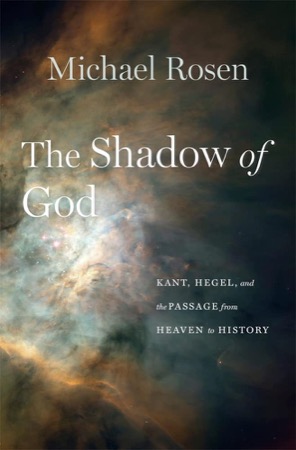
Hardcover. Cambridge MA, Belknap Press: An Imprint of Harvard University Press, 1st, 2022, Book: Very Good, Dust Jacket: Very Good, Hardcover in a bright dust jacket, 406 pages. A bold and beautifully written exploration of the "afterlife" of God, showing how apparently secular habits of mind in fact retain the structure of religious thought. Once in the West, our lives were bounded by religion. Then we were guided out of the darkness of faith, we are often told, by the cold light of science and reason. To be modern was to reject the religious for the secular and rational. In a bold retelling of philosophical history, Michael Rosen explains the limits of this story, showing that many modern and apparently secular ways of seeing the world were in fact profoundly shaped by religion. Clean copy.




 "The Principles of Logic (Volume 2)by: Bradley, F. H.")



 "The Puritan in Holland, England, and America. An introduction in American History. Two volumes.by: Douglas Campbell")
 "The Quest for the Historical Muhammadby: Ibn Warraq (Editor)")
 "The Reception of Locke's Politics Vol 2: Patriarchalism, the Social Contract and Civic Virture 1705- 1760by: Goldie, Mark (Ed.)")
 "The Reception of Locke's Politics Vol 3: The Age of the American Revolution 1760-1780by: Goldie, Mark (Ed.)")
 "The Reception of Locke's Politics Vol 4: Poitical Reform in the Age of The French Revolution 1780-1838by: Goldie, Mark (Ed.)")




![The Rhetorics of Thomas Hobbes and Bernard Lamyby: Harwood, John T. [Editor]](https://www.browsingisarousing.com/shop/images/The-Rhetorics-of-Thomas-Hobbes-and-Bernard-Lamy_by_Harwood-John-T.-Editor386560-440172.jpg "The Rhetorics of Thomas Hobbes and Bernard Lamyby: Harwood, John T. [Editor]")