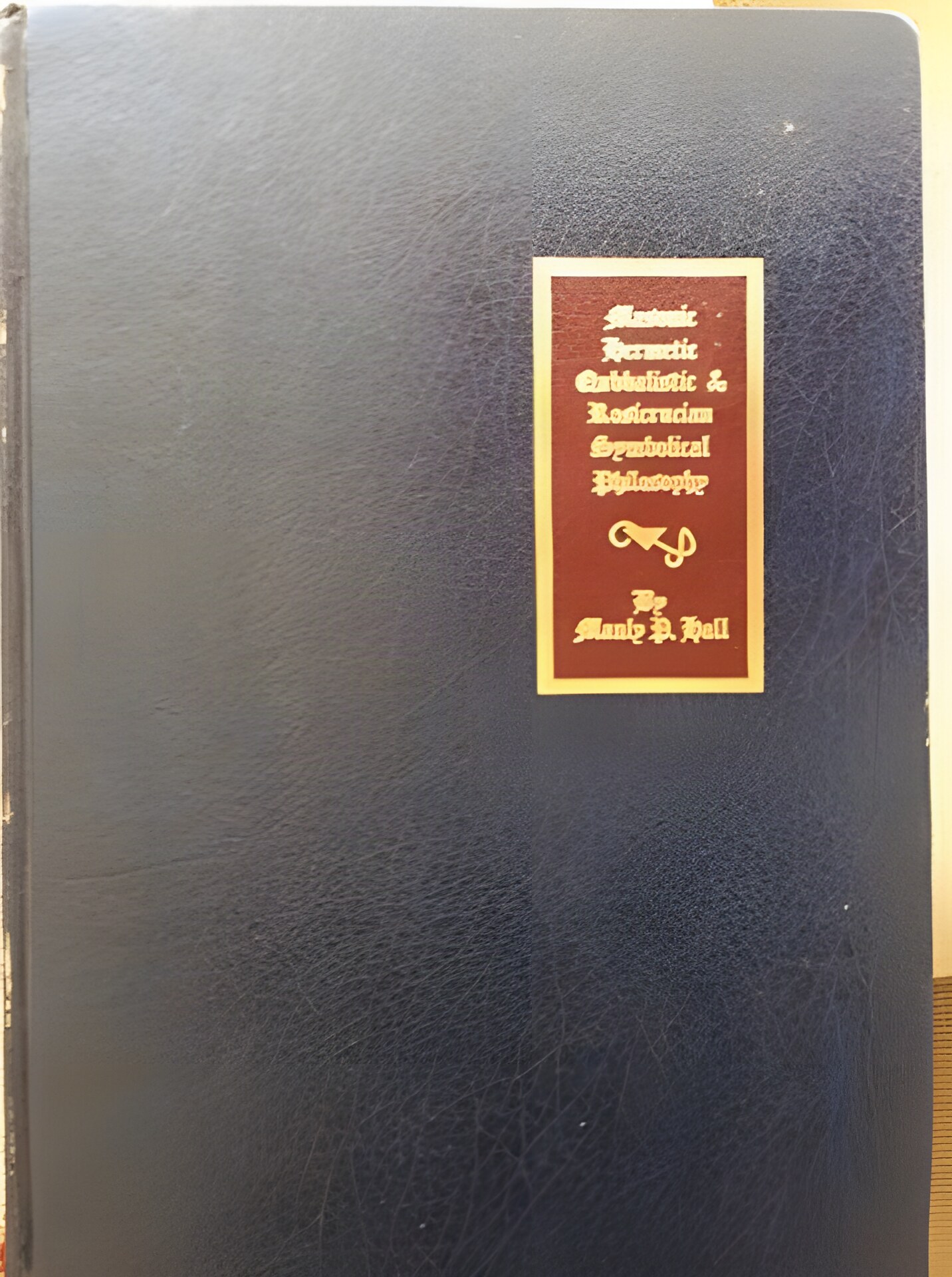
Hardcover. Los Angeles CA, Philosophical Research Society, 19th ED., 1973, Book: Very Good, Dust Jacket: None, Hardcover, textured black boards with red and gold gilt lettering design on front cover. Bronze color title on spine B&w illustrations by J. Augustus Knapp, 245 pages. Clean, bright copy. A reduced facsimile of the 1928 edition.
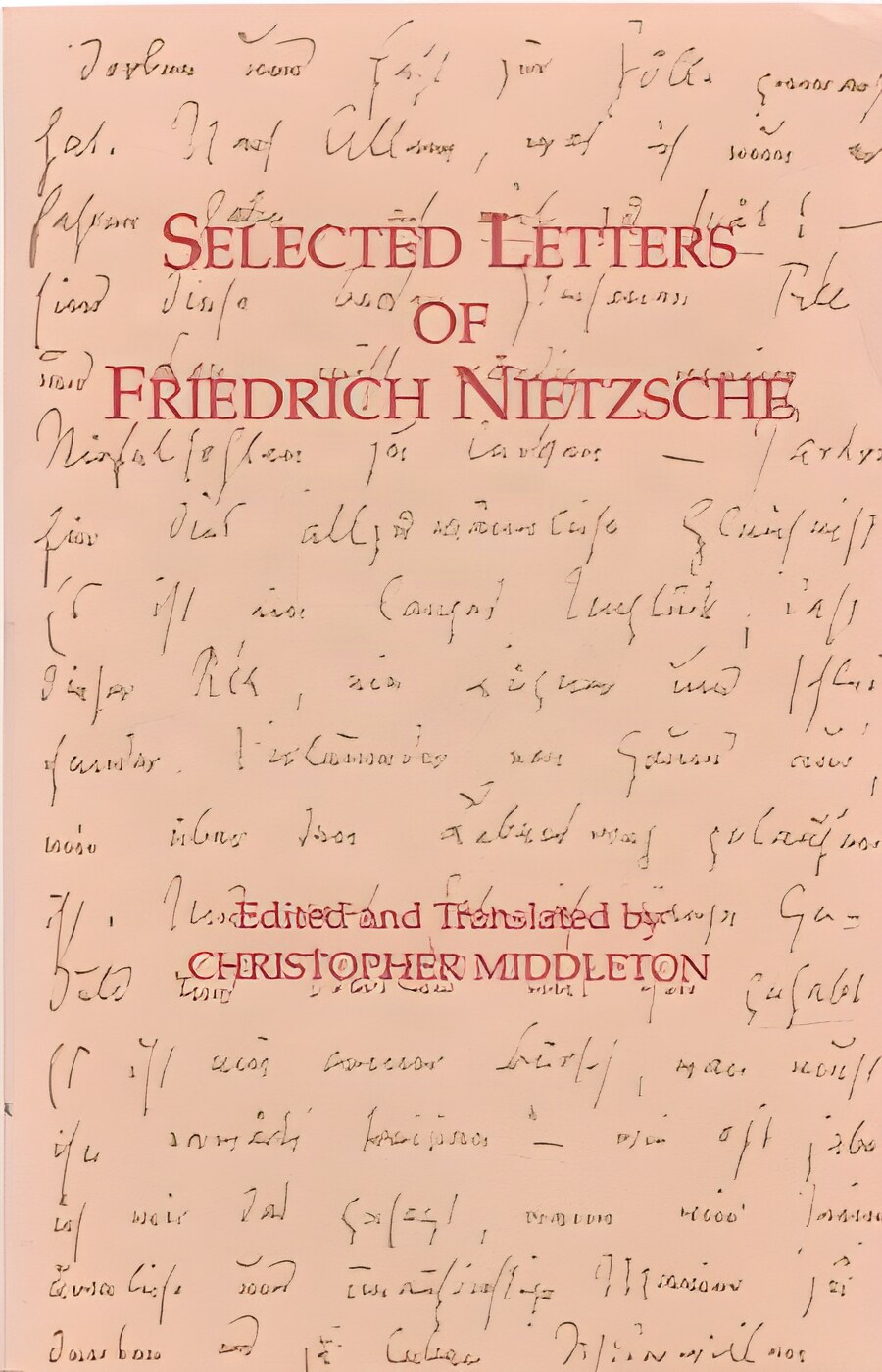
Softcover. Indianapolis IN, Hackett Publishing, reprint, 1996, Book: Very Good, Dust Jacket: None, Softcover, 368 pages. This collection of more than two hundred of Nietzsche's letters offers a representative body of correspondence on subjects of main concern to him--philosophy, history, morals, music and literature. Also included are letters of biographical interest which, in Middleton's words, mark the stresses and turnings of his life. Among the addressees are Richard Wagner, Erwin Rohde, Jacob Burkhardt, Lou Salome, his mother, and his sister Elisabeth. The annihilating split in Nietzsche's personality that has been associated with his collapse on a street in Turin in 1889 is described in a moving letter from Franz Overbeck which forms the Epilogue. Index. Light cease to front cover, otherwise clean, bright copy.
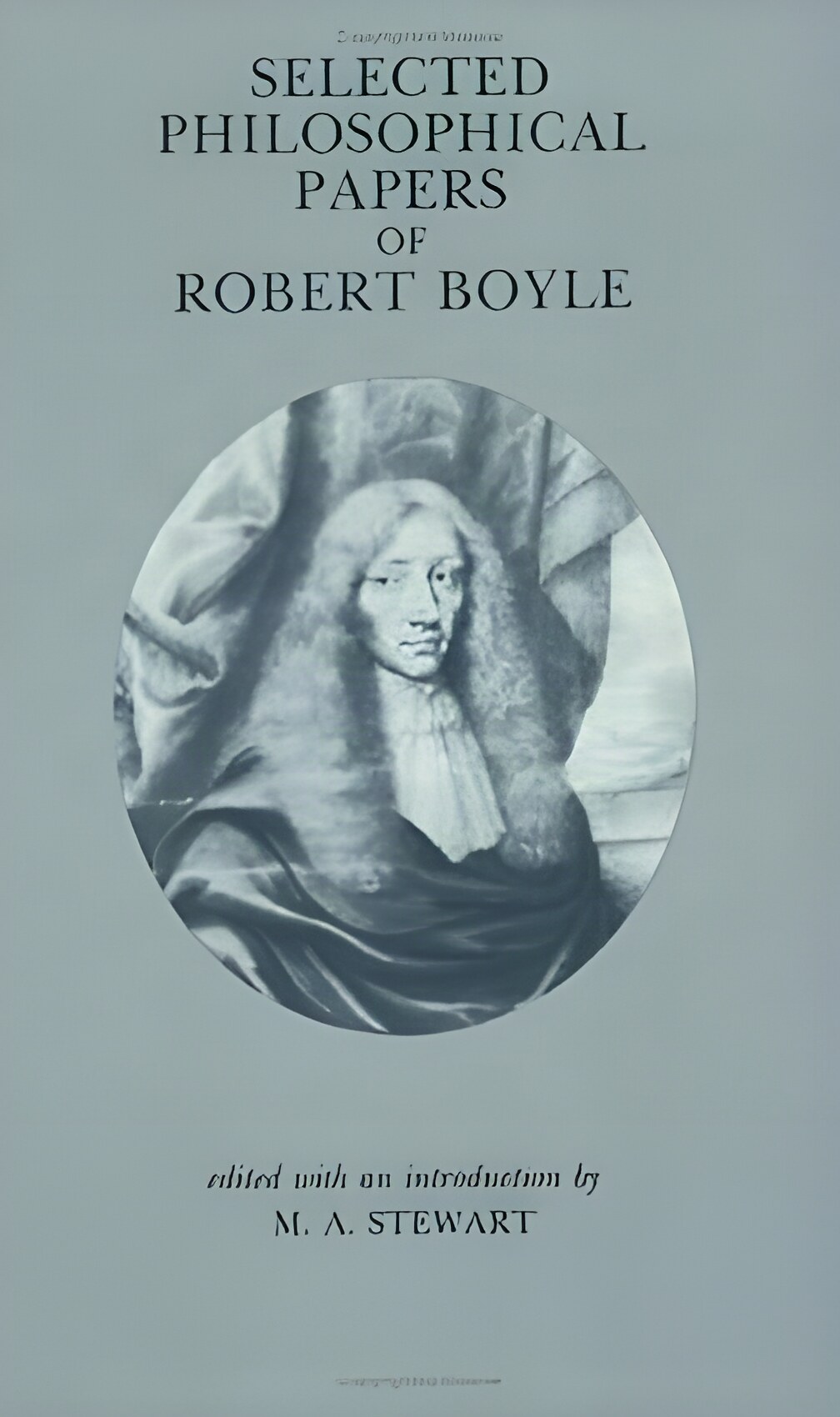
Softcover. Indianapolis, Hackett Publishing, 2nd pr., 1991, Book: Very Good, Dust Jacket: None, Softcover, 256 pages. "The availability of a paperback version of Boyle's philosophical writings selected by M. A. Stewart will be a real service to teachers, students, and scholars with seventeenth-century interests. The editor has shown excellent judgment in bringing together many of the most important works and printing them, for the most part, in unabridged form. The texts have been edited responsibly with emphasis on readability. . . . Of special interest in connection with Locke and with the reception of Descarte's Corpuscularianism, to students of the Scientific Revolution and of the history of mechanical philosophy, and to those interested in the relations among science, philosophy, and religion. In fact, given the imperfections in and unavailability of the eighteenth-century editions of Boyle's works, this collection will benefit a wide variety of seventeenth-century scholars."
Hardcover. Athens GA, University of Georgia Press, 1st, 2001, Book: Very Good, Dust Jacket: Very Good, Hardcover in a bright dust jacket, 168 pages. This work tells how the first generation of Protestant fundamentalists embraced the modern business and entertainment techniques of marketing, advertising, drama, film, radio, and publishing to spread the gospel. Clean copy.
Softcover. Kessinger Publishing, reprint, Book: Very Good, Dust Jacket: None, Softcover, 457 pages. A photocopied facsimile reprint of the 1685 volume. FRENCH TEXT. Clean copy.
Hardcover. Boston, J. Stilman Smith & Co., 1st, 1893, Book: Very Good, Dust Jacket: None, Hardcover, white buckram with maroon rules and gilt lettering, decorations. 293 pages, a collection of sermons given the previous year by the author who was Minister of the South Congregational Church in Boston. From a church library with a spine label, bookplate on inside front cover and a stamp on a blank prelim page. Otherwise clean and bright.
Hardcover. Windsor VT, Richard and Tracy, 1st US, 1833, Book: Very Good, Dust Jacket: None, Hardcover, polished brown calf, 213 pages. Eleven page preliminary essay by the American editors, followed by 9 sermons, title label on spine. Clean, bright copy.
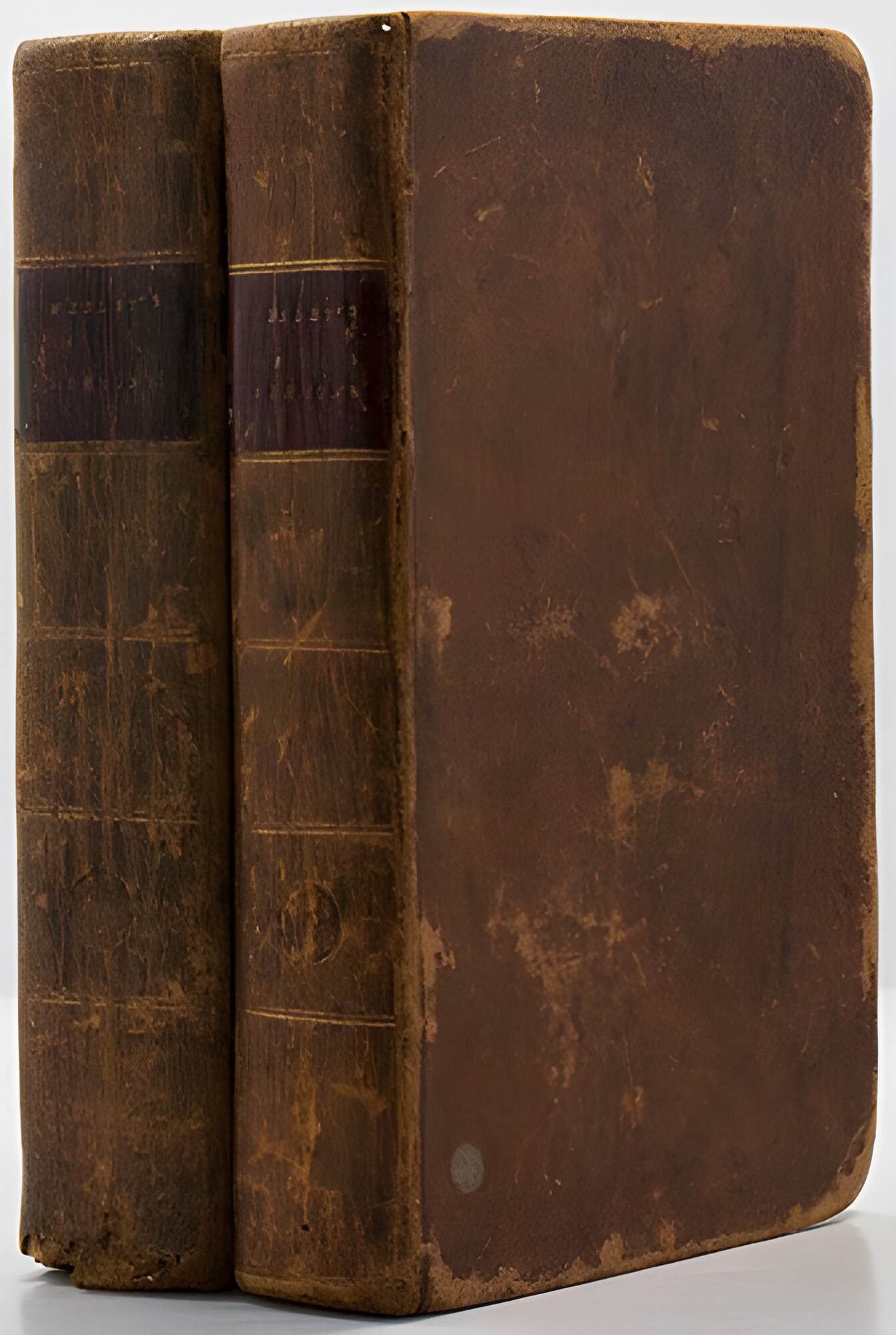
Hardcover. New York, Daniel Hitt and Thomas Ware, 1815, Book: Good, Dust Jacket: None, Two volumes complete, 478 and 632 pages respectively. Leather bound with red labels, covers worn and rubbed. Bottom of spine on volume 2 fraying. Still, a sound and attractive set with moderate foxing to pages. Previous owner's 1828 notation on front fly leaf of both volumes stating where, when and for how much he purchased the set.
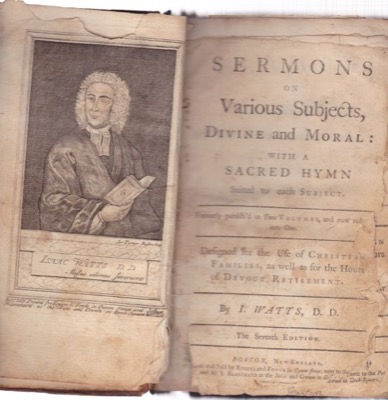
Hardcover. Boston, Rogers & Fowle, 7th Ed., 1746, Book: Fair, Dust Jacket: None, Hardcover, contemporary calf. Sermons on Various Subjects, Divine and Moral: With a Sacred Hymn Suited to each Subject. Designed for the Use of Christian Families, as well as for the Hours of Devout Retirement. By I. Watts, D.D., Formerly published in Two Volumes, and now reduced into One. The Seventh Edition. Boston, New-England, Printed and Sold by Rogers and Fowle in Queen-street, next to the Prison, and by J. Blanchard at the Bible and Crown in Dock-Squre. 1746. VOLUMES I & II BOUND IN ONE; A COMPLETE WORK. 740 pages. Two title pages, but first 8 leaves of text (Dedication) torn and chipped. Partial 28 page pamphlet laid-in at rear (only pp 5-23), very worn. Book itself is firmly bound with mostly bright, clean pages. Previous owner's name on front fly leaf. Three pages of advertisements in rear with tears, light stain. DUE TO SIZE, DOMESTIC SHIPPING ONLY.
Softcover. Burlington, VT, Chauncey Goodrich, 1st , 1836, Book: Very Good, Dust Jacket: None, Hardcover. Containing some account of proceedings during protracted meetings, held under his direction in Burlington, Williston & Hinesburg, VT Dec. 1835 and Jan. 1836. 119 pages. Wear to cardboard covers. Orignal boards, green cloth spine with label.
Paperback. Albany, NY, Education Department, Albany Institute of History and Art., revised, 1984, Book: Very Good, Dust Jacket: None, Softcover, 201 pages. Very little wear to cover. Inside is bright and clean with many b&w illustrations throughout.
Softcover. Spain, Editorial Escudo de Oro. S.A., 1st, 1995, Book: Very Good, Dust Jacket: None, 93 pages. Softcover. Mild soiling throughout. An otherwise unmarked copy with only minor edgewear. Color photographs throughout.
Softcover. Cambridge UK, Cambridge University Press, 1st, 1996, Book: Very Good, Dust Jacket: None, Softcover, 216 pages. This remarkable expression of republican thought has never before been published. Algernon Sidney was among the most unrelenting republican partisans of the seventeenth century, and was executed for his opposition to Charles II. Written during Sidney's continental exile, the vivid Court Maxims was only recently rediscovered. The work presents a lively discussion about the principles of government and the practice of politics, articulating a vital tradition of republicanism in an absolutist age.
Softcover. Urbana IL, University of Illinois Press, reprint, 2003, Book: Very Good, Dust Jacket: None, Softcover, 433 pages. From the plaintive tunes of woe sung by exiled kings and queens of Africa to the spirited worksongs and "shouts" of freedmen, enslaved people created expansive forms of music from the United States to the West Indies and South America. Dena J. Epstein's classic work traces the course of early black folk music in all its guises. Anchored by groundbreaking scholarship, it redefined the study of black music in the slavery era by presenting the little-known development of black folk music in the United States. Her findings include the use of drums, the banjo, and other instruments originating in Africa; a wealth of eyewitness accounts and illustrations; in-depth look at a wide range of topics; and a collection of musical examples. This edition offers an author's preface that looks back on the twenty-five years of changes in scholarship that followed the book's original publication. Clean copy.
Hardcover. NY, Little Brown, 1st, 2005, Book: Very Good, Dust Jacket: Very Good, Hardcover in a bright, unclipped dust jacket. This is a biography of C.L. Franklin, one of the black preachers in American history. It tells the story of black migration and activism, alongside the rise of gospel, blues, and soul music, with a cast of characters including Martin Luther King, Jr., B.B. King, Art Tatum, and Coleman Young.
Softcover. NY, Schocken Books, reprint, 1967, Book: Very Good, Dust Jacket: None, Softcover, 520 pages. In order to understand the English Revolution and Civil War we need to understand Puritanism. Using his consummate skill as a historian, Professor Hill suggests that there might have been non-theological reasons for supporting the Puritans, or for being a Puritan. He shows Puritanism as a living faith, answering the hopes and fears of yeomen and gentlemen, merchants and artisans. He looks at oath-taking, the Sabbath, bawdy courts, and poor relief and assesses the significance of the household (rather than the Parish) and the dignity of labor. He shows Puritanism in daily life and discusses the emergence of the seemingly paradoxical Puritan revolutionaries. Light bump to top corner of about 50 pages, clean copy.
Softcover. New York, Penguin Books, 1st, 1999, Book: Very Good, Dust Jacket: None, 420 pages. Softcover with light edgewear to paper wrappers. Clean, tight copy.
Hardcover. Philadelphia, David McKay Company, 1st, 1934, Book: Very Good, Dust Jacket: None, 135 pages. Hardcover. Black & white illustrations by Willy Pogany. Black cloth with titles and decoration in silver. Black & white paste down on front cover is intact. Clear plastic cover protecting boards. Pages are clean, unmarked. No slipcase. A nice copy.
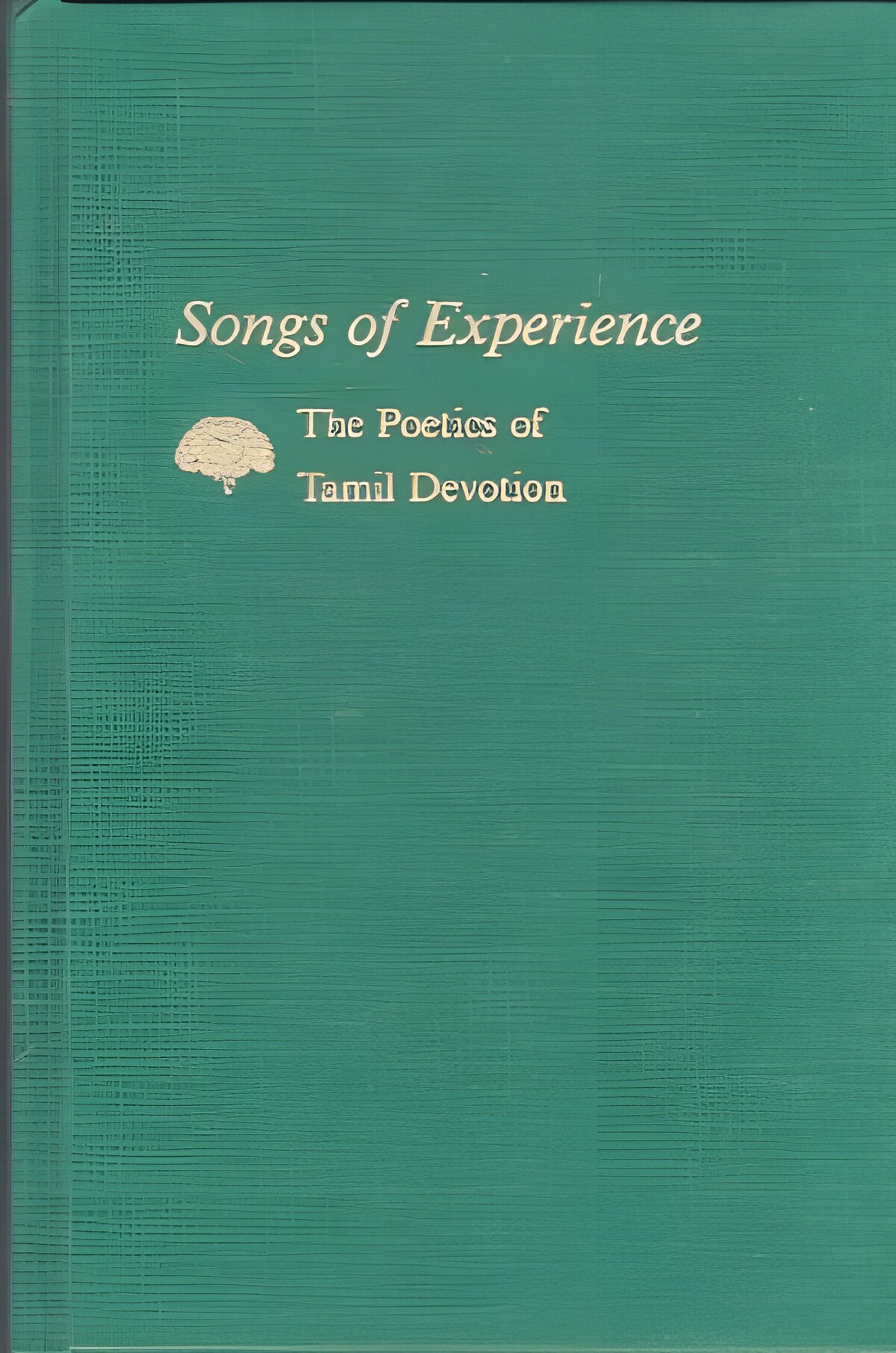
Hardcover. Bloomington IN, Indiana University Press, 1st, 1987, Book: Very Good, Dust Jacket: None, Hardcover, green cloth stamped with gilt lettering and design. artfully explains the initial spirit and modern understanding of Tamil bhakti poetry. His fluent translations make the poems -- songs of the experience of God -- live for us as they did for their first audience nearly fifteen centuries ago. Clean, bright copy.
Hardcover. Oxford UK, Oxford University Press, 1st, 2015, Book: Very Good, Dust Jacket: Very Good, Hardcover in a bright dust jacket, 184 pages. Alexander X. Douglas offers a new understanding of Spinoza's philosophy by situating it in its immediate historical context. He defends a thesis about Spinoza's philosophical motivations and then bases an interpretation of his major works upon it. The thesis is that much of Spinoza's philosophy was conceived with the express purpose of rebutting a claim about the limitations of philosophy made by some of his contemporaries. They held that philosophy is intrinsically incapable of revealing anything of any relevance to theology, or in fact to any study of direct practical relevance to human life. Spinoza did not. He believed that philosophy reveals the true nature of God, and that God is nothing like what the majority of theologians, or indeed of religious believers in general, think he is. The practical implications of this change in the concept of God were profound and radical. As Douglas shows, many of Spinoza's theories were directed towards showing how the separation his opponents endeavored to maintain between philosophical and non-philosophical (particularly theological) thought was logically untenable.
Hardcover. Cambridge MA, Harvard University Press, 1st, 1969, Book: Very Good, Dust Jacket: None, Hardcover, yellow cloth with black lettering on spine. 174 pages including index. "In a study that is both an explanation and a defense of Spinozism, Mr. Curley not only clarifies abstruse elements of the Spinozistic system, but also offers intriguing interpretations of the contemporary views he employhs to explain Spinoza's intentions." Clean copy.
Softcover. New York, Aperture, 1st, 2001, Book: Very Good, Dust Jacket: None, Softcover. In original shrink wrap, spotless and tight. Poet, scholar, philosopher, and master of Vajrayana (Tibetan) Buddhism, Dilgo Khyentse Rinpoche led a life of profound dedication to spiritual enlightenment and teaching. During the final fourteen years of his life his personal assistant was Matthieu Ricard. Together they traveled throughout Tibet, Bhutan, India, and Nepal, returning to the places of Khyentse Rinpoche's youth: his birthplace in Eastern Tibet; the monastery of Shechen which he had entered at the age of eleven; and the retreats where he spent years in meditation and study. At every stop on his journey, Khyentse Rinpoche was welcomed with elaborate ceremonies and outpourings of devotion. Ricard's deeply personal photographs of this journey are enhanced by a biographical narrative that is interspersed with extensive passages from the writings and teachings of Khyentse Rinpoche. Together, these images and texts form an inspiring portrait of one of the great spiritual leaders and teachers of our time. Many masters of Tibetan Buddhism studied with Khyentse Rinpoche, including His Holiness the Dalai Lama, who regarded him as his principal instructor in the Nyingma tradition of Tibetan Buddhism.


 "Sentimens de Quelques Theologiens de Hollande Sur La Acentsacentsa A Acentsa Acentshistoire Critique Du Vieux Testament (1685 )by: Simon, Richard")
 "Sermons of the Winterby: Hale, Edward Everett")
 "Sermons on Infidelity: First American Edition with a Preliminary Essayby: Thomson, Andrew")




 "Sermons, Addresses & Exhortations by Rev. Jedediah Burchard with an appendixby: Eastman, C. G.")


 "Seventeenth Century Albany: A Dutch Profile.by: Wilcoxen, Charlotte")




 "Siva's Warriors: The Basava Purana of Palkuriki Somanatha (Princeton Library of Asian Translations)by: Somanatha, Palkuriki")


 "Song Celestial or Bhagavad Gita - Being a Discourse between Arjuna, Prince of India, and the Supreme Being, under the form of Krishna, Theby: Arnold (Translator), Sir")
 "Spinoza and Dutch Cartesianism: Philosophy and Theology by: Douglas, Alexander X.")

