Softcover. Cambridge MA, Medieval Academy of America, 1st, 1979, Book: Very Good, Dust Jacket: None, Softcover, 152 pages. Bouchard's work is erudite and provides a picture of the development of the shifting relationship between the pastoral demands placed on the prelates and those of the secular administrative. Some coped with the phenomenal increase of secular administration over the century better than others. Some coped with the machinations of local counts and even kings who would seize property almost at a whim better than others. One even defied the Pope until threatened with excommunication if he did not accept his 'promotion'. Clean copy.
Hardcover. UK, Oxford University Press, 2nd pr., 2002, Book: Very Good, Dust Jacket: Very Good, Hardcover in a bright dust jacket, 327 pages. John Damascene, a monk near Jerusalem in the early 700s, never set foot in the Byzantine Empire, yet he had a great influence on Byzantine theology. This book, the first to present an overall account of John's life and work, sets him in the context of the early synods of the Church that took place in the Palestinian monasteries during the first century of Arab rule.
Hardcover. UK, Oxford University Press, reprint, 1968, Book: Very Good, Dust Jacket: Very Good, Hardcover in a bright dust jacket, 196 pages. Translated with an Introduction and Philosophical Commentary by M. J. Charlesworth. This is the work in which Anselm (a medieval church father) presents his ontological argument for the existence of God. It's one of the most debated philosophical arguments for the existence of God in history. Clean copy.
Hardcover. NY, Cambridge University Press, 1st, 2005, Book: Very Good, Dust Jacket: None, Hardcover, maroon cloth covers with gilt lettering on spine, 320 pages, b&w illustrations. St. Peter's in the Vatican has a long and turbulent history. First constructed in the fourth century to honor the tomb of St. Peter, the Early Christian edifice was gradually torn down and replaced by the current structure. The history of the design and construction of this new building spans several centuries and involved several of the most brilliant architects, including Bramante, Michelangelo and Bernini, of the early modern period. This volume presents an overview of St. Peter's history from the late antique period to the twentieth century. Lacks dust jacket, clean, bright copy.
Hardcover. Cambridge UK, Cambridge University Press, 1st, 2004, Book: Very Good, Dust Jacket: Very Good, Hardcover in a bright dust jacket with mild edgewear. 295 pages. Stoicism is now widely recognized as one of the most important philosophical schools of ancient Greece and Rome. But how did it influence Western thought after Greek and Roman antiquity? The contributors recruited for this volume include leading international scholars of Stoicism as well as experts in later periods of philosophy. They trace the impact of Stoicism and Stoic ideas from late antiquity through the medieval and modern periods. Name on front fly leaf otherwise clean.
Hardcover. Munchen/Leipzig, K.G. Saur, 1st, 2004, Book: Very Good, Dust Jacket: None, Hardcover, blue cloth with light gray stamping, 348 pages. Name on front fly leaf, otherwise clean. Name on front fly leaf, otherwise clean.
Hardcover. Munchen/Leipzig, K.G. Saur, 1st, 2004, Book: Very Good, Dust Jacket: None, Hardcover, blue cloth with light gray stamping, 269 pages. Name on front fly leaf, otherwise clean. Name on front fly leaf, otherwise clean.
Hardcover. Munchen/Leipzig, K.G. Saur, 1st, 2004, Book: Very Good, Dust Jacket: None, Hardcover, blue cloth with light gray stamping, 221 pages. Name on front fly leaf, otherwise clean. Name on front fly leaf, otherwise clean.
Hardcover. Toronto, Groundwood Books , 1st, 2004, Book: Very Good, Dust Jacket: Very Good, Hardcover in a bright, unclipped dust jacket. 144 pages with color illustrations by Gary Clement. Lottridge uses her storyteller's ear to bring ancient stories from the Hebrew Bible to a young audience, tailoring them to make them more age appropriate. Sometimes blending several stories together, she introduces the familiar characters--Adam and Eve, Abraham and his kin, Moses, Daniel--and writes about them in ways that bring them near. The numerous, well-drawn ink-and-watercolor illustrations are reminiscent of Warwick Hutton's work. Clean copy.
Hardcover. Morehouse Publishing, 1st, 1994, Book: Very Good, Dust Jacket: Good, Hardcover in an edgeworn dust jacket. 56 pages illustrated by Tony Morris. Small inscription to front fly leaf, otherwise clean.
Hardcover. Netherlands, Springer, 1st, 2008, Book: Very Good, Dust Jacket: Very Good, Hardcover in a dust jacket, 289 pages. This collection of new essays on John Locke by a constellation of leading Locke scholars focuses on his philosophy, biography, sources and influence. The topics discussed here include his theory of ideas, his debt to Stoicism, his relations the Dry Club and with his translator, Pierre Coste, and the hitherto overlooked critique by Thomas Beconsall. A major emphasis of the collection is the relationship between Locke and seventeenth-century philosophers, Descartes, Hobbes, Cudworth, Bayle, Malebranche and Leibniz. The coverage of Locke's legacy extends to into the eighteenth-century legacy as far as Rousseau and Kant. Ink name on front fly leaf, otherwise clean.
Hardcover. Indianapolis, Hackett Publishing, 1st, 2000, Book: Very Good, Dust Jacket: Very Good, Hardcover in a bright dust jacket, 322 pages. In this groundbreaking work, C. D. C. Reeve uses a fundamental problem--the Primacy Dilemma--to explore Aristotle's metaphysics, epistemology, dialectic, philosophy of mind, and theology in a new way. At a time when Aristotle is most often studied piecemeal, Reeve attempts to see him both in detail and as a whole, so that it is from detailed analysis of hundreds of particular passages, drawn from dozens of Aristotelian treatises, and translated in full that his overall picture of Aristotle emerges. Primarily a book for philosophers and advanced students with an interest in the fundamental problems with which Aristotle is grappling, Substantial Knowledge's clear, non-technical and engaging style will appeal to any reader eager to explore Aristotle's difficult but extraordinarily rewarding thought. Name on front fly leaf, otherwise clean.
Hardcover. Albany, State University of New York Press, 2nd pr., 1973, Book: Very Good, Dust Jacket: None, Hardcover in glazed boards, 184 pages with index. The renowned Islamic scholar combines his research into Sufi doctrine and history with a rich account of the spiritual and metaphysical significance of sufism as a living tradition. Clean copy.
Softcover. Sanbornton, Sant Bani Press, First Edition, 1984, Book: Very Good, Dust Jacket: None, 333 pages. Softcover. Full page, full color illustrations and a few in bw. Interviews & reflections with Kirpal Singh, Baba Sawan & Sant Ajaib. Light wear to spine edges, light sunfading to lower spine. Discolored smudge to top edge. Previous owner's signature to preliminary pages. Otherwise, clean & unmarked copy.
Softcover. Cambridge UK, Cambridge University Press, reprint, 2010, Book: Very Good, Dust Jacket: None, Softcover, 449 pages. Thomas Hobbes is widely acknowledged as the most important political philosopher to have written in English. Originally published in 2007, Taming the Leviathan is a wide-ranging study of the English reception of Hobbes's ideas. In the first book-length treatment of the topic for over forty years, Jon Parkin follows the fate of Hobbes's texts (particularly Leviathan) and the development of his controversial reputation during the seventeenth century, revealing the stakes in the critical discussion of the philosopher and his ideas. Revising the traditional view that Hobbes was simply rejected by his contemporaries, Parkin demonstrates that Hobbes's work was too useful for them to ignore, but too radical to leave unchallenged. His texts therefore had to be controlled, their lessons absorbed and their author discredited. In other words the Leviathan had to be tamed. Taming the Leviathan significantly revised our understanding of the role of Hobbes and Hobbism in seventeenth-century England. Clean copy.
Hardcover. New Haven CONNECTICUT, Yale University Press, 1st, 1978, Book: Very Good, Dust Jacket: Very Good, Hardcover, 317 pages, b&w illustrations, red cloth with gilt lettering on spine. Bright dust jacket with price-clip.
Softcover. Washington DC, The Catholic University of America Press, 1st, 1954, Book: Very Good, Dust Jacket: None, Softcover, 178 pages, original printed wraps. VG, light wear to edges of covers. INSCRIBED BY 0'MALLEY on front fly leaf.
Hardcover. New Delhi, privately printed/Pasang Wangdu, 1st, 2003, Book: Very Good, Dust Jacket: Very Good, Hardcover in a bright dust jacket. 282 pages., profusely illustrated throughout in color and black and white painting schematics. Parallel text in English and Tibetan. Private printing. Ribbon marker, clean copy. NOTE: DUE TO SIZE AND WEIGHT, DOMESTIC SHIPPING ONLY.
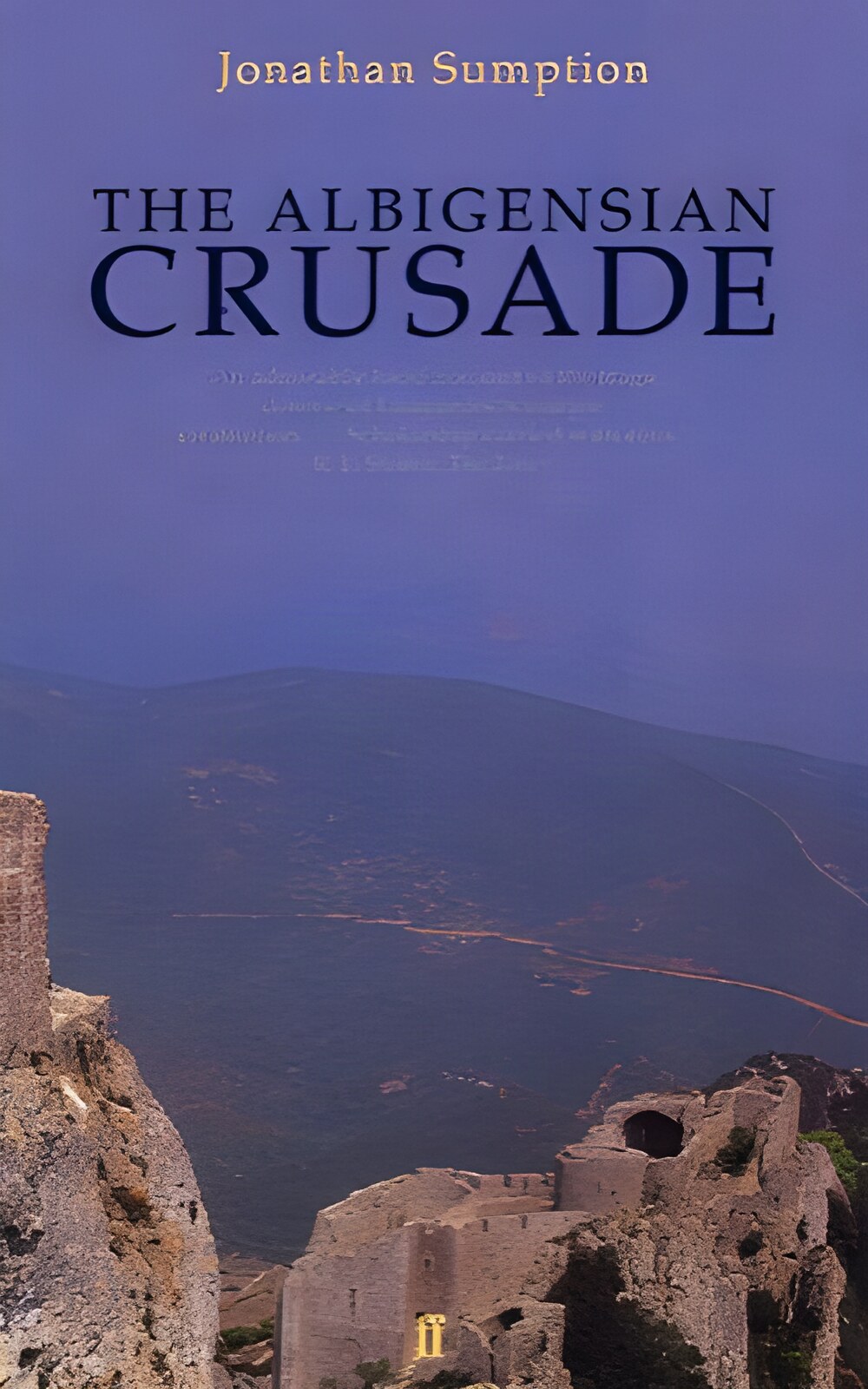
Softcover. UK, Faber & Faber, reprint, 1988, Book: Very Good, Dust Jacket: None, Softcover, 271 pages. In the twelfth century, Languedoc, in the far south, was among the most beautiful parts of France, far away from the world of the feudal north. However, it was in this rich region that a heresy of Eastern origin took hold, forcing the Catholic Church to confront a rival whose teachings questioned the foundations of Christian thought. These heretics, called Cathars, held a profoundly pessimistic view of the world that was based on the duality of all things, including good and evil: according to one heretic, "The one, the good God, made the invisible world, while the other, the evil God, made the visible one." Jonathan Sumption's acclaimed history examines the roots of this heresy as well as of the crusade the Church undertook in 1208 to stamp out the infidels, who ultimately were conquered by the Catholic armies. But this book does more than simply describe this terrible war; it reconstructs a lost world of great cultural richness, one that saw the creation in Languedoc of the troubadour tradition as well as the magnificent castles at Cabaret and Carcassonne. Clean copy.
Hardcover. Oxford UK, Oxford University Press, 1st, 1999, Book: Very Good, Dust Jacket: Very Good, Hardcover in a bright dust jacket, 393 pages. This is the first study of the reception of the apocryphal Second Book of Esdras from the fifteenth to the eighteenth century. The author discusses the concepts of biblical apocrypha and canonicity in connection with the increasingly critical attitude to religious authority that developed with the humanists and intensified with the Reformation.
Hardcover. NY, Oxford University Press, 1st, 1998, Book: Very Good, Dust Jacket: Very Good, Hardcover in a very good dust jacket with fading to spine, 403 pages. The concept of the atom is very near scientific bedrock, touching first causes, fundamental principles, our conception of the nature of reality. This book is a translation from the French of a history of atomic thought and theory, from ancient Greece to the present day. Pullman grounds his coverage of scientific theory always in the religious and philosophical context of the times, covering the whole period of Western civilization, including in passing the major scientific philosophies of the Muslim world and India. The transition of atomism from a philosophical position to an experimental science, in the mid-19th century, is well handled, and the coverage is nicely rounded out by a treatment of the first visual proof of atoms' material existence by direct microscopic imaging of individual atoms about 10 years ago. Name on front fly leaf otherwise clean.
Hardcover. Princeton NJ, Princeton University Press, 1st, 1993, Book: Very Good, Dust Jacket: Very Good, Hardcover in a bright dust jacket with light edgewear, 419 pages. By the mid-1600s, the commonsense, manifest picture of the world associated with Aristotle had been undermined by skeptical arguments on the one hand and by the rise of the New Science on the other. What would be the scientific image to succeed the Aristotelian model? Thomas Lennon argues here that the contest between the supporters of Descartes and the supporters of Gassendi to decide this issue was the most important philosophical debate of the latter half of the seventeenth century. Descartes and Gassendi inspired their followers with radically opposed perspectives on space, the objects in it, and how these objects are known. Lennon maintains that differing concepts on these matters implied significant moral and political differences: the Descartes/Gassendi conflict was typical of Plato's perennial battle of the gods (friends of forms) and giants (materialists), and the crux of that enduring philosophical struggle is the exercise of moral and political authority. Lennon demonstrates, in addition, that John Locke should be read as having taken up Gassendi's cause against Descartes. In Lennon's reinterpretation of the history of philosophy between the death dates of Gassendi and Malebranche, Locke's acknowledged opposition to Descartes on some issues is applied to the most important questions of Locke exegesis.
Hardcover. Ontario CA, Wilfrid Laurier University Press, 1st, 2004, Book: Very Good, Dust Jacket: Very Good, Hardcover in a bright dust jacket, 201 pages. Clean, bright copy. "Parker has produced a clear and well-researched study of an aspect of Locke's thought that theologians may have tended to miss because it is to do with politics, and that political theorists may have tended to overlook because it involves the Bible and theology. For this he is to be congratulated. Theologians today may also learn from the debate between Filmer and Locke the profoundly unsatisfactory character of attempts to resolve contemporary issues, whether in politics, society, or religion, by imaginative and inventive applications of stray texts. In this respect what is past gives a warning to the present. How will current debates citing biblical texts (for example, in debates about the treatment of homosexuals, or about the consecration of women, or about divine intervention and design in creation) be seen in centuries hence? Those who, with Locke, confidently condemn the speck distorting Filmer's religio-political view, must examine whether, what they see is free from distortion by the `learned Gibberish' of inherited prejudices and convictions. It is to Parker's credit that this useful contribution to the history of thought also raises controversial contemporary challenges.''
Hardcover. NY, Summit Books, 1st US, 1988, Book: Very Good, Dust Jacket: Very Good, Hardcover in a bright, price-clipped dust jacket. Color illustrations through by Steadman. His take on the creation of the universe, man:- and, what we have done to the earth!

 "St. Anselm's Proslogion with A Reply on Behalf of the Fool by Guanilo and The Author's Reply to Gauniloby: Charlesworth, M.J. (trans.)")






 "Taming the Leviathan: The Reception of the Political and Religious Ideas of Thomas Hobbes in England 1640??\"1700 (Ideas in Contextby: Parkin, Jon")
 "Teachings of Taoist Master Chuang, Theby: Saso, Michael")
 "Thanka Painting of the Tsang-Pa Tradition of Tibetby: Sangpo, Phuntsok")