London, Society For Promoting Christian Knowledge, 1st, 1930, Book: Very Good, Dust Jacket: None, Hardcover, green cloth covers with gilt title on spine. 121 pages including index. Clean copy.
Hardcover. NY, Columbia University Press, 1st, 1960, Hardcover, blue cloth covers with gilt lettering to spine, 249 pages, two b&w plates. Through criticism and analysis of ancient traditions, Kahn reconstructs the pattern of Anaximander's thought using historical methods akin to the reconstructive techniques of comparative linguists. Name on front fly leaf, light pencil marking to a dozen pages. Cloth spine faded.
Softcover. Amsterdam, North - Holland Publishing, 2nd pr., 1957, Book: Very Good, Dust Jacket: Very Good, Thin card covers in a lightly sunned dust jacket, 122 pages. Remarkable work in which the author aimed to collect some of the data available in the state of science of Bochenski's times and to arrange them in a kind of outline, which showed forth some of our indebtedness to Greek Logicians, and allowed the reader to see how their results were reached.
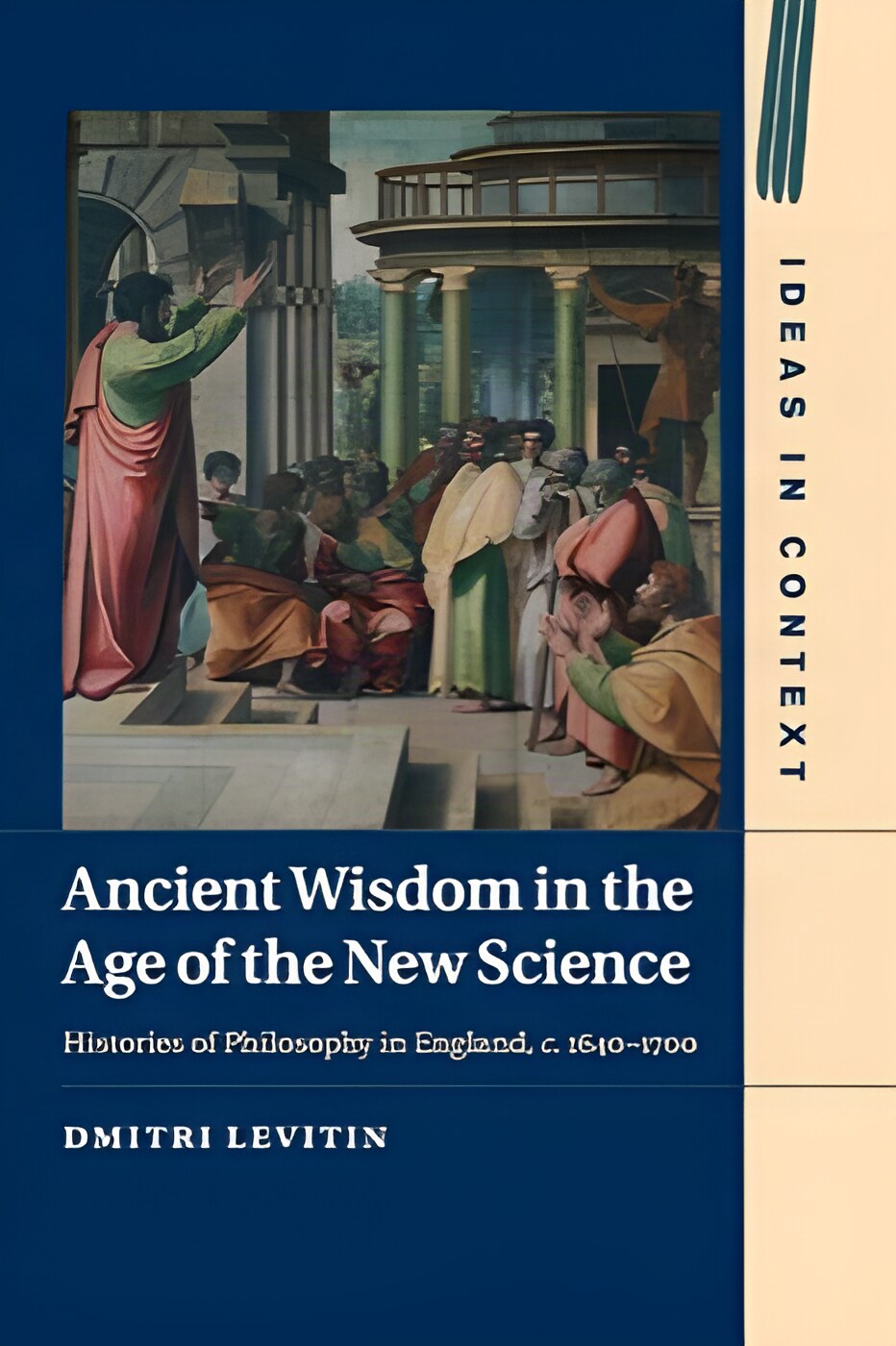
Hardcover. Cambridge UK, Cambridge University Press, 1st, 2015, Book: Very Good, Dust Jacket: Very Good, Hardcover in a bright dust jacket, pages. Seventeenth-century England has long been heralded as the birthplace of a so-called 'new' philosophy. Yet what contemporaries might have understood by 'old' philosophy has been little appreciated. In this book Dmitri Levitin examines English attitudes to ancient philosophy in unprecedented depth, demonstrating the centrality of engagement with the history of philosophy to almost all educated persons, whether scholars, clerics, or philosophers themselves, and aligning English intellectual culture closely to that of continental Europe. Drawing on a vast array of sources, Levitin challenges the assumption that interest in ancient ideas was limited to out-of-date 'ancients' or was in some sense 'pre-enlightened'; indeed, much of the intellectual justification for the new philosophy came from re-writing its history. At the same time, the deep investment of English scholars in pioneering forms of late humanist erudition led them to develop some of the most innovative narratives of ancient philosophy in early modern Europe. Name on front fly leaf, otherwise clean.
New York, Clarion Books, 1st, 1996, Book: Very Good, Dust Jacket: Very Good, Hardcover in a bright, unclipped dust jacket. Color illustrations by Alexander Koshkin. SIGNED BY PATERSON on title-page.
Hardcover. Paris, Zodiaque, 1st, 1983, Book: Very Good, Dust Jacket: Very Good, 374 pages plus index. Color, b&w gravure photographs, plans of churches, cathedrals, abbeys and monasteries in England. Text in French. Ribbon marker.
Hardcover. New York, Board of Publications of the Reformed Protestant Ditch Church, 3rd Edition, 1857, Book: Good, Dust Jacket: None, 479 pages. Hardcover. B/w illustrations with tissue guards for most. Red cloth cover boards with blindstamped design and gilt title on spine (faded), agewear to covers. Foxing throughout. Tanning to edges and pages from age. Binding good. Spine straight.
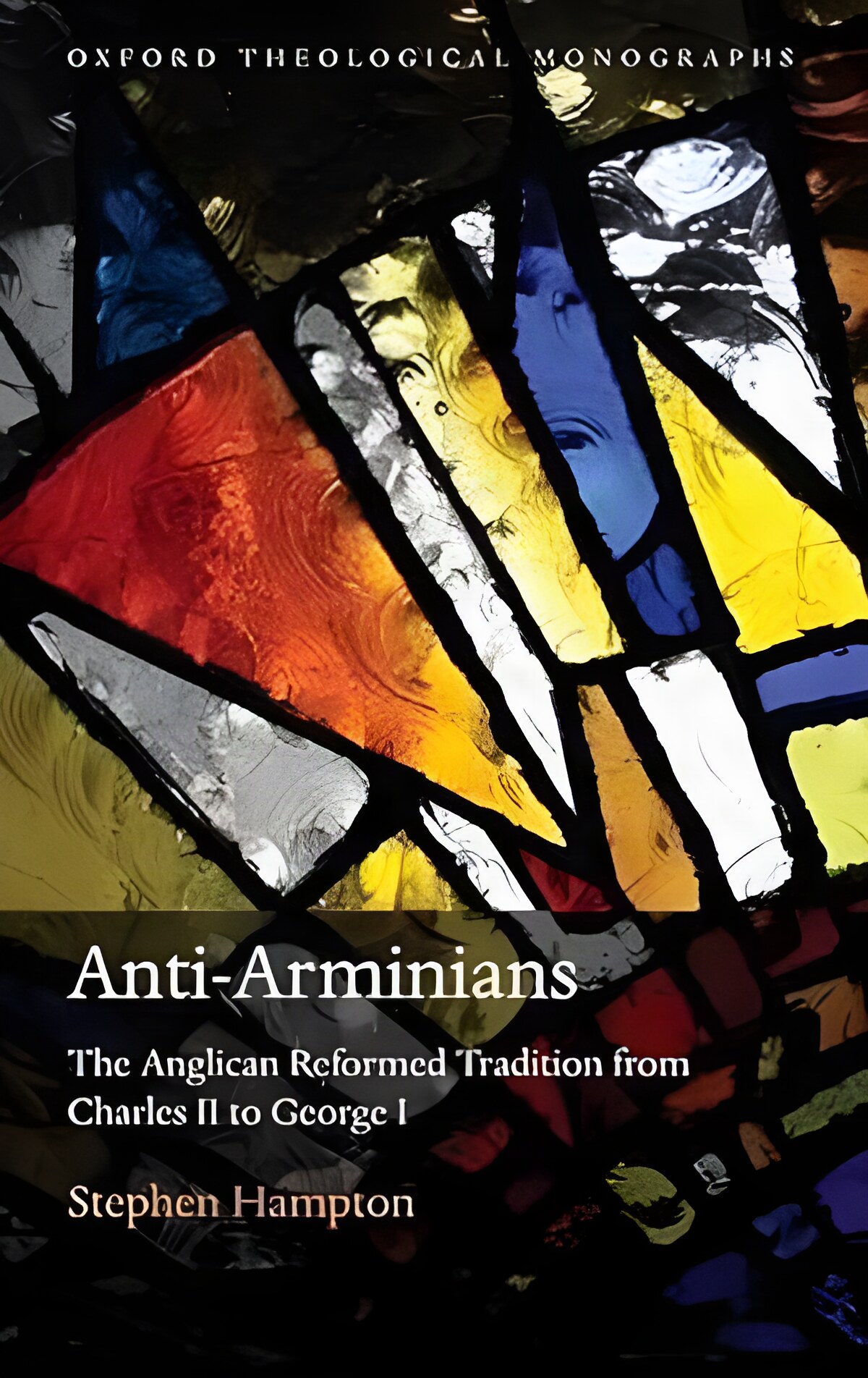
Hardcover. Oxford UK, Oxford University Press, 1st, 2008, Book: Very Good, Dust Jacket: Very Good, Hardcover in a bright dust jacket, 293 pages. A study of the Anglican Reformed tradition (often inaccurately described as Calvinist) after the Restoration. Hampton sets out to revise our picture of the theological world of the later Stuart period. Arguing that the importance of the Reformed theological tradition has frequently been underestimated, his study points to a network of conforming reformed theologians which included many of the most prominent churchmen of the age. Focussing particularlyon what these churchmen contributed in three hotly disputed areas of doctrine (justification, the Trinity and the divine attributes), he argues that the most significant debates in speculative theologyafter 1662 were the result of the Anglican Reformed resistance to the growing influence of continental Arminianism. Hampton demonstrates the strength and flexibility of the Reformed response to the developing Arminian school, and shows that the Reformed tradition remained a viable theological option for Anglicans well into the eighteenth century. Clean, bright copy.
Hardcover. Boston, William White & Co, 3rd, 1862, Book: Very Good, Dust Jacket: None, 344 pages. Black boards with embossed pictorial border, gilt titles to spine. Previous owner's signature to front endpaper, light rubbing to covers, top third of outside of front hinge cracked, mild edgewear, pages crisp and unmarked; overall, a very neat, tight copy.
Softcover. London, Routledge, reprint, 2016, Book: Very Good, Dust Jacket: None, Softcover, 287 pages. St Anselm's archiepiscopal career, 1093-1109, spanned the reigns of two kings: William Rufus and the early years of Henry I. As the second archbishop of Canterbury after the Norman Conquest, Anselm strove to extend the reforms of his teacher and mentor at Bec, and his predecessor at Canterbury, Archbishop Lanfranc. Exploring Anselm's thirty years as Prior and Abbot of the large, rich, Norman monastery of Bec, and teacher in its school, this book notes the wealth of experiences which prepared Anselm for his archiepiscopal career--in particular Bec's missionary attitude toward England. Sally Vaughn examines Anselm's intellectual strengths as a teacher, philosopher and theologian: exploring his highly regarded theological texts, including his popular Prayers and Meditations, and how his statesmanship was influenced as he dealt with conflict with the antagonistic King William Rufus. Clean copy.
Hardcover. Boston, Little Brown & Co., 1st, 1964, Book: Very Good, Dust Jacket: Good, Hardbound, 246 pages. Previous owner's inscription front end paper. Dust jacket with light edgewear and chipping. Protective mylar cover.
Hardcover. UK, Clarendon Press, 1st, Book: Very Good, Dust Jacket: Very Good, Hardcover in a bright dust jacket, 303 pages. Aristotle, great Greek philosopher, researcher, reasoner, and writer, born at Stagirus in 384 BCE, was the son of Nicomachus, a physician, and Phaestis. He studied under Plato at Athens and taught there (367 47); subsequently he spent three years at the court of a former pupil, Hermeias, in Asia Minor and at this time married Pythias, one of Hermeias s relations. After some time at Mitylene, in 343 2 he was appointed by King Philip of Macedon to be tutor of his teen-aged son Alexander. After Philip s death in 336, Aristotle became head of his own school (of Peripatetics ), the Lyceum at Athens. Previous owner's name on front fly leaf, otherwise clean, like new.
Hardcover. Chicago, University of Chicago Press , 1st, 1987, Book: Very Good, Dust Jacket: Very Good, Hardcover in a bright dust jacket, 249 pages. A study of "Aristotle's psychology, or philosophy of mind." Name on front fly leaf, otherwise clean, tight copy.
Hardcover. Oxford UK, Clarendon Press, reprint, 2001, Book: Very Good, Dust Jacket: Very Good, Hardcover in a bright dust jacket, 690 pages, folding table. Greek & English text. biblio. index. Name on front fly leaf, otherwise clean. Originally published in 1949.
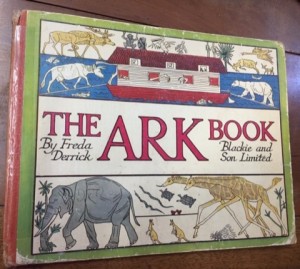
Hardcover. London, Blackie and Son, Ltd., 1st, 1921, Book: Good, Dust Jacket: None, Nonpaginated (about 24 pages). Hardcover. Undated, assumed it's a 1st edition. Fun, engaging, color illustrations with text below throughout. Stitch binding with a few stitches missing, but still intact with no pages missing. The gray paper-covered boards are bound at the spine in gray cloth, and the front board has a full coloured pictorial panel pasted to it, with a scene of the Ark on a white background, with red and black lettering. Red cloth spine. Back cover's illustration has been romoved from board. Back cover board has been previously torn off and repaired with tape. Previous owner stamp on preliminary page with a crayon decoration. Some stray makes made with pencil on back cover board. Pages clean inside. In good condition for its age.
Softcover. Paris, Reunion des Musees Nationaux, 1st, 1990, Book: Very Good, Dust Jacket: None, 204 pages. Softcover. French text only. Previous owners stamp on front endpaper. Illustrated with beautiful full color and black & white examples of religious art and artifacts of Tibet and Nepal. Slight toning to page edges. Clean, tight copy.
Hardcover. Cambridge MA, Harvard University Press, 1st, 1970, Book: Very Good, Dust Jacket: Very Good, Hardcover in a lightly worn dust jacket, 478 pages. Name on half-title page, otherwise clean.
Softcover. New Haven CT, Yale University Press, 2nd pr., 1987, Book: Very Good, Dust Jacket: None, Softcover, 450 pages. The rise of atheism in the modern world is a religious phenomenon unprecedented in history, both in the number of its adherents and in the security of its cultural establishment. How did so revolutionary a conviction as this arise? What can theological reflection learn from this massive shift in religious consciousness? In this book, Michael J. Buckley investigates the origins and development of modern atheism and argues convincingly that its impetus lies paradoxically in the very attempts to counter it. Although modern atheism finds its initial exponents in Denis Diderot and Paul d'Holbach in the eighteenth century, their works bring to completion a dialectical process that reaches back to the theologians and philosophers of an earlier period. During the seventeenth century, theologians such as Leonard Lessius and Marin Mersenne determined that in order to defend the existence of god, religious apologetics must become philosophy, surrendering as its primary warrant any intrinsically religious experience or evidence. The most influential philosophers of the period, Rene Descartes and Isaac Newton, and the theologians who followed them accepted this settlement, and the new sciences were enlisted to provide the foundation for religion. Clean, bright copy.
Softcover. Berkeley CA, University of California Press, 1st pbk., 1969, Book: Very Good, Dust Jacket: None, Softcover, 463 pages. This classic biography has established itself as the standard account of Saint Augustine's life and teaching. The remarkable discovery recently of a considerable number of letters and sermons by Augustine has thrown fresh light on the first and last decades of his experience as a bishop. These circumstantial texts have led Peter Brown to reconsider some of his judgments on Augustine, both as the author of the Confessions and as the elderly bishop preaching and writing in the last years of Roman rule in North Africa. Clean copy.
Hardcover. London, England, Messrs. Luzac & Co., 1st Edition, 1954, Book: Very Good, Dust Jacket: None, Two volume set. Hardcovers. Domestic shipping only. Previous owner's name on front flyleaf. Vol. 1: 374 pages; Vol. 2: 217 pages. Black cover boards, gilt title on spine. Volume 2 has fading to spine. Pages unmarked. Spines straight. Binding tight. An important Islamic philosophical treatise in which the author defends the use of Aristotelian philosophy within Islamic thought. DOMESTIC SHIPPING ONLY.
Hardcover. Boston, Bulfinch/Little, Brown and Co, 1st, 1999, Book: Very Good, Dust Jacket: Very Good, Gold covers, blue cloth spine sith gilt titles, color illustrated dust jacket, gorgeous full page color illustrations. Mild rubbing to dust jacket; a beautiful clean, tight copy in excellent condition.
Hardcover. NY, Doubleday, reprint, 1972, Book: Very Good, Dust Jacket: Good, Hardcover in a worn, chipped dust jacket, 272 pages. Mr. Wills takes the disarray of the Catholic Church as a model of institutional breakdown, tracing parallel agonies in church and state... He asks whether life can rise again from our institutional ruins, and finds promising signs of this, not only among Catholic "prophets" but Protestant and Jewish ones as well." Name on front leaf, otherwise clean.
Hardcover. Oxford University Press, 1st thus, 2010, Book: Very Good, Dust Jacket: Very Good, Hardcover in a bright dust jacket, 426 pages. Behemoth, or The Long Parliament is essential to any reader interested in the historical context of the thought of Thomas Hobbes (1588-1679). In De Cive (1642) and Leviathan (1651), the great political philosopher had developed an analytical framework for discussing sedition, rebellion, and the breakdown of authority. Behemoth, completed around 1668 and not published until after Hobbe's death, represents the systematic application of this framework to the English Civil War. Clean, bright copy.




 "Angel and the Donkey, The (SIGNED COPY)by: Paterson, Katherine")



 "Arcana of Nature; The History of Laws and Creationby: Tuttle, Hudson")

 "Aristos, The: A Self-Portrait in Ideasby: Fowles, John")
 "Aristotle on Coming-to-Be and Passing-Away: De Generatione Et Corruptioneby: Harold H. Joachim")




 "Atheist, The : Madalyn Murray O'Hairby: Le Beau, Bryan F.")
 "Averroes' Tahafut Al-Tahafut (The Incoherence of the Incoherence) Volume 1 & 2by: Van Den Bergh, Somin")


