Bologna, Damiani, 1st, 2017, Book: Very Good, Dust Jacket: None, Hardcover, 280 pages. American fashion photographer James Moore (1936-2006) was an influential voice in mid-20th-century fashion photography, working for Harper's Bazaar during its 1960s heyday under the leadership of legendary editor Carmel Snow. Shooting languid mod gamines and luxe bohemians in arresting, often surreal or cinematic compositions, Moore helped shape the visual vocabulary of '60s fashion alongside better-known colleagues such as art director Alexey Brodovitch (under whom Moore studied). Moore also directed television commercials and contributed photographs to European magazines in the 1980s and 1990s, and taught photography at the School of Visual Arts, New York, and the Rochester Institute of Technology. Every Moore photograph is an intricate exploration of space and beauty, with an attention to detail that betrays the photographer's peerless eye. Something of a "photographer's photographer," Moore influenced the next generation of great fashion photographers but has been somewhat neglected in histories of 1960s fashion and culture--until now. James Moore: Photographs 1962-2006 collects a half century of extraordinary photographs by Moore, the first time his work has been collected in a single monograph. Including texts from the leading editors, models, photographers and designers of the day, this volume takes stock of James Moore's astounding career and an extraordinary cultural moment.
Softcover. Washington DC, Smithsonian Institution, 1st, 1990, Book: Very Good, Dust Jacket: None, Softcover, 64 pages, color illustrations. a noted commercial photogrpher shows how he approaches and executes a given job. 30 color plates with commentary. Also a lengthy interview with Maisel by editor Susan Weiley.
Hardcover. NY, Abrams, 1st, 2014, Book: Very Good, Dust Jacket: Very Good, Hardcover in a bright dust jacket. This collection of more than 250 remarkable images is the result of seven years of painstaking fieldwork across the Pacific Ocean, using photographic techniques that Middleton developed to capture these extremely fragile creatures on camera, creatures who are astonishingly diverse in their shapes, patterns, textures, and colors--in nature's fashion show, they are the haute couture of marine life. Middleton also provides short essays that examine the place these invertebrates occupy on the tree of life, their vast array of forms, and their lives in the ocean. Scientist Bernadette Holthuis contributes profiles describing each species, many of them for the first time. Middleton's book is a stunning view of nature that harmoniously combines art and science. 255 pages in color. Clean copy. PLEASE NOTE: DUE TO SIZE & WEIGHT, DOMESTIC SHIPPING ONLY.
Hardcover. Rome, Silvana Editoriale d'Arte, 1st, 1955, Book: Very Good, Dust Jacket: Good, Hardcover in a bright, lightly worn dust jacket. Italian text. B&w photos throughout by List.
Hardcover. Los Angeles Times, 1st, 1999, Book: Very Good, Dust Jacket: Very Good, Hardcover in dust jacket with some fading to spine, otherwise very good, clean copy. A compilation of Los Angeles Times archive photos from 1920 through 1960, offers an extraordinary and unique chronicle of early Hollywood marriages, divorces, births. Deaths, lawsuits, celebrations, and arrests. All pictures in black and white. 189 pages. Plus notes, index.
Hardcover. NY, Thames & Hudson, 1st, 2021, Book: Very Good, Dust Jacket: None, Hardcover in pictorial boards. An evocative portrait of mid-century New York City by master documentary photographer. It focuses on the work photographer Todd Webb produced in New York City in the 1940s and 1950s. Webb photographed the city day and night, in all seasons, and in all weather. Buildings, signage, vehicles, the passing throngs, isolated figures, curious eccentrics-from the Brooklyn Bridge to Harlem, this book is a rich portrait of the everyday life and architecture of New York. Webb's work is focused and layered with light and shadow, capturing the soul of this city shaped by the friction and frisson of humanity. Remainder line to bottom edge, otherwise clean.
Hardcover. US, Stern Portfolios, 1st, 2013, Book: Very Good, Dust Jacket: None, 96 pages. Hardcover with laminated boards. Like new in publishers shrinkwrap. In 1975, the young Parisian photographer Brigitte Lacombe met Donald Sutherland and Dustin Hoffman at the Cannes Film Festival; these new acquaintances would go on to open doors for her. That same year she was hired as a photographer for the filming of Fellini's Casanova. Since then, Lacombe's famous images have reflected a who's who of Hollywood cinema. This collection spans a masterfully choreographed array of photographs Lacombe took - all the way from the sets of 1970's cinema classics to film milestones of the new millennium, including Alan J. Pakula's All the President's Men, Martin Scorsese's Gangs of New York, and Quentin Tarantino's Inglorious Bastards. Conveying a certain intimacy without unmasking any mystery, Lacombe's images capture classical beauty in a way that is fresh and exciting.
Softcover. NY, Aperture, 1st, 1983, Book: Very Good, Dust Jacket: None, Softcover, 183 pages. Profile by Calvin Tomkins; excerpts from correspondence, interviews, and other documents. This is a comprehensive survey of the power and force of one of the 20th century's major photographic figures. Before his death, Strand spent his last days going over his photographic prints and his many books with an eye to the completion of this book. Clean copy.
Hardcover. New York, Knopf, 1st , 1983, Book: Very Good, Dust Jacket: Very Good, 207 pages. Hardcover with dust jacket. INSCRIBED BY ARNOLD on front fly leaf. 161 color photographs by Arnold. Dust jacket with light wear. A short 1/2" tear at top of spine but not affecting integrity of binding.
Hardcover. Prestel Publishing, 1st, Book: Very Good, Dust Jacket: Very Good, Hardcover in a bright dust jacket, 576 pages. Unlike many other artistic media, photographys origins are well documented, as are its ever-changing technologies and applications. Written by an international team of experts, this definitive history of photography looks at every step of the fields dynamic evolution, period by period and movement by movement. Each key genre is chronologically presented within its social, economic, and political context, along with close analysis of specially selected works that best exemplify the characteristics of the period. With more than 500 gorgeous examples in black and white and color, the book explores in-depth virtually every aspect of the medium since its first public demonstration in 1839 to the latest innovations: from early portraits and the birth of photojournalism to travel photography and the mapping of the world; from the Pictorialists to the avant-garde; from celebrity and fashion to documentary and landscape. Along the way readers will learn why some photographs are considered iconic, and why the medium as an art form continues to challenge and enthrall us. DUE TO WEIGHT, DOMESTIC SHIPPING ONLY.
Hardcover. Lausanne, Clairefontaine, 1st , 1956, Book: Very Good, Dust Jacket: Very Good, Hardcover, 128 pages. Black & white photos by Schuh printed in gravure. Documentary images of people in the Cartier-Bresson style. FRENCH TEXT by Fouchet. Nice condition. Schuh's early work as freelance photojournalist for several magazines, including "Paris Match" and "Life," led him throughout Europe and as far as Indonesia. In this work, Schuh presents the realities of daily life through a selection of his early photographs, including his two most famous: "Enfant javanais jouant" (a boy stretched out playing a game), and "Danseuses sacrees de Bali" (temple dancer), both taken in Indonesia in 1938-39.
Softcover. NY, Aperture, 1st, 1973, Softcover, 136 pages. First Edition. Introduction by Jonathan Williams. Stories by Lafcadio Hearn. Captions, and a Statement, by Laughlin. Glossy illustrated wrappers. The Aperture Monograph issued in connection with the Laughlin exhibition at the Philadelphia Museum of Art in 1973. Clean, bright copy.
Hardcover. NY, Simon & Schuster, 1st, 1988, Book: Very Good, Dust Jacket: Very Good, Hardcover, 228 pages. Illustrated with full color and black & white photographs. Clean, bright copy. British photographer Beaton was noted for his portraits of royalty. His career spanned 50 years and included well-known portraits of King Geroge V and Queen Mary; his last official photo was in 1979. More than just a photographer, Beaton helped the royal family develop a worldwide image, an important component in the evolution and stability of the British monarchy as symbolic leaders of the Commonwealth. His photos were also an essential part of Britain's public relations and morale efforts, especially after Edward VIII's abdication and during World War II. A splendid compendium of Beaton's best works, supplemented by text explaining his importance.
Hardcover. London, The Folio Society, 1st, 2001, Book: Very Good, Dust Jacket: None, Hardcover with decorated boards in decorated slipcase, 298 pages, illustrations from photographs. 'With texts by various writers, selected by Roger Hudson'. Sepia-tone archive photographs throughout. Clean, bright copy.
Hardcover. Santa Fe, Arena, 1st, 2000, Book: Very Good, Dust Jacket: Very Good, Hardcover in a very good, unclipped dust jacket, 117 pages. 64 duotone photographs. Essays by Pierre Borhan and Diane Johnson, and commentary by Thomas Mellins.
Hardcover. London/NY, Thames & Hudson , 1st, 2022, Book: Good, Dust Jacket: None, Hardcover, orange cloth, 256 pages. A full-career retrospective on the work of Vivian Maier, bringing together a selection of key works from throughout her life and career. When Vivian Maier's archive was discovered in Chicago in 2007, the photography community gained an immense and singular talent. Maier lived in relative obscurity until her death in 2009, but is now the subject of films and books, and recognized as one of the great American photographers of the 20th century. Cover bumped, remainder line on bottom edge.
Hardcover. New York, Aperture, 1st, 2002, Book: Very Good, Dust Jacket: Very Good, Hardcover, 192 pages. Stunning black and white photos by award winning photographer of the aftermath of the September 11 terrorist attack on NYC. These images are accompanied by Janine Altongy's dramatic interviews with family members who lost loved ones, with survivors, rescue workers, firefighters, a police officer, a funeral director, and other witnesses to September 11th.
Softcover. NY, Viking Press, 1st, 1980, Book: Very Good, Dust Jacket: None, Softcover, 96 pages. Introduction by Anthony Burgess. Candid shots of the stars off their guard; Romy Schneider, Tom Jones, Dustin Hoffman, Raquel Welsh, Richard Burton, Orson Welles, Alfred Hitchcock, Brigitte Bardot, Mick Jagger, Onassis, Edith Piaf. Many others.
Hardcover. Austin TX, Texas Monthly Press, 1st, 1983, Book: Very Good, Dust Jacket: Very Good, 149 pages, illustrated throughout in b&w. Clean, unmarked copy with only minor wear to dust jacket.
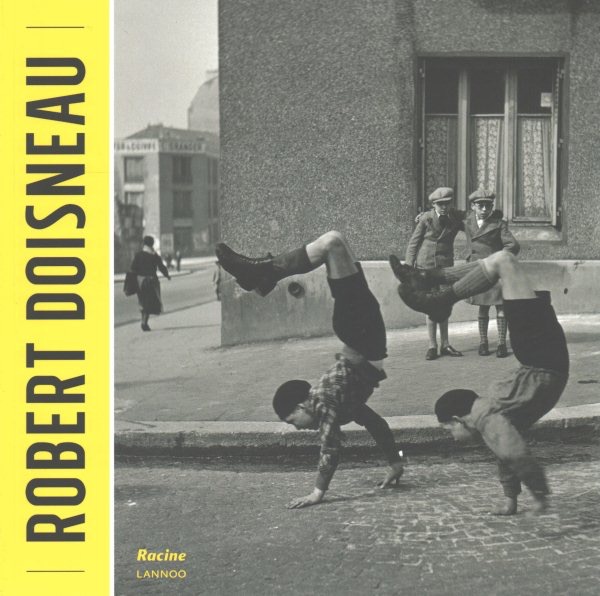
Softcover. Racine/Lannoo, 1st, 2017, Book: Very Good, Dust Jacket: None, Softcover, 239 pages, b&w and color plates. Text in English and French. Featuring the most well-known photos from Robert Doisneau since the beginning of his career. This retrospective also gives an insight in the lives of famous artists such as Picasso and Niki de Saint Phalle. The book is themed by three subjects: the main characteristics of his work and his importance for 20th century photography, the notion of the poetry of realism and 164 photos, which are also themed: daily beauty, Palm Springs, artists' studios. Published to accompany an exhibition in Musee Ixelles (Brussels) from 19 October 2017 until 4 February 2018. Clean, bright copy.
Softcover. New York , powerHouse Books, 1st, 2010, Book: Near Fine, Dust Jacket: None, Softcover. Like new in publishers shrink-wrap. Features photographs of female impersonators who have performed in the gay district of Osaka, Japan, from the '90s to the present, along with an essay discussing the photographer's work and the country's gay culture. Text by Eric Shiner and Simone Fukayuki.
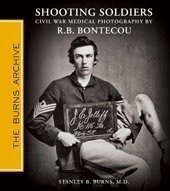
Hardcover. NY, The Burns Archive Press, 1st, 2011, Book: Very Good, Dust Jacket: None, Hardcover, laminated boards, measures 6 x 6 3/4", 164 pages. SIGNED AND INSCRIBED BY BURNS on title page. The first published expose focusing on the war-time clinical photographs of Dr. Reed Bontecou. Photographs of wounded Civil War soldiers from New York regiments, on display for the first time since the 19th century, show the supreme sacrifices made by Americans and their families in sobering detail. Clean copy.
Softcover. US, Turner, 1st, 2008, Book: Very Good, Dust Jacket: None, Softcover, 270 pages, illustrated throughout in color and b&w. Text in English and Spanish. Light edgewear to wrappers, else a clean, tight copy. Featuring work by Cecil Beaton, Brassai, Henri Cartier-Bresson, Robert Frank, Raoul Hausmann, Richard Avedon, Man Ray, El Lissitzky, Aleksandr Rodchenko and dozens more of the most outstanding photographers of the twentieth century. Analyzes photography as an artistic medium from 1900 to 2000-paying particular attention to the myriad ways that human beings have been portrayed across the years.
Hardcover. Munich, Hirmer, 1st, 2024, Book: Very Good, Dust Jacket: None, Hardcover in pictorial boards, 240 pages. Ylla (1911-1955) devoted herself exclusively to animal portraiture at a time when no one had thought of only photographing animals. Driven by her symbiotic relationship with animals, she created a new genre in animal photography: the expression and personality in animals. Ylla: The Birth of Modern Animal Photography recounts the eventful odyssey of a "New Woman" par excellence, fearless and knowing no limits. She was part of artists' circles in Belgrade and Paris, however during WW II she fled to New York via Marseille where she started her career again from square one. Originally taking beguiling photos in her studio and zoos, Ylla finally traveled to Africa and India where she died in a tragic accident during a water buffalo race. Her Animals in Africa and Animals in India are some of the first books on the subject. Ylla also introduced photography to children's literature. Her books The Sleepy Little Lion and Two Little Bears are juvenile classics. This book details her remarkable life and work.
Hardcover. Berkeley CA, University of California Press, 1st, 2009, Book: Very Good, Dust Jacket: Very Good, Hardcover. Like new in publishers shrink-wrap. Text by Robert Flynn Johnson; introduction by Alexander McCall Smith. 208 pages; over 220 duo-toned and color photos; 10 x 10 inches. A collection of interesting vernacular photography.
Softcover. London, Vision On Publishing, 1st, 2000, Book: Very Good, Dust Jacket: None, Softcover, 224 pages, color and b&w photos by Greg Qilliams. "As a photographer and film enthusiast, I wanted to revive the genre of the Life Magazine set reports of the 1950s and 60s," says Williams. "For a variety of reasons, the past 30 years have seen photographic access to the film industry severely restricted, limited mainly to portrait shots. I wanted to re-establish reportage as a respected form of film photography." Planned as an editorial project exploring the film-making process in its entirety, On Set grew into a three-years-in-the-making report on British cinema as it once again blossomed with movies like The Talented Mr. Ripley, Lock Stock and Two Smoking Barrels and Elizabeth. Gaining unprecedented access to sets, Williams was able to frame stars, directors and crew in their element and tell a complete, naturalistic story. Starting with Terry Gilliam's hands at the storyboarding stage and ending with Hugh Grant lip-syncing in post-production, On Set's fascinating insider's tale captures the leading lights of British and American film as they've rarely seen: Jude Law practices his dance moves; Matt Damon prepares for his close up; Renee Zellweger relaxes between takes. Clean copy.
Hardcover. New York, Graphis Press, 1st, 1999, Book: Very Good, Dust Jacket: Very Good, Hardcover, 106 pages, 45 full-page nude photographs by the Hungarian-born photographer Ferenc Berko, who worked in in Aspen Colorado since 1949. Like new in publishers shrink-wrap.
Softcover. Durham NC, Duke University Press, 2012, Book: Very Good, Dust Jacket: None, Softcover, 387 pages. Pictures and Progress explores how, during the nineteenth century and the early twentieth, prominent African American intellectuals and activists understood photography's power to shape perceptions about race and employed the new medium in their quest for social and political justice. They sought both to counter widely circulating racist imagery and to use self-representation as a means of empowerment. In this collection of essays, scholars from various disciplines consider figures including Frederick Douglass, Sojourner Truth, Ida B. Wells, Paul Laurence Dunbar, and W. E. B. Du Bois as important and innovative theorists and practitioners of photography. In addition, brief interpretive essays, or "snapshots," highlight and analyze the work of four early African American photographers. Featuring more than seventy images, Pictures and Progress brings to light the wide-ranging practices of early African American photography, as well as the effects of photography on racialized thinking. Still in publisher's shrinkwrap.
Hardcover. New York, Five Ties Publishing, 1st, 2006, Book: Very Good, Dust Jacket: Very Good, Hardcover, 163 pages. Like new in publishers shrink-wrap. Contains 93 color photos spanning 25 years of the photographer's work; Includes photos of Exeter Cathedral, the Millenium Dome, Lloyds of London, Washington National Gallery, the Louvre, and many more.
Softcover. Washington DC, Smithsonian Institute, 1st, 1981, Book: Very Good, Dust Jacket: None, Softcover, 95 pages, b&w illustrations. Originally conceived to accompany the exhibition, Photographs from the National Portrait Gallery. Presents the development of photography accompanied by portraits illustrating various photographic techniques. Includes suggestions for organizing and maintaining a collection of prints. Clean copy.
Softcover. Vancouver BC, Arsenal Pulp Press, 1st, 2003, Book: Very Good, Dust Jacket: None, Softcover, 155 pages, illustrated throughout in b&w. Clean, unmarked copy in excellent condition. "One Ring Circus pays homage to the wrestling life: the sound and the fury and the die-hard fans who are often as colorful and outrageous as the wrestlers they clamor for."
Hardcover. NY, Abradale Press, reprint, 1995, Book: Very Good, Dust Jacket: Very Good, Hardcover in a bright, price-clipped dust jacket. A collection of photograph reproductions and accompanying text of O. Watson Link's work on the Norfolk and Western Railway.
Softcover. London, Tate Publishing, 1st, 2007, Book: Near Fine, Dust Jacket: None, Softcover. Clean, unmarked copy with only minor wear to wrappers. 136 pages, 40 color & 50 black & white illustrations. Helio Oiticia (1937-80) was one of the most influential artists of the late twentieth century. At the end of the 1960s Oiticica was invited to exhibit at the Whitechapel Art Gallery in London. This book captures not only a pivotal moment in the life and career of a unique artist but also in the development of the avant-garde in London.
Hardcover. BY, Aperture Foundation, 1st, 1991, Book: Very Good, Dust Jacket: Very Good, Hardcover in a bright dust jacket. The first collection of the extensive and superlative work realized by Mary Ellen Mark in the United States. The book is composed of many previously unpublished images, as well as photographs from several of her best-known projects. From "Streetwise" to "The Damm Family," Mary Ellen Mark includes the most iconic images from these groundbreaking stories, as well as powerful, never-before-seen photographs Mark accomplished in subsequent years. She makes a deeply felt commitment to her subjects, and her empathy and humanity come through in every image. Clean copy. DOMESTIC SHIPPING ONLY.
Hardcover. New York, Rizzoli, 1st, 2010, Book: Very Good, Dust Jacket: Very Good, Hardcover, 320 pages in color and b&w. Like new in publisher's shrink-wrap. From the late '70s, Herb Ritts gained a reputation as a master of art and commercial photography. In addition to his portrait and fashion work for Vogue, Vanity Fair, and Rolling Stone, he created campaigns for Calvin Klein, Coco Chanel, Gianni Versace, and Valentino Garavani. Churchward interviews Klein, Cindy Crawford, Elton John, Anna Wintour, Madonna, and Christopher Buckley and has many behind-the-scenes shots from photo shoots, parties, travels, intimate portraits, and moments with friends.
Hardcover. NY, Abrams, 1st, 1999, Book: Very Good, Dust Jacket: Very Good, Hardcover in a bright, unclipped dust jacket. A staff photographer for the "Philadelphia Inquirer" presents intimate pictures and lively personal anecdotes for readers nostalgic for their own hometown diner. 145 photos, 125 in color. Clean copy.
Softcover. US, University of South Carolina Press, 1st, 2013, Book: Very Good, Dust Jacket: None, Softcover, 125 pages, illustrated throughout in b&w. Remainder mark to bottom edge. Clean, tight copy.
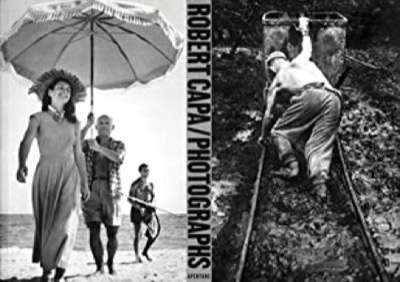
Hardcover. NY, Aperture, 1st, 2005, Book: Very Good, Dust Jacket: Very Good, Hardcover, 192 pages. Robert Capa: Photographs is a major retrospective of one of the century's greatest photographers. Drawing upon hundreds of previously unseen images, this collection reveals Capa as one of the great poets of the camera. In these photographs, we see the world through the eyes of a driven humanist who was also a documentarian of the highest caliber. While previous volumes on Capa have focused on his role as a war photographer, Robert Capa: Photographs shows us the remarkable range of his work: the sufferings as well as the tenderness, humor, and wonder of his subjects. The extraordinary book includes poignant comments by Capa's close friend Henri Cartier-Bresson and by Cornell Capa (Robert's younger brother and the Founding Director of the International Center of Photography), as well as a historical essay by Robert Capa biographer Richard Whelan. The dramatic collection of images in Robert Capa: Photographs shows that he captured-through the events of history-the very heart of humanity.
Hardcover. London, Thames & Hudson, 1st, 2014, Book: Very Good, Dust Jacket: Very Good, Like new in publisher's shrink-wrap. The complete catalogue of design collective Hipgnosis, showcasing groundbreaking cover art created for iconic rock "n" roll giants, including the Rolling Stones, Paul McCartney, Led Zeppelin, and Pink Floyd. 320 pages, 500 color illustrations. Hardcover.
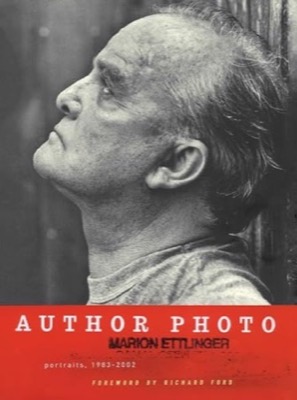
Hardcover. NY, Simon & Schuster, 1st, 2003, Book: Very Good, Dust Jacket: Very Good, Hardcover in a bright, price-clipped dust jacket. Collects, for the first time in book form, more than two hundred of Ettlinger's most famous photographs. Immortalized in these pages are many of America's greatest writers, including Raymond Carver, Francine Prose, Walter Mosley, Mary Karr, John Irving, Joyce Carol Oates, Truman Capote, Cormac McCarthy, Patricia Highsmith, Ken Kesey, Edwidge Danticat, and Jeffrey Eugenides. Shot exclusively in natural light and in black-and-white film, each of these images is an intimate artwork, putting the reader closer than ever before to the writers they revere and admire. Bright, clean copy.
Hardcover. US, Konemann, 1st, 1999, Book: Very Good, Dust Jacket: Very Good, 776 pages, illustrated throughout on sepia, b&w and color. Light edgewear and scratching to dust jacket, else a clean, tight copy. NOTE: DUE TO SIZE AND WEIGHT, DOMESTIC SHIPPING ONLY.
Softcover. NY, Callaway Editions, 1st, 2000, Book: Very Good, Dust Jacket: None, First edition. Softbound oversize book housed in publisher's slipcase. Clean, still in publisher's shrinkwrap. DOMESTIC SHIPPING ONLY.
Hardcover. US, Edition Stemmle, 1st, 1998, Book: Very Good, Dust Jacket: Very Good, 208 pages, illustrated throughout in sepia. Light edgewear and tanning to dust jacket, else a clean, tight copy. Alvin Langdon Coburn (1882-1966) is remembered today as one of photography's early masters and great innovators. This monograph investigates the unconventional nature of his personal and artistic achievements. Coburn's landscapes, cityscapes, portraits, and Vortographs reflect his unprecedented steps towards the creation of a photography of symbol and abstraction.
Hardcover. San Francisdo, Chronicle Books, 1st, 2023, Book: Very Good, Dust Jacket: Very Good, Hardcover in a bright dust jacket, 240 pages. Founded in 1960 by Chris Strachwitz, the one-man operation Arhoolie Records eventually produced more than four hundred albums during more than forty years in operation, exploring the far corners of American vernacular music--blues, gospel, Cajun, zydeco, hillbilly, Texas-Mexican norteno music, and more. From the very beginning, Strachwitz brought his camera along with recording equipment as he met and recorded now-legendary artists such as Lightnin' Hopkins, Mississippi Fred McDowell, Clifton Chenier, and Big Joe Williams. This book collects more than 150 of his best, most intimate, and exciting images--many never-before-seen--each with rich captions by Strachwitz and award-winning music journalist Joel Selvin, along with a substantial 20,000-word essay by Selvin about Arhoolie, Strachwitz, and the music. Bright, clean copy.
Softcover. Paris, Chene, 1979, Book: Very Good, Dust Jacket: None, Four softcover books in a cardboard slipcase. 64 pages each, all with 64 b&w plates by Kertesz. Books are clean and tight, very good. Slipcase has rubbing, edgewear.
Softcover. Seattle, University of Washington, 1st, 1974, Book: Very Good, Dust Jacket: None, Softcover. Introduction by Margery Mann. A retrospective look at Cunningham's long career. Includes many of her best images. B&w images throughout. A clean copy in wrappers.
Softcover. New York, Thames & Hudson, 1st, 1996, Book: Very Good, Dust Jacket: None, Softcover, 112 pages. Like new in publisher's shrink-wrap. This book selects from Jane Bown's whole range of her photography during the forty-five years she has worked for London's Observer, starting with scenes typical of the fifties and ending with others characteristic of the nineties. The portraits, sandwiched between these and forming the body of the book, themselves range widely - from such proven classics as those of Samuel Beckett, Mick Jagger and John Gielgud, to early studies of the Beatles and recent photos of Alan Bennett, Archbishop Tutu, Boy George and Woody Allen among a great variety of famous people in the worlds of music, literature, stage, screen, politics and the arts.
Hardcover. Albuquerque, University of New Mexico Press, 1st, 1987, Book: Very Good, Dust Jacket: Very Good, Hardcover in a bright, lightly worn dust jacket, 307 pages illustrated in b&w and color. Explores how photographs are perceived and analyzes the work of photographers including William Klein, Henri Cartier-Bresson, and Helen Levitt. Max Kozloff was an American art historian, art critic of modern art, and photographer. He was art editor at The Nation, and Executive Editor of Artforum.
Hardcover. New York, Assouline, 1st, 2005, Book: Very Good, Dust Jacket: Very Good, 152 pages, b&w and color illustrations. Fashions inspired by Fellini's cult film. In publisher's shrinkwrap.
Hardcover. NY, Thames & Hudson, 1st, 2017, Book: Very Good, Dust Jacket: Very Good, Hardcover in a bright, unclipped dust jacket. "While it seems we've already seen photographs of every centimeter of Paris from every angle, it's a pleasure to look at the postwar city through Child's viewfinder. A trained draftsman, painter and lithographer, he had strong theories about composition and light, as well as a desire to distill 'some aspect of each place,' whether it be fishermen on the Seine, geometrically framed by the overlapping arches of a bridge, or an old woman unwittingly anchoring an angular shadow in the South of France. As accomplished as the photographs are, and as engaging a character as Paul Child is revealed to be, the real draw here will undoubtedly be his intimate portraits of Julia Child before she was, well, Julia Child. What ultimately makes this enjoyable celebration of his work an important part of the Child archive is that it illuminates the third side of that fabled triangle, connecting us to his love of Julia - and France." (NYTimes) Clean copy.

 "James Moore: Photographs 1962-2006by: Martin Harrison (Author), Holly Brubach (Author), Nicolas Moore (Editor), James Moore (Photographer)")


 "ON ASSIGNMENT (Photographers at Work) by: Maisel, Jay")


 "High Exposure: Hollywood Lives - Found Photos from the Archives of the L.A. Times by: Amanda Parsons")
 "I See a City: Todd Webb's New Yorkby: Corcoran, Sean/ Okrent, Daniel/ Webb, Todd (Photographer)")


 "Brigitte Lacombeby: Lacombe, Brigitte")
 "Paul Strand: Sixty Years of Photographsby: Tomkins, Calvin/Paul Strand")
 "In America (SIGNED)by: Arnold, Eve")


 "Photography: The Whole Story by: Hacking, Juliet and David Campany")
 "Instants Voles Instants Donnesby: Schuh, Gotthard and Max-Pox Fouchet")
 "Clarence John Laughlin: The Personal Eye (An Aperture Monograph) by: Laughlin, Clarence John")
 "Cecil Beaton - The Royal Portraitsby: Strong, Roy")


 "Changing Paris: A Tour Along the Seineby: Trager, Philip & Pierre Borhan, Diane Johnson, Thomas Mellins")
 "Vivian Maierby: Anne Morin")


 "Stepping Through the Ashes by: Richards, Eugene & Janine Altongy")
 "Private Picturesby: Daniel Angeli and Jean-Paul Dousset")
 "Out of the Fortiesby: Lemann, Nicholas")
 "Night is Still Young, Theby: Hata, Tomoaki")
 "On the Human Being 1900-1950by: Ebner, Florian (Ed.)")
 "Ylla: The Birth of Modern Animal Photographyby: Pryor Dodge")
 "The Face in the Lens: Anonymous Photographsby: Johnson, Robert Flynn")
 "On Set by: Greg Williams")


 "Berko: Photographs 1935 1951 by: Berko, Ferenc")
 "Pictures and Progress: Early Photography and the Making of African American Identity by: Wallace, Maurice O. & Smith, Shawn Michelle (Editors)")
 "Variations: The Architecture Photographs of Jenny Okunby: Okun, Jenny")
 "Picture It! Smithsonian Institution Traveling Exhibition Service by: Stapp William F. and Marjorie L. Share")
 "One Ring Circus: Extreme Wrestling in the Minor Leagues by: Howell, Brian")
 "The Last Steam Railroad in Americaby: Garve, Thomas and Winston O. Link.")
 "Oiticica in Londonby: Brett, Guy and Figueiredo Luciano")
![American Odyssey: 1963-1999 by: Angelou, Maya / Mark, Mary Ellen [Photographer]](javascript:largeIMTop('https://www.browsingisarousing.com/shop/images/American-Odyssey-1963-1999_by_Angelou-Maya-Mark-Mary-Ellen-Photographer398340-451739.jpg','https://www.browsingisarousing.com/shop/images/American-Odyssey-1963-1999_by_Angelou-Maya-Mark-Mary-Ellen-Photographer398340-451739.jpg',0,'398340',0,'') "American Odyssey: 1963-1999 by: Angelou, Maya / Mark, Mary Ellen [Photographer]")
 "Herb Ritts: The Golden Hour: A Photographer's Life and His Worldby: Churchward, Charles")
 "Hometown Diners by: Williams, Robert O.")
 "Controversy and Hope: The Civil Rights Photographs of James Karalesby: Julian Cox; James H. Karales; Rebekah Jacob; Monica Karales")
 "Hipgnosis Portraitsby: Powell, Aubrey")
 "New History of Photography, Aby: Frizot, Michel")
 "Alvin Langdon Coburn, 1882-1966: A Monographby: Coburn, Alvin Langdon")


 "Jane Bown, Observerby: Billen, Andrew")

 "Dolce Vita Styleby: Dufreigne, Jean-Pierre")
 "France is a Feast: The Photographic Journey of Paul and Julia Childby: Alex Prud'homme, Katie Pratt")


)
)