Hardcover. New York, Macmillan, 1st, 1996, Book: Very Good, Dust Jacket: Very Good, 182 pages. Hardcover with dust jacket. Clean, tight copy. A photographic tribute to Julia Tuell, one of the first women to photograph Native Americans at the turn of the 20th century.
Softcover. New York, Grossman Publishers, 1st, 1970, Book: Very Good, Dust Jacket: None, 124 pages. Softcover with moderate wear to spine and paper wrappers. Creasing to spine. Previous owner's writing on front fly leaf, remainder mark.
Hardcover. NY, Prestel, 1st, 2015, Book: Very Good, Dust Jacket: None, Hardcover, 192 pages, color and b&w images. This first volume in a major new series of illustrated biographies of Magnum photographers traces the life and achievements of Eve Arnold, who captured an incredible array of subjects with remarkable clarity and compassion. Eve Arnold (1912-2012) was born to a poor immigrant family in Philadelphia and became a photographer by chance. In 1950 Arnold was a 38-year-old Long Island housewife when she enrolled in a six-week photography course that led to her groundbreaking photo essay on black fashion models in Harlem. She went on to become the first woman to join Magnum Photos and, eventually, one of the most accomplished photojournalists of her time. Filled with reproductions of Arnold's acclaimed photographs, shot in both color and black and white, as well as previously unseen archival images, this biography relates Arnold's bold images to the fascinating story of their making. Renowned for her intimate portraits of figures such as Marilyn Monroe, Malcolm X, and Queen Elizabeth, Arnold was equally comfortable documenting the lives of the poor and dispossessed. "I don't see anybody as either ordinary or extraordinary. I see them simply as people in front of my lens." To her images of migrant workers, disabled veterans, and protesters for civil rights in the US and against apartheid in South Africa, she brought an unflinching eye and a strong sense of social justice. This highly engrossing narrative tells a compelling story of an intrepid artist whose life's purpose was to report on the lives of others.
Hardcover. San Francisco, Chronicle Books, 1st, Book: Very Good, Dust Jacket: Very Good, Hardcover in a bright, unclipped dust jacket, 200 pages, large format. Profusley illustrated with color photographs of trees. Trees are vital- without them we simply wouldn't be here. Not only essential, they have been an inspiration throughout our history. In breathtaking photographs and stories we are taken on a journey from the boreal forest at the edge of the Arctic to the rainforests girdling the planet; from ancient bristlecones to fresh-leaved seedlings; from the charming and familiar to the scary and rare. An elegantly written and highly accessible text is complemented by an extraordinary collection of images created by some of the world's leading nature photographers.
Hardcover. NY, Abrams/Cameron Books, 1st, 2020, Book: Very Good, Dust Jacket: Very Good, Hardcover, 288 pages. Hong Kong provides a stunning backdrop for Abe Kogan's skillfully rendered black-and-white photography. The third in the Split Seconds series, following Havana and Florence, Hong Kong explores the city famous for its dense urbanism and high-rise marvels. The towering obelisks and repetitive facades of the modern megacity stand in stark contrast to its complex cultural roots--a city born of compromise between Chinese tradition and British influence. Kogan's strikingly evocative images showcase this intersection of influence with intimate portraits of bustling street life, iconic skylines, claustrophobic residential areas, maritime hubs, rugged coastline, and the parks and public spaces that provide a respite from the unrelenting vigor of the city. Like new in publisher's shrinkwrap.
Hardcover. 1st, 2010, Book: Very Good, Dust Jacket: None, Hardcover with cover pastedown, gilt lettering. The amiably spontaneous pictures taken by Sam Shaw (1912-1999) are well known: the native and life-long New Yorker shot countless cover photographs for Life and Look in the fifties and sixties, and later also took the still images for the films he produced himself. Shaw and Marilyn Monroe were friends, and he captured her unique aura in countless unpretentious portraits. During the filming of The Seven Year Itch, he staged his probably best known picture with her: Marilyn standing over a subway grate, a waft of air blowing the skirt of her white dress above her knees. Sam Shaw also portrayed almost every major Hollywood star of his day, consistently capturing the moment in his quest for truthfulness, with enthusiasm and from a new perspective, just as if he were selecting the camera angle for a film sequence. The researcher and author Lorie Karnath, the book's editor, enhances the publication with very personal memories of her long-time friend.
Hardcover. New York, NY, Harry N. Abrams, 1st, 2017, Book: Very Good, Dust Jacket: Very Good, 255 pages. Hardcover with dust jacket. Clean, tight copy with minor wear to dust jacket. Light bumps on bottom edge front cover edge.
Hardcover. NY, powerHouse Books, 1st, 2019, Hardcover in a bright dust jacket. For some 70 years, Leo Goldstein's East Harlembodyof work remained mostly untouched and unseen.The silver gelatin prints were catalogued in 2016,and a selection is gathered here for the first time.The photographs were taken over a number of years,beginning in 1949 when Goldstein was a memberof the Photo League.The East Harlem corpus, edited by Regina Monfort,represents an important and unique addition to thephotographic history of New York City. Because thereare no negatives in existence, it was of particularimportance to preserve the images in book form andmake them available to the public.The selected images reflect the postwar years in theEast Harlem community, which would grow intoa center of Puerto Rican culture and life in the U.S.From the families portrayed gathering on stoops, tothe kids at their shoeshine stations, to youths playingball in the streets, to posters on neighborhood walls,Goldstein's images of East Harlem provide a windowinto the socio-economic, cultural, and politicallandscape of the time.
Hardcover. New Haven CT, Yale University Press, 1st, 2018, Book: Very Good, Dust Jacket: None, Hardcover, 156 pages, no dj issued. An insightful new look at two renowned photographers, their interconnected legacies, and the vital documents of urban transformation that they created. In this comprehensive study, Kevin Moore examines the relationship between Eugene Atget (1857-1927) and Berenice Abbott (1898-1991) and the nuances of their individual photographic projects. Abbott and Atget met in Man Ray's Paris studio in the early 1920s. Atget, then in his sixties, was obsessively recording the streets, gardens, and courtyards of the 19th-century city--old Paris--as modernization transformed it. Abbott acquired much of Atget's work after his death and was a tireless advocate for its value. She later relocated to New York and emulated Atget in her systematic documentation of that city, culminating in the publication of the project Changing New York.
Hardcover. NY, Lustrum Press, 1st, 1980, Book: Very Good, Dust Jacket: Good, Hardcover in a lightly worn dust jacket with minor wrinkles to rear panel. 175 pages. Photographs and essays by Robert Adams, Lewis Baltz, Harry Callahan, Paul Caponigro, Hamish Fulton, William Garnett, Eliot Porter, Art Sinsabaugh, George Tice, and Brett Weston. No markings.
Hardcover. San Francisco, Chronicle Books, 1st, 2019, Book: Very Good, Dust Jacket: None, Hardcover in decorative boards with a paste-down photo of Marilyn Monroe reading. Audrey Hepburn, Humphrey Bogart, Gregory Peck, Rita Hayworth,--the brightest stars of the silver screen couldn't resist curling up with a good book. This unique collection of rare photographs celebrates the joy of reading in classic film style. The Hollywood Book Club captures screen luminaries on set, in films, in playful promotional photos, or in their own homes and libraries with books from literary classics to thrillers, from biographies to children's books, reading with their kids, and more. Featuring nearly 60 enchanting images, lively captions about the stars and what they're reading by Hollywood photo archivist Steven Rea, and a glamorous stamped case design, here's a real page-turner for booklovers and cinephiles. Clean copy.
Softcover. NY, Ziff-Davis Publications,, 1st, 1957, Book: Very Good, Dust Jacket: None, Softcover, magazine format. 250 pages of b&w and color photographs by various photographers from the previous year. Bright, clean copy. . Photographers' Index. Photographic essays : Ansel Adams "Master of Daylight", Ed Feingersh "Master of Available Light", Philippe Halsman "Master of Artifical Light", and more
Hardcover. NY, Harry N. Abrams/Hood Museum of Art, 1st, 1988, Book: Very Good, Dust Jacket: Very Good, Hardcover in a bright, unclipped dust jacket. A beautiful and intimate treatment of the architecture of the early industrialization of New England. 108 pages of color plates. Essays by Noel Perrin & Kenneth Breisch. Clean copy.
Softcover. Middlebury VT, Vermont Folklife Center, 1st, 2005, Book: Very Good, Dust Jacket: None, Softcover, 135 pages, b&w photos throughout. Neil Rappaport was a documentary photographer and teacher (27 years at Bennington College) who lived in Pawlet, Vermont for 30 years,. He was obsessed with recording how life in one small rural town was changing and being changed in the latter decades of the twentieth century. When he died suddenly in 1998, he left behind thousands of images: the town's well-known slate quarries, its farms that were rapidly declining in numbers, and its pastoral landscape. But most of all, he photographed its people - individuals, families, groups - at work, at play, and at rest, in settings of their own choosing. For this volume, Susanne Rappaport has selected the best of her late husband's work. She has juxtaposed them with historical photographs taken by two Pawlet women from the early years of the century., and with selections from oral histories she collected from some of the subjects of her late husband's portraits. In addition, she has added her own poignant recollections, mixed with excerpts from Neil's writings. Clean, bright copy.
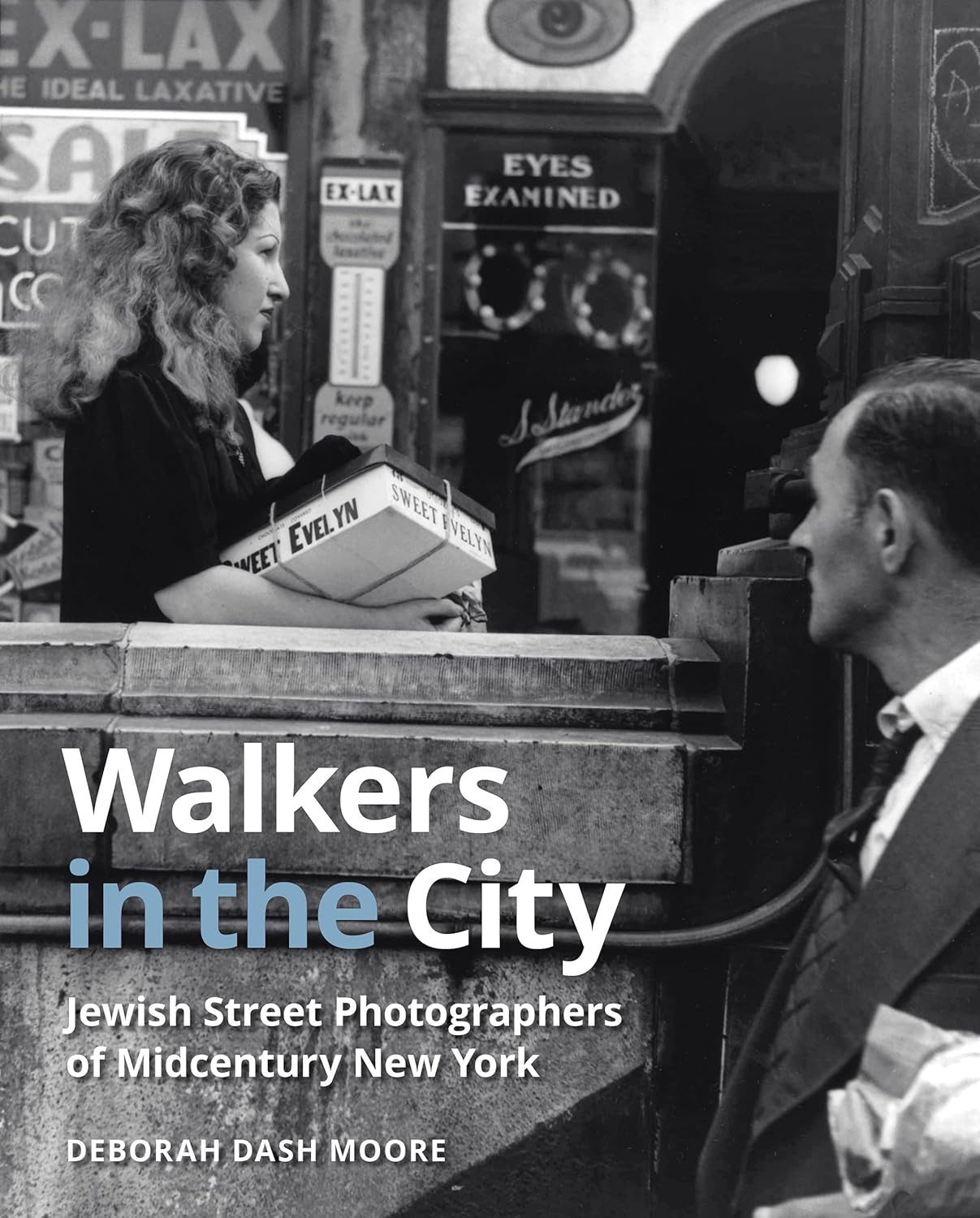
Hardcover. Ithaca NY, Three Hills/Cornell University, 1st, 2023, Book: Very Good, Dust Jacket: Very Good, Hardcover in a bright dust jacket. 290 pages, b&w photos throughout. Drawing on the experiences of and photographs by a generation of young Jewish photographers who belonged to the New York Photo League, Deborah Dash Moore offers a new perspective on New York as seen through their eyes-a cityscape of working-class people and democratizing public transit. With their cameras, they pictured Gotham's abrasive social milieu and its evanescent textures and light, creating an archive of vernacular images of city life and a distinctive tradition of street photography that would be widely imitated. Walkers in the City documents how these roving, imaginative New Yorkers, entranced by the medium of photography, transformed everyday sights into rousing, joyous, and poignant moments of time, creating visual poetry out of the fabric of social life.
Softcover. Paris, Marval, 1st, 1989, Book: Very Good, Dust Jacket: None, Softcover, 79 pages, text by Francis Hofstein IN FRENCH. wonderful photobook devoted to the blues scene in Oakland during the 1980s. Dozens of full-page black & white photographs. Clean copy.
Hardcover. Boston, Bulfinch/Little Brown, 1st, 1996, Book: Very Good, Dust Jacket: None, Hardcover, pictorial boards. 180 b/w photos of athletes in preparation for the 1996 Atlanta Olympic Games. A celebrated, highly stylized photographer of rock stars shooting Olympic athletes? That apparent anomaly seems just right when the photographer in question is Leibovitz, whose portraiture has always managed to capture the inner turmoil lurking beneath outward calm. Wisely, she chose to shoot her athletes not in Atlanta, surrounded by hoopla, but in preparation for the games, isolated and intense. The results are stunning: a sculpted Carl Lewis in repose, achieving a Mapplethorpian elegance mixed with menace; a poised and incredibly focused Michael Johnson, suggesting all the unleashed energy it would take to run faster than anyone has ever run before; a sober U.S. women's softball team, exuding the determination that would eventually produce wild jubilation and the gold medal. Still in publisher's shrinkwrap.
Hardcover. New York, Whitney Museum of American Art, 1st, 1996, Book: Very Good, Dust Jacket: Very Good, 240 pages. Hardcover. Color and b/w illustrations throughout. Gilt titles to spine and front cover. Red fabric covered. Some age wear to dust jacket, otherwise very clean copy, bright pages. Previous owner signature on front flyleaf. Published to accompany an exhibition. From the front flap: "The photographs are presented to the greatest advantage in full-color plates and stunning tritone and duotone black-and-white reproductions. The 22 essays by leading historians, novelists, journalists, and environmentalists trace the shifting perceptions of the arid lands of the American West from a wide range of literary and scholarly perspectives.
Hardcover. NY/Munich, Prestel, 1st, 2001, Book: Very Good, Dust Jacket: Very Good, Hardcover in a lightly worn dust jacket. This book is the culmination of an advertising campaign by the exclusive design company Vitra, which had the idea of photographing famous personalities sitting on Vitra chairs. The resulting photographs collected are remarkable in their portrayal of world-famous personalities from the fine and performing arts commenting on the link between style and status.
Hardcover. Zurich, Scalo, 1st , 2000, Book: Very Good, Dust Jacket: Very Good, Hardcover with a bright dust jacket, 335 pages. Illustrated black & white photographs, and some full color illustrations. Clean, bright copy. "This book is the first comprehensive monograph on the Swiss photographer, filmmaker, and painter Jakob Tuggener (1904-1988). The main themes of Tuggener's oeuvre were work in the factory, life in the countryside, and society events such as the magnificent New Year's Eve balls at the Palace Hotel in St. Moritz. At the time of his death, Tuggener left an overwhelming and practically untouched trove of work, consisting of thousands of prints, over twenty silent films, and hundreds of drawings, watercolors and oil paintings.
Hardcover. New Haven CT, Yale University Press, 1st, 2019, Book: Very Good, Dust Jacket: None, Hardcover, brick red cloth with a color photo illustrations on the front board with gilded and black letters to the front boards and spine, 168 pages. A fresh, comprehensive, and critical look at the California gold rush through the lens of the daguerreotype camera.The California gold rush was the first major event in American history to be documented in depth by photography. This fascinating volume offers a fresh, comprehensive, and critical look at the people, places, and culture of that historical episode as seen through daguerreotypes and ambrotypes of the era. After gold was discovered at Sutter's Mill in 1848, thousands made the journey to California, including daguerreotypists who established studios in cities and towns and ventured into the gold fields in specially outfitted photographic wagons. Their images, including portraits, views of cities and gold towns, and miners at work in the field, provide an extraordinary glimpse into the evolution of mining culture and technology, the variety of nationalities and races involved in the mining industry, and the growth of cities such as San Francisco and Sacramento. Still in publisher's shrinkwrap.
Hardcover. New Haven, CONNECTICUT, Yale University Press, 1st, 2000, Book: Very Good, Dust Jacket: Very Good, Black & white photos by Shahn, 340 pgs. Hardcover with dust jacket. Clean, tight copy.
Hardcover. London, Editions Gallimard, 1st, 1985, Book: Very Good, Dust Jacket: Very Good, Non-paginated. First French Edition. 14.25" x 10.5". French language throughout. Foreword by H.R.H. Duke of Edinburgh. Presented by Christian Fevrier. A collection of superb photographs from the archives of the well known photographers Beken of Clowes covering the hundred years from 1880 to 1980. All related to sailing, yachting, boats and printed in sepia duo-tone process with some as fold out spreads. Photographic index and captioned section at rear. Full bound maroon cloth with gold blocking to spine. Unclipped dust wrapper.
Hardcover. Waterbury VT, Silver Print Press, 1st, 2002, Book: Very Good, Dust Jacket: Very Good, Hardcover, 136 pages. !00 beautiful b&w portraits of farm women in Vermont. Autograph sticker on cover. SIGNED by the photographer and author Peter Miller on the half title page.
Hardcover. Philadelphia, Williams, Brown & Earle, unknown, Book: Good, Dust Jacket: None, Album of photographs (circa 1900) 20 2"x3" original photographs of landscapes and scenery at Watkins Glen, N,Y. in framed mounts on 10 pages. The last page, with frames empty, leaves room to add four additional photographs. Oblong small folio. Two color cloth, red with heavy gilt vine floral decor, brown with gilt title. Photographs all in very good condition. The album covers show some wear and chipping around edges. Good.
Hardcover. Berlin, Hatje Cantz, reprint, 2023, Book: Very Good, Dust Jacket: None, Hardcover, pictorial boards, 319 pages. Text by David Campany, Jeff Wall, Hans-Michael Koetzle. Text in English and German. Fred Herzog is known for his unusual use of color in the 1950s and 1960s, a time when art photography was almost exclusively associated with black and white imagery. The Canadian photographer worked almost exclusively with Kodachrome slide film for over 50 years, and only in the past decade has technology allowed him to make archival pigment prints that match the exceptional color and intensity of the Kodachrome slide. In this respect, his photographs can be seen as a pre-figuration of the New Color photographers of the seventies. This book brings together over 230 images, many never before reproduced, and will feature essays by acclaimed authors David Campany and Hans-Michael Koetzle. Small bunp tp top of front board otherwise very good, clean copy.
Softcover. New York , Matthew Marks Gallery, 1st, 2003, Book: Very Good, Dust Jacket: None, 116 pages, softcover, 52 duotone illustrations. Designed by Catherine Mills. Produced in conjunction with a 2003 New York gallery exhibition, this is a somber volume that reproduces fifty-two photographs taken by Robert Adams between 1974 and 1984 of everyday folks traversing parking lots and city streets in the metropolitan Denver area. Like new in publishers shrink-wrap.
Softcover. Argentum, 1st, 2008, Book: Very Good, Dust Jacket: None, Softcover, 126 pages in color. Critically acclaimed photographer David Ward explores the essential attributes of a successful landscape photograph--simplicity, ambiguity, and beauty--in this intriguing companion to his first book, Landscape Within. David discusses how the notion of beauty has been viewed by artists and psychologists and how, despite various modifications over the centuries, the concept of beauty remains relevant. David suggests that all photographers' work either poses a question or seeks to impose the photographer's viewpoint, and he goes on to investigate how photography affects our interpretation of the world around us. Accompanied by a selection of David's stunning, large-format landscape images, this is an elegant and insightful look into the nature of photography. Clean copy.
Hardcover. Chicago, University Of Chicago Press, 1st, 2013, Book: Very Good, Dust Jacket: Very Good, Hardcover, 364 pages, illustrated throughout in color. Clean, unmarked copy with only minor wear to dust jacket. Wandering the streets of Harlem for the past forty years, Camilo Vergara has noticed and miraculously recorded those moments of great human invention that have been largely overlooked by the official chronicles of architecture and urban history. For this reason, his photographs are unique and indispensable.
Hardcover. NY, Museum of Modern Art, 1st, 2016, Book: Very Good, Dust Jacket: Very Good, Hardcover in a bright dust jacket, 416 pages. The history of photography has been told many times, but never before through the incomparable collection of photographs at The Museum of Modern Art. This publication charts the medium during the height of the modernist period, from 1920 to 1960. with 550 b/w and color illustrations. The book begins with an in-depth introduction followed by eight chapters of full-color plates, each introduced by a short essay. Masterworks by photographers such as Alfred Stieglitz, Dorothea Lange, Man Ray and Aleksander Rodchenko appear alongside lesser-known gems, and diverse notions of modernism enrich classic interpretations, so that the beautiful fictions and messy realities of photography are complicated, refreshed and, above all, enjoyed. Clean copy. DOMESTIC SHIPPING ONLY.
Hardcover. New York, Prestel, 1st, 2010, Book: Very Good, Dust Jacket: Very Good, Hardcover, 207 pages, illustrated throughout in color and b&w. Light shelf-wear to dust jacket, else a clean, tight copy. Artist Kiki Smith is a print-maker. sculptor and photographer. Elizabeth Brown"s illustrated essay "I Myself Have Seen It: Photography and Kiki Smith" opens the book, followed by five photographic essays by Kiki Smith, Generously illustrated. 8-3/4 x 10-3/4".
Hardcover. Middlebury VT, PhotoPlace Gallery, 1st, 2012, Book: Very Good, Dust Jacket: Very Good, Hardcover in a bright dust jacket. A collection of 75 portraits in color and b&w chosen by Frank Goodyear, Associate Curator at the National Portrait Gallery. Clean copy.
Hardcover. New York, Clarkson N. Potter & Polaroid Corp., 1st, 1986, Book: Very Good, Dust Jacket: Very Good, Hardcover, a collection of 54 color images by Metzner. Like new in publishers shrink-wrap. Preface by poet Mark Strand.
Hardcover. GR, Hatje Cantz, 1st, 2000, Book: Very Good, Dust Jacket: None, Hardcover, pictorial boards, oblong format, 80 pages. The Australian artist Tracey Moffatt is among the most carefully watched younger figures on the international scene. Of Aboriginal descent, Moffatt focuses on themes of the other, the unknown, the outcast, and the marginal. In her photographs and videos, she shows the complex interweaving of human relationships, forged by ethnic, social, and gender differences. Moffatt does not, however, aim to capture reality but to create her own reality. In her photographic work, the past, present, and future of the protagonists seem to gel together into a surreal simultaneity. Text in English and German by Brigitte Reinhardt, Stephan Berg, and Alexander Tolnay. Includes color and black and white illustrations. Clean copy.
Softcover. New York, Independent Curators Inc, 1st, 1995, Book: Near Fine, Dust Jacket: None, Softcover, 80 pages, illustrated throughout in b&w. Clean, unmarked copy in excellent condition. Exhibition catalog for a group show that ran January 21 through March 6, 1992 and then May 20 through June 30, 1992 at the Zabriskie Gallery in New York. Introduction by Klaus Ottmann. Essay by Leslie Tonkonow. Includes numerous black and white images from these photographers who were in the show: Robert Doisneau, Diane Arbus, Thomas Struth, Neal Slavin, William Klein, Walker Evans and many others.
Hardcover. Boston, Bulfinch/Little Brown, reprint, 1995, Book: Very Good, Dust Jacket: Very Good, Hardcover in a bright dust jacket with a tiny chip to the front panel. Edited by Doris C. O'Neil. Features an introduction by Bryan Holme. An attractive collection of 141 duotones from this famous photographer who spent much of his storied career working for Life magazine.
Hardcover. New York, Glitterati Incorporated, 1st, 2008, Book: Very Good, Dust Jacket: Very Good, Hard cover, 128 pages. Clean, unmarked copy with only minor wear to dust jacket. Relatively unknown peer of innovative photographers Slim Aarons and Richard Avedon, Ronny Jaques' photographs captured the fashion, travel, food and lifestyle scenes for magazines like Town & Country, Harper's Bazaar, and Gourmet, where he established himself as the first true innovator of food photography. His work is chronicled and explained for the first time in book form by fashion luminary and friend, Pamela Fiori, editor for the past fifteen years of Town & Country magazine.
Hardcover. Boston, Bulfinch Press, 1st, 2001, Book: Very Good, Dust Jacket: Very Good, Large oblong hardcover in a lightly worn dust jacket. Features essays by Ian Frazier and Douglas R. Nickel. A powerful book of 60 color portraits from the photographer whose book "American Prospects" is widely considered a classic. Dust jacket with wear at corners, top and bottom of spine. Clean copy. DOMESTIC SHIPPING ONLY.
Hardcover. New York, Umbrage Editions, 1st, 2006, Book: Very Good, Dust Jacket: None, Hardcover, 112 pages. Like new in publishers shrink-wrap. Clayton Burkhart adopts the view of an anonymous wanderer in this mythic city and speaks of absence and loss against a backdrop of steel, stone, concrete, and neon. It is a story of love and redemption after the rain falls, when the damp sidewalks take on the saturated colors of the night.
Hardcover. Millerton NY, Aperture, 1st, 1983, Book: Very Good, Dust Jacket: Very Good, Hardcover in a bright, lightly worn dust jacket. 134 pages, color plates throughout. Haunting, stark images of rotting buildings, rusted signs, odd churches, weird kudzu landscapes and other rural scenes recall a rural South of the 60's and 70's. Small closed tears to dust jacket, otherwise a clean copy. DOMESTIC SHIPPING ONLY.
Hardcover. London, Dewi Lewis Publishing, 1st, 2000, Book: Very Good, Dust Jacket: None, Hardcover, 128 pages. Like new in publishers shrink-wrap. The photographs in Harvey Benge's fourth book, Vital Signs, were made in Paris, London, Prague, Hong Kong, and beyond, and invite the viewer to examine his or her own experiences of urban life. Offering up both humorous and deeply disturbing images, Benge questions the significance and substance of the many outwardly bizarre constructs that form the urban landscape.
Softcover. Millerton NY, Aperture/MOMA, 1st pbk, 1972, Book: Very Good, Dust Jacket: None, Softcover, (Twins on the cover). No additional printing stated indicating first softcover edition. 80 b&w plates by Arbus. Does contain the "Two girls in identical raincoats" photograph that was struck from all but a few copies due to legal controversy. Published posthumously, the year after her suicide, and in conjunction with a retrospective show at MOMA, the book was edited and designed by Arbus's daughter Doon and Marvin Israel. Diane Arbus left behind her career as a top fashion photographer and turned her attention to society's oddities and outsiders - twins, dwarves, giants, transvestites, the elderly and lonely. Her accent on these people was in no way mocking; rather, these portraits reveal her fascination with life's tragedies as destinies. Mild soil to wrappers.
Hardcover. NY, Harry N Abrams, 1st, 1989, Book: Very Good, Dust Jacket: Very Good, 264 pages, illustrated throughout in b&w. Clean, unmarked copy with only minor wear to dust jacket. "A lavish, information-packed look at the people and places of an important, exciting era in art history. "?Publishers Weekly. From 1900 to 1930, Montparnasse was the center of artistic life for the whole world. A major contribution to the social and cultural history of the period? with its informative text and hundreds of photographs?. As The Washington Post said, Kiki's Paris "celebrates the people who made the modern movement in art, music and literature, most of whom were friends or lovers of Kiki, the woman Hemingway called 'The Queen of Montparnasse.'"
Hardcover. New York, Aperture, 1st, 1995, Book: Very Good, Dust Jacket: Very Good, Hardcover in a bright, price-clipped dust jacket, 96 pages. Illustrated with black & white photographs by Edward Weston. Clean, bright copy. Among some of the portraits are D.H. Lawrence, Frida Kahlo, Diego Rivera, Orozco, Robinson Jeffers, Henry Fonda, James Cagney, Stravinsky, E.E. Cummgs and many distinctive nudes. Clean copy.
Hardcover. Mechanicsburg PA, Stackpole Books, 1st, 2010, Book: Very Good, Dust Jacket: Very Good, Hardcover, 227 pages, b&w photos. Light scratching to dust jacket front cover. Clean, tight copy. They shot some of the most iconic footage of World War II while risking their lives, yet the stories--and sheer guts--of the U.S. Marine Corps combat cameramen have been overshadowed by the heroism of the men with the rifles. War Shots brings these photographers into sharp focus through the career of Norm Hatch, a true American character whose skill with a camera and knack for being in the right place at the right time thrust him to the fore of the effort to record the Marines at war in the Pacific.
Hardcover. NY, Metropolitan Museum of Art/ The Viking Press, 1st, 1978, Book: Very Good, Dust Jacket: Very Good, Hardcover in a lightly worn dust jacket. In addition to being one of the preeminent American photographers of the late 19th and early 20th centuries, Alfred Stieglitz was an avid collector of the works of other photographers. From 1894-1910, he collected over 650 prints from a variety of photographers. He donated 400 of these to the Metropolitan Museum of Art in 1939, and the balance was given in a bequest to the museum in 1949. Photographers included in the collection include Edward Steichen, Gertrude Kasebier, Baron de Meyer, Ansel Adams, Eliot Porter, and Julia Margaret Cameron. This substantial volume was produced by Weston Naef, who was Associate Curator of Prints and Photographs at The Metropolitan Museum of Art. It includes a black-and-white reproduction of all the photographs in the Stieglitz Collection, some full-page and many in smaller size. It also includes details about, and portraits and signatures of each of the painters. Small closed tears to dust jacket, otherwise a clean, bright copy.
Hardcover. US, University of New Mexico Press, 1st, 1987, Book: Very Good, Dust Jacket: Very Good, Hardcover, 307 pages, b&w photos. Foxing to all edges. Nineteen essays on various issues in photography; includes essays about Photographers at War, Robert Doisneau, Helen Levitt, William Klein, Atget, and more.

 "Women and Warriors of the Plains: The Pioneer Photography of Julie E. Tuellby: Aadland, Dan")
 "Made In Germanyby: Freed, Leonard")
 "Alison Jackson: Stern Portfolioby: Jackson, Alison")
 "Eve Arnold: Magnum Legacyby: Janine di Giovanni, Susan Meiselas , et al.")


 "The Life & Love Of Treesby: Blackwell, Lewis")
 "SPLIT SECONDS: HONG KONGby: Abe Kogan")
 "Sam Shawby: Lorie Karnath/Sam Shaw")


 "Love, Cecil: A Journey with Cecil Beatonby: Lisa Immordino Vreeland")
 "East Harlem: The Postwar Yearsby: Leo Goldstein, A.D. Coleman, et al.")


 "Old Paris and Changing New York: Photographs by Eugene Atget and Berenice Abbottby: Kevin Moore")
 "Landscape: Theory by: Adams Robert; Baltz Lewis; Callahan Harry; Caponigro Paul; Fulton Hamish; Garnett William; Porter Eliot; Sinsabaugh Art; Tice George; Weston Bre")
 "The Hollywood Book Clubby: Steven Rea")


 "PHOTOGRAPHY ANNUAL. 1957 A Selection of the World's Greatest photographs by the Editors of Popular Photography.by: Bruce Downes (Ed. Popular Photography)")
 "Mills and Factories of New England by: Hambourg, Serge/Perrin Noel & Kenneth Breisch (essays)")
 "Messages from a Small Town: Photographs Inside Pawlet, Vermont by: Rappaport, Susanne")

 "Important 19th & 20th Century Photographs: May 26 2005by: N/A")
 "Oakland Blues (French Edition)by: Vignes, Michelle")
 "Olympic Portraitsby: Leibovitz, Annie")
 "Perpetual Mirage: Photographic Narratives of the Desert Westby: n/a")
 "Sittingsby: Coigny, Christian/ Goldberg, Vicki (Essay)")
 "Jakob Tuggener Photographsby: Gasser, Martin")
 "Golden Prospects: Daguerreotypes of the California Gold Rush by: Jane L. Aspinwall")
 "Ben Shahn's New York - The Photography of Modern Timesby: Kao, Deborah Martin and others")
 "Aperture 12:4 1965 by: White, Minor (Editor)")
 "Cent Ans De Voilesby: Beken of Cowes")
 "Vermont Farm Women (SIGNED COPY)by: Miller, Peter")
 "Rembrandt Album, The (Watkins Glen, New York)by: n.a.")
 "Fred Herzog: Modern Color by: Herzog, Fred")
 "Robert Adams: No Small Journeys, Across Shopping Center Parking Lots, Down City Streetsby: Adams, Robert")

 "Harlem: The Unmaking of a Ghetto (Historical Studies of Urban America)by: Vergara, Camilo Jose")
 "Kiki Smith: Photographsby: Brown, Elizabeth A.")
 "Personal Portraitsby: Kirsten Hoving/Rick Clark")
 "Objects of Desireby: Metzner, Sheila")

 "Multiple Exposure: The Group Portrait in Photographyby: Tonkonow, Leslie")
 "Stolen Moments: The Photographs of Ronny Jaquesby: Fiori, Pamela")
 "Stranger Passing by: Sternfeld, Joel")
 "Orpheus Descendingby: Burkhart, Clayton")
 "William Christenberry: Southern Photographs by: Christenberry, William / R. H. Cravans")
 "Harvey Benge: Vital Signsby: Benge, Harvey")
 "Diane Arbusby: Arbus, Diane")
 "Ki Ki's Paris: Artists and Lovers 1900-1930by: Kluver, Billy/ Julie Martin")
 "Edward Weston: Portraitsby: Weston, Edward")
 "War Shots: Norm Hatch and the U.S. Marine Corps Combat Cameramen of World War IIby: Jones, Charles")
 "The Collection of Alfred Stieglitz: Fifty Pioneers of Modern Photography by: Naef, Weston")
 "The Privileged Eye: Essays on Photographyby: Kozloff, Max")
)