Hardcover. NY, Rizzoli, 1st, 1997, Book: Very Good, Dust Jacket: Very Good, Hardcover, 160 pages, in a bright dust jacket. Fascinating collection of photographs in color and b&w by Lord Snowdon presenting a period of change in theatre - from 1954 to the present- in addition to the many changes Snowdon himself initiated in the style of photography.
Hardcover. NY, Random House, 1st, 1999, Book: Very Good, Dust Jacket: Very Good, Hardcover, 240 pages. The Sixties is the product of a 30-year collaboration between photographer Richard Avedon and writer Doon Arbus, whose images and words combine in this volume to create a compelling portrait of one of the 20th century's most tumultuous decades. Avedon, the celebrated photographer whose portraits of some of the best-known personalities of our age have graced the pages of Harper's Bazaar, Vogue, and The New Yorker magazines since the early 1950s, was prolific during the '60s. Looked at together, his images from those years create a visual time capsule. This large book is filled with a cacophony of Yippies, Black Panthers, Weathermen, Hare Krishnas, Andy Warhol Factory Superstars, pop artists, rock musicians, astronauts, pacifists, politicians, electroshock therapists, media correspondents, civil rights lawyers, antiwar activists, and more--all shot against his signature white background. Arbus, a novelist and writer for magazines including Rolling Stone and The Nation (and the daughter of photographer Diane Arbus), conducted interviews with many of the subjects. Snippets of those conversations provide an intimate and unforgettable document of the tension, vulnerability, anger, recklessness, hope, and empowerment many people experienced during that era. Brief biographies of the portrait sitters, as well as a chronology that spans the first signs of the war in Vietnam in 1960 to its final conclusion in 1973, provide excellent context for the images.
Hardcover. NY, Abrams, 1st, 2018, Book: Very Good, Dust Jacket: Very Good, Hardcover, 248 pages. b&w photos throughout. During his 50-year association with the Village Voice, Fred W. McDarrah (1926-2007) covered the city's downtown scenes, producing an unmatched and encyclopedic visual record of people, movements, and events. McDarrah frequented the bars, cafes, and galleries where writers, artists, and musicians gathered, and he was welcome in the apartments and lofts of the city's avant-garde cultural aristocracy. He captured every vital moment, from Jack Kerouac reading poetry, to Bob Dylan hanging out in Sheridan Square, to Andy Warhol filming in the Factory, to the Stonewall Riots. Through his lens, we see the legendary birth of ideas and attitudes that continue to shape the character and allure of New York today.
Hardcover. NY, Abrams, 1st, 2005, Book: Very Good, Dust Jacket: Very Good, Hardcover, 744 pages.A year's worth of rare images from the archives of the National Baseball Hall of Fame includes action shots, humorous moments, publicity stunts, players in the off season, minor-league and armed-forces players, and more.
Hardcover. London, Lund Humphries, 1st, 2001, Book: Very Good, Dust Jacket: Very Good, Hardcover, 121 pages. The Beautiful and the Damned looks for the first time at the broad social and cultural context for the development of portrait photography in the nineteenth century, showing how social and celebrity portraiture on the one hand, and scientific photography on the other, were different facets of the nineteenth-century fascination with classification and ordering.Between 1860 and 1900, editions of celebrity portraits, as well as the vogue for the carte de visite, fuelled the fashion for collecting and classifying photographs of the face. In an age of rapid industrialisation and the growth of the middle classes, the carte de visite became a means of conferring social status, and family albums - which often incorporated photographs of royalty and public figures - were used to position family members within society at large
Hardcover. GR, Steidl, 1st, 2007, Book: Very Good, Dust Jacket: Very Good, Hardcover, 232 pages. When celebrated photographer Arnold Newman began his career in 1938 in chain portrait studios in Philadelphia, Baltimore and West Palm Beach, he also immediately began to make abstract and documentary photography on his own, studying people and places impoverished by the Depression. In June of 1941, Beaumont Newhall of The Museum of Modern Art, New York, and Alfred Stieglitz "discovered" him, and he was given an exhibit with Ben Rose at the A.D. Gallery that September. There Newman began to combine his independent work with the portraiture that had been his bread-and-butter, developing the approach for which he is best known, which came to be called "environmental portraiture," and which is so widely influential today that it might be the new standard practice. This style made Newman a distinctive contributor to publications like Life, Vanity Fair, and the New York Times Magazine, brought him into the collections of museums around the world, including The Museum of Modern Art, The Metropolitan Museum of Art, and the International Center of Photography in New York, and led to his recognition in photography histories and with awards including France's Commander of the Order of Arts and Letters. The photographs collected here were made before Newman achieved recognition as a pioneering portraitist, during the formative years from 1938 to 1942. They highlight the early stirrings of a great photographic master.
Softcover. NY, Aperture Foundation, 1995, Book: Very Good, Dust Jacket: None, Softcover, 80 pages. A large, beautifully designed photography publication with many full page photographs in black and white and color. Glossy wraps. Special Monograph Issue: Edward Weston Portraits. Foreword by Cole Weston Biographical Essay by Susan Morgan.
Softcover. NY, Aperture Foundation, 2003, Book: Very Good, Dust Jacket: None, Softcover, 80 pages. A large, beautifully designed photography publication with many full page photographs in black and white and color. Glossy wraps. Summary: Elegy in White (Combining sculpture with photography, Walter Martin and Paloma Munoz encapsulate the quaint and the macabre in snow-globes), Lost Worlds: Recent Discoveries in Andean Photo-History, Reading newspaper pictures: a thousand words, and then some, Roger Ballen?s world, John Dugdale and John Kelly: photo play. Photographers: Roger Ballen, Carrie Boretz, Crisanto Cabrera, Julio Cordero Castillo, Gregory Crewdson, Stephen Crowley, John Dugdale, Christophe Ena, Luis Gismondi, Manuel Jesus Glave, Jose Gabriel Gonzales, Tyler Hicks, James Hill, Kenneth Jarecke, Edward Keating, Chang W. Lee, Walter Martin, Paloma Munoz, Carlos and Miguel Vargas
Hardcover. NY, Abrams, 1st, 2008, Book: Very Good, Dust Jacket: Very Good, Hardcover, 300 pages. In this lavishly produced volume, journalist Gaudriault accompanies photographer Rancinan to Africa, Asia, Europe and the United States to interview 23 masters of contemporary photography, paying homage to fashion photographers and photojournalists, traditional chroniclers of their times and conceptual artists. Rancinan's photographs record each encounter in portraits that encapsulate each subject's relationship with his shared discipline. Readers follow paparazzo Ron Galella fending off the camera; Martin Parr, the sardonic chronicler of middle-class British life, having tea in a cafe; Rankin, the creator of the hip magazine Dazed and Confused, hopping into a trashcan filled with his own cast-off images. Gaudriault's short essays quote liberally from her interviews and provide both biographical information and incisive commentary. Several of the older photographers strike an elegiac tone and confess to finding themselves at the end of the eras that gave birth to their visions, but optimism reigns among younger practitioners: David LaChapelle is reinventing himself in Hawaii; Rankin is bearing witness to an age that is still young; and Oliviero Toscani, the radical combination of journalist and marketer behind the Benetton campaigns, describes billboards as the church frescoes of today.
Hardcover. Corte Madera CA, Gingko Press, 1st, 1998, Book: Very Good, Dust Jacket: Very Good, Hardcover, 257 pages. Recognized as the most original photographer of the 20th century, Man Ray delighted the avant-garde of the 1920s and 1930s with daring, creative experimentation. He was the first Surrealist photographer, a gifted rebel with an incisive eye and a passion for freedom and pleasure. This outstanding monograph sheds new light on Man Ray's photographic genius -- incredibly, around one third of these images have never before been published. Visually spectacular and intellectually stimulating it shatters the myth -- cultivated by Man Ray himself -- that his photographic creativity resulted from timely mistakes and chance occurrences. Featured are many of his solarizations, rayographs, unconventional portraits and sensual nudes. Previous owner's signature on front fly leaf.
Hardcover. NY, Aperture, 1st, 2005, Book: Very Good, Dust Jacket: Very Good, Hardcover, 128 pages. Brutal Kinship explores the relationship between humankind and its closest relative, the chimpanzee, presenting these extraordinary animals in the wild, in captivity and in protective sanctuaries. In photographs and commentary Michael Nichols and Jane Goodall show us that chimpanzees are physically, emotionally and intellectually closer to us than we imagined and that we have forced them into a more human yet less humane existence. The book is filled with over 100 remarkable color photographs
Hardcover. New Haven CT, Yale University Press;, 1st, 2009, Book: Very Good, Dust Jacket: Very Good, Hardcover, 180 pages. John Gutmann (1905-1998) was one of America's most distinctive photographers. Born in Germany where he trained as an artist and art teacher, he fled the Nazis in 1933 and settled in San Francisco, reinventing himself as a photo-reporter. Gutmann captured images of American culture, celebrating signs of a vibrant democracy, however imperfect. His own status as an outsider--a Jew in Germany, a naturalized citizen in the United States--informed his focus on individuals from the Asian-American, African-American, and gay communities, as well as his photography in India, Burma, and China during World War II. This handsome book acknowledges Gutmann's place in the history of photography. Drawing on his archive of photographs and papers at the Center for Creative Photography, it presents both unfamiliar works and little-known contexts for his imagery, linking his photography to his passionate interest in painting and filmmaking, his collections of non-Western art and artifacts, and his pedagogy. In addition to a major essay by Sally Stein, the volume includes an introduction by Douglas R. Nickel, and an overview of the Gutmann archive by Amy Rule.
Softcover. Vintage, 1st, 1999, Book: Very Good, Dust Jacket: None, Softcover, 192 pages. Throughout his travels, writer Bruce Chatwin took thousands of photographs. They demonstrate his legendary "eye" at its best, showing a sense of color and surface, an ability to find beauty in the most mundane of objects or prosaic of places.
Hardcover. New York , Random House, 1st, 2011, Book: Very Good, Dust Jacket: Very Good, Remainder mark to bottom edge, else like new in publishers shrink-wrap. White cloth hardcover in the dust jacket and name band , 244 page book . With color and black & white photo illustrations by Annie Leibovitz .
Hardcover. NY, Norton, 1st, 2004, Book: Very Good, Dust Jacket: Very Good, Hardcover, 256 pages. Through a lively text and 250 stunning duotone images (most never previously published), Millionaires, Mansions, and Motor Yachts re-creates an era of opulence and extravagance that today seems incredible. Dominating this volume are the mansions and yachts of Alfred and Jessie du Pont. Equally larger-than-life personalities include Thomas Lawson, his expansive estate, Dreamwold, and yachts such as Dreamer; empire builder John Spreckels's 227-foot Venetia; Emily Cadwalader, who commissioned a vessel destined for world renown as a U.S. presidential yacht, before checkmating this achievement by ordering the largest private yacht ever built, the 407-foot Savarona; Eugene Tompkins, the "Napoleon of Theater Managers"; George Fabyan; Harry Darlington; and William Rands. Enfolded in this volume's fascinating pages are not only the wealthy individuals who shaped this era but also curmudgeonly writer/yachtsman Thomas Fleming Day, photographer Nathaniel Stebbins, and the designers and builders who created the splendid yachts that here return to life.
Hardcover. NY, Random House, 1st, 2001, Book: Very Good, Dust Jacket: Very Good, Hardcover, 304 pages, 289 photographs from her own collection. Legendary actress Marlene Dietrich is honored in this beautiful coffee-table book, which is introduced by brief recollections from director Josef von Sternberg, Orson Welles (who worked with her in Touch of Evil), Ernest Hemingway, and others. The Film Museum of Berlin contains 25,000 objects and 18,000 images related to Dietrich, and this book is like a museum exhibition held expressly for Dietrich lovers. It is divided into sections such as "Portraits," "Beads, Furs, and Feathers," and "Possessions" and displays her dresses and accessories in pristine condition, alongside excerpts from letters and diaries. Daughter Maria Riva (author of a 1994 biography, Marlene Dietrich) provides extended captions to the many photographs of the actress and her belongings. Also included are a filmography, theatography, concertography, discography, and collection inventory with exhibitions.
Softcover. NY, Phaidon Press, 1st, 2005, Book: Very Good, Dust Jacket: None, Softcover, 128 pages, 55 photos. Born in 1941, Larry Fink was a teenager in the 1950s in an America on the cusp of radical social change. Growing up on Long Island in New York, Larry Fink was disinterested in the consumer-driven culture of 1950s' America. A disaffected teenager, his parents transferred him to art school where his career as a photographer began to flourish. His parents were supportive of his interest in the arts, and Fink would later drop out of college to join a circle of artists living in Greenwich Village. Fink spent the 1960s watching and learning from the prominent photographers of the time: Henri Cartier- Bresson, Robert Frank, W. Eugene Smith, and in many ways, his photographic aesthetic and rebellious spirit encapsulate the dramatic lose of innocence that the US underwent after the assassination of John F. Kennedy in 1963. photographic mentor.
Hardcover. NY, Abrams, 1st, 2005, Book: Very Good, Dust Jacket: Very Good, Hardcover, 192 pages. Shadows of War presents an astonishing collection of previously unpublished, unknown photographs of life at the front lines in the German war machine during World War II, taken by a common foot soldier. The work of a gifted amateur, Willi Rose's images present a powerful vision of a largely suppressed aspect of the war. These fractured glimpses of the world at war, from quotidian tasks and moments of leisure to scenes of death and destruction, reveal one man's experience of the epic flow of history. A miller in the years before World War II, Rose was drafted into the German army in October 1939 and served as a motorbike messenger on the front, first in France and then in Russia. He was wounded twice and was later captured by the Polish army, eventually returning home in June 1946. Throughout his military service, Rose sent home photographs that he took of the action, mostly along the Eastern Front. Discovered by his widow after his death, these images form a unique photographic document of one soldier's war.
Hardcover. Boston, David R. Godine, 1st, 2009, Hardcover, 192 pages. The photography of Angus McBean encompasses more than three decades of the history of British theater. His work includes most of the memorable productions of the Old Vic Company and of what is now the Royal Shakespeare Company; opera productions at Glyndebourne and the Royal Opera House, Covent Garden; ballet and operetta at Sadler's Wells; and West End productions of plays and musicals both old and new -- hundreds of productions in all. He was the favorite photographer of Vivien Leigh, Laurence Olivier, and Edith Evans, and he photographed countless plays starring John Gielgud, Ralph Richardson, and Alec Guinness, not to mention younger stars such as Audrey Hepburn, Richard Burton, and Elizabeth Taylor. In fact, McBean photographed virtually every great actor of his era, perhaps the most brilliant years in the annals of British theater. His studio was active and eclectic; among his patrons were not only actors, singers, and dancers, but also playwrights, producers, composers, artists, and writers. In his early career, McBean had been a pioneer of surrealist photography, with a highly popular series of "surrealized" portraits that appeared in The Sketch, and, later, of montage and multiple-exposure photography in a long-running series for The Tatler. In 1969, McBean approached Harvard University to initiate the sale of his collection, and in the following year his archive of glass plate negatives, index prints, and programs, together with the copyrights, became a part of the Harvard Theatre Collection, where it remains the most often-requested collection of visual material. The photographs in this book, selected and captioned by the archive's curator, Fredric Woodbridge Wilson, have been carefully reproduced from the original negatives.
Hardcover. Scalo, 1st, 2001, Book: Very Good, Dust Jacket: Very Good, Hardcover, 176 pages. The catalogue to Robert Frank's (born 1924) 2001 exhibition at the Museum Folkwang in Essen. Though the artist is best known for his seminal photobook The Americans (1959) and his experimental film Pull My Daisy (1959), until this publication, little scholarship existed on the intersection between Frank's work in the disciplines of photography and film. Hold Still, Keep Going fills that void, exploring the influence of film on Frank's photographic work, and the interaction between the still and moving image that has engaged the photographer and experimental filmmaker since the late 1950s. The book adopts a nonchronological approach, including photographs, film stills, 35mm filmstrips, as well as photomontages that present Frank's most famous series alongside less known work; from these varied contents, the volume offers revealing juxtapositions, rendering the seemingly disjointed arc of Frank's art more cohesive. Text, from handwritten phrases on photographs (of which "HOLD STILL-keep going" is but one example) to the dialogue in his films, emerges as a crucial tool, one that is also central to Frank's photo-diaries. Including a new essay from Tobia Bezzola, director of the Museum Folkwang, this edition highlights some of the more obscure work by perhaps the world's best-known living photographer, and is an essential addition to all photography and film collections.
Hardcover. Bulfinch, 1st, 2006, Book: Very Good, Dust Jacket: Very Good, Hardcover, 256 pages. Haynes provides an insider's look at the remarkable photographs and stories of UPI's news photographers, providing a unique window on the second half of the 20th century. Clean copy.
Hardcover. NY, Macmillan, 1st, 1983, Book: Very Good, Dust Jacket: Very Good, Hardcover. 721 pages.; 144, playes, 133 b/w, 11 color. Approximately 500 biographical listings of nineteenth- and early twentieth-century photographers; Includes appendix of museums and galleries in the US.
Hardcover. Boston, David R. Godine, 1st US, 1976, Book: Very Good, Dust Jacket: None, 144 pages. Hardcover with no dust jacket. Black and white photographs throughout. Clean, tight copy.
Hardcover. New York, Harry N. Abrams, 1st thus, 1986, Book: Very Good, Dust Jacket: Very Good, 272 pages. Hardcover with dust jacket. Clean, tight copy. Photographs throughout. Spine lightly faded. Photographs portray the actual way of life of the pioneers who settled the American West in the years after the Civil War.
Hardcover. US, Museum of Photographic Arts, 1st, 2008, Book: Very Good, Dust Jacket: Very Good, 240 pages. Hardcover with dust jacket. Clean, tight copy. Black and white photographs throughout. This publication is the first comprehensive survey of Nancy Newhall, a prolific writer and major contributor to the history of photography. During the first half of the twentieth century, Newhall helped define photography and was one of the first to write about visual literacy- the importance of reading images and how text can change their meaning. Using her skills as designer, editor and collaborator, Nancy Newhall helped shape the concept of the modern photographic book. A Literacy of Images celebrates the 100th anniversary of her birth, exhibiting her photographs (many for the first time) and the work of her circle of friends, including well-known photographers such as Ansel Adams, Paul Strand, Helen Levitt and Edward Weston.
Hardcover. UK, Dewi Lewis, 1st, 1998, Book: Very Good, Dust Jacket: Very Good, Hardcover in a bright dust jacket, 144 pages. Claudio Edinger's color photographs of Havana, Cuba. Clean. This is a photography book about Cuba unlike any you've seen before. Award-winning photojournalist Claudio Edinger gets inside the country, and shows us an unforgettable image of the people of Old Havana, living with harsh economic realities among the fading houses of the pre-Castro era. Yet the spirit of the people is one of steadfast hope, as South American writer Humberto Werneck, in his fascinating introduction, makes clear. The book also features text by exiled Cuban writer G. Cabrera Infante.
Hardcover. Santa Fe, Twin Palms Publishers, 1st, 2005, Book: Very Good, Dust Jacket: Very Good, Hardcover, 148 pages, b&w plates. Like new in publisher's shrink-wrap. During 1945 Andre de Dienes (1913-1985) photographed a young model named Norma Jean. His subsequent five-year working relationship with the woman who became Marilyn Monroe is the beginning of de Dienes's career in Hollywood. He photographed celebrities, and his documentary work took him from Muscle Beach in Venice to sharecroppers working the cotton fields of the deep South. But his first love in photography was the female nude, and in his lifetime he photographed and published thousands of these pictures. Selected from the archives of his estate are seventy-five of the finest images printed by the artist. Reproduced actual size these prints are a time capsule of half-century old interpretations of female beauty.
Softcover. London, Afterall Books, 1st, 2019, Book: Very Good, Dust Jacket: None, Softcover, 88 pages. Illustrated with b&w and color plates. Kitchen Corner, Tenant Farmhouse, Hale County, Alabama shows a painstakingly clean-swept corner in the house of an Alabama sharecropper. Taken in 1936 by Walker Evans as part of his work for the Farm Security Administration, Kitchen Corner was not published until 1960, when it was included in a new edition of Walker Evans and James Agee's classic Let Us Now Praise Famous Men. The 1960 reissue of Evans and Agee's book had an enormous impact on Americans' perceptions of the Depression, creating a memory-image retrospectively through Walker's iconic photographs and Agee's text. In this latest addition to the Afterall One Work series, photographer Olivier Richon examines Kitchen Corner. The photograph is particularly significant, he argues, because it uses a documentary form that privileges detachment, calling attention to overlooked objects and to the architecture of the dispossessed.
Hardcover. Louisville, University Press of Kentucky, 1st, 1986, Book: Very Good, Dust Jacket: Very Good, Hardcover in a bright dust jacket., 160 pages. Sulky races at the Mercer County Fair, church suppers, sorghum making, shooting marbles in the school yard, housing tobacco, loafing at the courthouse-here are 129 beautifully reproduced images of who we were as Kentuckians not so long ago-during the Depression and the early years of World War II. This collection is part of the remarkable series of photos shot for the Farm Security Administration-more than 125,000 photographs taken over a period of nine years by some of the best American photographers of the time, including Ben Shahn, Marion Post Wolcott, Russell Lee, John Vachon, and Arthur Rothstein. To reintroduce us to that important slice of our history, Beverly Brannan and David Horvath have selected a rich sampling from among several thousand photos taken in Kentucky for the FSA. They have added an extra dimension to the images by including in their commentary excerpts from the photographers' own correspondence and field notes.
Softcover. NY, Yonkers International Press, 1st, 2016, Book: Very Good, Dust Jacket: None, Softcover, b&w illustrations. The author promoted New York theater productions in Times Square. Amid the tourists and street performers he took these b&w photos. Inferior printing job but a fascinating record nevertheless. Uncommon.
Hardcover. London, Arcperiplus Publishing, 1st UK, 2002, Book: Very Good, Dust Jacket: Very Good, Hardcover in a bright dust jacket. Two major events in the Buddhist world occurred in 2002. In January, the small village of Bodhgaya in Bihar, India, was chosen by the Dalai Lama as the site for the highly important Kalachakra Initiation ceremony. Some half-million pilgrims made their way there by any means possible. In May, at the holy Mount Kailash in Tibet, the celebration of the Buddha's birth and death was particularly auspicious in this Year of the Horse, and the usual trickle of pilgrims swelled to tens of thousands. Photographer Lena Herzog, wife of film director Werner Herzog, presents this evocative album of 146 color images of the holy and the penitent.
Hardcover. NY, powerHouse Books, 1st, 2015, Book: Very Good, Dust Jacket: None, Hardcover, 132 pages. To humanize the inhabitants of the "Projects" (NYC Housing Authority public housing) through their own eyes. Cameras were given out over years to hundreds of residents who then went on to take photographs of things that were important to them in their community. After all these years the resulting photographs are nothing short of breathtaking. Not only do they take you on a 'day in the life' of many of these residents, they introduce to the viewer a gentler, more intimate view of "project life" than has been disseminated throughout pop culture in the last several decades. You will not find images of gangs, drugs, guns or otherwise the criminality of these communities that we have all grown to expect. This is not on purpose. These photographs have not been curated or filtered in any way to hide such themes. The humbling fact of the matter is that all photographs came back depicting positive aspects of their lives: family, friends, pets, children, mothers, fathers.
Softcover. Boston, David R. Godine / Pocket Paragon, 1st, 2003, Book: Very Good, Dust Jacket: None, Softcover, b&w illustrations. Introduction and notes by Peter Moriarty. Lotte Jacobi was the fourth generation of her family to seize a camera to earn a living. She was drawn to artists and writers, musicians, poets and scientists. 95 pages.
Hardcover. Museums of San Francisco/ DelMonico Books, 1st, Book: Very Good, Dust Jacket: Very Good, Hardcover in a bright dust jacket. In 1974 the photojournalist and art photographer Steve Kahn began a series of provocative black-and-white Polaroids of porn-industry models posing in seedy Hollywood apartments. What began as an exploration of staged photography and portraiture evolved over the next three years into "The Hollywood Suites," a multi-faceted conceptual project in which Kahn turned his lens away from the models to deconstruct their seemingly mundane and monotonous surroundings. Endlessly fascinating, Kahn's series touches on myriad themes including bondage, containment, isolation, and the poetics of absence. This volume includes more than 100 works arranged in chronological groupings based on the original Polaroid film sessions and features essays that offer a scholarly assessment of a groundbreaking work. Published on the occasion of the exhibition "Steve Kahn: The Hollywood Suites" at the de Young museum, San Francisco, from September 9, 2018 to March 31, 2019.
Hardcover. Brisbane AU, Steve Parish, 1st, 2007, Book: Very Good, Dust Jacket: Very Good, Hardcover, large oblong volume. Slater dedicated most of his life to the photography and study of Australian birds capturing their incredible beauty on film, recording their unique behaviour in books and sharing here his experiences as a birder with unwavering honesty, compassion and humor. 160 pages of color plates. Oversized. DOMESTIC SHIPPING ONLY.
Hardcover. Wellington NZ, Listener, 1st, 1983, Book: Very Good, Dust Jacket: Very Good, Hardcover in a bright dust jacket. 159 pages in color. This book is the record of a personal journey by two men, a writer and a photographer, into the rural heartland of New Zealand. covers musters in Glenray Station deep in the high back country of Southland. From that experience grew the idea of taking part in different kinds of sheep and cattle musters throughout N.z. from the rivers of Westland to the dunes of Northland, from the remote east coast to the South Island's vast Molesworth Station. The idea was to capture the glory of these uniquely NZ farming adventures which had already endured intact for 100 years, before inevitable changes in landscape and methods. This book is a feast of back-country colour and action which you will never ever get to see unless invited along. Mild tanning to dust jacket at top and bottom edge. Otherwise clean and bright.
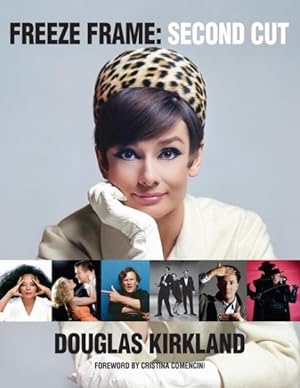
Hardcover. NY, Glitterati Incorporated, 1st, 2017, Book: Very Good, Dust Jacket: Very Good, Hardcover in a bright dust jacket, 368 pages. An expanded edition of the best-selling collection, Freeze Frame: Second Cut, featuring 150 new photographs (more than 450 in all) of stars shot on-set over a period of more than 50 years, by the planet's most famous on-set photographer, Douglas Kirkland. From Angelina Jolie and Brigitte Bardot to Baz Luhrmann and Antonio Banderas, Kirkland, an artist in his own right, has been chronicling the making of films for more than half a century through his lens, and his riveting images take us behind the scenes to reveal much about the way movies are made. Going beyond the first edition, this book includes stories and anecdotes of behind the scenes, along with the pictures ranging from the 1960s through the 2000s. Here is a glamorous volume in a luxurious oversized format, chock-full of amazing portraits of the most illustrious and talented movie stars, directors, and performers from the last half-century of movie-making. Clean copy. PLEASE NOTE: DUE TO SIZE & WEIGHT, DOMESTIC SHIPPING ONLY.
Hardcover. Laurence King Publishing, 1st, 2020, Book: Very Good, Dust Jacket: None, Hardcover in pictorial boards. 272 pages in coloe and b&w. Matisse and Picasso by Robert Capa, Takashi Murakami by Olivia Arthur, Warhol and de Kooning by Thomas Hoepker, Bonnard by Henri Cartier-Bresson, Sonia Delaunay by Herbert List, Kiki Smith by Susan Meiselas, and many more. For the first time, Magnum Artists brings together a collection of over 200 photographs that define the unique relationship between the world's greatest photography collective and the world's greatest artists. Still in publisher's shrinkwrap.
Hardcover. NY, Delilah/ Putnam, 1st, 1982, Book: Very Good, Dust Jacket: Very Good, Hardcover in a bright dust jacket, 158 pages. Beefcake and cheesecake photos of Hollywood stars and wannabes, in color and black and white. Photographs from the Kobal collection. Clean copy.
Hardcover. Princeton NJ, Princeton University Press, 1st, 2020, Book: Very Good, Dust Jacket: Very Good, Hardcocer in a bright dust jacket, 257 pages plus 143 b&w pages of photographs in the front of the book. Walker Evans (1903-75) was a great American artist photographing people and places in the United States in unforgettable ways. He is known for his work for the Farm Security Administration, addressing the Great Depression, but what he actually saw was the diversity of people and the damage of the long Civil War. In Walker Evans, renowned art historian Svetlana Alpers explores how Evans made his distinctive photographs. Delving into a lavish selection of Evans's work, Alpers uncovers rich parallels between his creative approach and those of numerous literary and cultural figures, locating Evans within the wide context of a truly international circle. Alpers demonstrates that Evans's practice relied on his camera choices and willingness to edit multiple versions of a shot, as well as his keen eye and his distant straight-on view of visual objects. Illustrating the vital role of Evans's dual love of text and images, Alpers places his writings in conversation with his photographs. She brings his techniques into dialogue with the work of a global cast of important artists--from Flaubert and Baudelaire to Elizabeth Bishop and William Faulkner--underscoring how Evans's travels abroad in such places as France and Cuba, along with his expansive literary and artistic tastes, informed his quintessentially American photographic style.
Hardcover. London, Dewi Lewis Publishing, 1st, 2000, Book: Very Good, Dust Jacket: None, Nonpaginated. Hardcover. Color illustrations throughout. Clean inside and out. From the back cover: "The images in Vital Signs, Harvey Benge's fourth book of photographs, have been made in Paris, London, Prague, Hong Kong and beyond. They engage both the eye and the mind, inviting viewers to examine their own experience of urban life and what that means to them."
Hardcover. NY, Amphoto, 1st, 1981, Book: Very Good, Dust Jacket: Very Good, Hardcover in a bright, lightly edgeworn dust jacket. 192 pages with 80 color pages and over 80 black and white illustrations. This book goes behind the scenes in the fascinating world of fashion photography. It shows how the illusion of fashion photographs is created--shows the people, planning, and hard work behind these striking and sensual images. A combination of finished fashion photos, background shots, and interviews with top people in fashion, Moves step-by-step through the intricate process of producing a fashion photograph for a major magazine, newspaper, or catalog. Minor wear to dust jacket, clean copy.
NY, Walker, 1st , 1967, Book: Very Good, Dust Jacket: Very Good, Hardcover. Black & white photos by Hine. 156 pages. Related material laid-in: exhibition card and newspaper article by author on Hine. Previous owner's stamp front fly leaf, old ink price on flap. Light edgewear, soil to dust jacket otherwise VG/VG
Softcover. NY, Aperture, 3rd pr., 1994, Book: Very Good, Dust Jacket: None, Softcover, 186 pages. A now classic text on the art, Why People Photograph gathers a selection of essays by the great master photographer Robert Adams, tackling such diverse subjects as collectors, humor, teaching, money and dogs. Adams also writes brilliantly on Edward Weston, Paul Strand, Laura Gilpin, Judith Joy Ross, Susan Meiselas, Michael Schmidt, Ansel Adams, Dorothea Lange, and Eugene Atget. The book closes with two essays on "working conditions" in the nineteenth- and twentieth-century American West, and the essay "Two Landscapes." Clean copy.
Softcover. London, Cornerhouse, 1st wraps, 1984, Book: Very Good, Dust Jacket: None, Softcover, 88 pages. Color photos of England in the 1980s by a Magnum photographer.
Hardcover. NY, Harper & Brothers, 1st, 1949, Book: Very Good, Dust Jacket: None, Hardcover, black cloth covers with yellow lettering. No dust jacket. 161 pages illustrated with 72 striking black-and-white photogravures by Berenice Abbott. Having spent most of the 1920s in Paris photographing such famous literati as James Joyce, Jean Cocteau and Andre Gide, Abbott returned to New York with the intention "to do in Manhattan what Atget did in Paris. " Throughout the 30s she captured New York "with a straightforward style that nodded toward 19th-century classicism while signaling a new sort of stripped-down modernism" (Roth, 100). Included here are her images of such artists as Isamu Noguchi, Edward Hopper, John Sloan and William Auerbach-Levy, each in their studios, along with numerous glimpses into the buildings, people and life of Greenwich Village. Text by Henry W. Lanier, editor, writer and son of renowned southern poet Sydney Lanier. Bright, clean copy.
Hardcover. Sao Paulo, Brazil, Dorea Books & Art, 1st , 1996, Book: Very Good, Dust Jacket: Very Good, Hardcover. Non-paginated. Illustrated with Black & white photographs by Claudio Edinger. Texts by Arnaldo Jabor, Jorge Amado and Roberto Damatta. Clean, tight copy. A collection of photographs taken during the Carnaval celebration in Brazil.
Hardcover. NY, Taschen, 1st thus, 2017, Book: Very Good, Dust Jacket: Very Good, Hardcover in a bright dust jacket, 503 pages. Mark Rotenberg was inspired to begin collecting lost and forgotten erotic photographs after he stumbled upon over a thousand very graphic vintage photos in a dumpster in Brooklyn. His collection now tops out at about 95,000 photos covering the period from 1860 to 1960. This special 25th anniversary edition draws highlights from Rotenberg's collection of crazy hardcore photographs that would make your grandmother squirm. Adults only. Still in publisher's shrinkwrap.
Hardcover. London, Merrill Holberton, 1st, 1998, Book: Very Good, Dust Jacket: Very Good, Hardcover, 160 pages. Black & white photography. Clean, tight copy. These largely unpublished photographs, some only recently discovered, were taken by Aby Warburg on his trip to the American frontier in 1895. Neither a photographer nor a native tourist, Warburg was a scholar with a camera. As seen though his own cultural and psychological perspective on art, these insightful photographs are significant not only to the study of Native American and frontier life, but also to an understanding of Warburg's unique vision of cultural history. 80 duotone photos.
Hardcover. NY, Abrams, 1st, 1994, Book: Very Good, Dust Jacket: Very Good, Hardcover in a bright dust jacket, 160 pages, b&w plates. An accomplished photographer of the American scene presents a unique artistic record that captures a vanishing part of our country, the main streets, barber shops, schoolhouses, and inhabitants of our small towns. In his 19th book on the American scene, Plowden has focused on what epitomizes small towns-before this endangered species disappears altogether. The well-produced images, arranged roughly by topic (e.g., schools, theaters, churches, home interiors, restaurants, stores, and grain elevators) and representing towns in many states (including Iowa, Kansas, West Virginia, New York, Minnesota, and Idaho), speak eloquently of small-town life. Even more so, they speak of change; by the time Plowden photographed these towns, most had been cut off from their rural heritages. Nevertheless, the photographs convey order, calm, and congeniality; the best of them evoke the work of Walker Evans, who, like Plowden, left scenes unaltered when he photographed them. Clean copy.

 "Snowdon on Stage: A Personal View of the British Theatreby: Lord Snowdon; Simon Callow")
 "The Sixtiesby: Avedon, Richard and Doon Arbus")
 "New Yok Scenesby: McDarrah and Sean Wilentz, Fred W.")
 "Grand Old Game: 365 Days of Baseballby: Wallace, Joseph")
 "Beautiful and the Damned: The Creation of Identity in Nineteenth-Century Photographyby: Hamilton/Roger Hargreaves, Peter")
 "Arnold Newman: The Early Workby: Philip Brookman , Arnold Newman")
 "Aperture 140: Edward Weston Portraits (Aperture Magazine)by: Aperture Foundation Inc. Staff")
 "Aperture 173: Winter 2003 (Aperture Magazine)by: Aperture Foundation Inc. Staff")
 "The Photographer by: Gerard Rancinan and Caroline Gaudriault")
 "Man Ray: Photography and Its Doubleby: Alain Sayag and Emmanuelle De I'Ecotais")
 "Brutal Kinshipby: Jane Goodall and Michael Nichols")
 "John Gutmann: The Photographer at Workby: Sally Stein , Douglas R. Nickel, et al.")
 "Winding Paths : Photographs by Bruce Chatwinby: Bruce Chatwin and Roberto Calasso")
 "Pilgrimageby: Leibovitz, Annie")
 "Millionaires, Mansions, and Motor Yachts: An Era of Opulenceby: Ross MacTaggart")
 "Marlene Dietrich: Photographs and Memoriesby: Marlene Dietrich, Filmmuseum Berlin")
 "Larry Finkby: Laurie Dahlberg")
 "Shadows of War: A German Soldier's Lost Photographs of World War IIby: Petra Bopp, Willi Rose , et al.")
 "The Theatrical World of Angus McBean: Photographs from the Harvard University Theatre Collectionby: Fredric Woodbridge Wilson and Richard Traubner")
 "Robert Frank: Hold Still, Keep Goingby: Ute Eskildsen, Christoph Ribbat , et al.")

 "Macmillan Biographical Encyclopedia of Photographic Artists and Innovatorsby: Elaine Browne, Turner and Partnow")
 "Victorian Studio Photographersby: Hillier, Bevis")
 "Photography and the Old Westby: Current, Karen; Current; William R.")
 "Nancy Newhall A Literacy of Imagesby: Klochko, Deborah")
 "Old Havanaby: Edinger Claudio; Cabrera Infante Guillermo; Werneck Humberto")
 "Studies Of The Female Nudeby: Dienes, Andre de")
 "Walker Evans: Kitchen Corner by: Olivier Richon")
 "A Kentucky Album: Farm Security Administration Photographs, 1935-1943by: Beverly W. Brannan, David Horvath, et al.")
 "Working in Times Square Is Hell and I Love It: Pictures From 2007-2016by: Ben Van Buren")
 "Pilgrims : Becoming the Path Itself by: Lena and Werner Herzog")
 "Project Lives: New York Public Housing Residents Photograph Their Worldby: George Carrano , Chelsea Davis , et al.")


 "Lotte Jacobi Photographsby: Moriarty, Peter & Lotte Jacobi")
 "The Hollywood Suitesby: Steve Kahn")
 "Growing Up with Australian Birdsby: Slater, Raoul")
 "Stockman Country: A New Zealand Mustering Adventure: at Glenaray, Molesworth, Arawhata, Waipaoa & Great Northern Cattle Driveby: Bruce Foster; Vernon Wright")
 "Magnum Artists: Great Photographers Meet Great Artists by: Bainbridge, Simon")


 "Screen Dreams: The Hollywood Pinupby: Crawley, Tony")
 "Walker Evans: Starting from Scratchby: Svetlana Alpers")


 "Vital Signsby: Benge, Harvey")
 "The Fashion Photographerby: Farber, Robert with Donald Goddard (photographs by Judith Asher)")
 "Lewis W. HIne and the American Social Conscienceby: Gutman, Judith Mara")
 "Why People Photograph: Selected Essays and Reviews by: Adams, Robert")

 "Greenwich Village Today & Yesterday by: Lanier, Henry Wysham / Berenice Abbott")
 "Carnavalby: Edinger, Claudio")

 "Photographs at the Frontier - Aby Warburg in America 1895-1896by: Cestelli Guidi (ed), Benedetta and Nicholas Mann")
 "Small Town Americaby: Plowden, David")