Hardcover. Cambridge MA, Harvard University Press, 1st, 2014, Book: Very Good, Dust Jacket: Very Good, Hardcover in a bright dust jacket, 337 pages. America's criminal justice system is broken. The United States punishes at a higher per capita rate than any other country in the world. In the last twenty years, incarceration rates have risen 500 percent. Sentences are harsh, prisons are overcrowded, life inside is dangerous, and rehabilitation programs are ineffective. Police and prosecutors operate in the dark shadows of the legal process--sometimes resigning themselves to the status quo, sometimes turning a profit from it. The courts define punishment as "time served," but that hardly begins to explain the suffering of prisoners. Looking not only to court records but to works of philosophy, history, and literature for illumination, Robert Ferguson, a distinguished law professor, diagnoses all parts of a now massive, out-of-control punishment regime. He reveals the veiled pleasure behind the impulse to punish (which confuses our thinking about the purpose of punishment), explains why over time all punishment regimes impose greater levels of punishment than originally intended, and traces a disturbing gap between our ability to quantify pain and the precision with which penalties are handed down. Clean copy.
Hardcover. UK, Cambridge University Press, 1st, 2005, Book: Very Good, Dust Jacket: Very Good, Hardcover, 334 pages. Spanning his renunciation of the Salon in 1834 until his large retrospective at the crucial 1855 Universal Exposition, this book examines the critical writing and journalistic reportage on Jean-Auguste-Dominque Ingres. It demonstrates how Ingres shaped his career in the rapidly evolving art world of mid-nineteenth century Paris. While enjoying the benefits of his affiliation with the Academy, the artist also pursued certain modes of presentation, most notably the single-artist exhibition and illustrated monograph, through which he distanced himself from the embattled world of artistic officialdom.
Softcover. NY, Abrams, 1st, 1999, Book: Very Good, Dust Jacket: None, Softcover, 120 pages. Introductions by Barbara Hitchcock and Deborah Klochko; essay Deborah Martin Kao. Mostly color Illustrated. Photos by Ansel Adams, Robert Frank, David Hockney, Robert Mapplethorpe and many more.
Softcover. Florence, Italy, Qua D'Arno, 1st, 1987, Book: Very Good, Dust Jacket: None, Softcover, 156 pages, bilingual texts in English and Spanish, b&w plates and text throughout. Illustrates and describes numerous torture devices including breast rippers, the ever popular rack and iron maiden, heretics fork and many more. Clean copy.
Hardcover. Boston, New England Historic Genealogical Society, reprint, 1995, Book: Very Good, Dust Jacket: None, Hardcover without dust jacket, 98 pages. Blue cloth covers very good. Gilt text to spine. Clean and tight copy, containing digitized publications of the Kings County Genealogical Club from 1882-1894. Clean copy.
Hardcover. Phillipsburg NJ, P & R Publishing, 1st, 1994, Book: Very Good, Dust Jacket: Very Good, Hardcover in a bright dust jacket, 724 pages. Vol. 2 only. Francis Turretin (1623-87) has been called "the best expounder of the doctrine of the Reformed Church" (Samuel Alexander), "a marvelous synthesizer" (Roger Nicole), and "a towering figure among the Genevan Reformers (Leon Morris). His Institutio Theologiae Elencticae, first published In 1679-85, was the fruit of some thirty years' teaching at the Academy of Geneva. A very insightful work for those seeking clarification on several theological issues such as free will, sanctification and good works, the person of Christ, and sin.Clean copy.
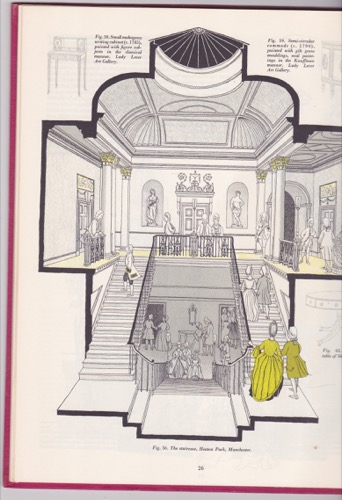
Hardcover. London, John Murray, 1st, 1957, Book: Very Good, Dust Jacket: None, Hardcover, red cloth stamped with white lettering, decoration. Delightfully illustrated history of interior design and furniture. 48 pages, 2-color art throughout by the authors. Small library stamp on title page, otherwise clean.
Hardcover. New York, Publishers Company, 2nd edition, 1968, Book: Very Good, Dust Jacket: None, 5 volumes: 291, 291, 317, 304, and 306 pages. Light brown cloth covers, with silver and black titles, profusely illustrated with b&w plates. Slight rubbing to covers, small brown stain to spines of Theater and Civil War volumes, previous owner's embossed stamp to all title pages, ex-lib bookplates to all copyright pages, pages very crisp and unmarked, tight binding; overall, volumes are in clean, tight condition. NOTE: DUE TO WEIGHT AND SIZE, DOMESTIC SHIPPING ONLY.
Hardcover. NY, Alfred A. Knopf, 1st, 1986, Book: Very Good, Dust Jacket: Very Good, Hardcover in a bright, unclipped dust jacket. 550 pages. A fascinating historical study using newly-declassified documents from the time the British were in Indochina through the end of the war. A detailed, specific history of the debacle. Clean copy.
Hardcover. New Haven CT, Yale University Press, 1st, 2012, Book: Very Good, Dust Jacket: Very Good, Hardcover, 416 pages, b&w photos. Light shelf-wear to dust jacket, else a clean, tight copy. A renowned curator and respected insider of the international art scene since the mid-1960s, Michael Peppiatt has spent his professional life with many of the greatest artists of the 20th century. His close friendships and frequent studio visits with Dubuffet, Sonia Delaunay, Francis Bacon, Henry Moore and others are included here.
Hardcover. Montpelier VT, Friends of the Vermont State House, 1st, 2015, Book: Very Good, Dust Jacket: Very Good, Hardcover in a bright, unclipped dust jacket. Intimate Grandeur is a 120-page celebration of the historic seat of Vermont state government. Illustrated with exquisite photographs and dozens of historic paintings and drawings. Clean copy.
Softcover. Emeryville CA, Seal Press, 1st pbk, 2006, Softcover, 549 pages, b&w illustrations. Set amidst the political upheaval of the McCarthy trials, the Vietnam War, and the rise of the women's movement, Intimate Politics is a courageous and uncompromising account of one woman's personal and political transformation, and a fascinating portrayal of a key chapter in our nation's history. At eight years old, Bettina Aptheker watched her family's politics play out in countless living rooms across the country when her father, historian and U.S. Communist Party leader Herbert Aptheker, testified on television in front of the House on Un-American Activities Committee in 1953. Born into one of the most influential U.S. Communist families whose friends included W. E. B. Du Bois, Paul Robeson, and Elizabeth Gurley Flynn, Bettina lived her parents' politics witnessing first-hand one of the most dramatic upheavals in American history. She also lived with a terrible secret: incest at the hands of her famous father and a frightening and lonely life lived inside a home wrought with family tensions. Light marking to ten pages, otherwise a clean, bright copy.
Hardcover. Bloomsbury Sigma, 1st, 2023, Book: Very Good, Dust Jacket: None, Hardcover, pictorial cloth, 320 pages. The story of recorded sound - the technological developments, the people that made them happen and the impact they had on society - from the earliest inventions via the phonograph to LPs, EPs and the recent resurgence of vinyl.While Thomas Edison's phonograph, the first device that could both record and reproduce sound, represented an important turning point in the story of recorded sound, it was really only the tip of the iceberg, and came after decades of invention, tinkering and experiment.Into the Groove tells the story of the birth of recorded sound, from the earliest serious attempts in the 1850s all the way up to the vinyl resurgence we're currently enjoying. This book celebrates the ingenuity, rivalries and science of the modulated groove.
Hardcover. NY, Oxford University Press, 1st, 1991, Book: Very Good, Dust Jacket: Very Good, Hardcover in a bright, price-clipped dust jacket, 268 pages. Focusing mainly on the nine months from November 1964 to July 1965 VanDeMark describes how the Johnson administration progressed along a seemingly inevitable path to double the number of ground troops in Vietnam, polarize the American people, and destroy Johnson's presidency in the short term. Mining a wealth of recently opened material at the Lyndon Baines Johnson Library and elsewhere, Brian VanDeMark vividly depicts the painful unfolding of a national tragedy. Name on front fly leaf otherwise clean.
Hardcover. NY, Alfred A. Knopf, 1943, Book: Very Good, Dust Jacket: Good, Hardcover in a worn dust jacket, 138 pages. B&w drawings by Major Donald L. Dickson, USMC. Edition not stated but 1943 on title page. "On the eighth day of October in the first year of our war, I went down into a valley with Captain Charles Rigaud of the United States Marines. A small skirmish took place down there. The Valley was on Guadalcanal Island, but it might have been anywhere. The skirmish was just an episode in an insignificant battle." Hersey's second book.
Hardcover. Chicago, International Harvester Company, 1st, 1949, Book: Very Good, Dust Jacket: None, Hardcover in green cloth with light yellow lettering on front cover, 259 pages, b&w photos. A report by the International Harvester Company that followed a trip to China. The Chinese government invited 25 American firms to help advance the country's agriculture programs. Clean, bright copy.
Hardcover. New York, Oceana Publications, 1st, 1953, Book: Very Good, Dust Jacket: None, 192 pages, salmon colored cloth, spine with light fading. One sentence in introduction with ink underlining, otherwise clean and tight.
Hardcover. Chicago, Henry Regnery Company, 1st, 1950, Book: Very Good, Dust Jacket: Fair, Hardcover in a worn, chipped dust jacket. Map endpapers, 176 pages, b&w photos. The first book by a German general published in America after the war, a German account of the D-Day & Normandy 'invasion' by Allied forces; the author was Rommel's Chief-of-Staff and therefore had an inside view of Rommel's efforts to get Hitler to negotiate a peace in the face of overwhelming Allied superiority. Speidel was a career military officer and trained historian; a German nationalist, he disagreed with racist Nazi policies, was involved in the 20 July plot to kill Hitler, and was important in rebuilding Germany's army after the war. Clean copy.
Hardcover. University of Pittsburgh Press, 1st, 2004, Book: Very Good, Dust Jacket: Very Good, Hardcover in dust jacket, 297 pages. James W. Heinzen's work fills a significant gap in the extensive historiography of the New Economic Policy (NEP) . The book studies the organization and staffing of NKZem RSFSR, offers some memorable portraits of its leading figures, especially its head, Alexander Petrovich Smirnov, and delves into the complexity of policy making in this era and the clash of institutional interests that had a major impact on policy. Heinzen makes a convincing case that Smirnov and the specialists in NKZem RSFSR were one of the major sources of ideas and policies for the 'Rightists' within the party leadership. The book is distinguished by its thoroughness, and by its cool and balanced judgment. This study brings out the full complexity of the Bolshevik regime, its dilemmas, and its internal contradictions. Clean copy, light fading to dj spine.
Hardcover. Chapel Hill NC, University of North Carolina Press, 1st, 2001, Book: Very Good, Dust Jacket: Very Good, Hardcover in a bright dust jacket. 277 pages, illustrated in b&w and color. The putto (often portrayed as a mischievous baby) appears frequently in the art and literature of Renaissance Italy. The "spiritelli" embody a minor species of demon, neither good nor bad. This book discusses the manifestations of the putto-spiritello in 15th-century art and literature. It offers parallel interpretations of two works: Botticelli's "Mars and Venus", a painting in which infant Satyr-putti appear as the panic-inducing spirits of the nightmare, and Politian's "Stanze", a poem in which masked cupids appear to the hero in a deceiving dream. The text concludes with an examination of the functions of such masks in the poetry and public masquerades sponsored by Lorenzo de'Medici and in Michelangelo's scheme for the decoration of the Medici Chapel. Clean copy.
Hardcover. Cambridge MA, MIT, 1st, 2003, Book: Very Good, Dust Jacket: Very Good, Hardcover, pages. The story of how hysterics were "invented" in 19th-century Paris is a fascinating one. All the more so because the staged performances that Freud witnessed at the famous Salpetriere asylum were to form the basis of his theory of hysteria, a theory which had a lasting impact on both psychiatry and medicine. Photography played an important role in the way doctors learned about so-called hysteria, often under the guise of objectivity.
Hardcover. Boston, Houghton Mifflin Co , 1st, 1928, Book: Good, Dust Jacket: None, Set of two hardcover volumes. 1113 pages total. Illustrated frontispiece. B&w illustrations throughout. Includes extensive appendix. With worn, decorative slipcase. Light edge wear to dust jacket otherwise clean, unmarked copy with only minor wear to dust jacket.
Softcover. Burlington VY, Ashgate Publishing , 1st, 2002, Book: Very Good, Dust Jacket: None, Softcover, 241 pages. The theology of Irenaeus, and the Demonstration of the Apostolic Preaching in particular, is pivotal in showing the way in which the fathers of the church interpreted scripture and distilled doctrine. The Demonstration is an important hinge showing how the doctrine of the fourth century with its definitive councils and definitions of faith, opens out from the new testament apostolic and evangelical witness. Presenting the full translation of the Demonstration of Irenaeus by Dean Armitage Robinson, this book offers a detailed theological commentary by Canon Iain MacKenzie on this foundational doctrinal text. MacKenzie sets out the main theological themes throughout Irenaeus' work, and explores his method of systematic theology, Athanasius's dependence on Irenaeus, and Irenaeus' influence on doctrine in the fourth century - particularly the works of Athanasius, Basil of Caesarea, Gregory of Nazianzus and Gregory of Nyssa. Highlighting the importance of this second century theologian for theology today, this commentary and theological interpretation offers an incentive to study Irenaeus in the wider development of Christian doctrine as a cardinal figure in the appreciation of systematic theology. Name on front fly leaf otherwise clean.