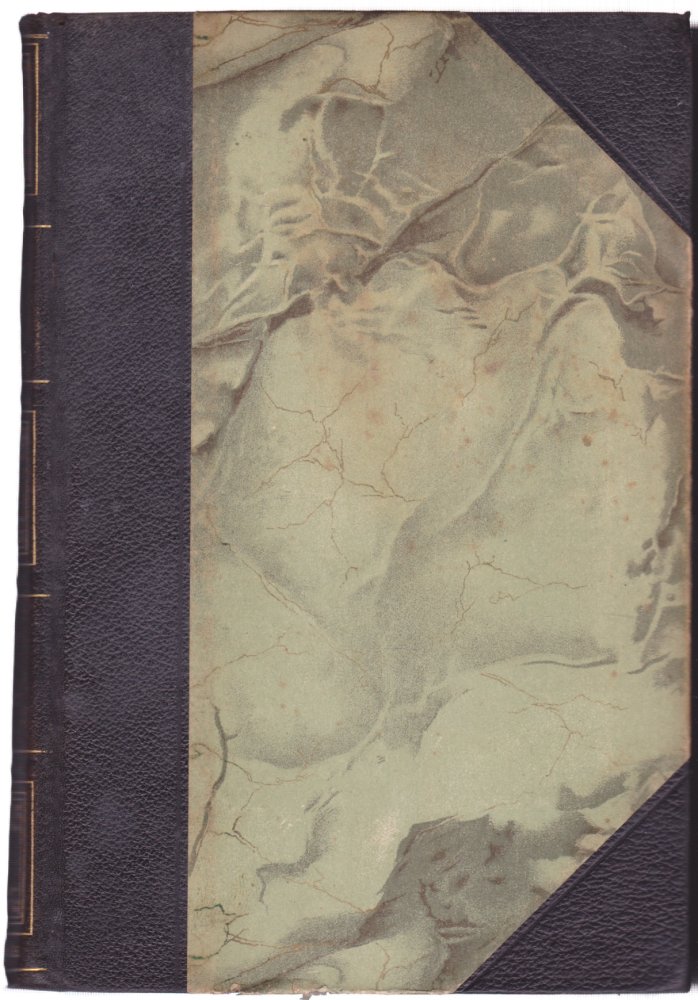
Hardcover. NY, Street & Smith, 1st, 1898, Book: Good, Dust Jacket: None, Hardcover. Book is divided into 4 sections: Cuba, Porto Rico, The Philippines, & Hawaii. Each with a fold-out color map. 178, 171, 174, & 178 pages respectively. All maps present and in very good condition. Previous owner's inscription on front fly leaf. The pale green covers suffer from rubbing and abrasions causing discoloration, fading. Internally very good.
Hardcover. Hatje Cantz, 1st, 2014, Book: Very Good, Dust Jacket: Very Good, 511 pages. Clean, unmarked copy in excellent condition. From the earliest days of the Cuban Revolution, the Revolutionary High Command was intensely aware of the power of the photographic image to advance the ideals of the Revolution, at home and abroad. If portraying the human side of its leaders was an important part of the Revolution's visual ideology, so too was its conception and depiction of the Cuban populace: as early as 1959, the High Command organized mass rallies in Havana assembling more than a million Cubans from throughout the island to celebrate the victory of the Revolution. Cuba in Revolution captures the complexity and the energy of this moment in all its contradictory beauty. It gathers a colossal array of photographs by both known and anonymous photographers into five thematic, chronologically overlapping sections: "Pre-Revolutionary Cuba: 1933-1959"; "The Years of Struggle and Victory: 1953-1957"; "Sierra Maestra: The Revolutionary Movement: 1956-1959"; "Bay of Pigs 1961"; and "Picturing the Revolution: 1959-1968." From Constantino Arias' portraits of poverty and wealth in pre-revolutionary Havana to the photographs of the dead Che Guevara in Bolivia, this volume offers an epic photo-narrative of the Cuban story. Iconic pictures of Che Guevara by Alberto Korda and Rene Burri are complemented by snapshots of Fidel Castro playing golf or hunting in the Soviet Union. Raul Corrales' pictures of revolutionaries playing the conga drums during the Cuban Missile Crisis also reveal a different face of the Revolution; portraits of individual Cubans by Henri Cartier-Bresson present an equally fluid vision of everyday life in Cuba; and the political and the personal merge in startlingly intimate portraits of Che Guevara by Andrew Saint-George and images of the forbidden pop culture of the mid-1960s by Jose Figueroa. Throughout the publication there is an exhilarating tension between the heroic portrayal of the leaders-Castro, Guevara and Cienfuegos-and the dramatic portrayal of a people in the midst of revolutionary transformation.
Hardcover. Washington, D. C., Smithsonian, 1st, 1998, Book: Very Good, Dust Jacket: Very Good, Hardcover, 58 pages. Illustrated with full color photographs. Clean, bright copy.
Softcover. Fonthill Media, reprint, 2017, Book: Very Good, Dust Jacket: None, Softcover, 144 pages illustrated in color. Cuba Cars and Cigars is full of glorious color images of the rare and varied Cuban-owned 1950s American and European automobiles, trucks, and station wagons that were imported before 1961. Among the famous Marques that feature are Cadillacs, Chevys, Buick, Dodge, Oldsmobile, Ford, Packard, De Soto, Pontiac, Plymouth, Edsel, Mercury and Metropolitan, Hillman, Singer and Austin, Nash Sedans, a Lloyd 600 German 2-cylinder/4-stroke 596cc car, Ramblers and SAABs, Mercs, Humber, Standard Vanguard, Ford Consul/Zephyr, Hillman Husky and Minx, Singer Gazelle and Austin. Most of these vehicles are still in running order, and are passed down from generation to generation. Trucks include Fords, a Fargo, Dodges and Chevys, not forgetting cigars, street urchins, and the lovely ladies of Havana. Clean copy.
Softcover. US, Prestel, 1st, 2009, Book: Very Good, Dust Jacket: None, Softcover, 424 pages, color and b&w illustrations. Like new in publisher's shrink-wrap. No dust jacket, as issued. From the exhibition produced by the Montreal Museum of Fine Arts in partnership with the Museo Nacional de Belias Artes and the Fototeca de Cuba in Havana. A comprehensive history of Cuban art and design.
Hardcover. New York, Charles Scribner's Sons, 1st, 1898, Book: Very Good, Dust Jacket: None, Hardcover, tan cloth covers stamped in blue and red, 360 pages. 116 b&w photos throughout, color maps in rear. In 1898 America intervened in the Cuban War of Independence, leading to conflict with Spain. This is a detailed account of this campaign, together with American military sea and land operations on the island of Puerto Rico during the Spanish American War. Cloth spine darkened otherwise clean, tight copy.
Softcover. Jefferson NC, McFarland & Company, 1st, 2015, Book: Very Good, Dust Jacket: None, Softcover, 222 pages. The changes Cuba experienced following the collapse of the Soviet Union compelled Cuban filmmakers to rethink the values developed after the 1959 Castro revolution. Long-forgotten genres re-emerged, established auteurs incorporated new aesthetics into their films and an influx of foreign capital led to the repackaging of revolutionary ideology into more visually attractive narratives. Films such as Alice in Wondertown (1991), Strawberry and Chocolate (1993) and Juan of the Dead (2011) stirred controversy, criticized revolutionary discourse and helped establish new models that allowed post-Castro cinema to find global audiences on an unprecedented scale. This book offers a detailed analysis of key post-Cold War Cuban films. Recurrent sociopolitical tropes are examined to reveal how Cuban cinema reflects the turbulent changes in the island.
Softcover. Durham NC, Duke University Press, reprint, 1995, Book: Very Good, Dust Jacket: None, Softcover, 312 pages plus index. Though written over fifty years ago, Cuban Counterpoint is recognized as one of the most important books of Latin American and Caribbean intellectual history. Treating tobacco and sugar both as agricultural commodities and as social characters in a historical process, he examines changes in their roles as the result of transculturation. Clean copy. Spine faded.
Hardcover. Albany NY, New York Agricultural Society, 1st, 1834, Book: Very Good, Dust Jacket: None, 192 pages, the first 12 issues of this early farming periodical, each 16 pages. Issues start with March 1834 and continue through February 1835. Bound in linen covered boards with a calf spine. Nice condition, minor foxing.
Softcover. New Brunswick NJ, Rutgers University Press, reprint, 1987, Book: Very Good, Dust Jacket: None, Softcover, 321 pages. Culture Builders deals primarily with the ways in which ideas about the good and proper life were anchored in the trivialities and routines of everyday life in Sweden, in the sharing of a meal, in holiday-making, and in the upbringing of children. The authors describe how the attitudes of the bourgeoisie toward time and time-keeping set them apart from the peasantry. Uses and perceptions of naturals increasingly divided the classes. For peasants, nature consisted of natural resources to be used. Fr the bourgeoisie, nature had only non-productive connotations. Another change was the growing importance of home over the community. Life became a romantic ideal, not an economic necessity. For the first time, parents became self-conscious about how to raise their children. Clean copy.
Hardcover. New York, Zone Books, 1st, 1996, Book: Very Good, Dust Jacket: Very Good, 565 pages. Hardcover. B/w illustrations throughout. Dust jacket unclipped, excellent, in protective brodart. Boards bound in black cloth, gilt title on spine. Binding tight. Some light pencil underlining throughout. Boards have a touch of rubbing, but in very good shape. A little light foxing to edges (shelfwear). A stunning, innovative blend of microsociology, cultural history, and philosophical reflection that will fascinate anyone concerned with problems of authenticity, identity, and originality.
Softcover. Durham NC, Duke University Press, 1st, 1993, Book: Very Good, Dust Jacket: None, Softcover, 672 pages. Pointing to a glaring blind spot in the basic premises of the study of American culture, leading critics and theorists in cultural studies, history, anthropology, and literature reveal the "denial of empire" at the heart of American Studies. Challenging traditional definitions and periodizations of imperialism, this volume shows how international relations reciprocally shape a dominant imperial culture at home and how imperial relations are enacted and contested within the United States.Drawing on a broad range of interpretive practices, these essays range across American history, from European representations of the New World to the mass media spectacle of the Persian Gulf War. The volume breaks down the boundary between the study of foreign relations and American culture to examine imperialism as an internal process of cultural appropriation and as an external struggle over international power. Clean copy.
Hardcover. New York, Covici-Friede, 2nd pr., 1936, Book: Very Good, Dust Jacket: Very Good, Hardcover, 269 pages. Previous owners name and the number "10" on front endpaper. Top edge stained black. Price clipped dust jacket with light chipping along edges. Clean, tight copy.
Hardcover. Oxford, Clarendon Press, 1st, 1912, Book: Very Good, Dust Jacket: None, 319 pages, illustrated with 2 portrait plates and a diagram. Gilt ruled brick-red cloth with gilt lettering on spine. Edited by Atkinson. Bright, tight copy.
Softcover. London, Sidgwick & Jackson , reprint, 1988, Book: Very Good, Dust Jacket: None, Softcover in pictorial wrappers, 192 pages, b&w illustrations. An abridged version of the two volume, 1892 book of Curzon's travels on the following route: Ashkabad, Kuchan, Kelat-I-Nadiri, Meshed, Teheran, The Northern Provinces, Teheran, Ishfahan, Shiraz to Bushire. Clean copy, minor corner wear.
Hardcover. NY, Sol Lewis & Liveright, 1st, 1975, Book: Very Good, Dust Jacket: None, Hardcover, blue cloth boards and spine with silver letters over a red background on spine. 288 pages, b&w illustrations. The author has provided a new interpretation of General Custer's tenure in Texas following the Civil War where he comes to life as a wise and successful military leader during Reconstruction. This is the first work that focuses entirely on Custer's tenure in the Lone Star State the first to detail his successful stay in Austin. No dust jacket.
Hardcover. NY/London, St. Martin's Press/Academy, 1st US, 1972, Book: Very Good, Dust Jacket: Good, Hardcover in a bright dust jacket with tape repair to reverse which bleeds through on front panel. A collection of black and white photographs from this early British photographer.
Hardcover. Philadelphia, J.B. Lippincott, 2nd Ed., 1865, Book: Very Good, Dust Jacket: None, Hardcover, dark green pebbled cloth with gilt lettering on spine, 4" x 6 1/4", 303 pages including index. A detailed instructional guide for the Civil War era soldier. Copyright page states 1964, title page says 1865. Probably a second edition. Still scarce in this nice condition. A few pages with dog ears, previous owner's pencil signature on front fly leaf. Otherwise clean, tight copy.
Hardcover. NY, Bounty Books , 1975, Book: Very Good, Dust Jacket: Very Good, Hardcover in a bright dust jacket. A study of censorship in the cinema. Many illustrations, a few in color. 112 pages. Small ink note on half-title page, otherwise clean.
Hardcover. Vista CA, Ibis Publishing, 1st, 1997, Book: Very Good, Dust Jacket: Very Good, Hardcover in a bright dust jacket, 315 pages. As Financial Advisor to China, Arthur N. Young had an intimate insight as an on-the-spot observer of events during the critical 18 years leading to the fall of the Nationalists and the Communist takeover. Along with Generalissimo Chiang Kai-shek, Dr. Young worked closely with the highest-ranking officials of the National Government in carrying out monetary and fiscal reforms prior to World War II, and stayed through the war to aid with problems of war finance, including procurement of American aid. As the Pacific Rim gains increasing international prominence, this book will prove to be of particular importance to students, scholars, business and political leaders with an interest in Asian affairs. Clean copy.
Softcover. Ausyin TX, University of Texas Press, 1st, 1997, Book: Very Good, Dust Jacket: None, Softcover, 282 pages, b&w illustrations. The simple question "How did the Maya come up with a calendar that had only 260 days?" led Vincent Malmstrom to discover an unexpected "hearth" of Mesoamerican culture. In this boldly revisionist book, he sets forth his challenging, new view of the origin and diffusion of Mesoamerican calendrical systems--the intellectual achievement that gave rise to Mesoamerican civilization and culture. Malmstrom posits that the 260-day calendar marked the interval between passages of the sun at its zenith over Izapa, an ancient ceremonial center in the Soconusco region of Mexico's Pacific coastal plain. He goes on to show how the calendar developed by the Zoque people of the region in the fourteenth century B.C. gradually diffused through Mesoamerica into the so-called "Olmec metropolitan area" of the Gulf coast and beyond to the Maya in the east and to the plateau of Mexico in the west. Clean copy.
Hardcover. Vilnius, Baltos Lankos, 1st, 1995, Book: Very Good, Dust Jacket: Very Good, 69 duotone plates, images taken by the Lithuanian photographer Jozef Chechowicz (1819-1888). Mostly landscapes of the city and it's buildings, some with people. Beautifully produced volume, limited to 2000 copies. Light edgewear to dust jacket.
Hardcover. Heidelberg, Universitatsverlag Winter , 1st, 2004, Book: Very Good, Dust Jacket: None, Hardcover, pictorial boards, 505 pages, GERMAN TEXT. Correspondence from the author and family laid in. Clean copy.
Hardcover. Philadelphia, Nottingham Society, Ltd Ed., 1900, Book: Very Good, Dust Jacket: None, Hardcover, marbled boards with 3/4 leather, gilt lettering on spine, top edge gilt. B&w frontis. The Vicomte of Bragelonne: Ten Years Later is a novel by Alexandre Dumas. It is the third and last of The d'Artagnan Romances, following The Three Musketeers and Twenty Years After. It appeared first in serial form between 1847 and 1850. Third volume from the set. Limited to 1000 copies.