Hardcover. New Haven CT, Yale University Press, 1st, 2005, Book: Very Good, Dust Jacket: Very Good, Hardcover, 320 pages. From the 1920s through the 1950s, two individuals, Joseph Urban and Norman Bel Geddes, did more, by far, to create the image of "America" and make it synonymous with modernity than any of their contemporaries. Urban and Bel Geddes were leading Broadway stage designers and directors who turned their prodigious talents to other projects, becoming mavericks first in industrial design and then in commercial design, fashion, architecture, and more. The two men gave shape to the most quintessential symbols of the modern American lifestyle, including movies, cars, department stores, and nightclubs, along with private homes, kitchens, stoves, fridges, magazines, and numerous household furnishings.Illustrated with more than 130 photographs of their influential designs, this book tells the engrossing story of Urban and Bel Geddes. Christopher Innes shows how these two men with a background in theater lent dramatic flair to everything they designed and how this theatricality gave the distinctive modernity they created such wide appeal. If the American lifestyle has been much imitated across the globe over the past fifty years, says Innes, it is due in large measure to the designs of Urban and Bel Geddes. Together they were responsible for creating what has been called the "Golden Age" of American culture.
Hardcover. Lee Publishers Group, 1st, 1981, Book: Very Good, Dust Jacket: Very Good, Hardcover in a bright dust jacket, 285 pages. Preface by Jean Mailey; Introduction by Zhang Ding. Designs in blue and white, fine bright tight copy, unmarked, very good slightly edge-rubbed dj. Collected from the remote areas of China's southwestern provinces, each decorative pattern is rich in beauty and meaning. This royalty-free volume will be an invaluable resource for artists, designers, craftspeople, and any lover of traditional Chinese folk art. Clean copy.
Hardcover. Los Angeles, Rare Bird Books, 1st, 2022, Book: Very Good, Dust Jacket: Very Good, Hardcover in a bright, unclipped dust jacket, 312 pages. The highlight of Desolation Peak is the journal Kerouac kept, starkly revealing the depth of his poverty, the extremity of his mood swings, and the ongoing arguments with himself over the future direction of his life, his writing, and faith. Along with the journal, he worked on a series of projects, including "Ozone Park," another installment of the Duluoz Legend beginning in 1943, after his discharge from the Navy; "The Martin Family," an intended sequel to The Town and the City, and "Desolation Adventure," a series of sketches that became part 1 of Desolation Angels. In writing it, Kerouac was re-committing himself to his more experimental, then-unpublishable style, declaring in the journal that "the form of the future is no-form." Also included in Collected Writings is "The Diamondcutter of Perfect Knowing," Kerouac's "transliteration" of the Diamond Sutra, his "Desolation Blues" and "Desolation Pops" poems, and assorted prose sketches and dreams. Clean copy.
Softcover. NY, Cooper Square Press, 1st pbk, 2001, Book: Very Good, Dust Jacket: None, Softcover, 285 pages, b&w illustrations. As told by the musicians who made it happen, Desperados: The Roots of Country Rock revisits country rock's rise to the top of the charts. Music scholar John Einarson delves into the years from 1963, when Buck Owens and his Buckaroos brought an electric edge to their Texas honky-tonk tunes, to 1973, when The Eagles released their album "Desperado" on David Geffen's label. Einarson examines how folk, rockabilly, blues, Nashville country, Tejano, bluegrass, and other musical idioms influenced a generation of journeyman musicians. He traces the paths taken by the songsmiths, the bands in which they served their apprenticeships, and the songs they wrote together, as they steadily shaped the country rock sound. The protagonists of this story include talented but troubled Gram Parsons, a virtuoso determined to burn out before he faded away; the versatile and appealing Linda Ronstadt; Mike Nesmith, the Monkee from Texas who returned to his musical roots with a trilogy of country-rock albums; TV heartthrob turned country rocker Rick Nelson; folkie songbird Emmylou Harris before she made it in Nashville; and many others. Clean.
Softcover. Boca Raton FL, Bordighera Press , 1st, 2002, Book: Very Good, Dust Jacket: None, Softcover, b&w illustrations. Tucked away on Via Tasso in a middle-class district in the Eternal City--a stone's throw from the Basilica of St. John in Lateran--the former prison is now the Museo Storico della Liberazione di Roma, commemorating the liberation of Rome by Resistance fighters and Allied troops in June 1944. Within, anti-fascist partisans scrawled graffiti full of pathos and the romantic idealism that so permeated the Italian Resistance. A visitor today can still read the desperate inscriptions, collected in this volume along with recollections by inmates and narratives concerning the Via Tasso. Pugliese's thoughtful narrative, accompanied by black-and-white photos by Lianna Miuccio, documents the lives of such antifascist prisoners as Arrigo Paladini, who wrote on the wall as he was dying, "There is nothing that can give the joy of a beautiful death as the consciousness of having served the country until the last breath of life." This book examines the inscriptions on the walls, translates them, shows Miuccio's stark photos of them, and gives a historical context, timeline, and survivor and family interviews. Clean copy. Scarce.
Hardcover. NY, Time Life, reprint, 1982, Book: Very Good, Dust Jacket: None, 224 pages. Hardcover with no dust jacket. Dark blue leather bound with gilt titles to front cover and spine. Embossed decoration on front cover. Gilt text block edges, red ribbon marker. Clean, tight copy. This Civil War classic of soldiering in the ranks debunks all the romantic notions of war. Like his Northern counterpart, the Confederate soldier fought against bullets, starvation, miserable weather, disease, and mental strain. But the experience was perhaps even worse for Johnny Reb because of the odds against him. Never as well equipped and provisioned as the Yankee, he nevertheless performed heroically. Carlton McCarthy, a private in the Army of Northern Virginia, describes the not-always-regular rations, various improvisations in clothing and weaponry, etc.
Hardcover. Hamburg, Cigaretten Bilderdienst, 1st, 1933, Book: Good, Dust Jacket: None, Hardcover, tan cloth with embossed gilt design on front cover. 150 pages with 225 mounted black and white and color images. German text. There is a frontispiece portrait of Hitler and a few other similar panels. A monumental propaganda work on Herr Hitler, Der Fuhrer, 9" x 12", The quality of the photographs is excellent, but one giant picture at the end, which opens out to 6 solid pages all joined together showing "Standartenweihe im Luitpoldhain1933" A vast sea of Hitler's armed forces in a giant arena. All photographs were taken and carefully selected by Heinrich Hoffmann, Adolf Hitler's official photographer. Hoffmann's photography was used. A chilling piece of German history and a fascinating example of the NSDAP's propaganda machine. Volume shows some shelf wear, name on half-title page, good plus overall.
Hardcover. Washington, D.C., Prestel, 1st, 1999, Book: Very Good, Dust Jacket: Very Good, Hardcover in a bright dust jacket, 408 pages, illustrated throughout in color. Large oversized book. Devi, the Great Goddess of India is beautiful, beneficent, terrifying, all-powerful, and glorious. Ubiquitous in India's social and spiritual fabric, she has, over the millennia, been painted, sculpted, carved, and wrought from silver and bronze in a myriad of shapes and forms. Devi: The Great Goddess brings together one hundred and twenty of these diverse examples of Devi and a group of distinguished essayists who explore facets of Devi worship and tradition, including ritual, architecture, literature, history and contemporary issues such as feminism and gender politics. Light edgewear to dust jacket, else a clean, tight copy. PLEASE NOTE: DUE TO SIZE & WEIGHT, DOMESTIC SHIPPING ONLY.
Hardcover. Boston, Little, Brown and Company, First Edition, 2000, Book: Very Good, Dust Jacket: Very Good, 266 pages. Hardcover. Black cloth boards with silver titles to spine. Black and white illustrations. Dust jacket in cream & white with photograph & only light marginal wear. Clean & unmarked. A biography of the controversial fighter follows Liston from the mean streets, where he was a petty criminal, to the heavyweight championship and his life as a pawn of organized crime. By the author of Power on Earth.
Hardcover. Los Angeles, CA, Aperient Press, 4th printing, 2001, Book: Very Good, 220 pages. Hardcover with no dust jacket. Very clean, unmarked copy with only minor edgewear. Many full color illustrations and black & white sketches throughout. Tight copy. Yes, that's right, this fancy hardcover book reproduces tons of Coop's posters and stickers and thangs, all in color. Step right up. "While illustrating record covers and ads for Long Gone John Mermis of Sympathy for the Record Industry, Coop made the acquaintance of the popular poster artist Frank Kozik. With Frank's influence, Coop set off in a career direction that eventually put him on the same level enjoyed by the psychedelic poster artists (Griffin, Moscoso, Kelley & Mouse, etc.) three decades earlier. Doing poster work with name bands, like Rocket From The Crypt, Soundgarden, Nirvana, and the Lords of Acid, elevated Coop's public visibility, and with it his recognition. . But the number one, singular form of expression that regurgitated his name from ear-to-ear was his aptitude for emblematic imagery which began showing up on stickers. Common is the sight of plump female figures, in coy positions (sometimes femme devils), as pressure sensitive stickers, glaring off the back window of some young gentleman's primer grey old car (and a lot of new cars too). It is with this kind of exposure that the name Coop has come to typify art for many people who simply like visual stimuli. And, of course, this visual voice speaks just as clearly (but more permanently) in the form of tattoo design. As I mentioned in the beginning, Coop doesn't exploit the occult metaphysics of satanic malarkey. Why should he? This gifted wonder-boy is the devil himself." - from the forward by Robert Williams
Softcover. San Diego, CA, IDW Publishing, 1st Edition, 2011, Book: Very Good, Dust Jacket: None, 95 pages. Softcover. INSCRIBED BY AUTHOR/ILLUSTRATOR. Created, written, drawn and colored by Palle Schmidt. Color illustrations throughout. Clean and tight copy, inside and out.
Hardcover. London, Jonathan Cape, 1st, 1935, Book: Good, Dust Jacket: None, Hardcover, green cloth covers, 317 pages. Four friends walk and tell tales while hiking over moors. A light hearted narrative in which Henry Williamson intended to evoke a holiday spirit. The conceit of four friends on a hiking holiday and telling tales to one another links six short stories. Williamson focusses on presenting Devon and its people as it was in the mid 1930s. Covers with fading, chipping to spine cloth, clean copy.
Hardcover. Cambridge, MA, Harvard University Press, 1st, 1977, Book: Very Good, Dust Jacket: None, Blue cloth covered boards with gold gilt lettering, slight stain on back cover, otherwise clean copy. Published by the Council on East Asian Studies at Harvard University. 335 pages. Appendixes include Table of the Published Chinese Sources of John Dewey's Lectures Delivered in China, 1919-1921, John Dewey's Major Lecture Series, Published Articles, and Professional Activities During His Visit to China, and Translations of Dewey's Works into Chinese.
Hardcover. New York, Umbrage Editions, 1st, 2007, Book: Very Good, Dust Jacket: None, Hardcover, 240 pages. Illustrated throughout in b&w. Clean, unmarked copy with only minor wear to covers. Having worked as a photojournalist in the 1990s in Zaire, Sierra Leone and Angola, van Lohuizen had seen the effects of the diamond trade first hand, and in 2005, he went back to Africa to assess the situation under new peace agreements. His haunting black and white images follow diamonds from the mines in Africa to retail spaces in New York and parties in London.
Hardcover. New York, Umbrage Editions, 1st, 2007, Book: Very Good, Dust Jacket: None, Hardcover, 240 pages. Illustrated throughout in b&w. Clean, unmarked copy with only minor wear to covers. Having worked as a photojournalist in the 1990s in Zaire, Sierra Leone and Angola, van Lohuizen had seen the effects of the diamond trade first hand, and in 2005, he went back to Africa to assess the situation under new peace agreements. His haunting black and white images follow diamonds from the mines in Africa to retail spaces in New York and parties in London.
Hardcover. New York, Umbrage Editions, 1st, 2007, Book: Very Good, Dust Jacket: None, Hardcover, 240 pages. Illustrated throughout in b&w. Clean, unmarked copy with only minor wear to covers. Having worked as a photojournalist in the 1990s in Zaire, Sierra Leone and Angola, van Lohuizen had seen the effects of the diamond trade first hand, and in 2005, he went back to Africa to assess the situation under new peace agreements. His haunting black and white images follow diamonds from the mines in Africa to retail spaces in New York and parties in London.
Hardcover. Koln, Taschen, 1st, 2004, Book: Very Good, Dust Jacket: None, Hardcover, 460 pages, without dustjacket, as issued. Clean, bright copy with hundreds of nudes and scantily-clad women in color and b&w photographs and illustrations.
Hardcover. Koln, Taschen, 1st, 2004, Book: Very Good, Dust Jacket: None, Hardcover, 460 pages, without dust jacket, as issued. Clean, bright copy with hundreds of nudes and scantily-clad women in color and b&w photographs and illustrations.
Hardcover. Koln, Taschen, 1st, 2005, Book: Very Good, Dust Jacket: None, Hardcover, 460 pages, without dust jacket, as issued. Clean, bright copy with hundreds of nudes and scantily-clad women in color and b&w photographs and illustrations.
Hardcover. Koln, Taschen, 1st, 2005, Book: Very Good, Dust Jacket: None, Hardcover, 460 pages, without dust jacket, as issued. Clean, bright copy with hundreds of nudes and scantily-clad women in color and b&w photographs and illustrations.
Hardcover. Germany, Taschen, 1st, 2013, Book: Very Good, Dust Jacket: Very Good, 3-vol set in slip case. Hardcovers. Like new in publisher's shrink-wrap. Editor Dian Hanson traces the fascinating development of the genre from 1900 to 1969 in three compact, informative volumes. In Volume 1 you'll learn about the first magazines that appeared around 1900 in France, Germany, and the U.S., and follow the development of the genre through the First and Second World Wars. Covered are men's magazines masquerading as movie magazines, humor magazines, art magazines, nudist magazines, and "spicy" fiction. Volume 2 documents the proliferation of pin-up magazines following World War II, most notably a little item called Playboy that debuted in December 1953 and spawned dozens of imitators. This volume also charts the emergence of English men's magazines, fetish magazines, and the top five covergirls of the 1950s. Volume 3 begins with an explosion of new American pin-up magazines following the loosening of U.S. obscenity laws, and continues with French titles in decline, England going pervy; nudists going hippy, and Germany going pervy, hippy and political.
Softcover. NY, Harper Design, reprint, 2011, Book: Very Good, Dust Jacket: None, Softcover, 308 pages. Eleanor Dwight delivers the definitive biography of Diana Vreeland, the twentieth century's most influential fashion editor. Lavishly illustrated with exclusive photographs and personal materials from the legendary style maker's private collection, and featuring a new preface from Vogue's Andre LeonTalley, Diana Vreeland is an indispensible look at a grand dame of great couture. Lavishly illustrated with more than three hundred drawings and photographs, many by the best fashion photographers of the time: Louise Dahl-Wolfe, Irving Penn, Cecil Beaton, and Brassai. Here, too, are the trendsetters, artists, models, and celebrities with whom Vreeland worked and played, including Coco Chanel, Yves Saint Laurent, Hubert de Givenchy, Oscar de la Renta, Elsie de Wolfe, Andy Warhol, Truman Capote, and Jacqueline Kennedy.
Softcover. New York, Aperture, 1st, 1984, Book: Very Good, Dust Jacket: None, Softcover, 176 pages. Illustrated with black & white photographs by Diane Arbus. Arbus's commercial photography and articles are less well known than her other works. Her assignments for 'Esquire', 'Harper's Bazaar' and the 'Sunday Times Magazine' in London covered the leaders of theater, fashion, show business and literature. Here are over 100 portraits and feature profiles which originally accompanied them. Remainder stamp to bottom edge, otherwise a clean, tight copy.
Hardcover. New York, Aperture, 1st, 1984, Book: Very Good, Dust Jacket: Very Good, Hardcover, 176 pages. Illustrated with black & white photographs by Diane Arbus. Arbus's commercial photography and articles are less well known than her other works. Her assignments for 'Esquire', 'Harper's Bazaar' and the 'Sunday Times Magazine' in London covered the leaders of theater, fashion, show business and literature. Here are over 100 portraits and feature profiles which originally accompanied them. Bottom right corners of covers lightly bumped. Clean, tight copy.
Softcover. New York, Aperture, 1st, 1984, Book: Very Good, Dust Jacket: None, Softcover, 176 pages. Illustrated with black & white photographs by Diane Arbus. Arbus's commercial photography and articles are less well known than her other works. Her assignments for 'Esquire', 'Harper's Bazaar' and the 'Sunday Times Magazine' in London covered the leaders of theater, fashion, show business and literature. Here are over 100 portraits and feature profiles which originally accompanied them. Luminaries include Jayne Mansfield, Mae West, William Golding, Susan Sontag, Norman Mailer, and many others. Clean, tight copy.
NY, Knopf, 1st, 1984, Book: Very Good, Dust Jacket: Very Good, Hardcover, 369 pages, b&w illustrations. in a very good, unclipped dust jacket. Examines the life behind the eerie, mesmerizing photographs: Diane"s pampered childhood; her passionate marriage to Allan Arbus and their work together as fashion photographers during the fifties; the emotional upheaval surrounding the end of that marriage; and the radically dark, liberating, and ultimately tragic turn Diane"s art took during the sixties. Bosworth"s engrossing book is a compassionate portrait of the woman behind some of the most powerful photographs of our time.
Softcover. New Haven CT, Yale University Press, 1st, 2003, Book: Very Good, Dust Jacket: None, Softcover, 168 pages. Diane Arbus (1923-1971) is renowned for her provocative and unsettling portraits of modern Americans. This book presents a significant body of previously unpublished pictures by Arbus and proposes a radically new way to understand her goals, strategies, and overall work. Diane Arbus: Family Albums examines unknown contact sheets from several of Arbus's portrait sessions, including more than three hundred photographs she took of a New York family one weekend in 1969. Anthony W. Lee and John Pultz put to the test Arbus's claim that she was developing a "family album." They present other images Arbus shot for Esquire magazine (including pictures of the families of Ricky Nelson, Jayne Mansfield, and Ogden Reid) and discuss her interest in photographic groupings of both traditional and alternative families. Challenging common interpretations of Arbus, the authors reveal a photographer far more savvy with the camera, more aware of photography as an artistic and commercial practice, and more sensitive to the social and cultural tensions of the 1960s than has been acknowledged before.
Softcover. New Haven CT, Yale University Press, 1st, 2003, Book: Very Good, Dust Jacket: None, Softcover, 168 pages. Diane Arbus (1923-1971) is renowned for her provocative and unsettling portraits of modern Americans. This book presents a significant body of previously unpublished pictures by Arbus and proposes a radically new way to understand her goals, strategies, and overall work. Diane Arbus: Family Albums examines unknown contact sheets from several of Arbus's portrait sessions, including more than three hundred photographs she took of a New York family one weekend in 1969. Anthony W. Lee and John Pultz put to the test Arbus's claim that she was developing a "family album." They present other images Arbus shot for Esquire magazine (including pictures of the families of Ricky Nelson, Jayne Mansfield, and Ogden Reid) and discuss her interest in photographic groupings of both traditional and alternative families. Challenging common interpretations of Arbus, the authors reveal a photographer far more savvy with the camera, more aware of photography as an artistic and commercial practice, and more sensitive to the social and cultural tensions of the 1960s than has been acknowledged before.
Hardcover. NY, Metropolitan Museum of Art, 1st, 2016, Book: Very Good, Dust Jacket: None, Hardcover, 240 pages. A collection of Arbus's photographs from her formative years, 1956-62; 125 images in all, more than half published here for the first time. No dust jacket issued. This book is the definitive study of the artist's first seven years of work, from 1956 to 1962. Drawn primarily from the rich holdings of the Metropolitan Museum's Diane Arbus Archive--a remarkable treasury of photographs, negatives, appointment books, notebooks, and correspondence--it is an essential contribution to our understanding of Arbus and her oeuvre.
Hardcover. New York, Metropolitan Museum of Art, 1st, 2016, Book: Very Good, Dust Jacket: None, 272 pages. Hardcover with no dust jacket. Very clean, unmarked copy still in shrink wrap. Over 100 of Diane Arbus' early photographs in black and white. Tight copy. Diane Arbus (1923-1971) is one of the most distinctive and provocative artists of the twentieth century. Her photographs of children and eccentrics, couples and circus performers, female impersonators and nudists, are among the most recognizable images of our time. This book is the definitive study of the artist's first seven years of work, from 1956 to 1962. Drawn primarily from the rich holdings of the Metropolitan Museum's Diane Arbus Archive--a remarkable treasury of photographs, negatives, appointment books, notebooks, and correspondence--it is an essential contribution to our understanding of Arbus and her oeuvre.
Hardcover. New York, Ecco, 2nd pr., 2016, Book: Very Good, Dust Jacket: Very Good, Hardcover, 734 pages, b&w illustrations. The definitive biography of the beguiling Diane Arbus, one of the most influential and important photographers of the twentieth century, a brilliant and absorbing exposition that links the extraordinary arc of her life to her iconic photographs. It is impossible to understand the transfixing power of Arbus's photographs without exploring her life. Lubow draws on exclusive interviews with Arbus's friends, lovers, and colleagues; on previously unknown letters; and on his own profound critical insights into photography to explore Arbus's unique perspective and to reveal important aspects of her life that were previously unknown or unsubstantiated. He deftly traces Arbus's development from a wealthy, sexually precocious free spirit into first, a successful New York fashion photographer and then, a singular artist who coaxed secrets from her subjects. Lubow reveals that Arbus's profound need not only to see her subjects but to be seen by them drove her to forge unusually close bonds with these people, helping her discover the fantasies, pain, and heroism within each of them, and leading her to create a new kind of photographic portraiture charged with an unnerving complicity between the subject and the viewer.
Hardcover. New York, Ecco, 2016, 2016, Book: Very Good, Dust Jacket: Very Good, 734 pages. Hardcover. B&w photographs throughout. Clean, unmarked copy with only minor wear to dust jacket.
Hardcover. Millerton NY, Aperture, 1st, 1972, Book: Very Good, Dust Jacket: Very Good, Hardcover, 80 b& plates by Arbus. True first with Two Girls in Identical Raincoats plate, later supressed. Very good in very good dust jacket that's unclipped. When Diane Arbus committed suicide in 1971, only a relatively small number of her most important pictures were widely known. The publication of Diane Arbus: An Aperture Monograph in 1972--along with the concurrent retrospective at the Museum of Modern Art--offered the general public its first encounter with the breadth and power of her work. Now considered a classic of photographic literature, it is probably the best selling photography book of all time.
Hardcover. NY, Assouline Publishing, 1st, 2004, Book: Very Good, Dust Jacket: Very Good, Hardcover, 80 pages. Diane von Furstenberg arrived in the fashion world in 1972 with her simple knit jersey wrap dresses. By 1976, Diane had sold more than 5 million of her signature wrap dresses, which had come to symbolize female power and liberation to an entire generation. Almost 20 years later, with the nostalgia for '70s fashion at its peak, Diane re-emerged on the New York fashion scene with her signature wrap modified for a new generation of chic young women. Now with smaller collars than the original wrap, the new version has been enthusiastically adopted by today's trendsetters and celebrities. This volume looks at the history of the "wrap" phenomenon, from its revolutionary early days to its ever-popular present.
Hardcover. Ithaca NY, Cornell University Press, 1st, 2006, Book: Very Good, Dust Jacket: Very Good, Hardcover in a bright dust jacket, 835 pages. Sergey Prokofiev, a compulsive diarist and gifted and idiosyncratic writer, possessed an incorrigibly sardonic curiosity about individuals and events. When he left Russia after the 1917 Revolution, his diaries were recovered from the family flat in Petrograd and later hidden at considerable personal risk by the composer Nikolai Myaskovsky. Prokofiev himself smuggled them out of the country after his first return to the Soviet Union in 1927. The later diaries, written in the West, were brought back by legal decree after the composer's death in 1953, to be kept in an inaccessible section of the Soviet State Archive. Eventually Prokofiev's son Sviatoslav was allowed to transcribe the voluminous contents. When he and his son Sergei eventually emigrated to Paris, they undertook the gigantic task of reproducing the partially encoded manuscript in an intelligible form.Diaries, 1907-1914, the first of three volumes that extend to 1933, covers Prokofiev's years at the St. Petersburg Conservatoire. Simultaneously attached to and exasperated by the tradition exemplified by composers such as Rimsky-Korsakov, Glazunov, and Tcherepnin, the brash young genius relishes the power of his talent to irritate, challenge, and finally overcome the establishment. Clean copy.
Hardcover. Oxford UK, Basil Blackwell, 1st thus, 1990, Book: Very Good, Dust Jacket: Very Good, Hardcover, 283 pages. "These intimately revealing diaries, now translated into English for the first time, date mainly from the 1880s and 1890s, when Wedekind was leading a bohemian life in Berlin, Munich and Paris, savoring the artistic and erotic delights of a 'decadent' environment." In a bright dust jacket.
Hardcover. New Haven CT, Yale University Press, 1st, 1979, Book: Very Good, Dust Jacket: Good, Hardcover in a lightly worn dust jacket. 467 pages, b&w illustrations. Translated from the German and edited by Joseph P. Tustin. Johann Ewald was acknowledged by the British for whom and with whom he fought in the American Revolution as one of the best light infantry officers (termed outpost officers) in their service. A dedicated, trained professional from Hesse-Cassel, who was 'hired out' by his sovereign for the American War, he knew his job 'from muzzle to butt plate' and was an excellent leader of men, as well as a shrewd observer of what he saw. Fortunately for us, he also wrote all of it down. This book is one of the most valuable memoirs of the period. The petite guerre (little war), also called partisan warfare, of the period is of great importance in understanding the picture of the whole for the War of the Revolution. The jagers that Ewald commanded were also some of the most deadly light infantry in the world at the time, and they were greatly feared by their American opponents. Armed with short German hunting rifles and dressed in green and brown, they not only blended in with their surroundings, but they served in almost every action and battle of the war. Ewald's direct, observant prose paints a vivid picture of the war, his British comrades, and his American opponents. He respected the Americans, especially their officers' attempt at becoming more professional as the war progressed, exemplified by the military books and treatises they read, which Ewald saw from time to time as he came across captured officers' baggage. he was amazed at the American attempts, which he noted were sadly lacking in his brother British officers. He noted this with care. Ewald ended up in the surrender at Yorktown and was eventually sent home to Germany. Light fading to dust jacket. Clean copy.
Hardcover. US, Sunday Press (CA), 1st, 2016, Book: Very Good, Dust Jacket: None, Like new in publisher's shrink-wrap. Over-size volume. This selection of Dick Tracy Sunday pages from 1931 to 1939 features Gould's most infamous villains of the decade, with four complete stories, plus forty more fabulous Sundays highlighting the villains and heroes not seen in the featured cases. 168 pages, 11" X 16", color throughout.
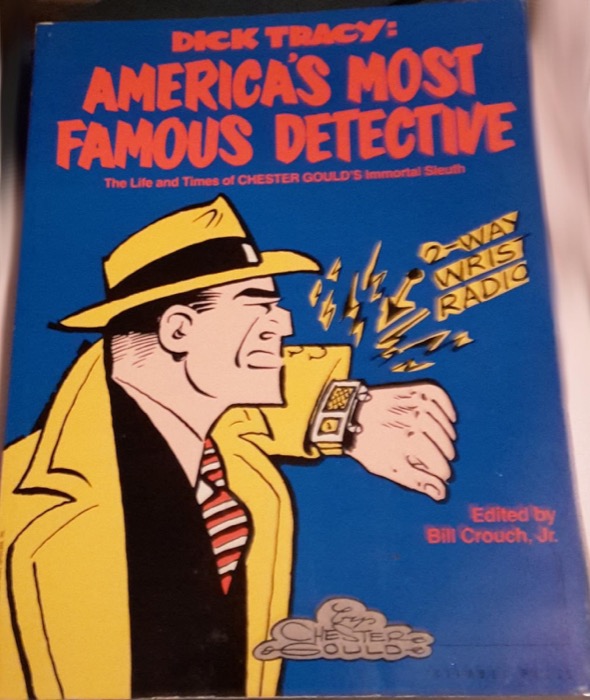
Softcover. London, Plexus Publishing, 1st, 1990, Book: Very Good, Dust Jacket: None, Softcover, 256 pages, b&w illustrations. Dick Tracy is America's most famous detective and after Sherlock Holmes, the second most in the world. However, until now, an overview of this landmark comic strip has never been published. Full of history, old comic strips, Chester Gould interviews and sections of the most famous Dick Tracy strips. A bright, clean copy that has a light smoker's odor.
Softcover. New York, Plume/Penguin Group, 1st, 1990, Book: Very Good, Dust Jacket: None, Softcover, 218 pages. Chester Gould's Dick Tracy, his adventures, his enemies, his allies, and his long-suffering sweetheart and eventual mate, Tess Truehart, live again in the one book that traces his entire crime-fighting career; enriched by a wealth of original classic strips in black-and-white, with 24 pages of color. Bright, clean copy.
Hardcover. Woodbridge, Suffolk, Antique Collectors Club Dist, rep, 1990, Book: Very Good, Dust Jacket: Very Good, Hardcover, 455 pages, illustrated throughout in color and b&w. Clean, unmarked copy with only minor wear to dust jacket.
Hardcover. England, Antiques Collectrors Club, reprint, 1981, Book: Very Good, Dust Jacket: Good, 520 pages. Hardcover with dust jacket. Ex-Lib with usually stamps and markings on end papers, front fly leaf and spine. Faded dust jacket spine. Black and white illustrations throughout. Tight copy.
Hardcover. London, J. Johnson, R. Faulder, J. Walker, etc., 1st Thus, 1805, Book: Good, Dust Jacket: None, 693 pages plus index and errata. Full leather hardcover with gilt decoration, blindstamping, raised bands along spine. Marbled endpapers and edges. Due to cracked hinge, front cover is detached - good candidate for repair as all original paper is present. Previous owners bookplate on inside front cover. Body of book is clean, tight. Good reference copy. PLEASE NOTE: DUE TO SIZE & WEIGHT, DOMESTIC SHIPPING ONLY.
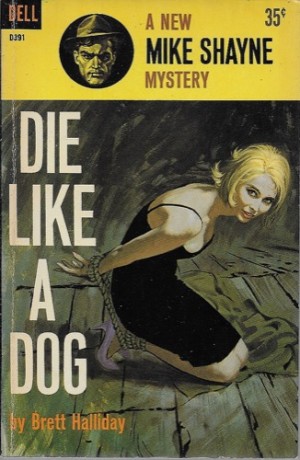
Softcover. New York, Dell Publishing, 1st, 1960, Book: Very Good, Dust Jacket: None, 192 pages. Paperback. Dell Book #D391. Minor wear to paper wrappers. Cover art by Robert McGinnis. Minor reading crease to spine.
Hardcover. New York, Norton, 1st, 1999, Book: Very Good, Dust Jacket: Very Good, Hardcover, 202 pages. Black & white photography. Color and black & white artwork by Diego Rivera. Dust jacket is protected by a mylar cover. Remainder mark on bottom book edge.
Hardcover. New York , W. W. Norton & Company, 1st, 1999, Book: Very Good, Dust Jacket: Very Good, Hardcover in a bright dust jacket, 202 pages, illustrated with 242 color and b&w plates, including a pullout poster in rear pocket. Early in the Depression, Diego Rivera was commissioned by Edsel Ford to create a series of murals in the gallery of the Detroit Institute of Arts, giant frescos whose theme would be America's industrial might. This volume studies the astonishing results and gives us a remarkably close look at Diego and his wife, Frida Kahlo. Rivera's Detroit Industry murals are one of this country's greatest treasures. In addition to providing full coverage and analysis of the murals, the book includes chapters on the murals' planning and antecedents, Rivera's working methods (which can be read as a primer on frescos), Diego and Frida's lives for their nine months in Detroit, and the public's dramatic response to the strong socialist/communist themes in the works.
Hardcover. New York , W. W. Norton & Company, 1st, 1999, Book: Very Good, Dust Jacket: Very Good, Hardcover in a bright dust jacket, 202 pages, illustrated with 242 color and b&w plates, including a pullout poster in rear pocket. Early in the Depression, Diego Rivera was commissioned by Edsel Ford to create a series of murals in the gallery of the Detroit Institute of Arts, giant frescos whose theme would be America's industrial might. This volume studies the astonishing results and gives us a remarkably close look at Diego and his wife, Frida Kahlo. Rivera's Detroit Industry murals are one of this country's greatest treasures. In addition to providing full coverage and analysis of the murals, the book includes chapters on the murals' planning and antecedents, Rivera's working methods (which can be read as a primer on frescos), Diego and Frida's lives for their nine months in Detroit, and the public's dramatic response to the strong socialist/communist themes in the works.



 "Desperadoesby: J. Ruffner and Didler Cromwell")



 "Detailed Minutiae of Soldier Life in the Army of Northern Virginia, 1861-1865 (Collector's Library of the Civil War)by: McCarthy, Carlton")


 "Devil and Sonny Liston, Theby: Tosches, Nick")

 "Devil's Concubine, The (INSCRIBED BY AUTHOR/ILLUSTRATOR)by: Schmidt, Palle")


 "Diamond Mattersby: Lohuizen, Kadir van")
 "Diamond Mattersby: Lohuizen, Kadir van")
 "Diamond Mattersby: Lohuizen, Kadir van")

 "Dian Hanson's : The History of Men's Magazines : Volume 2: From Post-War to 1959by: Hanson, Dian")
 "Dian Hanson's : The History of Men's Magazines : Volume 3: 1960s at the Newsstandby: Hanson, Dian")

 "Dian Hanson's History of Pin-up Magazines Vol. 1-3by: Hanson, Dian (editor)")


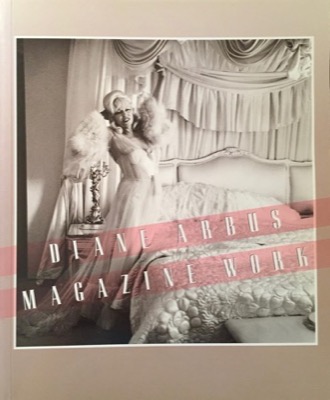
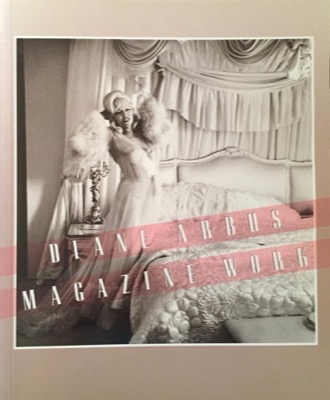
 "Diane Arbus: A Biographyby: Bosworth, Patricia")


 "Diane Arbus: In the Beginningby: Rosenheim, Jeff L")
 "Diane Arbus: In the Beginningby: Rosenheim, Jeff L.")


 "Diane Arbusby: Arbus, Diane")
 "Diane Von Furstenberg: The Wrapby: Talley, Andre Leon")

 "Diary of an Erotic Lifeby: Frank Wedekind; Translator William E. Yuill")



 "Dictionary of 20th Century British Book Illustrators, The by: Horne, Alan")

 "Dictionary of British Miniature Painters (2 vols.)by: Foskett, Daphne")
 "Diego Rivera - The Detroit Industry Muralsby: Bank Downs, Linda")

 "Diego Rivera: The Detroit Industry Muralsby: Downs, Linda Bank")
)
)
)
)