Hardcover. Steidl, 1st, 2004, Book: Very Good, Dust Jacket: Very Good, Hardcover, 192 pages. In 1935, when the influential New York collector Julien Levy conceived the exhibition Documentary and Anti-Graphic Photographs by Cartier-Bresson, Walker Evans & Alvarez Bravo, no one could imagine the eminent place this trio would come to occupy in the avant garde of their time, nor the immense influence they would have on future generations of photographers. Collected here for the first time since the famous 1935 exhibition, this treasure of images by three great masters of twentieth-century photography places us face to face with the history of the medium in the making. The show was one of the first exhibitions Henri Cartier-Bresson ever had, and this book is the last project he considered before his death in 2004.
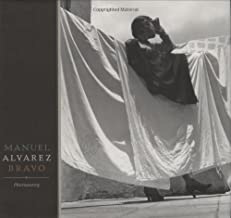
Hardcover. NY, Aperture, 1st, 1997, Book: Very Good, Dust Jacket: Very Good, Hardcover in a bright, price-clipped dust jacket. Published simultaneously with a major exhibition of Alvarez Bravo's work at the Museum of Modern Art, NYC, this is a nice survey of the photographer's work. Photographs by Manuel Alvarez Bravo; essay by Frederick Kaufman. 80 pages; 62 duo-toned b&w plates + 6 text illustrations. Clean copy.
Hardcover. San Francisco, Chronicle Books, 1st, 2008, Book: Very Good, Dust Jacket: Very Good, Hardcover, 336 pages. Manuel Alvarez Bravo was one of the foremost practitioners of visual arts in the twentieth century. Manuel Alvarez Bravo, the first major retrospective of his eighty-year career, showcases hundreds of iconic photographs and unveils more than twenty previously unpublished images. Featuring landscapes, still lifes, rural and urban scenes, religious and vernacular subjects, as well as portraits of luminaries such as Diego Rivera, Frida Kahlo, Carlos Fuentes, and Octavio Paz, the work is chronologically arranged and richly varied. Three illuminating essays reveal the poetry of Bravo's photographsfrom his use of light and form to his fascination with dreams and his preoccupation with death. This definitive monograph is a powerful tribute to Mexico's most distinguished photographer.
Hardcover. Santa Monica CA, RoseGallery/DAP, 1st, 2007, Book: Very Good, Dust Jacket: None, Red and burgundy cloth boards with yellow stamped lettering. 144 pages. Color and b&w illustrations, portraits. Eyes in His Eyes reintroduces some of the artist's overlooked masterpieces, and reveals, for the first time, a broad selection of never-before-seen images from his private archives. In his 80-year career, Alvarez Bravo printed, published and exhibited only a thousand images. This portfolio, culled with the help of the artist himself, and completed after his death, is full of unfamiliar abstractions, portraits, landscapes and street photography.
Hardcover. New Haven CT, Yale University Press, reprint, 2004, Book: Very Good, Dust Jacket: Very Good, Hardcover, 208 pages. Between 1936 and 1941 Walker Evans and James Agee collaborated on one of the most provocative books in American literature, Let Us Now Praise Famous Men (1941). While at work on this book, the two also conceived another less well-known but equally important book project entitled Many Are Called. This three-year photographic study of subway passengers made with a hidden camera was first published in 1966, with an introduction written by Agee in 1940. Long out of print, Many Are Called is now being reissued with a new foreword and afterword and with exquisitely reproduced images from newly prepared digital scans. Many Are Called came to fruition at a slow pace. In 1938, Walker Evans began surreptitiously photographing people on the New York City subway. With his camera hidden in his coat--the lens peeking through a buttonhole--he captured the faces of riders hurtling through the dark tunnels, wrapped in their own private thoughts. By 1940-41, Evans had made over six hundred photographs and had begun to edit the series. The book remained unpublished until 1966 when The Museum of Modern Art mounted an exhibition of Evans's subway portraits.
Softcover. London, Black Dog Publishing, 1st, 2010, Book: Very Good, Dust Jacket: None, 192 pages. Softcover. Like new in publisher's shrink-wrap. Mapping the Invisible: EU-Roma Gypsies takes the reader on a visual journey across Europe with a focus on its fastest-growing ethnic minority: the Roma. This publication is the result of a unique partnership called EU-ROMA formed by a group of architects, designers and artists wishing to raise awareness to the diversity and richness of the Roma people. The book shows us the EU-ROMA projects conducted together with the gypsy communities in Romania, Greece, Italy and the UK.
Softcover. New York , Marvel Comics Group, 1st, 1985, Book: Very Good, Dust Jacket: None, Softcover, 62 pages illustrated in color by Bolton. Clean, bright copy.
Hardcover. London, Faber and Faber, 1st, 2013, Book: Very Good, Dust Jacket: Very Good, Unpaginated. Hardcover no dusk jacket issued. Color boards with black and white comics throughout. Light rubbing to rear board.
Hardcover. London, Faber and Faber, 1st, 2013, Book: Very Good, Dust Jacket: Very Good, Unpaginated. Hardcover no dusk jacket issued. Color boards with black and white comics throughout. Light rubbing to rear board. Marble Season is the semiautobiographical novel by the acclaimed cartoonist Gilbert Hernandez, author of the epic masterpiece Palomar and cocreator, with his brothers, Jaime and Mario, of the groundbreaking Love and Rockets comic book series. Marble Season is his first book with Drawn & Quarterly, and one of the most anticipated books of 2013. It tells the untold stories from the early years of these American comics legends, but also portrays the reality of life in a large family in suburban 1960s California. Pop-culture references-TV shows, comic books, and music-saturate this evocative story of a young family navigating cultural and neighborhood norms set against the golden age of the American dream and the silver age of comics. Middle child Huey stages Captain America plays and treasures his older brother's comic book collection almost as much as his approval. Marble Season subtly and deftly details how the innocent, joyfully creative play that children engage in (shooting marbles, backyard performances, and organizing treasure hunts) changes as they grow older and encounter name-calling naysayers, abusive bullies, and the value judgments of other kids. An all-ages story, Marble Season masterfully explores the redemptive and timeless power of storytelling and role play in childhood, making it a coming-of-age story that is as resonant with the children of today as with the children of the sixties.
Hardcover. Stanford CA, Stanford University Press, 1st, 2003, Book: Very Good, Dust Jacket: Very Good, Hardcover, 1056 pages, b&w illustrations. This work presents a biography of the artist Marc Chagall in dialogue with events and ideologies of his time. It encompasses different aspects of his life (1889-1985) including his roots in folk culture, his personal relationships and his interests.
Softcover. Paris, Musee D'art Moderne De La Ville De Paris, 1st, 1995, Book: Very Good, Dust Jacket: Very Good, 288 pages, illustrated in color and b&w, French text. Softcover exhibition catalog with dust jacket.
Softcover. Sarasota FL, John and Mable Ringling Museum of Art, 1st, 1980, Book: Very Good, Dust Jacket: None, Softcover. Non-Paginated. About 40 pages with 23 black & white illustrations. Some light spotting along top edge of front cover. Clean, tight copy.
Hardcover. New York, Flammarion, 1st, 2015, Book: Very Good, Dust Jacket: Very Good, 280 pages. Hardcover with dust jacket. A very clean copy still in publishers shrink-wrap, however shrink wrap has been torn at bottom edge for a remainder mark to bottom edge of textblock and a small tear near top edge. The first fashion monograph on Marcel Rochas, a key twentieth-century women's wear designer, written by his daughter. Fashion designer Marcel Rochas (1902-1955) made considerable and enduring contributions to the world of fashion; his legacy has inspired a range of contemporary designers. In this lavish monograph, his daughter, Sophie Rochas, provides an intimate first-hand account that includes her childhood memories and rare access to the family's private archives. She provides insight into her father's talents as an innovative designer, communications genius, revered socialite, attentive father, and demanding husband, as well as the style influences that inspired him.
Hardcover. New Haven CT, Yale University Press, 1st, 2022, Book: Very Good, Hardcover, pictorial boards, Photographer Marcia Resnick (b. 1950) earned recognition as part of the legendary Downtown New York art scene of the 1970s and 1980s. Her portraits of the era's major cultural figures, such as Jean-Michel Basquiat, John Belushi, and Susan Sontag, have contributed to the scene's mythic status. Against this backdrop, Resnick also produced a significant body of work that engaged with the history of art, took a humorous approach to conceptual art and feminism, and proposed new ideas for what photography could be. Spanning the artist's career, this richly illustrated volume explores Resnick's early influences and education at Cooper Union and CalArts; discusses her series and photobooks such as See and Re-visions; and situates the artist's work within the history of contemporary art. An afterword by Laurie Anderson speaks to the very personal vision of Resnick's photography. Still in publisher's shrinkwrap.
Hardcover. New York, Harper Collins, 1st, 2001, Book: Very Good, Dust Jacket: Very Good, Non-paginated. Hardcover with dust jacket. Color illustrations by Vermont folk art artist, Warren Kimble. Clean, tight copy.
Hardcover. New York, Harper Collins, 1st, 2001, Book: Very Good, Dust Jacket: Very Good, Non-paginated. Hardcover with dust jacket. Color illustrations by Vermont folk art artist, Warren Kimble. Clean, tight copy.
Hardcover. New York, D.A.P.//La Fabrica , 1st, 2013, Book: Very Good, Dust Jacket: Very Good, Hardcover, 192 pages. Like new in publisher's shrink-wrap. America's first female war correspondent, Margaret Bourke-White was also something of a media star, with the portrait of her decked out in flying gear, camera in hand, about to set off on a bombing raid, being a favorite pin-up among U.S. forces. Focusing on the work Bourke-White made in the 1930s and 40s in Czechoslovakia, Germany, Italy, the Soviet Union and the U.K., Moments in History presents 150 classic photographs alongside revelatory extracts from letters and publications in periodicals. Bourke-White traveled to the USSR when the first Five-Year Plan was being implemented; she documented the German invasion of the Soviet Union in 1941, and the Allied bombing of Germany. In the summer of 1945 she was commissioned by Life to make a photographic record of the destroyed German cities. She was present at the liberation of the Buchenwald concentration camp and the Leipzig-Thekla forced labor camp. She recorded the partition of India and the Korean War, and one of her most famous pictures of this period is "Gandhi," which shows the subject at his spinning wheel. Also included in the catalogue are some of the word-picture sequences Bourke-White did for Fortune and Life, as well as extracts from her correspondence with personalities from the worlds of politics and culture, such as Winston Churchill and Georgia O'Keeffe. Bourke-White wanted to be the "eyes of the age," and her pictures testify to (as she put it) her "unquenchable desire to be present when history is being made."
Hardcover. Bloomington, IN, Indiana University Press, 1st, 2016, Book: Very Good, Dust Jacket: Very Good, 152 pages. Hardcover with dust jacket. A very clean, unmarked copy with only minor wear to dust jacket edges. A tight copy. As a photographer for Life and Fortune magazines, Margaret Bourke-White traveled to Russia in the 1930s, photographed the Nazi takeover of Czechoslovakia in 1938, and recorded the liberation of Buchenwald at the end of WWII. In 1949, Life sent her to South Africa to take photographs in a country that was becoming racially polarized by white minority rule. Life published two photo-essays highlighting Bourke-White's photographs, but much of her South African work remained unpublished until now. Here, these stunning photographs collected by Alex Lichtenstein and Rick Halpern offer an unparalleled visual record of white domination in South Africa during the early days of apartheid. In addition to these powerful and historically significant photographs, Lichtenstein and Halpern include two essays that explore Bourke-White's artistic and political formation and provide background material about the cultural, political, and economic circumstances that produced the rise and triumph of Afrikaner nationalism in South Africa. This richly illustrated book brings to light a large body of photography from a major American photographer and offers a compelling history of a reprehensible system of racial conflict and social control that Bourke-White took such pains to document.
Hardcover. NY, Oxford University Press, 1st, 1992, Book: Very Good, Dust Jacket: Very Good, Hardcover in a bright dust jacket, 423 pages. INSCRIBED BY CAPPER on front fly leaf with presentation bookplate opposite on inside front cover. With this first volume of a two-part biography of the Transcendentalist critic and feminist leader, Margaret Fuller, Capper has launched the premier modern biography of early America's best-known intellectual woman. Based on a thorough examination of all the firsthand sources, many of them never before used, this volume is filled with original portraits of Fuller's numerous friends and colleagues and the influential movements that enveloped them. Writing with a strong narrative sweep, Capper focuses on the central problem of Fuller's life--her identity as a female intellectual--and presents the first biography of Fuller to do full justice to its engrossing subject. This first volume chronicles Fuller's "private years": her gradual, tangled, but fascinating emergence out of the "private" life of family, study, Boston-Cambridge socializing, and anonymous magazine-writing, to the beginnings of her rebirth as antebellum America's female prophet-critic. Capper's biography is at once an evocative portrayal of an extraordinary woman and a comprehensive study of an avant-garde American intellectual type at the beginning of its first creation.
Hardcover. Montreal/NY, Drawn and Quarterly, 1st, 2019, Book: Very Good, Dust Jacket: None, Hardcover, illustrated boards, unpaginated. Lulu Moppet is an outspoken and brazen young girl who doesn't follow any rules. A reissue series of Lulu's suburban hijinks: she goes on picnics, babysits, and attempts to break into the boys' clubhouse again and again. The cartoonist John Stanley's expert timing and constant gags made these stories unbelievably enjoyable, which made Marge's Little Lulu a defining comic of the postwar period. First released in the 1940s and 1950s as Dell comics, Little Lulu as helmed by Stanley remains one of the most entertaining works in the medium.
Hardcover. NY, W. W. Norton/ Santa Barbara Museum of Art, 1st, 2001, Book: Very Good, Dust Jacket: Very Good, Hardcover, 153 pages, b&w illustrations. "Mather and Weston first met in Los Angeles in 1913. They soon developed a close relationship, eventually working together as full-fledged artistic partners and even co-signing the photographs they produced. Weston was also madly in love with Mather, and the two engaged in an affair during his first marriage, even though Mather was more interested in women. This book which features art by both artists, chronicles their twelve-year association and sheds light on Mather, whose artistry, sexual identity, and mysterious past have been overshadowed by the massive reputation of Edward Weston and his subsequent association with Tina Modotti."
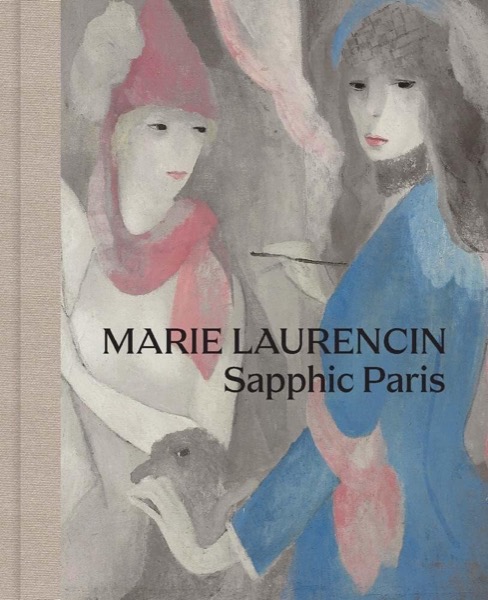
Hardcover. New Haven CT, Yale University Press/Barnes Foundation, 1st, 2023, Book: Very Good, Dust Jacket: None, Hardcover, pictorial boards with a white cloth spine. This book offers a long-overdue reassessment of the career of the Parisian-born artist Marie Laurencin (1883-1956), who moved seamlessly between the Cubist avant-garde and lesbian literary and artistic circles, as well as the realms fashion, ballet, and decorative arts. Critical essays explore her early experiments with Cubism; her exile in Spain during World War I; her collaborative projects with major figures of her time such as Andre Mare, Serge Diaghilev, Francis Poulenc, and Andre Groult; and her role in the emergence of a "Sapphic modernity" in Paris in the 1920s. Along with more than 60 full-color plates, Laurencin's life and career are documented through an illustrated chronology and exhibition history, as well as an appendix charting her network of female patrons and associates. Laurencin became a fixture of the contemporary art scene in pre-World War I Paris, including as a muse and romantic partner of the poet Guillaume Apollinaire. She returned to the city after the war, having developed her signature style of diaphanous female figures in a blue-rose-gray palette. Laurencin's feminine yet sexually fluid aesthetic defined 1920s Paris, and her work as an artist and designer met with high demand, with commissions by Ballets Russes and Coco Chanel, among others. Her romantic relationships with women inspired homoerotic paintings that visualized the modern Sapphism of contemporary lesbian writers like Nathalie Clifford Barney. Indeed, one of Laurencin's final projects was to illustrate the poems of Sappho in 1950.
Hardcover. Ostfildern, Hatje Cantz, 1st, 2007, Book: Very Good, Dust Jacket: None, Hardcover in a white cardboard slipcase, 352 pages. One of the best-known Japanese artists of the international scene, Mariko Mori, born in 1967 in Tokyo, envisions fantastical worlds and beings in spectacular photographs and videos--frequently casting herself amid these scenarios as a Bjork-esque avatar in biomorphic and technological symbiosis. Mori studied fashion design in Tokyo, worked briefly as a model and later studied fine art in England, and this early education is visible in her elaborately produced photographs, videos and sculpture that are as reminiscent of Hollywood as they are of contemporary art. Her recent work involves exotic landscapes, computer-generated images and choreographed performances for which the artist designs her own costumes and plays the central characters.This extraordinary and substantial publication offers a retrospective of Mori's entire oeuvre, and is the first to present the complete Beginning of the End: Past, Present, Future, a photographic cycle produced over a period of 11 years, in which Mori presents herself as a time traveler in a plexiglass capsule at significant symbolic locations, from Giza to New York to Shanghai.
Hardcover. New York, St. Martin's Press, 2nd Printing, 1985, Book: Very Good, Dust Jacket: Very Good, Hardcover, 155 pages, large black & white photographs throughout. Minor dust jacket edge wear and fade, otherwise, very clean and tight copy.
Hardcover. NY, powerHouse, 1st, 2005, Book: Very Good, Dust Jacket: None, Hardcover, pictorial boards, 128 pages. During the early 80s, New York's Lower East Side was a hotbed of creative activity. Unknown artists were synthesizing the fertile ground at the legendary New York nightclubs Studio 54, the Mudd Club, Club 57, Palladium, and Danceteria while on their way to international fame and acclaim. Among those emerging were Madonna, Jean-Michel Basquiat, Grace Jones, Keith Haring, Kenny Scharf, Vincent Gallo, Anna Sui, Exene Cervenka, Kid Creole, and Diego Cortez. Maripol was part of a collective of artists, graffiti writers, street dancers, and performers who all thrived together in the explosive downtown eccentricity. As an image maker and stylist for Madonna during her "Like a Virgin" days, jewelry designer, art director, and producer Maripol relentlessly documented the movers and shakers of the early 80s scene through the lens of her instant Polaroid SX-70. Collected for the first time in Maripolarama, Maripol's photographs vividly depict the extraordinary personalities that inhabited the "forever" hip, arty Manhattan clubland during the post-punk era when hip hop was in its earliest stages and graffiti covered the landscape. Whether it's Andy Warhol, Debbie Harry, Basquiat, or Madonna modeling a bright pink wig, Maripolarama provides lively and inspiring insight into a time long gone.
Hardcover. Orleans MA, Lower Cape Publishing, 1st, 1996, Book: Very Good, Dust Jacket: None, Hardcover, dark blue cloth covered boards with bold gilt text on the spine and on the front board. A small quarto measuring 11 by 8 1/2 inches with map end sheets. 264 pages including an index. Illustrated throughout with hundreds of black and white photographs. SIGNED BY THE AUTHOR on the title page. Bright, clean copy.
Hardcover. New York, Norton, 1st, 1994, Book: Very Good, Dust Jacket: Very Good, Hardcover, 159 pages. Black & white photography by Marjorie Content. Marjorie Content, a well-bred, intelligent woman who moved in artistic circles that included Georgia O'Keeffe and Jean Toomer (her last and worst husband), produced a body of sensitive black-and-white photographs in the 1920s and 1930s that were little known then but may reach a wider audience now. Quasha gathers them and a biographical essay in a lovely, pocketable volume that is a pleasure for those weary from hefting usually much heavier photography tomes. The pictures themselves are of familiar, early modernist types: close-ups of calla lilies and other plants, head-only portraits, and city vignettes. Quasha writes, "The photographs will not change our sense of photographic history . . . [but] will add to our understanding of what photography is capable of, especially in the lyric mode." More interesting, perhaps, is that Content exemplifies the kind of woman (more common in the past) who gives of herself to others and doesn't take her own work seriously enough, in spite of which she left behind a few lovely things that photography collections will cherish.
Hardcover. US, Damiani, 1st, 2011, Book: Very Good, Dust Jacket: None, 300 pages. Hardcover with no dust jacket. Clean, unmarked copy with only minor wear to boards. Like new in publisher's shrink-wrap. One of the foremost fashion and magazine cover photographers of the past two decades, American photographer Mark Abrahams has straddled the gap between fashion and celebrity portraiture with guileless simplicity and exacting care. A self-taught photographer, Abrahams portrays his subjects with an introspective depth and candor. His subjects run the gamut of the A-list: Julianne Moore, George Clooney, James Franco, Dakota Fanning, Sean Diddy Combs, Ashley Olsen, Dennis Hopper, Lindsay Lohan, Larry Clark, Michelle Obama, Ed Ruscha, Philip Roth, Roberto Bolle, Evander Holyfield, Kate Winslet, Justin Timberlake, Tom Hanks, Rachel Weisz and countless others. This volume provides a dazzling parade of the glitterati under Abrahams' lens, devoid of affectation or artifice.
Hardcover. Berkeley CA, University of California Press, 1st, 2008, Book: Very Good, Dust Jacket: None, Hardcover, 287 pages. Pictorial boards, no dust jacket issued. This beautifully illustrated book-the definitive volume on American sculptor Mark di Suvero-features more than two hundred images of his most important works, interspersed with short texts by the artist and by other writers who have inspired his art-making practice, plus a contribution by Francois Barre. Humanist in approach and populist in sensibility, di Suvero's sculpture is accessible, inviting, and inclusive. Praised in particular for his monumental assemblages incorporating steel and wood, di Suvero emerged as a superstar in the 1960s. He was the first living artist to show his sculpture at the Tuileries Gardens, Paris, and the first honored with three major exhibitions at Storm King Art Center. His distinctive, bold pieces can be found in museums and public collections all over the world, and he continues to be the subject of numerous exhibitions both in the United States and in Europe. Mark di Suvero: Dreambook is a celebration of his artistic oeuvre and of his long, distinguished career.
Softcover. NY, Whitney Museum of American Art, 1st, 1975, Book: Very Good, Dust Jacket: None, Softcover exhibition catalog. 92 pages. B&W and color illustrations throughout. White pictorial front cover with slight wear to spine an soiling to covers. Frontispiece. Overall, a clean, tight copy.
Hardcover. London, Flame Tree Publishing, 1st, 2016, Book: Very Good, Dust Jacket: Very Good, 192 pages. Hardcover with dust jacket. Color photographs throughout. Only light edgewear. Matching laminated boards.
Hardcover. NY, Skira Rizzoli, 1st, 2012, Book: Very Good, Dust Jacket: Very Good, Hardcover, 176 pages. The first publication dedicated exclusively to Mark Rothko's art during the critical formative period of the 1940s. Examining the development and artistic exploration of one of the greatest artists of the twentieth century, this unprecedented volume presents the works of American artist Mark Rothko from the 1940s, a time when his most essential development as a painter occurred, dramatically and in a very compact space of time. During this period, Rothko moved from expressive figurative and surrealist canvases to more abstract multiform subjects and finally to his signature abstractions--luminous rectangles of color suspended in space. Richly illustrated with works by Rothko and his contemporaries, introduction by Todd Herman and essays by prominent Rothko scholars, this important new book deepens our understanding of Rothko's art during this vital period, and that of the mature works that emerged from it.
Softcover. New Haven CT, Yale University Press , reprint, 2016, Book: Very Good, Dust Jacket: None, Softcover, 281 pages. A fascinating exploration of the life and work of one of America's most famous and enigmatic postwar visual artists Mark Rothko, one of the greatest painters of the twentieth century. Clean copy.
Hardcover. New York, Citadel Press, 1st, 1960, Book: Very Good, Dust Jacket: Good, Hardcover, 296 pages, b&w photographs. Edgewear, rubbing to price-clipped dust jacket; in brodart. Else a very clean, tight copy.
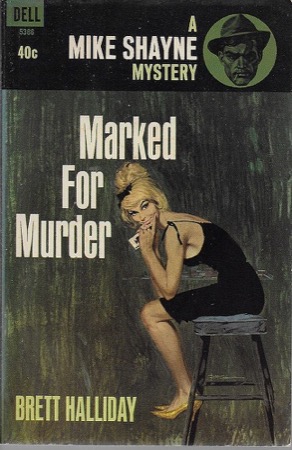
Softcover. New York, Dell Publishing, 1st, 1963, Book: Very Good, Dust Jacket: None, 192 pages. Paperback. Dell Book #5386. Minor wear to paper wrappers. Cover art by Robert Stanley. Light crease and fade to spine and front cover.
Hardcover. Montreal, Drawn and Quarterly, 1st, 2010, Book: Very Good, Dust Jacket: None, 96 pages, graphic novel in color. Life as seen through the eyes of an early-twentieth century Jewish rug maker.
Hardcover. New York, Lothrop, Lee and Shepard, 1st, 1996, Book: Very Good, Dust Jacket: Very Good, Hardcover with dust jacket. SIGNED BY LEWIN on title page. Brilliant water color illustrations by Lewin. Tight copy. Describes, with wonderful luminous visual detail, the characteristics of different markets in various parts of the world: Ecuador, Nepal, Ireland, Uganda, Morocco, and New York's Fulton Fish Market.
Hardcover. New York, Aperture/SADEV, 1st, 1986, Book: Very Good, Dust Jacket: Very Good, Hardcover, 104 pages, b&w photographs, small format catalogue with extensive notes. A fine copy in the illustrated dust jacket. Bridges made aerial photographs of the earthworks in Peru, Yucatan and Chiapas, and in the U.S. in California, Arizona, New Mexico, Mississippi, South Dakota, as well as France and England. Preface by Haven O'More. Essays by Maria Reiche, Charles Gallenkamp, Lucy Lippard, Keith Critchlow. Clean, bright in an unclipped dust jacket.
Softcover. New York , Abrams, 1st wraps, 1987, Book: Very Good, Dust Jacket: None, Softcover, 208 pages. Profusely illustrated in color and b&w. Published in conjunction with an exhibition held at the Houston Museum of Art. Clean, bright copy
Softcover. Hanover NH/ New York, Hood Museum of Art/Hudson Hills Press, 1st, 2005, Book: Very Good, Dust Jacket: None, Softcover, 282 pages. with 82 color plates and 270 halftones. Catalogue to accompany the centerpiece exhibition of a year-long celebration commemorating the Hood's 20th anniversary and its permanent collection. Thorough text accompanies each plate, and the essay material includes an overview of the collection. Clean, like new. DOMESTIC SHIPPIG ONLY.
Hardcover. NY, Phaidon Press, 1st, 2013, Book: Very Good, Dust Jacket: Very Good, Hardcover in a bright dust jacket, 192 pages, illustrated in color and b&w. Marlon Brando (1924-2004) is an icon in the history of American cinema. When he passed away in 2004, The New York Times remember 'the rebellious prodigy who electrified a generation and forever transformed the art of screen acting... a truly revoluntionary presence.' From his beginnings in A Streetcar Named Desire (1951) to his mythic performances The Godfather (1972) and Apocalypse Now (1979), Brando, who worked with such famous film stars as Elizabeth Taylor and Al Pacino, and such leading directors as Elia Kazan, John Huston and Francis Ford Coppola, has become a benchmark for other actors. Clean copy.
Hardcover. Boston, James R. Osgood and Company, 1885, Book: Very Good, Dust Jacket: None, Hardcover, mustard cloth boards stamped on front and spine with a black and gilt design. 288 pages with b&w engraved illustrations. Artists include Frank Merrill, Henry Fenn, A.R. Waud, A.B. Shute, E.H. Garrett. others. All edges gilt. Hinges cracked. Otherwise a clean, bright copy.
Hardcover. Paris, Arthaud, 1st, 1966, Book: Very Good, Dust Jacket: Very Good, Hardcover in a bright, lightly edgeworn dust jacket. A photographic study of Morocco and it's people. Gravure photos, mostly b&w, some color. TEXT IN FRENCH. Name on front fly leaf, otherwise clean.
Hardcover. Los Angeles, J. Paul Getty Museum, 1st Thus, 2002, Book: Very Good, Dust Jacket: Very Good, 237 pages. Hardcover. Illustrated with full color and black & white photographs. Clean, tight copy. PLEASE NOTE: DUE TO WEIGHT, DOMESTIC SHIPPING ONLY.
Hardcover. New Haven CT, Yale University Press, 2007, Book: Very Good, Dust Jacket: Very Good, Hardcover, 208 pages, color plates. Considered to be among the greatest early American modernists, the painter Marsden Hartley (1877-1943) traveled the United States and Europe in his search for a distinctive American aesthetic. His stay in New Mexico resulted in an extraordinary series of landscape paintings--created in New Mexico, New York, and Europe between 1918 and 1924--that show an evolution in style and thinking that is important for understanding both Hartley's oeuvre and American modernism in the postwar years. Marsden Hartley and the West examines this pivotal stage of the painter's career, drawing upon his writings and providing illustrations of rarely seen and previously unpublished works. The author considers Hartley's involvement with the Stieglitz circle and its "soil-and-spirit" philosophy, the Taos art colony, New York Dada, and the impact of historical events such as World War I. Within this setting she analyzes the pastels and oil paintings that suggest Hartley's increasingly ambivalent response to the land. Beginning with optimistic, naturalistic views, the New Mexico works grew progressively darker and more tumultuous, increasingly reflecting a sense of loss brought on by war. The paintings become a site where the landscapes of memory, self, and nation merge, while reflecting broader modernist debates about "American-ness" and a usable past.
Softcover. New York, Whitney Museum & University of New York Press, 1st, 1980, Book: Very Good, Dust Jacket: None, Softcover, 224 pages illustrated throughout with plates in color and b&w. White pictorial stiff wrappers with light wear and some yellowing to back cover, else a very nice, tight, clean copy.
Softcover. Hartford CT, Wadsworth Atheneum Museum of Art/ Yale University, 1st, 2003, Book: Very Good, Dust Jacket: None, Softcover, 334 pages, 106 full-page color plates. Issued in conjunction with 2003-2004 exhibitions featuring work by American modernist Marsden Hartley (1877-1943). Gathers together the most recent scholarship on Hartley's work. Includes a chronology of his life, with a full catalogue entry accompanying each painting. With essays by Elizabeth Mankin Kornhauser, Amy Eillis, Patricia McDonnell, Wanda M. Corn, Jonathan Weinberg, Bruce Robertson, Donna M. Cassidy, Randall R. Griffey, Carol Troyen, Stephen Kornhauser, and Ulrich Birkmaier. Clean copy.
Hardcover. NY, Abbeville Press, 1st, 1988, Book: Very Good, Dust Jacket: Very Good, Hardcover in a bright dust jacket, 10 x 12". 187 pages. 77 b&w, 77 color plates. The major monograph on American modernist Marsden Hartley (1877-1943). In addition to insightful and sensitive text, there is included a chronology, index, list of exhibitions, collections and selected bibliography. Wonderful color plates. Clean copy.
Hardcover. New York, Alfred A. Knopf, 1st, 1966, Book: Very Good, Dust Jacket: Good, Hardcover, 179 pages, with photographs throughout by Martha Swope. Minor dust jacket edge wear and rub, otherwise, very clean and tight copy.


 "Manuel Alvarez Bravo: Photographs and Memories (Aperture 147) by: Manuel Alvarez Bravo; Frederick Kaufman (essay)")




 "Many Worlds of Arshile Gorky, Theby: Mooradian, Karlen")



 "Marc Chagall and His Times: A Documentary Narrativeby: Harshav, Benjamin")

 "Marca-Relliby: Varian, Elayne H./Dr. Henry R. Hope/Minerva Wagner/Wayne Manly/Jan Silberstein")

 "Marcia Resnick: As It Is or Could Be by: Resnick, Marcia")





 "Marge's Little Lulu - Working Girlby: Stanley, John")


 "MARILYN, MON AMOUR: The private album of Andre de Dienes, her preferred photographerby: Dienes, Andre de (Photographer)")
 "Maripolaramaby: Anna Sui (Author), Glenn O'Brien (Author, Introduction), Diego Cortez (Author, Afterword)")


 "Marjorie Content - Photographsby: Quasha, Jill")

 "Mark di Suvero: Dreambookby: Suvero/Francois Barr")
 "Mark di Suveroby: Monte, James K.")





 "Market! (SIGNED COPY)by: Lewin, Ted")


 "Marks of Achievement - Four Centuries of American Presentation Silverby: Warren David B.; Howe Katherine S.; Brown Michael K.")



 "Marsden Hartleyby: Haskell, Barbara")

 "Marsden Hartleyby: Scott, Gail R.")


