Softcover. The Norton Gallery of Art, 1st, 1986, Book: Very Good, Dust Jacket: None, Softcover, 122 pages illustrated in color and b&w. Here the Norton Gallery of Arts Museum shows the exhibition of works by the distinguished Norwegian painter and printmaker Edvard Munch. For him, art must do nothing less than reveal the essential human condition. Having emerged as an accomplished Naturialist painter in the 1880s, he rejected Naturalism in his artistic manifesto of 1889-90. He began to paint images reflecting the stormy human psyche, and arranged his paintings into friezes to better communicate their meaning. At his death in 1944, his legacy included several thousand oil prints, reams of drawings, literary fragments, photographs and sculpture. Light sticker residue to front cover otherwise clean and bright.
Hardcover. New York, The Museum of Modern Art, 1st, 2006, Book: Very Good, Dust Jacket: Very Good, 256 pages. Hardcover with dust jacket. Very clean, unmarked copy with only minor dust jacket wear. Very light yellow fading to textblock edges. Otherwise a tight copy. 250 illustrations, 207 in color, 43 black & white.
Hardcover. New York, Schocken Books, 1st, 1980, Book: Very Good, Dust Jacket: Very Good, Hardcover, 191 pages. Color and black & white illustrations by Edward Ardizzone. Dust jacket has light edgewear.
Hardcover. New York, Schocken Books, 1st, 1980, Book: Very Good, Dust Jacket: Very Good, Hardcover, 191 pages. Color and black & white illustrations by Edward Ardizzone. Dust jacket has light edgewear. Previous owner's bookplate inside front cover, otherwise clean.
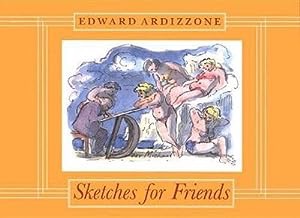
Hardcover. Boston, David R. Godine, 1st US, 2002, Book: Very Good, Dust Jacket: None, Hardcover, oblong volume, 128 pages. The much-admired English artist enjoyed adding artistic touches to letters he sent to friends, and this collection displays some of these delightful drawings. With examples throughout in color and black and white, as well as at endpapers. No dj issued, clean copy.
Hardcover. Boston, David R. Godine, 1st US, 2002, Book: Very Good, Dust Jacket: None, Hardcover, oblong volume, 128 pages. The much-admired English artist enjoyed adding artistic touches to letters he sent to friends, and this collection displays some of these delightful drawings. With examples throughout in color and black and white, as well as at endpapers. No dj issued, clean copy.
Hardcover. Garden City, N.Y., Doubleday and Co., 1st, 1974, Book: Very Good, Dust Jacket: Very Good, 189 pages. Hardcover with dust jacket. 1st edition after limited edition. Illustrated in color and b&w. Cloth covers with gilt lettering. In a bright, price-clipped dust jackey.
Hardcover. Garden City, N.Y., Doubleday and Co., 1st, 1974, Book: Very Good, Dust Jacket: Very Good, 189 pages. Hardcover with dust jacket. 1st edition after limited edition. Black and white pictures, some in color. Cloth covers with gilt lettering. Edge wear and fraying to top of dust jacket spine, small closed tear to back dust jacket. Remainder spray on bottom edge page block.
Hardcover. New York, Abbeville Press, 1st, 1985, Book: Near Fine, Dust Jacket: Near Fine, 276 pages illustrated throughout in color and b&w. Gray cloth with dark green title to spine. Pictorial dust jacket. Beautiful copy. Like new. Edward Hicks (1780-1849), itinerant Quaker preacher and painter of coaches, signs and his own pictures, viewed Paine and Spinoza as devils, considered slavery a moral but not a political issue, and abhorred the temperance movement. When not torturing himself with guilt for being an artist or for leaving his wife and children in order to preach, he produced some masterpiecesnotably The Peaceable Kingdom, whose 50 or so variants dramatize Isaiah's biblical prophecies. Fifty color plates and 100 halftones show Hicks's folk renditions of William Penn, Noah's ark, David and Jonathan, along with his pastoral landscapes.
Hardcover. New York, Norton/Whitney Museum, 1st, 1979, Book: Very Good, Dust Jacket: Very Good, Hardcover, SIGNED BY LEVIN on title page. 506 illustrations in color and b&w of Hopper's commercial work. In a brght, unclipped dust jacket.
Softcover. New York, W. W. Norton, 1st, 1979, Book: Very Good, Dust Jacket: None, 509 pages. Softcover with minor wear to edges. Otherwise clean, unmarked copy. Color and black & white images throughout. Heavily illustrated throughout. Chapters explore Edward Hopper's career as an illustrator and his mature style. Much of the catalogue comprised of color plates. Includes magazine covers, short story illustrations and advertisements. xii, 54 pages plus 110 leaves of plates.
Hardcover. NY, Henry Holt and Co. , 1st, 2014, Book: Very Good, Dust Jacket: Very Good, SIGNED BY AUTHOR AND ILLUSTRATOR on half title page. Light edgewear to dust jacket, else a clean, tight copy. As a boy, Edward Hopper knew exactly what he wanted to be when he grew up: on the cover of his pencil box, he wrote the words EDWARD HOPPER, WOULD-BE ARTIST. He traveled to New York and to Paris to hone his craft. And even though no one wanted to buy his paintings for a long time, he never stopped believing in his dream to be an artist. He was fascinated with painting light and shadow and his works explore this challenge. In this striking picture book biography, Robert Burleigh and Wendell Minor invite young readers into the world of a truly special American painter (most celebrated for his paintings "Nighthawks" and "Gas").
Hardcover. NY, Rizzoli, Revised Ed., 2007, Book: Very Good, Dust Jacket: None, Hardcover, 777 pages. In the art of Edward Hopper (1882-1967), tense, unhappy men and women, in whom we recognize something of our neighbors and ourselves, play out mysterious dramas in silent, stripped-down spaces - stages raked by an unrelenting and revealing light. These paintings, and Hopper's equally evocative landscapes and houses, make us wonder: what kind of man had this haunting vision, and what kind of life engendered this art? No one is better qualified to answer these questions than the art historian Gail Levin, author of the major studies of Hopper's work (including the catalogue raisonne) and curator of many exhibitions that explored his development and cultural context. Delving deeply into his art and into a rich archive of unpublished letters and diaries, she now constructs "An Intimate Biography, " which reveals the true nature and personality of the man himself - and of the woman who shared his life and helped to shape his art. Jo Hopper's diaries permit an intimate look at the interactions of an indissolubly bonded couple, revealing for the first time the personal tensions that lie behind some of Hopper's most haunting works. Lacks dust jacket but a clean, bright copy.
Softcover. NY, Christie's, 2013, Book: Very Good, Dust Jacket: None, Softcover, illustrated wraps, 34 pages. BW & color illus. Issued in conjunction with an auction of Edward Hopper's painting "Blackwell's Island." Offers historical background with substantial text and archival and contemporary photographs Includes related works by fellow artists Robert Henri, Georgia O'Keeffe, George Wesley Bellows, and additional paintings by Hopper. Clean, bright copy.
Softcover. NY, Hirschl & Adler Galleries, 1st, 1987, Book: Very Good, Dust Jacket: None, Softcover, 40 pages illustrated in color and b&w. 6 color, 32 b&w plates, frontispiece. Showcases select artwork by Edward Hopper. With an essay by Douglas Dreishpoon. Many of these works were included in a traveling exhibition entitled "Edward Hopper: The Early Years", and held Mar. 14 to Apr. 18, 1987. The exhibition checklist cites 81 pieces, and about 40 are shown here. Clean copy.
Softcover. NY, Hirschl & Adler Galleries, 1st, 1988, Book: Very Good, Dust Jacket: None, Softcover, 60 pages, 67 illustrations (13 color). Catalogue of 106 paintings, watercolors, etchings and drawings, with notes on selected works. Essay by Peter Schjeldahl. Includes a collection of drawings, forming the basis of the exhibition, bequeathed by the artist's widow Jo Hopper to her friend Mrs. Mary R. Schiffenhaus. Clean, bright copy.
Hardcover. NY, W.W Norton/Whitney Museum, 7th pr., Book: Very Good, Dust Jacket: Very Good, Hardcover in a bright, unclipped dust jacket. Hopper is generally considered the major twentieth-century realist. Such paintings as House by the Railroad, Early Sunday Morning, and Nighthawks seem to embody the very character of our time. Yet few people have penetrated the mask of Hopper's public image. Here, Gail Levin has gone beyond the standard evaluations of the man and his work to investigate the authentic identity of the artist and the way his personality informed his art. She has uncovered aspects of Hopper's life (and even unknown works) that provide the first comprehensive view of the artists early development. The fascinating and often poignant story of Hopper's long struggle for recognition gives new insight into his later pessimism. A complex man is revealed, introspective and intellectual, yet romantic, illuminating the many levels of meaning in the paintings of his maturity. In addition to Hopper's watercolors and oil paintings, there are study drawings for his major works and documentary photographs illuminating all phases of his life. 280 color and 220 black-and-white illustrations.
Hardcover. New York, Harry N Abrams, 1st, 1989, Book: Very Good, Dust Jacket: Very Good, Oversize, heavy hardcover. 306 pages, b&w illustrations, color tipped-in plates. Light edge wear, rubbing to dust jacket. Foxing to fly leaves and bottom edge. Small stain on top edge. Else a very clean, tight copy.
Hardcover. New York, Harry N. Abrams, 1st, 1975, Book: Very Good, Dust Jacket: Very Good, 306 pages. Green cloth hardcover with gilt illustration of lighthouse on front cover and gilt lettering on spine. In a lightly worn dust jacket. Green endpapers and color frontispiece. Edited by Milton S. Fox, book design by Nai Y. Chang. Numerous b/w and color plates (246 reproductions of Hopper's work, 88 in full color).
Hardcover. Cambridge, Belknap/Harvard University Press, 1st, 1967, Book: Very Good, Dust Jacket: Very Good, 109 pages. INSCRIBED BY AUTHOR on front endpaper. Illustrated with black & white reproductions of drawings and paintings by Edward Lear. Dust jacket has small closed tear on front bottom edge. Dust jacket protected with clear plastic cover. Clean, tight copy.
Hardcover. Berkeley, University of California Press, 1st, 1990, Book: Very Good, Dust Jacket: Very Good, Hardcover in a bright dust jacket, 480 pages. Although he is referred to as a "genius" more often than any other scholar of his period, Edward Sapir has received no full-scale biography since his death in 1939. At long last, Regna Darnell provides a comprehensive assessment of the life, ideas, and wide-ranging interests of this remarkable man. Sapir, the foremost linguist and anthropologist of his generation, contributed substantially to the professionalization of linguistics as an independent discipline. He was the first to apply comparative Indo-European methods to the study of American Indian languages, on which he conducted extensive fieldwork. His theoretical work on the relationship of the individual personality to culture remains fundamental to culture theory in anthropology, as does his insistence on the symbolic nature of culture and the importance of culture as understood by its members, in their own words.Sapir became the first professional anthropologist in Canada and teacher of a whole generation of linguists and anthropologists at Chicago and Yale. Holding to a humanistic view of anthropology (his own work included poetry and literary criticism), he was the most articulate spokesman for the interdisciplinary social science of the late 1920s and 1930s. In both linguistics and anthropology Sapir is a revered master whose ideas continue to inspire discussion and research. A sixteen-volume Collected Works is now in progress. Clean copy.
Hardcover. Alabama, University of Alabama Press, 1st, 1974, Book: Very Good, Dust Jacket: Very Good, 365 pages. Hardcover. Southern Historical Publications No.18. Dust cover front flap price clipped. Just a bit of age wear to dust cover, but completely whole, no rips or tears (covered in plastic). Vary clean inside. "Edward Stanley was light of frame but fearless, and his aggressive electioneering and, in Congress, his temper and sarcasm brought him more than once to the verge of duels, won him the nickname "Little Conqueror," and led John Quincy Adams to call him "the terror of the Lucifer party"."
Hardcover. New York, W. W. Norton & Company, 1st, 2008, Book: Very Good, Dust Jacket: Very Good, Hardcover, 288 pages, 242 photographs reproduced in four-color process. Like new in publishers shrink-wrap. Edward Steichen was already a famous painter and photographer in America and abroad when, in early 1923, he was offered the most prestigious position in photography's commercial domain: that of chief photographer for Vogue and Vanity Fair. Over the next fifteen years, he would produce a body of work of unequaled brilliance, dramatizing and glamorizing contemporary culture and its achievers. Here are icon images of Gloria Swanson, Gary Cooper, Greta Garbo, and Charles Chaplin, as well as numerous other celebrities drawn from an archive of more than 2,000 original prints.
Hardcover. Oxford UK, Clio Press, 1st, 1996, Book: Very Good, Dust Jacket: Very Good, Hardcover in a bright dust jacket, maroon boards with gilt lettering along spine. Binding and hinges tight and square. 1996 publication, in like-new condition with no wear or distress. 202 pages including extensive bibliography; has black & white illustrations. A collection of writings by and about American photographer Steichen (1879-1973) who set new standards for advertising photography, helped pioneer aerial reconnaissance during the First World War and photography as a tool of propaganda during the Second, and served as the first Director of the Department of Photography at the Museum of Modern Art in New York.
Softcover. Dayton OH, The Dayton Art Institute, 1st pbk, 2004, Book: Very Good, Dust Jacket: None, Softcover, measures 12" X 12" - 342 pages, with 90 B&W, toned, and 10 color plates, plus text illustrations. Clean copy. DOMESTIC SHIPPING ONLY.
Hardcover. New York , Aperture, 1st, 1973, Book: Very Good, Dust Jacket: Very Good, 284 pages, beautifully reproduced plates of the photographer's work. Large format, dust jacket with a closed tear and sunning causing discoloration to spine and part of front panel. Otherwise clean.
Hardcover. NY, Merrell, 1st, 2017, Book: Very Good, Dust Jacket: Very Good, Hardcover, 160 pages. Over the course of his fifty-year career, American photographer Edward Weston (1886-1958) blazed a path into Photo-Modernism rendering portraits, landscapes, still-lifes and nudes. In 1902, a sixteen-year-old Weston took up photography in Highland Park, Illinois, where he worked as an amateur for five years. In 1907, at the age of twenty-one, Weston moved to Tropico, California, now the city of Glendale in Los Angeles County, where he constructed his first studio and set about with great purpose to become a photographic artist. Examining Weston's earliest sharp- and soft-focus photographs reveals that the young artist had already formed a perfect sense of composition that was to be the hallmark of his later work. Presenting Weston's earliest work from a recently discovered family album, Edward Weston: Portrait of the Young Man as an Artist compares the artist's naive first artistic efforts with his latest masterworks to show the persistence and evolution of his singular vision to find essential form in the vernacular with an ever-increasing intensity. As a young man deeply intuitive and original in his creative expression, Edward Weston demonstrates that his teenage work, beginning with his amateur snapshots, embrace the same significant form as the later work for which he is now considered a master.
Hardcover. New York, Knopf, 1st US, 2007, Book: Very Good, Dust Jacket: Very Good, Hardcover, 32 pages illustrated in color by Burningham. Dust jacket, very clean and tight copy. With a few words and clear, spacious line-and-watercolor pictures, award-winning British author-artist Burningham expresses a small child's rebellion against overwhelming grown-ups. Edwardo is sometimes a little untidy, cruel, clumsy, noisy, and rude. But when adults overreact and tell him he is the roughest and nastiest of boys, he becomes much, much worse. Then one day, completely by accident, he starts to make good things happen, and everyone loves him.
Softcover. London, Unicorn Press Ltd, 1st, 2015, Book: Very Good, Dust Jacket: None, 192 pages. Softcover. Very clean, unmarked copy with only minor edgewear. Over 100 drawings and paintings in black & white and color, many of which are published for the first time in this book.
Softcover. Northampton, Mass., Smith College Museum of Art, 1st, 1983, Book: Very Good, Dust Jacket: None, Softcover, 170 pages, b&w and color illustrations. Light edge wear, rubbing to wrappers. Else a clean, tight copy.
Hardcover. Washington DC, Anderson House, 1st, 1945, Book: Very Good, Dust Jacket: None, Hardcover, gray cloth with blue lettering, unpaginated (about 100 pages). B&w cartoons throughout. SIGNED WITH A COLOR ILLUSTRATION BY CHESNEY on the inside cover. Clean, square copy. Lacks dust jacket.
Softcover. London, Sotheby's, 1st, 2004, Book: Very Good, Dust Jacket: None, Softcover, cream wraps with color illustration; blue spine with white lettering. Unpaginated, approx 50 pages. 15 color plates and additional images, 1 fold-out. Auction catalogue for sale 21 June 2004. Lots 21-35, sale L04007.
Hardcover. Munich/NY, Prestel, 1st, 2014, Book: Very Good, Dust Jacket: Very Good, Hardcover in a bright dust jacket, 296 pages, color illustrations and portraits throughout. Issued in conjunction with a 2014-2015 exhibition of portraiture rendered by Austrian painter Egon Schiele (1890-1918). "Despite a career that lasted less than a decade, Schiele is considered one of the most important artists of the twentieth century. A protege of Gustav Klimt, Schiele is celebrated for his singular style of draftsmanship, unusual use of color, and physically raw, often sexually provocative depictions of his sitters. Schiele's expressive style and controversial subject matter played an important role in the advancement of modernism in Europe. ... Both the catalogue and the exhibition are divided into six groupings of the artist's work: Family and Academy; Fellow Artists; Sitters and Patrons; Eros; Lovers; and Self-Portraits and Allegorical Self-Portraits. In addition, there is a section highlighting a traumatic and pivotal period in Schiele's life: his arrest and imprisonment during the spring of 1912. The color plates document the evolution of the artist's style, both pre- and post-imprisonment. Schiele's untimely death at the age of 28 adds a mythic quality to his abbreviated career." (dj) With five thematic and illustrated essays, and many illustrations. Clean copy.
Hardcover. Cologne, Dumont Buchverlag, 1st, 1997, Book: Very Good, Dust Jacket: Very Good, Hardcover, 363 pages, illustrated throughout in color and b&w. Clean, unmarked copy with only minor wear to dust jacket. This volume provides an extensive survey of painting in Austria from 1900-1930, with Egon Schiele as the focal point, through a representative selection of over 100 works by Schiele and 23 of his contemporaries from the collection of Dr. Rudolf Leopold. Contributions by: Antonia Hoerschelmann, Rudolf Leopold, Klaus Albrecht Schroder, Harald Szeemann, and Patrick Werkner. 139 color plates and 59 b&w illustrations.
Hardcover. London, Grant Richards, 1st, 1909, Book: Good, Dust Jacket: None, Hardcover, green cloth stamped in white, 294 pages, illustrated with 32 b&w photos. Back hinge partially cracked, otherwise clean. Light fraying to spine cloth at top.
Hardcover. New York, Pantheon Books, 1st, 1948, Book: Very Good, Dust Jacket: None, 212 pages, hardcover. Egyptian Servant Statues. Volume XIII in the Bollingen Series. Illustrated with b&w plates. Rubbing and edgewear to spine, marking to rear panel. Bumping to corners. Fading to text block, all edges. Unmarked. A tight copy.
Hardcover. Boston, New York Graphic Society , 1st, 1977, Book: Very Good, Dust Jacket: Very Good, Hardcover in a bright, unclipped dust jacket. Folio, 160 pages illustrated with the plant paintings and drawings of Georg Dionysius Ehret. Clean copy.
Hardcover. NY, Scribner, 1st, 2012, Book: Very Good, Dust Jacket: Very Good, Hardcover in a bright, unclipped dust jacket. SIGNED BY OTTO on the title page. This captivating novel opens in 1917 as Cymbeline Kelley surveys the charred remains of her photography studio, destroyed in a fire started by a woman hired to help take care of the house while Cymbeline pursued her photography career. This tension-- between wanting and needing to be two places at once; between domestic duty and ambition; between public and private life; between what's seen and what's hidden from view--echoes in the stories of the other seven women in the book. Among them: Amadora Allesbury, who creates a world of color and whimsy in an attempt to recapture the joy lost to WWI; Clara Argento, who finds her voice working alongside socialist revolutionaries in Mexico; Lenny Van Pelt, a gorgeous model who feels more comfortable photographing the deserted towns of the French countryside after WWII than she does at a couture fashion shoot; and Miri Marx, who has traveled the world taking pictures, but also loves her quiet life as a wife and mother in her New York apartment. Crisscrossing the world and a century, Eight Girls Taking Pictures is an affecting meditation on the conflicts women face and the choices they make. These memorable characters seek extraordinary lives through their work, yet they also find meaning and reward in the ordinary tasks of motherhood, marriage, and domesticity. Most of all, this novel is a vivid portrait of women in love--in love with men, other women, children, their careers, beauty, and freedom.
Hardcover. NY, St. Martin's Press, 1st, 2005, Book: Very Good, Dust Jacket: Very Good, Hardcover in a bright, unclipped dust jacket. First edition first printing of the first novel by this author and the first novel in the Warren Ritter series. A strange thing was happening to Warren Ritter. He certainly didn't believe in the tarot. He was a businessman, setting up a folding table on a San Francisco street where a stream of passersby could bring him as much as a hundred dollars a day when the weather was right. But he was beginning to notice more and more that what he had learned to predict from his tarot cards seemed to be coming to pass with an unsettling regularity. It made him do odd things. Like stop teenage Heather Wellington's tarot at nine cards instead of ten. The first eight had been ominous, the ninth more upbeat, so Warren simply stopped the reading there. It was only after Heather had left that he looked at number ten-it was the Death card. Clean copy.
Hardcover. NY, G. P. Putnam"s Sons, 1st, 1981, Book: Very Good, Dust Jacket: Very Good, Hardcover, 220 pages, b&w photos. In a bright, unclipped dust jacket. "The romantic leading lady whose hands were smashed by a cane-wielding James Mason as she sat at the piano in the climactic scene of THE SEVENTH VEIL now draws back THE EIGHTH VEIL to reveal the intimate details of a life that has been rich in earthly and spiritual experience. With wit and candor, Ann Todd tells how she fought with her American discoverer, David O. Selznick, who said, 'I presume you have a bust -- show it.' She fell in love with co-star Gregory Peck, who referred to her as his 'bundle from Britain.' Alfred Hitchcock directed their love scenes in THE PARADINE CASE and the actress relates a hilarious 'casting couch' experience with Hitch that occurred at the Mark Hopkins Hotel. Especially provocative is Ann Todd's surprising account of what it was like to work with the great Vivien Leigh, with whom she co-starred in DUEL OF ANGELS. "
Hardcover. Taschen, reprint, 2007, Book: Very Good, Dust Jacket: Very Good, Hardcover, 160 pages. Though her work has often been overshadowed by that of her peers such as Le Corbusier and Marcel Breuer, Irish designer, lacquer-artist, and architect Eileen Gray (1878-1976) is now widely recognized as a designer of great talent and individuality. She first excelled in the exacting craft of lacquer, creating screens, panels, furniture, and objects of technical virtuosity and poetic strength. Eileen Gray then developed an interest in architecture, designing two houses, ?E-1027? (completed 1929) and ?Tempe a Pailla? (completed 1934) in the south of France, which are seminal examples of the spirit of the Modern movement. This book analyses and illustrates the full range of her furniture, interiors, and completed architectural projects. Reprint of the edition of 1993.
Hardcover. Taschen, reprint, 2007, Book: Very Good, Dust Jacket: Very Good, Hardcover, 160 pages. Though her work has often been overshadowed by that of her peers such as Le Corbusier and Marcel Breuer, Irish designer, lacquer-artist, and architect Eileen Gray (1878-1976) is now widely recognized as a designer of great talent and individuality. She first excelled in the exacting craft of lacquer, creating screens, panels, furniture, and objects of technical virtuosity and poetic strength. Eileen Gray then developed an interest in architecture, designing two houses, "E-1027" (completed 1929) and "Tempe a Pailla" (completed 1934) in the south of France, which are seminal examples of the spirit of the Modern movement. This book analyses and illustrates the full range of her furniture, interiors, and completed architectural projects. Reprint of the edition of 1993.
Hardcover. New York , Frederick A. Stokes, 1st, 1920, Book: Very Good, Dust Jacket: None, Hardcover, tan cloth covers with a color illustration on cover paste-down. Color frontispiece and 11 line illustrations by Stuart Hay. Clean, tight copy.
Hardcover. Princeton NJ, Princeton University Press, 2nd pr., 2013, Book: Very Good, Dust Jacket: Very Good, Hardcover in a bright dust jacket, 332 pages, b&w illustrations. Einstein and the Quantum reveals for the first time the full significance of Albert Einstein's contributions to quantum theory. Einstein famously rejected quantum mechanics, observing that God does not play dice. But, in fact, he thought more about the nature of atoms, molecules, and the emission and absorption of light-the core of what we now know as quantum theory-than he did about relativity. A compelling blend of physics, biography, and the history of science, Einstein and the Quantum shares the untold story of how Einstein-not Max Planck or Niels Bohr-was the driving force behind early quantum theory. It paints a vivid portrait of the iconic physicist as he grappled with the apparently contradictory nature of the atomic world, in which its invisible constituents defy the categories of classical physics, behaving simultaneously as both particle and wave. And it demonstrates how Einstein's later work on the emission and absorption of light, and on atomic gases, led directly to Erwin Schrodinger's breakthrough to the modern form of quantum mechanics. The book sheds light on why Einstein ultimately renounced his own brilliant work on quantum theory, due to his deep belief in science as something objective and eternal. Clean copy.
Hardcover. NY, Oxford University Press, 1st, 1994, Book: Very Good, Dust Jacket: Very Good, Hardcover in a bright, unclipped dust jacket. Pais turns his attention to the great physicist's life outside of science, with an informal, almost kalaidoscopic portrait of Einstein--his personal life and his public persona ("my mythical namesake who has made my life so burdensome"), his scientific contributions, and his thoughts on religion, philosophy, and politics, on Israel and Zionism, on the rise of Nazism and McCarthyism, and on much more. Pais offers a candid look at Einstein's troubled personal life--his two failed marriages, his first child Lieserl, who was born out of wedlock (and of whom all trace has vanished), his estranged son Hans Albert, also a scientist, who felt his father had abandoned the family, and his son Eduard, who gradually descended into madness. Of course, any book on Einstein must touch upon science, and Pais includes several illuminating chapters, one of which offers general readers an accessible explanation of relativity, and another traces the long road to Einstein's Nobel Prize (after being nominated almost every year from 1909 to 1920, he finally won in 1921--not for relativity, but for his work on the photoelectric effect). On the lighter side, Pais includes samples from Einstein's "curiosity file," in which he kept crank letters, marriage proposals, hate mail (one began "You are the prince of idiocy, the count of imbecility, the duke of cretinism, the baron of morons"), and the like. But the heart of the book is the final section, where Pais traces Einstein's life as seen through the media. Here we not only meet Einstein the living legend--receiving the keys to New York City from flamboyant Mayor Jimmy Walker, attending the Hollywood premier of City Lights with Charlie Chaplin--but also witness his extensive involvement in the issues of his day.
Hardcover. NY, Thames and Hudson , 1st, 2017, Book: Very Good, Hardcover, pictorial boards with a red cloth spine. Sergei Eisenstein is regarded as one of cinema's greatest revolutionaries; his use of montage, symbolic images and skilful editing transformed the possibilities of filmmaking and dramatically modernized the artform. Yet he was also a prolific graphic artist who sketched continuously throughout his life. This book chronicles his life and career. Num Pages: 320 pages, 500 color illustrations. Clean copy.
Softcover. Milwaukie OR, Dark Horse, 1st, 2005, Book: Very Good, Dust Jacket: None, 346 pages, trade paperback with french flaps. It would be hard to imagine any creators who have more greatly affected their chosen medium than Will Eisner and Frank Miller have influenced the world of comics and graphic novels. Often misunderstood, but enduringly enjoyed by people from all walks of life, the comic book has in recent years been recognized as a "legitimate" art form by cultural institutions ranging from Harvard University to the Smithsonian, from The New Yorker to the Art Institute of Chicago. Now, culture-curious readers and life-long fans of the comics medium are invited to read along as two of the medium's greatest contributors-legendary innovator and godfather of sequential art Will Eisner, and the modern master of cinematic comics storytelling, Frank Miller-discuss one on one in an intimate interview format, the ins-and-outs of this compelling and often controversial art form. Eisner/Miller is profusely illustrated and features rare, behind-the-scenes photos of Eisner, Miller, and other notable creators.
Softcover. Washington DC, The Corcoran Gallery Of Art, 1st, 2000, Book: Very Good, Dust Jacket: None, Softcover in stapled gray wraps 24 pages, color plates. Introduction by Paige Turner. Clean, like new exhibition catalog.

 "Edvard Munch: Mirror Reflections by: Patricia G. Berman")

 "Edward Ardizzone - Artist and Illustratorby: White, Gabriel")
 "Edward Ardizzone - Artist and Illustratorby: White, Gabriel")

 "Edward Borein, Cowboy Artist: The Life and Works of John Edward Borein, 1872-1945by: Davidson, Harold G.")
 "Edward Borein, Cowboy Artist: The Life and Works of John Edward Borein, 1872-1945by: Davidson, Harold G.")

 "Edward Hopper As Illustrator (SIGNED COPY)by: Levin, Gail")

 "Edward Hopper Paints His World (SIGNED COPY)by: Burleigh, Robert/Wendell Minor")
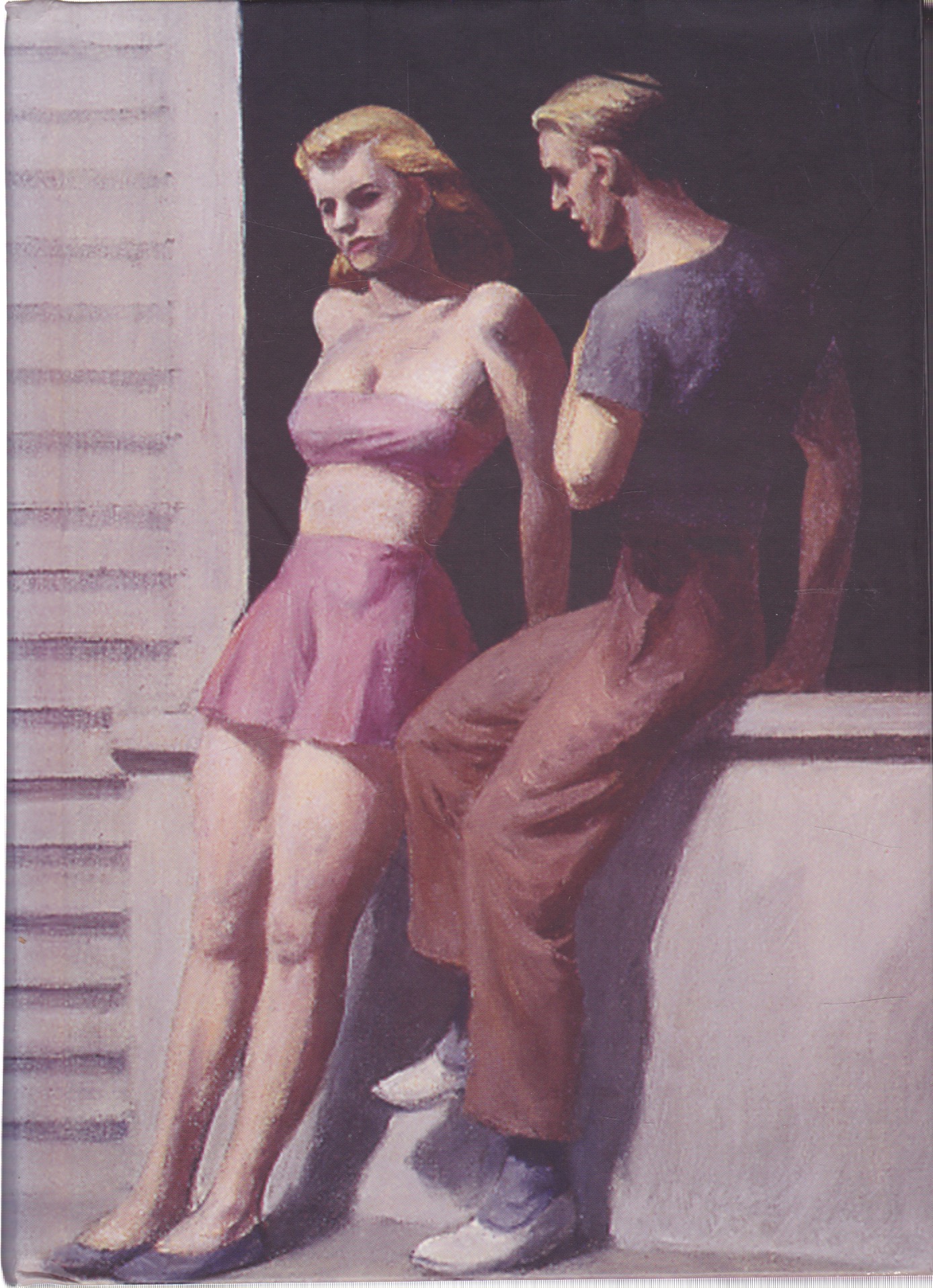

 "Edward Hopper: Early and Late: Drawings, Watercolors and Paintingsby: Edward Hopper")


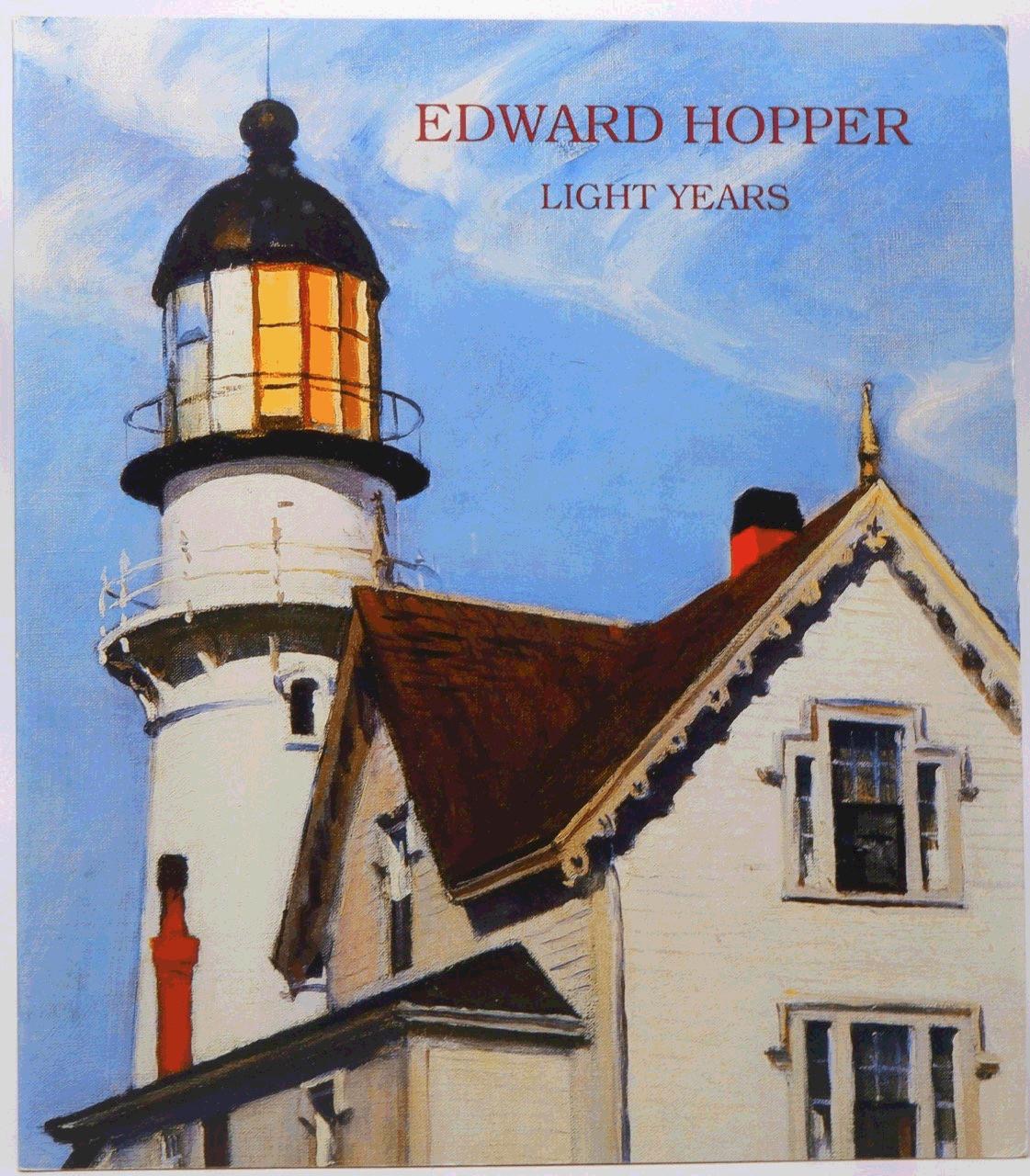
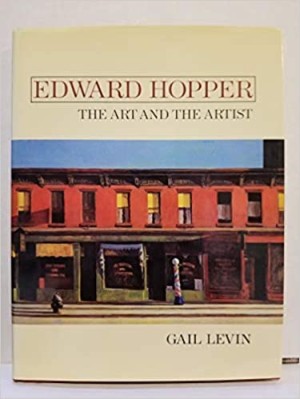

 "Edward Lear as a Landscape Draughtsman (SIGNED COPY)by: Hofer, Philip")


 "Edward Stanly: Whiggery's Tarheel \"Conqueror\"by: Brown, Norman D.")
 "Edward Steichen: In High Fashion - The Conde Nast Years, 1923-1937by: Ewing, William A.")
 "Edward Steichen: Selected texts and bibliography (World Photographers Reference) by: Ronald J. Gedrim")




 "Edwardo: The Horriblest Boy in the Whole Wide Worldby: Burningham, John")


 "Eggburt and other Navy Cartoons (SIGNED WITH ILLUSTRATION)by: Chesney, Earle D.")


 "Egon Schiele: Fifteen Works from a Private American Collection. June 21, 2004. Sale 7470 by: Sotheby's")
 "Egon Schiele: Portraitsby: Comini, Alessandra (editor) ; Ronald S. Lauder ; Renee Price ; et al.")


 "Ehret: Flower Painter Extraordinaryby: Calmann Gerta")

 "Eighth Veil, Theby: Todd, Ann")






 "Eisenstein on Paper: Graphic Works by the Master of Filmby: Kleiman, Naum")

 "Elaine Kurtz: Alluvial Paintings by: Elaine Kurtz")