Hardcover. Indianapolis, Indiana, Indianapolis Museum of Art, 1st, 2013, Book: Very Good, Dust Jacket: None, 160 pages. Hardcover no dust jacket. Color pictures throughout. Clean, unmarked copy with only minor wear to boards. Decoding Robert Indiana's work for a new generation, this revelatory book explores previously unknown autobiographical elements in the work of the Pop artist and printmaker. Famously proclaiming himself to be "an American painter of signs," Robert Indiana has created an enormous body of work, much of it boldly colored abstractions. In this incisive new examination of the artist, based on ongoing conversations with Indiana, art historian Martin Krause sifts through autobiographical clues within the artist's work and finds a wealth of affecting and affectionate references to Indiana's childhood, literary heroes, and the cultural icons of his generation. In addition, a penetrating essay by Pop art scholar John Wilmerding deconstructs Indiana's use of geometric shapes, making unexpected connections that enhance Krause's thesis. Accompanied by reproductions of more than 50 prints from the period 1960-2010--and focusing specifically on series such as Decade: Autoportraits, Vinalhaven Suite, and The Hartley Elegies as well as the "Love" and "Hope" images and studies of Marilyn Monroe, Picasso, and the Brooklyn Bridge--Krause's decryption of Indiana's visual language provides telling insight into the work of this quintessentially American artist.
Hardcover. Christie's, 1987-1989, Book: Very Good, Dust Jacket: None, Complete 7 volume set including index, bound handsomely in red cloth over boards with gilt lettering and insignia to front covers, gilt titles to spines. Part I, Eighteenth Century Books Including the Gutenberg Bible; Part II, Medieval and Renaissance Manuscripts; Part III, Printed Books and Manuscripts Including Western Americana; Part IV, Printed Books and Manuscripts Including Early Printing, Literature, and Fine Bindings; Part V, Printed Books and Manuscripts Including Americana, Literature, and Fine Bindings; Part VI, Printed Books and Manuscripts Concerning William Morris and His Circle; Index and Price Lists. (12" x 9"). 302pp, 125pp, 320pp, 344pp, 316pp, 102pp, 99pp. Color and b/w plates throughout.
Hardcover. New York , White Stokes & Allen, 1st, 1886, Book: Very Good, Dust Jacket: None, Hardcover, 96 pages, 12mo. Decorative pale green cloth stamped with gilt and maroon design, top edge gilt, floral end papers. Original etching frontispiece by R. Swain Gifford (The First Plate Etched in The New York Etching Club). Includes lists of American Etchers and Notable Collections of Prints.
Softcover. NY, The New Press, 1st, 2003, Book: Very Good, Dust Jacket: None, Softcover, 199 pages. For thirty years, Eugene Atget photographed the historic core of Paris, its buildings and monuments, its ancient streets and civic spaces, its public parks and gardens. With the exception of his earliest photographs, he chose not to represent a particular site by a single, definitive photograph but produced sequences of interrelated images that create a cumulative portrait. A collection of case studies of archetypal urban settings, this book examines Atget's approach to photography. It features 240 of his photographs-nearly all of which have never been published-assembled to display the integral relationship between the photographer's working method and his subject matter, revealing the character of Le Vieux Paris itself. Clean copy.
Softcover. Cambridge MA, Harvard University Press, reprint, 1985, Book: Very Good, Dust Jacket: None, Softcover, 291 pages with index. A social history of Europe in all its aspects: economic, political, diplomatic military, colonial-expansionist. Crisply and succinctly written, it describes Europe not through a history of individual countries, but in a common context during the three quarters of a century between the death of Louis XIV and the industrial revolution in England and the social and political revolution in France. It presents the development of government, institutions, cities, economies, wars, and the circulation of ideas in terms of social pressures and needs, and stresses growth, interrelationships, and conflict of social classes as agents of historical change, paying particular attention to the role of popular, as well as upper- and middle-class, protest as a factor in that change. Clean, bright copy.
Hardcover. NY, Rizzoli, 1st US, 1990, Book: Very Good, Dust Jacket: Very Good, Hardcover in a bright dust jacket, 207 pages. Entertainingly idiosyncratic in its selection of material, this historical compendium of facts and fascinating lore takes off on a visual romp through the history of gardens. Rather than adhere to a conventional narrative format, Vercelloni--an Italian architect, city planner and landscape gardener--arranges his material as though it were a slide show, devoting each page to an image and accompanying text. Beginning with the "landscape" of the Ice Ages, forging ahead to the Renaissance and finally reaching contemporary times, the author presents a captivating grab-bag of information, covering such topics as the significance of flowers in Renaissance painting, the reasoning behind the 17th-century craze for tulips and the role of contemporary urban parks in society. With its strong visual orientation and pungent text, Vercelloni's "historical atlas" looks deftly and light-heartedly at humanity's ongoing love of gardens. Clean copy.
Softcover. London, V & A Publications, 1st pbk, 1996, Book: Very Good, Dust Jacket: None, Softcover, 191 pages. Containing over 100 masterpieces from a major collection, this volume traces the history of European sculpture, from the early-Christian period through to the beginning of the 20th century. Highlights include the medieval ivories, works by many of the Italian Renaissance masters, English 18th-century pieces, such as Roubillac's statue of Handel and sculptures by Rodin. Clean, bright copy.
Softcover. West Lafayette IN, Purdue University Press , 1st, 2020, Book: Very Good, Dust Jacket: None, Softcover, 529 pages, b&w illustrations. Eva and Otto is a true story about German opposition and resistance to Hitler as revealed through the early lives of Eva Lewinski Pfister (1910-1991) and Otto Pfister (1900-1985). It is an intimate and epic account of two Germans-Eva born Jewish, Otto born Catholic-who worked with a little-known German political group that resisted and fought against Hitler in Germany before 1933 and then in exile in Paris before the German invasion of France in May 1940. After their improbable escapes from separate internment and imprisonment in Europe, Eva obtained refuge in America in October 1940 where she worked to rescue other endangered political refugees, including Otto, with the help of Eleanor Roosevelt. As revealed in recently declassified records, Eva and Otto later engaged in different secret assignments with the US Office of Strategic Services (OSS) in support of the Allied war effort. Despite their vastly different backgrounds, Eva and Otto gave each other hope and strength as they acted upon what they understood to be an ethical duty to help others threatened by fascism. The book provides a sobering insight into the personal risks and costs of a commitment to that duty. Their unusually beautiful writing-directed to each other in diaries and correspondence during two long periods of wartime separation-also reveals an unlikely and inspiring love story.
Softcover. New Haven, Yale University Art Gallery, 1at, 1992, Book: Very Good, Dust Jacket: None, Softcover, 253 pages, b&w and color illustrations, illustrated end paper. Bottom front left corner slightly bumped. Light marks to bottom edge. Else a very clean, tight copy. The book includes essays by five noted authorities: Linda Norden discusses Hesse's early career in New York following her years as a student of Josef Albers; Maria Kreutzer writes on Hesse's work in Germany in the mid-sixties, when she moved from two to three dimensions; Robert Storr places Hesse in relation to the central American artistic concerns of the 1960s, focusing on her links to such artists as Jasper Johns, Sol LeWitt, and Claes Oldenburg; Anna Chave analyzes Hesse's mature work in light of contemporary feminist theory on authorship and subjectivity; and Maurice Berger examines Hesse's radical and personal approach to the sculptural object following her rejection of painting. In addition, Helen Cooper draws on the artist's extensive diaries, notebooks, and correspondence for a chronology detailed as much as possible in Hesse's own words.
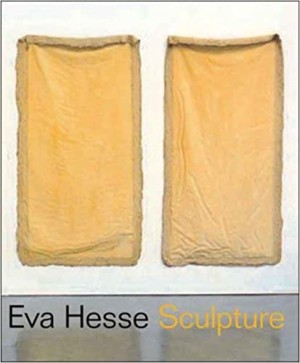
Hardcover. NY, Jewish Museum / Yale University Press, 1st, 2006, Book: Very Good, Dust Jacket: Very Good, Hardcover, 192 pages. Eva Hesse: Sculpture focuses on the artist's large-scale sculptures in latex and fiberglass and provides a rare opportunity to look at Hesse's artistic achievement within the historical context of her life in never-before-seen family diaries and photographs. Essays consider Hesse's art from a variety of angles: Elisabeth Sussman discusses the sculptures shown in the 1968 solo exhibition; Fred Wasserman delves into the Hesse family's life in Nazi Germany and in the German Jewish community in New York in the 1940s; Yve-Alain Bois examines Hesse's works within the context of the art and aesthetic theories of the 1960s; and Mark Godfrey analyzes the importance of Hesse's celebrated hanging sculptures of 1969-70. In addition to color reproductions of the artist's sculpture, the book features a copiously illustrated chronology of the artist's life.
Hardcover. np, New Texture, 1st, 2019, Book: Very Good, Dust Jacket: None, Hardcover, 188 pages, color and b&w illustrations. A lushly-illustrated book that showcases the unique career of the blonde Swedish model and actress Eva Lynd, with text written by Eva herself or taken from conversations with her. Millions of men saw photographs of Eva taken by the best "glamour girl" photographers of the era in dozens of different bachelor magazines published in the '50s and '60s. She was also a popular artist's model for paperback covers and illustrations done for magazines in the men's adventure genre that flourished in those decades. Like new, issued w/o a dust jacket.
Hardcover. NY, Prestel, 1st, 2015, Book: Very Good, Dust Jacket: None, Hardcover, 192 pages, color and b&w images. This first volume in a major new series of illustrated biographies of Magnum photographers traces the life and achievements of Eve Arnold, who captured an incredible array of subjects with remarkable clarity and compassion. Eve Arnold (1912-2012) was born to a poor immigrant family in Philadelphia and became a photographer by chance. In 1950 Arnold was a 38-year-old Long Island housewife when she enrolled in a six-week photography course that led to her groundbreaking photo essay on black fashion models in Harlem. She went on to become the first woman to join Magnum Photos and, eventually, one of the most accomplished photojournalists of her time. Filled with reproductions of Arnold's acclaimed photographs, shot in both color and black and white, as well as previously unseen archival images, this biography relates Arnold's bold images to the fascinating story of their making. Renowned for her intimate portraits of figures such as Marilyn Monroe, Malcolm X, and Queen Elizabeth, Arnold was equally comfortable documenting the lives of the poor and dispossessed. "I don't see anybody as either ordinary or extraordinary. I see them simply as people in front of my lens." To her images of migrant workers, disabled veterans, and protesters for civil rights in the US and against apartheid in South Africa, she brought an unflinching eye and a strong sense of social justice. This highly engrossing narrative tells a compelling story of an intrepid artist whose life's purpose was to report on the lives of others.
NY, Holt, Rinehart and Winston, 2nd pr., 1977, Book: Very Good, Dust Jacket: Very Good, Hardcover in a bright, unclipped dust jacket. Covers Karras's life from childhood to his retirement from football. Parts of the book are laugh out loud funny, while other parts are surprisingly sensitive and deep. In addition to football, Karras deals with the death of his father and of his early experiences with women. (They aren't "conquest" stories and usually didn't end up happily for Karras.) Co-authored by Herb Gluck,. Clean copy.
Softcover. Berkeley CA, University of California Press, reprint, Book: Very Good, Dust Jacket: None, Softcover, 210 pages. Taking Gandhi's statements about civil disobedience to heart, in February 1922 residents from the villages around the north Indian market town of Chauri Chaura attacked the local police station, burned it to the ground and murdered twenty-three constables. Appalled that his teachings were turned to violent ends, Gandhi called off his Noncooperation Movement and fasted to bring the people back to nonviolence. In the meantime, the British government denied that the riot reflected Indian resistance to its rule and tried the rioters as common criminals. These events have taken on great symbolic importance among Indians, both in the immediate region and nationally. Amin examines the event itself, but also, more significantly, he explores the ways it has been remembered, interpreted, and used as a metaphor for the Indian struggle for independence. The author, who was born fifteen miles from Chauri Chaura, brings to his study an empathetic knowledge of the region and a keen ear for the nuances of the culture and language of its people. In an ingenious negotiation between written and oral evidence, he combines brilliant archival work in the judicial records of the period with field interviews with local informants. Clean copy.
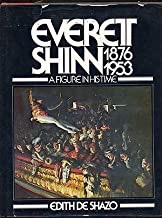
Hardcover. Clarkson N. Potter, inc, 1st, 1974, Book: Very Good, Dust Jacket: Good, Hardcover, 236 pages. b&w and color illustrations and photographs. Red cloth spine. Dust jacket edgewear, otherwise in good shape. Everett Shinn (1876 - 1953) was an American realist painter and member of the Ashcan School. He also exhibited with the short-lived group known as "The Eight," who protested the restrictive exhibition policies of the powerful, conservative National Academy of Design. He is best known for his robust paintings of urban life in New York and London, a hallmark of Ashcan art, and for his theater and residential murals and interior-design projects. His style varied considerably over the years, from gritty and realistic to decorative and rococo.
Softcover. NY, Berry-Hill Galleries, 1st, 2000, Book: Very Good, Dust Jacket: None, Softcover, 176 pages. 5 b&w, 55 color plates. Issued in conjunction with an exhibition featuring the work of Ashcan artist Everett Shinn (1876-1953). A tremendous presentation of text and richly printed color illustrations. Clean copy
Softcover. New York, Berry - Hill Galleries, 1st, Book: Very Good, Dust Jacket: None, 176 pages. Softcover. Extensive color illustrations by Everett Shinn throughout. Clean, unmarked copy with only minor wear to wrappers. Illustrated with 55 plates in color and 7 figures in the text.
Hardcover. Just One Guy Press, 1st, 2008, Book: Very Good, Dust Jacket: Very Good, Hardcover, 64 pages. In his most recent body of work, Hollingsworth sends up his former home of Los Angeles, the vortex of American pop culture, playing the characters who populate and define it: personas ranging from the well-worn stereotypes to the forgotten and disenfranchised. Shot entirely on Polaroid film, the images have a mug-shot aesthetic, whereby each character seems to have been momentarily plucked from his immediate environment for scrutiny under the artist's no-holds-barred gaze.
Hardcover. NY, Ecco, 1st, 2022, Book: Very Good, Dust Jacket: Very Good, Hardcover in a bright, unclipped dust jacket. 454 pages, b&w, color illustrations. Los Angeles in the 1960s: riots in Watts and on the Sunset Strip, wild weekends in Malibu, late nights at The Daisy discotheque, openings at the Ferus Gallery, and the convergence of pop art, rock and roll, and the New Hollywood. At the center of it all, one inspired, improbable, and highly combustible couple--Dennis Hopper and Brooke Hayward--lived out the emblematic love story of '60s L.A. The home these two glamorous young actors created for themselves and their family at 1712 North Crescent Heights Boulevard in the Hollywood Hills became the era's unofficial living room, a kaleidoscopic realm--"furnished like an amusement park," Andy Warhol said--that made an impact on anyone who ever stepped into it. Hopper and Hayward, vanguard collectors of contemporary art, packed the place with pop masterpieces by the likes of Roy Lichtenstein, Ed Ruscha, and Warhol, and welcomed a who's who of visitors, from Jane Fonda to Jasper Johns, Joan Didion to Tina Turner, Hells Angels to Black Panthers. In this house, everything that defined the 1960s went down: the fun, the decadence, the radical politics, and, ultimately, the danger and instability that Hopper explored in the project that made his career, became the cinematic symbol of the period, and blew their union apart--Easy Rider.
Hardcover. NY, Ecco, 1st, 2022, Book: Very Good, Dust Jacket: Very Good, Hardcover in a bright, unclipped dust jacket. 454 pages, b&w, color illustrations. Los Angeles in the 1960s: riots in Watts and on the Sunset Strip, wild weekends in Malibu, late nights at The Daisy discotheque, openings at the Ferus Gallery, and the convergence of pop art, rock and roll, and the New Hollywood. At the center of it all, one inspired, improbable, and highly combustible couple--Dennis Hopper and Brooke Hayward--lived out the emblematic love story of '60s L.A. The home these two glamorous young actors created for themselves and their family at 1712 North Crescent Heights Boulevard in the Hollywood Hills became the era's unofficial living room, a kaleidoscopic realm--"furnished like an amusement park," Andy Warhol said--that made an impact on anyone who ever stepped into it. Hopper and Hayward, vanguard collectors of contemporary art, packed the place with pop masterpieces by the likes of Roy Lichtenstein, Ed Ruscha, and Warhol, and welcomed a who's who of visitors, from Jane Fonda to Jasper Johns, Joan Didion to Tina Turner, Hells Angels to Black Panthers. In this house, everything that defined the 1960s went down: the fun, the decadence, the radical politics, and, ultimately, the danger and instability that Hopper explored in the project that made his career, became the cinematic symbol of the period, and blew their union apart--Easy Rider.
Hardcover. New York, W.W Norton Co, 1st, 2019, Book: Very Good, Dust Jacket: Very Good, 270 Pages. Hardcover with dust jacket. Clean, tight copy with only marginal wear to edges.
Hardcover. Hudson NY, Princeton Architectural Press, 1st, 2019, Book: Very Good, Dust Jacket: None, Hardcover, pictorial boards, 143 pages. We are all critics now. From social media "likes" to reviews on Yelp and Rotten Tomatoes, we're constantly asked to give our opinion and offer feedback. Everyone's a Critic is a curated collection of the best and brightest New Yorker cartoonists celebrating the art of the drawn critique, whether about restaurants, art, sports, dates, friends, or modern life. Featuring the work of thirty-six masters of the cartoon, including Roz Chast, Sam Gross, Nick Downes, Liza Donnelly, Bob Mankoff, Michael Maslin, and Mick Stevens, over half the cartoons in this book appear in print for the first time. No dust jacket issued. Clean copy.
Hardcover. Saratoga Springs NY, Tang Teaching Museum & Art Gallery at Skidmore College,, 1st, 2015, Book: Very Good, Dust Jacket: None, Hardcover, pictorial boards, 208 pages. What, exactly, is a "teaching museum"? Everything is Connected answers that question by tracing the ideas and people behind the creation of the Frances Young Tang Teaching Museum and Art Gallery at Skidmore College. The book also explores the many ways the museum has realized its mission as an interdisciplinary space for the creation of new knowledge since opening in 2000. Through deep research and stunning photography, Everything is Connected shows the exhibitions and public programs that make the Tang a national leader among college and university museums. Clean copy in shrinkwrap.
Hardcover. NY, Farrar, Straus and Giroux, 1st, 2009, Book: Very Good, Dust Jacket: Very Good, Hardcover in a bright, unclipped dust jacket. Viking marauders descend on a much-plundered island, hoping some mayhem will shake off the winter blahs. A man is booted out of his home after his wife discovers that the print of a bare foot on the inside of his windshield doesn't match her own. Teenage cousins, drugged by summer, meet with a reckoning in the woods. A boy runs off to the carnival after his stepfather bites him in a brawl. In the stories of Wells Tower, families fall apart and messily try to reassemble themselves. His version of America is touched with the seamy splendor of the dropout, the misfit: failed inventors, boozy dreamers, hapless fathers, wayward sons. Combining electric prose with savage wit, Everything Ravaged, Everything Burned is a major debut, announcing a voice we have not heard before. Clean copy.
Hardcover. NY, The Monacelli Press, 1st, 2012, Book: Very Good, Dust Jacket: None, Hardcover, yellow cloth stamped in black. SIGNED BY STERN on the hslf-title page. Robert A. M. Stern is the founding partner of Robert A. M. Stern Architects and dean of the Yale School of Architecture. He is the author of the monumental five-volume history of New Yorka??s architecture and urban development, culminating with New York 2000. Major current architectural projects include the new residential colleges at Yale University and the George W. Bush Presidential Center in Dallas. 400 pages; well illustrated with black and white as well as color images. No dust jacket issued.
Softcover. New York, Hartwest Productions, N/A, 1979, Book: Very Good, Dust Jacket: None, Softcover, blue plastic covers. three-hole punched screenplay with brad binding, 125 pages. Early television movie script by the award-winning screenwriter (The Dresser, The Pianist, The Diving Bell and the Butterfly, among others). The 1981 biopic starred Faye Dunaway, James Farentino and was based on books by Nicholas Fraser and John Barnes and aired on NBC. Clean copy.
Hardcover. Carbondale IL, Southern Illinois University Press, 1st, 1983, Book: Very Good, Dust Jacket: Very Good, Hardcover in a very good dust jacket with fading to spine, 307 pages. Edited by Francis M. Nevins, Jr. and Martin H. Greenberg. Collects twenty-two stories. Introduction and checklist of Boucher's fiction by Nevins. Clean copy.
Softcover. Athens, Benaki Museum, 1st, 1978, Book: Very Good, Dust Jacket: None, 334 pages, softcover exhibition catalog, b&w illustrations. Printed on glossy stock. Sculpture, pottery, vases, jewelry and other art from ancient Greece and the Cycladic civilization. Previous owner's embossed stamp on front fly leaf, otherwise clean, very good.
Hardcover. New York, Da Capo Press, 2nd pr., 2006, Book: Very Good, Dust Jacket: Very Good, Hardcover, 258 pages, illustrated in b&w. Recorded during the blazing summer of 1971 at Villa Nellcote, Keith Richards' seaside mansion in the south of France, Exile on Main St. has been hailed as one of the Rolling Stones' best albums-and one of the greatest rock records of all time. Yet its improbable creation was difficult, torturous...and at times nothing short of dangerous.In self-imposed exile, the Stones-along with wives, girlfriends, and a crew of hangers-on unrivaled in the history of rock-spent their days smoking, snorting, and drinking whatever they could get their hands on. At night, the band descended like miners into the villa's dank basement to lay down tracks. Out of those grueling sessions came the familiar riffs and rhythms of "Rocks Off," "Tumbling Dice," "Happy," and "Sweet Virginia."All the while, a variety of celebrities-John Lennon, Yoko Ono, and Gram Parsons among them-stumbled through the villa's neverending party, as did the local drug dealers, known to one and all as "les cowboys." Villa Nellcote became the crucible in which creative strife, outsize egos, and all the usual byproducts of the Stones' legendary hedonistic excess fused into something potent, volatile, and enduring.Here, for the first time, is the season in hell that produced Exile on Main St.
Hardcover. New York, Harper and Brothers, 1st, 1894, Book: Very Good, Dust Jacket: None, Hardcover, green cloth stamped in dark green, silver and gold gilt. 221 pages illustrated with b&w plates by various artists. Spine slightly cocked, darkened otherwise clean, very good.
Hardcover. NY, Thames & Hudson, 1st, 2007, Book: Very Good, Dust Jacket: Very Good, Hardcover, 208 pages, color illustrations. Introduction by Paul Theroux. This album of over 200 century-old postcards takes the reader on a magical journey across the world in five travelogues, depicting the Orient, the Arab lands, Africa, the Americas and Oceania. These haunting postcards and the people they depict strike us with a special force today, vividly expressing a deep-seated connection with the land and customs that gave them their identities. Clean, bright copy in a dust jacket.
Hardcover. NY, John Wiley & Sons, 3rd Ed., 1943, Book: Very Good, Dust Jacket: None, Hardcover, light gray cloth with blue lettering, 611 pages with index. A detailed study of cooking from a scientific point of view. Charts, tables, a few b&w illustrations. Light fading to covers, bookplate on inside front cover otherwise clean and tight copy.
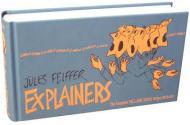
Hardcover. Seattle, WA, Fantagraphics, 1st, 2008, Book: Very Good, Dust Jacket: None, 528 pages. Hardcover with no dust jacket. Sunfading to spine. Otherwise a very clean, unmarked copy with only minor edgewear. Over 500 comic strips published between 1956 through 1966. SIGNED BY JULES FEIFFER ON HALF TITLE PAGE.
Hardcover. Boston, MA, Richardson & Lord, 1st edition, 1826, Book: Fair, Dust Jacket: None, 125 pages plus publisher ads. Hardcover. Small: 4.5" W x 5.5" L. Previous owners' names on front endpapers. Brown, marbled cover boards, brown quarter cloth, rubbing and chipping to cover boards (see image). Tanning and some foxing to pages from age (see image), doesn't affect text. Binding tight. Spine straight. Charming old, tiny textbook.
Hardcover. Los Angeles, Getty Research Institute, 1st, 2017, Book: Very Good, Dust Jacket: None, Hardcover, pictorial boards, 199 pages. The artists' books made in Russia between 1910 and 1915 are like no others. Unique in their fusion of the verbal, visual, and sonic, these books are meant to be read, looked at, and listened to. Painters and poets--including Natalia Goncharova, Velimir Khlebnikov, Mikhail Larionov, Kazimir Malevich, and Vladimir Mayakovsky--collaborated to fabricate hand-lithographed books, for which they invented a new language called zaum (a neologism meaning 'beyond the mind') that was distinctive in its emphasis on 'sound as such' and its rejection of definite logical meaning. At the heart of this volume are close analyses of two of the most significant and experimental futurist books: Mirskontsa (Worldbackwards) and Vzorval' (Explodity). In addition, Nancy Perloff examines the profound difference between the Russian avant-garde and Western art movements, including futurism. Still sealed in publisher's shrinkwrap.
Hardcover. NY, Simon & Schuster, 1st, 2000, Book: Very Good, Dust Jacket: Very Good, Hardcover in a bright, unclipped dust jacket, 512 pages. B&w illustrations. With this handsome book, David Sweetman, a biographer of Vincent van Gogh and Paul Gauguin, brings together the dissolute lives of various artists who came to represent decadent fin-de-siecle Paris: Oscar Wilde, Felix Feneon, Alfred Jarry, and, of course, Henri de Toulouse-Lautrec. As the author reminds us, imitations of the latter's work adorn the walls of French-themed bars worldwide and have become a shorthand for sanitized debauchery. Toulouse-Lautrec--absinthe drinker and brothel frequenter--was instrumental in the development of the poster, but what is his artistic legacy? Although Toulouse-Lautrec dominates the book's subtitle, Sweetman's sweep is much grander. In much the same way as his main subject was, Sweetman proves a sympathetic host to the women of Montmartre, tragic figures such as La Goulue, Jane Avril, and Suzanne Valadon, and he is particularly insightful on the singer Aristide Bruant's influence on the fledgling artist. Clean copy.
Softcover. Berkeley CA, University of California Press, 1st, 2001, Book: Near Fine, Dust Jacket: Near Fine, Still wrapped in plastic. Accompanied the exhibition "Expressionist Utopias" at the Los Angeles County Museum in 1993. In great condition. Color illustrations throughout. A nice, tight copy.The notion of utopia exists in every culture, capturing shared dreams and common goals. This book--prepared to accompany the exhibition Expressionist Utopias mounted at the Los Angeles County Museum in 1993--explores how the optimistic themes of utopia and fantasy sustained faith among artists and architects in the power of art to shape a better world during the tumultuous World War I era in Germany. The exhibition's curator, Timothy O. Benson along with David Frisby, Reinhold Heller, Anton Kaes, Wolf Prix, and Iain Boyd White present the diverse manifestations of the utopia metaphor in its progression throughout Expressionism from Arcadian to manmade utopias.
Softcover. Durham NC, Duke University Press, 2nd pr., 1994, Book: Very Good, Dust Jacket: None, Softcover, 342 pages. In Extended Play, one of the country's most innovative music writers conducts a wide-ranging tour through the outer limits of contemporary music. Over the course of more than twenty-five portraits, interviews, and essays, John Corbett engages artists from lands as distant as Sweden, Siberia, and Saturn. With a special emphasis on African American and European improvisers, the book explores the famous and the little known, from John Cage and George Clinton to Anthony Braxton and Sun Ra. Employing approaches as diverse as the music he celebrates, Corbett illuminates the sound and theory of funk and rap, blues and jazz, contemporary classical, free improvisation, rock, and reggae. Using cultural critique and textual theory, Corbett addresses a broad spectrum of issues, such as the status of recorded music in postmodern culture, the politics of self-censorship, experimentation, and alternativism in the music industry, and the use of metaphors of space and madness in the work of African American musicians. He follows these more theoretically oriented essays with a series of extensive profiles and in-depth interviews that offer contrasting and complementary perspectives on some of the world's most creative musicians and their work. Clean copy.
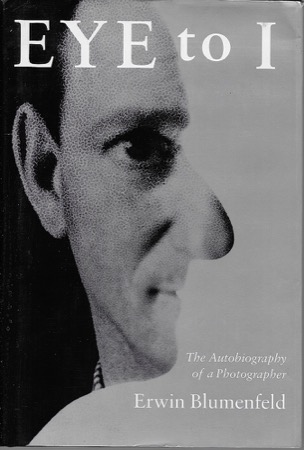
Hardcover. London, Thames and Hudson, 1st, 1999, Book: Very Good, Dust Jacket: Very Good, 384 pages. Hardcover with dust jacket. Clean, tight copy with black and white photographs throughout. Light wear ton dust jacket. The life of Erwin Blumenfeld, one of the century's best-known photographers, was by no means conventional. By turns acerbic, self-mocking, playful, even absurd, his autobiography is a compelling, virtuoso account of an extraordinary man. All his subjects--his Jewish family, the Germans, the Vichy French, his models, New York publishers--are dealt equal measures of wit, mockery, and merciless irony. He spares himself least of all. Born in turn-of-the-century Berlin, Blumenfeld was drafted to serve in the First World War, first as an ambulance driver (although he couldn't drive) and then as a bookkeeper in a field brothel, and he was awarded the Iron Cross for giving his sergeant French lessons. Between the wars he was part of an avant-garde circle that included such artists as Else Lasker-Schler, George Grosz, and members of the Dada movement. During the Second World War, Blumenfeld was interned in a series of French camps but eventually arrived in New York, where he found work with Vogue and Harper's Bazaar, producing many of their most memorable covers and becoming fashion's highest-paid photographer. From the creator of some of the most striking and influential photographs ever taken, Blumenfeld's autobiography--published here in English for the first time--is a biting and iconoclastic take on the century, and the insightful, gripping story of an exceptional life. Remainder line to bottom edge.
Hardcover. Urbana IL, University of Illinois Press, 1st, 1990, Book: Very Good, Dust Jacket: Very Good, Hardcover in a bright, unclipped dust jacket. Power was at the heart of FDR's relationship with the media: the power of the nation's chief executive to control his public messages versus the power of the free press to act as an independent watchdog over the president and the government. This compelling study points to Roosevelt's consummate news management as a key to his political artistry and leadership legacy.
Softcover. London/NY, Bloomsbury, 1st, 2016, Book: Very Good, Dust Jacket: None, Softcover, 346 pages. This volume makes the key essays of 19th century French philosopher Felix Ravaisson available in English for the first time. In recent years, Ravaisson has emerged as an extremely important and influential figure in the history of modern European philosophy. The volume contains the classic 1838 dissertation Of Habit, studies of Pascal, Stoicism and the wider history of philosophy together with the Philosophical Testament that he left unfinished when he died in 1900. The volume also features Ravaisson's work in archaeology, the history of religions and art-theory, and his essay on the Venus de Milo, which occupied him over a period of twenty years after he noticed, when hiding the statue behind a false wall in a dingy Parisian basement during the Franco-Prussian war, that it had previously been presented in a way that deformed its original bearing and meaning. Clean copy.
Hardcover. NY, Hugh Lauter Levin Associates, 1st, Book: Very Good, Dust Jacket: Very Good, Hardcover in a bright, unclipped dust jacket. 128 pages illustrated in color. Featuring forty-eight magnificent close-up views of each piece, a collection of stunning photographs and informative essays shows the variety of original variations of the "shells" of the Faberge eggs, as well as the delightful surprises hidden inside. Clean copy.
Hardcover. Paris, Hector Bossange, reprint, 1829, Book: Very Good, Dust Jacket: None, Hardcover. Two parts in one volume, 136 + 203 pages, bound in maroon half leather over marbled boards, gilt design on spine. Edition Stereotype: D'apres le procede de Firmin Didot. Previous owner's signature on front fly leaf and blank prelim page, moderate foxing to pages.
Hardcover. New York, Peter Lang Inc., International Academic Publishers , 1st, Book: Very Good, Dust Jacket: None, Hardcover, 180 pages, b&w illustrations. A very clean, tight copy. Fables in Frames argues that the increased interest in the fables of La Fontaine during the nineteenth century resulted largely from the activities of artists, who offered the seventeenth-century fables new contexts for a post-Revolution age. First in caricature and book illustration and later in Salon painting, artists transformed the fables to comment on contemporary issues. The goal of this study is to tackle the general issue of why La Fontaine's fables appeared in art at all during the nineteenth century and to explore the specific questions of how certain artists made those texts culturally normative.




 "Eva Hesse: A Retrospectiveby: Cooper, Helen A.")



 "Eve Arnold: Magnum Legacyby: Janine di Giovanni, Susan Meiselas , et al.")



 "Everybody I Ever Met in L.A.by: Hollingsworth, Jonathan")
 "Everybody Thought We Were Crazy: Dennis Hopper, Brooke Hayward, and 1960s Los Angeles by: Mark Rozzo")


 "Everybody Thought We Were Crazy: Dennis Hopper, Brooke Hayward, and 1960s Los Angeles by: Mark Rozzo")


 "Everybody's Doin' It: Sex, Music and Dance in New York, 1840-1917by: Cockrell, Dale")

 "Everything is Connectedby: Moller, Barbara Kahn")




 "Exile on Main St.: A Season in Hell with the Rolling Stonesby: Greenfield, Robert")


 "Experimental Cookery: From the Chemical and Physical Standpointby: Belle Lowe")


 "Explanatory and Pronouncing French Word Book; or, First Step to the French Languageby: Bossut, M. L'Abbe")


 "Explosive Acts: Toulouse Lautrec Oscar Wilde Felix Feneon and the Art & Anarchy of the Fin De Siecle by: Sweetman, David")

 "Extended Play: Sounding Off from John Cage to Dr. Funkensteinby: John Corbett")
 "Eye for an Eye, Anby: Schorr, Mark")


)