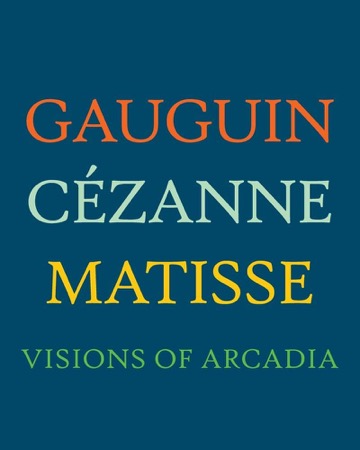
Hardcover. New Haven CT, Yale University Press, 1st, 2012, Book: Very Good, Dust Jacket: Very Good, Hardcover in a bright dust jacket. Published on the occasion of the exhibition held at the Philadelphia Museum of Art, 20 June-3 September 2012]/edited by Joseph J Rishel; with essays by Stephanie D'Allessandro.[et al.] A trio of masterpieces by Gauguin, Cezanne, and Matisse are joined by works by other major artists in this exploration of the enduring vitality of the theme of Arcadia. Paul Gauguin's Where Do We Come From? What Are We? Where Are We Going? (1897-98), Paul Cezanne's The Large Bathers (1906), and Henri Matisse's Bathers by a River (1909-10, 1913, and 1916-17). Other masterpieces by Jean-Baptiste-Camille Corot, Nicolas Poussin, and Pierre Puvis de Chavannes establish the high value given to Arcadia in the history of French painting. Still in publisher's shrinkwrap.
Softcover. Washington, National Gallery of Art, 2nd printing, 1988, Book: Very Good, Dust Jacket: None, 519 pages. Softcover. Previous owner's bookplate on front endpaper. Color and b/w illustrations throughout. Wrapper excellent, in beautiful condition. Pages clean and bright, unmarked. Binding tight. Published to accompany exhibition: National Gallery of Art, Washington, 5/1-7/31/88; The Art Institute of Chicago, 9/17-12/11/88; Grand Palais, Paris, France, 1/10-4/20/89.
Hardcover. Geneva, Skira, 1st, 1953, Book: Very Good, Dust Jacket: None, Hardcover, 115 pages with tipped-in color plates. publisher's textured white cloth, red lettering on spine, Skira "S", red, embossed on cover. Translated by James Emmons. Chronological Survey. Bibliography. Index. The first title in "The Taste of Our Time" Series. No dust jacket, a clean, bright copy.
Hardcover. POONA, Oriental Book Agency, 1st, 1939, Book: Very Good, Dust Jacket: None, 567 pages. Hardcover. Boards bound at spine with orange quartercloth, has fading and foxing to spine from age. Gray cardboard cover boards (some agewear). Pages and edges have some tanning, but otherwise unmarked. Previous owner's name on front flyleaf. This work is a product of seven manuscripts. It begins with the English tranlation of lectures on Nyayasutras by Gautama. The author has also used his notes from Bodhasiddhi.
Softcover. Bloomington IN, Indiana University Press, 1st, 2003, Book: Very Good, Dust Jacket: None, Softcover, 209 pages. This groundbreaking study explores the Harlem Renaissance as a literary phenomenon fundamentally shaped by same-sex-interested men. Christa Schwarz focuses on Countee Cullen, Langston Hughes, Claude McKay, and Richard Bruce Nugent and explores these writers' sexually dissident or gay literary voices. The portrayals of men-loving men in these writers' works vary significantly. Schwarz locates in the poetry of Cullen, Hughes, and McKay the employment of contemporary gay code words, deriving from the Greek discourse of homosexuality and from Walt Whitman. By contrast, Nugent-the only "out" gay Harlem Renaissance artist-portrayed men-loving men without reference to racial concepts or Whitmanesque codes. Schwarz argues for contemporary readings attuned to the complex relation between race, gender, and sexual orientation in Harlem Renaissance writing. Clean copy.
Softcover. Hatje Cantz, 1st, 2006, Book: Very Good, Dust Jacket: None, Softcover, 240 pages. Venezuelan sculptor Gertrud Luise Goldschmidt (1912-1994), who worked under the pseudonym Gego, was one of the most important representatives of Latin American Geometric Abstractionism. Born in Germany, Goldschmidt became an architect and later immigrated to Caracas in 1939, where she radically altered the nature of modernist sculpture, countering the deductive logic of 1960s abstraction with a fluid conceptualism, reconfiguring "content-less" art into an open-ended process of "thinking the line." The most comprehensive examination of Gego's art published in English to date, this monograph contains deep analyses by scholars from a range of disciplines as well as previously untranslated historical texts, offering new perspectives on Gego's critical relationships to Venezuelan urbanism and kineticism, the New York avant-garde, and the European modernist traditions of Bauhaus and Russian Constructivism. Includes an illustrated chronology and an extensive plate section featuring three decades of sculpture and drawings.
Hardcover. Cambridge, Mass., MIT Press in association with Violette Editions, 1st, 2004, Book: Good, Dust Jacket: Very Good, 539 pages. Hardcover. Extensive b&w illustrations by Frank Gehry throughout. Includes appendix of Gehry's projects. Includes artistically styled dust jacket. Some small stains to fore edge, otherwise clean, tight copy.
Hardcover. Garden City, Doubleday & Company, Inc., 1st, 1981, Book: Very Good, Dust Jacket: Very Good, 452 pages. Hardcover. Translated from the French, Les Meteores, by Anne Carter. Ivory cloth boards, with light tone to bottom edge, silver titles to spine. Dust jacket with light age toning, protected with a plastic cover. Clean, unmarked copy.
Hardcover. NY, Pantheon, 1st, 2005, Book: Very Good, Dust Jacket: Very Good, Hardcover, 112 pages. This clever, satirical graphic novel reimagines the Flaubert classic Madame Bovary through contemporary mores and attitudes. Simmonds's unique approach includes the usual panels and balloons, but also voluminous amounts of text on each page. The result is a graphic novel that reads like an actual novel. Simmonds tells the story through the eyes of Raymond Joubert, a baker in Normandy. Gemma herself is a complex character--an unsatisfied young woman who marries Charlie Bovery, a lumpish carpenter, out of apparent boredom, and then persuades him to move from London to a farmhouse in Normandy, to escape his clinging ex-wife and two children. Here, the rather unlikable Gemma begins to come into focus, her loneliness and isolation leading to her affair. Joubert, who mixes genuine concern with denial about his voyeurism, is convinced Gemma's headed down the same tragic path as Flaubert's original. Since we learn in the first paragraph that Gemma is dead, the question is who will be responsible for her demise. Simmonds's art recalls the elegance of New Yorker cartoonists mingled with the goth charm of Edward Gorey (Gemma herself is all restlessly darting pinpoint pupils).
Hardcover. NY, Farrar, Straus and Giroux, 1st, 2017, Book: Very Good, Dust Jacket: Very Good, Hardcover in a bright dust jacket, 206 pages. Famously unabashed, W. Eugene Smith was photography's most celebrated humanist. As a photo essayist at Life magazine in the 1940s and '50s, he established himself as an intimate chronicler of human culture. His photographs of war and disaster, villages and metropolises, doctors and midwives, revolutionized the role of images in journalism, transforming photography for decades to come. When Smith died in 1978, he left behind eighteen dollars in the bank and forty-four thousand pounds of archives. He was only fifty-nine, but he was flat worn-out. His death certificate read "stroke," but, as was said of the immortal jazzman Charlie Parker, Smith died of "everything," from drug and alcohol benders to weeklong work sessions with no sleep. Lured by the intoxicating trail of people that emerged from Smith's stupefying archive, Sam Stephenson began a quest to trace his footsteps. In Gene Smith's Sink, Stephenson merges traditional biography with rhythmic digressions to revive Smith's life and legacy. Traveling across twenty-nine states, Japan, and the Pacific, Stephenson profiles a lively cast of characters, including the playwright Tennessee Williams, to whom Smith likened himself; the avant-garde filmmaker Stan Brakhage, with whom he once shared a Swiss chalet; the artist Mary Frank, who was married to his friend Robert Frank; the jazz pianists Thelonious Monk and Sonny Clark, whose music was taped by Smith in his loft; and a series of obscure caregivers who helped keep Smith on his feet. The distillation of twenty years of research, Gene Smith's Sink is an unprecedented look into the photographer's potent legacy and the subjects around him. Clean, bright copy.
Hardcover. Baltimore, Genealogical Publishing Co., 1st, 1983, Book: Very Good, Dust Jacket: None, Hardcover, black cloth with gilt lettering, 733 pages. Many of the early settlers of Barbados eventually moved to the mainland of North America and settled in Virginia, Georgia, the Carolinas, and other colonies. Records of Barbados families exist in a variety of places and indeed a great many have been written up and published in the turn-of-the-century journal "Caribbeana" and "The Journal of the Barbados Museum and Historical Society". Unfortunately, back issues of these journals are no longer available, and copies can be found today in only a handful of libraries. With this present work, however, genealogists at last have access to both of these publications, for the book contains every article pertaining to family history ever published in these journals. The combined articles, reprinted here in facsimile, range from conventional genealogies and pedigrees to will abstracts and Bible records and refer to some 15,000 persons, all of whom are listed in the index. Besides the genealogies and family records, this compilation also contains a selection of notes on the connections between Barbados and New England families and four invaluable lists of Barbados Quakers.
Hardcover. The Hague, Mouton, reprint, 2015, Book: Very Good, Dust Jacket: None, Hardcover, decorated green boards, 197 pages. Translated from the French. Early 'rational' language study. Originally published in 1975. Preface by Arthur Danto. Clean copy.
Hardcover. NY, Longmans Green and Co., 1st, 1926, Book: Good, Dust Jacket: None, Hardcover, dark green cloth with gilt title on spine. 702 pages. Front hinge cracked, re-enforced with tape. Light shelf-wear, otherwise sound and clean.
Softcover. Austin TX, University of Texas Press, 1st, 1985, Book: Very Good, Dust Jacket: None, Softcover, 127 pages, b&w and color plates. Bottom right corner slightly bumped. Else a very clean, tight copy.
Hardcover. Ames IA, Iowa State University Press, 1st, 1985, Book: Very Good, Dust Jacket: Very Good, Hardcover, 254 pages. A very clean hardcover edition in dust jacket and INSCRIBED BY HARNACK on the title page. The book 'focuses on the formation in the 1880s of a colony of upper-class British immigrants who viewed Iowa pioneering as a way of perpetuating the Victorian gentleman's code. It covers a broad range of social history of the latter part of the 19th century, from London drawing rooms to Iowa pig farms, and includes a careful scrutiny of Walter and James Cowan, brothers who were typical of Victorian gentlemen in this special venture'.
Softcover. Boston, The Solio Foundation, 1st, 1987, Book: Very Good, Dust Jacket: None, 107 pages. Softcover with minor wear to edges. Full color and black & white illustrations throughout. Clean unmarked text.
Softcover. NY, Reporter Publications, Inc., 1957, Book: Very Good, Dust Jacket: None, Softcover magazine. Articles on Elvis with drawings by Felix Topolski, Sugar Ray Robinson, Maria Callas, touring cars, building your own golf course, writing by W. Eugene Smith, James Beard, and others. And men's fashion, of course. Red spine faded. Clean.
Softcover. New York, Harper Design, 1st, 2012, Book: Very Good, Dust Jacket: None, 255 pages. Softcover. Extensive b&w photographs and illustrations throughout. Illustrated frontispiece. Clean, unmarked copy with only minor wear to wrappers.
Softcover. Berlin GR, Walther Konig/Contemporary Fine Arts, Berlin, 1st, 2007, Book: Very Good, Dust Jacket: None, Softcover, 56 pages, color and b&w illustrations. Collection of new works on paper by the German neo-Expressionist Georg Baselitz is beautifully printed on deluxe paper and includes a tipped in centerfold on glossy paper. Here Baselitz revisits and remixes early works in fresh new ways. Bright, clean copy. English and German text.
Hardcover. NY, Pivately Printed, 1st , 1908, Book: Near Fine, Dust Jacket: None, Hardcover, 3/4 leather and marbled boards with gilt lettering on spine and raised bands. 16 pages of text by W. Stanton Howard. 261 pages. Black & white plates. Card of author tipped on front end paper. Previous owner's name & stamp. Bright, sharp condition.
Hardcover. NY, HMH Books for Young Readers, 1st thus, 2008, Book: Very Good, Dust Jacket: Very Good, Hardcover, 368 pages. Like all best friends, George and Martha do everything together--go to the movies, play at the beach, and just hang around not doing much of anything. George and Martha teach each other (and adoring readers) that even in a close friendship, privacy is important, practical jokes can sometimes backfire, and among other things, pouring split pea soup into your loafers to spare the chef's feelings is not the best-laid plan. A man with a talent for friendship, James Marshall defined its very essence in his stories about the world's two best friends. In this volume, all thirty-five episodes are brought together to celebrate friendship and two of the most lovable characters ever created. Each of these brief tales is filled with humor, and James Marshall's drawings are guaranteed to spark feelings of empathy, delight, and self-recognition. This collector's edition includes 35 stories, an introduction by Maurice Sendak as well as appreciations by some of the top authors and illustrators working in children's publishing today. It is a true testament to James Marshall as an author, as an artist, and as a person that his work and his life inspired such a diverse and immensely talented group. Noted children's book historian Anita Silvey provides an afterword.
Softcover. US, PIE International, 1st, 2012, Book: Very Good, Dust Jacket: None, Softcover, Clean, unmarked copy with only minor wear to wrappers. Most of text in English and Japanese with portions in Japanese only. 256 pp. ; 200 color illustrations.
Softcover. West Palm Beach, Norton Museum of Art, 1st, 1997, Book: Very Good, Dust Jacket: None, 120 pages. 26 color plates, 60 b&w illustrations. Softcover with light edgewear on wrappers. Published in conjunction with a major retrospective exhibition (opening at National Gallery of Art, Washington, in June 2012, then travelling to The Metropolitan Museum of Art, New York, in November 2012, before moving to Royal Academy of Arts.
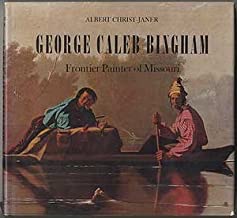
Hardcover. New York, Harry N. Abrams , 1st, 1975, Book: Very Good, Dust Jacket: Very Good, Hardcover in a bright dust jacket, 181 pages with 177 illustrations, including 50 plates in full color. Oblong folio. With an introduction by Thomas Hart Benton. Focuses on the life and art of the great American artist, George Caleb Bingham. Green cloth with silver lettering to spine and decoration in silver on front cover. Pictorial dust jacket with minor rubbing to lower edge of front cover. Beautiful copy.
Hardcover. Berkeley, CA, University of California Press, 1st, 1967, Book: Very Good, Dust Jacket: Good, Two hardcover volumes. 339 pages+ plates, 238 pages. 197 illustrations in b&w and color throughout. Red cloth, gilt lettering to spines. Small sealed up tears to front cover of Evolution of an Artist, small chip missing from back dust jacket cover of Catalogue Raisonne. Price clipped. Clean and tight set.
Hardcover. NY, Mason/Charter,, 1st US, 1976, Book: Very Good, Dust Jacket: Very Good, Hardcover in a bright, unclipped dust jacket, 355 pages. Bibliography, appendix, notes, index. This biography reveals both the public and private sides of George Canning, and is also a study of international opportunism in an age when "empire" was an exalted concept. Name on front fly leaf,otherwise clean.
Hardcover. London , Bell & Daldy, reprint, 1869, Book: Very Good, Dust Jacket: None, Hardcover in 3/4 polished leather with marbled boards, spine with gilt lettering, raised bands. Engraved title and twelve full-page engraved plates and 116 engravings on wood by Cruikshank. 277 pages, humorous essays and commentary throughout by various writers. Reprint of the 1845 Edition.
New York, Collectors Editions Ltd., reprint , nd, Book: Very Good, Dust Jacket: None, Hardcover. 375 pages. Corners lightly bumped. Entries comprise 863 illustrated books and 1251 caricatures and separate prints. Bibliographic collations are provided for the illustrated books with some annotations. Prints are arranged by title with imprints noted, a statement of any signature, and with a short description.
Hardcover. NY, St Martins Press, 3rd pr, 1991, Book: Very Good, Dust Jacket: Very Good, Hardcover in a bright dust jacket, 404 pages, with black & white photographs. Minor dust jacket edge wear, otherwise, very clean and tight copy.
Hardcover. New York, Macmillan Publishing, 1st , 1983, Book: Near Fine, Dust Jacket: Very Good, Hardcover, 312 pages, illustrated throughout with drawings in b&w. Black blind-stamped boards, brown cloth spine with gilt title. White pictorial dust jacket. Light wear to covers and spine, else a very nice, tight copy.
Hardcover. NY, Taschen, 1st, 2025, Book: Very Good, Dust Jacket: None, Hardcover, pictorial boards, A color facsimile of the complete pages of George Herriman's Krazy Kat 1935-44. One of the first comics to be considered a work of art, Krazy Kat delights with its characterization and visual-verbal creativity alongside the slapstick shenanigans between Krazy and Ignatz the mouse. This book comes with an illustrated introduction by Alexander Braun. The premise is simple: a black cat loves scheming a white mouse who incessantly throws bricks at the cat's head, which police dog Officer Pupp, secretly harboring a passionate love for the cat, tries to prevent. George Herriman endlessly plays with the above formula in his legendary newspaper strip Krazy Kat, published from 1913 until his death in 1944. Clean, bright copy, still in publisher's shrinkwrap.
Hardcover. Philadelphia, Running Press, 1st, 2013, Book: Very Good, Dust Jacket: Very Good, Hardcover, 416 pages, illustrated throughout in color and b&w. Light shelf-wear to dust jacket. Clean, tight copy. George Hurrell is credited as the master of the Hollywood glamour portrait. He photographed every star from Greta Garbo to Humphrey Bogart to Sharon Stone. Written by historian and former Hurrell assistant Mark A. Vieira, George Hurrell's Hollywood is the definitive retrospective. Covers Hurrell's entire career, from his beginnings as a Los Angeles society photographer to his finale as the celebrity photographer who became a celebrity himself. Hundreds of pristine images showcase the photographer's work with Hollywood icons from 1929 to 1992. The text recounts the artist's life, from his childhood to the heyday of his career as a starmaker, through the previously untold stories of his fall from grace and eventual comeback.
Softcover. US, Yale University Press, 1st, 2011, Book: Very Good, Dust Jacket: None, Softcover, 60 pages. Like new in publishers shrink-wrap. A canonical figure in American painting, George Inness (1825-1894) is widely admired as the pioneer of the landscape aesthetic known as Tonalism, which is distinguished by soft focus and diaphanous layers of paint. This is the first book about the artist's two Italian sojourns (1851-52 and 1870-74) and their formative impact on his work. Italy--its art and its landscape--offered Inness a font of inspiration as he developed his unique artistic vision. This handsome book presents ten oil paintings surveying Inness's Italian subjects dating from 1850 to 1879, including the Philadelphia Museum of Art's recently restored Twilight on the Campagna, which has not been on view since 1952. This was the first of Inness's works completed in Italy, and its reemergence offers a unique opportunity to reconsider the career of a leading American artist.
Softcover. Springfield, MA, George Walter Vincent Smith Art Museum, 1st, 1946, Book: Very Good, Dust Jacket: None, Softcover, vintage exhibition catalog, 87 pages, b&w illustrations, color frontispiece. Small tear on spine. Else a clean, tight copy.
Hardcover. Houston, Rice University, 1st, 1991, Book: Very Good, Dust Jacket: Very Good, Hardcover, 142 pages. Illustrated with black & white photographs by George Krause. Clean, bright copy. For the past 45 years, George Krause has worked on four distinct series of photographs, each represented in this volume. "The Street" is an oblique journal of places, including Mexico, Spain, Italy, and Philadelphia, where the artist has lived and worked. The objects photographed in "Qui Riposa" are tombstones and cemetery monuments; in "Saints and Martyrs," religious statuary; and in "I Nudi," naked human models. From these common objects arise pictures of great beauty and mystery.
Hardcover. New York , Assouline Publishing, 1st, 2010, Book: Very Good, Dust Jacket: None, 200 pages, color illustrations. At the forefront of American advertising's creative revolution in the 1960s, George Lois was hand-picked by magazine editor Harold Hayes to visually convey that Esquire--a proponent of that era's New Journalism--was on the cutting edge of American culture. In 2008, New York City's Museum of Modern Art acquired a wide range of George Lois's groundbreaking, often controversial Esquire covers for its permanent collection. This fascinating catalogue presents the original exhibit, with additional covers and images from Lois's private collection, including photos of the designer at work and out-takes of the shoot that resulted in Andy Warhol "drowning" in one of his own tomato soup cans. Like new in publisher's shrink-wrap.
Hardcover. NY, Harper, 1st, 2014, Book: Very Good, Dust Jacket: Very Good, Hardcover in a bright, unclipped dust jacket. A major historical biography of George C. Marshall--the general who ran the U.S. campaign during the Second World War, the Secretary of State who oversaw the successful rebuilding of post-war Europe, and the winner of the Nobel Peace Prize--and the first to offer a complete picture of his life. While Eisenhower Patton, Bradley, Montgomery, MacArthur, Nimitz, and Leahy waged battles in Europe and the Pacific, one military leader actually ran World War II for America, overseeing personnel and logistics: Chief of Staff of the U.S. Army from 1939 to 1945, George C. Marshall. This interpretive biography of George C. Marshall follows his life from his childhood in Western Pennsylvania and his military training at the Virginia Military Institute to his role during and after World War II and his death in 1959 at the age of seventy-eight. It brings to light the virtuous historical role models who inspired him, including George Washington and Robert E. Lee, and his relationships with the Washington political establishment, military brass, and foreign leaders, from Harry Truman to Chiang Kai-shek. It explores Marshall's successes and failures during World War II, and his contributions through two critical years of the emerging Cold War--including the transformative Marshall Plan, which saved Western Europe from Soviet domination, and the failed attempt to unite China's nationalists and communists.
Hardcover. NY, Simon & Schuster, 1st, 1955, Book: Very Good, Dust Jacket: Fair, Hardcover in a worn and repaired dust jacket. A collection of 200 Price cartoons, mostly from The New Yorker. 96 pages. Clean copy.
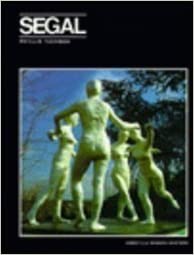
Softcover. New York, Abbeville Press, 1st, 1983, Book: Very Good, Dust Jacket: None, Volume of the definitive work of George Segal. Softcover, 128 pages, 118 b&w and color illustrations. In very good condition, shows some rubbing on cover. Chronology. Bibliography. Index. Discusses the full range of Segal's work. Includes photographs of the artist at work. Topics include early cast sculpture, fragments and painted plasters, public commissions, and more. George Segal (1924-2000) was an American painter and sculptor associated with the Pop Art movement.
Hardcover. New York, Alfred A. Knopf, inc, 1st, 1927, Book: Good, Dust Jacket: None, First edition, small folio, 254 pages, [1]; frontis portrait, 195 illustrations; biographical note by Thomas Beer, introduction by Eugene Speicher, edited by Emma S. Bellows; original coarse buckram lettered in black on upper cover and spine; very good. The catalogue raisonne of Bellows' lithographs.
Hardcover. US, Rizzoli, 1st, 1988, Book: Very Good, Dust Jacket: Good, 319 pages, illustrated throughout with 235 illustrations, including 150 in full color. Faint soil to fore edge. Light edgewear and rubbing to dust jacket. Small tear on front end paper.
Hardcover. New York, Arcade Publishing, 1st, 2005, Book: Very Good, Dust Jacket: Very Good, Hardcover, 440 pages, illustrations in color and b&w. Clean, unmarked copy with only minor wear to dust jacket. A pioneer of modern art and founder of Cubism, Georges Braque was a creative genius and tireless innovator, constantly pushing back the boundaries of the possible. In this magisterial work, Alex Danchev taps a wide range of new sources to reveal the heart and mind of one who helped usher in the greatest revolution in the ways of seeing since the Renaissance and changed the face of modern art. Chapters include: "Memories in anticipation:" The Confirmed Painter, "Mon vieux Wilbourg:" The Encounter with Picasso, "If I should Ide Out There:" The Great War, The prong of the rade" : Late Braque. And much more.
Hardcover. New York, Arcade Publishing, 1st, 2005, Book: Very Good, Dust Jacket: Very Good, Hardcover, 440 pages, illustrations in color and b&w. Clean, unmarked copy with only minor wear to dust jacket. A pioneer of modern art and founder of Cubism, Georges Braque was a creative genius and tireless innovator, constantly pushing back the boundaries of the possible. In this magisterial work, Alex Danchev taps a wide range of new sources to reveal the heart and mind of one who helped usher in the greatest revolution in the ways of seeing since the Renaissance and changed the face of modern art. Chapters include: "Memories in anticipation:" The Confirmed Painter, "Mon vieux Wilbourg:" The Encounter with Picasso, "If I should Ide Out There:" The Great War, The prong of the rade" : Late Braque. And much more.
Hardcover. NY, Arcade Publishing, 1st us, 2005, Book: Very Good, Dust Jacket: Very Good, Hardcover in a bright dust jacket, 440 pages, color and b&w illustrations. This biography examines Braque's creativity, his personal and professional relationships (with Beckett, Cezanne, Giacometti, Matisse, Miro, Picasso etc) and enriches our understanding of France's early 20th century art culture.
Hardcover. NY, Museum of Modern Art, 1st, 1949, Book: Very Good, Dust Jacket: Good, Hardcover in a bright, lightly chipped dust jacket. 170 pages, 135 illustrations with 10 in color. Bibliography. Bump to bottom of cloth cover otherwise a clean, square copy.
Hardcover. Washington DC, National Gallery of Art / Yale University Press, 1st, 1996, Book: Very Good, Dust Jacket: Very Good, Hardcover in a bright, unclipped dust jacket. Publisher's full red cloth, gilt lettering on spine, gold endpapers. Profusely illustrated with numerous full-color plates (many full-page) as well as B&W illustrations. Published to coincide with the exhibition held at the National Gallery of Art, Washington, and the Kimbell Art Museum, Fort Worth, October 1996 to May 1997. Includes essays by Jean-Pierre Cuzin, Gail Feigenbaum, Patricia Behre Miskimin, Edmund P. Pillsbury, and Leonard J. Slatkes; and also technical essays by Claire Barry, Barbara Berrie, Melanie Gifford, and Michael Palmer. Also includes Bibliography and detailed Index. . Both the volume and the unclipped dust jacket are in pristine condition.
Hardcover. Galerie Raeber, 1st, 1976, Book: Very Good, Dust Jacket: Very Good, Hardcover in a bright dust jacket. GERMAN TEXT. 190 pages plus a photo gallery showing 572 works in b&w in rear. The main section has a generous selection of paintings reproduced in color. Georges Einbeck was born in 1871 in the West Prussian town Golluschutz (Goluszyce). After several trips to Paris, Einbeck begins self-taught with painting in 1897, followed by studies at the Academy of Arts in Munich and at the Ecole des Beaux Arts as well as the Academie de la Grande Chaumiere in Paris. He also studied with Henri Matisse. In the 1920s, he lived in Switzerland for some time. His early works still show influences of Art Nouveau style, the later works, however, are influenced by Expressionism especially the Fauvism painting. He died in 1951. Book is clean and tight.
Hardcover. NY/Boston, Little Brown & Co., 1st, 2008, Book: Very Good, Dust Jacket: Very Good, Hardcover in a bright, unclipped dust jacket, 175 pages. This is the first major publication and exhibition devoted to a comparative view of the work of Georgia O'Keeffe and Ansel Adams." who became friends in Taos. The exhibition was organized y the Georgia O'Keeffe Museum in Santa Fe. Contains essays and beautiful illustrations by both artists. Contains an index, source notes, chronologies, and a bibliography in the rear. Clean copy.
Hardcover. Princeton NJ, Princeton University Press, 1st, 2004, Book: Very Good, Dust Jacket: Very Good, Hardcover, 143 pages, illustrated in color. Bright, clean copy in similar dust jacket.

 "Gauguin: The art of Paul Gauguinby: Brettell, Richard, Francoise Cachin, Claire Fr")





 "Geminiby: Tournier, Michel")
 "Gemma Boveryby: Simmonds, Posy")

 "Genealogies of Barbados Families: From Caribbeana and the Journal of the Barbados Museum and Historical Societyby: James C. Branow")




 "Gentry Magazine Number 22 Spring 1957 by: N/A")


 "George A. Hearn Collection of Carved Ivoriesby: Hearn)(Geroge A")
 "George and Martha: The Complete Stories of Two Best Friends by: Marshall, James")


 "George Barbier: Master of Art Deco: Fashion, Illustration and Graphic Design(English and Japanese Edition)by: Unno, Hiroshi")




 "George Grosz: An Autobiographyby: Grosz, George")
 "George Herriman. Krazy Kat. The Complete Color Sundays 1935-1944 by: Braun, Alexander/George Herriman")


 "George Hurrell's Hollywood: Glamour Portraits 1925-1992by: Vieira, Mark A.")
 "George Inness in Italyby: Mitchell, Mark D.")
 "George Inness: An American Landscape Painter 1825-1894by: McCausland, Elizabeth")
 "George Krause: A Retrospectiveby: Tucker, Anne W.")
 "George Lois: The Esquire Coversby: Lois, George")



 "Georges Braque: A Lifeby: Danchev, Alex")
 "Georges Braque: A Lifeby: Danchev, Alex")


 "Georgia O'Keeffe and Ansel Adams: Natural Affinities by: Lynes, Barbara Buhler and Richard B. Woodward, Sandra S. Phillips, Georgia O'Keeffe, Ansel Adams")

)