Softcover. Montpelier VT, Laughing Bear, 1st, 2001, Book: Very Good, Dust Jacket: None, Softcover, 48 pages, color photos throughout. A collection of various artworks, collages, sculptures and constructions by the artist. INSCRIBED BY LEVIN on the title page. Clean copy.
Hardcover. New York , Simon & Schuster , 1st, 1998, Book: Very Good, Dust Jacket: Very Good, Non-paginated. Hardcover with dust jacket. Color illustrations by Amy Schwartz. States First Edition on copyright page, but lowest number is 2.
Hardcover. New York , Simon & Schuster , 1st, 1998, Book: Very Good, Dust Jacket: Very Good, Non-paginated. Hardcover with dust jacket. Color illustrations by Amy Schwartz. First Edition.
Hardcover. NY, Random House, 1st, 1994, Book: Very Good, Dust Jacket: Very Good, Hardcover. Color illustrations by New Yorker Cartoonist Roz Chast. Small crease on front flap of dust jacket.
Softcover. US, Somogy Art Publishers , 1st, 2008, Book: Very Good, Dust Jacket: None, 320 pages. Softcover with little to no wear on edges. Still in publisher's shrinkwrap. Bringing the famed Parisian illustrator to light, this biography centers on Gabriel de Saint-Aubin, who studied at the prestigious Royal Academy but failed to win the coveted Prix de Rome. The study relates that the subject reacted to this disappointment by throwing aside all hopes of a traditional artistic career and hastening out into the thoroughfares of Paris to sketch everything in sight, living an errant, bohemian existence and succumbing increasingly to an obsession with drawing. Detailed and engaging, this recollection demonstrates that, despite his personal eccentricities, Saint-Aubin was employed as an artist all his life.
Hardcover. Thames & Hudson, 1st, 2020, Book: Very Good, Dust Jacket: None, Hardcover, pictorial cloth. Gabrielle 'Coco' Chanel is an icon of fashion, and can lay claim to having invented the look of the 20th century. At the height of the Belle Epoque, she stripped women of their corsets and feathers, bobbed their hair, put them in bathing suits and sent them out to get tanned in the sun. She introduced the little black dress; trousers for women; costume jewelry; the exquisitely comfortable suit that became her trademark. Early in the Roaring Twenties, Chanel made the first ever couture perfume - No. 5 - presenting it in the famous little square-cut flagon that, inspired by Picasso and Cubism, became the arch symbol of the Art Deco style. No. 5 remains the most popular scent ever created. This volume, published to accompany a landmark exhibition in Paris, traces the birth and evolution of Chanel's timeless style. Specially commissioned photographs by Julien T. Hamon showcase the clothing, while essays by fashion historians illuminate a period, an event or a theme. Rare archival documents, including portraits of Gabrielle Chanel herself, round out the book. Remainder line on bottom edge otherwise clean copy. DOMESTIC SHIPPING ONLY.
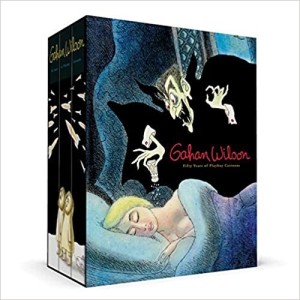
Hardcover. Seattle, Fantagraphics, 1st, 2011, Book: Very Good, Dust Jacket: Very Good, Three hardcover volumes in a pictorial slipcase, 1056 pages. Few cartoonists ever had as lavish a tribute as a three-volume-slipcased collection, but few are as deserving as Wilson. Collecting 50 years worth of his monthly single page gag cartoons from Playboy, it's a definitive overview of a remarkable talent and viewpoint. Considering the timeframe, Wilson's fabled black humor and art style remain remarkably consistent--as time passes, the drawing renders into slightly blobbier shapes that retain all of their wit just the same--but the source and degree of the humor is a constant. Although best known for his slightly lugubrious subjects--monsters, witches, corpses, vampires and skeletons are frequent visitors to these pages--Wilson also targets consumerism, materialism, and other basic human foibles. As publisher Gary Groth writes in a biography in the third volume, He has constructed a world that is eerily family, unsettlingly recognizable and lethally consistent. Beautifully designed and printed, the books contain cut-out pages, and the slipcase itself becomes a window for a trapped photo of Wilson. Text extras include Wilson's prose short stories and an appreciation by Neil Gaiman.
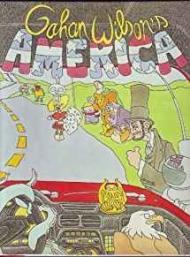
Hardcover. New York, Simon & Schuster, 1st, 1985, Book: Very Good, Dust Jacket: Very Good, 143 pages. Hardcover with dust jacket. A very clean, unmarked copy with only minor wear to dust jacket. Yellowing and wear to dust jacket edges. A collection of ghoulish cartoons conducts an irreverent tour of such American institutions as teenage dating, Las Vegas, automobiles, New England Calvinism, and witchcraft by Gahan Wilson.
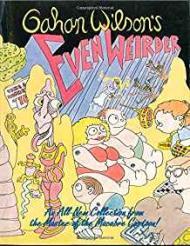
Softcover. New York, Forge, 1st, 1996, Book: Very Good, Dust Jacket: None, 237 pages. Softcover. A very clean, unmarked copy with only minor edgewear. Nearly 150 Gahan Wilson cartoons appear for the very first time anywhere in Gahan Wilson's Even Weirder. An additional 90 cartoons make their debut in book form, after initial publication in The New Yorker, Playboy and other magazines.
Softcover. San Francisco, Sierra Club Books, 1st pbk., 1995, Book: Very Good, Dust Jacket: None, Softcover, 288 pages illustrated in color. In sixty practical yet inspirational essays drawn from his Outdoor Photographer column, and in 145 stunning color photographs, world-renowned photographer Galen Rowell explains and demonstrates the techniques he uses to transform light and color into vivid, uniquely expressive art. The illuminating essays in Galen Rowell's Vision are grouped into four chapters covering the fundamental aspects of the art of adventure photography as practiced by one of its masters: "Goals," transforming dreams into realities through personal vision; "Preparations," pushing the limits of equipment, film, and technique; "Journeys," merging visions with realities; and "Realizations," communicating one's worldview through photography. Throughout, Rowell includes examples of some of his most memorable images and relates fascinating anecdotes from his extraordinary photographic career. Clean copy.
Hardcover. New Haven CT, Yale University Press, 1st, 2010, Book: Very Good, Dust Jacket: None, Hardcover, pictorial boards, 216 pages. Galleries of Friendship and Fame is the first comprehensive investigation of the origin, development, and practices of 19th-century American photograph albums. In this fascinating book, the author argues that the album--whether functioning as family record, parlor entertainment, social register, national portrait gallery, or advertisement for photography itself--helped transform the nature of self-presentation at the cusp of modernity. This handsome volume examines carte de visite and cabinet card albums from their introduction in the United States in 1861 through the rise of the snapshot at the century's end. By examining a wealth of previously overlooked primary materials, this study offers a completely new understanding of photograph albums, revealing how they emerged, how they were marketed and sold, and how families displayed and told stories through them. Galleries of Friendship and Fame addresses the history of technology and innovation, the interconnectedness of the commercial and domestic spheres, and the ways photography helped shape notions of identity, family, and nation in a rapidly changing America.
Hardcover. Philadelphia, PA, j.M. Stoddart & Co., 1st Edition, 1873, Book: Good, Dust Jacket: None, 488 pages. Hardcover. "Richly Illustrated with one hundred and fifty steel engravings, executed in the finest style of the art, mostly from original designs by distinguished artists." Light blue, fancy textured endpapers. Previous owner's signature on front endpaper. Cover boards elaborately bound in leather with raised bands and gilt title and decoration on spine. Front cover has engraved decoration in black, with gilt title and design, back cover board has same design without gilt (see image). Boards have some chipping around the corners and edges (see images). Elaborately decorative first title page (see image). All edges gilt (quite bright). Hinge cracked at gutter in one place (second page,--second page), binding remains tight, otherwise. Tanning to pages from age, doesn't affect text or illustrations. Some shadowing on a few pages due to previous owner's pressed flowers (now removed). This beautiful old volume was obviously meant to decorate someone's library, as well as provide some comfort at the beginning of the Twentieth Century.
Hardcover. Monte-Carlo, Andre Sauret, 1st, 1967, Book: Good, Dust Jacket: Very Good, INSCRIBED BY AUTHOR. French text. 156 pages, b&w and color illustrations throughout. Slightly warped. Foxing to top edge. Light edge wear to dust jacket; in brodart. Else a clean, tight copy.
Hardcover. NY, Scribner, 1st, 2010, Book: Very Good, Dust Jacket: Very Good, Hardcover in a bright, unclipped dust jacket. Pizzolatto, author of the short story collection Between Here and the Yellow Sea (2006), delivers a taut first novel suffused with a strong noir sensibility. Roy Cady is working as a strong-arm man for a low-level New Orleans gangster when two events change his life: he's diagnosed with terminal cancer, and his boss puts out a hit on him. Soon enough, Roy and a young prostitute, Rocky--thrown together after a blood-spattered encounter with the would-be hit men--are on the run, traveling from New Orleans to Galveston. "Nothing ends well," Roy muses at one point, and, of course, we know from the start that this road trip is on a collision course with disaster.
Hardcover. N. Ireland, Laurel Cottage Ltd., 1st, 2002, Book: Very Good, Dust Jacket: None, Hardcover, pictorial boards, oblong format, 92 pages, color illustrations by Derek Biddulph. SIGNED BY BOTH AUTHORS AND ARTIST on the title page. The combination of Derek Biddulph's delightful paintings and the fascinating history, stories and anecdotes from Peadar and Dick make this handsome guided tour of Galway City and the surrounding area. Clean copy.
Softcover. NY/San Francisco, Vorpal Gallery, 1st, Book: Very Good, Dust Jacket: None, Softcover, 40 pages with 14 color plates of the artist's paintings. Clean copy.
Hardcover. UK, Oxford University Press, 1st, 2004, Book: Very Good, Dust Jacket: Very Good, Hardcover in a bright dust jacket, 482 pages. This is the first comprehensive study of Gangraena, an intemperate anti-sectarian polemic written by a London Presbyterian Thomas Edwards and published in three parts in 1646. These books, which bitterly opposed any moves to religious toleration, were the most notorious and widely debated texts in a Revolution in which print was crucial to political moblization. They have been equally important to later scholars who have continued the lively debate over the value of Gangraena as a source for the ideas and movements its author condemned. This study includes a thorough assessment of the usefulness of Edwards' work as a historical source, but goes beyond this to provide a wide-ranging discussion of the importance of Gangraena in its own right as a lively work of propaganda, crucial to Presbyterian campaigning in the mid-1640s. Name, date on front fly leaf, otherwise clean.
Hardcover. Boston, Houghton Mifflin , 1st, 2000, Book: Very Good, Dust Jacket: Very Good, Non-paginated. Illustrated with full color woodcuts by Mary Azarian. SIGNED BY AZARIAN. Clean, tight copy. Revealing the variety of life underground, the bright comfort of a greenhouse on a winter's day, or the anticipation of starting seeds indoors in early spring, this striking alphabet book celebrates the simple joys of gardening. Without neglecting the frustrations--the nibbling critters and the toil--or wry, humorous moments spent in the garden. Mary Azarian's spare words and lovely woodcuts capture the essence of turning a bare plot of ground into fragrant flowers and lush vegetables and trees. Her depictions of insects, manure, and compost piles are as delightful as her fountains, pumpkins, and Queen Anne's lace. Whether we are young or old, our gardens both exhaust and renew us. They are our source of magic and wonder and perhaps our best way to live closer to the land and to the rhythm of the seasons.
Hardcover. NY, Macmillan, 1st, 1999, Book: Very Good, Dust Jacket: Very Good, Hardcover in a bright dust jacket, 212 pages. Stone is an important, though often overlooked, element of creating the perfect garden. Stone can combine with plants and water in an infinite array to bring us landscapes that range from the serene and contemplative to the boisterous and exuberant. While much has been written about plants and water in the garden, only scant attention has been paid to stone. Jan Kowalczewski Whitner finds this an injustice. "Stone is eloquent, and it speaks in many voices," says Whitner. "Some of our most imaginative gardeners have used stone to transform ordinary plots of land into the cumulatively rich and evocative landscapes we all hope to create." With photographer Linda Quartman Younker, Whitner travels across America, exploring some of the most imaginative uses of stone in gardens ranging from orderly formal gardens to relaxed and cozy cottage plots. A good deal of the book is devoted to specific types of stones and stonework, such as using gravel or working with outcrops, with accompanying lists of plants that work well with each. Clean copy.
Hardcover. New York, Kodansha International, Reprint, 1984, Book: Very Good, Dust Jacket: Very Good, 228 pages. Hardcover with dust jacket. A very clean, unmarked copy with only minor wear to dust jacket edges. Black & white and color photographs throughout. A tight copy.
Hardcover. New York, Stewart Tabori & Chang, 1st, 1999, Book: Very Good, Dust Jacket: Very Good, Hardcover, 160 pages. Oversized. Green cloth cover with some bumping to edges and corners. Dust jacket has slight wear to edges. Color and b&w illustrations and photographs throughout. A clean, bright copy.
Hardcover. New York, Robert M. McBride & Company, 2nd Printing, 1945, Book: Good, Dust Jacket: None, 128 pages. Hardcover. Black & white cartoons by Gardner Rea. Light foxing to preliminary pages. Clean, unmarked pages.
Hardcover. New Haven CT, Yale University Press, 1st, 2007, Book: Very Good, Dust Jacket: Very Good, Hardcover in a bright dust jacket, 482 pages with index. The first sustained analysis of the cult of the legendary Italian hero Giuseppe Garibaldi, the Italian revolutionary leader and popular hero, was among the best-known figures of the nineteenth century. This book seeks to examine his life and the making of his cult, to assess its impact, and understand its surprising success. For thirty years Garibaldi was involved in every combative event in Italy. His greatest moment came in 1860, when he defended a revolution in Sicily and provoked the collapse of the Bourbon monarchy, the overthrow of papal power in central Italy, and the creation of the Italian nation state. It made him a global icon, representing strength, bravery, manliness, saintliness, and a spirit of adventure. Handsome, flamboyant, and sexually attractive, he was worshiped in life and became a cult figure after his death in 1882. Lucy Riall shows that the emerging cult of Garibaldi was initially conceived by revolutionaries intent on overthrowing the status quo, that it was also the result of a collaborative effort involving writers, artists, actors, and publishers, and that it became genuinely and enduringly popular among a broad public. 33 b&w illustrations.
Hardcover. New York, Beaufort Books, 1st, 2016, Book: Very Good, Dust Jacket: Very Good, 375 pages. Hardcover with dust jacket. Clean, unmarked copy with only minor wear to dust jacket. Black and white pictures throughout.
Hardcover. NY, Aperture, 1st, 2005, Book: Very Good, Dust Jacket: None, Hardcover, 80 pages. In this previously unpublished body of work, Gary Schneider presents a haunting series of nudes and faces that emerge and seem to float above a receding black ground. Each image is rendered through a long exposure and by exploring the surfaces of the skin with a small handheld light. Due to the prolonged time required and the inevitable movements and consequent distortions that occur in the process, the results both reveal and obscure the intimate physical details and personality of the individual who poses. The sensibility and the obsessions of the artist are reflected by his decisions to expose certain areas more than others. The skin-tones are lush and luminous as they emerge from the darkness, yet these portraits also disturb as a result of the exaggerations and irregularities--the blurred traces of unconscious gesture matched with a stiffness that implies the innate physicality and mortality within each body.
Hardcover. Dark Horse, 1st, 2014, Book: Very Good, Dust Jacket: None, Hardcover, large format, 128 pages in color. Dark Horse's first volume in a series that will collect all the Sunday pages of the classic newspaper strip, in chronological order! While the daily pages focused on a continuing narrative, creator Frank King reserved the Gasoline Alley Sunday strips for wonderful, inventive interludes in which Walt Wallet, and his adopted foundling son Skeezix, reflected upon the lessons of life and the beauty of nature. Reprinted in full color, using the King family's collection of proofs, this giant-sized volume collects every Gasoline Alley Sunday strip from 1920 through 1922.
Hardcover. San Diego, CA, IDW Publishing, 1st, 2012, Book: Very Good, Dust Jacket: None, 318 pages. Hardcover with laminated boards. Clean, unmarked copy with only minor wear to edges. Satin ribbon marker. The year 1964 was a momentous one in the history of Gasoline Alley -- it's when Frank King officially handed the baton to Dick Moores. King continued to help plot the strip but it's Dick Moores who takes center stage. More so than any other newspaper strip, Gasoline Alley is renowned for its strict continuity and this is our chance to see Moores -- who continued writing and drawing the strip until 1986 -- make it his own.
Hardcover. Milwaukie WI, Dark Horse Books, 1st, 2014, Book: Very Good, Dust Jacket: None, Volume 2. Like new in publisher's shrink-wrap. Presenting the second in a series that collects, in chronological order, all the Sunday pages of the celebrated newspaper strip! Discover the abundant wonder and dazzling beauty in the world--as seen through the eyes of creator Frank King and his beloved characters, Walt and Skeezix--in some of Gasoline Alley's most artistically imaginative art! Reprinted in full color, this giant-sized volume collects every Gasoline Alley Sunday strip from 1923 through 1925. Hardcover, 128 pages, 16 X 12".
Softcover. NY, Avon/Flare, 1st, 1985, Book: Very Good, Dust Jacket: None, Softcover, 137 pages. Black and white illustrations throughout. Introduction by Nat Hentoff.
Boston, Houghton Mifflin, 1st, 2000, Book: Very Good, Dust Jacket: Very Good, Hardcover in a bright, unclipped dust jacket. The second book in Lois Lowry'sGiver Quartet tells the story of Kira, orphaned, physically flawed, and left with an uncertain future. Clean copy.
Softcover. London, Jantar Publishing, 1st, 2018, Book: Very Good, Dust Jacket: None, 258 pages. Softcover. A very clean, unmarked copy with only minor edgewear. The unloved wife of a doctor practising in Slovakia comes across his medical notes after his death. One `unofficial patient' has severe problems coming to terms with the disappearance and murder of his childhood sweetheart. Set in Slovakia from the mid-1970s onwards, historical fact, murder, loss and mourning combine delicately in a tale of love, loss, redemption and joy.
Hardcover. London/NY, Hamlyn, 1st, 1969, Book: Very Good, Dust Jacket: Very Good, Hardcover in a bright dust jacket, black cloth with silver lettering, 96 pages, Illustrated profusely with 59 black-and-white and 40 color illustrations. Clean copy.
Hardcover. London, Cory, Adams & Mackay, 1st, 1965, Book: Very Good, Dust Jacket: Good, 84 pages. Hardcover with price clipped dust jacket. Dust jacket shows heavy wear and rubbing, laminate is coming off the paper of the dust jacket. Moderately soiled. Cover boards are clean, internally clean and tight. There are 4 color plates tipped in; Black and white illustrations throughout.
Hardcover. Washington DC, The PhillipsCollection/D Giles Ltd , 1st, 2015, Book: Very Good, Dust Jacket: Very Good, Hardcover in a bright, unclipped dust jacket. 176 pages in color. Features rnot-often-seen examples of modern art. with works by Edouard Manet, Pierre-Auguste Renoir, Paul Cezanne, Claude Monet, Vincent van Gogh, Paul Gauguin, Marc Chagall, Pablo Picasso, Amedeo Modigliani, Georges Rouault, Alexej von Jawlensky and Wassily Kandinsky as well as Swiss Modernists Cuno Amiet and Ferdinand Hodler. Clean copy.
Hardcover. New Haven CT, Yale University Press, 1st, 2012, Book: Very Good, Dust Jacket: Very Good, Hardcover in a bright dust jacket. Published on the occasion of the exhibition held at the Philadelphia Museum of Art, 20 June-3 September 2012]/edited by Joseph J Rishel; with essays by Stephanie D'Allessandro.[et al.] A trio of masterpieces by Gauguin, Cezanne, and Matisse are joined by works by other major artists in this exploration of the enduring vitality of the theme of Arcadia. Paul Gauguin's Where Do We Come From? What Are We? Where Are We Going? (1897-98), Paul Cezanne's The Large Bathers (1906), and Henri Matisse's Bathers by a River (1909-10, 1913, and 1916-17). Other masterpieces by Jean-Baptiste-Camille Corot, Nicolas Poussin, and Pierre Puvis de Chavannes establish the high value given to Arcadia in the history of French painting. Still in publisher's shrinkwrap.
Softcover. Washington, National Gallery of Art, 2nd printing, 1988, Book: Very Good, Dust Jacket: None, 519 pages. Softcover. Previous owner's bookplate on front endpaper. Color and b/w illustrations throughout. Wrapper excellent, in beautiful condition. Pages clean and bright, unmarked. Binding tight. Published to accompany exhibition: National Gallery of Art, Washington, 5/1-7/31/88; The Art Institute of Chicago, 9/17-12/11/88; Grand Palais, Paris, France, 1/10-4/20/89.
Hardcover. Geneva, Skira, 1st, 1953, Book: Very Good, Dust Jacket: None, Hardcover, 115 pages with tipped-in color plates. publisher's textured white cloth, red lettering on spine, Skira "S", red, embossed on cover. Translated by James Emmons. Chronological Survey. Bibliography. Index. The first title in "The Taste of Our Time" Series. No dust jacket, a clean, bright copy.
Hardcover. POONA, Oriental Book Agency, 1st, 1939, Book: Very Good, Dust Jacket: None, 567 pages. Hardcover. Boards bound at spine with orange quartercloth, has fading and foxing to spine from age. Gray cardboard cover boards (some agewear). Pages and edges have some tanning, but otherwise unmarked. Previous owner's name on front flyleaf. This work is a product of seven manuscripts. It begins with the English tranlation of lectures on Nyayasutras by Gautama. The author has also used his notes from Bodhasiddhi.
Softcover. Bloomington IN, Indiana University Press, 1st, 2003, Book: Very Good, Dust Jacket: None, Softcover, 209 pages. This groundbreaking study explores the Harlem Renaissance as a literary phenomenon fundamentally shaped by same-sex-interested men. Christa Schwarz focuses on Countee Cullen, Langston Hughes, Claude McKay, and Richard Bruce Nugent and explores these writers' sexually dissident or gay literary voices. The portrayals of men-loving men in these writers' works vary significantly. Schwarz locates in the poetry of Cullen, Hughes, and McKay the employment of contemporary gay code words, deriving from the Greek discourse of homosexuality and from Walt Whitman. By contrast, Nugent-the only "out" gay Harlem Renaissance artist-portrayed men-loving men without reference to racial concepts or Whitmanesque codes. Schwarz argues for contemporary readings attuned to the complex relation between race, gender, and sexual orientation in Harlem Renaissance writing. Clean copy.
Softcover. Hatje Cantz, 1st, 2006, Book: Very Good, Dust Jacket: None, Softcover, 240 pages. Venezuelan sculptor Gertrud Luise Goldschmidt (1912-1994), who worked under the pseudonym Gego, was one of the most important representatives of Latin American Geometric Abstractionism. Born in Germany, Goldschmidt became an architect and later immigrated to Caracas in 1939, where she radically altered the nature of modernist sculpture, countering the deductive logic of 1960s abstraction with a fluid conceptualism, reconfiguring "content-less" art into an open-ended process of "thinking the line." The most comprehensive examination of Gego's art published in English to date, this monograph contains deep analyses by scholars from a range of disciplines as well as previously untranslated historical texts, offering new perspectives on Gego's critical relationships to Venezuelan urbanism and kineticism, the New York avant-garde, and the European modernist traditions of Bauhaus and Russian Constructivism. Includes an illustrated chronology and an extensive plate section featuring three decades of sculpture and drawings.
Hardcover. Cambridge, Mass., MIT Press in association with Violette Editions, 1st, 2004, Book: Good, Dust Jacket: Very Good, 539 pages. Hardcover. Extensive b&w illustrations by Frank Gehry throughout. Includes appendix of Gehry's projects. Includes artistically styled dust jacket. Some small stains to fore edge, otherwise clean, tight copy.
Hardcover. Garden City, Doubleday & Company, Inc., 1st, 1981, Book: Very Good, Dust Jacket: Very Good, 452 pages. Hardcover. Translated from the French, Les Meteores, by Anne Carter. Ivory cloth boards, with light tone to bottom edge, silver titles to spine. Dust jacket with light age toning, protected with a plastic cover. Clean, unmarked copy.
Hardcover. NY, Pantheon, 1st, 2005, Book: Very Good, Dust Jacket: Very Good, Hardcover, 112 pages. This clever, satirical graphic novel reimagines the Flaubert classic Madame Bovary through contemporary mores and attitudes. Simmonds's unique approach includes the usual panels and balloons, but also voluminous amounts of text on each page. The result is a graphic novel that reads like an actual novel. Simmonds tells the story through the eyes of Raymond Joubert, a baker in Normandy. Gemma herself is a complex character--an unsatisfied young woman who marries Charlie Bovery, a lumpish carpenter, out of apparent boredom, and then persuades him to move from London to a farmhouse in Normandy, to escape his clinging ex-wife and two children. Here, the rather unlikable Gemma begins to come into focus, her loneliness and isolation leading to her affair. Joubert, who mixes genuine concern with denial about his voyeurism, is convinced Gemma's headed down the same tragic path as Flaubert's original. Since we learn in the first paragraph that Gemma is dead, the question is who will be responsible for her demise. Simmonds's art recalls the elegance of New Yorker cartoonists mingled with the goth charm of Edward Gorey (Gemma herself is all restlessly darting pinpoint pupils).
Hardcover. NY, Farrar, Straus and Giroux, 1st, 2017, Book: Very Good, Dust Jacket: Very Good, Hardcover in a bright dust jacket, 206 pages. Famously unabashed, W. Eugene Smith was photography's most celebrated humanist. As a photo essayist at Life magazine in the 1940s and '50s, he established himself as an intimate chronicler of human culture. His photographs of war and disaster, villages and metropolises, doctors and midwives, revolutionized the role of images in journalism, transforming photography for decades to come. When Smith died in 1978, he left behind eighteen dollars in the bank and forty-four thousand pounds of archives. He was only fifty-nine, but he was flat worn-out. His death certificate read "stroke," but, as was said of the immortal jazzman Charlie Parker, Smith died of "everything," from drug and alcohol benders to weeklong work sessions with no sleep. Lured by the intoxicating trail of people that emerged from Smith's stupefying archive, Sam Stephenson began a quest to trace his footsteps. In Gene Smith's Sink, Stephenson merges traditional biography with rhythmic digressions to revive Smith's life and legacy. Traveling across twenty-nine states, Japan, and the Pacific, Stephenson profiles a lively cast of characters, including the playwright Tennessee Williams, to whom Smith likened himself; the avant-garde filmmaker Stan Brakhage, with whom he once shared a Swiss chalet; the artist Mary Frank, who was married to his friend Robert Frank; the jazz pianists Thelonious Monk and Sonny Clark, whose music was taped by Smith in his loft; and a series of obscure caregivers who helped keep Smith on his feet. The distillation of twenty years of research, Gene Smith's Sink is an unprecedented look into the photographer's potent legacy and the subjects around him. Clean, bright copy.
Hardcover. Baltimore, Genealogical Publishing Co., 1st, 1983, Book: Very Good, Dust Jacket: None, Hardcover, black cloth with gilt lettering, 733 pages. Many of the early settlers of Barbados eventually moved to the mainland of North America and settled in Virginia, Georgia, the Carolinas, and other colonies. Records of Barbados families exist in a variety of places and indeed a great many have been written up and published in the turn-of-the-century journal "Caribbeana" and "The Journal of the Barbados Museum and Historical Society". Unfortunately, back issues of these journals are no longer available, and copies can be found today in only a handful of libraries. With this present work, however, genealogists at last have access to both of these publications, for the book contains every article pertaining to family history ever published in these journals. The combined articles, reprinted here in facsimile, range from conventional genealogies and pedigrees to will abstracts and Bible records and refer to some 15,000 persons, all of whom are listed in the index. Besides the genealogies and family records, this compilation also contains a selection of notes on the connections between Barbados and New England families and four invaluable lists of Barbados Quakers.
Hardcover. The Hague, Mouton, reprint, 2015, Book: Very Good, Dust Jacket: None, Hardcover, decorated green boards, 197 pages. Translated from the French. Early 'rational' language study. Originally published in 1975. Preface by Arthur Danto. Clean copy.
Hardcover. NY, Longmans Green and Co., 1st, 1926, Book: Good, Dust Jacket: None, Hardcover, dark green cloth with gilt title on spine. 702 pages. Front hinge cracked, re-enforced with tape. Light shelf-wear, otherwise sound and clean.
Softcover. Austin TX, University of Texas Press, 1st, 1985, Book: Very Good, Dust Jacket: None, Softcover, 127 pages, b&w and color plates. Bottom right corner slightly bumped. Else a very clean, tight copy.
Hardcover. Ames IA, Iowa State University Press, 1st, 1985, Book: Very Good, Dust Jacket: Very Good, Hardcover, 254 pages. A very clean hardcover edition in dust jacket and INSCRIBED BY HARNACK on the title page. The book 'focuses on the formation in the 1880s of a colony of upper-class British immigrants who viewed Iowa pioneering as a way of perpetuating the Victorian gentleman's code. It covers a broad range of social history of the latter part of the 19th century, from London drawing rooms to Iowa pig farms, and includes a careful scrutiny of Walter and James Cowan, brothers who were typical of Victorian gentlemen in this special venture'.

 "Gabby Growing Upby: Hest, Amy and Amy Schwartz")

 "Gabby The Shrewby: Olsen, Alfa-Betty and Marshall Efron and Roz Chast")




 "Gallery of Famous Poets (A Gallery of Famous English and American Poets with an Introductory Essay by Henry Copp")











 "Garibaldi: Invention of a Heroby: Lucy Riall")

 "Gary Schneider: Nudesby: Schneider, Gary")
 "Gasoline Alley - The Complete Sundays Volume One 1920-1922by: King, Frank")
 "Gasoline Alley Volume 1-Daily Comics 1964-1966by: King, Frank and Dick Moores")
 "Gasoline Alley: The Complete Sundays Volume 2 1923-1925by: King, Frank")







 "Gauguin: The art of Paul Gauguinby: Brettell, Richard, Francoise Cachin, Claire Fr")





 "Geminiby: Tournier, Michel")
 "Gemma Boveryby: Simmonds, Posy")

 "Genealogies of Barbados Families: From Caribbeana and the Journal of the Barbados Museum and Historical Societyby: James C. Branow")




)