Hardcover. NY/London, Routledge, 1st, 1993, Book: Very Good, Dust Jacket: Very Good, Hardcover in a bright dust jacket, 283 pages, b&w illustrations. " Richard Schechner explores the nature of ritualised behavior and its relationship to performance and politics. A brilliant and uncontainable examination of cultural expression and communal action, THE FUTURE OF RITUAL asks pertinent questions about art, theatre and the changing meaning of 'culture' in today's intercultural world. It is richly illustrated with over 50 photos of pereformances and public events." Clean copy.
Softcover. Cambridge University Press, reprint, 2011, Book: Very Good, Dust Jacket: None, Softcover, 379 pages. Scholars have argued about U.S. state development - in particular its laggard social policy and weak institutional capacity - for generations. Neo-institutionalism has informed and enriched these debates, but, as yet, no scholar has reckoned with a very successful and sweeping social policy designed by the federal government: the Servicemen's Readjustment Act of 1944, more popularly known as the GI Bill. Kathleen J. Frydl addresses the GI Bill in the first study based on systematic and comprehensive use of the records of the Veterans Administration. Frydl's research situates the Bill squarely in debates about institutional development, social policy and citizenship, and political legitimacy. It demonstrates the multiple ways in which the GI Bill advanced federal power and social policy, and, at the very same time, limited its extent and its effects. Clean copy.
Hardcover. Dublin, Brett Smith, 1st thus, 1788, Book: Very Good, Dust Jacket: None, Hardcover, leather bound. 553 pages plus Index of Proper Names. Uncommon translation from Ireland. Hawkey was a Reverend and Master of the Free-School in Dundalk. "The Commentaries of his Wars in Gaul" is Julius Caesar's firsthand account of the Gallic Wars, written as a third-person narrative. In it Caesar describes the battles and intrigues that took place in the nine years he spent fighting the Germanic peoples and Celtic peoples in Gaul that opposed Roman conquest. The Gallic Wars were a series of military campaigns waged by the Roman proconsul Julius Caesar against several Gallic tribes. Rome's war against the Gallic tribes lasted from 58 BC to 50 BC and culminated in the decisive Battle of Alesia in 52 BC, in which a complete Roman victory resulted in the expansion of the Roman Republic over the whole of Gaul (mainly present-day France and Belgium). "His Commentaries of the Civil War" is an account written by Julius Caesar of his war against Gnaeus Pompeius and the Senate. It covers the events of 49-48 BC, from shortly before Caesar's invasion of Italy to Pompey's defeat at the Battle of Pharsalus and flight to Egypt with Caesar in pursuit. It closes with Pompey assassinated, Caesar attempting to mediate rival claims to the Egyptian throne, and the beginning of the Alexandrian War. Prelim pages gone so the book opens on the title page. Interior pages bright with no foxing, firm binding. Light wear to covers, front cover with partial split along spine, Otherwise clean.
Hardcover. NY, Atheneum, 1st, 1975, Book: Very Good, Dust Jacket: Very Good, Hardcover in a bright, unclipped dust jacket. Corrie refuses to believe that her father is dying until she realizes that no matter what happens, a part of him will always live in her. Clean copy. Light fade to spine.
Hardcover. NY, Hugh Lauter Levin, 1st, 2002, Book: Very Good, Dust Jacket: Very Good, 100 pages. Hardcover with dust jacket. The planning and sketches for the famous installation that took place in 2005. Many black and white and color photographs. Bibliography.
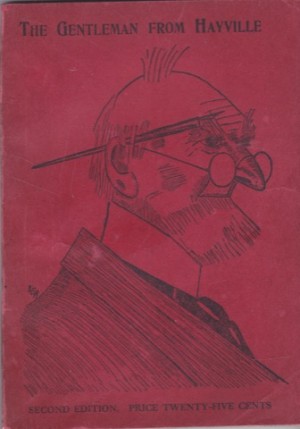
Softcover. Rutland VT, self-published, 2nd Ed., 1909, Book: Very Good, Dust Jacket: None, Softcover, red paper covers stamped with a black title and cartoon portrait of author. Yankee humor in the form of short sketches originally published in the Rutland Herald. The author (pictured in a photo on the first inside page) was a member of the Vermont legislature. Several cartoons by George Randall embellish the 90 pages of text. Ads in rear. Clean copy.
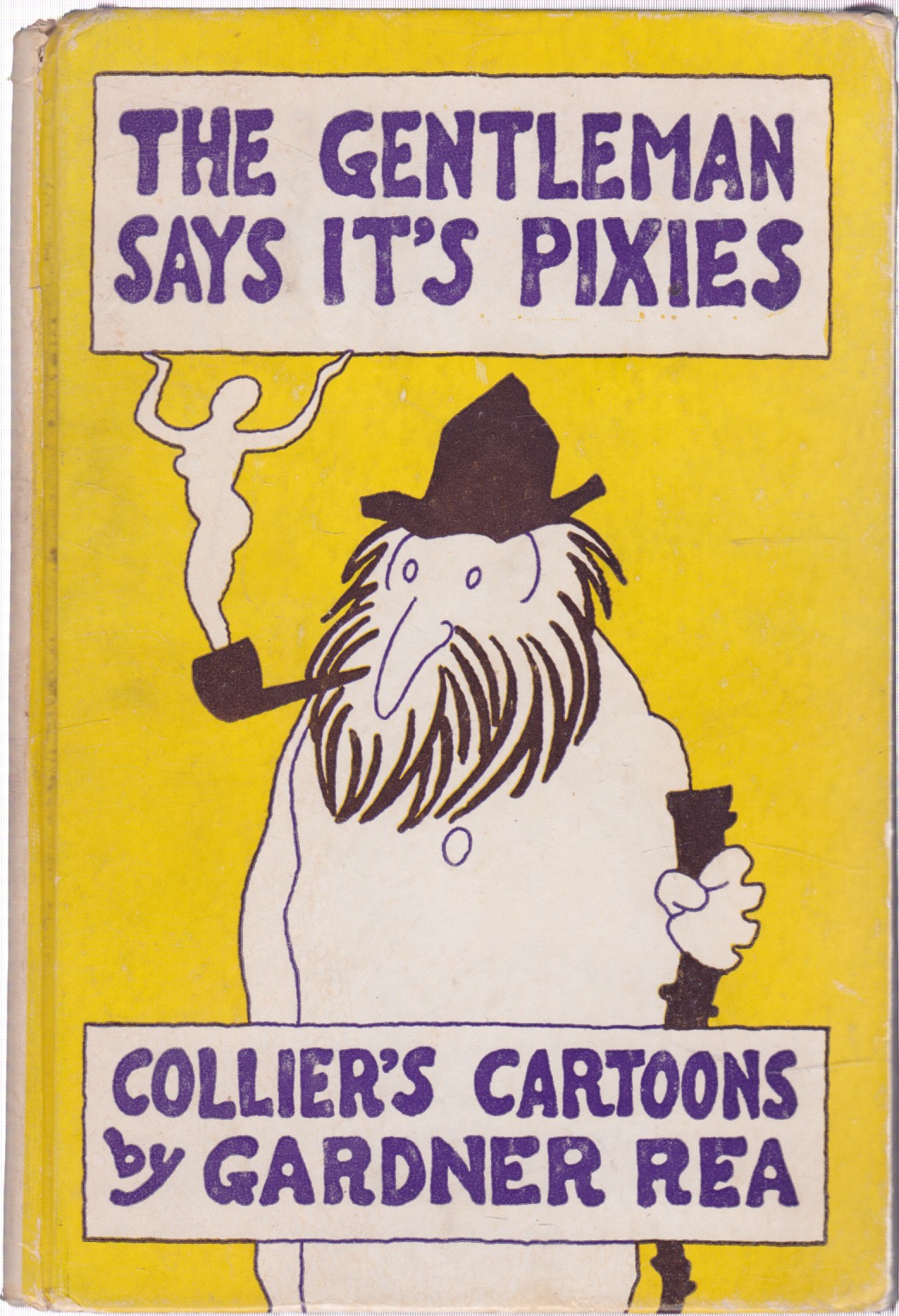
Hardcover. NY, Robert M. McBride & Company, 1st, 1944, Book: Good, Dust Jacket: None, Hardcover, pictorial boards, 80 pages. Introduction by Ogden Nash. Edited by Gurney Williams. Rea's cartoons for Colliers, he also contributed heavily to the New Yorker. Paper starting to peel from spine, otherwise clean, sound copy.
Hardcover. NY, Simon & Schuster, 1st, 1993, Book: Very Good, Dust Jacket: Very Good, Hardcover in a bright, unclipped dust jacket, 303 pages. Eighty percent of everything ever built in America has been built since the end of World War II. This tragic landscape of highway strips, parking lots, housing tracts, mega-malls, junked cities, and ravaged countryside is not simply an expression of our economic predicament, but in large part a cause. It is the everyday environment where most Americans live and work, and it represents a gathering calamity whose effects we have hardly begun to measure. In The Geography of Nowhere, James Howard Kunstler traces America's evolution from a nation of Main Streets and coherent communities to a land where everyplace is like noplace in particular, where the city is a dead zone and the countryside a wasteland of cars and blacktop. Now that the great suburban build-out is over, Kunstler argues, we are stuck with the consequences: a national living arrangement that destroys civic life while imposing enormous social costs and economic burdens. Kunstler explains how our present zoning laws impoverish the life of our communities, and how all our efforts to make automobiles happy have resulted in making human beings miserable. Name on front fly leaf, otherwise like new.
Hardcover. Seattle, Fantagraphics, 1st, 2020, Book: Very Good, Dust Jacket: Very Good, This new deluxe hardcover collects full-sized Sunday newspaper comics from 1919 through 1921 in a handsome archival collection. As the surreal comic strip continues into the 1920s, the likes of Joe Stork, Blind Pig, and Bum Bill Bee settle into the mesas of Coconino County. Brand-new readers and Herriman aficionados alike will find out what happens when Ignatz the Mouse's brick supplier runs out of stock, how Krazy Kat fares after taking up boxing, and what happens when a new "Katnippery" opens providing libations to the locals. Krazy & Ignatz 1919-1921 (Vol. 2) includes photographs, artwork, and introductory text by comic historians Bill Blackbeard and Michael Tisserand. Black & white illustrations. 184 pages.
Hardcover. Wheat Ridge CO, Hoflin Publishing, 1st, 1986, Book: Very Good, Dust Jacket: None, Hardcover, bright red cloth covers with gilt rules and lettering, color pastedown on front. 552 pages, 970 b&w illustrations. A wealth of information on every aspect of the German Shepherd Dog. Many contributors on a variety of topics: history, breeding, behavior and care. Front cover art with light rubbing, name and address on front fly leaf, otherwise clean. DUE TO WEIGHT, DOMESTIC SHIPPING ONLY.
Softcover. NY, Kodanska Comics, reprint, 2009, Book: Very Good, Dust Jacket: None, Softcover, 348 pages plus a 32 page interview with artist. Illustrated in color and b&w. From Masamune Shirow, leading exponent of manga -- the most dynamic and popular comic genre in the world -- comes his most influential and important creation! The near future. Human and robot are indistinguishable and giving birth to new criminals -- ghost hackers capable of reducing people to puppets. Cyborg agent Major Motoko Kusanagi is on the trail of the most lethal hacker -- the Puppeteer, leading her into the twisted nexus between living technology and the human psyche! This new edition includes additional material never seen before. Light sticker residue to rear cover, otherwise clean.
Hardcover. NY, Holiday House, 1st, 1991, Book: Very Good, Dust Jacket: Very Good, Hardcover in a bright, unclipped dust jacket with cover art and interior map by Trina Schart Hyman. 12 year old Gabe is invited by his grandfather to help shear the sheep on Ghost Island where Gabe sees the ghost who haunts the island. Clean copy.
Softcover. Washington DC, U.S. Department of Interior, 1st, 1975, Book: Good, Dust Jacket: None, Softcover, 180 pages, b&w illustrations. Fading to red on covers, light musty odor. Name on front fly leaf, otherwise clean.
Hardcover. Somerville MA, Candlewick Press, reprint, Book: Very Good, Dust Jacket: Very Good, Hardcover in a bright dust jacket. O. Henry's classic tale of the wisest gifts of Christmas, brought to life by P.J. Lynch's extraordinary art, is itself a gift to share and treasure. In a shabby New York flat, Della sobs as she counts the few coins she has saved to buy a Christmas present for her husband, Jim. A gift worthy of her devotion will require a great sacrifice: selling her long, beautiful hair. Jim, meanwhile, has made a sacrifice for Della that is no less difficult. As they exchange gifts on Christmas Eve, the discovery of what each has done fills them with despair, until they realize that the true gifts of Christmas can be found more readily in their humble apartment than in any fine store. The sepia-toned watercolors have an authentic period look; the details present in the New York City street scenes and the couple's rather shabby apartment add a strong feeling of time and place to the story. Clean copy.
Hardcover. Chicago, Playboy Press, 1st, 1975, Hardcover, purple cloth in an edgeworn dust jacket. An American figurative painter, specializing most often in paintings of female nudes, whose work incorporates elements of realist and abstract art. Text by Elizabeth Claridge. 158 pages. Some light peeling of laminate on dust jacket. Otherwise very good, clean copy.
Hardcover. NY, Harper, 1st, 2008, Book: Very Good, Dust Jacket: Very Good, Hardcover in a bright, unclipped dust jacket. The Glory Game recreates in breathtaking detail the 1958 National Football League Championship Game between the New York Giants and the Baltimore Colts, which many football fans feel was "The Greatest Game Ever Played." This first-hand, field level, "behind-the-helmet" account by ex-Giant Hall of Famer and longtime "Monday Night Football" broadcaster Frank Gifford brings back to life all the sights and sounds of the momentous contest that changed football forever, and offers vivid, indelible portraits of the legendary players--including Sam Huff, Andy Robustelli, Art Donovan, Lenny Moore, and Raymond Berry. The Giants-Colts clash of '58 was truly The Glory Game--and now readers can relive it in all its glory. Clean copy.
Hardcover. NY, Harper & Brothers, 1957, Book: Very Good, Dust Jacket: Good, Hardcover in yellow and black cloth illustrated in black and with yellow spine lettering. 222 pages Illustrated with drawings by Williams from The New Yorker accompanied by the text they decorated from authors such as Robert Benchley, Corey Ford, Edward Streeter, Laurence McKinney, David McCord, and Ralf Kircher. Book is very good, clean. The dust jacket has tears with tape repair on reverse. Light soil.
Hardcover. NY, Regan Arts, 1st, 2016, Book: Very Good, Dust Jacket: None, Hardcover in pictorial boards. The never-before-published edition of Francis Ford Coppola's notes and annotations on The Godfather novel by Mario Puzo reveals the story behind one of the worlds most iconic films. The most important unpublished work on one of the greatest films of all time, The Godfather, written before filming, by the man who wrote and directed it-Francis Ford Coppola, then only thirty-two years old-reveals the intense creative process that went into making this seminal film. With his meticulous notes and impressions of Mario Puzos novel, the notebook was referred to by Coppola daily on set while he directed the movie. The Godfather Notebook pulls back the curtain on the legendary filmmaker and the film that launched his illustrious career. Complete with an introduction by Francis Ford Coppola and exclusive photographs from on and off the set, this is a unique, beautiful, and faithful reproduction of Coppolas original notebook. Clean, bright copy.
Hardcover. NY, Regan Arts, 1st, 2016, Book: Very Good, Dust Jacket: None, Hardcover in pictorial boards. The never-before-published edition of Francis Ford Coppola's notes and annotations on The Godfather novel by Mario Puzo reveals the story behind one of the worlds most iconic films. The most important unpublished work on one of the greatest films of all time, The Godfather, written before filming, by the man who wrote and directed it-Francis Ford Coppola, then only thirty-two years old-reveals the intense creative process that went into making this seminal film. With his meticulous notes and impressions of Puzo's novel, the notebook was referred to by Coppola daily on set while he directed the movie. The Godfather Notebook pulls back the curtain on the legendary filmmaker and the film that launched his illustrious career. Complete with an introduction by Francis Ford Coppola and exclusive photographs from on and off the set, this is a unique, beautiful, and faithful reproduction of Coppola's original notebook. Clean, bright copy.
Hardcover. NY, Artabras Publishers, 1st, 1994, Book: Very Good, Dust Jacket: Very Good, Hardcover, 144 pages. A review of all the Batman comics features 224 covers, ranging from the first issue of Detective Comics in 1939 to the mid-1950s.
Hardcover. NY, Taschen, reprint, 2013, Book: Very Good, Dust Jacket: None, Hardcover in pictorial boards, 416 pages in color. In June of 1938, Action Comics debuted with a new kind of comic book character on its cover: a costumed man with two identities, who possessed extraordinary strength and powers-a man able to protect the public when ordinary measures would not do. He was not the first super hero, but the Man of Steel would become the prototype for all super heroes thereafter. Superman's story, and those of Batman, Wonder Woman, and hundreds of other DC Comics characters, are all told in The Golden Age of DC Comics. The single most comprehensive book on the subject, this volume traces the company's first decades, from its pulp origins up to the comic book burnings of the McCarthy '50s in more than 400 pages bursting with comics, art, comics, photographs, and more comics. Also included is an exclusive interview with legendary artist Joe Kubert. Expanded from the Eisner Award-winning XL book, 75 Years of DC Comics, TASCHEN's series on DC Comics explores the origins of comics' most enduring legends and the behind-the-scenes, era by era. In a reader-friendly size, the books feature updated essays by author Paul Levitz and thousands of covers and interiors, original illustrations, photographs, film stills, and collectibles to bring the story lines, the characters, and their creators to vibrant life. Due to size and weight, DOMESTIC SHIPPING ONLY.
Hardcover. NY, Taschen, reprint, 2018, Book: Very Good, Dust Jacket: None, Hardcover in pictorial boards, 416 pages in color. In June of 1938, Action Comics debuted with a new kind of comic book character on its cover: a costumed man with two identities, who possessed extraordinary strength and powers-a man able to protect the public when ordinary measures would not do. He was not the first super hero, but the Man of Steel would become the prototype for all super heroes thereafter. Superman's story, and those of Batman, Wonder Woman, and hundreds of other DC Comics characters, are all told in The Golden Age of DC Comics. The single most comprehensive book on the subject, this volume traces the company's first decades, from its pulp origins up to the comic book burnings of the McCarthy '50s in more than 400 pages bursting with comics, art, comics, photographs, and more comics. Also included is an exclusive interview with legendary artist Joe Kubert. Expanded from the Eisner Award-winning XL book, 75 Years of DC Comics, TASCHEN's series on DC Comics explores the origins of comics' most enduring legends and the behind-the-scenes, era by era. In a reader-friendly size, the books feature updated essays by author Paul Levitz and thousands of covers and interiors, original illustrations, photographs, film stills, and collectibles to bring the story lines, the characters, and their creators to vibrant life. A bright, clean copy that has a light smoker's odor.
Softcover. NY, Dover Publications, 1st, 1971, Book: Very Good, Dust Jacket: None, Softcover, 80 pages. "70 European and American posters of the 1890's in color". Clean copy.
Hardcover. London, Thames & Hudson, 1st, 1984, Book: Very Good, Dust Jacket: Very Good, Hardcover in a bright dust jacket. 536 pages, 1117 illustrations, 74 in color. Translated from the Dutch & edited by Elizabeth Willems-Treeman. The chapter headings are: iconoclasm & revolt 1566-1588; the artist's social position; the patrons; theories of art; realism & symbolism; different genres; the development of painting in the early 17th century; painting in Haarlem, Leiden, Amsterdam, the Northern Quarter, Utrecht, Delft, The Hague etc 1625-1650; The Republic in the third quarter of the 17th Century; painting in Haarlem, Leiden, Amsterdam, the Northen Quarter, Utrecht, Delft, The Hague etc 1650-1680. Name on half-titile page, otherwise clean. NOTE: DUE TO WEIGHT, DOMESTIC SHIPPING ONLY.
Hardcover. Porvoo Finland, Werner Soderstrom Osakeyhtio, 1st, 1992, Book: Very Good, Dust Jacket: None, Hardcover, glossy illustrated boards with yellow and white lettering on front and spine. 311 pages. Translated by Michael Wynne-Ellis. Extensively illustrated, with many full-page color plates. Clean, bright copy.
Hardcover. NY, Hogarth Press, Book: Very Good, Dust Jacket: None, Hardcover in cloth with dark green buckram spine with gold lettering on the spine, no DJ, deckled edges. 359 pages, 6 full page plates and chapter head drawings by Philip Hagreen. Uncommon edition. Clean, bright copy.
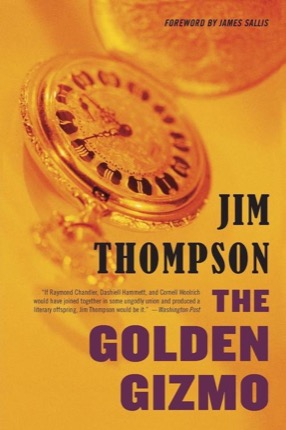
Softcover. NY, Little, Brown & Company, reprint, 2014, Book: Very Good, Dust Jacket: None, Softcover, 209 pages. Originally published in paperback by Lion Books, March 1954. "Gizmo" is the GI term for the unidentifiable -- and that's the way that Toddy Kent has begun to think of the reasons behind the rapid swing of his days. Somehow, Kent seems always to find himself regularly confronted with The Big Break every man would kill for -- only to see it slip through his fingers. Kent's grinding out a paycheck buying gold on the cheap and selling it for the slimmest of profits when he stumbles into his latest, almost mythical discovery -- pure, unadulterated gold in the form of a priceless watch he didn't exactly mean to steal. Soon Kent finds himself at the center of a whirlwind of danger involving everyone from the woman he can't seem to shake, bail bondsmen who get word of Kent's discovery, the Treasury Department, his pawnbroker, and a devious old man with a dog that may or may not be able to speak English, in a rip-roaring comedy of errors and would-you-believe-it bad luck unlike anything you've ever read. Who ever knew one lousy watch could bring so much trouble? And how many times can Kent avoid getting killed before his luck runs out for good?Clean, unread copy.
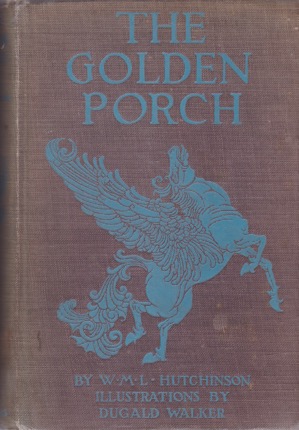
Hardcover. NY/London, Longmans, Green and Co., 1st, 1925, Hardcover, gray cloth with blue design featuring a winged horse on the cover. Illustrations by Dugald Stewart Walker, with a color frontispiece and b&w drawings throughout the text and decorative endpapers of blue and white illustrations of a Centaur hunter and forest scene. Blue lettering on spine faded, inscription on half title in ink, another on ext blank page in pencil.
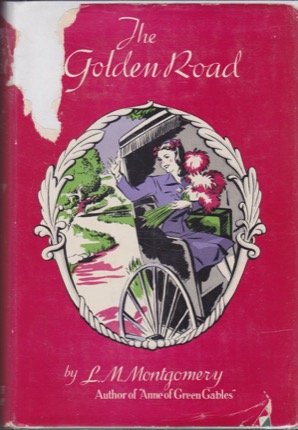
Hardcover. NY, Grosset & Dunlap, reprint, circa 1945, Book: Very Good, Dust Jacket: Fair, Hardcover, green cloth in a dust jacket that has a big chunk gone from front panel, 369 pages. First published in 1913 this reprint is from mid-40s with Wartime notation on title page. No marking, clean, tight copy.
Hardcover. NY, Pantheon, 1st US, 1999, Book: Very Good, Dust Jacket: Very Good, Hardcover in a bright, unclipped dust jacket. A magisterial achievement: part biography, part history, part moral meditation on the resurrection of torture as an instrument of political power in the twentieth century, The Good Listener tells the story of Helen Bamber, a good but complex woman now in her seventies, who has spent her life battling to bring the dark side of history into the light. In almost every situation in our century where mankind has demonstrated its capacity to intensify evil--during the Nazi Holocaust, in Algeria, Chile, Africa, the USSR, and Israel, as well as in postwar Britain and Germany--Bamber has served as a witness, an expert, or a reproach, as well as a repository of our collective memory of debasement. Her father, a Polish Jew, had been so obsessed by the Fascist threat that he would read to Helen from Goebbels' speeches, teaching her how corrupting and manipulative language can be. She went to Bergen-Belsen after World War II had ended, and upon her return to London she dedicated herself to caring for the young survivors of the camp. So began Bamber's brave devotion to the grim and dangerous task of undoing the work of the torturer--culminating, after her participation as a central force in Amnesty International, in her establishment in England of the Foundation for the Care of Victims of Torture. Because Bamber's uncanny openness to others has been one of her great skills, Clean copy.
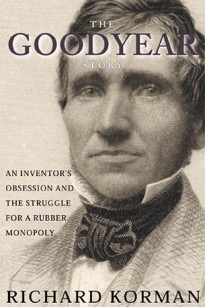
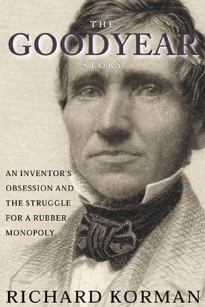
Hardcover. San Francisco, Encounter Books, 1st, 2002, Book: Very Good, Dust Jacket: Very Good, Hardcover in a bright dust jacket, 222 pages. SIGNED BY AUTHOR ON HALF TITLE PAGE. Clean, unmarked copy. Black and white pictures in center. Goodyear was an entrepreneur who actually made good on the ever-popular claim that his company would change the world. Korman, senior editor of Engineering News-Record, dryly traces the life of the rubber pioneer and American industrial legend in this part scientific history lesson and part American business story. Goodyear (1800-1860) became an inventor not out of any great scientific thirst; he was self-taught and wanted to make money. He earned success, but endured continual patent monopoly battles and numerous trips to debtors' prison as he steadfastly and compulsively held onto his dream of using rubber to change just about every aspect of life. (According to Korman, Goodyear frequently wore a coat made of rubber in his early inventing days to underscore the versatility of his product.) Korman waxes scientific at times, offering in-depth descriptions of how Goodyear cooked rubber and sulfur compounds, yet his technical discourses are not so esoteric that they will turn away amateurs. His book is also valuable for its accurate portrayal of factory life in the 1830s and '40s; his accounts of the aproned men who chopped rubber with axes and knives and the machines that ground it are lively examples of industrial age America. Clean copy.
Hardcover. San Francisco, Encounter Books, 1st, 2002, Book: Very Good, Dust Jacket: Very Good, Hardcover in a bright dust jacket, 222 pages. Clean, unmarked copy. Black and white pictures in center. Goodyear was an entrepreneur who actually made good on the ever-popular claim that his company would change the world. Korman, senior editor of Engineering News-Record, dryly traces the life of the rubber pioneer and American industrial legend in this part scientific history lesson and part American business story. Goodyear (1800-1860) became an inventor not out of any great scientific thirst; he was self-taught and wanted to make money. He earned success, but endured continual patent monopoly battles and numerous trips to debtors' prison as he steadfastly and compulsively held onto his dream of using rubber to change just about every aspect of life. (According to Korman, Goodyear frequently wore a coat made of rubber in his early inventing days to underscore the versatility of his product.) Korman waxes scientific at times, offering in-depth descriptions of how Goodyear cooked rubber and sulfur compounds, yet his technical discourses are not so esoteric that they will turn away amateurs. His book is also valuable for its accurate portrayal of factory life in the 1830s and '40s; his accounts of the aproned men who chopped rubber with axes and knives and the machines that ground it are lively examples of industrial age America. Clean copy.
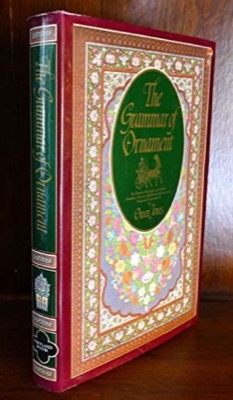
Hardcover. NY, Portland House, reprint, 1986, Book: Very Good, Dust Jacket: Very Good, Hardcover in a bright dust jacket. Illustrated with 100 full-page color plates, each with multiple patterns; additional black & white figures. Originally published in 1867 by S. & T. Gilbert of London. Folio.
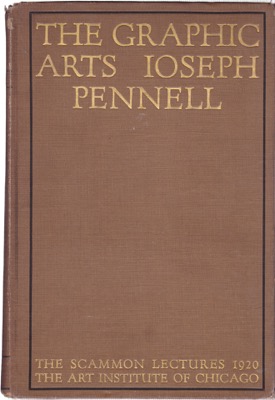
Hardcover. Chicago, University of Chicago, 1st, 1921, Book: Very Good, Dust Jacket: None, Hardcover, 315 pages. B&w illustrations throughout.Compilation of lectures given by Pennell in 1920 on the print-making methods and techniques used by artists of the day. Very good in light brown cloth with gilt lettering to front board and spine. Hinge cracked at title page, light wear to cloth at top and bottom of spine. Otherwise a clean, bright copy.
Hardcover. NY, HarperCollins, 1st illust thus, 2014, Book: Very Good, Dust Jacket: Very Good, Hardcover in a bright dust jacket. The second volume of a glorious two-volume, four-color graphic novel adaptation of Neil Gaiman's #1 New York Times bestselling and Newbery and Carnegie Medal-winning novel The Graveyard Book, adapted by P. Craig Russell and illustrated by an extraordinary team of renowned artists. Inventive, chilling, and filled with wonder, Neil Gaiman's The Graveyard Book reaches new heights in this stunning adaptation. Artists Kevin Nowlan, P. Craig Russell, Galen Showman, Scott Hampton, and David Lafuente lend their own signature styles to create an imaginatively diverse and yet cohesive interpretation of Neil Gaiman's luminous novel. Volume Two includes chapter six to the end of the book. The concluding volume of the graphic novel adaptation of the book about a boy, raised by the inhabitants of the local graveyard who rally to protect him from a league of villains named Jack that seeks to destroy him. Clean copy.
Softcover. Seattle, Fantagraphics Books, 1st, 2009, Book: Very Good, Dust Jacket: None, Softcover, 184 pages. Color frontispiece, b&w illustrations. The Great Anti-War Cartoons by Craig Yoe offers a "hard-hitting but hopeful" collection spanning centuries of anti-war drawings by some of the best graphic artists, from Honore Daumier to R. Crumb and many others. As noted in the foreword, the works included in this compilation of responses to war come from both the left and the right, and this is indeed one of the strengths of this book. The insightful, thought-provoking introduction is delivered by none other than Nobel Peace Prize Winner Dr. Muhammad Yunus and proves to be well worth reading in its own right.
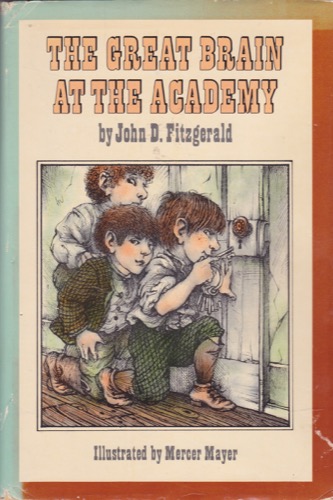
Hardcover. NY, Dial Press, 1st, 1972, Book: Very Good, Dust Jacket: Good, Hardcover, in an unclipped ($4.95) but partially faded dust jacket. 164 page, b&w drawings by Mercer Mayer. The Great Brain faces the challenge of life at a strict Catholic boarding school with daring exploits and money-making schemes. Stated first printing.
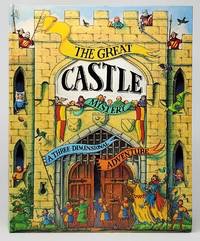
Hardcover. NY, HarperFestival, 1st, 1996, Book: Very Good, Dust Jacket: None, Hardcover, 12" X 9 3/4". Interactive 3-D pop-out castle model measuring 8 1/4" X 16 1/2" X 8 1/4" is clean, functional, and unworn. Very mild shelf wear to 24-page story book. Includes 38 press-out figures that have not been punched out. Landscape mat is present and clean. A highly presentable and apparently complete pop-up castle playset of Baron Swarthy's Castle with accompanying fact-filled book that tells of a murder and invites readers to look for clues to discover the villain's whereabouts before the king arrives. Still in publisher's shrinkwrap.
Hardcover. Geneva, Albert Skira, 1st, 1959, Book: Very Good, Dust Jacket: Very Good, Hardcover in a bright, unclipped dust jacket. Green cloth boards with gilt lettering. Clean, bright copy with tipped-in color plates throughout, 193 pages.
Hardcover. Boston, Little, Brown and Company, 1st, 1997, Book: Good, Dust Jacket: Good, Hardcover in a worn dust jacket. Glossy pictorial boards with trace wear and lightly bumped spine ends and corners. Color art throughout by Tudor. A delightful sequel to her 1971 title, The Corgiville Fair. Small inscription on front endpaper.
NY, Simon & Schuster, 1st, 2021, Book: Very Good, Dust Jacket: Very Good, Hardcover in a bright, unclipped dust jacket. 609 pages, b&w illustrations. They say that history is written by the victors. But not in the case of the most famous dissenter on the Supreme Court. Almost a century after his death, John Marshall Harlan's words helped end segregation and gave us our civil rights and our modern economic freedom. But his legacy would not have been possible without the courage of Robert Harlan, a slave who John's father raised like a son in the same household. After the Civil War, Robert emerges as a political leader. With Black people holding power in the Republican Party, it is Robert who helps John land his appointment to the Supreme Court. At first, John is awed by his fellow justices, but the country is changing. Northern whites are prepared to take away black rights to appease the South. Giant trusts are monopolizing entire industries. Against this onslaught, the Supreme Court seemed all too willing to strip away civil rights and invalidate labor protections. So as case after case comes before the court, challenging his core values, John makes a fateful decision: He breaks with his colleagues in fundamental ways, becoming the nation's prime defender of the rights of Black people, immigrant laborers, and people in distant lands occupied by the US. Harlan's dissents, particularly in Plessy v. Ferguson, were widely read and a source of hope for decades. Thurgood Marshall called Harlan's Plessy dissent his "Bible"--and his legal roadmap to overturning segregation. In the end, Harlan's words built the foundations for the legal revolutions of the New Deal and Civil Rights eras.
Softcover. New York, Brooklyn Museum, 1st, 1983, Book: Very Good, Dust Jacket: None, 180 pages, b&w and color photography. Very light edge wear, else a very clean, tight copy. Wonderful book on the great Brooklyn Bridge. Includes much historical material, chapters on the design of the bridge with several beautiful fold-outs, and many full color repros. of the many paintings and artwork that have been inspired by the beauty of one of the wonders of the modern world. Even includes a small filmog. of films that have used the Bridge as a background or a major location/set. Published on the 100th anniversary of the opening of the bridge and an exhibition celebrating it, held at The Brooklyn Museum.
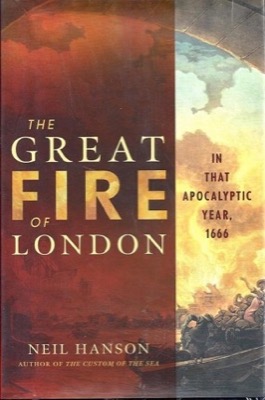
Hardcover. Hoboken NJ, John Wiley, 1st, 2002, Book: Very Good, Dust Jacket: Very Good, Hardcover in a bright dust jacket, 294 pages. The tragic story of the disastrous London fire is told here from both a human and architectural point of view, as the fire destroyed lives along with buildings such as the original St. Paul's cathedral. The Great Fire of London depicts the heartfelt and inspiring human dramas that unfolded, drawing on firsthand accounts of aristocrats, tradesmen, and servants. It reveals the stories of many compelling figures, including diarist Samuel Pepys, who saw the early hours of the fire from the Tower of London, as well as Charles II and his brother, who helped the commoners thwart the flames. In an era when structures were built of wood with thatched roofs, before organized fire departments and insurance, the Great London Fire left in its aftermath a devastated population of homeless, poverty-stricken people who nevertheless found the strength and courage to rebuild their city from ashes. Light bump to bottom rear cover, clean copy.
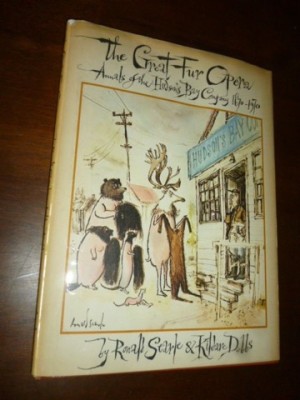
Hardcover. Toronto, McClelland and Stewart, 1st, 1970, Book: Very Good, Dust Jacket: Good, Hardcover in a bright dust jacket, 128 pages, illustrated throughout by Searle's drawings. A witty and irreverent glance at the three-hundred-year history of the Hudson's Bay Company, North America's oldest continuing commercial enterprise. Light edgewear to the dust jacket, otherwise a clean, tight copy.
Hardcover. NY, McGraw Hill, 1st, 1966, Book: Very Good, Dust Jacket: Very Good, Hardcover in a bright, unclipped dust jacket. The American Trails Series, edited by A.B. Guthrie, Jr. 383 pages, includes a two-page map. This book offers an account of the route between Siberia and Alaska that continues southward along the Rockies all the way to Mexico and beyond. Cushman details the stories of the many groups who have traversed parts of the route from prehistoric peoples to Native Americans, Spanish explorers, fur traders, cowboys, and whiskey runners of the Prohibition era. A clean and pristine copy of the first printing,
Hardcover. NY, Crown, 1st, 2012, Book: Very Good, Dust Jacket: Very Good, Hardcover in a bright, unclipped dust jacket, 246 pages. Several months before novelist Howard Frank Mosher turned sixty-five, he learned that he had prostate cancer. Following forty-six intensive radiation treatments, Mosher set out alone in his twenty-year-old Chevy Celebrity on a monumental road trip and book tour across twenty-first-century America. From a chance meeting with an angry moose in northern New England to late-night walks on the wildest sides of America's largest cities, The Great Northern Express chronicles Mosher's escapades with an astonishing array of erudite bibliophiles, homeless hitchhikers, country crooners and strippers, and aspiring writers of all circumstances. Full of high and low comedy and rollicking adventures, this is part travel memoir, part autobiography, and pure, anarchic fun. From coast to coast and border to border, this unforgettable adventure of a top-notch American writer demonstrates that, sometimes, in order to know who we truly are, we must turn the wheel towards home.
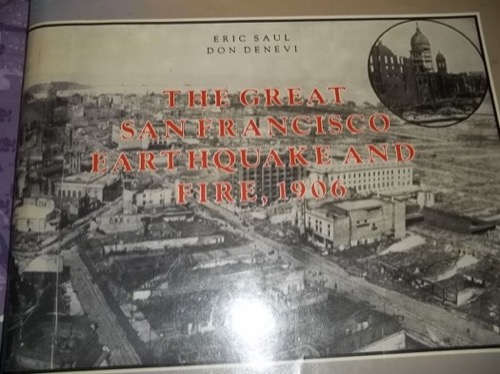
Hardcover. Millbrae CA, Celestial Arts, 1st, 1981, Book: Very Good, Dust Jacket: Very Good, Hardcover, oblong format in a bright dust jacket. 168 pages, map frontis. Period photographs throughout primarily from the San Francisco Public Library collection, as well as the Bancroft Library and Presidio Army Museum collections among others. Clean copy.
Hardcover. Berkeley CA, University of California Press, 1st, 1975, Book: Very Good, Dust Jacket: Very Good, Hardcover, 433 pages including index. B&w illustrations. Recounts the Wilkes Expedition, whose six ships set out from Norfolk in summer 1838 to sail to the polar regions, the South Pacific, and the coasts of present-day Oregon, Washington, and British Columbia. The expedition discovered new islands and reefs in the Pacific and charted the Fijis and other islands. Its men explored, fought with natives, and gathered copious scientific specimens, many of which were given to the National Museum, the Naval Observatory, and the U.S. Botanical Garden. Dust jacket with light edgewear, clean copy.
Hardcover. New Haven CT, Yale /Houston Museum of Fine Arts, 1st, 2007, Book: Very Good, Dust Jacket: Very Good, Hardcover, 168 pages. Chen Changfen (b. 1941) began to photograph the Great Wall twenty years before the Chinese government officially adopted it as the national symbol in 1984. This fascinating book presents a small fraction of his decades-long study of the monumental form and conveys the fertile range of themes and ideas that Chen has investigated, each informed by traditional Chinese art, history, and philosophy. Combining a unique blend of traditional and contemporary technical processes, Chen's richly evocative photographs at once celebrate the remarkable series of building campaigns that produced the Wall and memorialize the thousands of conscripted laborers whose lives were sacrificed to its construction.One of the most striking features of Chen's photographs is their unexpected variety of perspectives and moods, capturing the vicissitudes of weather, time, and human history that have acted upon it. By excluding the people, highways, factories, and modern buildings that encroach on and daily destroy sections of the Wall, however, Chen eliminates major aspects of the Wall's present reality from his pictures. In a thoughtful essay and interview with the artist, Anne Wilkes Tucker probes the meanings of such omissions and guides the reader through Chen's extraordinary images. The Great Wall of China is essential reading for photographers, historians, and travelers.
Hardcover. NY, W. W. Norton & Company, 1st, 2013, Book: Very Good, Dust Jacket: None, Hardcover, 24-foot-long black-and-white drawing printed on heavyweight accordion-fold paper and packaged in a deluxe hardcover slip-case. From "the heir to R. Crumb and Art Spiegelman" (Economist) comes a monumental, wordless depiction of the most infamous day of World War I. Launched on July 1, 1916, the Battle of the Somme has come to epitomize the madness of the First World War. Almost 20,000 British soldiers were killed and another 40,000 were wounded that first day, and there were more than one million casualties by the time the offensive halted. In The Great War, acclaimed cartoon journalist Joe Sacco depicts the events of that day in an extraordinary, 24-foot- long panorama: from General Douglas Haig and the massive artillery positions behind the trench lines to the legions of soldiers going "over the top" and getting cut down in no-man's-land, to the tens of thousands of wounded soldiers retreating and the dead being buried en masse. Printed on fine accordion-fold paper and packaged in a deluxe slipcase with a 16-page booklet, The Great War is a landmark in Sacco's illustrious career and allows us to see the War to End All Wars as we've never seen it before. Clean copy.





 "The Gates - Project for Central Park, New York Cityby: Christo and Jeanne-Claude, Christo")
 "The Geography of Nowhere: The Rise and Decline of America's Man Made Landscape by: Kunstler, James Howard")



 "The Ghost of Lost Island by: Murrow, Liza Ketchum")




 "The Gluyas Williams Gallery: Drawings by Gluyas Williamsby: Gluyas Williams")
 "The Godfather Notebookby: Francis Ford Coppola")


 "The Godfather Notebookby: Francis Ford Coppola")


 "The Golden Age of Batman: The Greatest Covers of Detective Comics from the '30s to the '50sby: Desris, Joe")
 "The Golden Age of the Posterby: Cirker, Hayward and Blanche (selectors and editors)")


 "The Golden Ass of Lucius Apuleius by: Apuleius; William Adlington, Translator; F. J. Harvey Darton, Editor;")



 "The Graveyard Book, Volume 2 by: Gaiman, Neil /Russell, P. Craig")
 "The Great Anti-War Cartoonsby: Yoe, Craig")
 "The Great Centuries of Painting - Greek Painting by: Martin Robertson")


 "The Great Corgiville Kidnappingby: Tasha Tudor")

 "The Great East River Bridge, 1883-1983by: No Author (Brooklyn Museum)")







)
)
)