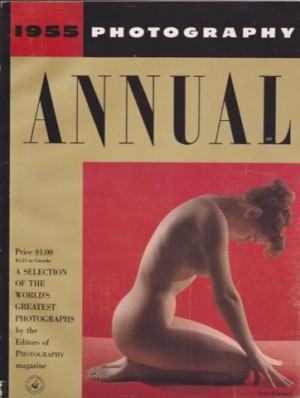
Softcover. NY, Ziff-Davis Publications,, 1st, 1954, Book: Very Good, Dust Jacket: None, Softcover, magazine format. 250 pages of b&w and color photographs by various photographers from the previous year. Bright, clean copy. Photographers's Index. Among photographers: Garry Winogrand, Cornell Capa, Horace Bristol, Henri Cartier-Bresson, Izis, Angus McDougall, Philippe Halsman, Milton H. Greene, Takamasa Inamura, Ralph Ginzburg, Robert Doisneau, Bruce L. Davidson, Andreas Feininger, Francesco Scavullo, many others.
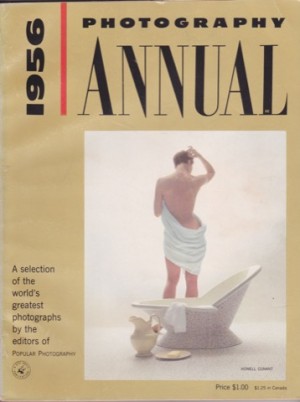
Softcover. NY, Ziff-Davis Publications,, 1st, 1956, Book: Very Good, Dust Jacket: None, Softcover, magazine format. 250 pages of b&w and color photographs by various photographers from the previous year. Bright, clean copy. . Photographers' Index. Among photographers : Hugh Bell, Don Briggs, Frank Cowan, Yousuf Karsh (Casals & Steinbeck), Cartier-Bresson, Sanford Roth, George Tames, Garry Winogrand, many others.
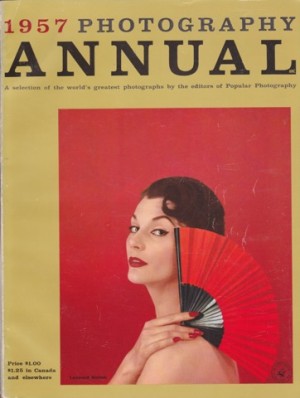
Softcover. NY, Ziff-Davis Publications,, 1st, 1957, Book: Very Good, Dust Jacket: None, Softcover, magazine format. 250 pages of b&w and color photographs by various photographers from the previous year. Bright, clean copy. . Photographers' Index. Photographic essays : Ansel Adams "Master of Daylight", Ed Feingersh "Master of Available Light", Philippe Halsman "Master of Artifical Light", and more
Softcover. NY, Ziff-Davis Publications,, 1st, 1956, Book: Very Good, Dust Jacket: None, Softcover, magazine format. 250 pages of b&w and color photographs by various photographers from the previous year. Bright, clean copy. Photographers's Index. Among photographers: Ansel Adams "Master of Daylight", Ed Feingersh "Master of Available Light", Philippe Halsman "Master of Artifical Light", Bert Stern, Newman, many others.
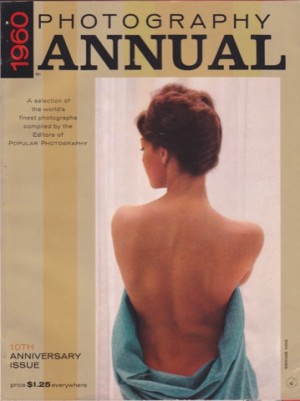
Softcover. NY, Ziff-Davis Publications,, 1st, 1959, Book: Very Good, Dust Jacket: None, Softcover, magazine format. 242 pages of b&w and color photographs by various photographers from the previous year. Bright, clean copy. Photographers's Index. Among photographers: Richard Avedon; a portfolio by Bruce Davidson; a tribute to Dan Weiner; and work by Elliott Erwitt, Bill Brandt, Henri Cartier-Bresson, Manuel Alvarez Bravo, Wingate Paine, Irving Penn, David Douglas Duncan, Weege many others.
Hardcover. Boston, J. Paul Getty Museum, 1st, 2011, Book: Very Good, Dust Jacket: Very Good, 112 pages. Hardcover with dust jacket. Very clean, unmarked copy still in publishers shrink-wrap. Photography as Fiction includes seventy-six color plates illustrating works from the J. Paul Getty Museum's collection that embrace theatricality and are unconcerned with documenting the world as it exists.
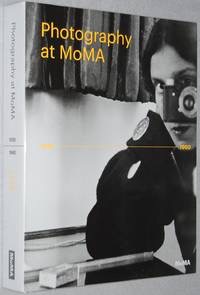
Hardcover. NY, Museum of Modern Art, 1st, 2016, Book: Very Good, Dust Jacket: Very Good, Hardcover in a bright dust jacket, 416 pages. The history of photography has been told many times, but never before through the incomparable collection of photographs at The Museum of Modern Art. This publication charts the medium during the height of the modernist period, from 1920 to 1960. with 550 b/w and color illustrations. The book begins with an in-depth introduction followed by eight chapters of full-color plates, each introduced by a short essay. Masterworks by photographers such as Alfred Stieglitz, Dorothea Lange, Man Ray and Aleksander Rodchenko appear alongside lesser-known gems, and diverse notions of modernism enrich classic interpretations, so that the beautiful fictions and messy realities of photography are complicated, refreshed and, above all, enjoyed. Clean copy. DOMESTIC SHIPPING ONLY.
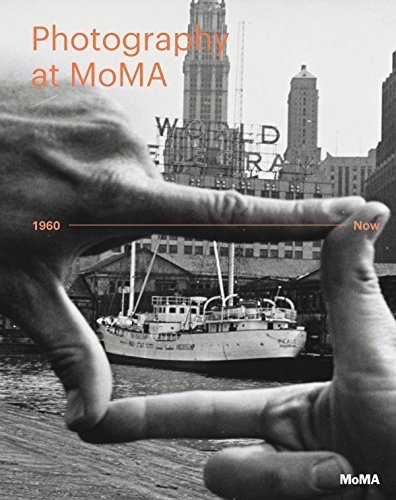
Hardcover. NY, Museum of Modern Art, 1st, 2015, Book: Very Good, Dust Jacket: Very Good, Hardcover in a bright dust jacket, 367 pages, color and b&w illustrations. This publication comprises a comprehensive catalogue of the collection post-1960s and brings much-needed new critical perspective on the most prominent artists working with the photographic medium of the late twentieth and early twenty-first centuries. At a moment when photography is undergoing fast-paced changes and artists are seeking to redefine its boundaries in new and exciting ways, Photography at MoMA serves as an excellent resource for understanding the expanded field of contemporary photography today. The book is organized with an in-depth introductory chapter and eight chapters of full-colour plates, each introduced by a short essay, and features work by over 250 artists, including Diane Arbus, John Baldessari, Jan Dibbets, Rineke Dijkstra, William Eggleston, Lee Friedlander, Louise Lawler, Zoe Leonard, Helen Levitt, Sigmar Polke, Cindy Sherman, Wolfgang Tillmans, Jeff Wall, Carrie Mae Weems, Hannah Wilke and Garry Winogrand, among many others. Clean copy. DOMESTIC SHIPPING ONLY.
Hardcover. Cambridge MA, The MIT Press, 1st, 1990, Book: Very Good, Dust Jacket: Very Good, 362 pages, hardcover in a bright dust jacket. Generously illustrated account [435 b/w photo reproductions] of the photogrphy produced by various well-known Bauhaus associates such as Laszlo Moholy-Nagy, Lucia Moholy, T. Lux Feininger, Florence Henri, Herbert Bayer, and others during the mid-1920s and early 1930s. An invaluable compilation of images and information about the work of this dynamic group of artists, designers, photographers and their students who had such an important impact on Western aesthetics and culture throughout the subsequent decades of the 20th century.
Hardcover. US, The MIT Press, 1st, 2000, Book: Very Good, Dust Jacket: Very Good, Like new in publisher's shrink-wrap. Remainder mark on top page block. Boston played a crucial role in the development of American photography, including criticism, collecting, and curating, in the second half of the twentieth century. This book accompanies a landmark exhibition at the DeCordova Museum that includes such important American artists as Berenice Abbott, Harry Callahan, Paul Caponigro, Marie Cosindas, Harold Edgerton, Nan Goldin, Jerome Liebling, Nicholas Nixon, Barbara Norfleet, Olivia Parker, Rosamond Purcell, Aaron Siskind, and Minor White.The period from 1955 to 1985 reflects photography's acceptance as an art form, the influence of modernism, and the coalescence of a unique constellation of educational institutions, museums, and technological development in the Boston area that directly influenced artistic options for photography. Minor White's arrival at the Massachusetts Institute of Technology in 1965 to run the Center for Creative Photography and the Polaroid Corporation's innovative support of photographic art suggest how developments built upon one another to create a regional critical mass in photography.The book contains twenty-five color plates, sixty duotones, and essays by A. D. Coleman, Rachel Rosenfield Lafo, Arno Rafael Minkkinen, and Kim Sichel.
Hardcover. US, The MIT Press, Book: Very Good, Dust Jacket: Very Good, Like new in publisher's shrink-wrap. Remainder mark on top page block. Boston played a crucial role in the development of American photography, including criticism, collecting, and curating, in the second half of the twentieth century. This book accompanies a landmark exhibition at the DeCordova Museum that includes such important American artists as Berenice Abbott, Harry Callahan, Paul Caponigro, Marie Cosindas, Harold Edgerton, Nan Goldin, Jerome Liebling, Nicholas Nixon, Barbara Norfleet, Olivia Parker, Rosamond Purcell, Aaron Siskind, and Minor White.The period from 1955 to 1985 reflects photography's acceptance as an art form, the influence of modernism, and the coalescence of a unique constellation of educational institutions, museums, and technological development in the Boston area that directly influenced artistic options for photography. Minor White's arrival at the Massachusetts Institute of Technology in 1965 to run the Center for Creative Photography and the Polaroid Corporation's innovative support of photographic art suggest how developments built upon one another to create a regional critical mass in photography.The book contains twenty-five color plates, sixty duotones, and essays by A. D. Coleman, Rachel Rosenfield Lafo, Arno Rafael Minkkinen, and Kim Sichel.
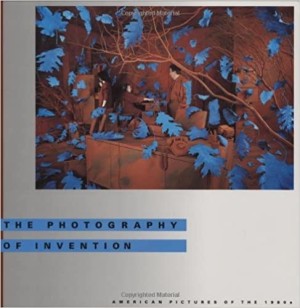
Hardcover. Cambridge, MA, MIT Press, 1st, Book: Very Good, Dust Jacket: Very Good, Hardcover, 208 pages. Pictures that are made, not taken, are the focus of this exciting collection of works by 90 American artists who are using appropriation, computer technology, performance, and numerous other sources of inspiration to stretch the limits and expand the possibilities of photographic art. "Perhaps in the future," Man Ray suggested to Duchamp, "photography would replace all art." The Photography of Invention hints at that future by documenting a decade of startling new work in American photography: work that challenges the accepted hierarchy of the arts and, arguably, establishes photography as the equal of the other arts. Pictures that are made, not taken, are the focus of this exciting collection of works by 90 American artists who are using appropriation, computer technology, performance, and numerous other sources of inspiration to stretch the limits and expand the possibilities of photographic art. The selection of nontraditional pictures includes works by some of the decade's most interesting experimenters-Cindy Sherman, Sherrie Levine, Richard Prince, Barbara Kruger, William Christenberry, Louise Lawler, Stefan Roloff, and others who create or manipulate the subject photographed.
Softcover. NY/London, Routledge, reprint, 2007, Book: Very Good, Dust Jacket: None, Softcover, 470 pages. Forty of the world's most active art historians and theorists, including Victor Burgin, Joel Snyder, Rosalind Krauss, Alan Trachtenberg, Geoffrey Batchen, Carol Squiers, Margaret Iversen and Abigail Solomon-Godeau in animated debate on the nature of photography. Photography has been around for nearly two centuries, but we are no closer to understanding what it is. For some people, a photograph is an optically accurate impression of the world, for others, it is mainly a way of remembering people and places. Some view it as a sign of bourgeois life, a kind of addiction of the middle class, whilst others see it as a troublesome interloper that has confused people's ideas of reality and fine art to the point that they have difficulty even defining what a photograph is. For some, the whole question of finding photography's nature is itself misguided from the beginning. This provocative second volume in the Routledge The Art Seminar series presents not one but many answers to the question what makes a photograph a photograph? Clean copy.
Hardcover. Princeton University Press, 1st, 1997, Book: Very Good, Dust Jacket: Very Good, Hardcover, 208 pages. The Victoria and Albert Museum (V&A) has one of the finest and oldest collections of photography in the world. In this fascinating book, Mark Haworth-Booth, Curator of Photographs at the V&A, offers the first comprehensive introduction to this extensive and impressive collection. In the process, he provides the reader with a general history of photography from its beginnings as a scientific curiosity, through its international commercialization, to its coming of age as an art form in its own right. The V&A's Victorian holdings are outstanding, with major photographs by Roger Fenton, David Octavius Hill, Robert Adamson, Julia Margaret Cameron, Gustave Le Gray, Camille Silvy, and Lady Hawarden. In recent years, the museum has acquired significant works by such twentieth-century master photographers as Bill Brandt, Henri Cartier-Bresson, Paul Martin, Walker Evans, Paul Strand, Manuel Alvarez Bravo, and Cecil Beaton. A number of these photographs are published here for the first time
Softcover. Munich , Prestel, 1st, 2012, Book: Very Good, Dust Jacket: None, Softcover, 192 pages. Chronologically arranged, each chapter focuses on a particular work or idea that changed the course of photography. Presented in beautiful spreads and with informative text, the book opens with photography's genesis in the form of the camera obscura. Centuries later, Daguerre, Niepce, and Talbot invented their own means of capturing light on paper. The book covers groundbreaking genres such as still life, landscape, portraiture, and nudes. Sections on the role of photography in journalism illustrate how the camera's presence on battlefields, on city streets, and in factories helped inform and reform the modern world. Fashion, animals, Surrealism, and staged portraits are also explored. Perfect for perusing or reading from cover to cover, this book illustrates how photography developed from a concept to a world-changing force--one that attempted to shed light on truth yet can also obscure and alter reality in dazzling ways. Clean copy.
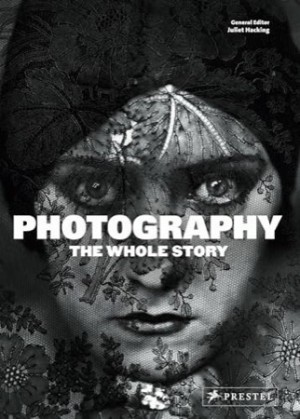
Hardcover. Prestel Publishing, 1st, Book: Very Good, Dust Jacket: Very Good, Hardcover in a bright dust jacket, 576 pages. Unlike many other artistic media, photographys origins are well documented, as are its ever-changing technologies and applications. Written by an international team of experts, this definitive history of photography looks at every step of the fields dynamic evolution, period by period and movement by movement. Each key genre is chronologically presented within its social, economic, and political context, along with close analysis of specially selected works that best exemplify the characteristics of the period. With more than 500 gorgeous examples in black and white and color, the book explores in-depth virtually every aspect of the medium since its first public demonstration in 1839 to the latest innovations: from early portraits and the birth of photojournalism to travel photography and the mapping of the world; from the Pictorialists to the avant-garde; from celebrity and fashion to documentary and landscape. Along the way readers will learn why some photographs are considered iconic, and why the medium as an art form continues to challenge and enthrall us. DUE TO WEIGHT, DOMESTIC SHIPPING ONLY.
Hardcover. San Francisco, Jossey-Bass , 1st, 1993, Book: Very Good, Dust Jacket: Very Good, Hardcover, 384 pages, b&w illustrations. In this book, Judy Weiser shows how mental health professionals can use clients' personal photos and family albums as catalysts for therapeutic communication. She reveals how initiating a dialogue based on such personally symbolic artistic expressions gives form to feelings which otherwise might be resistant to verbal investigations. She shows how to use this dialogue to stimulate recall of forgotten, blocked, or denied information and memories, and to apply these insights to an effective therapeutic framework. A comprehensive guide to PhotoTherapy, this book provides the theoretical principles, detailed techniques, anecdotal illustrations, and practical exercises that will help mental health professionals apply this approach in practice. Looking at all types of photographs - whether they are ones that clients respond to, collect, pose for, or create - Weiser describes various ways to engage clients with photographic imagery. Providing several examples from actual cases to illustrate how clients' responses to photographs can be integrated into the therapeutic process, she offers practitioners a powerful therapeutic tool, regardless of their particular theoretical orientation. Clean copy.
Softcover. New York, Clarion, Ltd. Ed., 1996, Book: Very Good, Dust Jacket: None, Ltd to 244 signed (#176). SIGNED BY TREVOR AND ILLUSTRATOR HOGARTH. Color illustrations by Paul Hogarth. Cardboard covers. 20 pages. The story first appeared in the October 30, 1995 issue of The New Yorker.
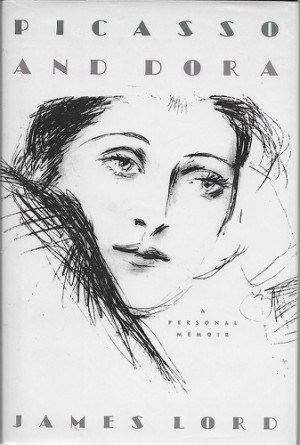
Softcover. New York, Fromm International Publishing Corporation, 1st, 1994, Book: Very Good, Dust Jacket: None, 340 pages. Softcover. B/w illustrations throughout. Very clean copy, inside and out. From the back cover: "...a wickedly peceptive and daring book. It is also that worst of present-day literary evils, a real work of literature." This fresh and vivid portrait of the postwar Paris art world, written by a member of Picasso's circle, sheds original new light on the greatest of modern artists and on the most important and least-known of his loves, the alluring and formidable photographer and painter Dora Maar.
Hardcover. New York, Farrar, Straus Giroux, 1st, 1993, Book: Very Good, Dust Jacket: Very Good, 340 pages. Hardcover with dust jacket. Clean, tight copy.
Hardcover. New York, Flammarion, 1st English, 1997, Book: Very Good, Dust Jacket: Very Good, 263 pages, hardcover with dust jacket. Catalog of a traveling exhibition first held at the Museum of Fine Arts, Houston, Texas, subsequently held at various European museums. Translated from the French by Deke Dusinberre. Minor rubbing and fading to dust jacket, mostly to top edge. Slight bumping to corners. Unmarked. A clean and tight copy.
Hardcover. NY, Doubleday and Co., 1st, 1964, Book: Very Good, Dust Jacket: None, Hardcover, glossy boards with Picasso art on covers, white cloth spine with gilt lettering.. Illustrated with 282 photos including 52 in full color by Quinn. No wraparound title band or acetate jacket. Mild soil to covers, name on front fly leaf, front hinge partially cracked, otherwise clean. DOMESTIC SHIPPING ONLY.
Hardcover. NY, Praeger Publishers, 1st US, 1972, Book: Very Good, Dust Jacket: Very Good, Hardcover. 288 pages. 971 illustrations including 64 color plates. Previous owner's inscription, embossed stamp on front fly leaf, some edge wear on dust jacket.
Hardcover. London, Pall Mall Press, 1st, 1969, Book: Very Good, Dust Jacket: None, Hardcover, very good copy in original pictorial cloth (designed by the artist), no dust jacket. Preface by Rene Char. 405 illustrations in monochrome, sepia & color. A remarkable record of the astonishing output of Picasso in his mid-eighties, featuring many of his favourite themes: 'the artist and his model, the sultan and his harem, the circus, the pastoral flute player, nude men and women engaged in the games of love'. Mild foxing to front endpapers, otherwise clean.
Softcover. New York, Tudor Publishing, 1st, 1968, Book: Very Good, Dust Jacket: None, Softcover, 104 pages, 24 color and 76 b&w plates. The first 4 pages, including the paper wrapper, have a crease down the center. Otherwise a very good copy of this scarce book.
Hardcover. NY, Riverhead , 1st, 2001-11-12, Book: Very Good, Dust Jacket: Very Good, 198 pages. Clean, unmarked copy with only minor wear to dust jacket. Filled with fame, fortune, tragedy, excess, betrayal, and salvation, a powerful glimpse into the life of Picasso and his first family, as told by his granddaughter, reveals his controlling ways and alcoholism that led to the destruction of their family and how she learned to come to terms with the blessings and curses of the Picasso legacy.
Hardcover. NY, Farrar Straus & Giroux, 1st US, 2023, Book: Very Good, Dust Jacket: Very Good, Hardcover in a bright, unclipped dust jacket, 588 pages, several color plates. Before Picasso became Picasso-the iconic artist now celebrated as one of France's leading figures-he was constantly surveilled by the French police. Amid political tensions in the spring of 1901, he was flagged as an anarchist by the security services-the first of many entries in an extensive case file. Though he soon emerged as the leader of the cubist avant-garde, and became increasingly wealthy as his reputation grew worldwide, Picasso's art was largely excluded from public collections in France for the next four decades. The genius who conceived Guernica in 1937 as a visceral statement against fascism was even denied French citizenship three years later, on the eve of the Nazi occupation. In a country where the police and the conservative Academie des Beaux-Arts represented two major pillars of the establishment at the time, Picasso faced a triple stigma-as a foreigner, a political radical, and an avant-garde artist. Picasso the Foreigner approaches the artist's career and art from an entirely new angle, making extensive use of fascinating and long-overlooked archival sources. In this groundbreaking narrative, Picasso emerges as an artist ahead of his time not only aesthetically but politically, one who ignored national modes in favor of contemporary cosmopolitan forms. Remainder dot to top edge, otherwise a bright, clean copy.
Hardcover. NY, Harper & Row, 1st, 1961, Book: Very Good, Dust Jacket: Good, Hardcover in a worn, chipped dust jacket, 270 pages. David Duncan was an accomplished photojournalist who covered World War II and the Korean War. He later joined Life magazine. He was a close friend of Picasso and was the only person allowed to photograph Picasso's private collection. Issued for the 80th birthday of the artist, the book is a recollection of Picasso's work between 1895-1960. The photographic reportage was shoot by Duncan in Villa La Californie in Cannes on the French Riviera, where Picasso was living with his wife Jacqueline. The book contains many illustrations, tipped in color plates, photographs of Picasso, and black and white illustrations, the text is reach of anecdotes and presents a fine portrait of Picasso's life through his work and time. Clean, no markings. DUE TO WEIGHT, DOMESTIC SHIPPING ONLY.
Hardcover. New York, Pace Wildenstein, 1st, 2007, Book: Very Good, Dust Jacket: Very Good, Hardcover, 188 pages. Illustrated in full color and black & white. Clean, bright copy.
Hardcover. New York, PaceWildenstein, 1st, 2007, Book: Very Good, Dust Jacket: Very Good, 187 pages. Hardcover with dust jacket. Sun fading to dust jacket spine and front cover. An otherwise very clean, unmarked copy with only minor wear to dust jacket edges. Color works throughout as well as black & white and color film stills. A tight copy.
Softcover. Paris, Berggruen & Cie, 1st, 1956, Book: Very Good, Dust Jacket: Very Good, 28 pages, 23 color and b&w illustrations. The cover, which wraps around, is an original four-color lithograph made by Picasso for this exhibition booklet. French text, essay by Maurice Jardot. Clean, tight copy.
Hardcover. New Haven, CT, Yale University Press, 1st, 2000, Book: Very Good, Dust Jacket: Very Good, 267 pages. Hardcover. Color illustrations throughout. Very clean inside and out. From the front flap: "This stimulating book is the first comprehensive examination of Picasso's political commitment, his motivations to join the French Communist Party, and his contributions as an active member. Guertje R. Utley assesses the impact Communism had on the artist's life and explores how Picasso's political beliefs and the doctrines of the Communist Party affected his artistic production."
Hardcover. NY, Rizzoli, 1st, 1996, Book: Very Good, Dust Jacket: Very Good, Hardcover, 208 pages. Pictorial photography is noted for its artistic expressiveness, careful design and composition, and muted focus. In 1914 Clarence White (1871-1925) left Alfred Stieglitz's Photo-Secession group, abandoned his ambitions to be a photographic illustrator, and opened the Manhatten-based Clarence H. White School of Photography. Lecturers at his school included Stieglitz, Paul Strand, and Edward Steichen. White's unique teaching skills, especially his encouragement of women students, nurtured the careers of such talented photographers as Margaret Bourke-White, Laura Gilpin, and Dorothea Lange. Presented by the Detroit Institute of Arts and the George Eastman House, this companion volume for a traveling exhibition contains the elegant photographic imagery of White and his students. The clear text by two photography curators imparts how the revered teacher's romantic pictorialism became the foundation for the student's avant-garde modernism. By far the most substantial review of White's work and influence in print.
Hardcover. NY, Charles Scribner's Sons, 1st, 1947, Book: Very Good, Dust Jacket: Very Good, Hardcover in a lightly worn, unclipped dust jacket. 308 pages with 393 b&w photographs, endpapers map. As proclaimed on the dust jacket: "This volume, carefully prepared under the direction of the Picture Maker's son, Mr. C. S. Jackson, contains an unrivaled pictorial record which can never be duplicated. It was created by a great artist and photographer who himself played a part in the opening of the frontier country." A truly wonderful work-attractive and informative. "A" On Copyright Page. Light bump to top corner of text block causing a mild crimp to pages at corner. Otherwise very good.
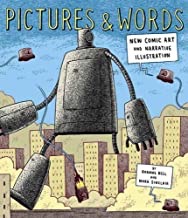
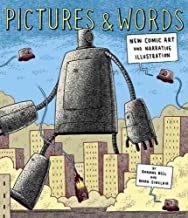
Softcover. New Haven, Yale University Press, 1st, 2005, Book: Very Good, Dust Jacket: None, Softcover, 144 pages. Explores the various uses of images with and without text in the work of over thirty artists from around the world. B&w illustrations.
Softcover. New Haven CT, Yale University Press, 1st, 2005, Book: Very Good, Dust Jacket: None, Softcover, 144 pages. Comics, graphic novels, and single panel cartoons have long flourished as an alternative medium. In recent years these forms of narrative illustration-artwork that tells its own story rather than supporting a text-have increasingly crossed over into mainstream popular culture. Pictorial storytelling now reaches the public through animated films (Spirited Away) and films with animated sequences (Kill Bill), while graphic novels win literary prizes and comic art hangs in art galleries. This delightful book explores the various uses of images with and without text in the work of over thirty artists from around the world.
Hardcover. Preinceton NJ, Princeton University Press, 2nd pr., 2006, Book: Very Good, Dust Jacket: Very Good, Hardcover in a bright, unclipped dust jacket. "What is abstract art good for? What's the use-for us as individuals, or for any society-of pictures of nothing, of paintings and sculptures or prints or drawings that do not seem to show anything except themselves?" In this invigorating account of abstract art since Jackson Pollock, eminent art historian Kirk Varnedoe, the former chief curator of painting and sculpture at the Museum of Modern Art, asks these and other questions as he frankly confronts the uncertainties we may have about the nonrepresentational art produced in the past five decades. He makes a compelling argument for its history and value, much as E. H. Gombrich tackled representation fifty years ago in Art and Illusion, another landmark A. W. Mellon Lectures volume. Realizing that these lectures might be his final work, Varnedoe conceived of them as a statement of his faith in modern art and as the culminating example of his lucidly pragmatic and philosophical approach to art history. He delivered the lectures, edited and reproduced here with their illustrations, to overflowing crowds at the National Gallery of Art in Washington in the spring of 2003, just months before his death. 297 pages; approx. 250 color and bw figures. Remains a nice, sharp and bright copy.
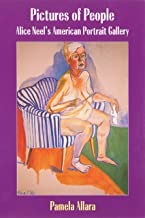
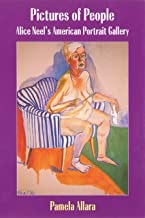
Softcover. Hanover, Brandeis University Press, 1st pbk, 2000, Book: Very Good, Dust Jacket: None, Softcover, 338 pages, a study of Alice Neel and her paintings. Illustrated with b/w photographs and color plates, with notes, bibliography, and index. Clean, bright copy.
Softcover. Hanover, Brandeis University Press, 1st pbk, 2000, Book: Very Good, Dust Jacket: None, Softcover, 338 pages, a study of Alice Neel and her paintings. Illustrated with b/w photographs and color plates, with notes, bibliography, and index. Clean, bright copy.
Softcover. NY, R.H. Russell, 1st, 1899, Book: Very Good, Dust Jacket: None, Hardcover. A collection of 84 black & white cartoons by Gibson. Oblong, 1/2 cloth and cardboard covers. Rear panel has scuffing tears to paper over boards. Interior very good.
Softcover. NY, The Museum of Modern Art, 1st, 2002, Book: Very Good, Dust Jacket: None, Softcover, 192 pages. Selected from 17 million prints preserved in the archives of The New York Times, the spectacular photographs in this book provide a spellbinding sample from the rich archive that is the twentieth century, as seen through the eyes of a great newspaper. Revealed is the extraordinary and omnivorous breadth of photography's gaze: vivid pictures of both World Wars; of presidents, mayors, dictators and celebrities; of Beatles fans and Halley's comet; of victims and perpetrators, riots and disasters; of Bill Bradley on the court and Willie Mays sliding into home--and a great many more. Underlying them all is the gripping immediacy that makes news photography not only an indispensable presence in the daily paper but a vital part of history. This book includes an illustrated chronology that traces the evolution of the technology and business of news photography, with special attention to the role of The New York Times and to the recent rise of digital technologies in newspaper production. Originally published to accompany an exhibition at The Museum of Modern Art, New York.
NY, Harper & Brothers , reprint, 1900, Book: Very Good, Dust Jacket: None, Hardcover, 385 pages. Illustrated with a frontispiece and 48 half tone photographs. Original decorated publisher's cloth, with gilt titles. First published in 1897. Account of Sicily at the turn of the 20th century, with a focus on the art, history, and landscape of the Island, from the largest of cities to its hamlets and villages. Contemporary color postcard laid in. Original pale green cloth fafed, previous owners name, embossed stamp on front fly leaf, otherwise clean.
Hardcover. NY, William Edwin Rudge, 1st, 1930, Book: Good, Dust Jacket: None, Hardcover, red cloth, 46 pages + 51 b&w plates (color frontispiece). Russian artist and diplomatic secretary Paul or Pavel Svinin (1787-1839) toured the northeastern United States in the early 1800s. Here are excerpts of his notes, details about the time and his trip, and 51 BW reproductions of landscapes he rendered along the way. Most of the paintings show scenes from Pennsylvania, New York, New Jersey, Virginia and Maryland. Of interest to both cultural and art historians. With an introduction by R.T.H. Halsey. One of 1000 copies. Ex-lib with stamping, residue to endpapers, gilt lettering on spine faded, otherwise clean.
Hardcover. US, Univ of New Mexico Press, 1st, 1995-10-01, Book: Very Good, Dust Jacket: Very Good, 227 pages. Minor edgewear to dust jacket, else a clean, tight copy. A in depth study of the exhibition held at the Museum of Modern Art in 1955, and its influence, with a final chapter on "Edward Steichen, Robert Frank and American Modernism".
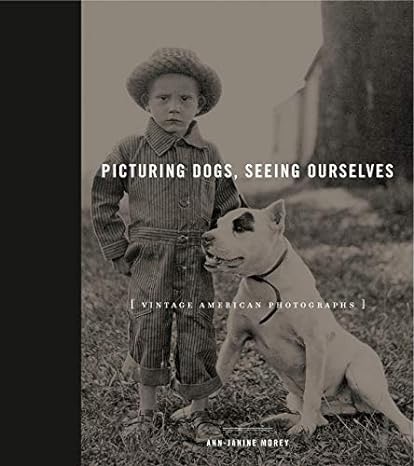
Hardcover. University Park PA, Penn State Press, 1st, 2014, Book: Very Good, Hardcover. Dogs are as ubiquitous in American culture as white picket fences and apple pie, embracing all the meanings of wholesome domestic life--family, fidelity, comfort, protection, nurturance, and love--as well as symbolizing some of the less palatable connotations of home and family, including domination, subservience, and violence. In Picturing Dogs, Seeing Ourselves, Ann-Janine Morey presents a collection of antique photographs of dogs and their owners in order to investigate the meanings associated with the canine body. Included are reproductions of 115 postcards, cabinet cards, and cartes de visite that feature dogs in family and childhood snapshots, images of hunting, posed studio portraits, and many other settings between 1860 and 1950. These photographs offer poignant testimony to the American romance with dogs and show how the dog has become part of cultural expressions of race, class, and gender. Still in publisher's shrink wrap.
Hardcover. NY, Harry N Abrams, 1st, 1995, Book: Very Good, Dust Jacket: Very Good, Hardcover in a bright dust jacket, 232 pages. The first photographic record of the Manhattan Project--the U.S. Government-sponsored effort to build an atomic bomb. With an introduction by Richard Rhodes. The granddaughter of Enrico Fermi, a key participant in the Manhattan Project, presents a pictorial survey of the making of the atomic bomb, containing many never-before-published photographs and snapshots of the many aspects of the Project.Illustrated with over 100 B&W photographs, some color. Clean copy. DOMESTIC SHIPPING ONLY.
Boston, Little Brown , 1st, 1967, Book: Very Good, Dust Jacket: Very Good, Hardcover. 60 pages. Black & white illustrations by Victor Ambrus. Dust jacket with edgewear, fading to spine. A story that takes place during the Sanfrancisco earthquake. Price clipped.
NY, Harcourt Brace Janovich, 1st US, 1984, Book: Very Good, Dust Jacket: None, Hardcover, glazed boards illustrated in color. Color art by Errol Le Cain.



 "Photography at The Bauhausby: Fiedler, Jeannine")




 "Photography: The Groundbreaking Momentsby: Florian Heine")

 "Piano Tuner's Wives, The (SIGNED COPY)by: Trevor, William")
 "Picasso and Dora: A Personal Memoirby: LordJames")

 "Picasso Birth of A Geniusby: Cirlot, Juan-Eduardo")


 "Picasso's Picassosby: David Douglas Duncan")


 "Picasso: Dessins d'un Demi-siecleby: Picasso, Pablo")
 "Picasso: The Communist Yearsby: Utley, Guertje")


 "Picture Maker of the Old West: William H. Jacksonby: Jackson, Clarence S.")



 "Pictures of Peopleby: Gibson, Charles Dana")
 "Pictures of the Times: A Century of Photography from The New York Timesby: Safire, William/ Peter Galassi, Susan Kismaric")

 "Picturesque Sicily by: Paton, William Agnew")



 "Picturing an Exhibition: The Family of Man and 1950s Americaby: Sandeen, Eric J.")

 "Pied Piper of Hamelin, Theby: Corrin, Sara & Stephen")
)