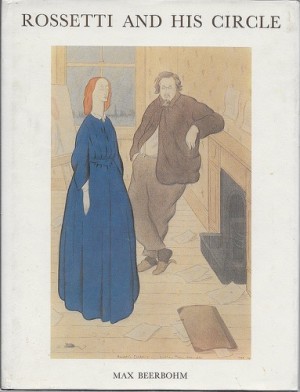
Hardcover. London, William Heinemann, 1st, 1922, Book: Very Good, Dust Jacket: None, Hardcover. Unpaginated, a series of tipped-in color plates. Blue cloth covers w/ gilt lettering. Light edge wear to covers, spine darkened. Light yellowing to end papers. Else a clean, tight copy.
Hardcover. London, William Heinemann, 1st, 1922, Book: Very Good, Dust Jacket: Very Good, Unpaginated, a series of tipped-in color plates. Blue cloth covers w/ gilt lettering. Light edge wear to covers, spine darkened. Light yellowing to end papers. Else a clean, tight copy. A humorous tribute to the Rossetti family and their circle, including Wilde, Ruskin, Millais, Ford Madox Brown, Swinburne, et al. Twenty two color plates mounted on art paper with amusing descriptive tissue guards.
Hardcover. NY, Norton, 1st US, 1965, Book: Very Good, Dust Jacket: Fair, Hardcover, 142 pages. Humoroue instructions for the man living on his own. Cartoons by Quenin Blake. Book is clean, very good, dust jacket is worn, chipped.
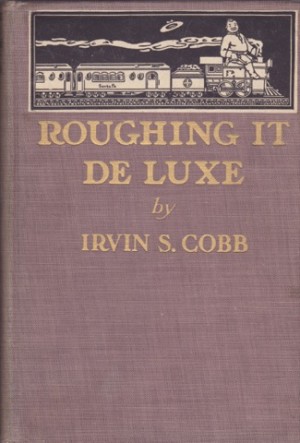
Hardcover. NY, George H. Doran Company, 1sr, 1914, Book: Very Good, Dust Jacket: None, Hardcover, brown cloth boards with gilt titles and a mounted paper label on the front board. Illustrated by John T. McCutcheon. A humorous vintage travel guide to the American West. Clean, bright copy.
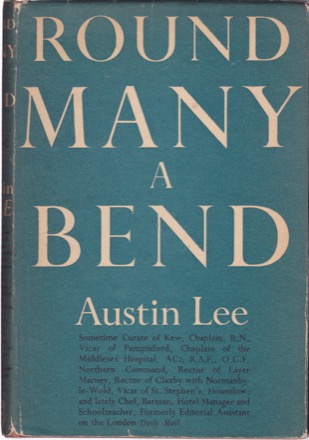
Hardcover. London, Jonathan Cape, 1st, 1954, Book: Very Good, Dust Jacket: Good, Hardcover in a lightly worn and chipped dust jacket. An English clergyman who was also Naval Chaplain, aircraftman, schoolmaster, barman, and hotel manager recounts a eventful life writing from a remote part of Ireland. Clean copy.
Softcover. Hanover NH, Dartmouth College Press, reprint, 2012, Book: Very Good, Dust Jacket: None, Softcover, 277 pages. One of Rousseau?s later and most puzzling works and never before available in English, this neglected autobiographical piece was the product of the philosopher?s old age and sense of persecution. Long viewed simply as evidence of his growing paranoia, it consists of three dialogues between a character named ?Rousseau? and one identified only as ?Frenchman? who discuss the bad reputation and works of an author named ?Jean-Jacques.? Dialogues offers a fascinating retrospective of his literary career. Clean copy.
Softcover. NY, Cambridge University Press, reprint, 2006, Book: Very Good, Dust Jacket: None, Softcover, like new. A comprehensive and authoritative anthology of Rousseau's important early political writings in faithful English translations. This volume includes the Discourse on the Sciences and Arts and the Discourse on the Origin and the Foundations of Inequality among Men - the so-called First and Second Discourses - together with Rousseau's extensive Replies to critics of these Discourses; the Essay on the Origin of Languages; the Letter to Voltaire on Providence; as well as several minor but illuminating writings - the Discourse on Heroic Virtue and the essay Idea of the Method in the Composition of a Book. In these as well as in his later writings, Rousseau probes the very premises of modern thought. His influence was wide-reaching from the very first, and it has continued to grow since his death. The American and the French Revolutions were profoundly affected by his thought, as were Romanticism and Idealism. 437 pages.
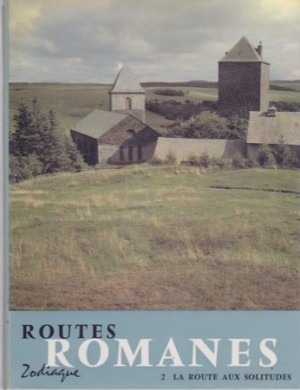
Hardcover. Paris, Zodiaque, 1st, 1984, Book: Very Good, Dust Jacket: Very Good, 334 pages plus index. Color, b&w gravure photographs, plans of churches, cathedrals, abbeys and monasteries in France. Text in French. Ribbon marker. Clean, tight copy in a bright dust jacket.
Hardcover. Paris, Zodiaque, 1st, 1982, Book: Very Good, Dust Jacket: Very Good, Hardcover, 407 pages plus index. Color and b&w gravure plates, plans of medieval churches of France. French text. A clean, tight copy in a bright dust jacket.
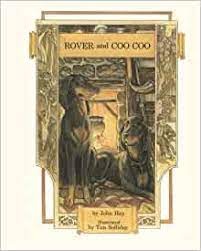
Hardcover. La Jolla CA, Green Tiger Press, 2nd pr., 1986, Book: Good, Dust Jacket: None, Hardcover, illustrated boards, no dust jacket. Rover and Coo Coo is a story in the traditional style of story telling, a story that was told to generations of the Hay family around an open fire in winter or on an open porch in summer. It takes place when Indiana was a frontier, and Charles Hay left his family in their log cabin and went to the distant mill to have his corn ground. The adventure takes place in the dark forest with a chase by hungry wolves, and Charles' faithful hounds saving the day. There are beautiful and clear descriptions of the surroundings in those pristine times. The illustrations of the highly acclaimed artist, Tim Soliday, bring it all alive. In the end Charles is safe with his wife and two small children, and he speaks of nature and how all creatures have a place in the larger picture of the oneness of the world.
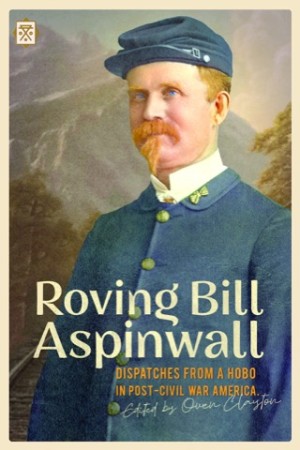
Softcover. Port Townsend WA, Feral House, 1st, 2022, Book: Very Good, Dust Jacket: None, Softcover, 339 pages. Ladies' man. Child soldier. Civil War hero. Egotist. Tramp. Drunkard. Published author. Roving Bill Aspinwall: Dispatches from a Hobo in Post-Civil War America tells the story of an American hobo entirely in his own words. William 'Roving Bill' Aspinwall was all of these things and yet no lone descriptor does him justice. Born one of 23 siblings, married 5 times, wounded fighting for the Union in one of the bloodiest battles of the American Civil War, kicked out of numerous jobs and soldiers' homes for drunkenness, and having spent decades wandering as a penniless vagabond, Bill also kept up a 24-year correspondence with John James McCook, Professor of Modern Languages at Trinity College, Hartford, Connecticut. In so doing Bill provided the earliest and best account of life on the road by an American hobo. Written between 1893 and 1917, Roving Bill Aspinwall: Dispatches from a Hobo in Post-Civil War America tells Bill's story entirely in his own words. Describing experiences on the road, the people he meets, his dalliances with women and his memories of the Civil War, the letters are a rich and unique correspondence. Having been physically and mentally scarred at the 1863 Battle of Champion Hill, Bill details his lifelong battle with booze. He also gives first-hand accounts of men thrown out of work during the economic Panic of 1893, of wandering around the country as an itinerant umbrella-mender, of working in factories, farms and even a circus, as well as his visit to the St. Louis World's Fair in 1903. Bill's words are the real voice of a nineteenth-century hobo.
Softcover. Montclair, NJ, Montclair Art Museum, 1st, 2005, Book: Very Good, Dust Jacket: None, Paperback. 90 pages, color and b&w illustrations. An exhibition catalog, not published in hardcover.
Hardcover. The Monacelli Press , 1st, 2011, Book: Very Good, Dust Jacket: Very Good, Hardcover, 128 pages. Roy Lichtenstein in His Studio is a portfolio of vivid and engaging photographs by Laurie Lambrecht, who was an administrative assistant to Lichtenstein for three years. She and the artist worked together daily, and the bond between them is evident in the photographs. Lichtenstein is shown working on two major series, Reflections and The Interiors. He is completely absorbed, oblivious to the camera, as he mounts ladders, assembles colors, composes, and steps back to consider the effect. In her essay Dorothy Lichtenstein, wife of the artist, recalls the collegial atmosphere of the studios in New York and Southampton in the early 1990s, a time of extraordinary productivity. Edward Robinson, an associate curator at the Los Angeles County Museum of Art, describes Lambrecht's process and approach.
Hardcover. Manchester VT , Hudson Hills, 1st, 2001, Book: Very Good, Dust Jacket: Very Good, Hardcover. Text by numerous authors. 104 pages, over 100 color plates. 4to, cloth. Museum of Contemporary Art in association with New York, Hudson Hills Press. This book brings together works from Lichtenstein's "Interiors" series, most of which he painted in the last decade of his career. In addition to paintings, the book includes prints, sculptures, drawings, and some of the source materials Lichtenstein used to develop this imagery. Like new in publisher's shrink-wrap.
Hardcover. Hatje Cantz, 1st, 2010, Book: Very Good, Hardcover, 208 pages. Between 1961 and 1968, at the height of the Pop art movement, Roy Lichtenstein (1923-1997) created about 50 large black-and-white drawings. Not only was their imagery, culled from consumer culture, entirely new--baked potatoes, ads for foot medication and BB Guns--but so was their treatment, which drew on the rudimentary character of cheaply printed commercial drawings. Conceived independently from Lichtenstein's paintings, these drawings recast illustrations from newspaper ads and comic books into works of keen visual intensity, curiously echoing the clean-edge aesthetic of 1960s geometric abstraction. "Drawing is the basis of my art," Lichtenstein later affirmed; "It is where my thinking takes place." Published for an exhibition at the Morgan Library in New York, this richly illustrated publication offers 120 color illustrations, plus essays on Lichtenstein's technique and on his little-known 1967 Aspen project, in which the artist transformed a room into a black-and-white cartoon drawing.
Hardcover. Los Alamitos, CA, Art Bagnall Publishing, 1st, 1990, Book: Very Good, Dust Jacket: None, Hardcover, 379 pages, with photographs throughout and illustrated cover. Minor corner and edge wear, previous owner's embossed stamp on title page, otherwise, very clean and tight copy. Richter was a professional auto racer in Southern California in the 1930s and 1940s who then founded Bell Auto Parts and devoted his life to creating specialty safety products for auto and motorcycle sports, including the Bell helmet, which quickly became an essential and popular part of driving gear.
Hardcover. US, PS Artbooks, 1st, 2013, Book: Very Good, Dust Jacket: None, Hardcover with no dust jacket. Clean, unmarked copy with only minor wear to covers. In matching slipcase.
Hardcover. East Yorkshire UK, PS Artbooks, 1st, 2013, Book: Very Good, Dust Jacket: None, Hardcover with no dust jacket. Clean, unmarked copy with only minor wear to covers. Black and white pictures throughout. In matching slipcase.
Hardcover. London, PS publishers, 1st, 2015, Book: Very Good, Dust Jacket: None, Hardcover with no dust jacket. Clean, unmarked copy with only minor wear to covers. Color and Black and white pictures throughout. Rulah first appeared in Zoot Comics #7 back in June 1947 and she's generally regarded as being the brainchild of Matt Baker and, some time later, Jack Kamen and Ghastly Graham Ingels. Collects Rulah #17-27, August 1948 to June 1949. These are typical Good Girl stories of simplistic morality and mega-violence, with a bit of erotic sizzle. Rulah defends people's rights and fights evil. But she was a bit different than the standard "Good Girl Art" stuff of that era. Most of her stories feature a bad girl so there are a lot of catfights.
Hardcover. London, PS publishers, 1st, 2015, Book: Very Good, Dust Jacket: None, Hardcover with no dust jacket. Clean, unmarked copy with only minor wear to covers. Color and Black and white pictures throughout. Originally published in magazine form in All Top Comics 8-18, Tegra/Zegra Aug 1948 - Apr 1949, and Seven Seas Comics 1-6.
Hardcover. US, PS publishers, 1st, Book: Very Good, Dust Jacket: None, Hardcover with no dust jacket. Clean, unmarked copy with only minor wear to covers. Color and Black and white pictures throughout.
Hardcover. UK, PS publishers, 1st, 2014, Book: Very Good, Dust Jacket: None, Hardcover with no dust jacket. Clean, unmarked copy with only minor wear to covers. Color and Black and white pictures throughout. She may still be everyone's favourite yellow-tressed leopard-skin-clad Jungle Jane but, having made her first appearance almost 80 years ago (courtesy of Will Eisner and 'Jerry' Iger in the British mag Wags #1), Sheena, Queen of the Jungle could be forgiven for being somewhat less spritely swinging through the trees righting wrongs and wielding her knife. In 1938, she made it Stateside with her first showing in Jungle Comics #1 where she settled happily in every issue (plus a decade in her own title) until April 1953. There have been other incarnations, of course, but it's this classic material that strikes at the very heart of Good Girl Art! Collects issues #11-18, Spring 1951 to Winter 1952.
Hardcover. London, St. Bartholomew's Hospital, 1st, 1974, Book: Very Good, Dust Jacket: Very Good, Hardcover in a bright dust jacket, 423 pages, b&w illustrations. Published to commemorate the 850th anniversary of the founding of St Barts with two chapters devoted specifically to the development of the Medical College. A comprehensive history of London's oldest Hospital now a centre of excellence for cancer and cardiac care part of the NHS in Central London. Notation and small stamp to front endpapers, otherwise clean.
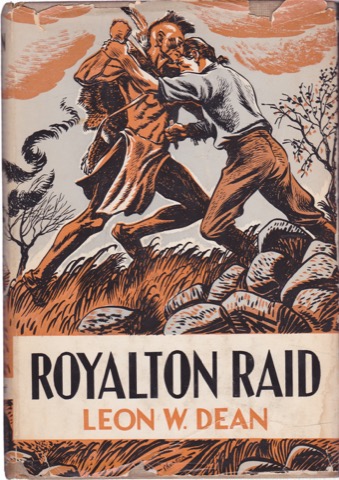
Hardcover. NY, Rinehart & Company, 2nd pr., 1949, Book: Very Good, Dust Jacket: Poor, Hardcover in very worn, chipped dust jacket with tape repairs, 241 pages, frontispiece by Edward Shenton. Novel based on the historic 1780 Indian raid on Royalton, in the White River Valley of Vermont. No markings.
Hardcover. New York , Simon and Schuster, 1st, 2000, Book: Very Good, Dust Jacket: Very Good, 190 pages, b&w cartoon contraptions by the master. Bright, clean copy in unclipped dust jacket. A collection of Rube Goldberg's wackiest inventions features more than two thousand "schematics" from the immensely popular comic for everything from suicide machines to a pick-pocket device designed for politicians.
Softcover. New Jersey, Princeton University Press, 1st, 1982, Book: Very Good, Dust Jacket: None, 278 pages including plates. (INSCRIBED) Softcover. B/w illustrations throughout. Wrapper has a touch of age yellow, otherwise very good. A small bit of soil on bottom edge. In very good condition.
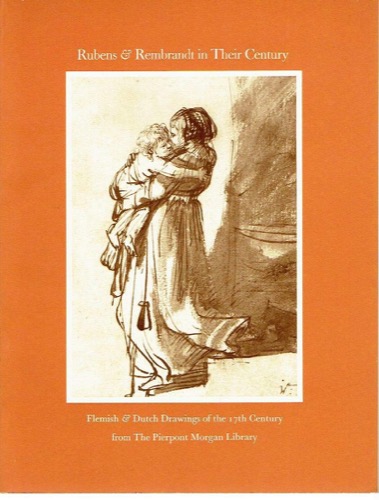
Softcover. NY, Pierpont Morgan Library,, 1979, Book: Very Good, Dust Jacket: None, Softcover, stiff paper wrappers. 298 pages. Catalogue of Rubens and Rembrandt drawings in the Pierpont Morgan Library, New York. Introduction, indexed by artists and former owners. 130 black and white plates. Index of artists. Illustrations of 57 watermarks.
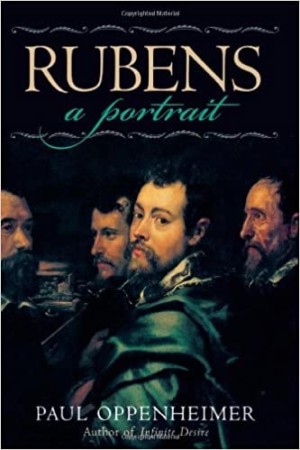
Hardcover. NY, Cooper Square Press, 1st, 2002, Book: Very Good, Dust Jacket: Very Good, Hardcover, 432 pages. The most popular painter of his day, yet an artist whose reputation has fluctuated among art scholars and critics of the succeeding centuries, Peter Paul Rubens (1577-1640) is chiefly remembered today for his large canvases of sensual gardens, religious scenes, and voluptuous "Rubenesque" women. In Oppenheimer's account of his life, Rubens emerges not only as a talented painter but also as an intellectual with a unique conception of beauty that proved very influential and ahead of his time. Oppenheimer explores Rubens' ideas as he tells the story of his life, which included years as a diplomat, and illuminates his response to the humanism of the Renaissance in which he lived.
Hardcover. NY, Abrams, 1st, 2004, Book: Very Good, Dust Jacket: Very Good, Hardcover, 224 pages. The poet John Ashbery wrote of Rudy Burckhardt in 1980: "Before there was an underground, there was Rudy Burckhardt. The genial, Swiss-born jack-of-all-trades and master of several has remained unsung for so long that he is practically a subterranean monument." Since that time Burckhardt's reputation has steadily grown - as photographer, filmmaker, and painter - beyond Manhattan's downtown community of artists in which he lived and worked. For six decades Rudy Burckhardt (1914-1999) was a discreet, but enduring, and ultimately important figure in New York's avant-garde art world. Author Phillip Lopate, a long-time friend of the photographer, provides an insightful and thought-provoking homage to the quiet brilliance of a national treasure. And the poet and curator, Vincent Katz, has contributed an essay further elaborating on Burckhardt's photographic achievement. Illustrated with almost three hundred photographs, Rudy Burckhardt presents the remarkable depth and range of the artist's work. The book will fascinate anyone interested in the New York art world and offers a revelation for all those interested in photography.
Hardcover. New York, Clarkson N. Potter, 1st, 1968, Book: Very Good, Dust Jacket: Very Good, Hardcover, 202 pages, 102 b&w and 22 color plates. Clean, tight copy in a bright dust jacket.
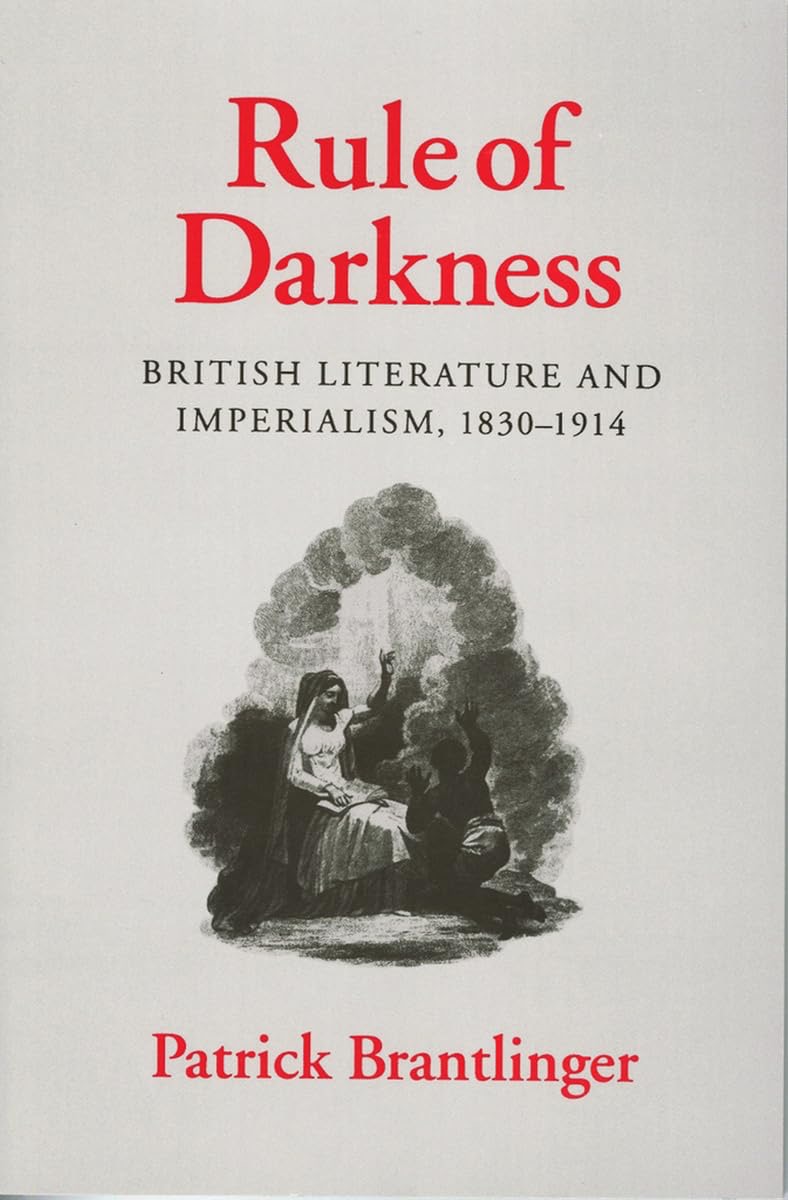
Softcover. Ithaca NY, Cornell University Press, reprint, 1990, Book: Very Good, Dust Jacket: None, Softcover, 309 pages. A major contribution to the cultural and literary history of the Victorian age, Rule of Darkness maps the complex relationship between Victorian literary forms, genres, and theories and imperialist, racist ideology. Critics and cultural historians have usually regarded the Empire as being of marginal importance to early and mid-Victorian writers. Patrick Brantlinger asserts that the Empire was central to British culture as a source of ideological and artistic energy, both supported by and lending support to widespread belief in racial superiority, the need to transform "savagery" into "civilization," and the urgency of promoting emigration. Rule of Darkness brings together material from public records, memoirs, popular culture, and canonical literature. Brantlinger explores the influence of the novels of Captain Frederick Marryat, pioneer of British adolescent adventure fiction, and shows the importance of William Makepeace Thackeray's experience of India to his novels. He treats a number of Victorian best sellers previously ignored by literary historians, including the Anglo-Indian writer Philip Meadows Taylor's Confessions of a Thug and Seeta. Brantlinger situates explorers' narratives and travelogues by such famous author-adventurers as David Livingstone and Sir Richard Burton in relation to other forms of Victorian and Edwardian prose. Through readings of works by Arthur Conan Doyle, Joseph Conrad, H. Rider Haggard, Rudyard Kipling, John Hobson, and many others, he considers representations of Africa, India, and other non-British parts of the world in both fiction and nonfiction. Clean, bright copy.
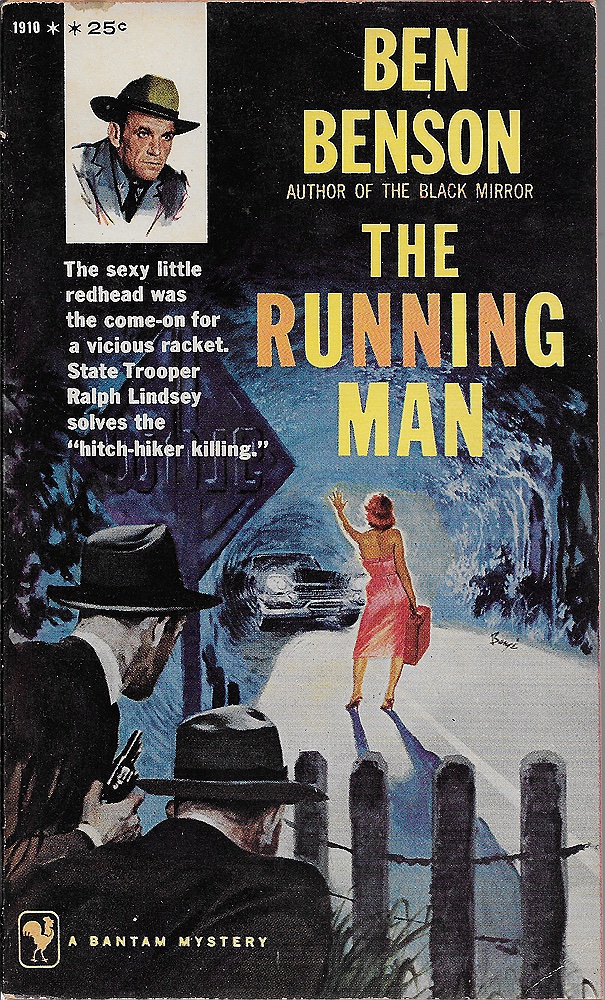
Softcover. New York, Bantam Books, 1st, 1959, Book: Very Good, Dust Jacket: None, 151 pages. Paperback. Bantam Mystery #1910. Cover art by Bayre Phillips. Light creasing to cover wrappers.
Hardcover. Philadelphia, Carey and Hart, 1st, 1843-46, Book: Good, Dust Jacket: None, Five volumes bound into one, 537 total pages. Half leather with marbled boards, edgeworn. All first American editions. The final book's full title: The Military Operations at Cabul, Which Ended in the Retreat and Destruction of the British Army, January 1842. With a Journal of Imprisonment in Afghanistan. Condition good with some browning and foxing to paper. Front inner hinge repaired with tape.
Hardcover. Madison, WI, The University of Wisconsin Press, 1st, 1948, Book: Good, Dust Jacket: None, Volume dedicated to the rural art originating in Wisconsin. Discusses 30 different artists and contains illustrations (color and black/white) of their pieces. Good condition; cloth bound book shows some wear on the edges of the covers. No dust jacket. Commemorates the 100th Anniversary of the founding of the University of Wisconsin by means of the work of rural Wisconsin artists such as Ambrose G. Ammel, Joan Arend, John M. Black, WIlliam H. Boose, Frances Burt, Frank H. Engebretson, Francis D. Grady, Louis Grebetz, Rachel Gertrude Grimm, Lois Ireland, Arthur Johnson, and many more.
Hardcover. NY, Abrams, 1st, 2001, Book: Very Good, Dust Jacket: Very Good, Hardcover, 176 pages. Before there was Martha Stewart, there was Russel Wright (1904-1976), the great mid-century modern American designer who pioneered the concept of "easier living" for the middle class, a uniquely American lifestyle that was gracious but contemporary and informal. Yet despite Wright's enormous influence, there has been no major survey of his work until now. This handsome volume-which accompanies an exhibition at Cooper-Hewitt, National Design Museum in New York City-showcases more than 125 of Wright's best designs for inexpensive, mass-produced dinnerware, textiles, and furniture. As the flurry of Wright auction activity on Ebay shows, there is a thriving collectors' market for his designs. 125 illustrations, 65 in full color, 176 pages, 71/2 x 10".
Softcover. New York, Morgan & Morgan, Reprint, 2007, Book: Very Good, Dust Jacket: None, 206 pages. Softcover. A clean, unmarked copy. Light foxing to top edge of textblock. Black and white photographs throughout.
Hardcover. New York, Oxford University Press, 1st, 1990, Book: Very Good, Dust Jacket: Very Good, Hardcover, 239 pages. Minor edge wear to dust jacket. Else a very clean, tight copy. The dramatic events of the twentieth century have often led to the mass migration of intellectuals, professionals, writers, and artists. One of the first of these migrations occurred in the aftermath of the Russian Revolution, when more than a million Russians were forced into exile. With this book, Marc Raeff, one of the world's leading historians of Russia, offers the first comprehensive cultural history of the "Great Russian Emigration." He examines the social and institutional structure of the emigration and describes its rich cultural and intellectual life. He points out that what distinguishes this emigration from other such episodes in European history is the extent to which the emigres succeeded in reconstituting and preserving their cultural creativity in the West. The flourishing Russian communities of Paris, Berlin, Prague and Kharbin not only enriched Russian arts and letters, but also significantly influenced the culture of their Western hosts, and Raeff concludes with an assessment of their impact on the development of modern Western and Soviet culture.
Hardcover. Moscow, Sovietsky Khudozhnik, 1st, 1990, Book: Very Good, Dust Jacket: Very Good, 359 pages. Hardcover with dust jacket. Russian text only. Profusely illustrated in full color and black & whiite. A survey of Russia's brief Art Nouveau movement in architecture. Bright, clean copy in a similar dust jacket. In a plain cardboard slipcase.
Hardcover. London, VIVAYS, 1st, 2012, Book: Very Good, Dust Jacket: Very Good, 200 pages. Hardcover with dust jacket. Like new in publisher's shrink-wrap. "This volume, based on rarely seen Russian archives, traces the history of the silent film poster in Russia, starting with a poster designed by Paul Assaturov ("Stenka Razin", 1908) in the style of ancient naive Russian imagery to the latest advertise- ment for a silent movie by Yuri Pimenov from 1934. Full-page reproductions of 161 Russian silent film posters are presented here in chronological order - from the very beginning of the 20th century until the 1930s.
Softcover. Los Angeles, Rare Bird Books, 1st US, 2024, Book: Very Good, Dust Jacket: None, Softcover, 122 pages. Advance Readers Copy. 'A great Russian novel in the grand Russian tradition' - LE FIGARO. Years after the death of their beloved son, there is a knock at the door of Nikolai and Vera's apartment. Introducing himself simply as 'Sergeant Bertrand', the unknown visitor triggers a precipitous journey into the depths of the human soul. Hailed as an early masterpiece of post-Soviet literature, Russian Gothic is now available in English for the first time. Three decades after it was written, its complex portrait of grief, misogyny, violence and love is as fresh, shocking and relevant as ever. Aleksandr Skorobogatov was born in Grodno in what is now Belorussia. He is one of the most original Russophone writers of the post-communist era. Clean copy.
Hardcover. Russia, Aurora Art Publishers, 1st, 1991, Book: Very Good, Dust Jacket: Very Good, 199 pages. Hardcover with dust jacket. Some foxing to textblock edges. Otherwise a very clean, unmarked copy with some minor dust jacket wear. Black & white and color illustrations throughout. A tight copy.
Hardcover. Chicago, University of Chicago Press, 1st, 2005, Book: Very Good, Dust Jacket: Very Good, Hardcover, 284 pages. In Rustic Cubism, Bruce Adams tells the fascinating story of Moly-Sabata, an art colony founded in the Rhone Valley during the height of French modernism by Cubist pioneer Albert Gleizes. Following his social and spiritual agenda of earthly labor and a Celtic-medievalist view of Christianity, Gleizes' disciples worked to fuse Cubism with a revival of ancient agrarian, artisanal traditions. The most important and committed member of this experimental commune was ceramicist Anne Dangar (1885-1951). Generously illustrated with photographs of the art and social milieu of the period, this captivating and original narrative makes a considerable contribution to our understanding of French modernism and early twentieth-century cultural politics as well as of the life of a most talented and intriguing female artist.
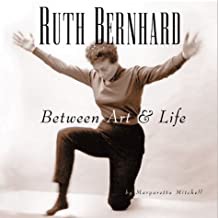
Hardcover. San Francisco, Chronicle Books, 1st, 2000, Book: Very Good, Dust Jacket: Very Good, Hardcover in a bright dust jacket, 172 pages. Hailed by Ansel Adams as "the greatest photographer of the nude," Ruth Bernhard is an icon in the photographic world. As told by Ruth in countless conversations with close friend and biographer Margaretta Mitchell, this thoughtful, illustrated memoir is a true tribute to the legendary artist. Reminiscent of a personal scrapbook, the engaging text is adorned with an abundance of fascinating memorabilia and nostalgic snapshots. Woven throughout is correspondence between Ruth and her mentor Edward Weston, as well as interviews with friends, colleagues, students, and her long-time printer. Also included is a special section entitled "Workshop," which surveys Ruth's acclaimed teaching methods. Coinciding with an exhibition in honor of Ruth's 95th birthday, Ruth Bernhard: Between Life and Art is a beautiful celebration of an extraordinary woman.
Hardcover. San Francisco, Chronicle Books, 1st, 2000, Book: Very Good, Dust Jacket: Very Good, Hardcover, 172 pages. Hailed by Ansel Adams as "the greatest photographer of the nude," Ruth Bernhard is an icon in the photographic world. As told by Ruth in countless conversations with close friend and biographer Margaretta Mitchell, this thoughtful, illustrated memoir is a true tribute to the legendary artist. Reminiscent of a personal scrapbook, the engaging text is adorned with an abundance of fascinating memorabilia and nostalgic snapshots. Woven throughout is correspondence between Ruth and her mentor Edward Weston, as well as interviews with friends, colleagues, students, and her long-time printer. Also included is a special section entitled "Workshop," which surveys Ruth's acclaimed teaching methods. Coinciding with an exhibition in honor of Ruth's 95th birthday, Ruth Bernhard: Between Life and Art is a beautiful celebration of an extraordinary woman.
Hardcover. Bologna, Damiani, 1st, 2017, Hardcover, 112 pages, lavender cloth with paste down image on front cover. B&w photos throughout. Bathers, by Toronto-based photographer Ruth Kaplan, explores the social theater of communal bathing. Kaplan's journey began in the nudist hot springs of California in 1991. By participating in the baths, Kaplan gradually became accepted and was able to make photographs of her fellow bathers, occupying the dual role of voyeur and participant. From California she then traveled to Eastern Europe, seeking a more traditional form of the practice in the spa towns of the Czech Republic, Slovakia, Poland, Hungary and Romania. The unique display of individual body types and ages became a component of the work, as did the decaying architecture of the interiors. She then traveled to higher-tech spas in Germany, France, Italy and Denmark, completing the series in 2002 in Moroccan hamams and Icelandic hot springs. Hedonism, sensuality, innocence and social bonding are some of the underlying themes that emerged.
Hardcover. Rutland, Sharp Offsett Printing, 1st, 1990, Book: Very Good, Dust Jacket: None, Hardcovers in bright dustjackets. SIGNED BY AUTHOR. Includes parts 1 and 2. Approx. 400 pages. B&W illustrations throughout. Rail map laid-in to part 1. Black pictorial covers. Pen mark on bottom edge of part 2. Overall, a clean, tight set.
Hardcover. New York, Abrams Image, 1st, 2010, Book: Very Good, Dust Jacket: None, 159 pages. Hardcover with no dust jacket. Light foxing to top edge of textblock. Rubbing to rear. An otherwise very clean, unmarked copy with only minor edgewear. Revealing an unprecedented, intimate look at Ryan Adams and his band the Cardinals through the evocative photography of lead guitarist, Neal Casal. An intensely personal collection of 200 photographs, Casal has captured the exhilaration of the stage and studio while sometimes exposing the solitary aspects of the creative process and life on the road. With an introduction by Ryan Adams and an afterword by legendary musician Phil Lesh, this collection will be revered by fans and is the official documentation of the beloved band.

 "Rossetti and His Circleby: Beerbohm, Max")
 "Rough Husbandry by: Campbell/Quentin Blake, Patrick")



 "Roy Lichtenstein - American Indian Encountersby: Stavitsky, Gail and Twig Johnson")



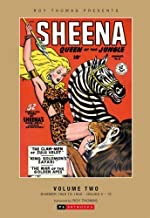
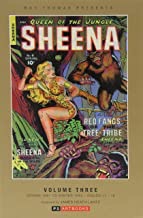
 "Roy Thomas Presents: Phantom Lady Classic Collected Works: # 2by: N/A")

 "Rube Goldberg Inventionsby: Wolfe, Maynard Frank")


 "Rubens and His Circle: Studies by Julius S. Held (INSCRIBED)by: Lowenthal, Anne W., David Rosand, John Walsh Jr.")


 "Rules of Summerby: Tan, Shaun")








 "Ruth Kaplan: Bathersby: Ruth Kaplan (Photographer), Marni Jackson (Contributor), Larry Fink (Contributor)")