Hardcover. Chicago, University of Chicago Press, 1st, 2008, Book: Very Good, Dust Jacket: Very Good, Hardcover, 385 pages. While browsing the stacks of the Regenstein Library at the University of Chicago some years ago, noted historian Neil Harris made a surprising discovery: a group of nine plainly bound volumes whose unassuming spines bore the name the Chicagoan. Pulling one down and leafing through its pages, Harris was startled to find it brimming with striking covers, fanciful art, witty cartoons, profiles of local personalities, and a whole range of incisive articles. He quickly realized that he had stumbled upon a Chicago counterpart to the New Yorker that mysteriously had slipped through the cracks of history and memory. Here Harris brings this lost magazine of the Jazz Age back to life. In its own words, the Chicagoan claimed to represent "a cultural, civilized, and vibrant" city "which needs make no obeisance to Park Avenue, Mayfair, or the Champs Elysees." Urbane in aspiration and first published just sixteen months after the 1925 appearance of the New Yorker, it sought passionately to redeem the Windy City's unhappy reputation for organized crime, political mayhem, and industrial squalor by demonstrating the presence of style and sophistication in the Midwest. Harris's substantial introductory essay here sets the stage, exploring the ambitions, tastes, and prejudices of Chicagoans during the 1920s and 30s. The author then lets the Chicagoan speak for itself in lavish full-color segments that reproduce its many elements: from covers, cartoons, and editorials to reviews, features--and even one issue reprinted in its entirety.
Softcover. McGill-Queen's University Press, reprint, 1987, Book: Very Good, Dust Jacket: None, Softcover, 913 pages, b&w illustrations, maps. Trigger's work integrates insights from archaeology, history, ethnology, linguistics, and geography. This wide knowledge allows him to show that, far from being a static prehistoric society quickly torn apart by European contact and the fur trade, almost every facet of Iroquoian culture had undergone significant change in the centuries preceding European contact. He argues convincingly that the European impact upon native cultures cannot be correctly assessed unless the nature and extent of precontact change is understood. His study not only stands Euro-American stereotypes and fictions on their heads, but forcefully and consistently interprets European and Indian actions, thoughts, and motives from the perspective of the Huron culture. The Children of Aataentsic revises widely accepted interpretations of Indian behaviour and challenges cherished myths about the actions of some celebrated Europeans during the "heroic age" of Canadian history. In a new preface, Trigger describes and evaluates contemporary controversies over the ethnohistory of eastern Canada.
Hardcover. London, Faber and Faber, 1st, 1939, Book: Very Good, Dust Jacket: None, Hardcover, green cloth with gilt lettering on spine, 292 pages, b&w plates. An affectionate and mostly literal account of the early years of Williamson's growing family, based in part on a series of articles called 'Tales of My Children' which he had contributed to 'Family' in 1935. With a frontispiece and sixteen photographs by the author. Mild shelf wear, clean copy.
Hardcover. Winchester UK, St. Paul's Bibliographies, 1st, 1987, Book: Very Good, Dust Jacket: Very Good, Hardcover, 142 pages. Mary Elliott (then Mary Belson) began writing for children in 1809, at a time when increasing literacy and wealth and more progressive understanding of the reading needs of children were creating a growing demand for more and more books for young people. Beginning with two books in verse - one a lively tale about town and country mice, the other, an anthology including many of her own poems - she went on to produce a stream of books on a variety of subjects. Her stories, some eventful and exciting, were mostly about real children learning to tackle the everyday circumstances and difficulties which they encountered in the world around them. These books were made all the more attractive by her publisher, William Darton, who provided them with entertaining illustrations, many of them interesting today for their depiction of contemporary scenes and fashions. Mary Elliott's books soon spread across the Atlantic, and American publishers reissued many of them, sometimes adapting the text to local circumstances. Although her books are now forgotten, they cannot be disregarded by researchers into the history of childhood and of children's literature. This bibliography contains about 470 entries. Clean.
Hardcover. Boston, Houghton Mifflin, 1st illust., 1929, Book: Very Good, Dust Jacket: None, Hardcover, red embossed covers with gilt decoration of two children in profile. One volume from the publisher's 10 volume series, 381 pages. Notable for the full color plates by Henry Pitz, 16 in all. Illustrated endpapers of young children in field of flowers (by another artist). Interior clean, very good.
Hardcover. Boston, Houghton Mifflin, 1st illust., 1929, Book: Very Good, Dust Jacket: None, Hardcover, red embossed covers with gilt decoration of two children in profile. One volume from the publisher's 10 volume series, 508 pages. Notable for the full color plates by H.I. Bacharach, 16 in all. Illustrated endpapers of young children in field of flowers (by another artist). Interior clean, very good.
Hardcover. Boston, Houghton Mifflin, 1st illust., 1929, Book: Very Good, Dust Jacket: None, Hardcover, red embossed covers with gilt decoration of two children in profile. One volume from the publisher's 10 volume series, 442 pages. Notable for the full color plates by H.I. Bacharach, 16 in all. Illustrated endpapers of young children in field of flowers (by another artist). Owner's name on front fly leaf, otherwise interior clean, very good.
Hardcover. Boston, Houghton Mifflin, 1st illust., 1929, Book: Very Good, Dust Jacket: None, Hardcover, red embossed covers with gilt decoration of two children in profile. One volume from the publisher's 10 volume series, 329 pages. Notable for the full color plates by C. E. Brock, 16 in all. Illustrated endpapers of young children in field of flowers (by another artist). Previous owner's name on front fly leaf otherwise interior clean, very good.
Hardcover. Boston, Houghton Mifflin, 1st illust., 1929, Book: Very Good, Dust Jacket: None, Hardcover, red embossed covers with gilt decoration of two children in profile. One volume from the publisher's 10 volume series, 517 pages. Notable for the full color plates by Martin Robinson, 16 in all. Illustrated endpapers of young children in field of flowers (by another artist). Interior clean, very good.
Hardcover. NY, WW Norton & Co,, 1st, 2018, Book: Very Good, Dust Jacket: Very Good, Hardcover in a bright, unclipped dust jacket. As World War II came to an end, General George Marshall was renowned as the architect of Allied victory. Set to retire, he instead accepted what he thought was a final mission-this time not to win a war, but to stop one. Across the Pacific, conflict between Chinese Nationalists and Communists threatened to suck in the United States and escalate into revolution. His assignment was to broker a peace, build a Chinese democracy, and prevent a Communist takeover, all while staving off World War III. In his thirteen months in China, Marshall journeyed across battle-scarred landscapes, grappled with Mao Zedong and Zhou Enlai, and plotted and argued with Generalissimo Chiang Kai-shek and his brilliant wife, often over card games or cocktails. The results at first seemed miraculous. But as they started to come apart, Marshall was faced with a wrenching choice. Its consequences would define the rest of his career, as the secretary of state who launched the Marshall Plan and set the standard for American leadership, and the shape of the Cold War and the US-China relationship for decades to come. It would also help spark one of the darkest turns in American civic life, as Marshall and the mission became a first prominent target of McCarthyism, and the question of "who lost China" roiled American politics. Remainder dot to top edge, otherwise like new.
Hardcover. NY, John Day Company, reprint, 1969, Book: Very Good, Dust Jacket: None, Hardcover, oblong pictorial cloth, 64 pages illustrated in two-colors by William Arthur Smith. SIGNED BY BUCK on the title page. Originally published 1n 1942, this is the 17th printing and was most likely signed in 1969 by Buck in Danby, Vermont, where she lived in her later years. Bright, clean copy, no dust jacket.
Softcover. Honolulu, University of Hawaii Press, 1st, 2009, Book: Very Good, Dust Jacket: None, Softcover, 132 pages. Few if any philosophical schools have championed family values as persistently as the early Confucians, and a great deal can be learned by attending to what they had to say on the subject. In the Confucian tradition, human morality and the personal realization it inspires are grounded in the cultivation of family feeling. One may even go so far as to say that, for China, family reverence was a necessary condition for developing any of the other human qualities of excellence. On the basis of the present translation of the Xiaojing (Classic of Family Reverence) and supplemental passages found in other early philosophical writings, Professors Rosemont and Ames articulate a specifically Confucian conception of "role ethics" that, in its emphasis on a relational conception of the person, is markedly different from most early and contemporary dominant Western moral theories. This Confucian role ethics takes as its inspiration the perceived necessity of family feeling as the entry point in the development of moral competence and as a guide to the religious life as well. Clean copy.
Softcover. London, London School of Economics and Political Science, 2nd pr., 1956, Book: Very Good, Dust Jacket: None, Softcover, red wrappers, 91 pages. One in a series of Monographs of Social Anthropology published by The London School of Economics and Political Science; this one is No. 12 and deals with the Chinese of Sarawak, a province of Malaysia located on the island of Borneo. There are several detailed fold-out maps and many charts and tables. Measures 7.25" x 9.75".
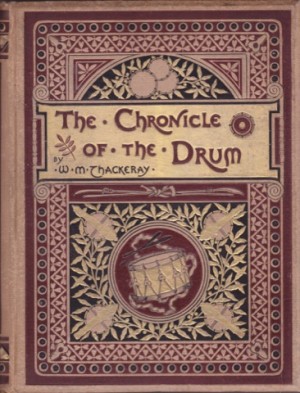
Hardcover. NY, Charles Scribner's Sons, 1st thus, 1882, Book: Very Good, Dust Jacket: None, Hardcover, gray cloth with red, black, and gilt embossed spine title, cover title, and bright cover illustration and decoration. Boards have beveled edges. All edges gilt. 70 pages, tissue-guarded frontispiece, 30 full-page illustrations; artists include A.B. Frost. Howard Pyle. Fredericks, J. S. Davis and others. A ballad written in Paris in 1841 at the time of the second funeral of Napoleon and is a narrative of French military history. Slender piece of cloth chipped away on rear cover, otherwise clean, very good.
Hardcover. Schirmer Mosel, 1st, 2020, Book: Very Good, Dust Jacket: Very Good, Hardcover in a bright dust jacket,, 171 pages. Since the 1970s Cindy Sherman (born in Glen Ridge, NJ, in 1954) has caused a stir in the art world with her photographic self-stagings. From the beginning, Neither her subjects nor her artistic realization of acting as the director, photographer, and performer of her motifs have lost their relevance to this day. Quite the contrary: her multilayered examination of themes of identity and social cliches are hot topics in our age of increasingly public gender and transgender discussions. Entitled 'The Cindy Sherman Effect', an exhibition organized by Kunstforum Wien explores the influence of Cindy Sherman?s work on artists such as Sophie Calle, Pipilotti Rist, Sarah Lucas, Gillian Wearing, Candice Breitz, Zanele Muholi, Markus Schinwald, Douglas Gordon, Samuel Fosso and many more. Clean copy, still in publisher's shrinkwrap.
Hardcover. NY/Cleveland, World Publishing Company, 1st US, 1969, Book: Very Good, Dust Jacket: Very Good, Hardcover in a bright dust jacket. First American edition 8.25 x 7.75". Unpaginated [52 pages]. Essentially an artists' book created by the noted Italian futurist, Munari, widely regarded as one of the most influential book-designers of the 20th century. Illustrations feature translucent overlays and brightly colored pages with die cut edges and windows. Voted the New York Times Best Illustrated Children's Book 1969 winner. Previous owner;s inscription on front fly leaf, otherwise clean.
Hardcover. Lexington KY, University of Kentucky Press, 1st, 1968, Book: Very Good, Dust Jacket: None, Hardcover, light green cloth, 307 pages. This volume of Eaton's selected writings forms a rich and provocative mosaic of southern life from the years of Thomas Jefferson to the close of the Civil War. These selections, perceptively edited by Albert D. Kinvan, show the wide range of Eaton's interests, including the impact of slavery, the influence of religion, and the art of politics, and they demonstrate the depth of his insight into the civilization of the Old South. Name on front fly leaf, otherwise clean.
Hardcover. Washington DC, Counterpoint, 1999, Book: Very Good, Dust Jacket: Very Good, Hardcover, 642 pages. Hailed in 1849 as "a new department in the literature of civilization," the slave narrative forms the foundation of the African American literary tradition. From the late-eighteenth-century narratives by Africans who endured the harrowing Middle Passage, through the classic American fugitive slave narratives of the mid-nineteenth century, slave narratives have provided some of the most graphic and damning documentary evidence of the horrors of slavery. Riveting, passionate, and politically charged, the slave narrative blends personal memory and rhetorical attacks on slavery to create powerful literature and propaganda.The Civitas Anthology presents the seven classic antislavery narratives of the antebellum period in their entirety: The History of Mary Prince, a West Indian Slave , the first slave narrative published by a woman in the Americas; The Confessions of Nat Turner , written when Turner was asked to record his motivation for leading the bloodiest slave revolt in U.S. history; The Narrative of the Life of Frederick Douglass , an international bestseller and the first narrative to fashion the male fugitive slave into an African American cultural hero; The Narrative of William W. Brown , an account that explored with unprecedented realism the slave's survival ethic and the art of the slave trickster; The Narrative of the Life of Henry Bibb , the story of the struggles of the most memorable family man among the classic slave narrators; Running a Thousand Miles for Freedom , a gripping chronicle of one of the most daring and celebrated slave escapes ever recorded; and Incidents in the Life of Slave Girl , a dramatic text that exposed the sexual abuse of female slaves and pioneered the image of the fugitive slave woman as an articulate resister and survivor.Born out of lives of unparalleled suffering, the slave narrative captures all the bravery, drama, and hope that characterized the African American struggle against slavery. From these beginnings came some of the most influential novels in American literature, for the works of writers such as Harriet Beecher Stowe, Mark Twain, and Toni Morrison owe much of their power and social resonance to the slave narrative tradition. The Civitas Anthology gathers the most important narratives in this tradition into one volume for the first time, an indispensable resource for scholars, students, and general readers. Clean copy.
Hardcover. NY, St. Martin's Press, 1st, 1997, Book: Very Good, Dust Jacket: Very Good, Hardcover in a bright, unclipped dust jacket. As Gone With the Wind approaches release, all the stars but Clark Gable prepare to head to Atlanta for the big premiere. Clark and his wife, Carole Lombard, are too distressed to celebrate the opening of the biggest movie of his career because Lydia Austin, a young actress and protege of Carole's, is missing. Clean copy.
Hardcover. Cleveland, World Publishing Company, 1st, 1966, Book: Very Good, Dust Jacket: Good, 336 pages. Hardcover. Previous owners name on front endpaper. Includes cartoonists: John Held, Jr., Charles Keene, George Herriman, A. B. Frost, Peter Arno, Saul Steinberg, Charles Addams, Virgil Partch, William Steig, Gerald Scarfe, Shel Silverstein, Tomi Ungerer, and more. Black & white illustrations. Dust jacket with chipping along edges. Clean, unmarked pages.
Hardcover. Prion, 1st, 2009, Book: Very Good, Dust Jacket: Very Good, Hardcover, 230 pages. In terms of both words and images the world had never seen the like of the American comic book. They were bizarre, morbid, lurid, risque and bursting with subconscious desires of burgeoning youth culture. By the time 1954 arrived their were 500 different comics being published by 35 different companies, selling over 60 million copies a month between them. This is the history of the era and the art it produced. The book looks at the pioneers of the comic book and the comic's founding links with sleazy pulp magazines; the campaign for censorship; the fraught relationship between the comic book artists and their publishers; how what they did was rarely recognized as art at the time - and of course the comics themselves.
Softcover. UK, Cambridge University Press, reprint, 2004, Book: Very Good, Softcover, pages 423-902. Volume 2 ONLY of a three volume set of the classical articles and reviews of A. E. Housman. These papers were originally published between 1897 and 1914 in a variety of academic journals, many of which are now difficult to obtain. The editors have checked and, where necessary, supplemented and updated all the references and corrected errors in them, but have otherwise presented each paper, in full, with the minimum of editorial comment.
Softcover. NY, Ticknor & Fields , Uncorr. Proof, 1988, Book: Very Good, Dust Jacket: None, Softcover, uncorrected proof of this author's second book who has won a MacArthur Foundation "genius grant" as well as a Lannan Foundation award, and been a finalist for the Pulitzer Prize and the PEN/Faulkner Award. A story told as the journal of a privileged 14-year-old boy, the owner's son, and a captain's apprentice on a slave ship. He is one of the few on board to know before the ship leaves port that its true commission is as a slaver, not as a whaling ship. Orange wrappers, clean and bright.
Softcover. Sausalito CA, Point Inc , 1st, 1978, Book: Very Good, Dust Jacket: None, 144 pages. Paperback Magazine. Very Good+,144 pages. Contributors: Michael McClure, Gregory Corso, David Brower, David Meltzer; Peter Coyote, Wavy Gravy. 40 pages of strips by R. Crumb (Little Joe, Mr. Nostalgia, Modern Dance Workshop and The Final Solution). 8 pages by Dan O'Neill.
Softcover. Houston, TX, Museum of Fine Arts Houston, 1st, 1972, Book: Very Good, Dust Jacket: None, Softcover. Exhibition catalog. 93 pages, illustrated throughout in color and b&w. White stiff wrappers, black/red titles. Light wear to edges and spine, front cover slightly sunned, small tear to spine, else a very nice, clean, tight copy.
Hardcover. Oxford UK, Cambridge University Press, 1st, 1928, Hardcover, 190 pages, text clean and sound, marbled boards and green quarter-cloth. Contains a collection of letters by the playwright and author Oliver Goldmith, author of She Stoops to Conquer and The Vicar of Wakefield, written between 1752 and 1774. Balderston includes letters which only exist in a fragmentary form, as well as doubtful and forged letters.
Hardcover. NY, Metropolitan Museum of Art/ The Viking Press, 1st, 1978, Book: Very Good, Dust Jacket: Very Good, Hardcover in a lightly worn dust jacket. In addition to being one of the preeminent American photographers of the late 19th and early 20th centuries, Alfred Stieglitz was an avid collector of the works of other photographers. From 1894-1910, he collected over 650 prints from a variety of photographers. He donated 400 of these to the Metropolitan Museum of Art in 1939, and the balance was given in a bequest to the museum in 1949. Photographers included in the collection include Edward Steichen, Gertrude Kasebier, Baron de Meyer, Ansel Adams, Eliot Porter, and Julia Margaret Cameron. This substantial volume was produced by Weston Naef, who was Associate Curator of Prints and Photographs at The Metropolitan Museum of Art. It includes a black-and-white reproduction of all the photographs in the Stieglitz Collection, some full-page and many in smaller size. It also includes details about, and portraits and signatures of each of the painters. Small closed tears to dust jacket, otherwise a clean, bright copy.
Hardcover. NY, Harper & Row, 1st, 1971, Book: Very Good, Dust Jacket: Very Good, Hardcover in a lightly worn dust jacket, 228 pages. Articles on Thomas Clap, William Douglas, Archibald Kennedy, William Livingston, Thomas Jeffreys, Samuel Smith, John Adams, and Mercy Warren. Volume 2 only. Name on front fly leaf, otherwise clean.
Hardcover. Belgium, Brepols , 1st, 2012, Book: Very Good, Dust Jacket: None, Hardcover, pictorial boards, 696 pages, 34 b/w illustrations.The rise of modern science and European colonial and imperial expansion are indisputably two defining elements of modern world history. James E. McClellan III and Francois Regourd explore these two world-historical forces and their interactions in this comprehensive and in-depth history of the French case in the Old Regime presented here for the first time. The case is key because no other state matched Old-Regime France as a center for organized science and because contemporary France closely rivaled Britain as a colonial power, as well as leading all other nations in commodity production and participating in the slave trade. Based on extensive archival research and vast primary and secondary literatures and sharply reframing the historiography of the field, this landmark volume traces the development and significance for early-modern history of the Colonial Machine of Old-Regime France, an unparalleled agglomeration of institutions geared to the success of the French colonial enterprise, including the Royal Navy, the Academie Royale des Sciences, the Jardin du Roi, and a host of related specialist institutions working together at home and overseas. Mainly supported by the French state, the Colonial Machine reveals itself through its actions from the time of Colbert and Louis XIV as it grappled with fundamental problems facing contemporary European colonialism. SIGNED LETTER from co-author McClelland laid in. Clean copy.
Hardcover. Cambridge MA, The MIT Press, 1st, 2012, Book: Very Good, Dust Jacket: Very Good, Hardcover in a bright dust jacket In this book, 380 pages, illustrated in color. The award-winning historian Regina Lee Blaszczyk traces the relationship of color and commerce, from haute couture to automobile showrooms to interior design, describing the often unrecognized role of the color profession in consumer culture. Blaszczyk examines the evolution of the color progression from 1850 to 1970, telling the stories of innovators who managed the color cornucopia that modern artificial dyes and pigments made possible. These color stylists, color forecasters, and color engineers helped corporations understand the art of illusion and the psychology of color. Clean copy.
Hardcover. Chicago, University Of Chicago Press, 1st, 2007, Book: Very Good, Dust Jacket: Very Good, Hardcover in a bright dust jacket, 182 pages. The Reverend Howard Finster was twenty feet tall, suspended in darkness. Or so he appeared in the documentary film that introduced a teenaged Greg Bottoms to the renowned outsider artist whose death would help inspire him, fourteen years later, to travel the country. Beginning in Georgia with a trip to Finster's famous Paradise Gardens, his journey--of which The Colorful Apocalypse is a masterly chronicle--is an unparalleled look into the lives and visionary works of some of Finster's contemporaries: the self-taught evangelical artists whose beliefs and oeuvres occupy the gray area between madness and Christian ecstasy. With his prodigious gift for conversation and quietly observant storytelling, Bottoms draws us into the worlds of such figures as William Thomas Thompson, a handicapped ex-millionaire who painted a 300-foot version of the book of Revelation; Norbert Kox, an ex-member of the Outlaws biker gang who now lives as a recluse in rural Wisconsin and paints apocalyptic visual parables; and Myrtice West, who began painting to express the revelatory visions she had after her daughter was brutally murdered. These artists' works are as wildly varied as their life stories, but without sensationalizing or patronizing them, Bottoms--one of today's finest young writers--gets at the heart of what they have in common: the struggle to make sense, through art, of their difficult personal histories. Clean copy.
Hardcover. London, Paul Holberton Publishing, 1st, 2015, Book: Very Good, Dust Jacket: Very Good, Hardcover in a bright dust jacket, 197 pages. Color and b&w plates throughout. This groundbreaking architectural history examines what people actually wanted in their institutional and private patronage over the last two centuries as opposed to what architects and theorists thought they should want - as seen through the prism of Oxford's principal building contractor and craft practitioner, Symm & Company. Clean, bright copy.
Softcover. Northhampton, MA, Kitchen Sink Press, 2nd printing, 1994, Book: Very Good, Dust Jacket: None, 56 pages. Softcover. Wrapper very good, glossy, vibrant. Wrapper has a touch of rubbing to the back. Color illustrations throughout. Pages clean and unmarked. Binding tight. In great condition. The first complete collection of the legendary work of one of comics' all-time greatest cartoonists.
Softcover. Seattle, Fantagraphics, 1st, 2008, Book: Very Good, Dust Jacket: None, Softcover, 200 pages. Gary Groth interviews father and son cartoonists Gene and Kim Deitch. Academy-award-winning Gene Deitch, whose wide-ranging career has spanned over 60 years, talks about doing illustrations for The Record Changer, directing cartoons such as Munro and Krazy Kat, and creating his comic strip Terr'ble Thompson. Underground comics pioneer Kim Deitch, touches on his father's influence, reminisces about the New York-based scene and outlines the evolution of Waldo the Cat. Plus: The innovative Grant Morrison fills us in on his X-Men run, All Star Superman, the ambitious Seven Soldiers "maxiseries," and how he became one of the architects of the current DC Comics universe. Finally, the comics gallery presents an historical essay and highlights from the turn-of-the-19th-century work of Puck cartoonist, F. M. Howarth.
Softcover. Seattle, Fantagraphics, 1st, 2009, Book: Very Good, Dust Jacket: None, Softcover, 207 pages. A career-spanning interview with Mort Walker, the creator of Beetle Bailey and Hi & Lois. Jordan Crane discusses The Clouds Above: comics by the famous 17th century caricaturist Thomas K. Rowlandson.
Softcover. Seattle, Fantagraphics, 1st, 2015, Book: Very Good, Dust Jacket: None, Large softcover, 263 pages, b&w photos ad illustrations. In-depth, career-spanning interviews with the cartoonists - Crumb, Shelton, and more - who forever altered the course of American comics with their anthology title, Zap Comix. The definitive Comics Journal interviews with the cartoonists behind Zap Comix, featuring: Supreme 1960s counterculture/underground artist Robert Crumb on how acid unleashed a flood of Zap characters from his unconscious; Marxist brawler Spain Rodriguez on how he made the transition from the Road Vultures biker gang to the exclusive Zap cartoonists' club; Yale alumnus Victor Moscoso and Christian surfer Rick Griffin on how their poster-art psychedelia formed the backdrop of the 1960s San Francisco music scene; Savage Id-choreographer S. Clay Wilson on how his dreams insist on being drawn; Painter and Juxtapoz-founder Robert Williams on how Zap #4 led to 150 news-dealer arrests; Fabulous, Furry, Freaky Gilbert Shelton on the importance of research; Church of the Subgenius founder Paul Mavrides on getting a contact high during the notorious Zap jam sessions; and much more. In these career-spanning interviews, the Zap contributors open up about how they came to create a seminal, living work of art. Partial color.
Softcover. Seattle, Fantagraphics, 1st, 2015, Book: Very Good, Dust Jacket: None, Large softcover, 263 pages, b&w photos ad illustrations. In-depth, career-spanning interviews with the cartoonists - Crumb, Shelton, and more - who forever altered the course of American comics with their anthology title, Zap Comix. The definitive Comics Journal interviews with the cartoonists behind Zap Comix, featuring: Supreme 1960s counterculture/underground artist Robert Crumb on how acid unleashed a flood of Zap characters from his unconscious; Marxist brawler Spain Rodriguez on how he made the transition from the Road Vultures biker gang to the exclusive Zap cartoonists' club; Yale alumnus Victor Moscoso and Christian surfer Rick Griffin on how their poster-art psychedelia formed the backdrop of the 1960s San Francisco music scene; Savage Id-choreographer S. Clay Wilson on how his dreams insist on being drawn; Painter and Juxtapoz-founder Robert Williams on how Zap #4 led to 150 news-dealer arrests; Fabulous, Furry, Freaky Gilbert Shelton on the importance of research; Church of the Subgenius founder Paul Mavrides on getting a contact high during the notorious Zap jam sessions; and much more. In these career-spanning interviews, the Zap contributors open up about how they came to create a seminal, living work of art. Partial color.
Softcover. New York, Fantagraphics Books, 1st, 2014, Book: Very Good, Dust Jacket: None, 300 pages. Softcover with light edgewear to paper wrappers. Clean, tight copy. Color and black and white illustrations throughout. The definitive Comics Journal interviews with the cartoonists behind Zap Comix, featuring: Supreme 1960s counterculture/underground artist Robert Crumb on how acid unleashed a flood of Zap characters from his unconscious; Marxist brawler Spain Rodriguez on how he made the transition from the Road Vultures biker gang to the exclusive Zap cartoonists' club; Yale alumnus Victor Moscoso and Christian surfer Rick Griffin on how their poster-art psychedelia formed the backdrop of the 1960s San Francisco music scene; Savage Id-choreographer S. Clay Wilson on how his dreams insist on being drawn; Painter and Juxtapoz-founder Robert Williams on how Zap #4 led to 150 news-dealer arrests; Fabulous, Furry, Freaky Gilbert Shelton on the importance of research; Church of the Subgenius founder Paul Mavrides on getting a contact high during the notorious Zap jam sessions; and much more. In these career-spanning interviews, the Zap contributors open up about how they came to create a seminal, living work of art.
Hardcover. Minneapolis, University Of Minnesota Press, 2nd pr., 1989, Book: Very Good, Dust Jacket: Very Good, Hardcover in a bright dust jacket, 228 pages, color and b&w illustrations. The haunting cry of the loon has for centuries fascinated people living in or near wilderness in northern parts of the world. The loon's call, its ability to dive, and its distinctive black and white feather pattern appear again and again in the myths and legends of North American Indians. There is included a disc recording of common loon vocalizations. Clean copy.
Softcover. Ithaca NY, Cornell University Press, 1st pbk, 1973, Book: Very Good, Dust Jacket: None, Softcover, 180 pages. The spirit of an event consecrated in anarchist legend is captured in these documents. Eyewitness reports, accounts of participants, and archival documents are used by Dr Edwards to illustrate the many facets of the seventy-three-day Paris Commune of 1871, the largest urban insurrection in modern history. Each section of the book is preceded by an explanatory note, and footnotes clarify contemporary references The introduction to the documents provides a general survey of the origins and events of the Commune. Bright, clean copy.
Hardcover. NY, Harper Business , 1st, 2020, Book: Very Good, Dust Jacket: Very Good, Hardcover in a bright dust jacket, 432 pages. B&w and color illustrations. Small remainder line on bottom edge. In his much-anticipated memoir, The Company I Keep: My Life in Beauty, Chairman Emeritus and former CEO of The Estee Lauder Companies Leonard A. Lauder shares the business and life lessons he learned as well as the adventures he had while helping transform the mom-and-pop business his mother founded in 1946 in the family kitchen into the beloved brand and ultimately into the iconic global prestige beauty company it is today. In its infancy in the 1940s and 50s, the company comprised a handful of products, sold under a single brand in just a few prestigious department stores across the United States. Today, The Estee Lauder Companies constitutes one of the world's leading manufacturers and marketers of prestige skin care, makeup, fragrance and hair care products. It comprises more than 25 brands, whose products are sold in over 150 countries and territories. This growth and success was led by Leonard A. Lauder, Estee Lauder's oldest son, who envisioned and effected this expansion during a remarkable 60-year tenure, including leading the company as CEO and Chairman.
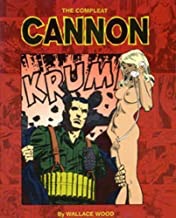
Softcover. Seattle, Fantagraphics Books, 1st, 2001, Book: Very Good, Dust Jacket: None, Softcover, 144 pages, b&w drawings throughout. The Compleat Cannon reprints the entirety of cartoonist Wally Wood's classic sex and violence strip from the 1960s. Super-spy John Cannon is the American's answer to James Bond, fighting the Cold War with a license to kill. Wally Wood is of course the legendary cartoonist known for his contributions to the original Mad magazine. Always regarded as one of comics' great craftsmen, Cannon is simply one of the most beautiful strips ever produced. Featuring outrageous parodies of pop culture icons of the time, the Cold War, and the secret agent genre, Cannon is Wood at his most gregarious and incisive, working on one of the few projects in his career where he had no editorial constraints. Like Fantagraphics' The Compleat Sally Forth, also by Wood, this oversized collection includes a section of never-before-seen Cannon ephemera in the form of sketches, notes and annotated information about the strip.
Hardcover. Boston, Little Brown, reprint, 1991, Book: Very Good, Dust Jacket: None, Seven volumes bound in illustrated glazed boards. Each volume with 3 complete Tintin stories illustrated in full color by Herge. One volume slightly cocked, otherwise clean, very good. No slipcase.
Hardcover. NY, Walker Books, 1st thus, 2012, Book: Very Good, Dust Jacket: None, 22 small hardcovers in a pictorial slipcase, a very clean set of books unread. All illustrated in color by Oxenbury. Set Titles in the Set Down The Rabbit-Hole, The Pool Of Tears, A Caucus-Race And A Long Tale, The Rabbit Sends In A Little Bell, Advice From A Caterpillar, Pig and Pepper, A Mad Tea-Party, The Queen's Croquet-Ground, The Mock Turtle's Story, The Lobster Quadrille, Who Stole The Tarts, Alice's Evidence, Looking-Glass House, The Garden Of Live Flowers, Looking-Glass Insects, Tweedledum And Tweedledee, Wool And Water, Humpty Dumpty, The Lion And The Unicorn, It's My Own Invention, Queen Alice, Queen Alice, Shaking Waking Which Dreamed It
Hardcover. NY, The Limited Editions Club, Ltd. Ed., 1949, Book: Very Good, Dust Jacket: None, Six hardcover volumes in a slipcase. Gathering all 168 stories together for the first time. Together making up the 10th and 11th release of the 18th Series. This being #1075 of 1500 copies. Signed and illustrated by Fritz Kredel, illustrations hand-colored by Yuster Studio. Further signed by the translator Jean Hersholt. Book design by George Macy and printed by Ferris Printing Company. 1292 pages and 6 1/2 x 10 1/2 inches. Slipcase shows wear, starting to split at edges, clean set with a faint musty odor. DOMESTIC SHIPPING ONLY.
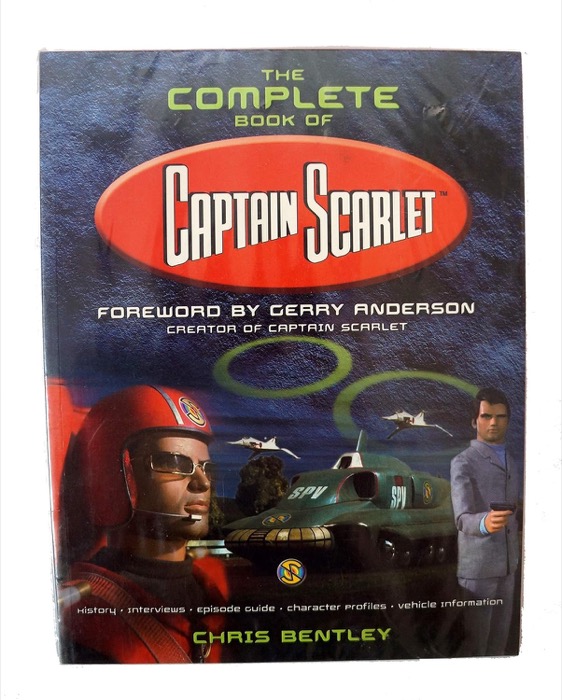
Softcover. London, Carlton Books, 1st, 2001, Book: Very Good, Dust Jacket: None, Softcover, 128 pages. "Captain Scarlet and the Mysterons" is one of the better "Supermarionation" series that came from the hands of Gerry and Sylvia Anderson, known by Americans as well as those in the UK for their many classic puppet series "Supercar", "Fireball XL5", "Stingray", and especially "Thunderbirds"- and their classic live action "UFO" and "Space Precinct".The Captain Scarlet series also was shown in the USA, but in a limited market originally and with wider exposure via compilation films on Showtime and HBO and later on SciFi Channel. Captain Scarlet marked one of the first Supermarionation series to have a truly dark and serious storyline, with an invisible alien race, the Mysterons, seeking revenge for an attack made in error on their cities on Mars. The Mysterons then declared war on Earth. Chris Bentley presents a complete production history and guide to all 32 episodes of the Captain Scarlet and the Mysterons series, plus information about voice artists, merchandising and spin-offs. PLEASE NOTE: the book is clean and tight, but was once owned by a smoker and has a smoke odor.
Hardcover. NY, Harry N. Abrams, 1st, 1984, Book: Very Good, Dust Jacket: Good, Hardcover in a lightly sunned dust jacket. Covers 11 seasons and 251 episodes of Korean War TV comedy. Profusely illustrated in color and b&w, 240 pages. Introduction by Larry Gelbart. Light paper clip mark to front endpapers, otherwise clean. DOMESTIC SHIPPING ONLY.
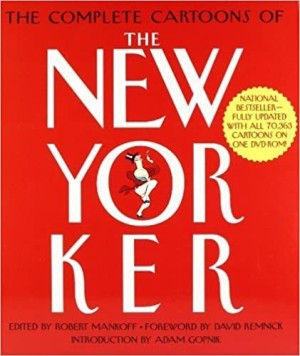
Softcover. NY, Black Dog & Leventhal , 1st thus, 2006, Book: Very Good, Dust Jacket: None, Softcover. In fine unread condition, complete with two unopened disks featuring all 68,647 cartoons ever published in the magazine. Easy to browse CDs allow the reader to find cartoons by favourite artists, subject and date. 650+ flawless pages of cartoons spanning 8 decades, complete with an index of the artists.
Hardcover. Princeton WI, Remco/Kitchen Sink Press, 1st, 1991, Book: Very Good, Dust Jacket: Very Good, 95 pages in color, black cloth covers, bright and unclipped dust jacket. Introduction by Art Spiegelman. Cliff Sterrett was one of the outstanding newspaper cartoon artists in the formative period of this 20th Century art: a skilled draftsman, borderline (and sometimes over the line) surrealist, and humorist.








 "The Chinese Children Next Door (SIGNED COPY)by: Pearl S. Buck")








 "The Civitas Anthology of African American Slave Narratives by: William L. Andrews; Henry Louis Gates/editors")


 "The Classic Era of American Comicsby: Wright, Nicky")



 "The CoEvolution Quarterly-No. 20, Winter 1978 (Published by The Whole Earth Catalog) by: R. Crumb, Michael McClure, Gregory Corso, Wavy Gravy and others.")
 "The Collages of Robert Motherwell: A Retrospective Exhibitionby: Carmean, Jr., E. A")


 "The Collected Letters of Oliver Goldsmithby: Goldsmith, Oliver ; Balderston, Katharine C. (ed.), BBP")


 "The Collection of Alfred Stieglitz: Fifty Pioneers of Modern Photography by: Naef, Weston")
 "The Colonial Legacy: Vol. II: Some Eighteenth-Century Commentators by: Leder, Lawrence H. (Ed.)")




 "The Comic Strip Art of Lyonel Feininger: The Kinder-Kids: Wee Willie Winkie's Worldby: Lyonel Feininger, Bill Blackbeard (Editor/Introduction)")




 "The Comics Journal Library Vol. 9: Zap - The Interviews by: Gary Groth (Editor), Michael Dean (Editor), Bob Levin (Introduction)")


 "The Comics Journal Library Vol. 9: Zap - The Interviews by: Gary Groth (Editor), Michael Dean (Editor), Bob Levin (Introduction)")


 "The Comics Journal Library Vol. 9: Zap - The Interviewsby: Rosenkranz, Patrick")



 "The Complete Adventures of Tintin (7 Volumes)by: Herge")
 "The Complete Alice: 22 Books Collection Box Setby: Lewis Carroll and Helen Oxenbury")


![The Complete Andersen: All of the 168 Stories by Hans Christian Andersen 6 Volume Set, Slipcased [SIGNED] by: Hersholt, Jean/ Kredel, Fritz:](http://www.browsingisarousing.com/images-books/387461.jpg "The Complete Andersen: All of the 168 Stories by Hans Christian Andersen 6 Volume Set, Slipcased [SIGNED] by: Hersholt, Jean/ Kredel, Fritz:")

 "The Complete Color Polly & Her Pals: Series 1 - The Surrealist Periodby: Sterrett, Cliff and Rick Marschall (Ed.)")
)
)